
Search
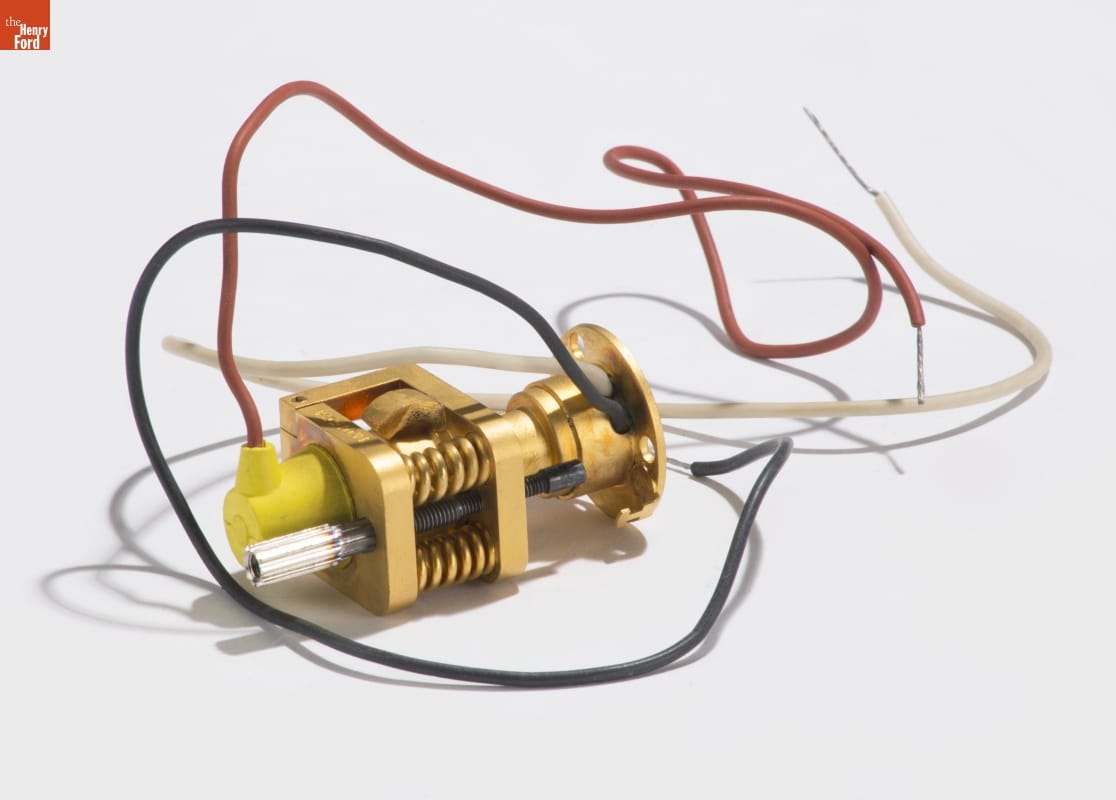
- Eimac Klystron Vacuum Tube, circa 1958 - The klystrom is a vacuum tube that amplifies high-range radio frequencies; it is an essential factor in the history of radar, microwave, and telecommunications. Klystroms also power UHF television, particle accelerators, and radiation therapy equipment. In 1937, brothers Russell and Sigurd Varian invented the klystrom, and founded Varian Associates -- one of the first technology companies in Silicon Valley.
- circa 1958
- Collections - Artifact
Eimac Klystron Vacuum Tube, circa 1958
The klystrom is a vacuum tube that amplifies high-range radio frequencies; it is an essential factor in the history of radar, microwave, and telecommunications. Klystroms also power UHF television, particle accelerators, and radiation therapy equipment. In 1937, brothers Russell and Sigurd Varian invented the klystrom, and founded Varian Associates -- one of the first technology companies in Silicon Valley.
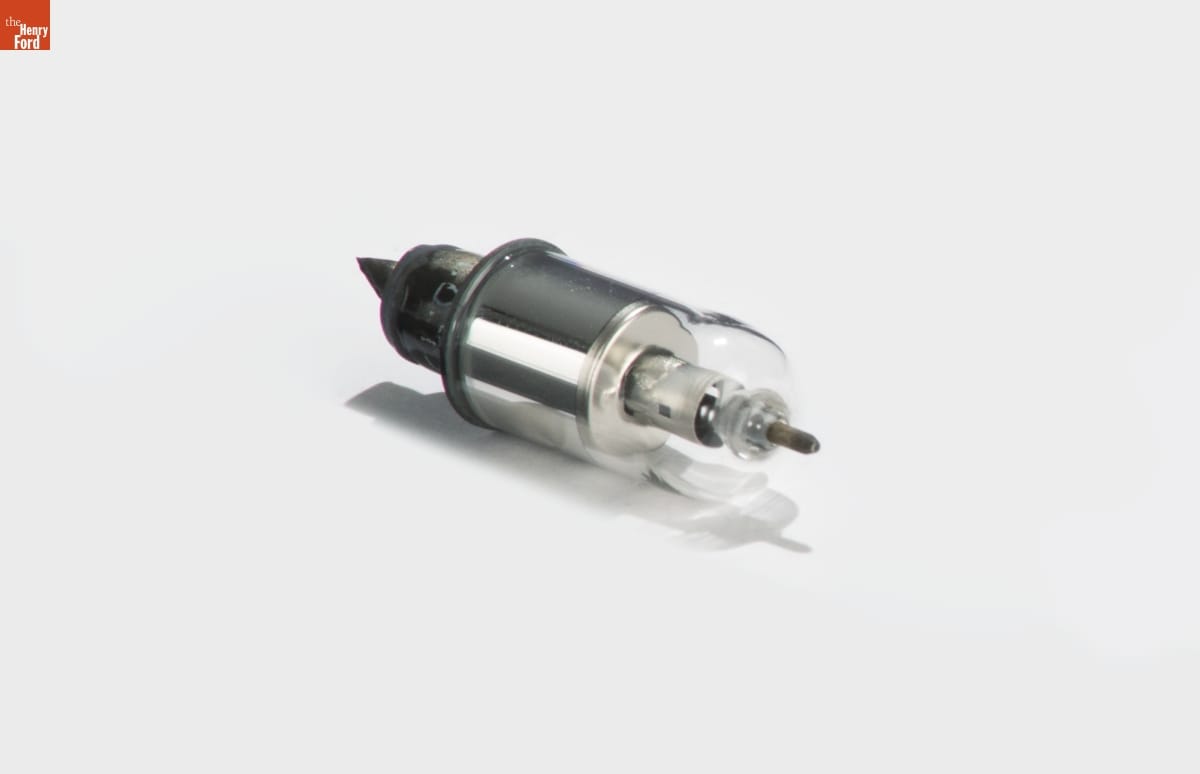
- Eimac Diode Vacuum Tube, 1946-1949 - Vacuum tubes appear in older radios, televisions, amplifiers, computers, and other electronic devices. Their function: to amplify and strengthen weak electronic signals. Typical tubes are sealed glass bulbs evacuated of gas, allowing electron flow to be influenced by an interior cathode, plate and grid. Perfected in 1906 by Lee De Forest, the vacuum tube was the genesis of a communications revolution.
- 1946-1949
- Collections - Artifact
Eimac Diode Vacuum Tube, 1946-1949
Vacuum tubes appear in older radios, televisions, amplifiers, computers, and other electronic devices. Their function: to amplify and strengthen weak electronic signals. Typical tubes are sealed glass bulbs evacuated of gas, allowing electron flow to be influenced by an interior cathode, plate and grid. Perfected in 1906 by Lee De Forest, the vacuum tube was the genesis of a communications revolution.
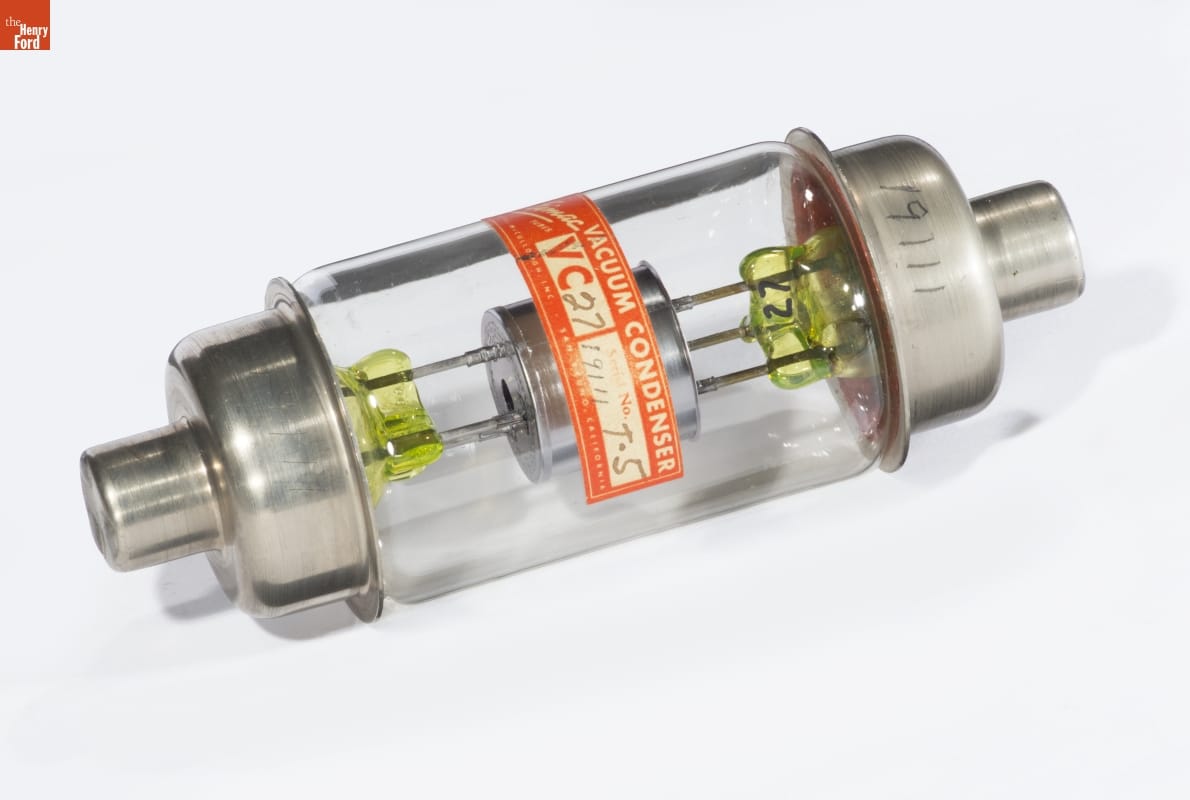
- Eimac VC27 Vacuum Condenser, 1940 -
- 1940
- Collections - Artifact
Eimac VC27 Vacuum Condenser, 1940
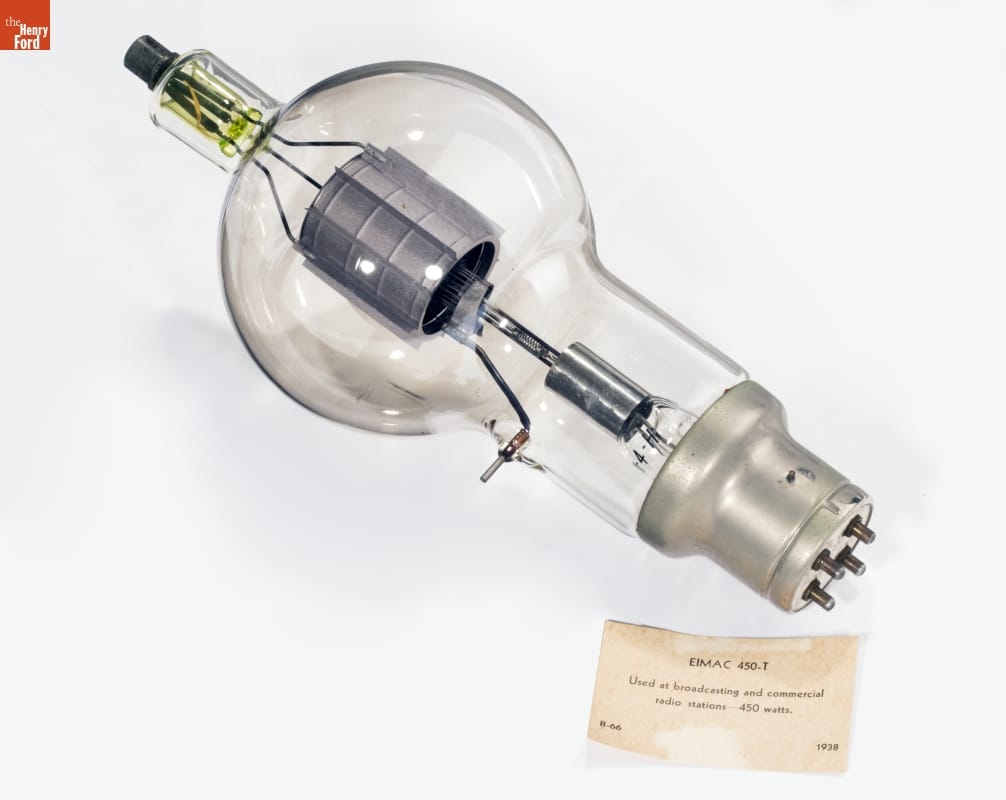
- Eimac Type 450-T Vacuum Tube, 1937-1939 -
- 1937-1939
- Collections - Artifact
Eimac Type 450-T Vacuum Tube, 1937-1939
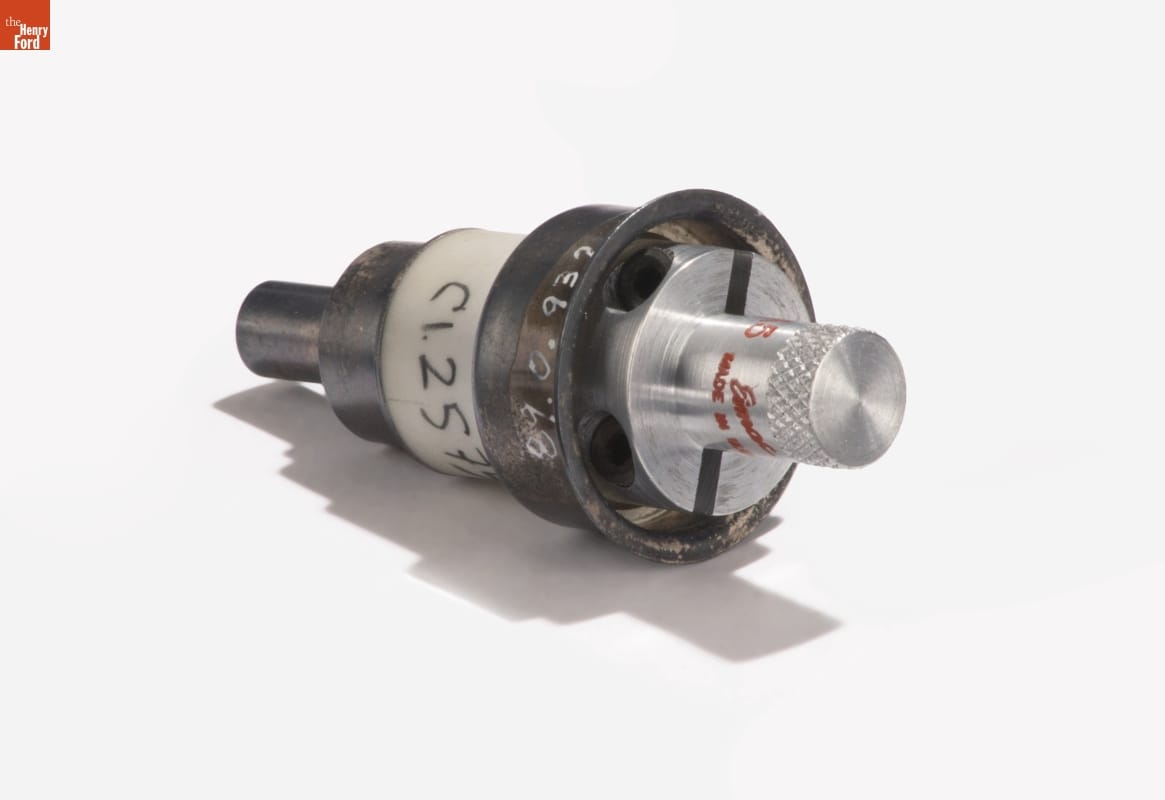
- Eimac 3CPN10A5 Vacuum Tube, 1934-1950 - Vacuum tubes appear in older radios, televisions, amplifiers, computers, and other electronic devices. Their function: to amplify and strengthen weak electronic signals. Typical tubes are sealed glass bulbs evacuated of gas, allowing electron flow to be influenced by an interior cathode, plate and grid. Perfected in 1906 by Lee De Forest, the vacuum tube was the genesis of a communications revolution.
- 1934-1950
- Collections - Artifact
Eimac 3CPN10A5 Vacuum Tube, 1934-1950
Vacuum tubes appear in older radios, televisions, amplifiers, computers, and other electronic devices. Their function: to amplify and strengthen weak electronic signals. Typical tubes are sealed glass bulbs evacuated of gas, allowing electron flow to be influenced by an interior cathode, plate and grid. Perfected in 1906 by Lee De Forest, the vacuum tube was the genesis of a communications revolution.
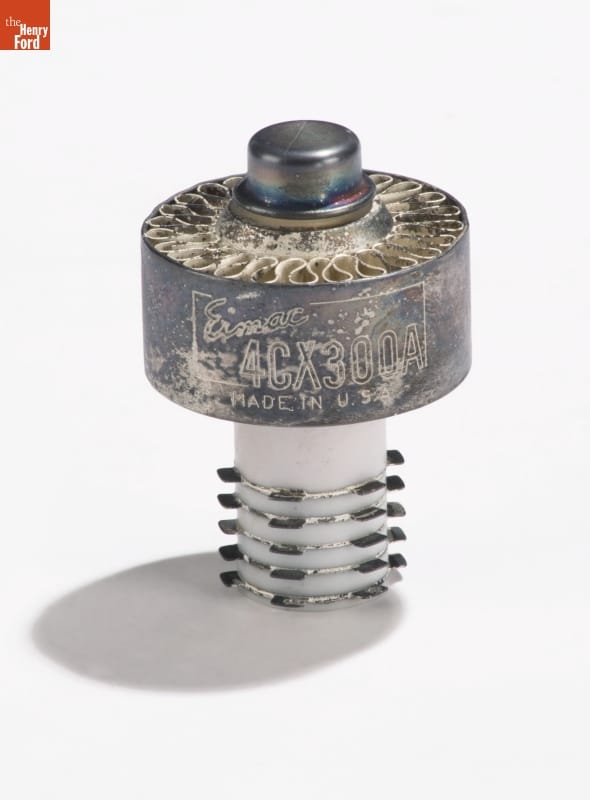
- Eimac 4CX300A Vacuum Tube, 1956-1959 - Vacuum tubes appear in older radios, televisions, amplifiers, computers, and other electronic devices. Their function: to amplify and strengthen weak electronic signals. Typical tubes are sealed glass bulbs evacuated of gas, allowing electron flow to be influenced by an interior cathode, plate and grid. Perfected in 1906 by Lee De Forest, the vacuum tube was the genesis of a communications revolution.
- 1956-1959
- Collections - Artifact
Eimac 4CX300A Vacuum Tube, 1956-1959
Vacuum tubes appear in older radios, televisions, amplifiers, computers, and other electronic devices. Their function: to amplify and strengthen weak electronic signals. Typical tubes are sealed glass bulbs evacuated of gas, allowing electron flow to be influenced by an interior cathode, plate and grid. Perfected in 1906 by Lee De Forest, the vacuum tube was the genesis of a communications revolution.