
Search
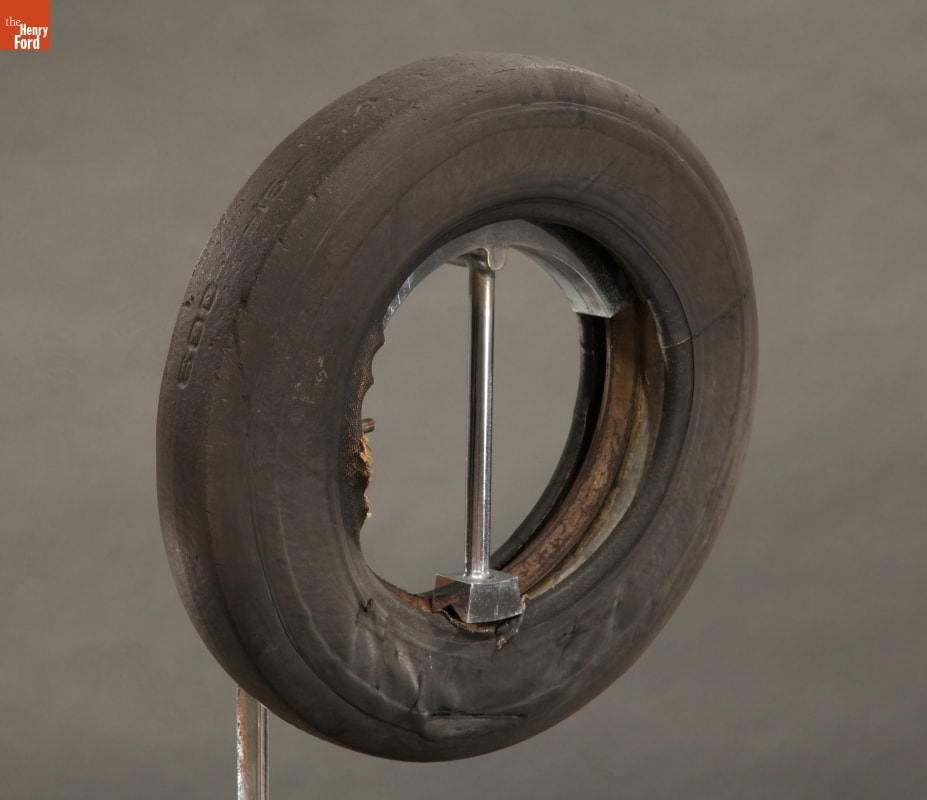
- Automobile Tire, 1937 - Rubber tires were mixed with sulfur to harden the rubber -- a chemical process called vulcanization. Bladders were placed inside the tires and filled with pressurized, high-temperature water. The pressure and heat cured the tires, making them more resistant to cracking. Tread patterns were also molded into the tires as a part of the same process.
- 1937
- Collections - Artifact
Automobile Tire, 1937
Rubber tires were mixed with sulfur to harden the rubber -- a chemical process called vulcanization. Bladders were placed inside the tires and filled with pressurized, high-temperature water. The pressure and heat cured the tires, making them more resistant to cracking. Tread patterns were also molded into the tires as a part of the same process.
- Refrigerator -
- 1950-1955
- Collections - Artifact
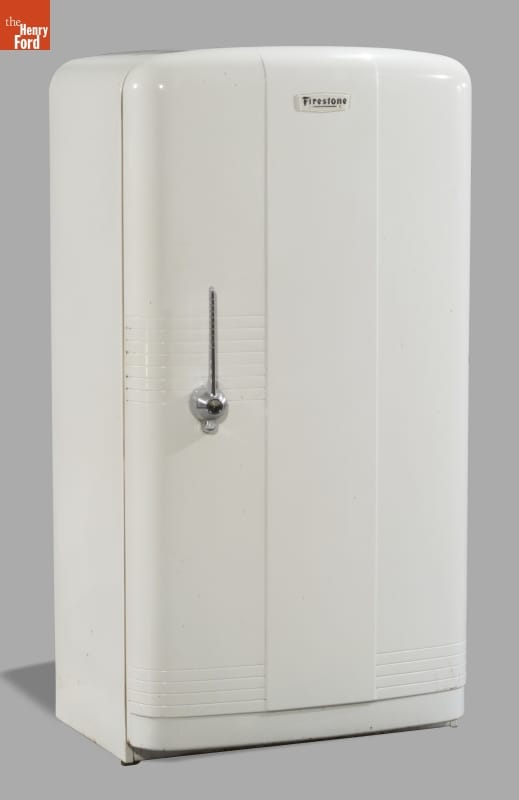
Refrigerator
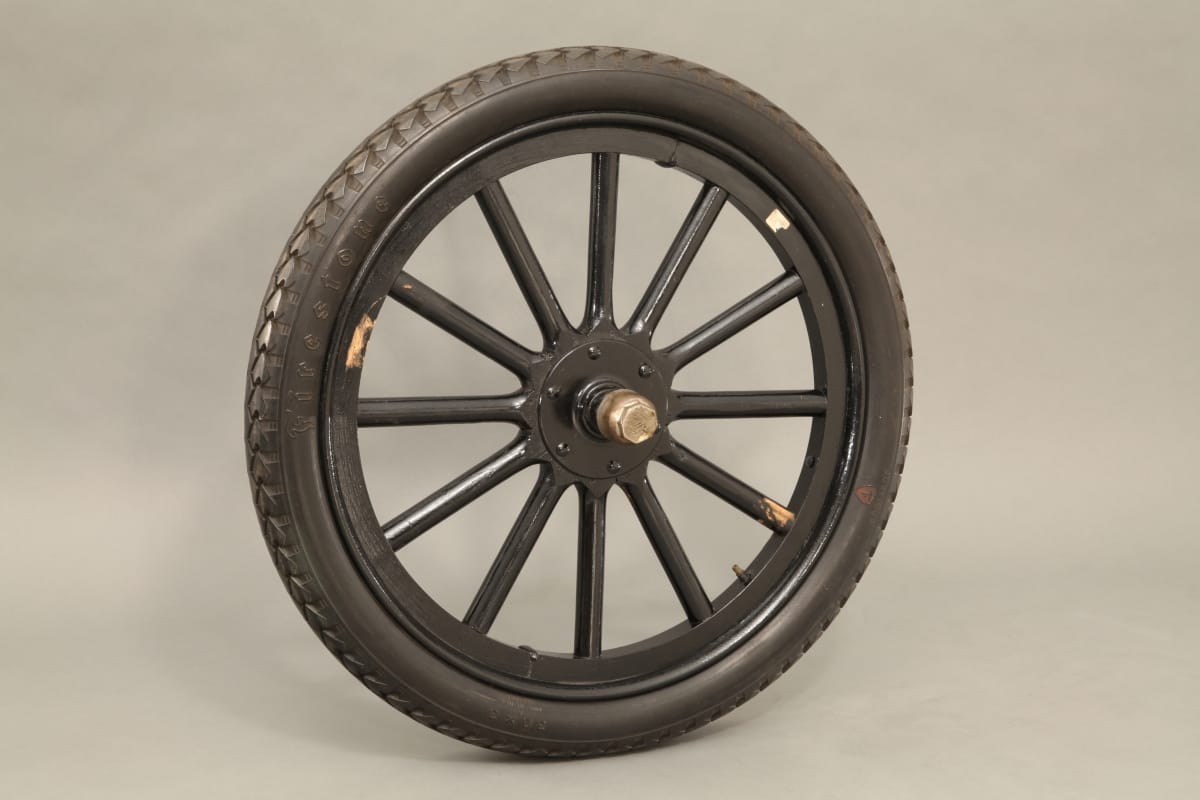
- Firestone Oldfield Tire, circa 1920 - Barney Oldfield partnered with Firestone in 1919 to produce a line of tires under his name. The famous racing driver claimed to have put all his years of experience into the design of his "Oldfield" brand tires. They received another important endorsement when driver Gaston Chevrolet used Oldfield tires in his victory at the 1920 Indianapolis 500.
- circa 1920
- Collections - Artifact
Firestone Oldfield Tire, circa 1920
Barney Oldfield partnered with Firestone in 1919 to produce a line of tires under his name. The famous racing driver claimed to have put all his years of experience into the design of his "Oldfield" brand tires. They received another important endorsement when driver Gaston Chevrolet used Oldfield tires in his victory at the 1920 Indianapolis 500.
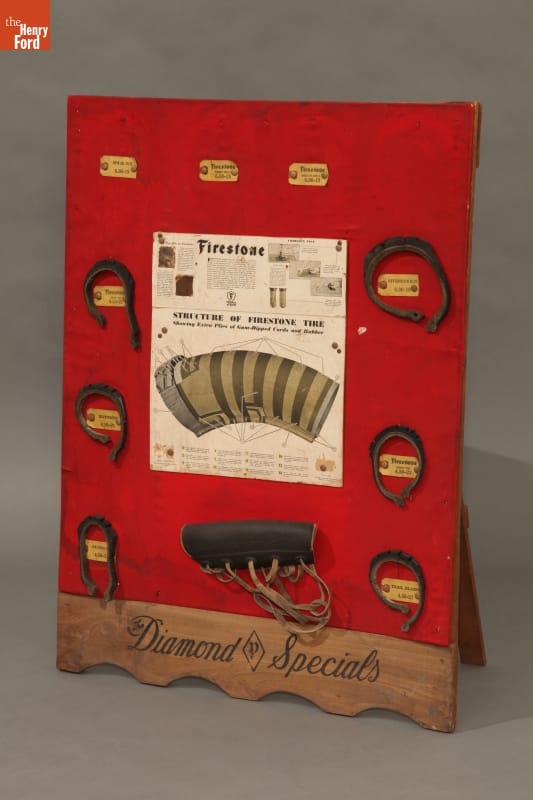
- Firestone "The Diamond Specials" Display, circa 1927 - By 1927, Firestone was an established market leader in the United States, manufacturing about 25 percent of all tires used here. This promotional display for the company's Diamond Special tires emphasized its gum-dipping process. Tires are supported by a cord body underneath the rubber surface. Firestone dipped the cotton cords in liquid rubber to help extend tire life.
- circa 1927
- Collections - Artifact
Firestone "The Diamond Specials" Display, circa 1927
By 1927, Firestone was an established market leader in the United States, manufacturing about 25 percent of all tires used here. This promotional display for the company's Diamond Special tires emphasized its gum-dipping process. Tires are supported by a cord body underneath the rubber surface. Firestone dipped the cotton cords in liquid rubber to help extend tire life.
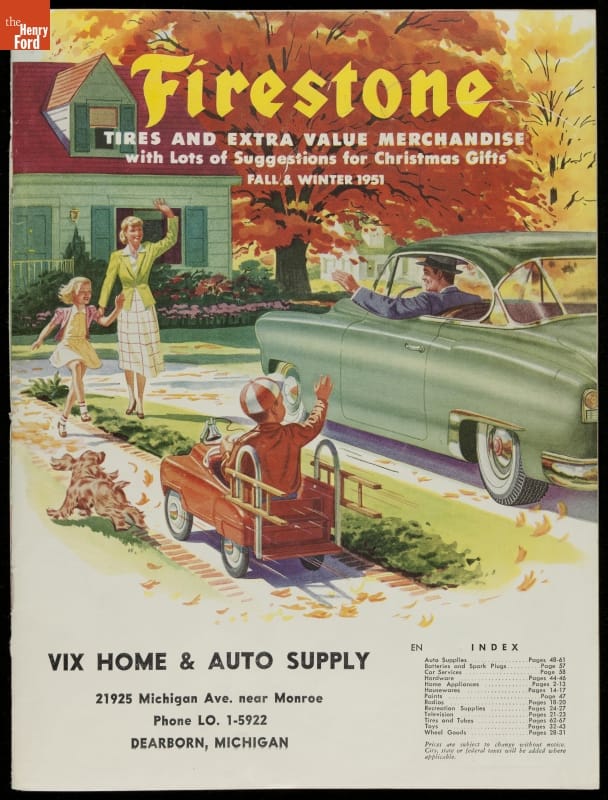
- "Firestone Tires and Extra Value Merchandise with Lots of Suggestions for Christmas Gifts," 1951 - You could buy more than tires and automotive supplies from Firestone in the 1950s. This 1951 catalog contains a range of merchandise. Inside, parents could find appliances and other household goods. Children could page through the toy section -- maybe to create a Christmas wish list or imagine themselves riding a stylish new bike.
- 1951
- Collections - Artifact
"Firestone Tires and Extra Value Merchandise with Lots of Suggestions for Christmas Gifts," 1951
You could buy more than tires and automotive supplies from Firestone in the 1950s. This 1951 catalog contains a range of merchandise. Inside, parents could find appliances and other household goods. Children could page through the toy section -- maybe to create a Christmas wish list or imagine themselves riding a stylish new bike.
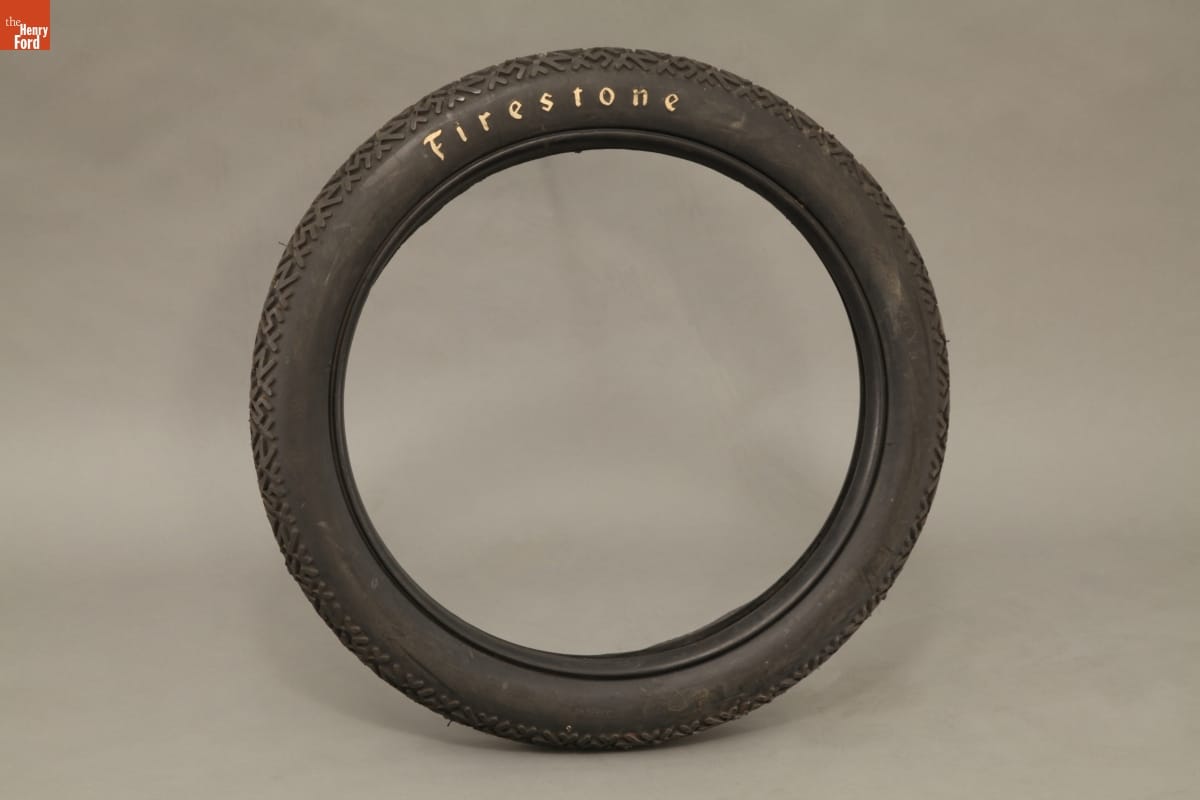
- Automobile Tire, circa 1920 - Firestone introduced its first non-skid tires in 1908. In a clever bit of marketing, the tread pattern itself was formed by the words "NON-SKID" printed at an angle on the tire's surface. The various edges in the lettering gave the tire several points of contact with the road. The tread pattern reduced the risk of slipping during sudden stops.
- circa 1920
- Collections - Artifact
Automobile Tire, circa 1920
Firestone introduced its first non-skid tires in 1908. In a clever bit of marketing, the tread pattern itself was formed by the words "NON-SKID" printed at an angle on the tire's surface. The various edges in the lettering gave the tire several points of contact with the road. The tread pattern reduced the risk of slipping during sudden stops.
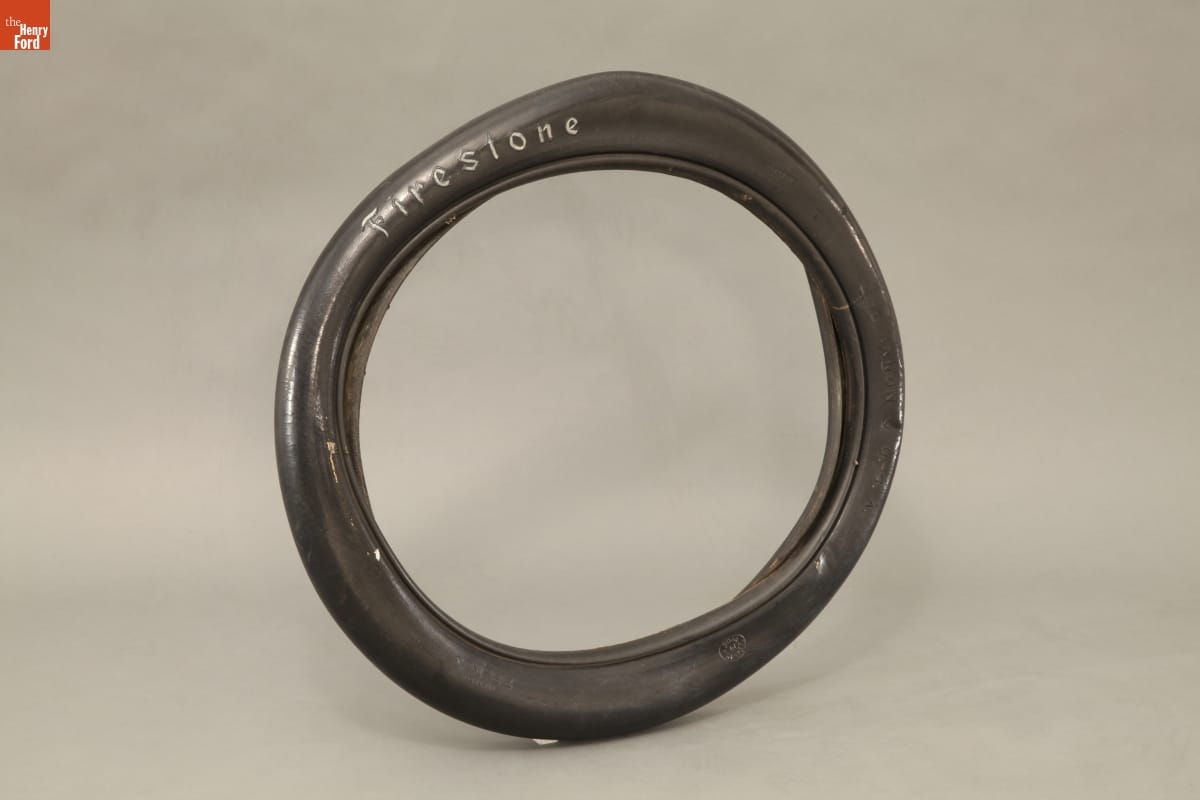
- Automobile Tire, circa 1908 - The first pneumatic automobile tires were little more than upscaled versions of bicycle tires. They lacked any sort of tread, were prone to skidding, and lasted maybe 2,500 miles. These "clincher" tires, secured to the rim by a rubber bead, required a crowbar and a good deal of patience when stretching to mount or demount.
- circa 1908
- Collections - Artifact
Automobile Tire, circa 1908
The first pneumatic automobile tires were little more than upscaled versions of bicycle tires. They lacked any sort of tread, were prone to skidding, and lasted maybe 2,500 miles. These "clincher" tires, secured to the rim by a rubber bead, required a crowbar and a good deal of patience when stretching to mount or demount.
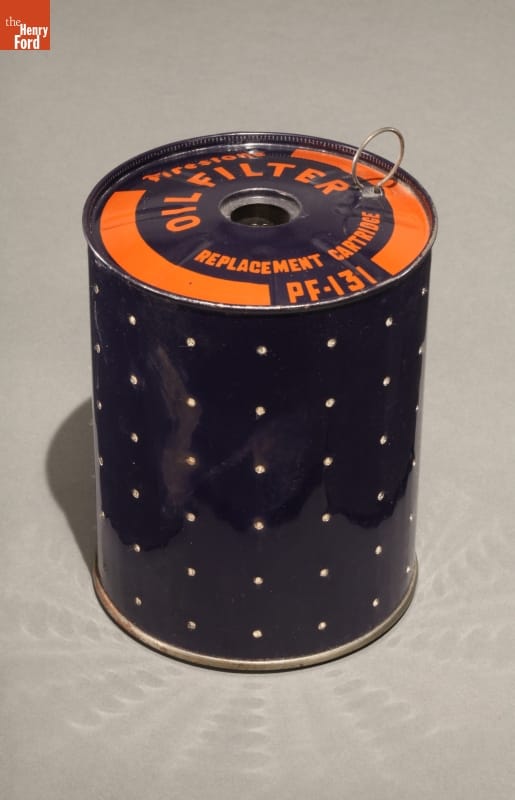
- Firestone Oil Filter, circa 1955 - Oil filters are designed to remove dirt, debris and contaminants from an automobile engine's lubricating oil. They extend the life of the oil and reduce wear and tear on engine parts. Oil filters must be changed regularly, often at the same time the oil itself is changed, but modern filters have longer service lives.
- circa 1955
- Collections - Artifact
Firestone Oil Filter, circa 1955
Oil filters are designed to remove dirt, debris and contaminants from an automobile engine's lubricating oil. They extend the life of the oil and reduce wear and tear on engine parts. Oil filters must be changed regularly, often at the same time the oil itself is changed, but modern filters have longer service lives.
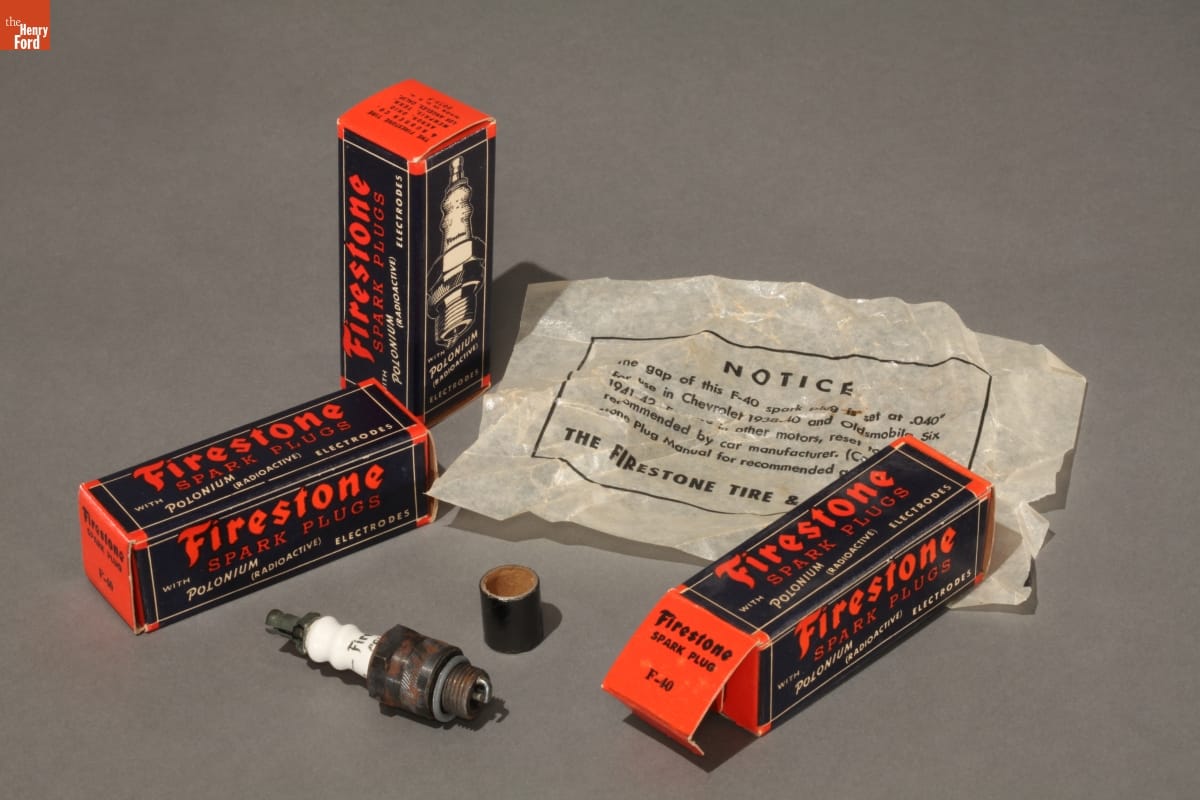
- Firestone Spark Plugs with Packaging, circa 1942 - Spark plugs ignite the air-fuel mixture in an internal combustion engine's cylinders. High voltage jumps across a gap between two electrodes on the plug's bottom and creates a spark. The plug's top is connected to a wire that runs to the distributor, which in turn is connected to the ignition coil and the battery.
- circa 1942
- Collections - Artifact
Firestone Spark Plugs with Packaging, circa 1942
Spark plugs ignite the air-fuel mixture in an internal combustion engine's cylinders. High voltage jumps across a gap between two electrodes on the plug's bottom and creates a spark. The plug's top is connected to a wire that runs to the distributor, which in turn is connected to the ignition coil and the battery.
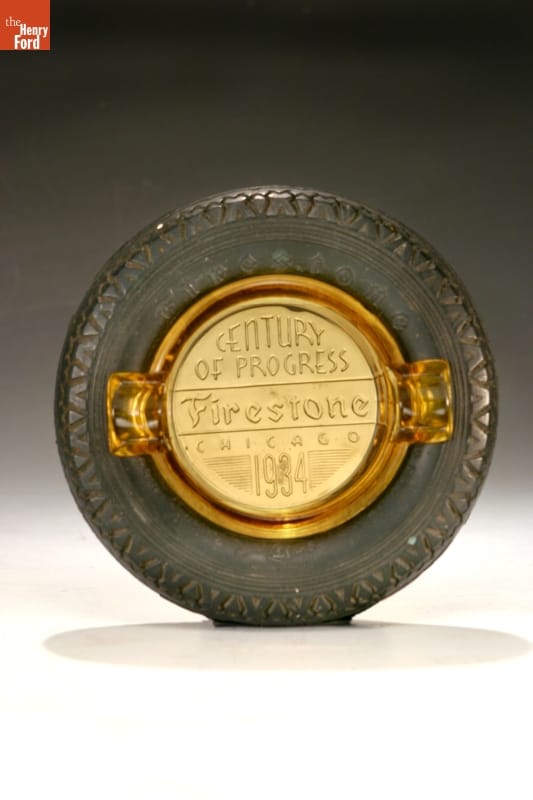
- A Century of Progress World's Fair Ashtray, 1934 - Chicago's 1933-34 Century of Progress Exposition used the theme of progress to buoy national optimism during the Depression's darkest years. The fair also provided the opportunity for companies to show off their achievements to millions of people. This souvenir ashtray embodied Firestone's featured product at the fair: rubber tires.
- 1934
- Collections - Artifact
A Century of Progress World's Fair Ashtray, 1934
Chicago's 1933-34 Century of Progress Exposition used the theme of progress to buoy national optimism during the Depression's darkest years. The fair also provided the opportunity for companies to show off their achievements to millions of people. This souvenir ashtray embodied Firestone's featured product at the fair: rubber tires.