
Search
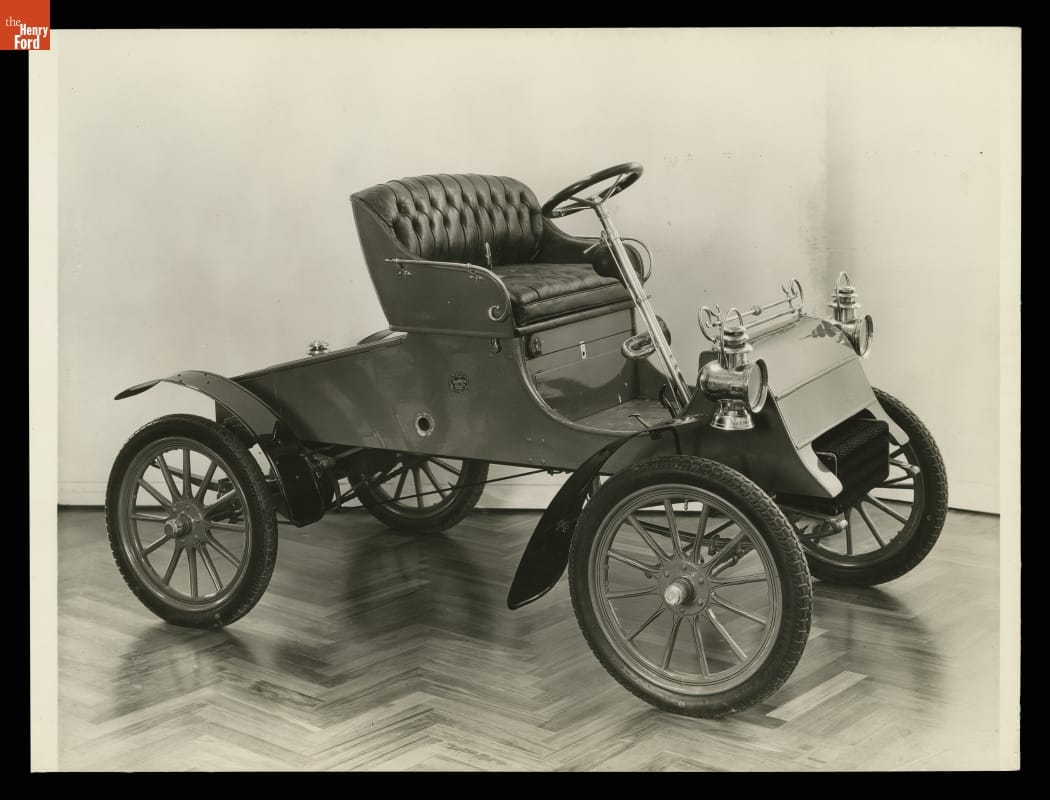
- 1903 Ford Model A Roadster in Henry Ford Museum, circa 1934 - A 1934 exhibition at Henry Ford's museum in Dearborn, Michigan, featured this Model A roadster, the first automobile produced and sold by the fledgling Ford Motor Company. In many ways, the original Ford was typical -- it looked like a carriage without the horse. But unlike other early autos, the 1903 Model A had a steering wheel rather than a tiller.
- April 20, 1934
- Collections - Artifact
1903 Ford Model A Roadster in Henry Ford Museum, circa 1934
A 1934 exhibition at Henry Ford's museum in Dearborn, Michigan, featured this Model A roadster, the first automobile produced and sold by the fledgling Ford Motor Company. In many ways, the original Ford was typical -- it looked like a carriage without the horse. But unlike other early autos, the 1903 Model A had a steering wheel rather than a tiller.
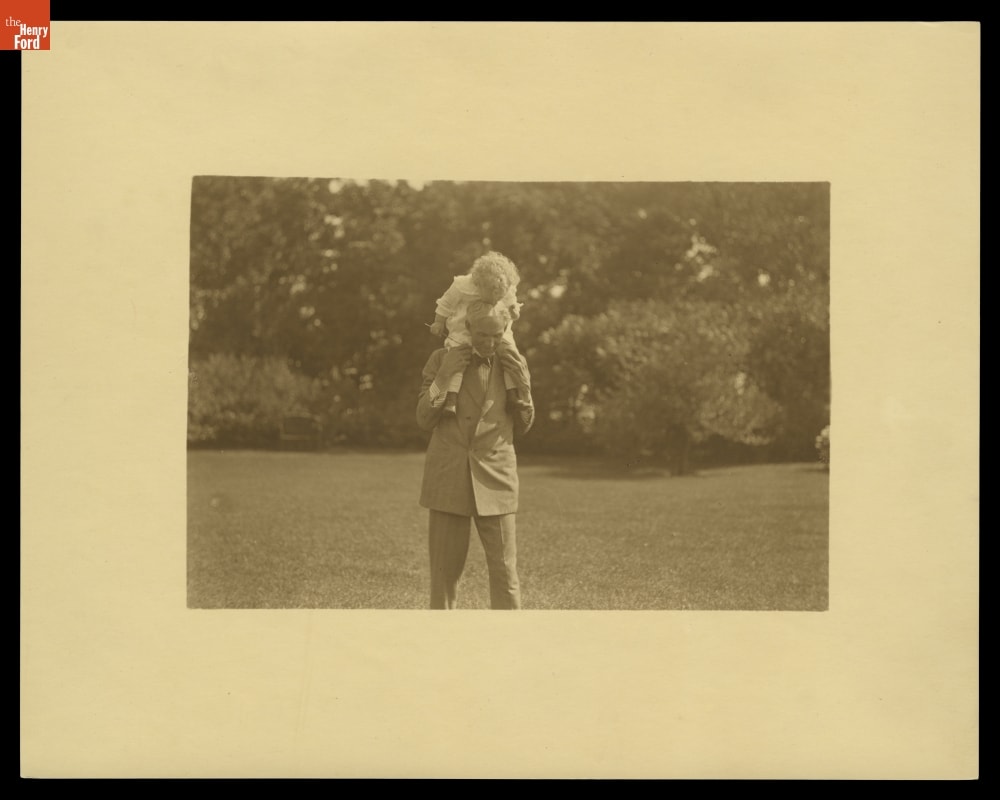
- Henry Ford Carrying Grandson Henry Ford II at Fair Lane, Dearborn, Michigan, 1919 - In the early 1910s, Henry and Clara Ford selected 1300 acres of farmland in Dearborn, Michigan, as the site for a new home. They called the estate Fair Lane. Surrounded by woods, meadows, gardens, and the nature they loved, Henry and Clara found this home a peaceful respite. Here they could wander the landscaped grounds, entertain guests, and play with grandchildren.
- 1919
- Collections - Artifact
Henry Ford Carrying Grandson Henry Ford II at Fair Lane, Dearborn, Michigan, 1919
In the early 1910s, Henry and Clara Ford selected 1300 acres of farmland in Dearborn, Michigan, as the site for a new home. They called the estate Fair Lane. Surrounded by woods, meadows, gardens, and the nature they loved, Henry and Clara found this home a peaceful respite. Here they could wander the landscaped grounds, entertain guests, and play with grandchildren.
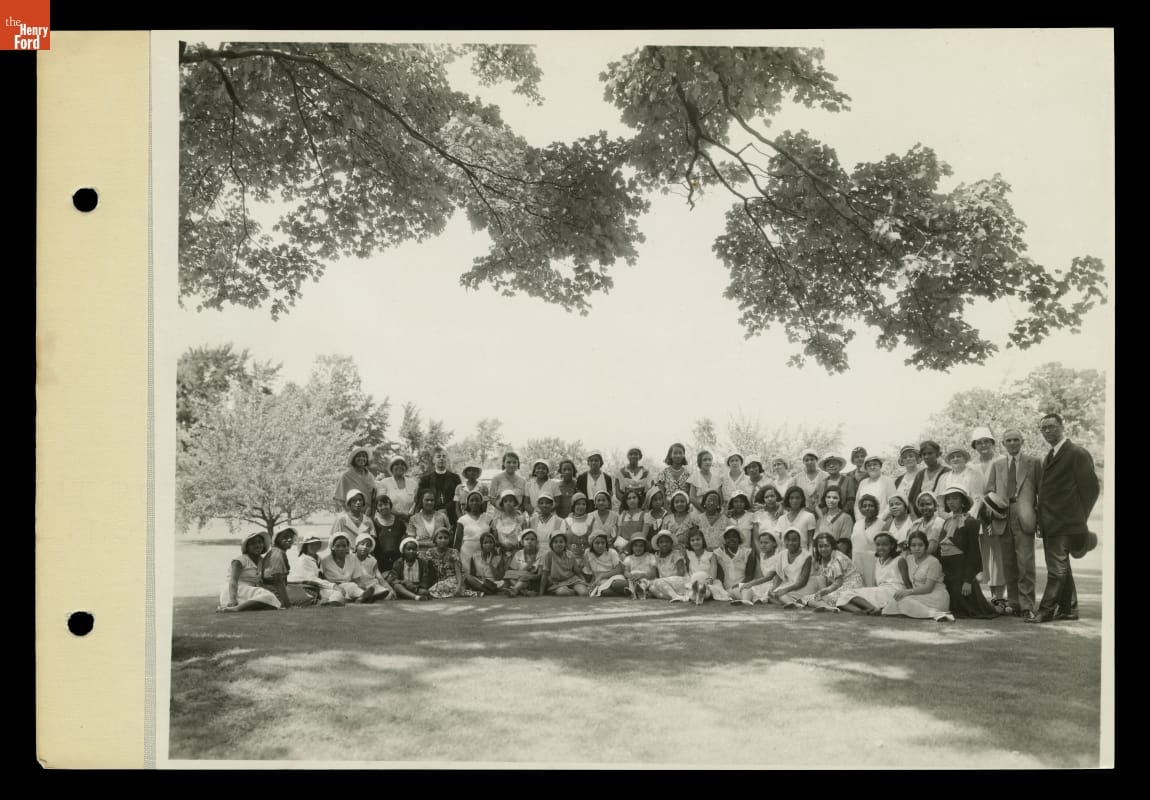
- Henry Ford and Clara Ford with Group on the Grounds of Fair Lane, 1932 - In the early 1910s, Henry and Clara Ford selected 1300 acres of farmland in Dearborn, Michigan, as the site for a new home. They called the estate Fair Lane. Surrounded by woods, meadows, gardens, and the nature they loved, Henry and Clara found this home a peaceful respite. Here they could wander the landscaped grounds, entertain guests, and play with grandchildren.
- July 09, 1932
- Collections - Artifact
Henry Ford and Clara Ford with Group on the Grounds of Fair Lane, 1932
In the early 1910s, Henry and Clara Ford selected 1300 acres of farmland in Dearborn, Michigan, as the site for a new home. They called the estate Fair Lane. Surrounded by woods, meadows, gardens, and the nature they loved, Henry and Clara found this home a peaceful respite. Here they could wander the landscaped grounds, entertain guests, and play with grandchildren.
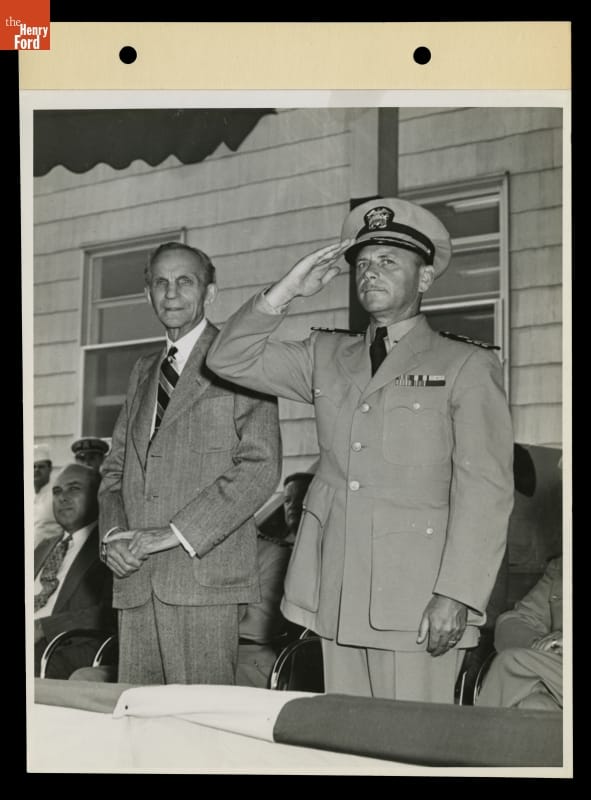
- Henry Ford on His 80th Birthday, U. S. Naval Training School at the Ford Rouge Plant, July 1943 - Personnel at the United States Naval Training School in Dearborn, Michigan, invited Henry Ford to celebrate his 80th birthday at the base. Ford was feted with gifts, a military drill, and a large cake modeled after the school buildings. The school -- built on land at Ford's Rouge Plant and leased to the Navy -- trained thousands of recruits in various skilled trades during World War II.
- July 28, 1943
- Collections - Artifact
Henry Ford on His 80th Birthday, U. S. Naval Training School at the Ford Rouge Plant, July 1943
Personnel at the United States Naval Training School in Dearborn, Michigan, invited Henry Ford to celebrate his 80th birthday at the base. Ford was feted with gifts, a military drill, and a large cake modeled after the school buildings. The school -- built on land at Ford's Rouge Plant and leased to the Navy -- trained thousands of recruits in various skilled trades during World War II.
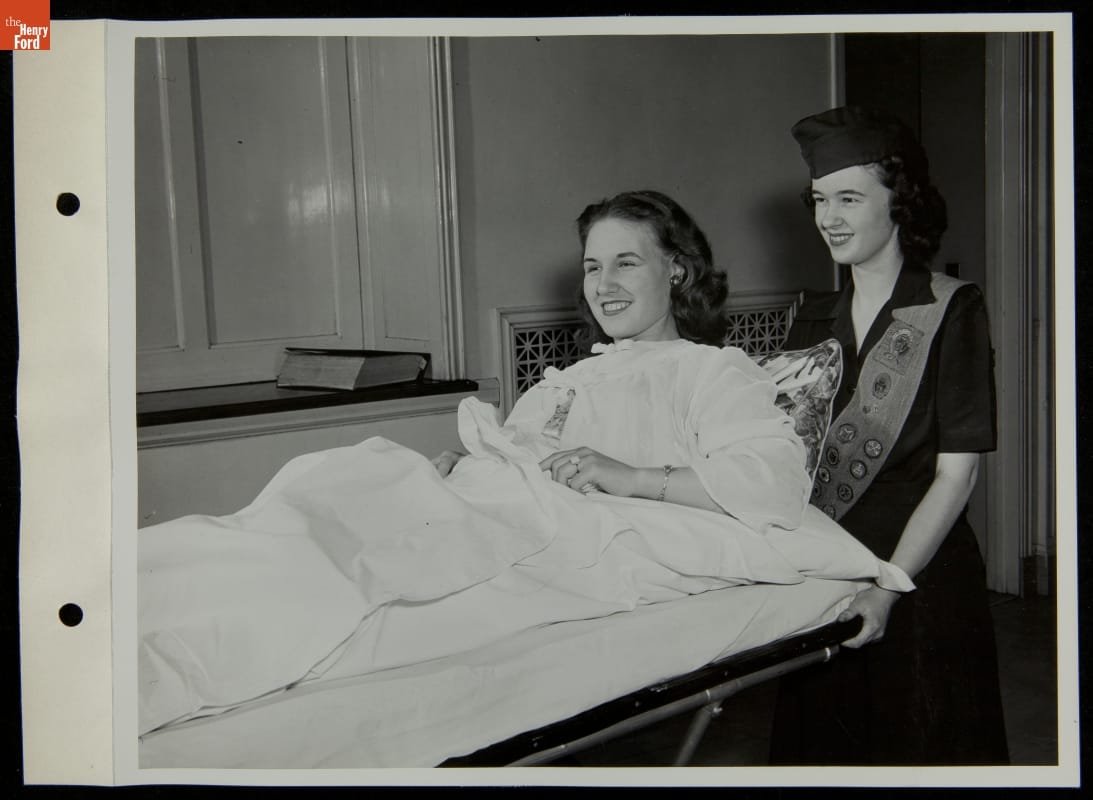
- Girl Scout Aiding a Patient While Doing Community Service at Henry Ford Hospital, Detroit, Michigan, 1946 - Since their organization was founded in 1912, American Girl Scouts have volunteered in local communities. A group of Senior Girl Scouts (ages 14-17) donated service in 1946 at Henry Ford Hospital in Detroit, Michigan. Here, a Girl Scout wearing a sash displaying official patches and badges transports a hospital patient on a gurney.
- February 28, 1946
- Collections - Artifact
Girl Scout Aiding a Patient While Doing Community Service at Henry Ford Hospital, Detroit, Michigan, 1946
Since their organization was founded in 1912, American Girl Scouts have volunteered in local communities. A group of Senior Girl Scouts (ages 14-17) donated service in 1946 at Henry Ford Hospital in Detroit, Michigan. Here, a Girl Scout wearing a sash displaying official patches and badges transports a hospital patient on a gurney.
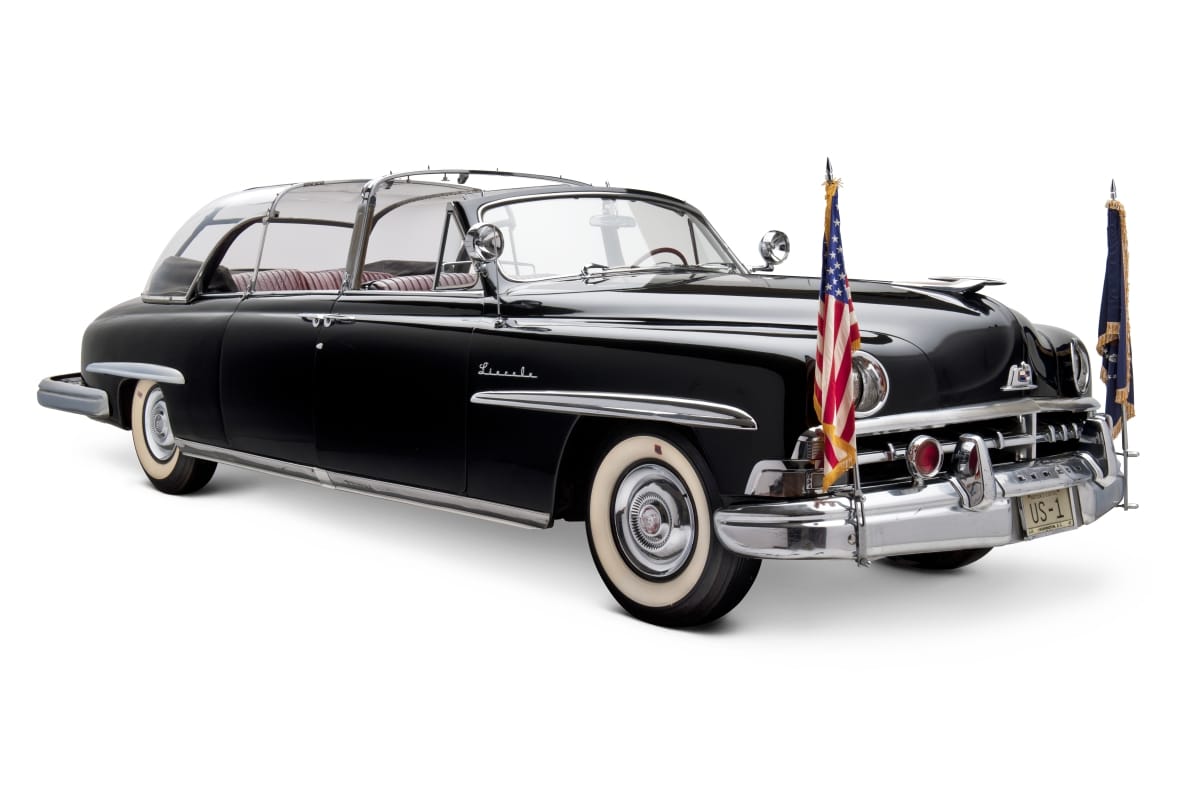
- 1950 Lincoln Presidential Limousine Used by Dwight D. Eisenhower - This massive convertible Lincoln was built for President Harry S Truman in 1950, but it is most associated with Truman's successor Dwight D. Eisenhower, who used the car from 1952 until 1960. Eisenhower added the distinctive plastic "bubble top." Presidents John F. Kennedy and Lyndon B. Johnson also used this car as a spare until its retirement in 1967.
- 1950-1967
- Collections - Artifact
1950 Lincoln Presidential Limousine Used by Dwight D. Eisenhower
This massive convertible Lincoln was built for President Harry S Truman in 1950, but it is most associated with Truman's successor Dwight D. Eisenhower, who used the car from 1952 until 1960. Eisenhower added the distinctive plastic "bubble top." Presidents John F. Kennedy and Lyndon B. Johnson also used this car as a spare until its retirement in 1967.
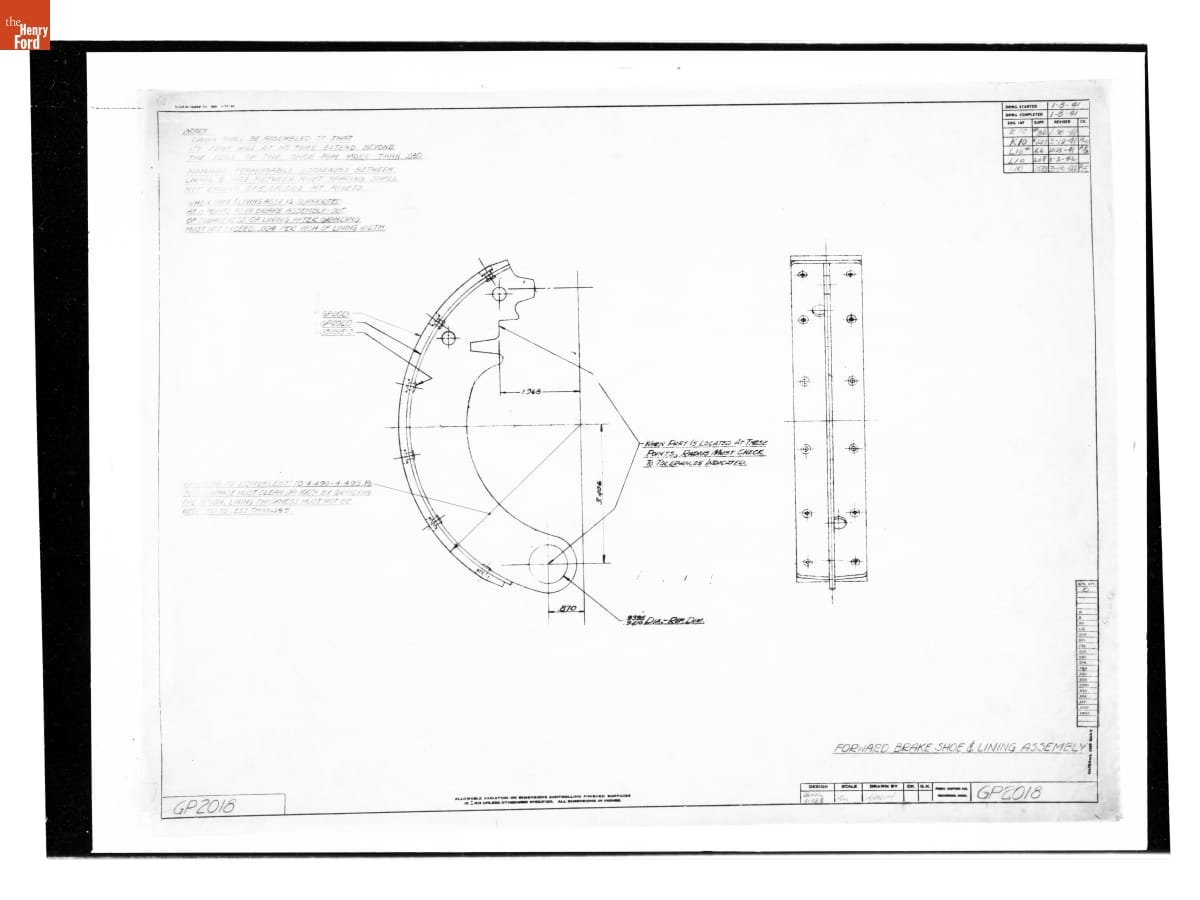
- Drawing, "Forward Brake Shoe & Lining Assembly," Ford GP, March 16, 1944 - The Ford Motor Company created over a million parts drawings from 1903 to 1957. Many of these drawings specify engineering requirements for the components of Ford-made vehicles--including automobiles, trucks, tractors, military vehicles and Tri-motor airplanes. Others document assembly components, stages of casting and forging, or experimental designs. Beginning in the 1940s, Ford transferred the drawings to microfilm.
- March 16, 1944
- Collections - Artifact
Drawing, "Forward Brake Shoe & Lining Assembly," Ford GP, March 16, 1944
The Ford Motor Company created over a million parts drawings from 1903 to 1957. Many of these drawings specify engineering requirements for the components of Ford-made vehicles--including automobiles, trucks, tractors, military vehicles and Tri-motor airplanes. Others document assembly components, stages of casting and forging, or experimental designs. Beginning in the 1940s, Ford transferred the drawings to microfilm.
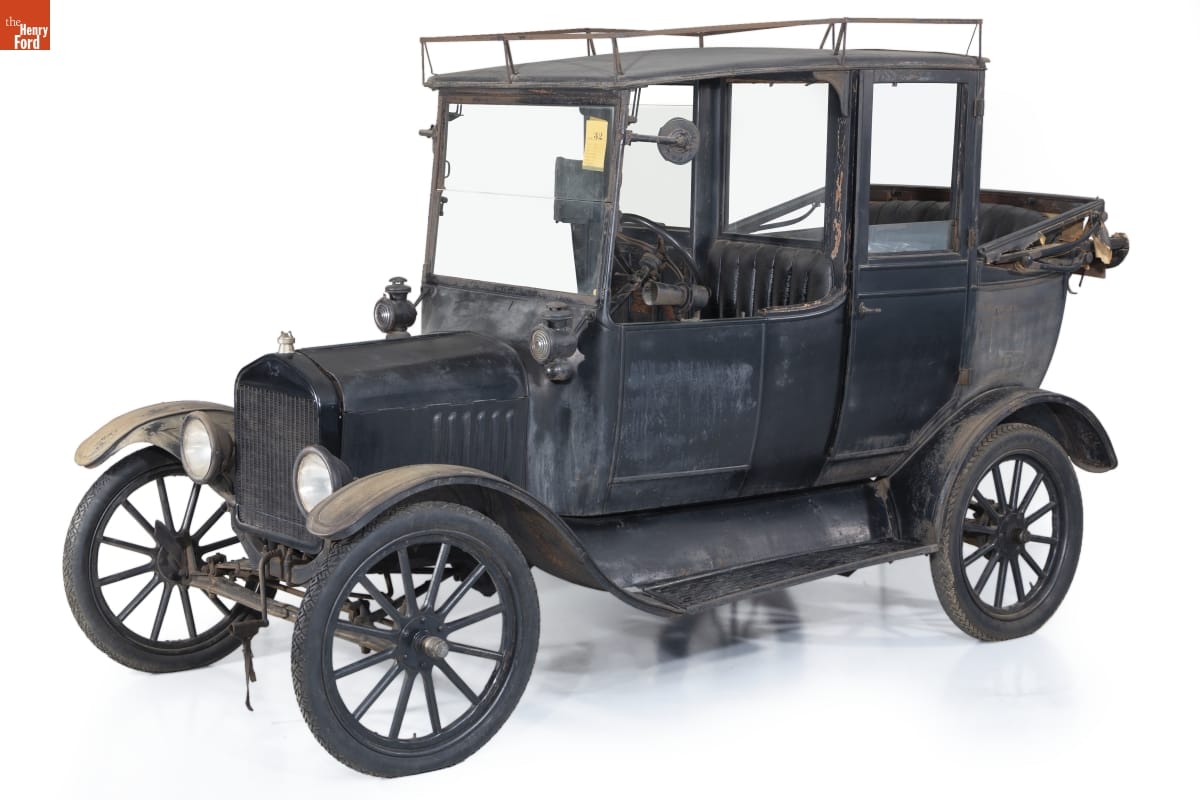
- 1917 Ford Model T Taxicab - The ever-versatile Ford Model T could be adapted for taxicab service. Taxi drivers appreciated the same qualities that made the Model T so appealing to private owners: its low price and modest operating costs. This cab features a landaulet body -- with a fixed roof for the driver and a convertible roof for the passengers.
- 1917
- Collections - Artifact
1917 Ford Model T Taxicab
The ever-versatile Ford Model T could be adapted for taxicab service. Taxi drivers appreciated the same qualities that made the Model T so appealing to private owners: its low price and modest operating costs. This cab features a landaulet body -- with a fixed roof for the driver and a convertible roof for the passengers.
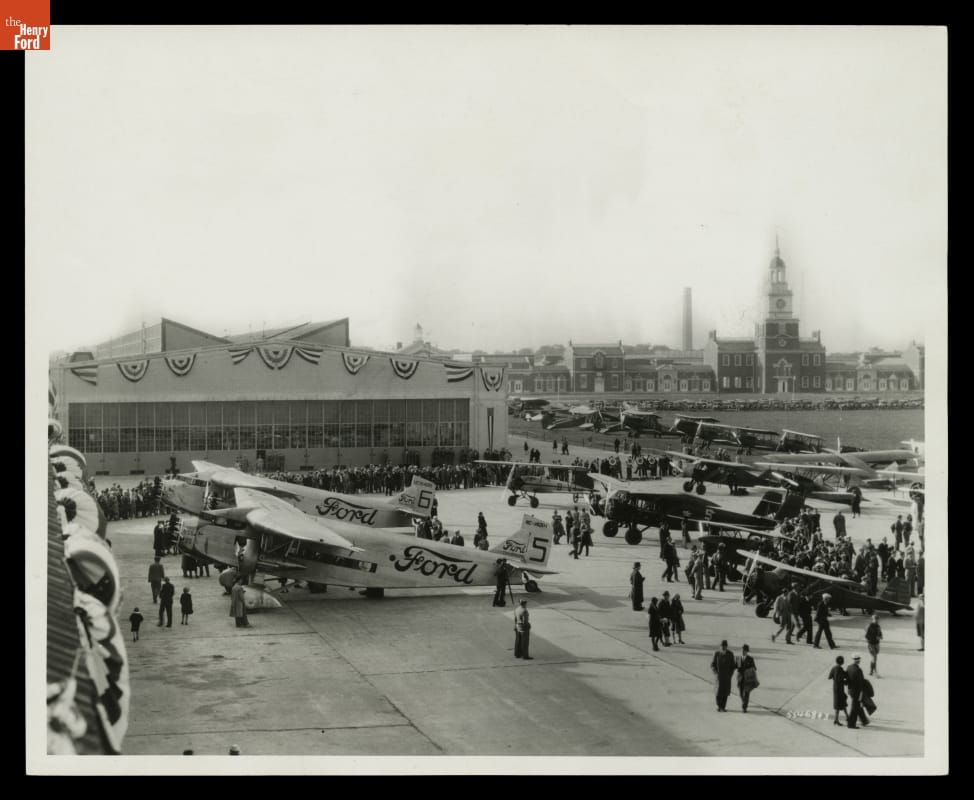
- Ford Reliability Tour at Ford Airport, Dearborn, Michigan, 1930 - From 1925-1931, Ford Motor Company sponsored annual air tours to promote reliability and safety in commercial aircraft. Pilots flew to pre-determined cities, and their airplanes were rated on the ability to take off and land quickly and maintain consistent speeds. The 1930 tour included 18 entries and visited 29 cities in the United States and Canada.
- September 27, 1930
- Collections - Artifact
Ford Reliability Tour at Ford Airport, Dearborn, Michigan, 1930
From 1925-1931, Ford Motor Company sponsored annual air tours to promote reliability and safety in commercial aircraft. Pilots flew to pre-determined cities, and their airplanes were rated on the ability to take off and land quickly and maintain consistent speeds. The 1930 tour included 18 entries and visited 29 cities in the United States and Canada.
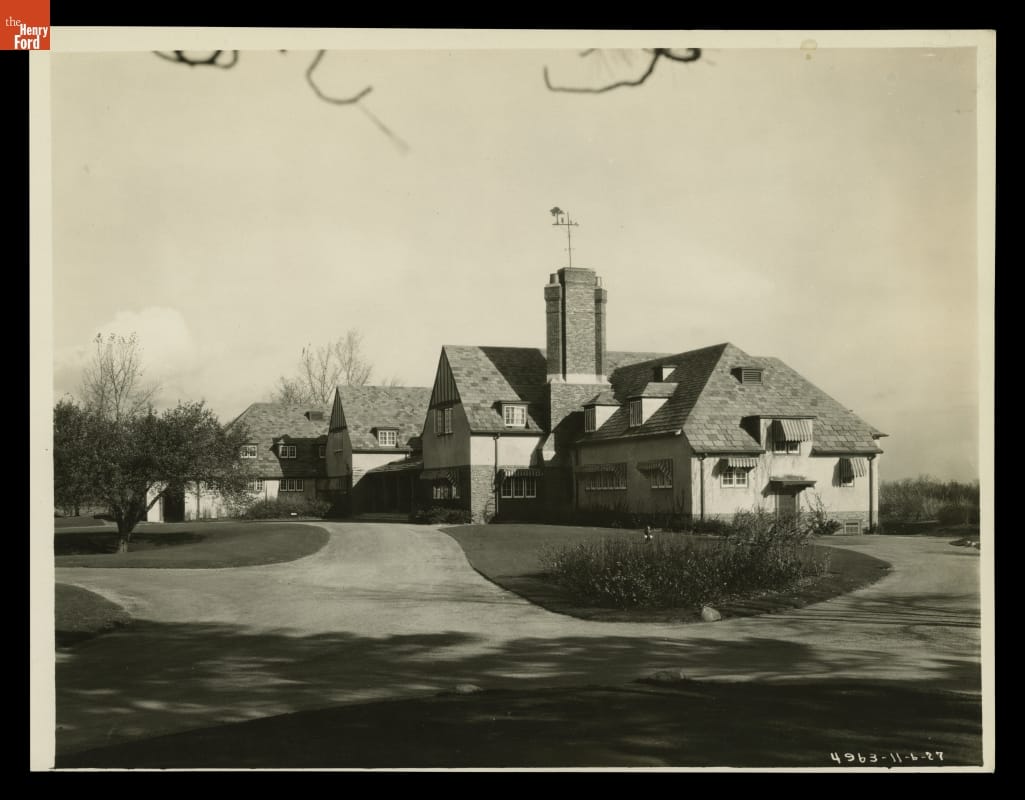
- Dearborn Country Club, Dearborn, Michigan, 1927 - Henry Ford established the Dearborn Country Club, with an 18-hole golf course and a clubhouse designed by Albert Kahn, in 1925. Ford himself was not a golfer, but the club helped attract and keep executive talent at Ford Motor Company's Dearborn, Michigan, offices. Club members purchased the facility from Ford interests in 1952.
- November 06, 1927
- Collections - Artifact
Dearborn Country Club, Dearborn, Michigan, 1927
Henry Ford established the Dearborn Country Club, with an 18-hole golf course and a clubhouse designed by Albert Kahn, in 1925. Ford himself was not a golfer, but the club helped attract and keep executive talent at Ford Motor Company's Dearborn, Michigan, offices. Club members purchased the facility from Ford interests in 1952.