
Search
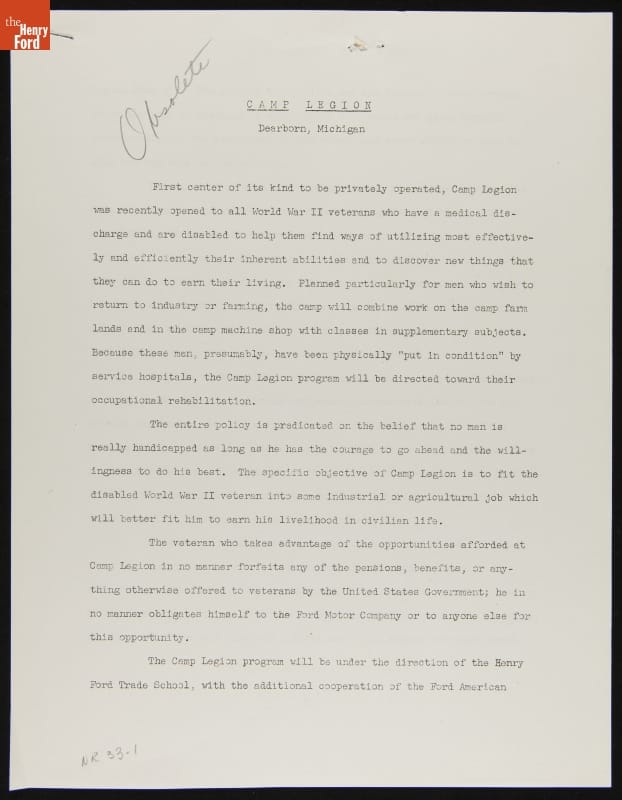
- Camp Legion Opened to Give Occupational Rehabilitation to Disabled Veterans, Ford Press Release, 1944 - Henry Ford opened Camp Legion, near Dearborn, Michigan, in 1938 for sons of dead or disabled World War I veterans. The young men earned steady wages working there seasonally from April-November. The camp's mission was modified in 1944 to include rehabilitation of World War II veterans with disabilities. Veterans learned new skills to help them reenter the workforce.
- 1944
- Collections - Artifact
Camp Legion Opened to Give Occupational Rehabilitation to Disabled Veterans, Ford Press Release, 1944
Henry Ford opened Camp Legion, near Dearborn, Michigan, in 1938 for sons of dead or disabled World War I veterans. The young men earned steady wages working there seasonally from April-November. The camp's mission was modified in 1944 to include rehabilitation of World War II veterans with disabilities. Veterans learned new skills to help them reenter the workforce.
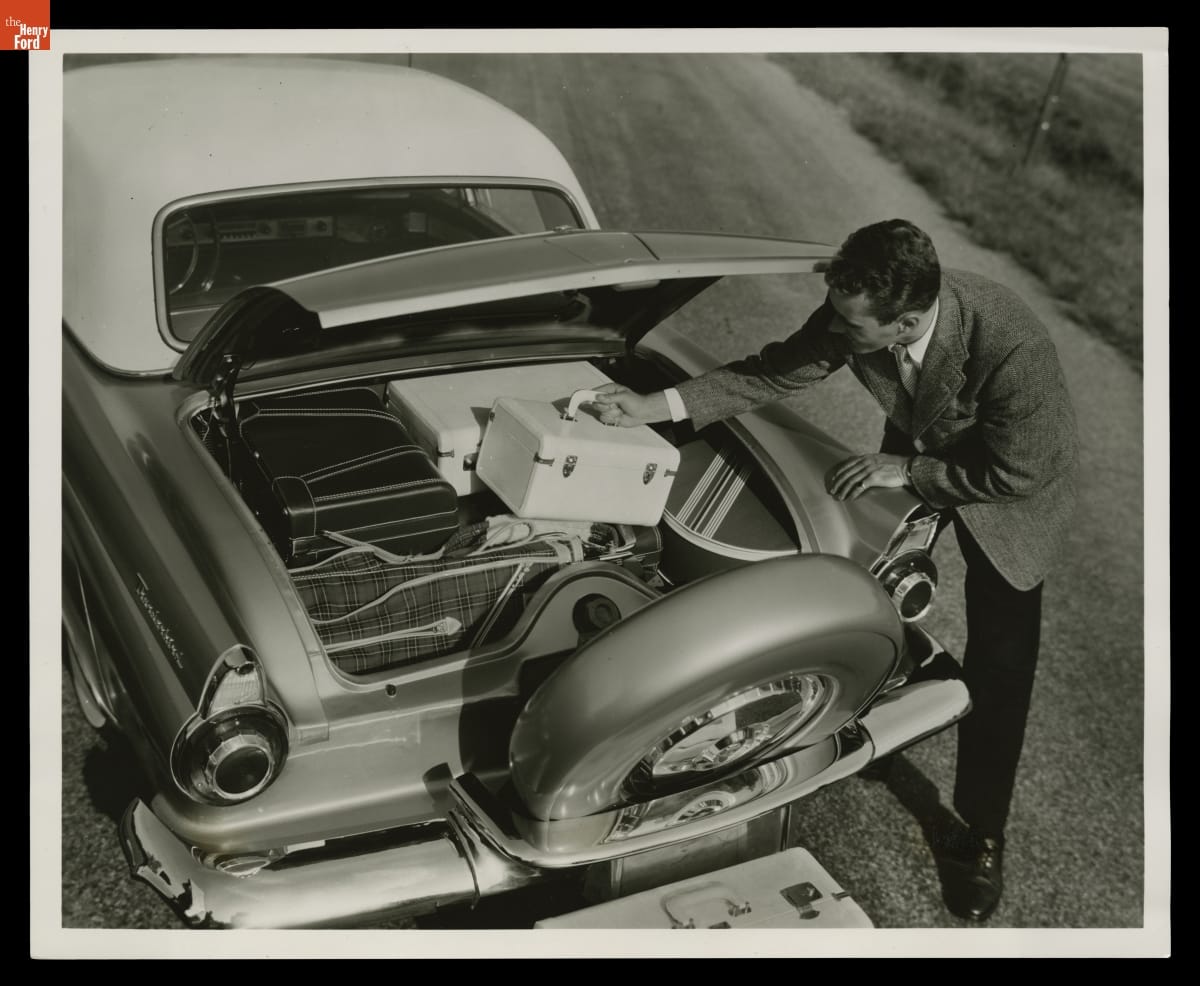
- Man Demonstrating Increased Luggage Space in 1956 Ford Thunderbird, May 1955 - Ford Motor Company introduced the Thunderbird, its two-seat "personal car," for 1955. The next year's model shared the same body, but the spare tire was moved outside to make more room in the trunk. The 1956 Thunderbird's 292-cubic-inch base V-8 produced 200 horsepower, and the car's factory price started at $3,151. Total Thunderbird production for the year was 15,631 units.
- May 31, 1955
- Collections - Artifact
Man Demonstrating Increased Luggage Space in 1956 Ford Thunderbird, May 1955
Ford Motor Company introduced the Thunderbird, its two-seat "personal car," for 1955. The next year's model shared the same body, but the spare tire was moved outside to make more room in the trunk. The 1956 Thunderbird's 292-cubic-inch base V-8 produced 200 horsepower, and the car's factory price started at $3,151. Total Thunderbird production for the year was 15,631 units.
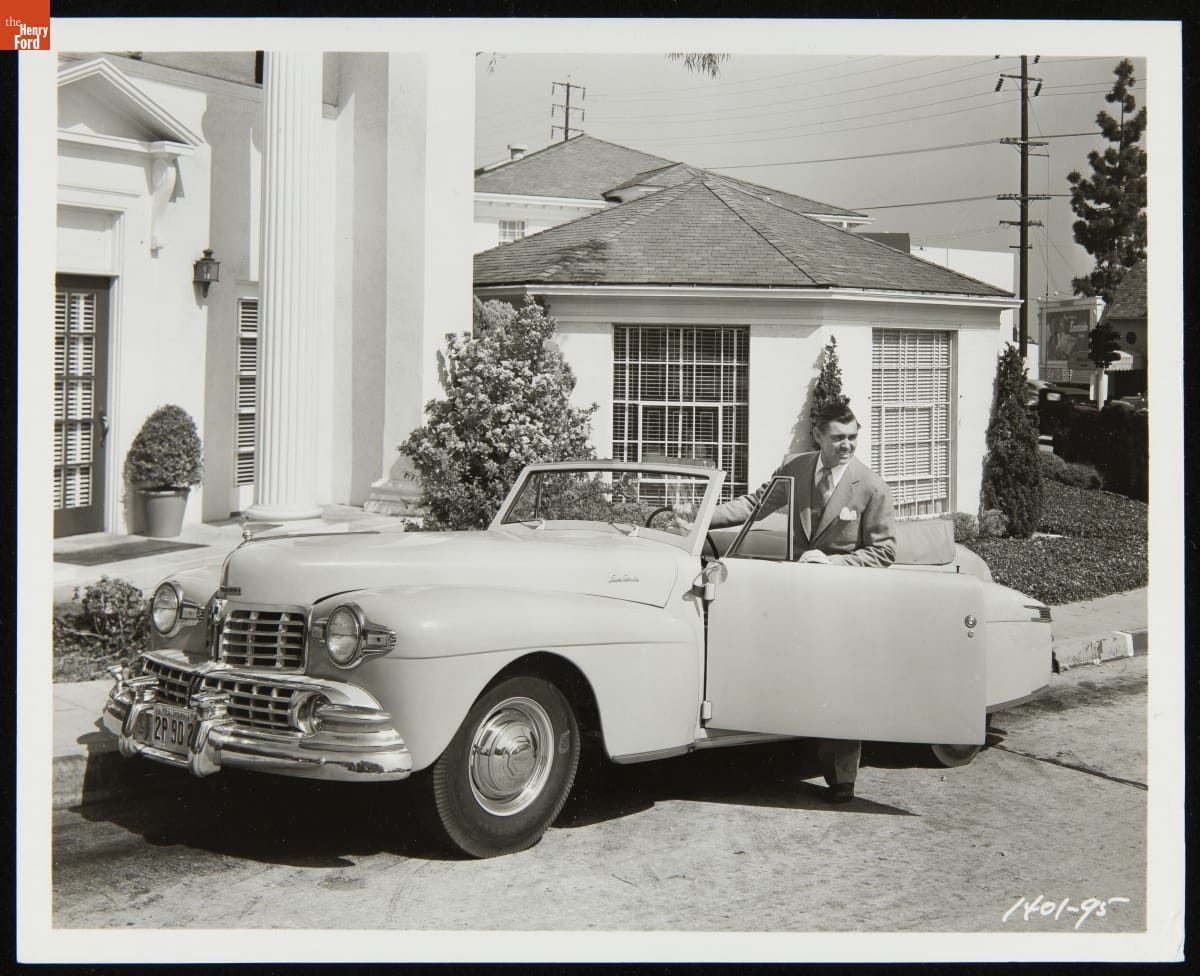
- Clark Gable Stepping into His Lincoln Continental in the MGM Film "The Hucksters," 1947 - Actor Clark Gable posed with a Lincoln Continental used in his 1947 film <em>The Hucksters</em>. Automakers were always happy to have one of their cars featured prominently in a hit movie. It was terrific advertising and, before television, the only kind of mass media ad that could show a car in motion.
- 1947
- Collections - Artifact
Clark Gable Stepping into His Lincoln Continental in the MGM Film "The Hucksters," 1947
Actor Clark Gable posed with a Lincoln Continental used in his 1947 film The Hucksters. Automakers were always happy to have one of their cars featured prominently in a hit movie. It was terrific advertising and, before television, the only kind of mass media ad that could show a car in motion.
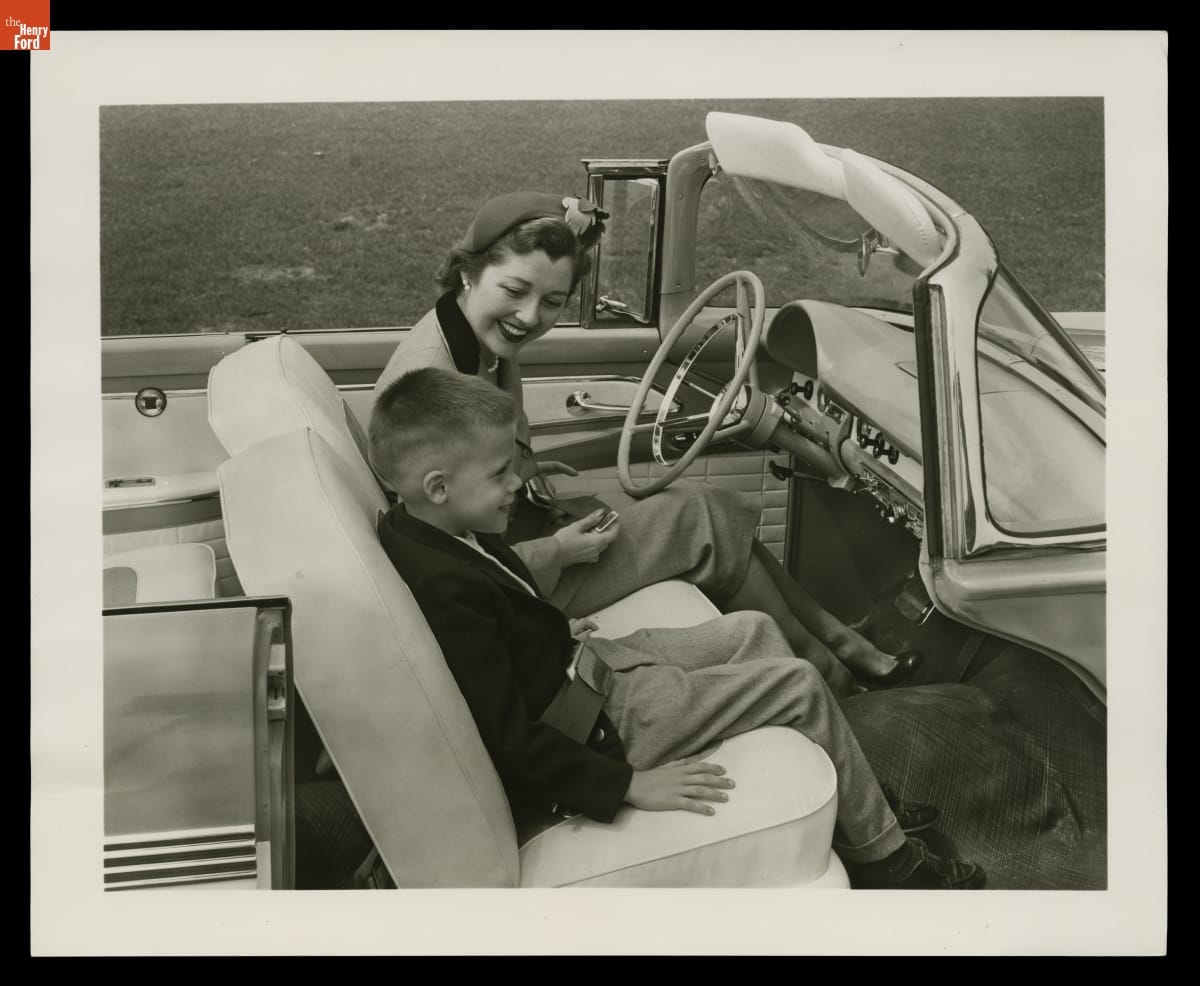
- Mother and Son Demonstrating Safety Features of 1956 Ford Fairlane Sunliner Convertible, 1955 - Ford made safety a central feature of its 1956 models with the "Lifeguard" campaign. Seat belts were a $9 option, and breakaway rear-view mirrors, reinforced door locks, padded dashboards, and steering wheels with recessed hubs were also available. Safety became an increasingly important concern for automakers, government regulators, and customers in the following decade.
- September 20, 1955
- Collections - Artifact
Mother and Son Demonstrating Safety Features of 1956 Ford Fairlane Sunliner Convertible, 1955
Ford made safety a central feature of its 1956 models with the "Lifeguard" campaign. Seat belts were a $9 option, and breakaway rear-view mirrors, reinforced door locks, padded dashboards, and steering wheels with recessed hubs were also available. Safety became an increasingly important concern for automakers, government regulators, and customers in the following decade.
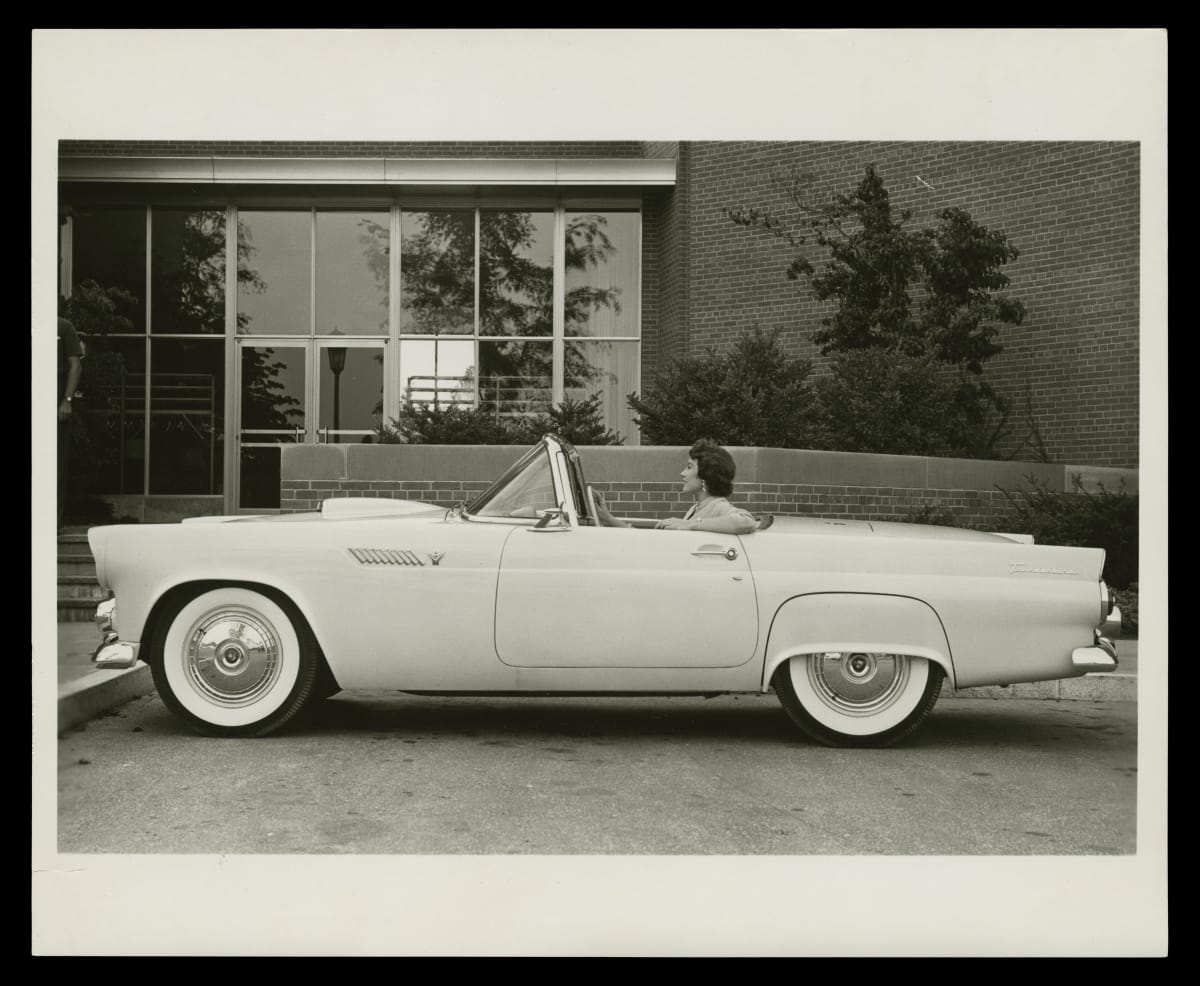
- 1955 Ford Thunderbird Convertible, June 1954 - Ford Motor Company introduced Thunderbird for 1955. The two-seat convertible came in response to Chevrolet's Corvette, which arrived two years earlier. Thunderbird was a personal luxury car boasting the look and V-8 power of a sports car, but with a more refined interior and a variety of power-assist options. Ford built more than 16,000 Thunderbirds in that first model year.
- June 01, 1954
- Collections - Artifact
1955 Ford Thunderbird Convertible, June 1954
Ford Motor Company introduced Thunderbird for 1955. The two-seat convertible came in response to Chevrolet's Corvette, which arrived two years earlier. Thunderbird was a personal luxury car boasting the look and V-8 power of a sports car, but with a more refined interior and a variety of power-assist options. Ford built more than 16,000 Thunderbirds in that first model year.
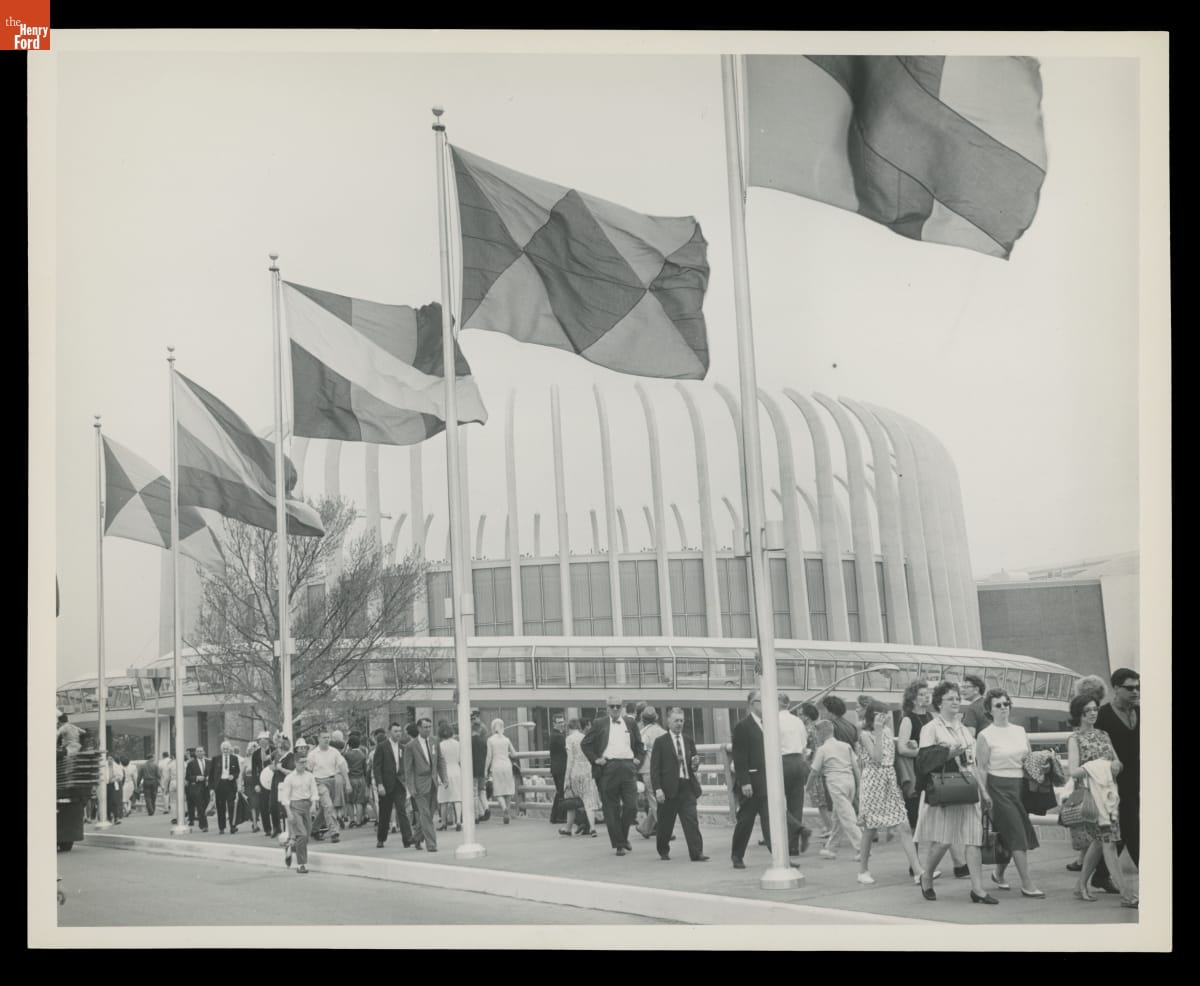
- Crowd outside the Ford Wonder Rotunda at the New York World's Fair, 1964-1965 - Ford Motor Company brought in Walt Disney to design exhibits for its pavilion at the 1964-1965 New York World's Fair. Visitors waited in long lines for this "unique and memorable entertainment adventure." Once inside, fairgoers encountered displays focusing on Ford's history, global influence, and current products. The highlight was the Magic Skyway ride, in which guests sat in Ford convertibles through a Disney-designed show.
- 1964-1965
- Collections - Artifact
Crowd outside the Ford Wonder Rotunda at the New York World's Fair, 1964-1965
Ford Motor Company brought in Walt Disney to design exhibits for its pavilion at the 1964-1965 New York World's Fair. Visitors waited in long lines for this "unique and memorable entertainment adventure." Once inside, fairgoers encountered displays focusing on Ford's history, global influence, and current products. The highlight was the Magic Skyway ride, in which guests sat in Ford convertibles through a Disney-designed show.
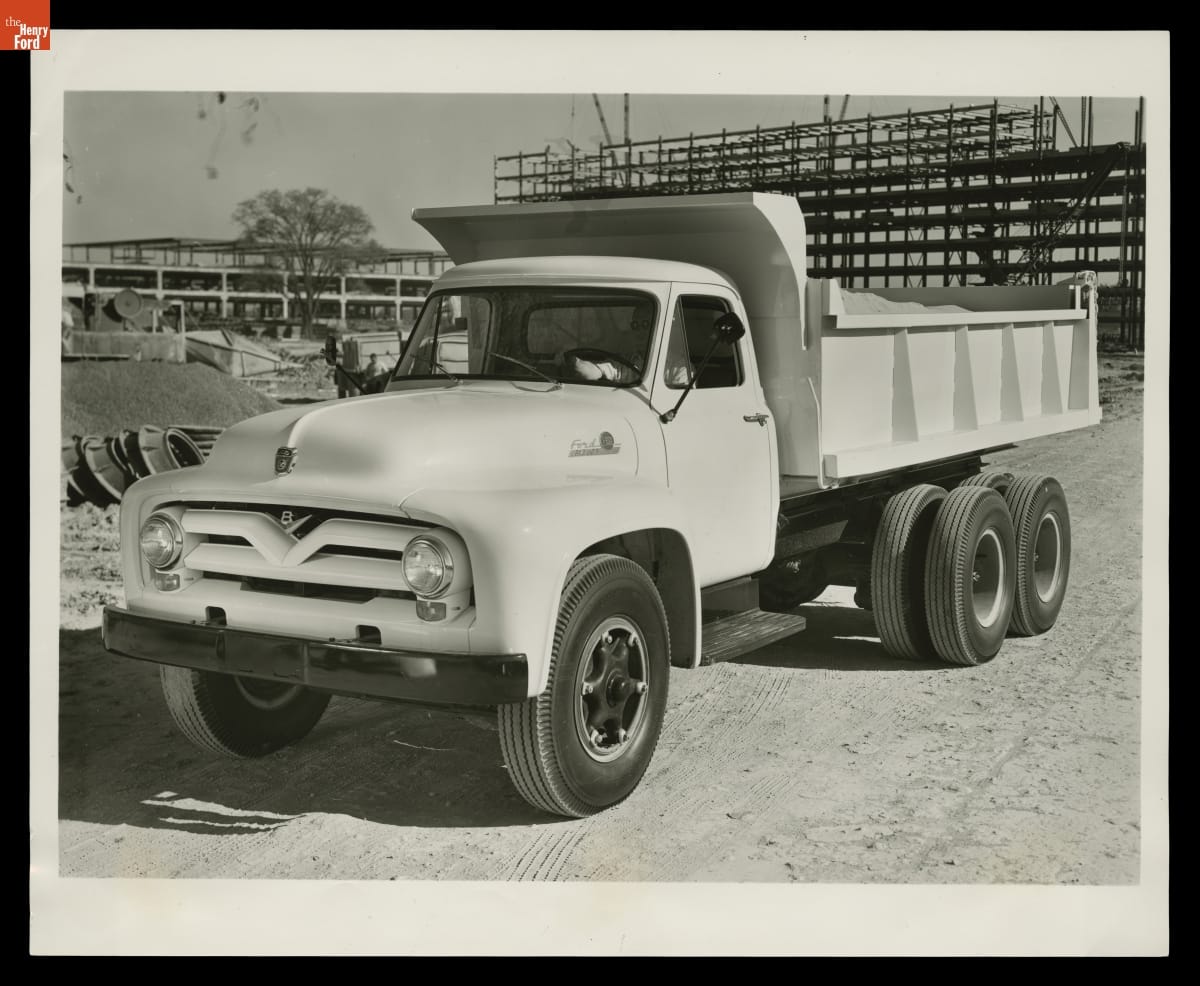
- 1955 Ford T-800 "Big Job" Dump Truck - Ford began marketing its larger commercial trucks under the "Big Job" name for 1951. These brutish vehicles were designed for difficult assignments like logging, heavy hauling, and dumping. The 1955 model T-800 dump truck in this photo boasted dual rear axles, a powerful "Cargo King" V-8 engine, and -- per Ford advertising -- a "more comfortable full foam rubber seat" in the cab.
- November 09, 1954
- Collections - Artifact
1955 Ford T-800 "Big Job" Dump Truck
Ford began marketing its larger commercial trucks under the "Big Job" name for 1951. These brutish vehicles were designed for difficult assignments like logging, heavy hauling, and dumping. The 1955 model T-800 dump truck in this photo boasted dual rear axles, a powerful "Cargo King" V-8 engine, and -- per Ford advertising -- a "more comfortable full foam rubber seat" in the cab.
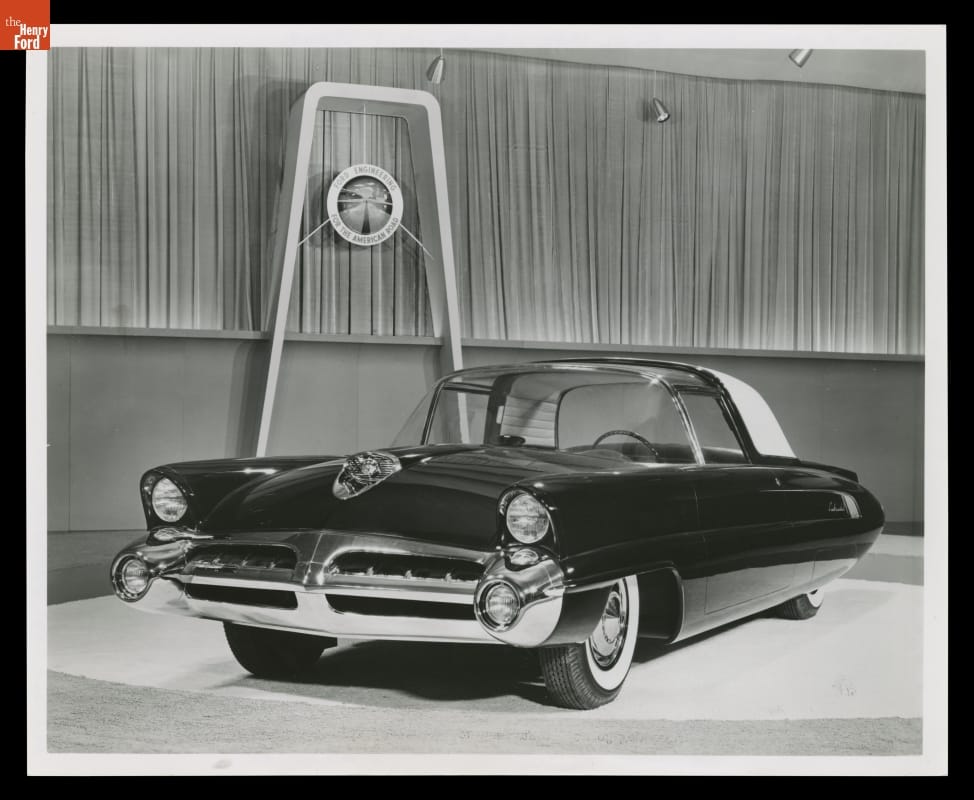
- Lincoln Continental "Nineteen Fifty X" Concept Car, 1952 - Ford revealed the Lincoln Continental Nineteen Fifty X in January 1952. The futuristic concept car was soon renamed the Ford X-100 and used to promote the company's 50th anniversary. Many of its design cues made their way onto production automobiles. The X-100's hooded headlights were used on Lincoln's 1956-1957 models, and its small tailfins and rocket-like taillights appeared on 1961-1963 Thunderbirds.
- January 10, 1952
- Collections - Artifact
Lincoln Continental "Nineteen Fifty X" Concept Car, 1952
Ford revealed the Lincoln Continental Nineteen Fifty X in January 1952. The futuristic concept car was soon renamed the Ford X-100 and used to promote the company's 50th anniversary. Many of its design cues made their way onto production automobiles. The X-100's hooded headlights were used on Lincoln's 1956-1957 models, and its small tailfins and rocket-like taillights appeared on 1961-1963 Thunderbirds.
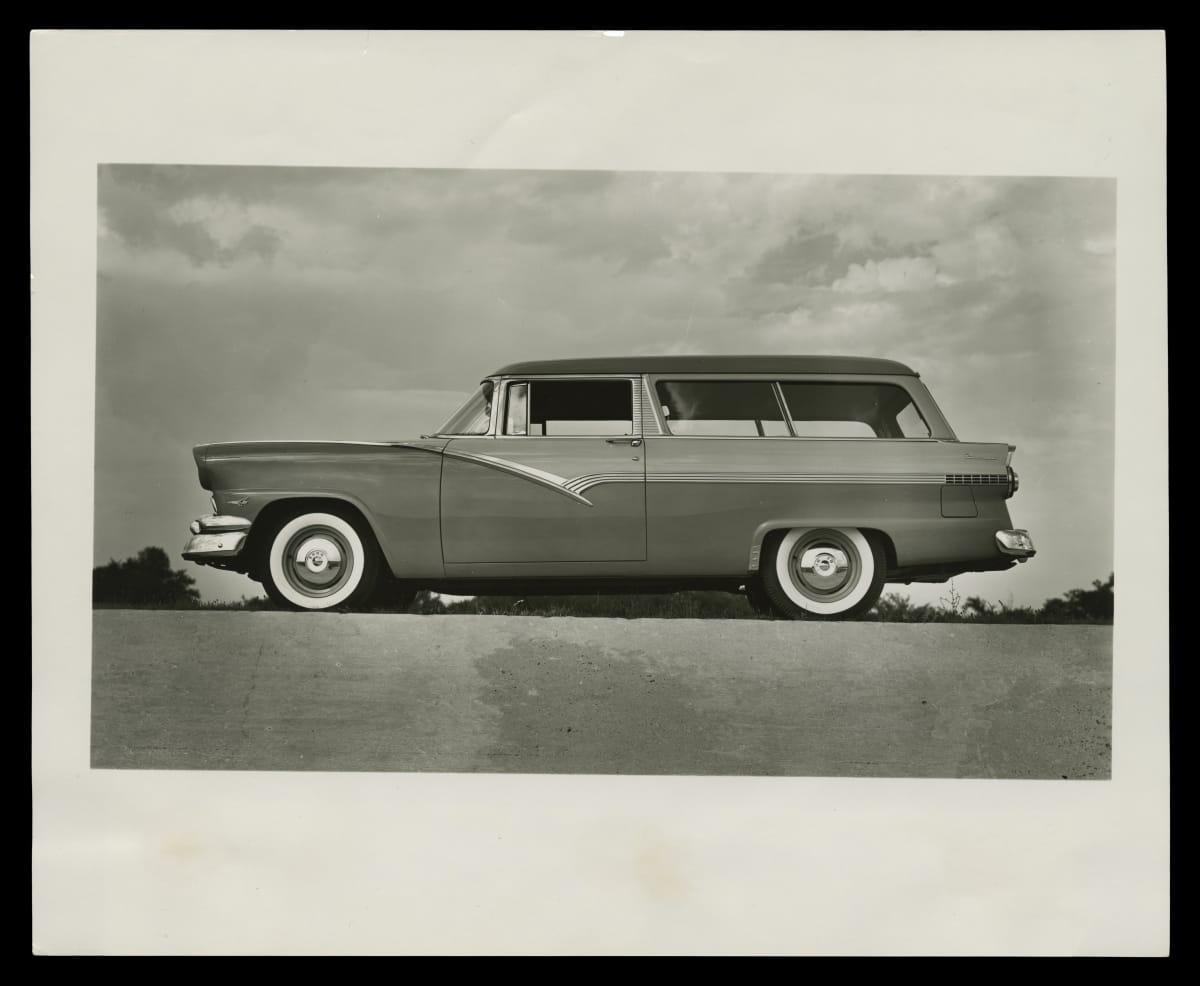
- Ford Parklane Station Wagon, September 1956 - Ford station wagons mostly fit into three trim levels for 1956: the basic Ranch Wagon, the mid-price Country Sedan, and the top-of-the-line Country Squire. All were available with either six-cylinder or V-8 engines. Country Squire wagons only came with four doors. Customers seeking an upscale two-door wagon could choose the Ford Parklane, offered for 1956 only.
- September 20, 1955
- Collections - Artifact
Ford Parklane Station Wagon, September 1956
Ford station wagons mostly fit into three trim levels for 1956: the basic Ranch Wagon, the mid-price Country Sedan, and the top-of-the-line Country Squire. All were available with either six-cylinder or V-8 engines. Country Squire wagons only came with four doors. Customers seeking an upscale two-door wagon could choose the Ford Parklane, offered for 1956 only.
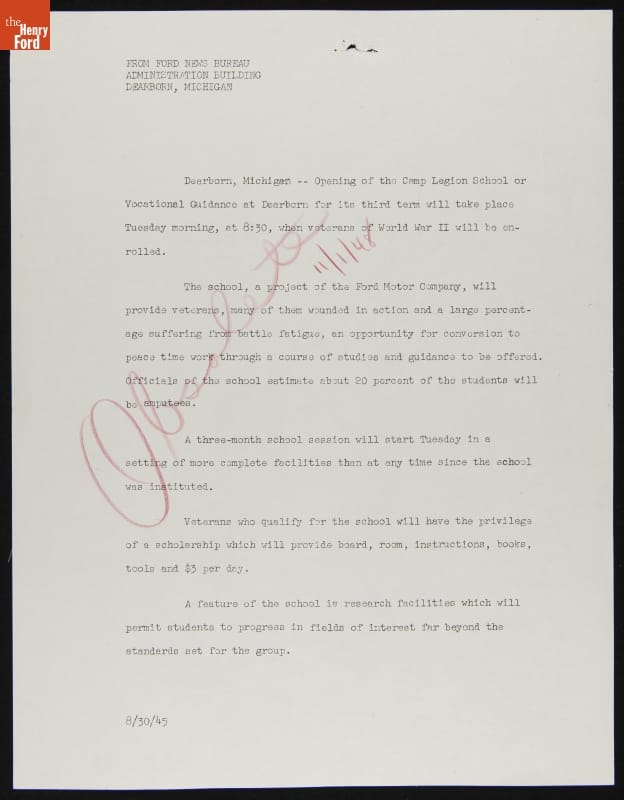
- Camp Legion School Third Term Begins, Ford Press Release, Auguat 1945 - Henry Ford opened Camp Legion, near Dearborn, Michigan, in 1938 for sons of dead or disabled World War I veterans. The young men earned steady wages working there seasonally from April-November. The camp's mission was modified in 1944 to include rehabilitation of World War II veterans with disabilities. Veterans learned new skills to help them reenter the workforce.
- August 30, 1945
- Collections - Artifact
Camp Legion School Third Term Begins, Ford Press Release, Auguat 1945
Henry Ford opened Camp Legion, near Dearborn, Michigan, in 1938 for sons of dead or disabled World War I veterans. The young men earned steady wages working there seasonally from April-November. The camp's mission was modified in 1944 to include rehabilitation of World War II veterans with disabilities. Veterans learned new skills to help them reenter the workforce.