
Search
- Tattoo Stencils, 1920-1922 - Tattoo stencils range in material from disposable paper to plastic. Designs were drawn on transfer paper or scratched into plastic with a needle. With plastic stencils, powdered charcoal was rubbed into the lines; Vaseline was applied to the skin. When the stencil was pressed against the skin, the charcoal transferred as an outline. Stencils allowed tattooists to circulate and exchange ideas.
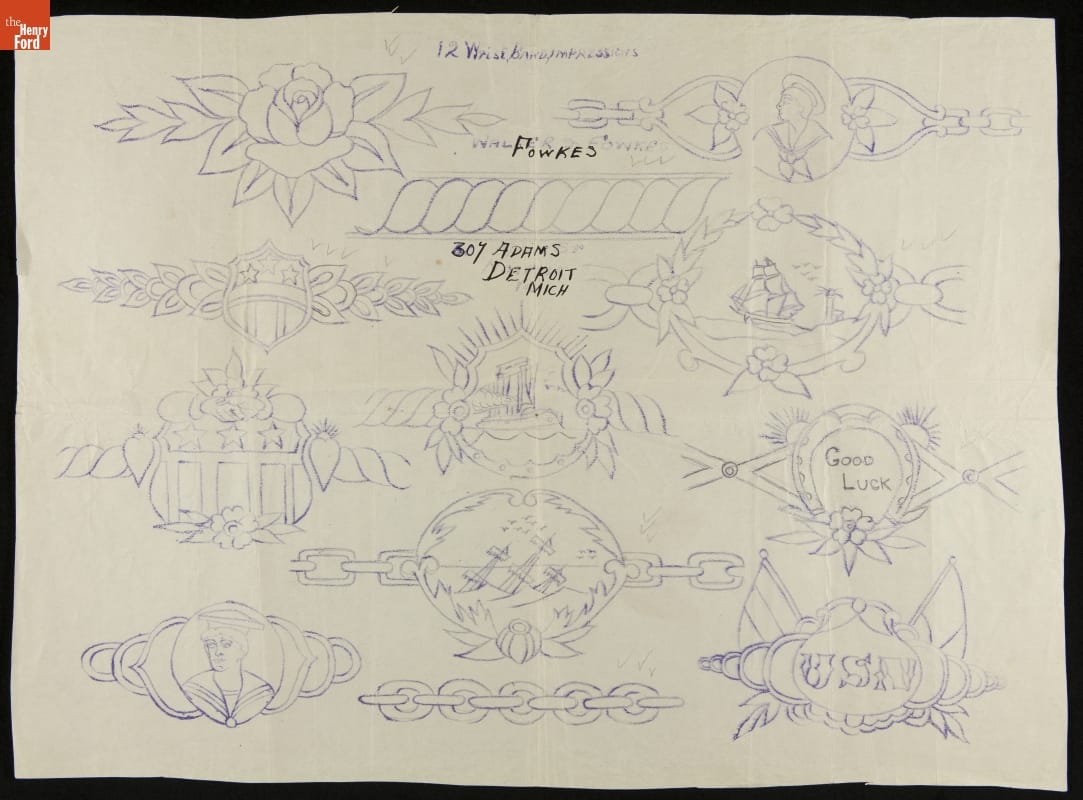
- 1920-1922
- Collections - Artifact
Tattoo Stencils, 1920-1922
Tattoo stencils range in material from disposable paper to plastic. Designs were drawn on transfer paper or scratched into plastic with a needle. With plastic stencils, powdered charcoal was rubbed into the lines; Vaseline was applied to the skin. When the stencil was pressed against the skin, the charcoal transferred as an outline. Stencils allowed tattooists to circulate and exchange ideas.
- Tattoo Stencils, 1923-1926 - Tattoo stencils range in material from disposable paper to plastic. Designs were drawn on transfer paper or scratched into plastic with a needle. With plastic stencils, powdered charcoal was rubbed into the lines; Vaseline was applied to the skin. When the stencil was pressed against the skin, the charcoal transferred as an outline. Stencils allowed tattooists to circulate and exchange ideas.
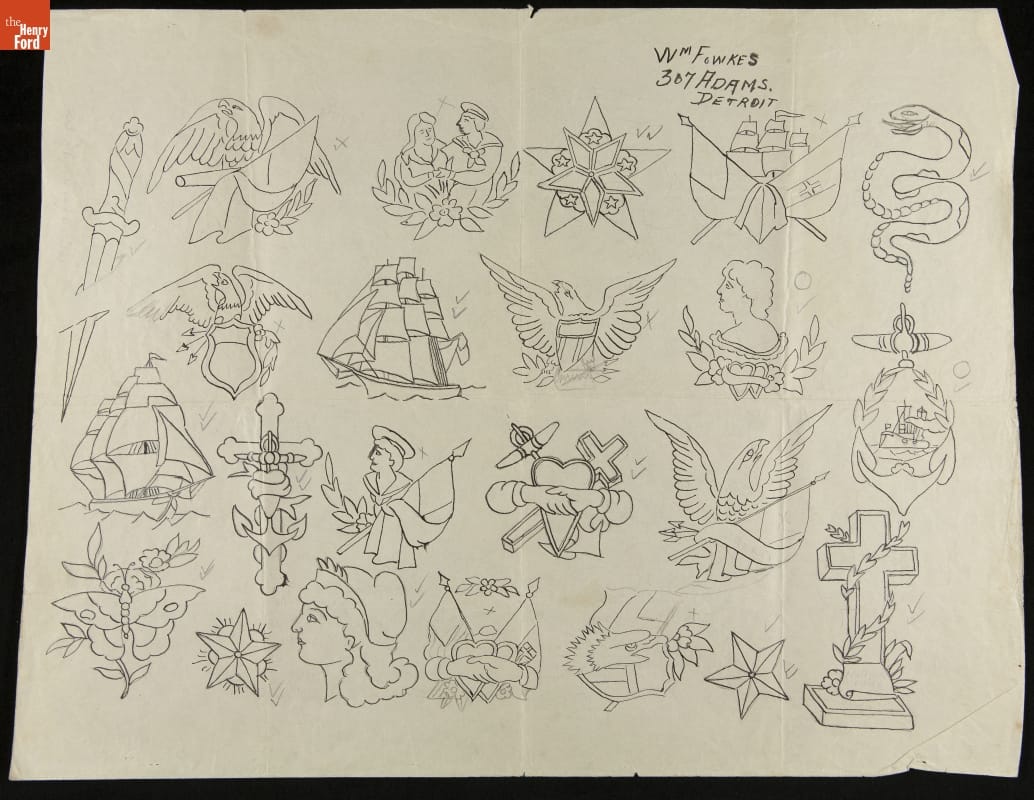
- 1923-1926
- Collections - Artifact
Tattoo Stencils, 1923-1926
Tattoo stencils range in material from disposable paper to plastic. Designs were drawn on transfer paper or scratched into plastic with a needle. With plastic stencils, powdered charcoal was rubbed into the lines; Vaseline was applied to the skin. When the stencil was pressed against the skin, the charcoal transferred as an outline. Stencils allowed tattooists to circulate and exchange ideas.