
Search
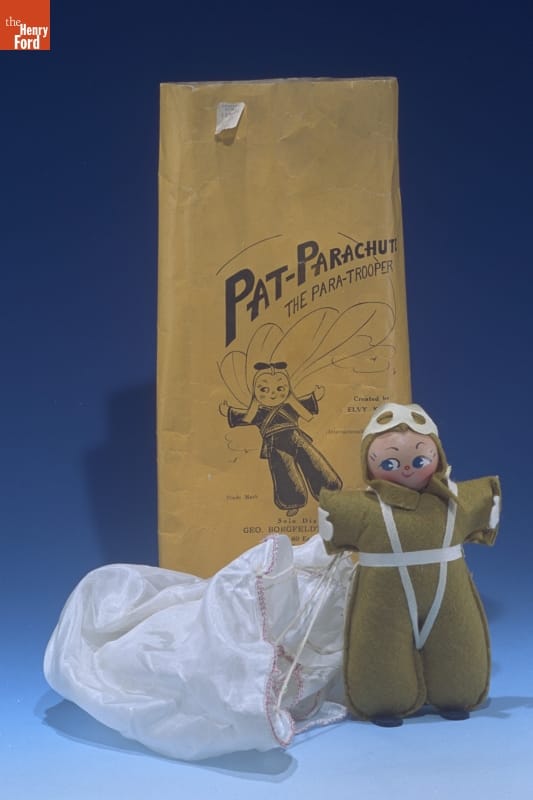
- Pat-Parachute: the Para-Trooper, 1942-1945 - Military toys and play sets became particularly popular during and just after World War II. With material shortages during the war, toymakers used their ingenuity to create products of wood, cardboard, and paper, such as this set, which was produced when the use of metal and rubber was restricted. Elvy Kalep, this toy's designer, was a female aviator.
- 1942-1945
- Collections - Artifact
Pat-Parachute: the Para-Trooper, 1942-1945
Military toys and play sets became particularly popular during and just after World War II. With material shortages during the war, toymakers used their ingenuity to create products of wood, cardboard, and paper, such as this set, which was produced when the use of metal and rubber was restricted. Elvy Kalep, this toy's designer, was a female aviator.
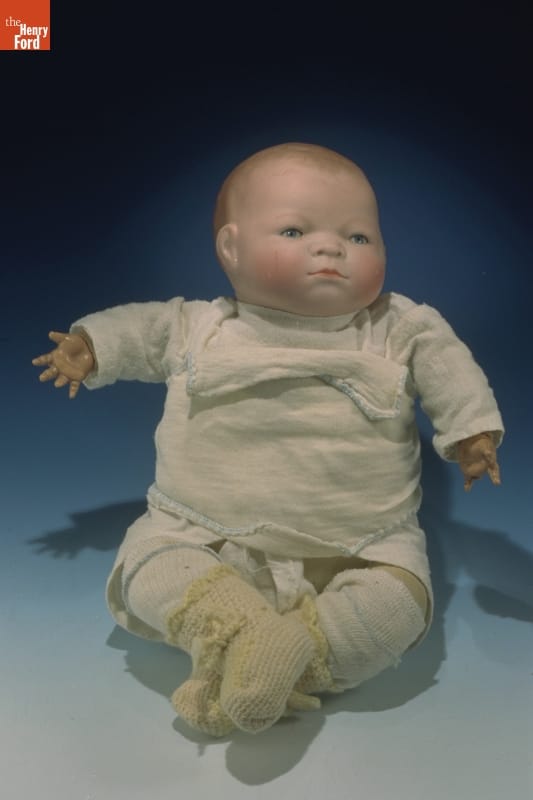
- Bye-Lo Baby Doll, circa 1925 - Grace Storey Putnam designed this doll to look and feel like a real three-day-old infant. But such realism was looked down upon by male industry executives. The manufacturer made design changes, smoothing facial creases and using a bisque head instead of rubber. Still, women eagerly lined up outside toy stores just before Christmas 1923 to buy the "Million Dollar Baby."
- circa 1925
- Collections - Artifact
Bye-Lo Baby Doll, circa 1925
Grace Storey Putnam designed this doll to look and feel like a real three-day-old infant. But such realism was looked down upon by male industry executives. The manufacturer made design changes, smoothing facial creases and using a bisque head instead of rubber. Still, women eagerly lined up outside toy stores just before Christmas 1923 to buy the "Million Dollar Baby."