
Search
- Trade Card for Heckers' Self Raising Buckwheat, Croton Mills, 1880-1900 - In the last third of the nineteenth century, an unprecedented variety of consumer goods flooded the American market. Some enterprising advertisers sought to distinguish their products from the competition by distributing trade cards. Special versions revealed hidden images and words when held to the light. Americans enjoyed and often saved the popular little advertisements, which survive as historical records of consumerism in the United States.
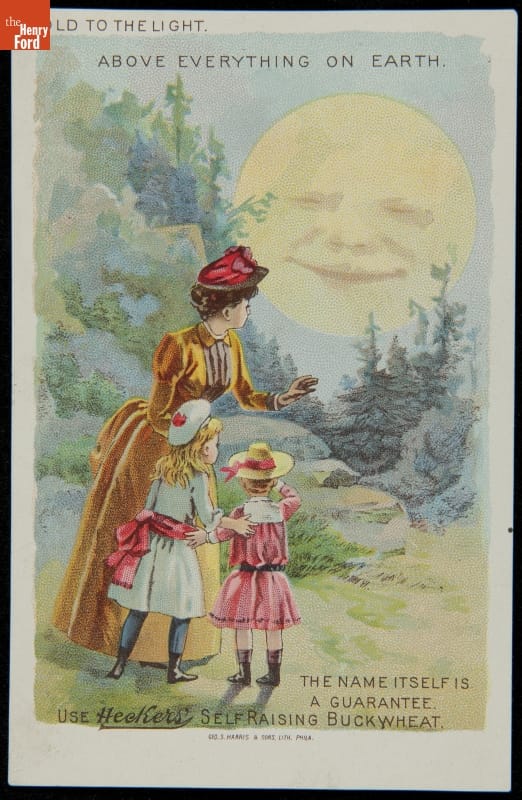
- 1880-1900
- Collections - Artifact
Trade Card for Heckers' Self Raising Buckwheat, Croton Mills, 1880-1900
In the last third of the nineteenth century, an unprecedented variety of consumer goods flooded the American market. Some enterprising advertisers sought to distinguish their products from the competition by distributing trade cards. Special versions revealed hidden images and words when held to the light. Americans enjoyed and often saved the popular little advertisements, which survive as historical records of consumerism in the United States.
- Trade Card for Heckers' Self Raising Buckwheat, Croton Mills, 1880-1900 - In the last third of the nineteenth century, an unprecedented variety of consumer goods flooded the American market. Some enterprising advertisers sought to distinguish their products from the competition by distributing trade cards. Special versions revealed hidden images and words when held to the light. Americans enjoyed and often saved the popular little advertisements, which survive as historical records of consumerism in the United States.
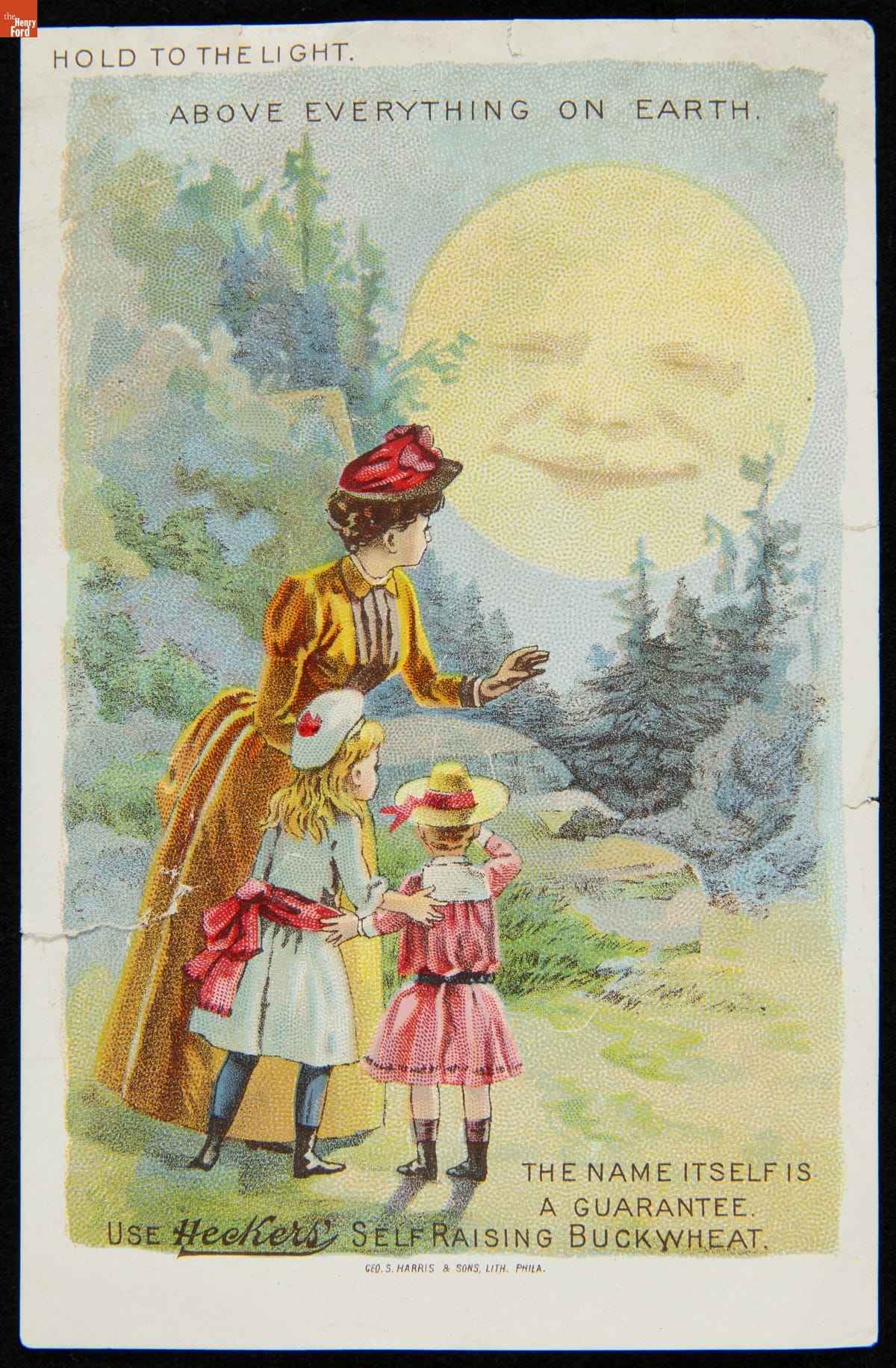
- 1880-1900
- Collections - Artifact
Trade Card for Heckers' Self Raising Buckwheat, Croton Mills, 1880-1900
In the last third of the nineteenth century, an unprecedented variety of consumer goods flooded the American market. Some enterprising advertisers sought to distinguish their products from the competition by distributing trade cards. Special versions revealed hidden images and words when held to the light. Americans enjoyed and often saved the popular little advertisements, which survive as historical records of consumerism in the United States.
- Photolithograph, "Yesterday's Game, Pennsylvania vs. Harvard. Franklin Field, Philadelphia," 1897 - During the late 19th century, colleges, high schools, and local amateur athletic clubs formed football teams to battle rivals on the field. The first football game was played in 1869 and resembled a soccer or rugby match. In the following decades, new rules formalized play and transformed the game into a more recognizable version of today's American sport.
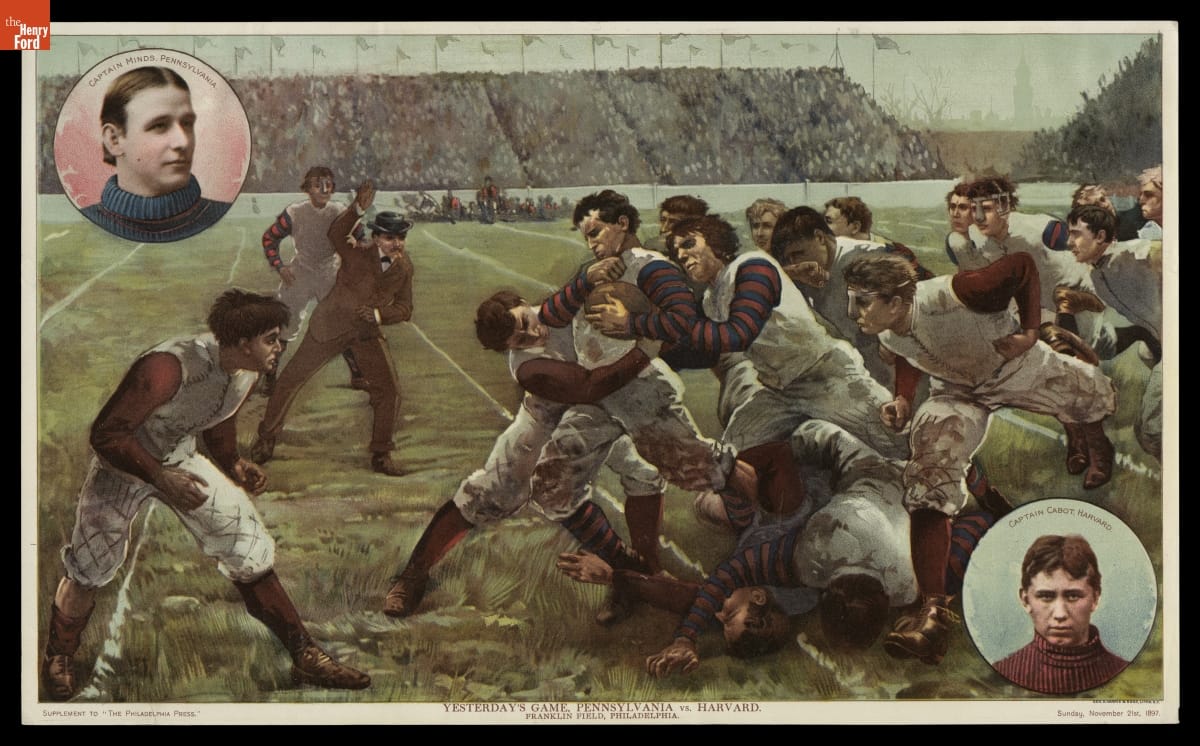
- November 21, 1897
- Collections - Artifact
Photolithograph, "Yesterday's Game, Pennsylvania vs. Harvard. Franklin Field, Philadelphia," 1897
During the late 19th century, colleges, high schools, and local amateur athletic clubs formed football teams to battle rivals on the field. The first football game was played in 1869 and resembled a soccer or rugby match. In the following decades, new rules formalized play and transformed the game into a more recognizable version of today's American sport.
- Trade Card for Pulomic Syrup, Schenk's, 1880-1900 - In the last third of the nineteenth century, an unprecedented variety of consumer goods flooded the American market. Some enterprising advertisers sought to distinguish their products from the competition by distributing trade cards. Special versions revealed hidden images and words when held to the light. Americans enjoyed and often saved the popular little advertisements, which survive as historical records of consumerism in the United States.
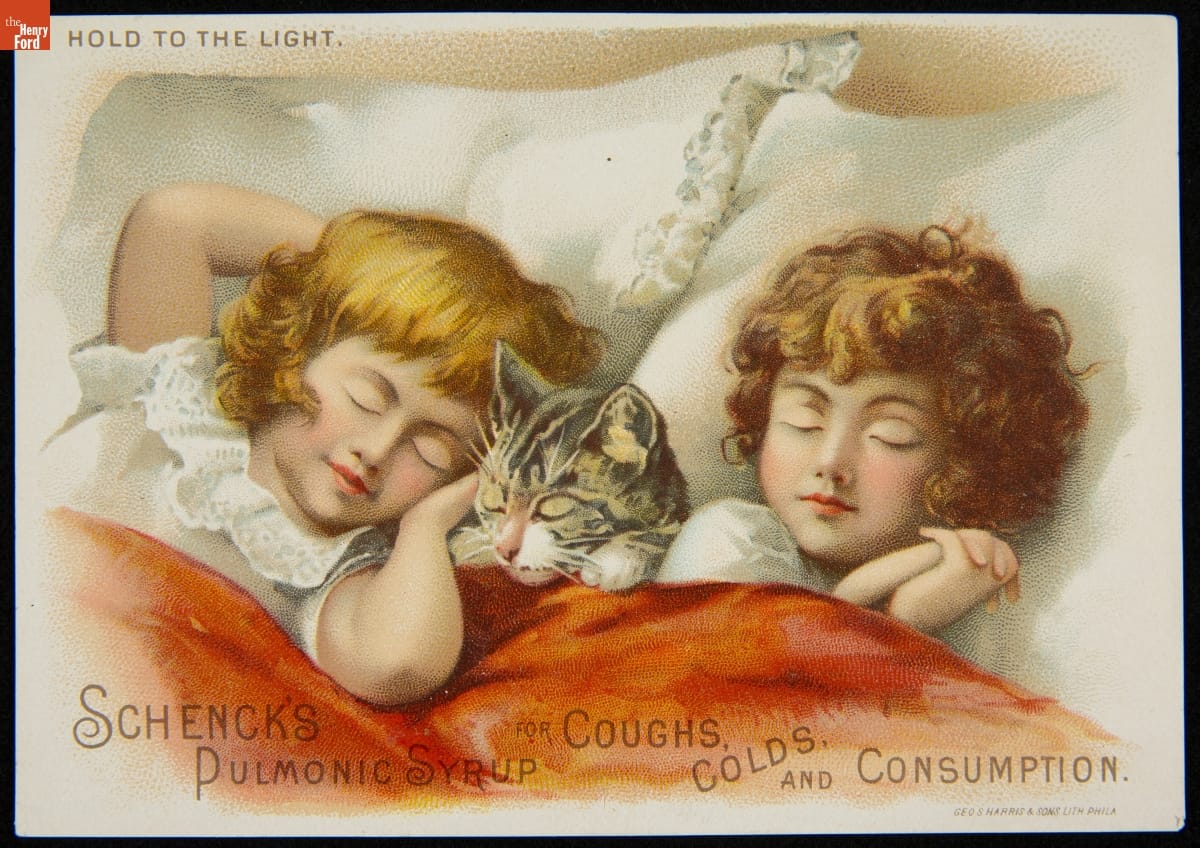
- 1880-1900
- Collections - Artifact
Trade Card for Pulomic Syrup, Schenk's, 1880-1900
In the last third of the nineteenth century, an unprecedented variety of consumer goods flooded the American market. Some enterprising advertisers sought to distinguish their products from the competition by distributing trade cards. Special versions revealed hidden images and words when held to the light. Americans enjoyed and often saved the popular little advertisements, which survive as historical records of consumerism in the United States.
- Trade Card for Ariosa Coffee, Arbuckle Bros., 1880-1900 - In the last third of the nineteenth century, an unprecedented variety of consumer goods and services flooded the American market. Advertisers, armed with new methods of color printing, bombarded potential customers with trade cards. Americans enjoyed and often saved the vibrant little advertisements found in product packages or distributed by local merchants. Many survive as historical records of commercialism in the United States.
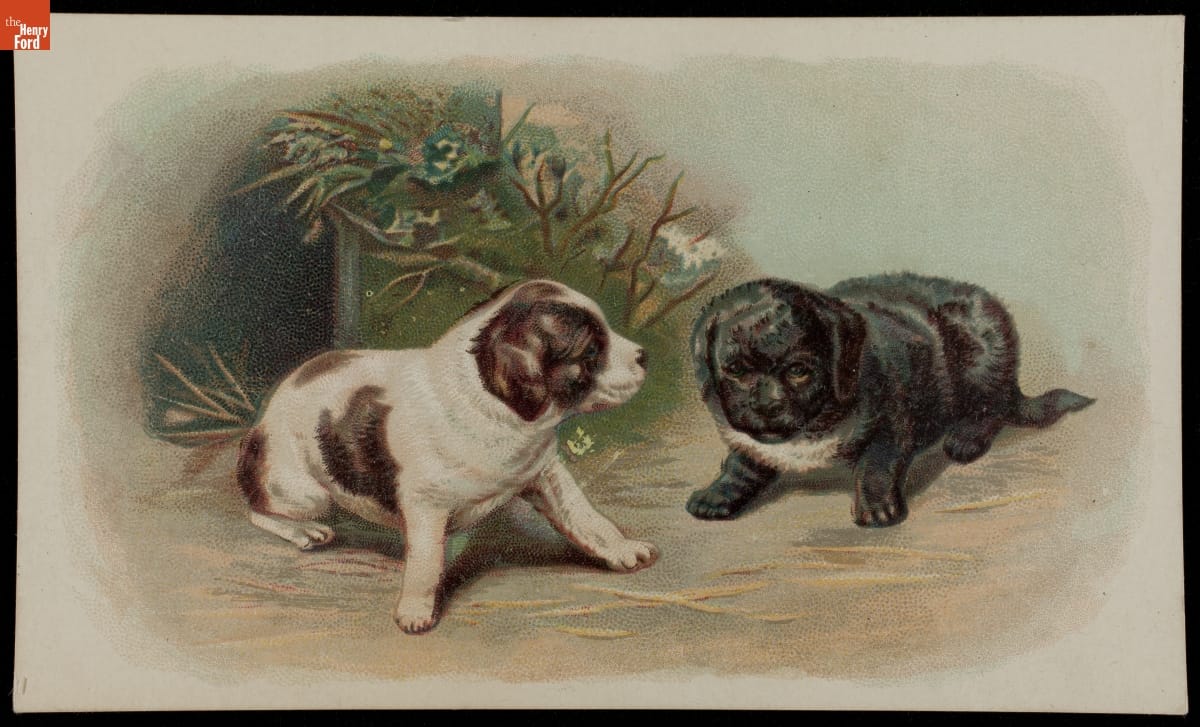
- 1880-1900
- Collections - Artifact
Trade Card for Ariosa Coffee, Arbuckle Bros., 1880-1900
In the last third of the nineteenth century, an unprecedented variety of consumer goods and services flooded the American market. Advertisers, armed with new methods of color printing, bombarded potential customers with trade cards. Americans enjoyed and often saved the vibrant little advertisements found in product packages or distributed by local merchants. Many survive as historical records of commercialism in the United States.