
Search
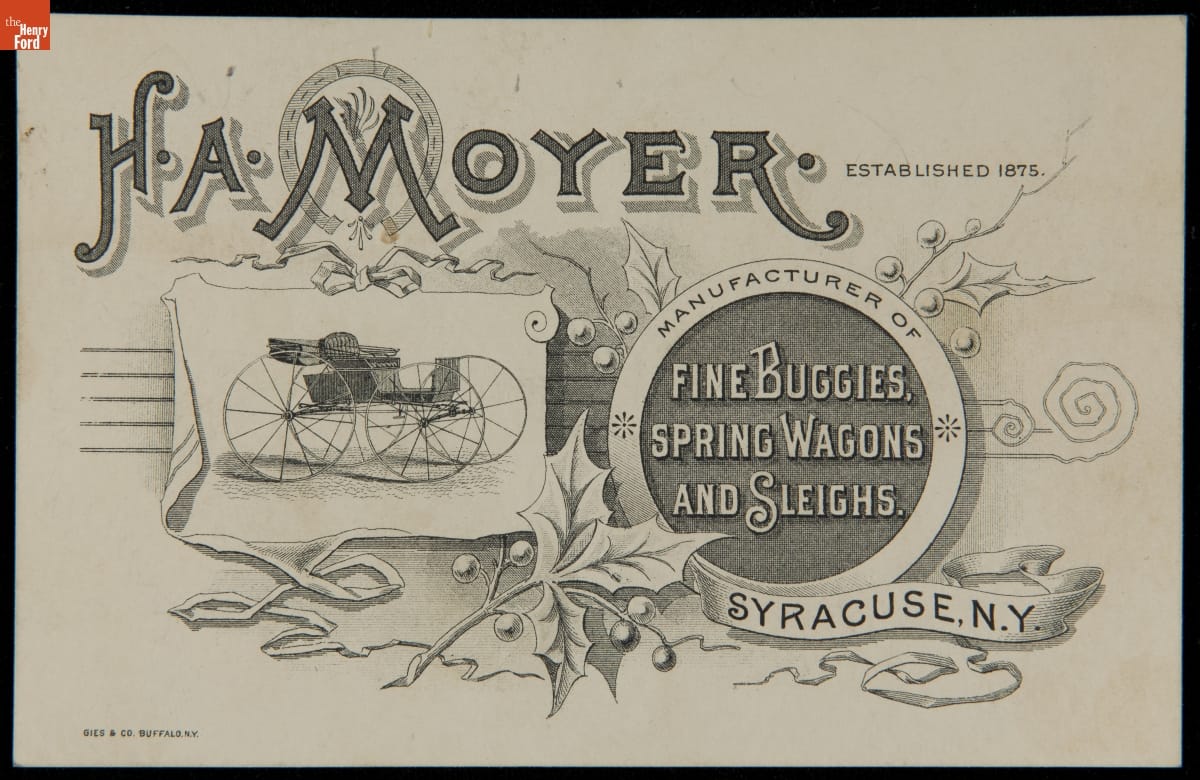
- Trade Card for H. A. Moyer, Manufacturer of Fine Buggies, Spring Wagons, and Sleighs, circa 1880 - In the last third of the nineteenth century, an unprecedented variety of consumer goods and services flooded the American market. Advertisers, armed with new methods of color printing, bombarded potential customers with trade cards. Americans enjoyed and often saved the vibrant little advertisements found in product packages or distributed by local merchants. Many survive as historical records of commercialism in the United States.
- circa 1880
- Collections - Artifact
Trade Card for H. A. Moyer, Manufacturer of Fine Buggies, Spring Wagons, and Sleighs, circa 1880
In the last third of the nineteenth century, an unprecedented variety of consumer goods and services flooded the American market. Advertisers, armed with new methods of color printing, bombarded potential customers with trade cards. Americans enjoyed and often saved the vibrant little advertisements found in product packages or distributed by local merchants. Many survive as historical records of commercialism in the United States.
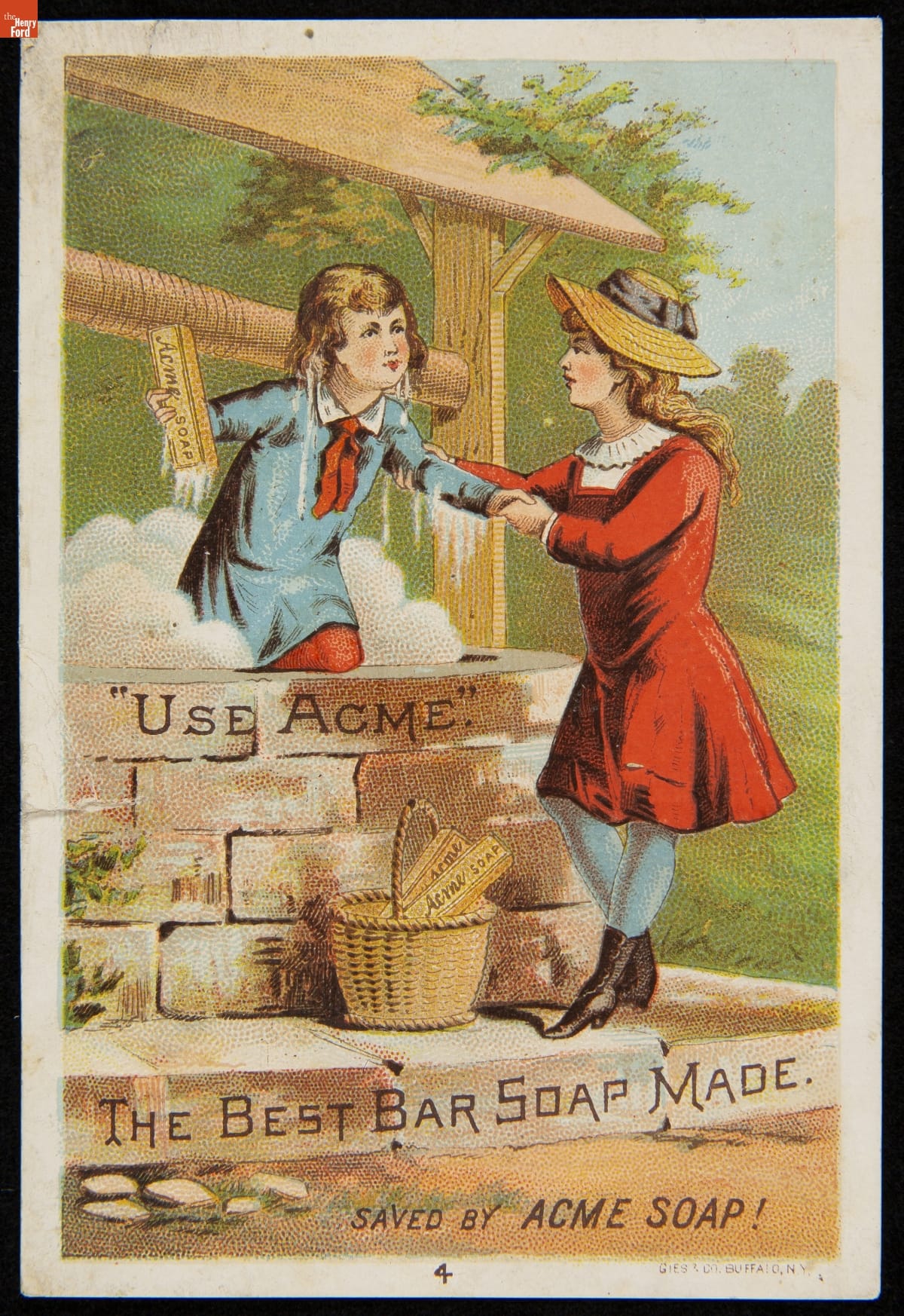
- Trade Card for Lautz Bros. & Company's Acme Towel Soap, "Saved by Acme Soap!," circa 1885 - In the last third of the nineteenth century, an unprecedented variety of consumer goods and services flooded the American market. Advertisers, armed with new methods of color printing, bombarded potential customers with trade cards. Americans enjoyed and often saved the vibrant little advertisements found in product packages or distributed by local merchants. Many survive as historical records of commercialism in the United States.
- circa 1885
- Collections - Artifact
Trade Card for Lautz Bros. & Company's Acme Towel Soap, "Saved by Acme Soap!," circa 1885
In the last third of the nineteenth century, an unprecedented variety of consumer goods and services flooded the American market. Advertisers, armed with new methods of color printing, bombarded potential customers with trade cards. Americans enjoyed and often saved the vibrant little advertisements found in product packages or distributed by local merchants. Many survive as historical records of commercialism in the United States.
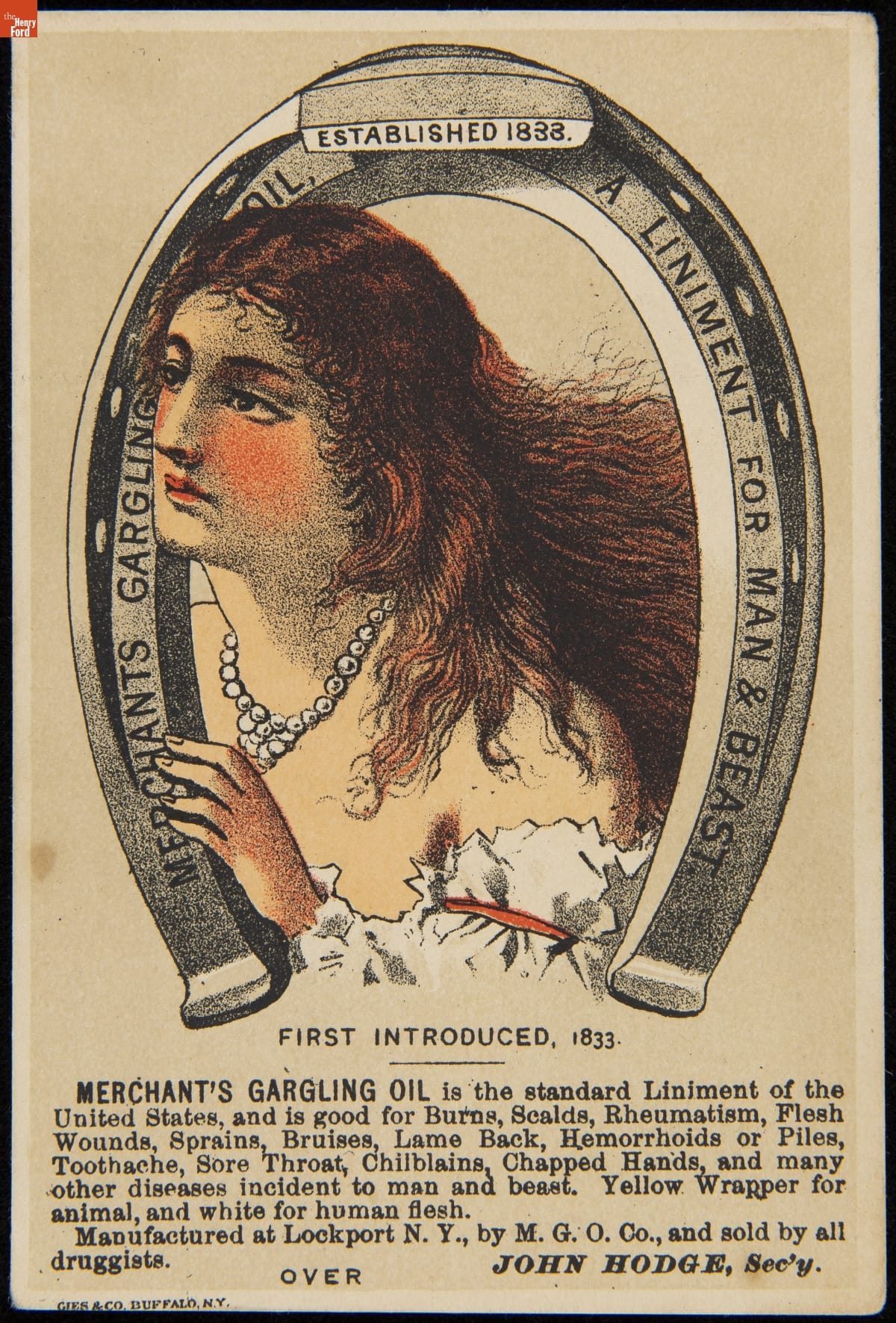
- Trade Card for Merchant's Gargling Oil, Merchant's Gargling Oil Company, circa 1880 - Dr. George Merchant founded the Merchant's Gargling Oil Company in 1833 in Lockport, New York. The company claimed the liniment (not really for "gargling") eased a variety of aches and pains common to "man and beast"--it bottled one version for humans and another for animals. In the late 1800s, the company used almanacs, songbooks, and trade cards to advertise its product.
- circa 1880
- Collections - Artifact
Trade Card for Merchant's Gargling Oil, Merchant's Gargling Oil Company, circa 1880
Dr. George Merchant founded the Merchant's Gargling Oil Company in 1833 in Lockport, New York. The company claimed the liniment (not really for "gargling") eased a variety of aches and pains common to "man and beast"--it bottled one version for humans and another for animals. In the late 1800s, the company used almanacs, songbooks, and trade cards to advertise its product.
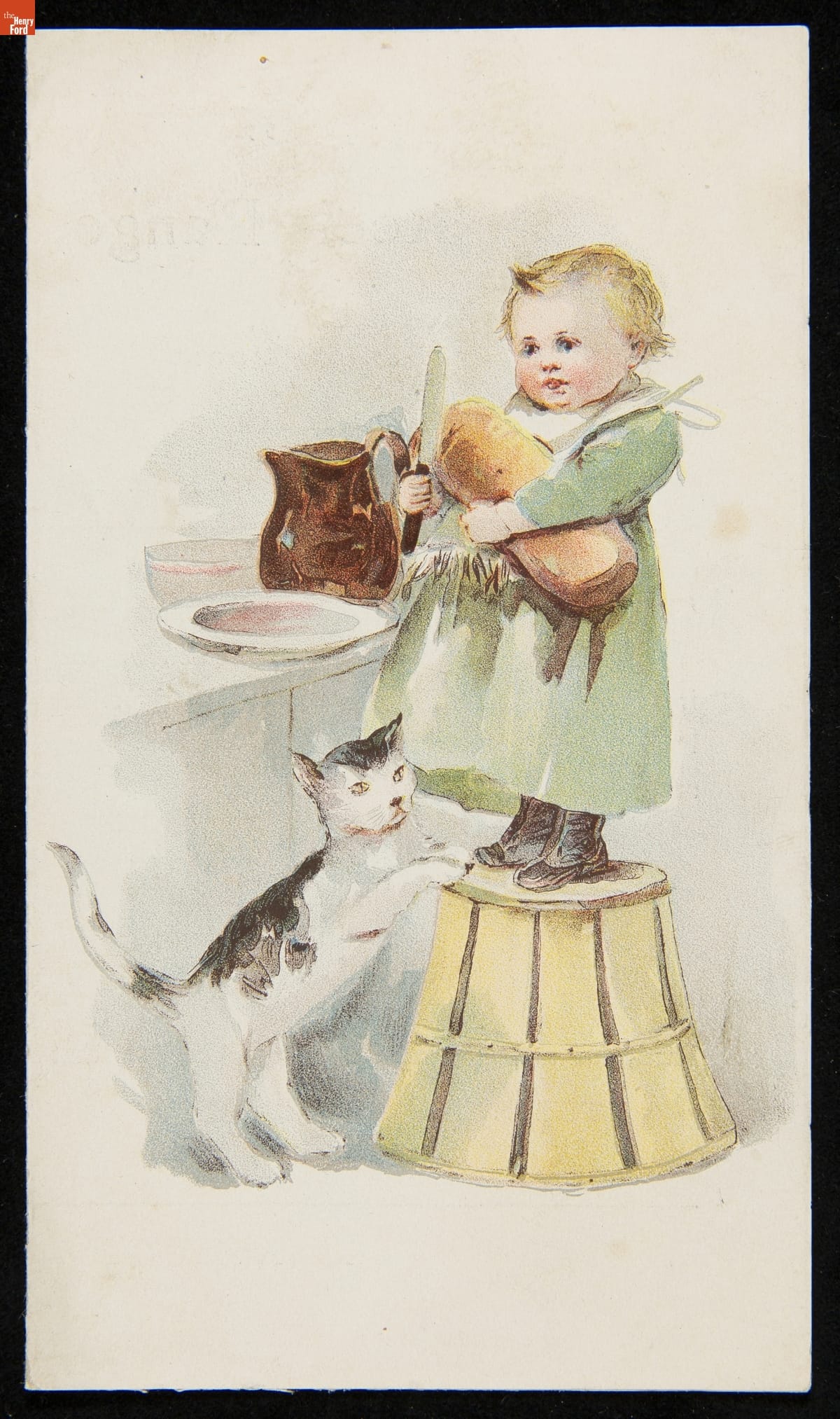
- Trade Card for the "Satisfaction" Steel Range, Michigan Stove Co., 1880-1900 - As color printing gained momentum in the late 19th century, trade cards became a major means of advertising goods and services. Americans enjoyed and often saved the little advertisements found in product packages or distributed by local merchants. This trade card unfolds to reveal information about the "Satisfaction" Steel Range made by the Michigan Stove Company.
- 1880-1900
- Collections - Artifact
Trade Card for the "Satisfaction" Steel Range, Michigan Stove Co., 1880-1900
As color printing gained momentum in the late 19th century, trade cards became a major means of advertising goods and services. Americans enjoyed and often saved the little advertisements found in product packages or distributed by local merchants. This trade card unfolds to reveal information about the "Satisfaction" Steel Range made by the Michigan Stove Company.
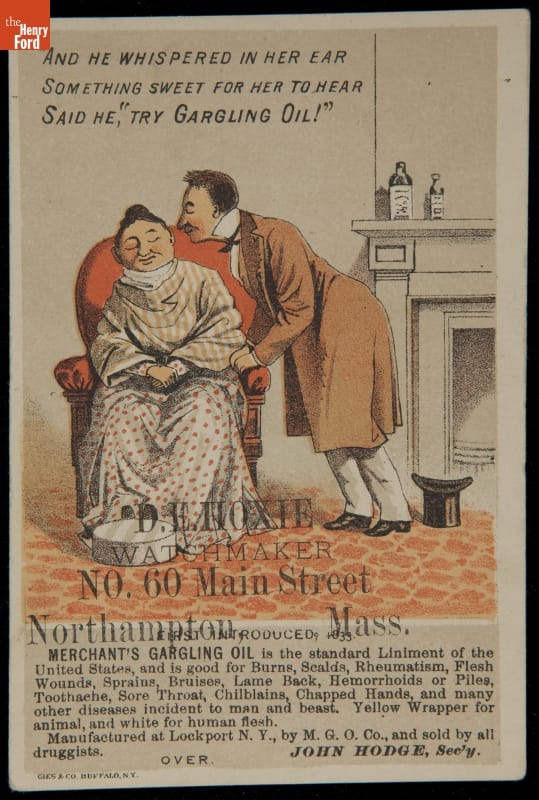
- Trade Card for Merchant's Gargling Oil and Watchmaker D.E. Hoxie, 1870-1900 - Dr. George Merchant founded the Merchant's Gargling Oil Company in 1833 in Lockport, New York. The company claimed the liniment (not really for "gargling") eased a variety of aches and pains common to "man and beast"--it bottled one version for humans and another for animals. In the late 1800s, the company used almanacs, songbooks, and trade cards to advertise its product.
- 1870-1900
- Collections - Artifact
Trade Card for Merchant's Gargling Oil and Watchmaker D.E. Hoxie, 1870-1900
Dr. George Merchant founded the Merchant's Gargling Oil Company in 1833 in Lockport, New York. The company claimed the liniment (not really for "gargling") eased a variety of aches and pains common to "man and beast"--it bottled one version for humans and another for animals. In the late 1800s, the company used almanacs, songbooks, and trade cards to advertise its product.
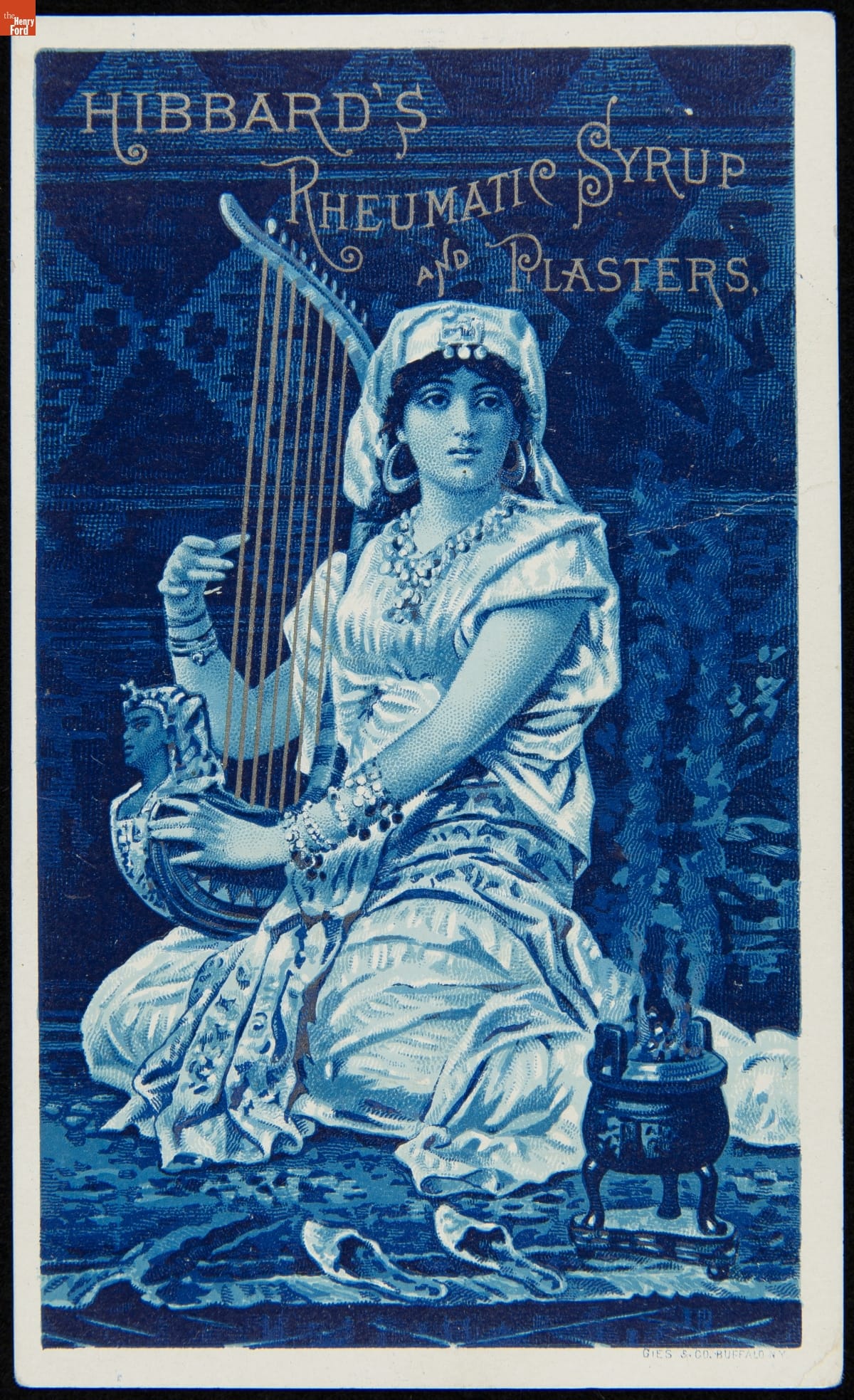
- Trade Card for Hibbard's Rheumatic Syrup and Plasters, Rheumatic Syrup Company, 1880-1900 - In the last third of the nineteenth century, an unprecedented variety of consumer goods and services flooded the American market. Advertisers, armed with new methods of color printing, bombarded potential customers with trade cards. Americans enjoyed and often saved the vibrant little advertisements found in product packages or distributed by local merchants. Many survive as historical records of commercialism in the United States.
- 1880-1900
- Collections - Artifact
Trade Card for Hibbard's Rheumatic Syrup and Plasters, Rheumatic Syrup Company, 1880-1900
In the last third of the nineteenth century, an unprecedented variety of consumer goods and services flooded the American market. Advertisers, armed with new methods of color printing, bombarded potential customers with trade cards. Americans enjoyed and often saved the vibrant little advertisements found in product packages or distributed by local merchants. Many survive as historical records of commercialism in the United States.
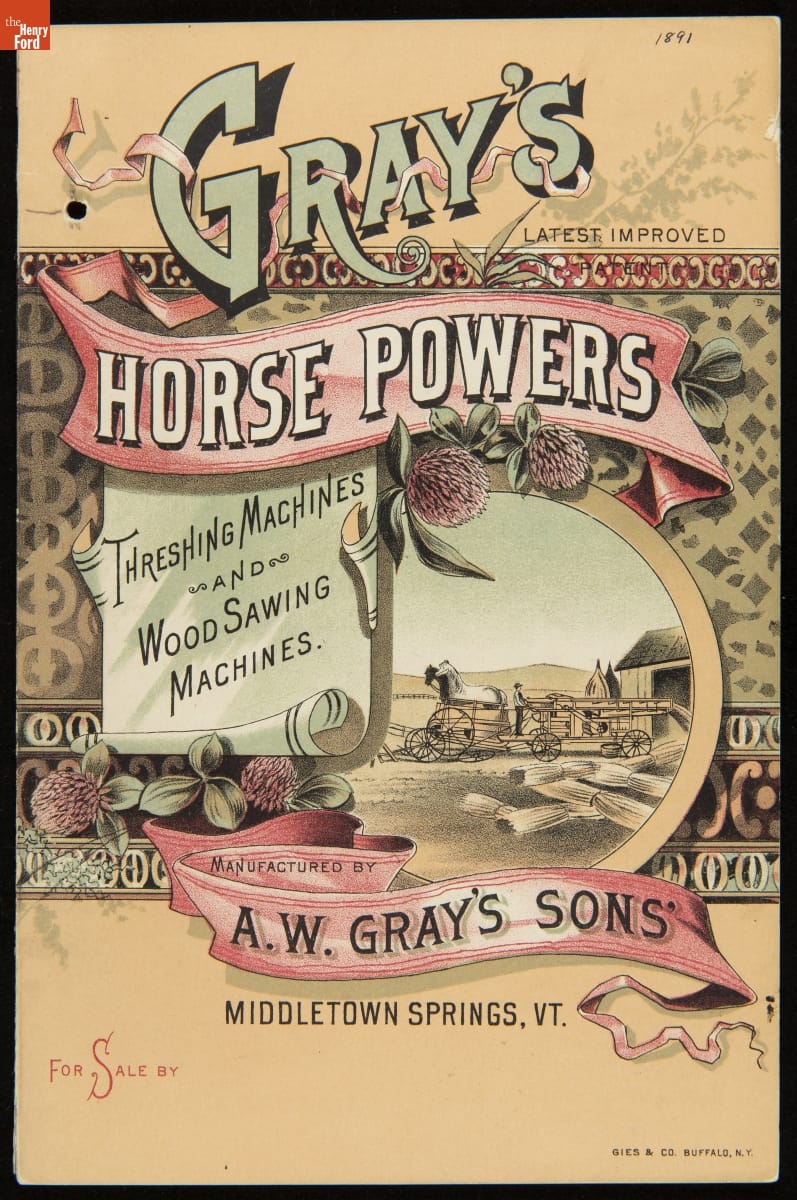
- Gray's Latest Improved Horse Powers Threshing Machines and Wood Sawing Machines, 1891 - As farmers mechanized barn and farmyard work in the nineteenth century, they began to use stationary power sources. These included devices such as treadmills that converted the movement of animals to drive a variety of agricultural machines. Enterprising manufacturers, like Vermont-based A.W. Gray's Sons, specialized in producing and selling these devices and the machines they were designed to power.
- 1891
- Collections - Artifact
Gray's Latest Improved Horse Powers Threshing Machines and Wood Sawing Machines, 1891
As farmers mechanized barn and farmyard work in the nineteenth century, they began to use stationary power sources. These included devices such as treadmills that converted the movement of animals to drive a variety of agricultural machines. Enterprising manufacturers, like Vermont-based A.W. Gray's Sons, specialized in producing and selling these devices and the machines they were designed to power.
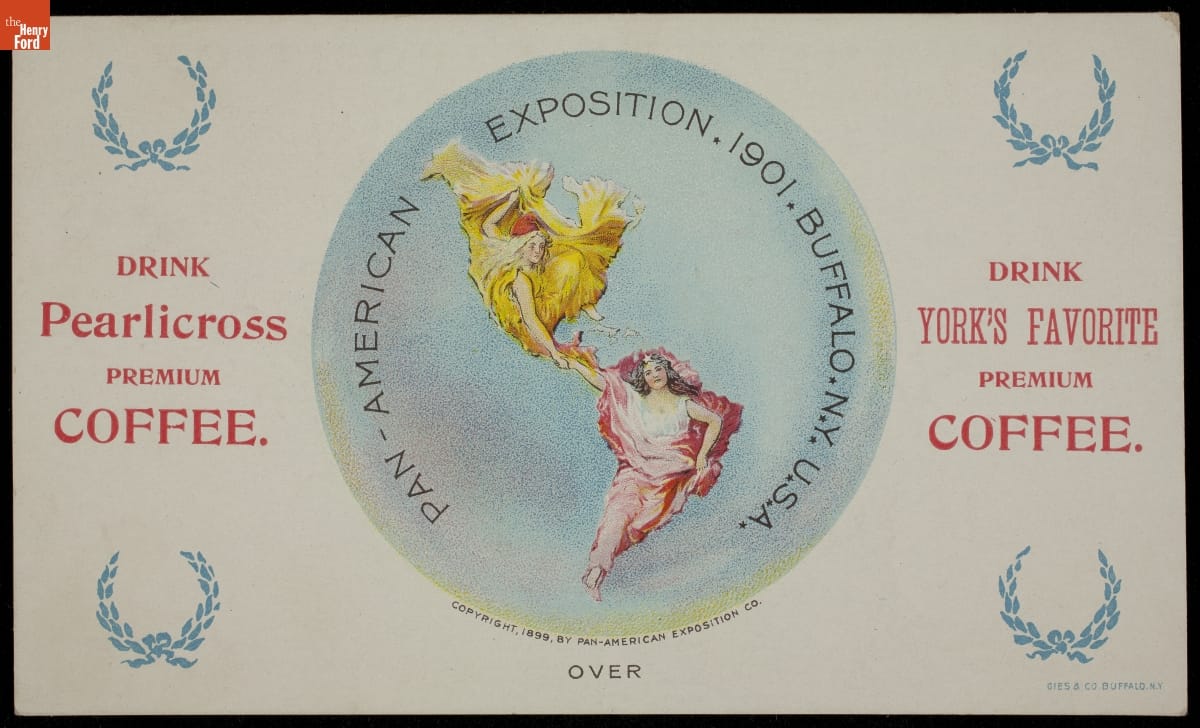
- Trade Card for the 1901 Pan-American Exposition, Pearlicross Coffee and York's Favorite Coffee, 1899 - In the last third of the nineteenth century, an unprecedented variety of consumer goods and services flooded the American market. Advertisers, armed with new methods of color printing, bombarded potential customers with trade cards. Americans enjoyed and often saved the vibrant little advertisements found in product packages or distributed by local merchants. Many survive as historical records of commercialism in the United States.
- 1901
- Collections - Artifact
Trade Card for the 1901 Pan-American Exposition, Pearlicross Coffee and York's Favorite Coffee, 1899
In the last third of the nineteenth century, an unprecedented variety of consumer goods and services flooded the American market. Advertisers, armed with new methods of color printing, bombarded potential customers with trade cards. Americans enjoyed and often saved the vibrant little advertisements found in product packages or distributed by local merchants. Many survive as historical records of commercialism in the United States.
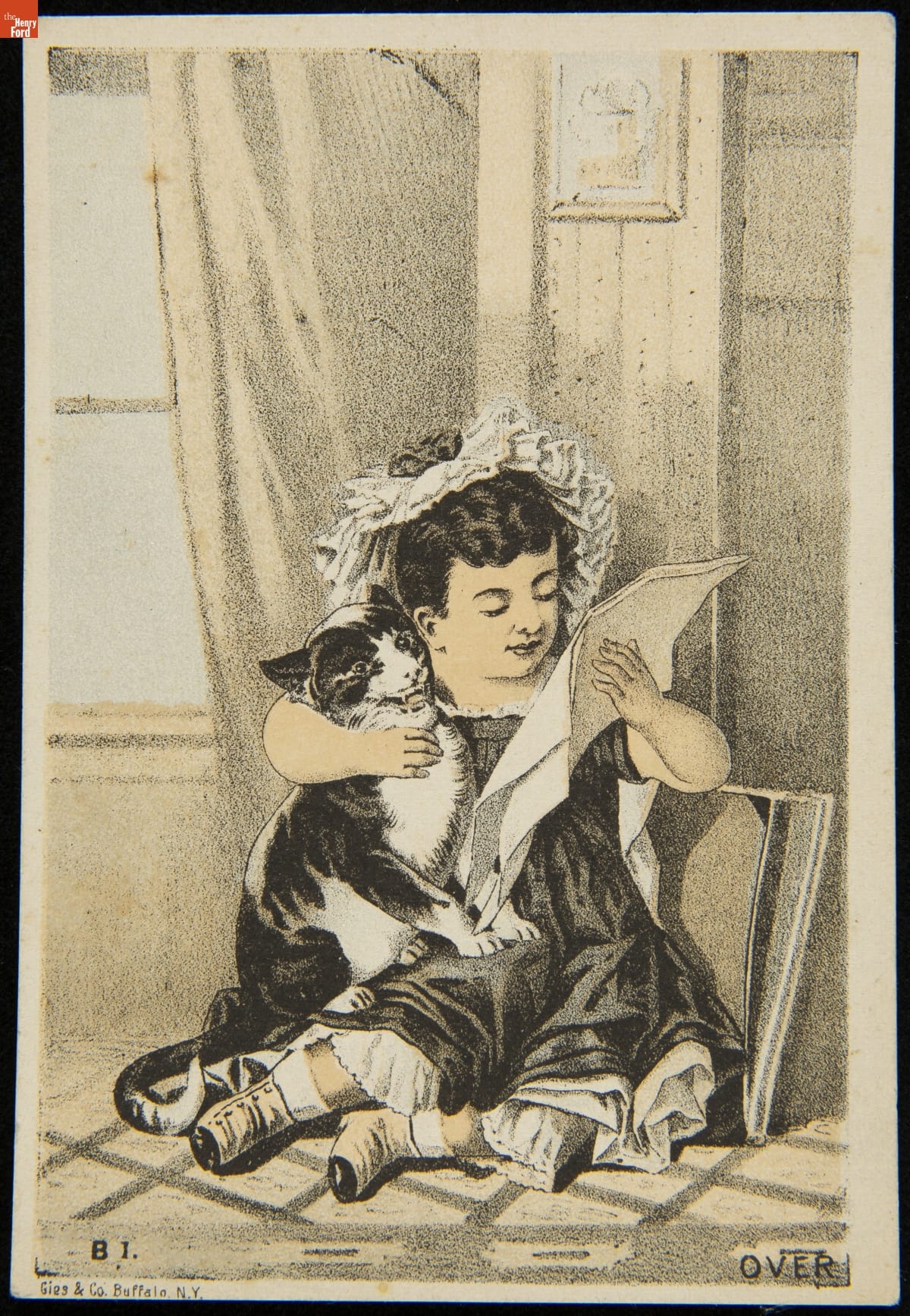
- Trade Card for Dr. Fenner's Pleasant Worm Syrup, 1880-1900 - In the last third of the nineteenth century, an unprecedented variety of consumer goods and services flooded the American market. Advertisers, armed with new methods of color printing, bombarded potential customers with trade cards. Americans enjoyed and often saved the vibrant little advertisements found in product packages or distributed by local merchants. Many survive as historical records of commercialism in the United States.
- 1880-1900
- Collections - Artifact
Trade Card for Dr. Fenner's Pleasant Worm Syrup, 1880-1900
In the last third of the nineteenth century, an unprecedented variety of consumer goods and services flooded the American market. Advertisers, armed with new methods of color printing, bombarded potential customers with trade cards. Americans enjoyed and often saved the vibrant little advertisements found in product packages or distributed by local merchants. Many survive as historical records of commercialism in the United States.
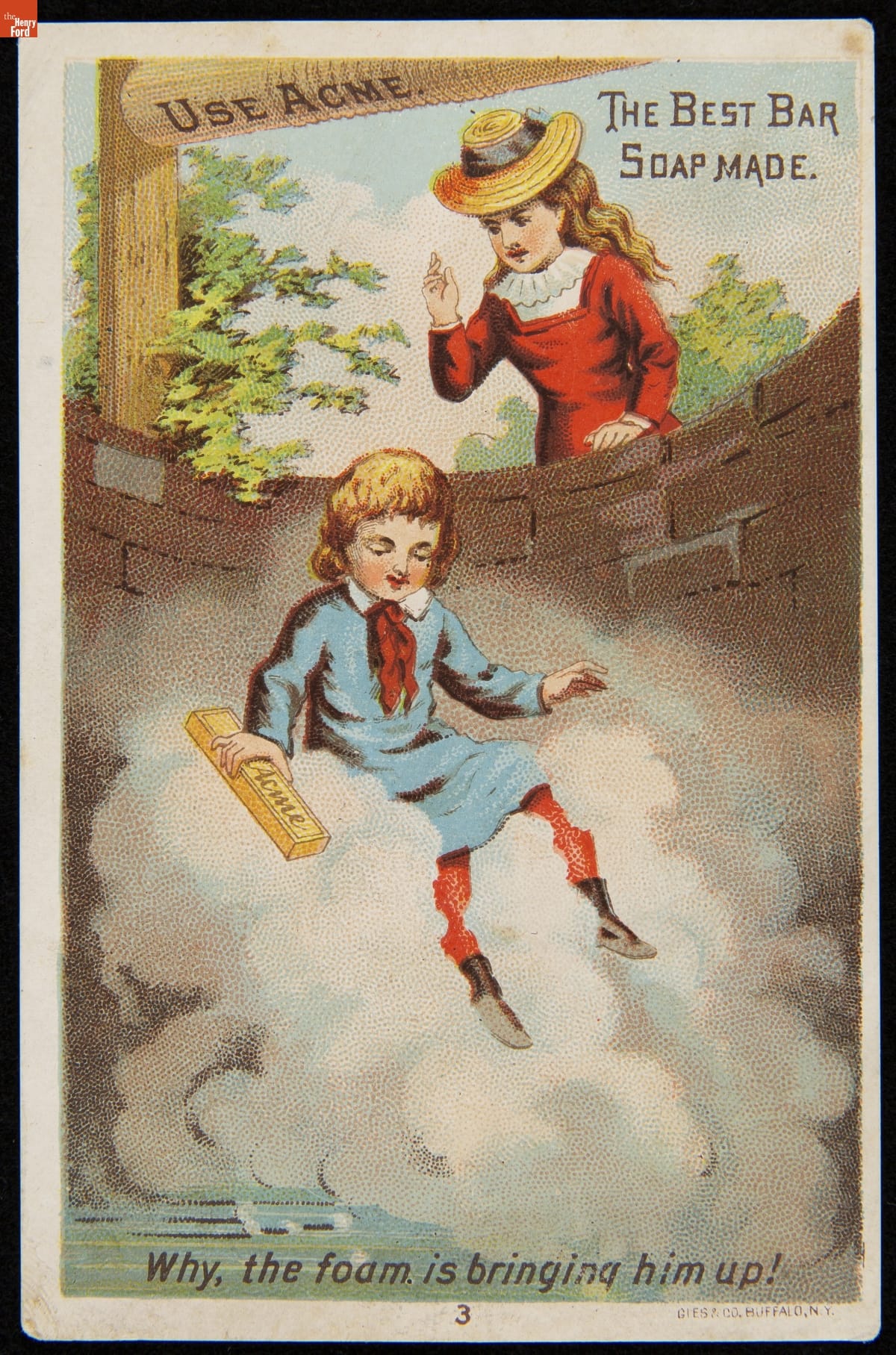
- Trade Card for Lautz Bros. & Company's Acme Towel Soap, "Why, the Foam is bringing him up!," circa 1885 - In the last third of the nineteenth century, an unprecedented variety of consumer goods and services flooded the American market. Advertisers, armed with new methods of color printing, bombarded potential customers with trade cards. Americans enjoyed and often saved the vibrant little advertisements found in product packages or distributed by local merchants. Many survive as historical records of commercialism in the United States.
- circa 1885
- Collections - Artifact
Trade Card for Lautz Bros. & Company's Acme Towel Soap, "Why, the Foam is bringing him up!," circa 1885
In the last third of the nineteenth century, an unprecedented variety of consumer goods and services flooded the American market. Advertisers, armed with new methods of color printing, bombarded potential customers with trade cards. Americans enjoyed and often saved the vibrant little advertisements found in product packages or distributed by local merchants. Many survive as historical records of commercialism in the United States.