
Search
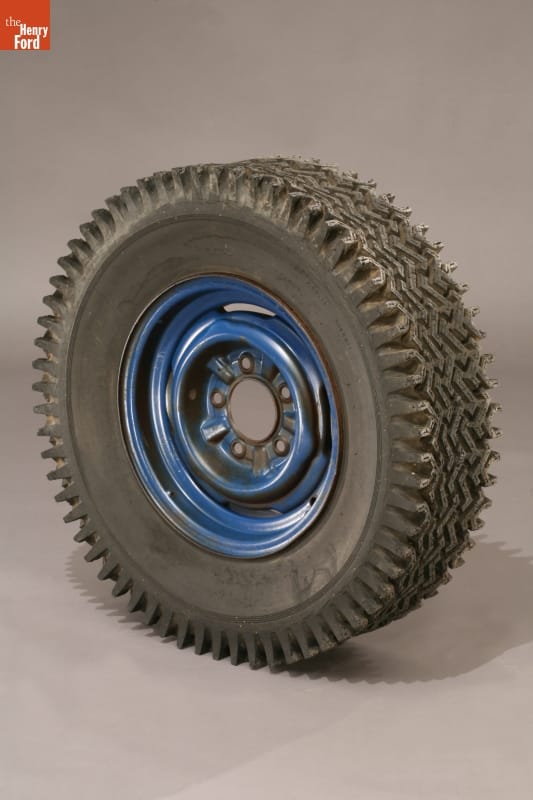
- Prototype Racing Tire, circa 1960 - Bobby Unser made his reputation in the Pikes Peak International Hill Climb. The course had a dirt surface when Unser raced it, so he searched for ways to improve tire traction. Unser tried grinding up various substances and mixing the results into rubber to produce a tire with more grip. The most effective material turned out to be ground walnut shells.
- circa 1960
- Collections - Artifact
Prototype Racing Tire, circa 1960
Bobby Unser made his reputation in the Pikes Peak International Hill Climb. The course had a dirt surface when Unser raced it, so he searched for ways to improve tire traction. Unser tried grinding up various substances and mixing the results into rubber to produce a tire with more grip. The most effective material turned out to be ground walnut shells.
- Women's Overshoes, Used by Isabel Hills Magill, circa 1900 -
- circa 1900
- Collections - Artifact
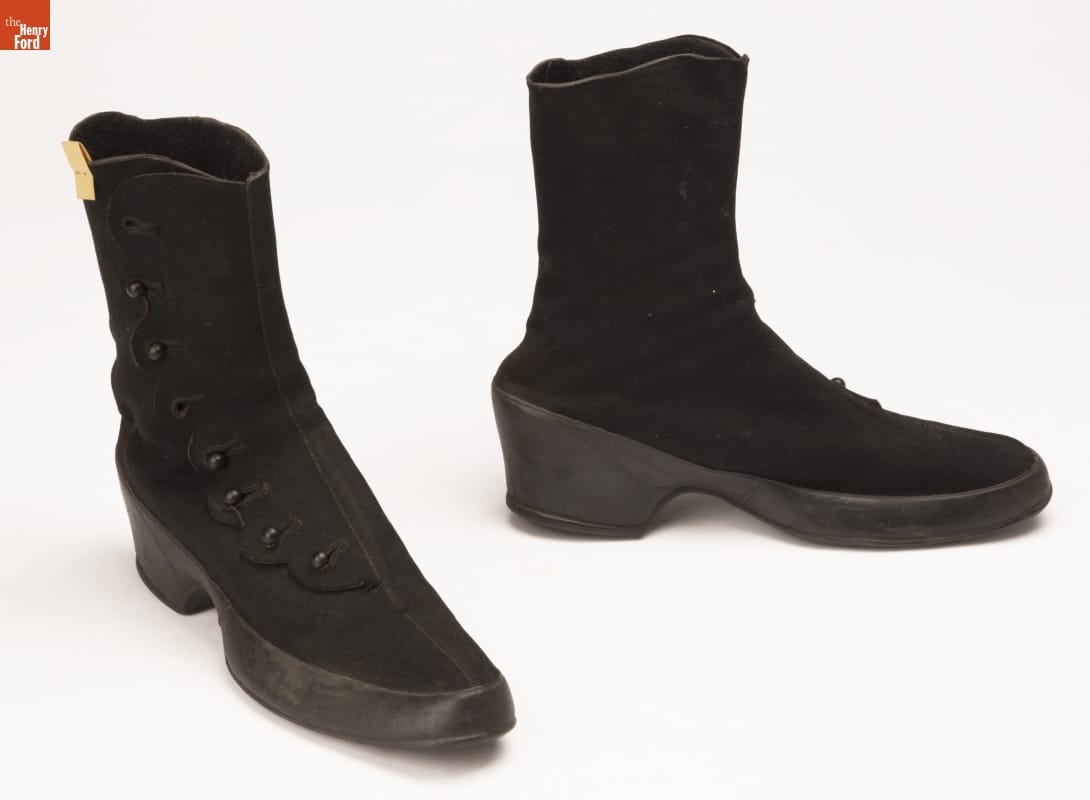
Women's Overshoes, Used by Isabel Hills Magill, circa 1900
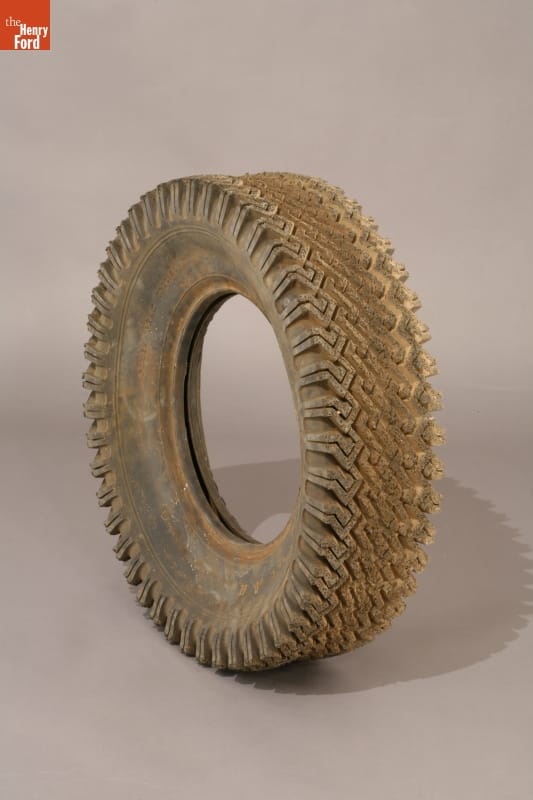
- "Pikes Peak Special" Racing Tire, circa 1965 - First held in 1916, the Pikes Peak International Hill Climb is known as the "Race to the Clouds." Cars climb 4,720 feet over the 12.42-mile course, negotiating 156 turns along the way. Goodyear produced special tires for the race's dirt surface, which wasn't fully paved until 2012.
- circa 1965
- Collections - Artifact
"Pikes Peak Special" Racing Tire, circa 1965
First held in 1916, the Pikes Peak International Hill Climb is known as the "Race to the Clouds." Cars climb 4,720 feet over the 12.42-mile course, negotiating 156 turns along the way. Goodyear produced special tires for the race's dirt surface, which wasn't fully paved until 2012.
- Greenback Labor Party Buttons, 1868-1888 -
- 1868-1888
- Collections - Artifact
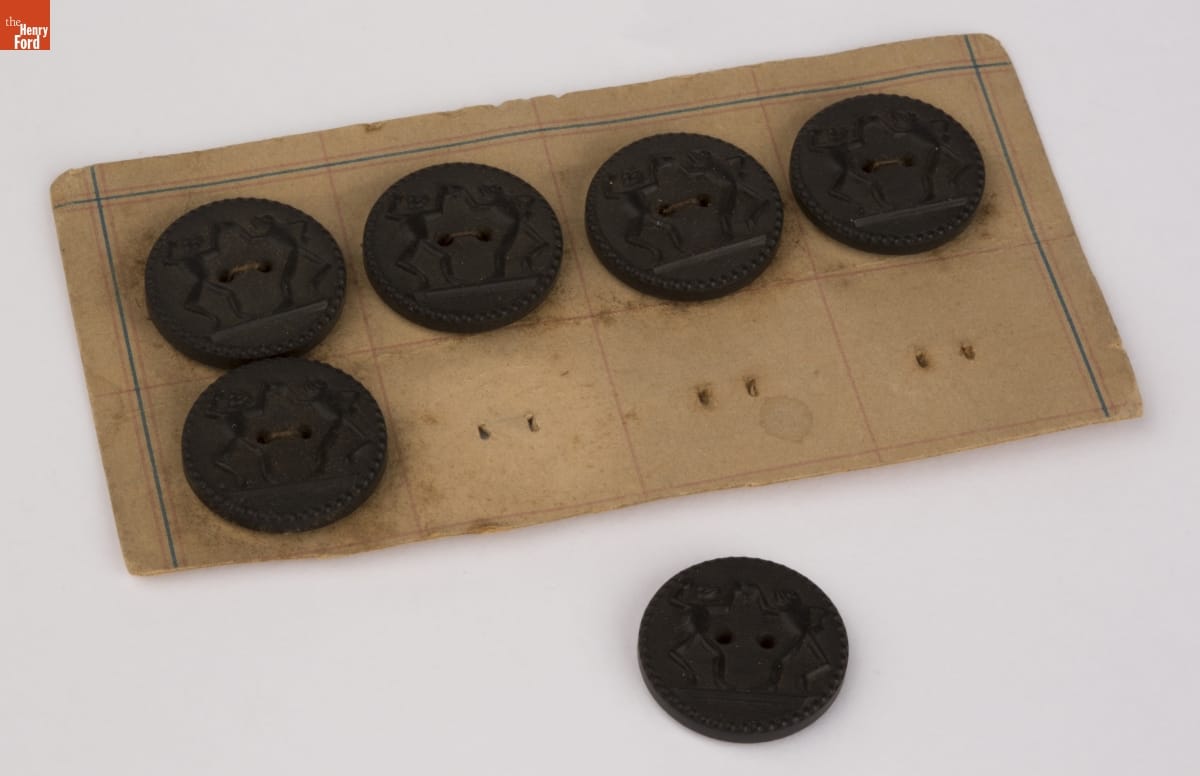
Greenback Labor Party Buttons, 1868-1888
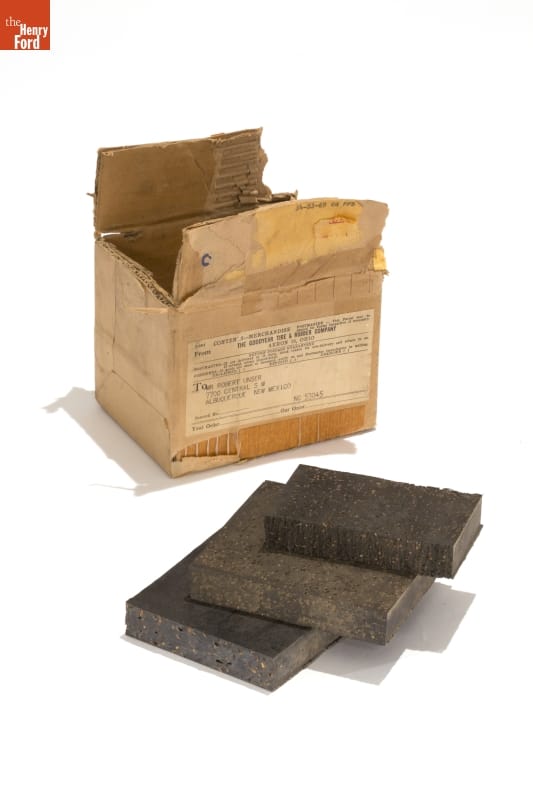
- Tire Samples Made with Crushed Walnut Shells for Bobby Unser, 1958 - Before his success at the Indianapolis 500, Bobby Unser made his name and reputation in the Pikes Peak International Hill Climb. The climb's course was all dirt, so Unser looked for ways to increase tire traction. After experimenting with various materials, he discovered that crushed walnut shells, mixed with rubber, produced ideal tires. Goodyear made these samples for Unser's tests.
- 1958
- Collections - Artifact
Tire Samples Made with Crushed Walnut Shells for Bobby Unser, 1958
Before his success at the Indianapolis 500, Bobby Unser made his name and reputation in the Pikes Peak International Hill Climb. The climb's course was all dirt, so Unser looked for ways to increase tire traction. After experimenting with various materials, he discovered that crushed walnut shells, mixed with rubber, produced ideal tires. Goodyear made these samples for Unser's tests.
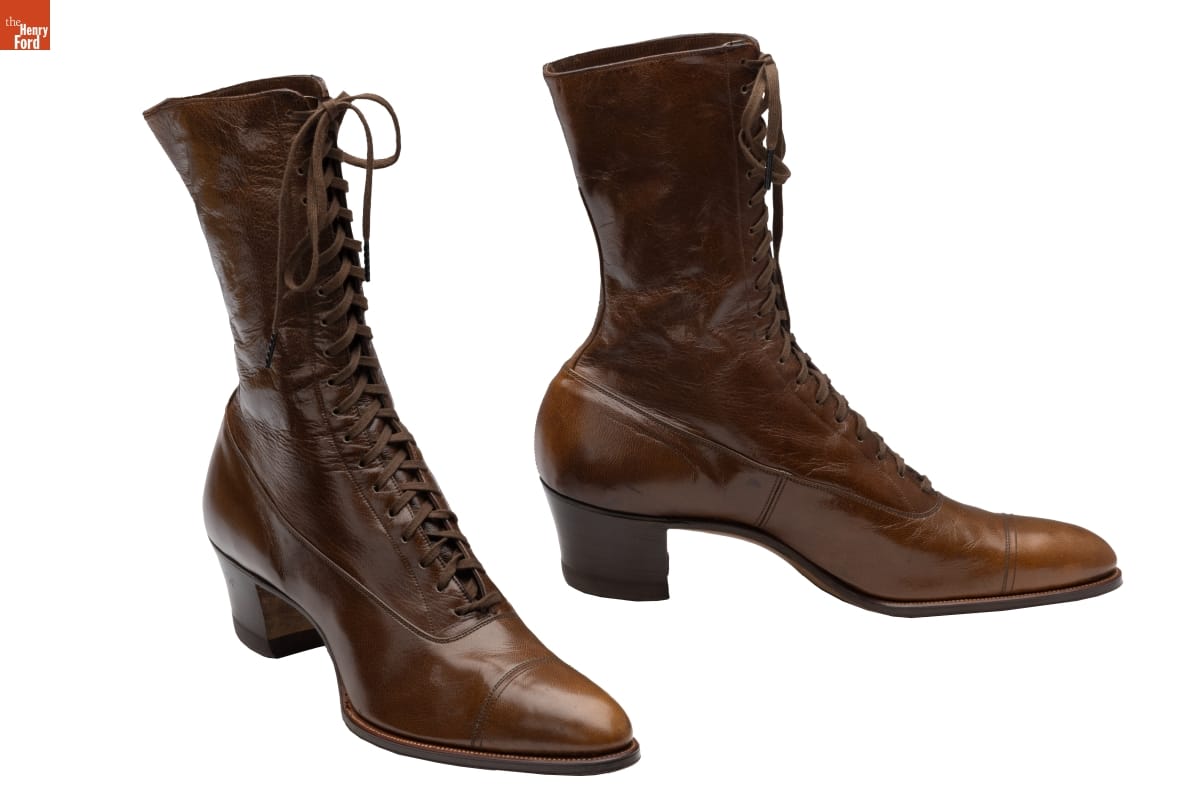
- Ladies' Shoes -
- Collections - Artifact
Ladies' Shoes
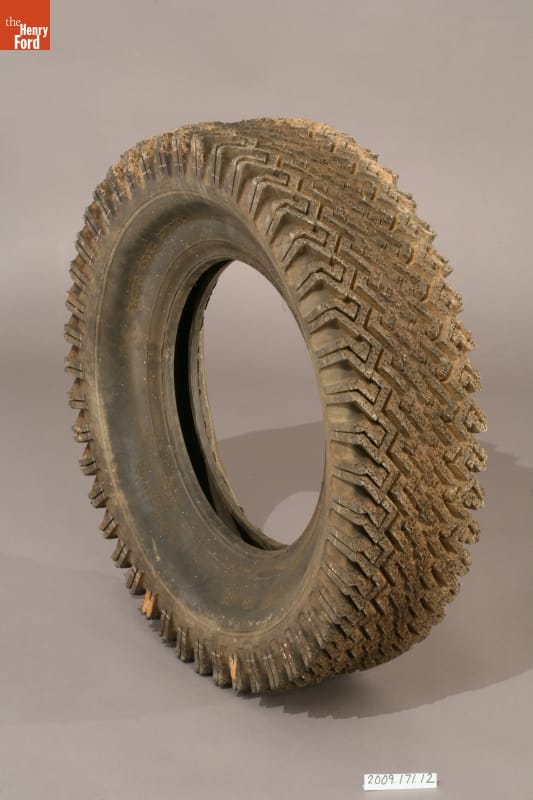
- "Pikes Peak Special" Racing Tire, circa 1965 - First held in 1916, the Pikes Peak International Hill Climb is known as the "Race to the Clouds." Cars climb 4,720 feet over the 12.42-mile course, negotiating 156 turns along the way. Goodyear produced special tires for the race's dirt surface, which wasn't fully paved until 2012.
- circa 1965
- Collections - Artifact
"Pikes Peak Special" Racing Tire, circa 1965
First held in 1916, the Pikes Peak International Hill Climb is known as the "Race to the Clouds." Cars climb 4,720 feet over the 12.42-mile course, negotiating 156 turns along the way. Goodyear produced special tires for the race's dirt surface, which wasn't fully paved until 2012.
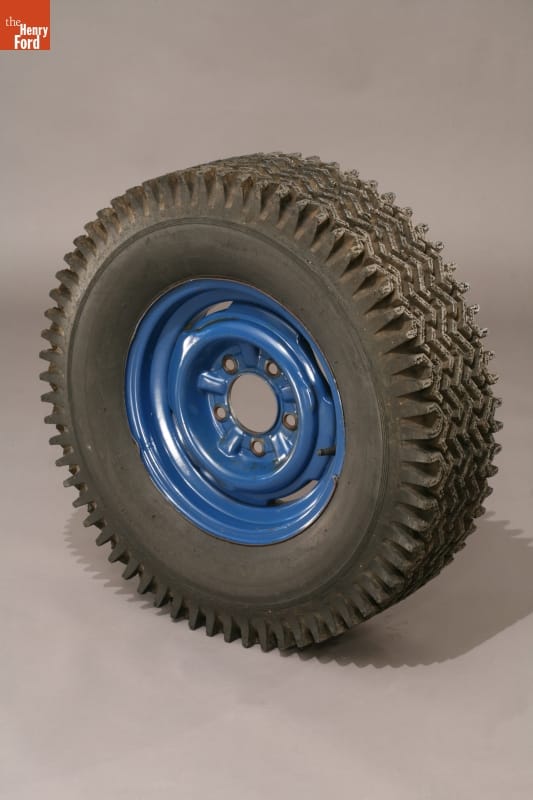
- Protoype Racing Tire, circa 1960 - Bobby Unser made his reputation in the Pikes Peak International Hill Climb. The course had a dirt surface when Unser raced it, so he searched for ways to improve tire traction. Unser tried grinding up various substances and mixing the results into rubber to produce a tire with more grip. The most effective material turned out to be ground walnut shells.
- circa 1960
- Collections - Artifact
Protoype Racing Tire, circa 1960
Bobby Unser made his reputation in the Pikes Peak International Hill Climb. The course had a dirt surface when Unser raced it, so he searched for ways to improve tire traction. Unser tried grinding up various substances and mixing the results into rubber to produce a tire with more grip. The most effective material turned out to be ground walnut shells.
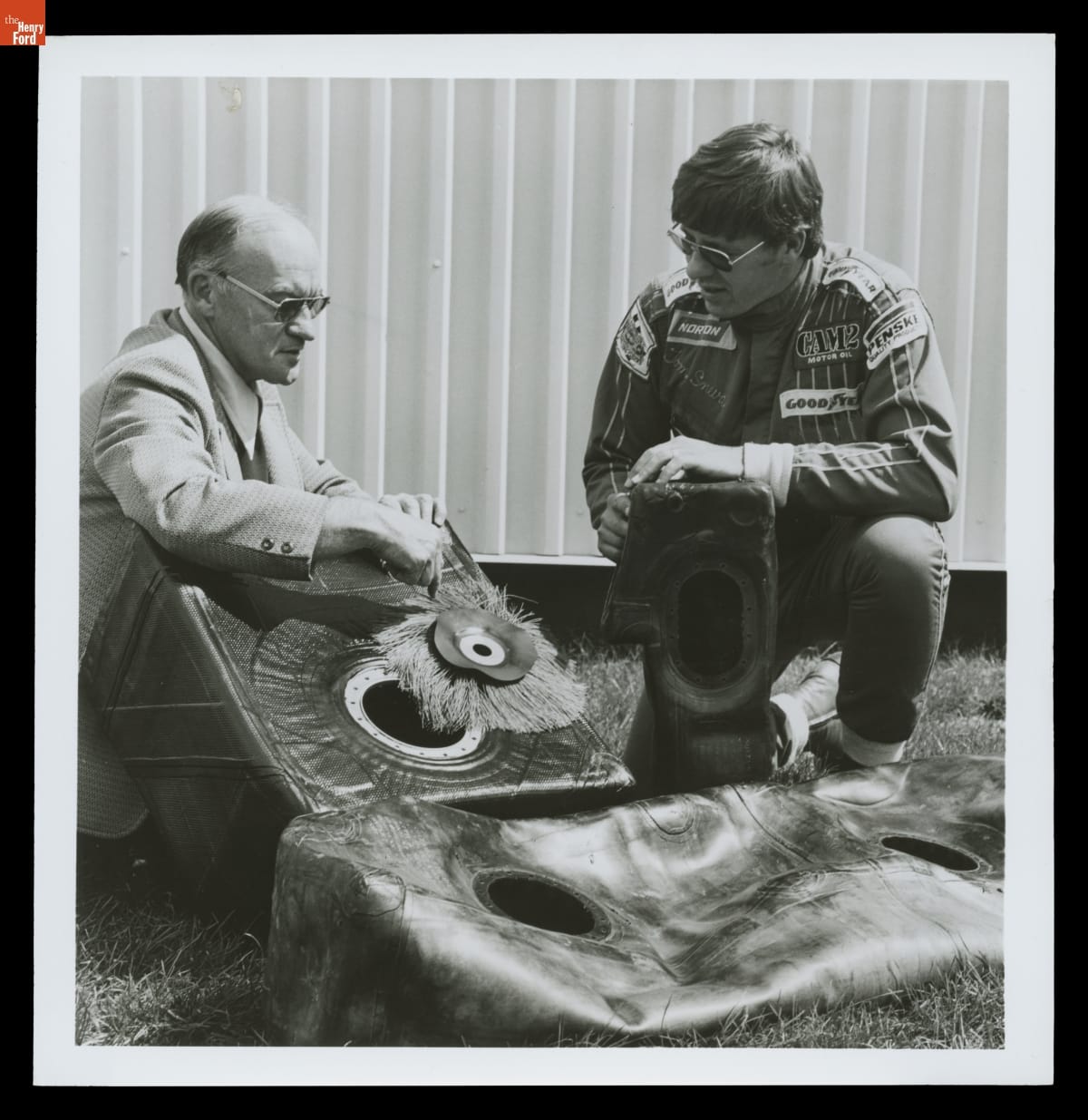
- Engineer Bill Ludwick Explaining Goodyear's "Crashworthy" Fuel System to Driver Tom Sneva, 1975-1976 - Many safety advances in auto racing focused on fuel systems -- making them more robust and less prone to fire in a crash. Driver Tom Sneva, who survived a serious crash at the 1975 Indianapolis 500, looks on as Goodyear engineer Bill Ludwick shows components of the improved rubber fuel cell required for new cars at the 1976 race.
- 1975-1976
- Collections - Artifact
Engineer Bill Ludwick Explaining Goodyear's "Crashworthy" Fuel System to Driver Tom Sneva, 1975-1976
Many safety advances in auto racing focused on fuel systems -- making them more robust and less prone to fire in a crash. Driver Tom Sneva, who survived a serious crash at the 1975 Indianapolis 500, looks on as Goodyear engineer Bill Ludwick shows components of the improved rubber fuel cell required for new cars at the 1976 race.
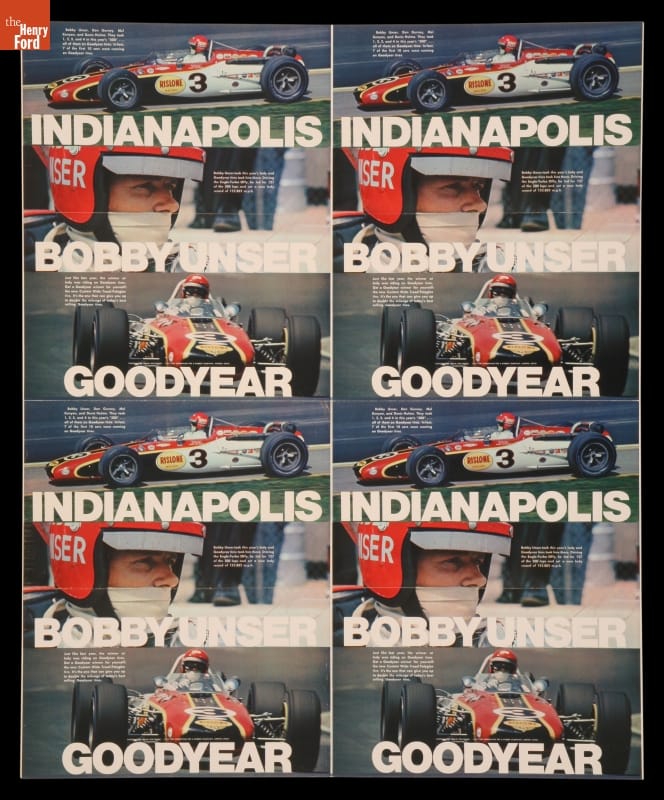
- Advertising Poster, "Indianapolis - Bobby Unser - Goodyear," 1968 - Bobby Unser earned the first of his three Indianapolis 500 wins in 1968. Goodyear was quick to capitalize on his victory, won while racing on Goodyear tires, with an advertising campaign. This poster from that campaign -- part of a large archival donation from Bobby and Lisa Unser to The Henry Ford -- helps to document Unser's career.
- 1968
- Collections - Artifact
Advertising Poster, "Indianapolis - Bobby Unser - Goodyear," 1968
Bobby Unser earned the first of his three Indianapolis 500 wins in 1968. Goodyear was quick to capitalize on his victory, won while racing on Goodyear tires, with an advertising campaign. This poster from that campaign -- part of a large archival donation from Bobby and Lisa Unser to The Henry Ford -- helps to document Unser's career.