
Search
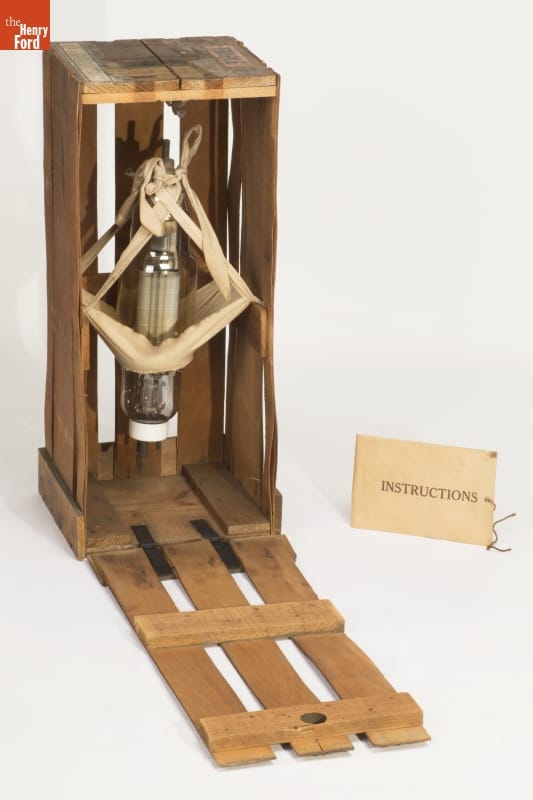
- Western Electric Transmitting Tube, Type 270-A, Used at Radio Station WWJ, Detroit, Michigan, circa 1935 - Vacuum tubes appear in older radios, televisions, amplifiers, computers, and other electronic devices. Their function: to amplify or transmit electronic signals. Typical tubes are sealed glass bulbs evacuated of gas, allowing electron flow to be influenced by an interior cathode, plate and grid. Perfected in 1906, the vacuum tube was the genesis of a communications revolution.
- 1936
- Collections - Artifact
Western Electric Transmitting Tube, Type 270-A, Used at Radio Station WWJ, Detroit, Michigan, circa 1935
Vacuum tubes appear in older radios, televisions, amplifiers, computers, and other electronic devices. Their function: to amplify or transmit electronic signals. Typical tubes are sealed glass bulbs evacuated of gas, allowing electron flow to be influenced by an interior cathode, plate and grid. Perfected in 1906, the vacuum tube was the genesis of a communications revolution.
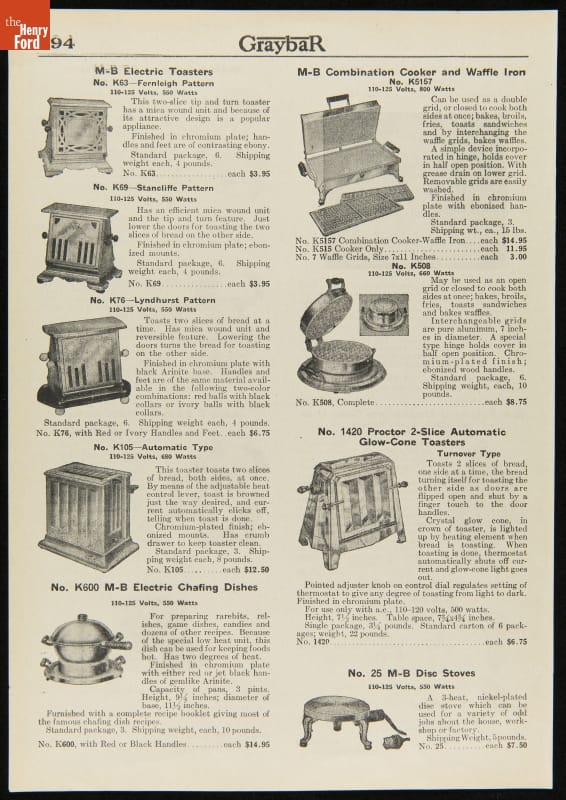
- Page from a Graybar Catalog for Household Appliances, circa 1932 -
- circa 1932
- Collections - Artifact
Page from a Graybar Catalog for Household Appliances, circa 1932
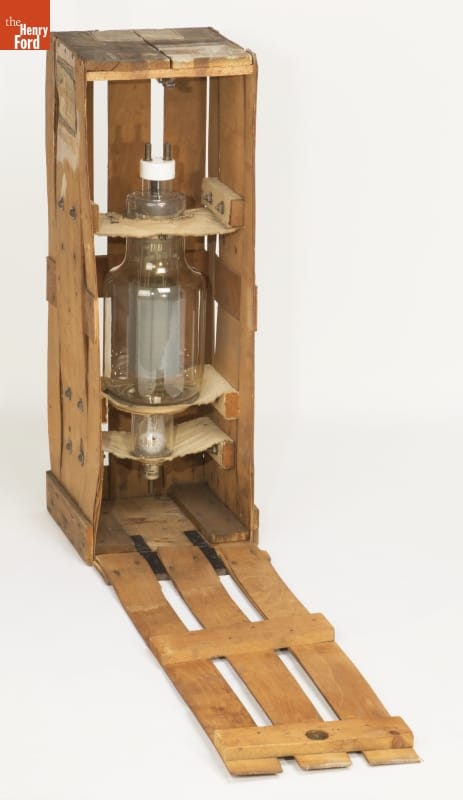
- Western Electric Transmitting Tube, Type 279-A, Used at Radio Station WWJ, Detroit, Michigan, circa 1935 - Vacuum tubes appear in older radios, televisions, amplifiers, computers, and other electronic devices. Their function: to amplify or transmit electronic signals. Typical tubes are sealed glass bulbs evacuated of gas, allowing electron flow to be influenced by an interior cathode, plate and grid. Perfected in 1906, the vacuum tube was the genesis of a communications revolution.
- 1936
- Collections - Artifact
Western Electric Transmitting Tube, Type 279-A, Used at Radio Station WWJ, Detroit, Michigan, circa 1935
Vacuum tubes appear in older radios, televisions, amplifiers, computers, and other electronic devices. Their function: to amplify or transmit electronic signals. Typical tubes are sealed glass bulbs evacuated of gas, allowing electron flow to be influenced by an interior cathode, plate and grid. Perfected in 1906, the vacuum tube was the genesis of a communications revolution.
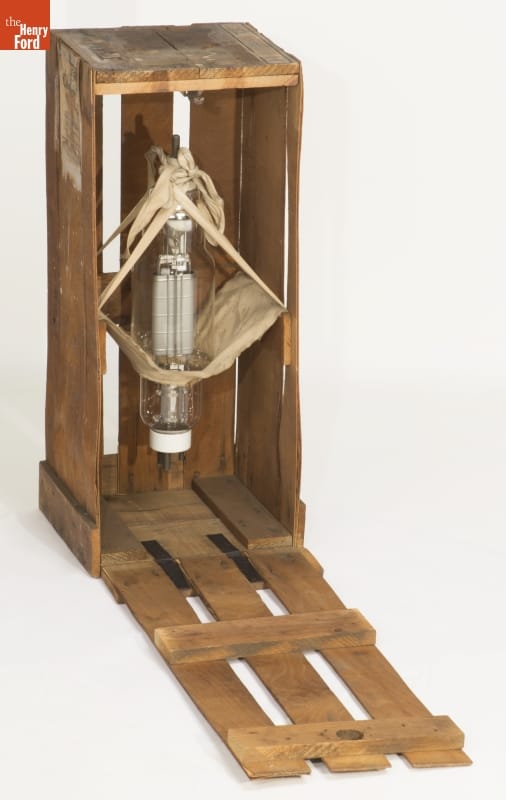
- Western Electric Transmitting Tube, Type 270-A, Used at Radio Station WWJ, Detroit, Michigan, circa 1935 - Vacuum tubes appear in older radios, televisions, amplifiers, computers, and other electronic devices. Their function: to amplify or transmit electronic signals. Typical tubes are sealed glass bulbs evacuated of gas, allowing electron flow to be influenced by an interior cathode, plate and grid. Perfected in 1906, the vacuum tube was the genesis of a communications revolution.
- circa 1935
- Collections - Artifact
Western Electric Transmitting Tube, Type 270-A, Used at Radio Station WWJ, Detroit, Michigan, circa 1935
Vacuum tubes appear in older radios, televisions, amplifiers, computers, and other electronic devices. Their function: to amplify or transmit electronic signals. Typical tubes are sealed glass bulbs evacuated of gas, allowing electron flow to be influenced by an interior cathode, plate and grid. Perfected in 1906, the vacuum tube was the genesis of a communications revolution.
- Western Electric Transmitting Tube, Type 270-A, Used at Radio Station WWJ, Detroit, Michigan, circa 1935 - Vacuum tubes appear in older radios, televisions, amplifiers, computers, and other electronic devices. Their function: to amplify or transmit electronic signals. Typical tubes are sealed glass bulbs evacuated of gas, allowing electron flow to be influenced by an interior cathode, plate and grid. Perfected in 1906, the vacuum tube was the genesis of a communications revolution.
- circa 1935
- Collections - Artifact
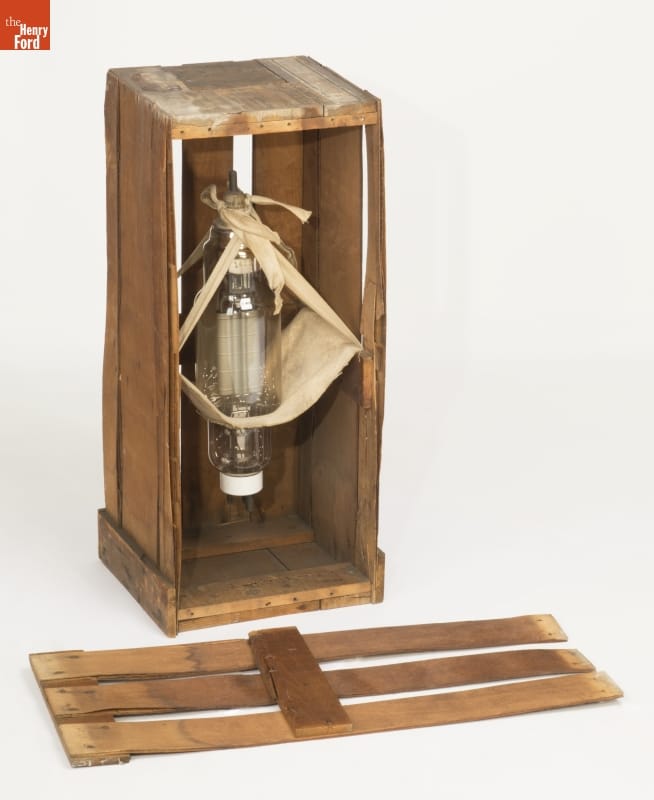
Western Electric Transmitting Tube, Type 270-A, Used at Radio Station WWJ, Detroit, Michigan, circa 1935
Vacuum tubes appear in older radios, televisions, amplifiers, computers, and other electronic devices. Their function: to amplify or transmit electronic signals. Typical tubes are sealed glass bulbs evacuated of gas, allowing electron flow to be influenced by an interior cathode, plate and grid. Perfected in 1906, the vacuum tube was the genesis of a communications revolution.