
Search
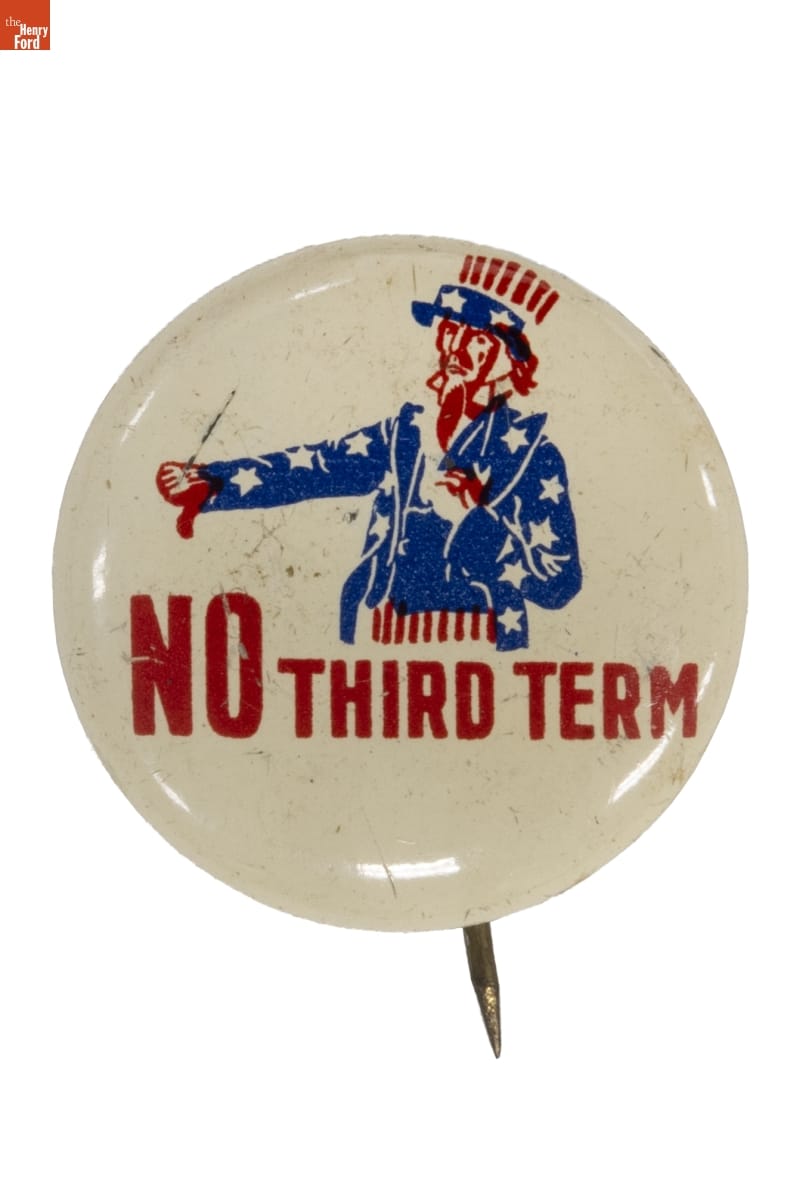
- "No Third Term" Wendell Willkie Campaign Button, 1940 - In 1940, President Franklin Roosevelt, the Democratic incumbent, ran for an unprecedented third term, breaking the tradition George Washington set that limited a President to eight years in office. Some voters questioned Roosevelt's decision. Republicans certainly did not want a third-term Roosevelt presidency -- they backed Wendell Willkie, and some conservative Democrats also voiced concerns. However, they could not stop Roosevelt's reelection victory.
- 1940
- Collections - Artifact
"No Third Term" Wendell Willkie Campaign Button, 1940
In 1940, President Franklin Roosevelt, the Democratic incumbent, ran for an unprecedented third term, breaking the tradition George Washington set that limited a President to eight years in office. Some voters questioned Roosevelt's decision. Republicans certainly did not want a third-term Roosevelt presidency -- they backed Wendell Willkie, and some conservative Democrats also voiced concerns. However, they could not stop Roosevelt's reelection victory.
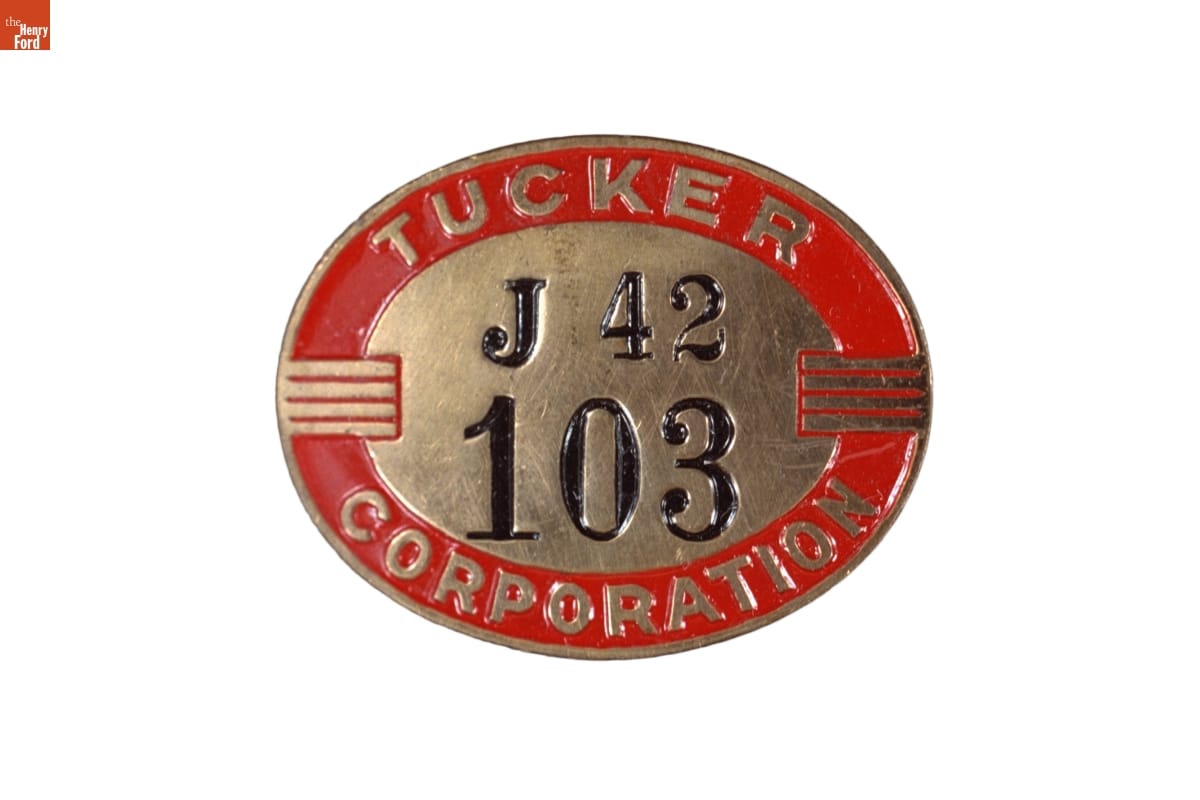
- Tucker Corporation Employee Badge, circa 1948 - The Tucker Corporation based itself in Chicago in a war-surplus factory that had produced engines for B-29 bomber airplanes. At its peak, Tucker employed some 1,600 people. The company anticipated having 35,000 employees once it reached full production. But it wasn't to be. Financial and legal problems closed Tucker in 1950 after only 51 cars were built.
- circa 1948
- Collections - Artifact
Tucker Corporation Employee Badge, circa 1948
The Tucker Corporation based itself in Chicago in a war-surplus factory that had produced engines for B-29 bomber airplanes. At its peak, Tucker employed some 1,600 people. The company anticipated having 35,000 employees once it reached full production. But it wasn't to be. Financial and legal problems closed Tucker in 1950 after only 51 cars were built.
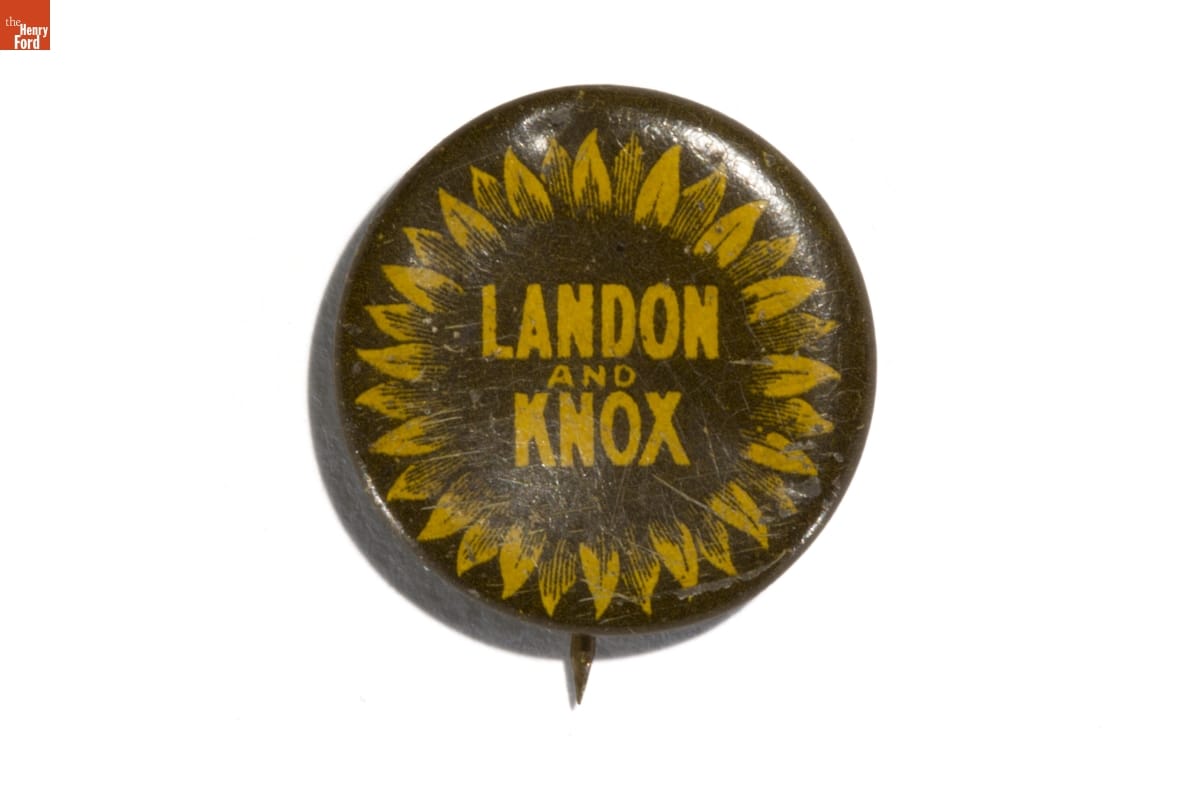
- Landon-Knox Campaign Button, 1936 - In 1936, the Republican Party chose two-time Kansas governor Alfred M. Landon as its presidential candidate. The sunflower -- Kansas's state flower -- became a prominent symbol in much of his campaign material. But Landon was no match against Franklin Roosevelt, the popular incumbent. He lost in a landslide -- Landon even failed to carry his home state of Kansas.
- 1936
- Collections - Artifact
Landon-Knox Campaign Button, 1936
In 1936, the Republican Party chose two-time Kansas governor Alfred M. Landon as its presidential candidate. The sunflower -- Kansas's state flower -- became a prominent symbol in much of his campaign material. But Landon was no match against Franklin Roosevelt, the popular incumbent. He lost in a landslide -- Landon even failed to carry his home state of Kansas.
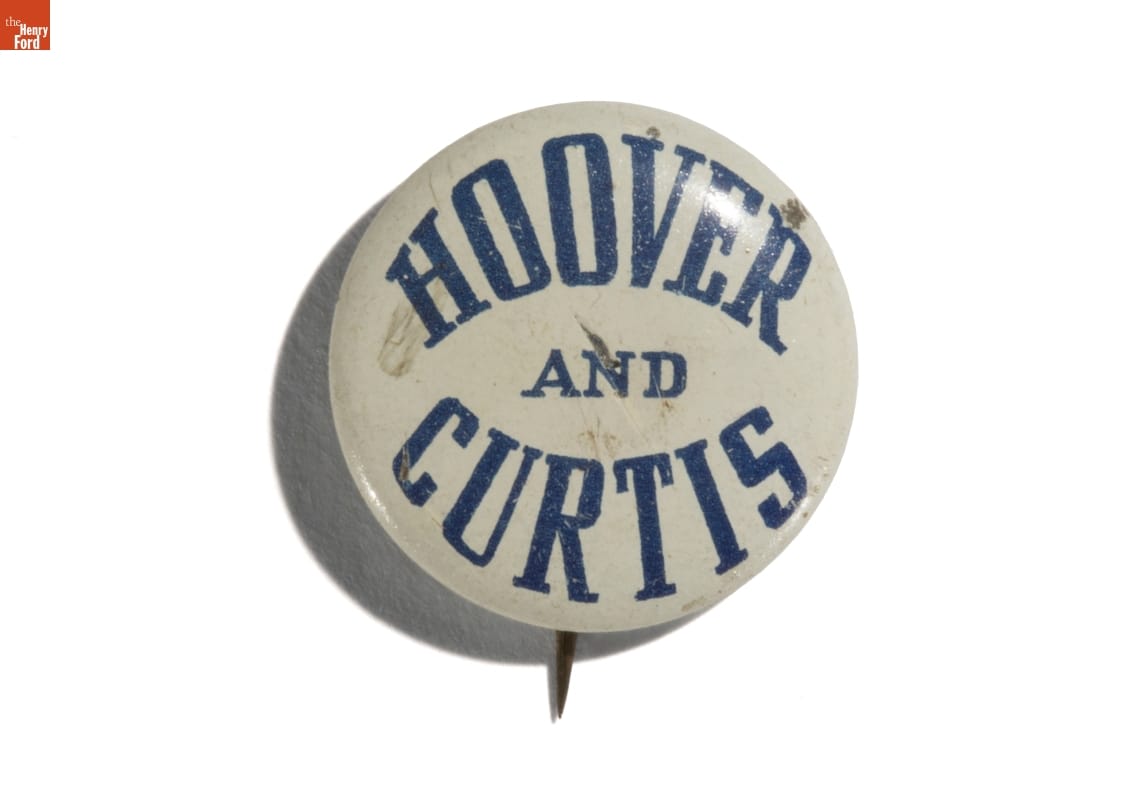
- Hoover-Curtis Campaign Button, 1928-1932 - Americans in the 1920s knew Herbert Hoover for his humanitarian work and as the capable Secretary of Commerce. In 1928, Hoover ran for president and won easily over his Democratic opponent. He ran again four years later, but after the devastating economic crash in 1929 Americans' view of Hoover had changed. Hoover's seeming inaction due to his commitment to volunteerism turned voters out for Franklin Roosevelt.
- 1928-1932
- Collections - Artifact
Hoover-Curtis Campaign Button, 1928-1932
Americans in the 1920s knew Herbert Hoover for his humanitarian work and as the capable Secretary of Commerce. In 1928, Hoover ran for president and won easily over his Democratic opponent. He ran again four years later, but after the devastating economic crash in 1929 Americans' view of Hoover had changed. Hoover's seeming inaction due to his commitment to volunteerism turned voters out for Franklin Roosevelt.