
Search
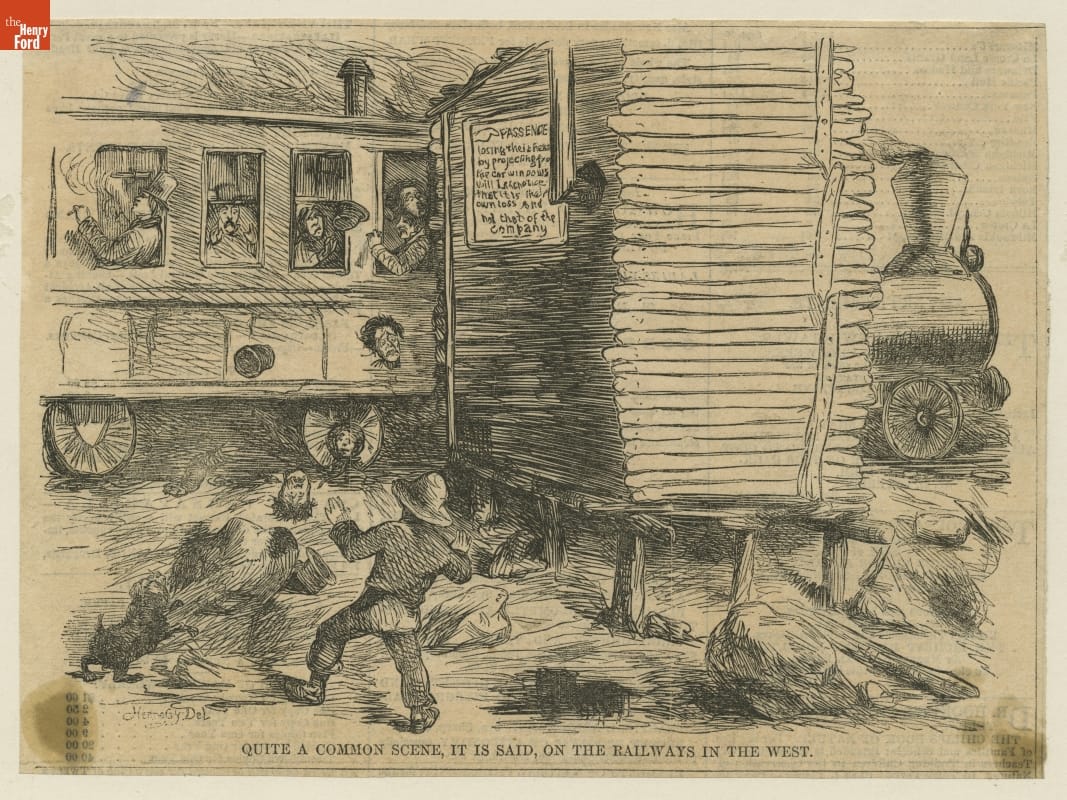
- Wood Engraving, "Quite a Common Scene, it is Said, on the Railways in the West," 1858 - While close clearances -- tight spaces between railroad cars and trackside structures -- did exist, this 1858 illustration from <em>Harper's Weekly</em> exaggerated the dangers faced by passengers who stuck their heads through windows. More likely threats from an open window included sparks, cinders and smoke from the steam locomotive pulling the train -- all of which could irritate eyes and damage clothing.
- 1858
- Collections - Artifact
Wood Engraving, "Quite a Common Scene, it is Said, on the Railways in the West," 1858
While close clearances -- tight spaces between railroad cars and trackside structures -- did exist, this 1858 illustration from Harper's Weekly exaggerated the dangers faced by passengers who stuck their heads through windows. More likely threats from an open window included sparks, cinders and smoke from the steam locomotive pulling the train -- all of which could irritate eyes and damage clothing.
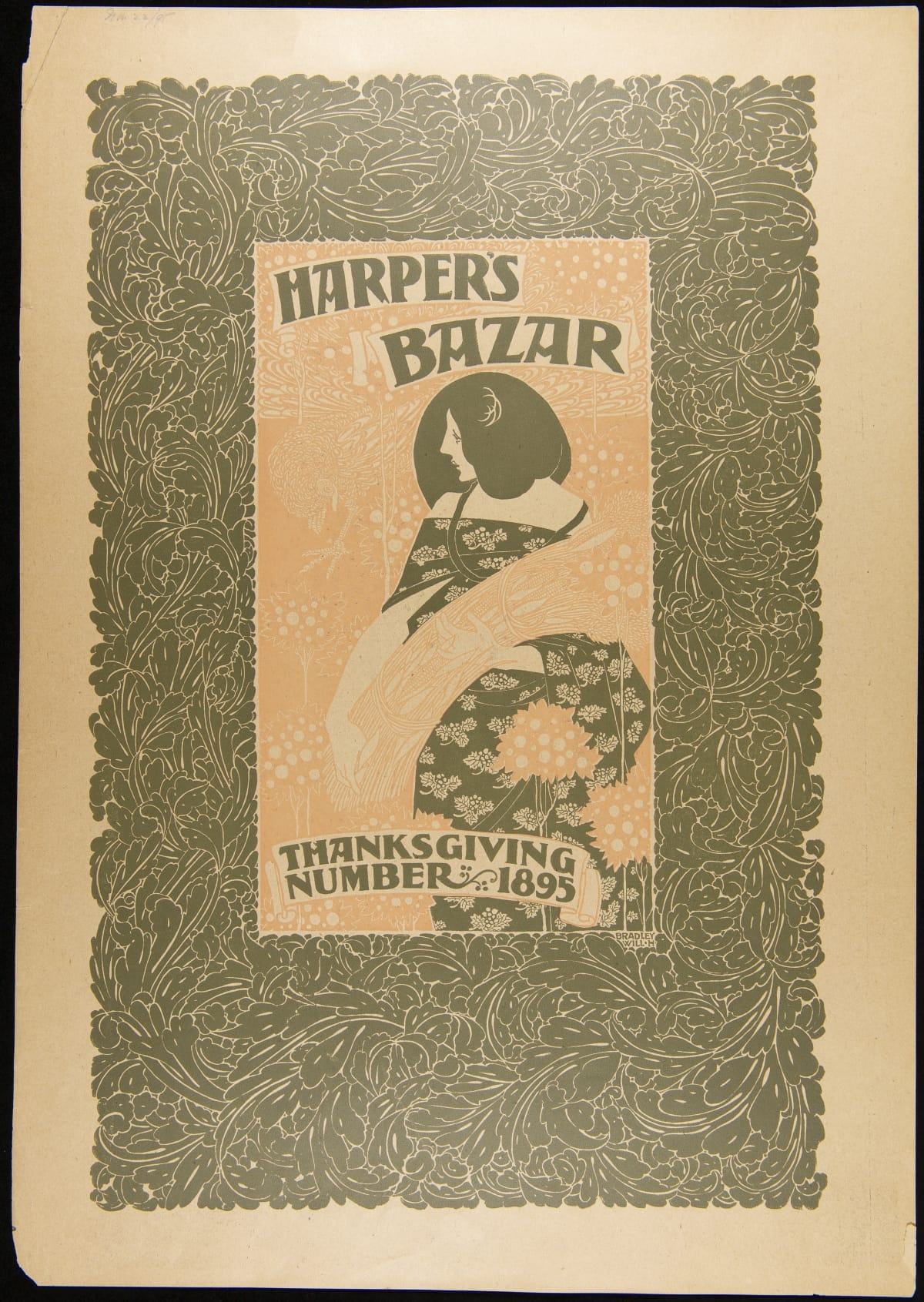
- Harper's Bazar Thanksgiving, Number 1895 - For a few years in the 1890s, a poster craze swept America. Bold, colorful art posters printed for bookstores and newsstands became collectors' items--sometimes more popular than the books and magazines they were designed to promote. Many posters, like this one by Will H. Bradley for a Thanksgiving issue of <em>Harper's Bazar</em>, featured eye-catching illustrations inspired by Art Nouveau trends.
- November 22, 1895
- Collections - Artifact
Harper's Bazar Thanksgiving, Number 1895
For a few years in the 1890s, a poster craze swept America. Bold, colorful art posters printed for bookstores and newsstands became collectors' items--sometimes more popular than the books and magazines they were designed to promote. Many posters, like this one by Will H. Bradley for a Thanksgiving issue of Harper's Bazar, featured eye-catching illustrations inspired by Art Nouveau trends.
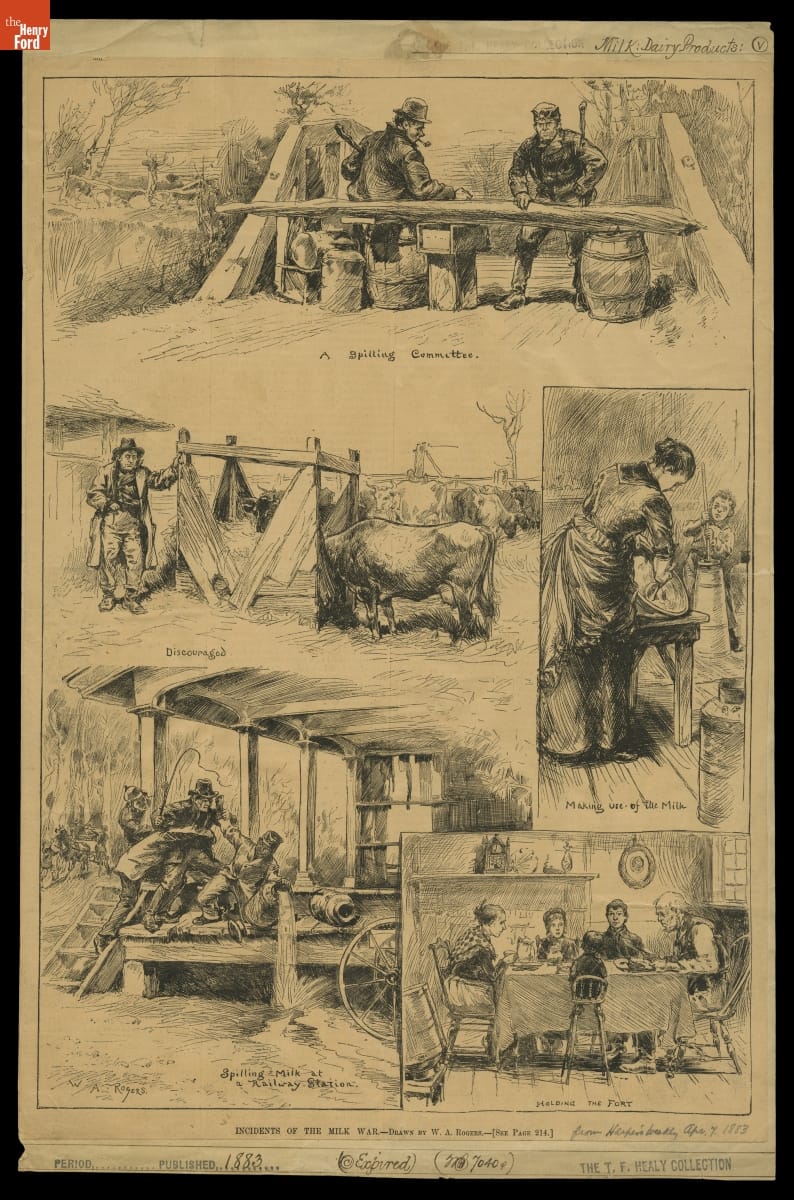
- "Incidencts of the Milk War" from Harper's Weekly, April 7, 1883 -
- April 07, 1883
- Collections - Artifact
"Incidencts of the Milk War" from Harper's Weekly, April 7, 1883
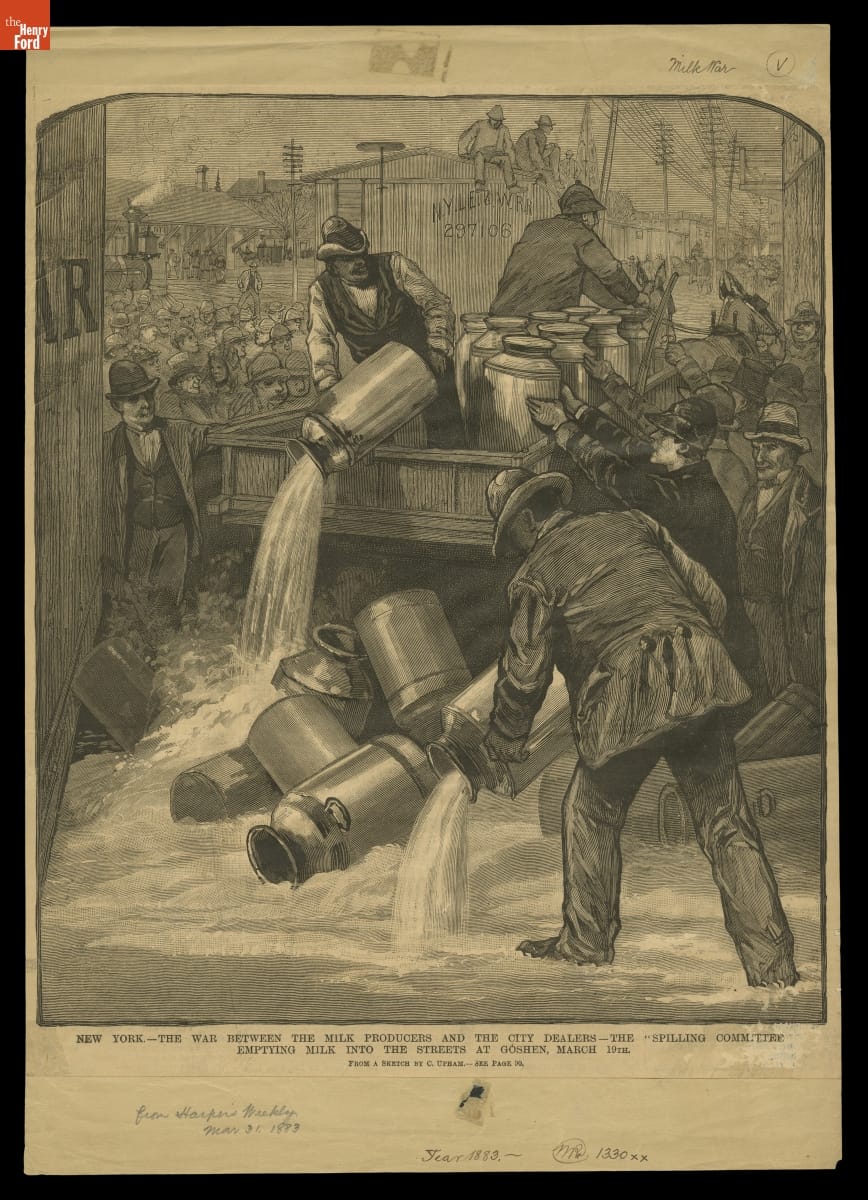
- "The War between the Milk Producers and the City Dealers..." from Harper's Weekly, March 31, 1883 -
- March 19, 1883
- Collections - Artifact
"The War between the Milk Producers and the City Dealers..." from Harper's Weekly, March 31, 1883
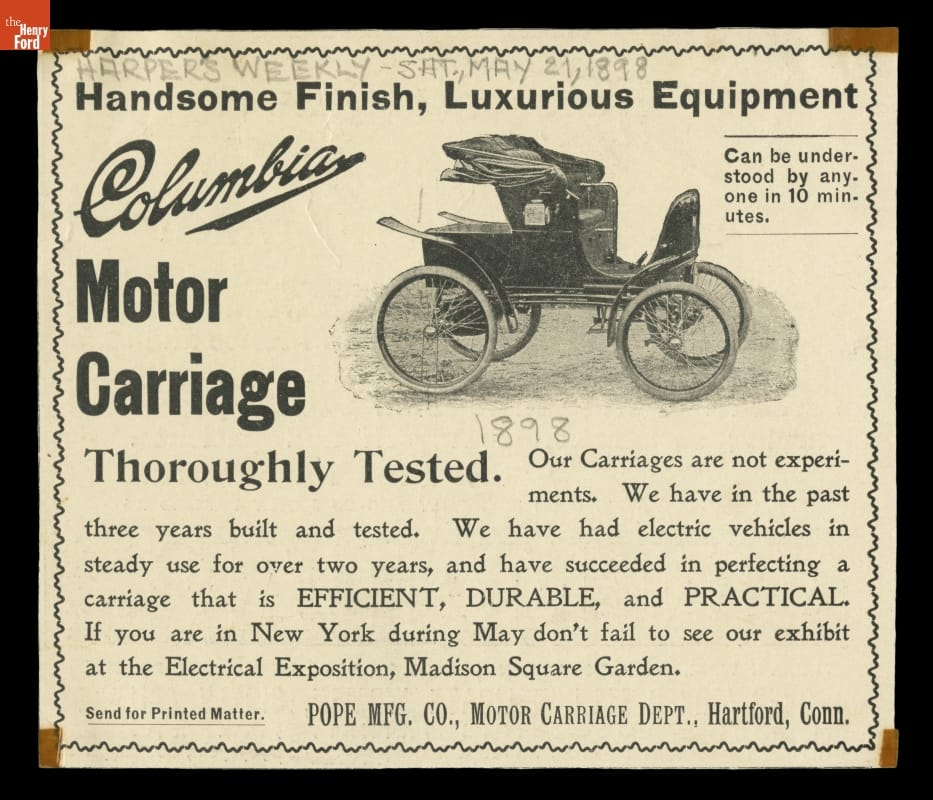
- Advertisement for Pope Manufacturing Company's Columbia Motor Carriage, 1898 - Albert Augustus Pope formed Pope Manufacturing Company in 1876. Two years later, it began producing bicycles. Pope kept up with the times, introducing electric automobiles in 1897 and motorcycles in 1902. When electric-car sales declined, so too did Pope's fortunes. The company filed for bankruptcy in 1915.
- May 21, 1898
- Collections - Artifact
Advertisement for Pope Manufacturing Company's Columbia Motor Carriage, 1898
Albert Augustus Pope formed Pope Manufacturing Company in 1876. Two years later, it began producing bicycles. Pope kept up with the times, introducing electric automobiles in 1897 and motorcycles in 1902. When electric-car sales declined, so too did Pope's fortunes. The company filed for bankruptcy in 1915.
- "Harper's Weekly" Bound Volume of Issues for the Year 1870 - Readers of <em>Harper's Weekly</em> could find news, fictional works, essays and illustrations depicting life in America and from around the world. This 1870 volume has an article on Hiram Revels, the Senator-elect from Mississippi. Revels, born a free person of color, became the first African American to serve in the United States Congress. He was elected to finish the term of one of Mississippi's Senators, left vacant since the Civil War.
- 01 January 1870 - 31 December 1870
- Collections - Artifact
"Harper's Weekly" Bound Volume of Issues for the Year 1870
Readers of Harper's Weekly could find news, fictional works, essays and illustrations depicting life in America and from around the world. This 1870 volume has an article on Hiram Revels, the Senator-elect from Mississippi. Revels, born a free person of color, became the first African American to serve in the United States Congress. He was elected to finish the term of one of Mississippi's Senators, left vacant since the Civil War.
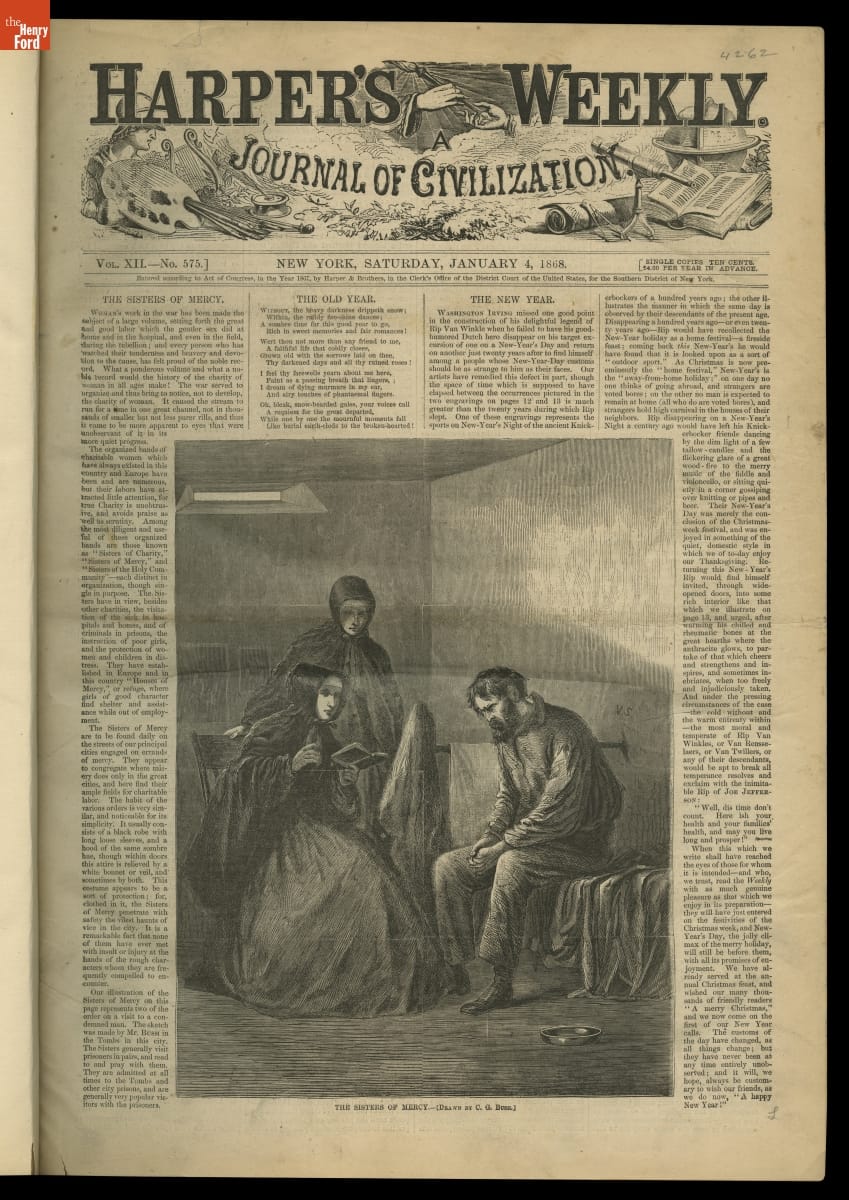
- Harper's Weekly, Volume 12, 1868 - <em>Harper's Weekly</em> began publishing in 1857. Published by Harper & Brothers, issues contained news articles, literary works, essays, and illustrations depicting life in America and around the world. <em> Harper's Weekly</em> ceased publication in 1916.
- January 1868-December 1868
- Collections - Artifact
Harper's Weekly, Volume 12, 1868
Harper's Weekly began publishing in 1857. Published by Harper & Brothers, issues contained news articles, literary works, essays, and illustrations depicting life in America and around the world. Harper's Weekly ceased publication in 1916.
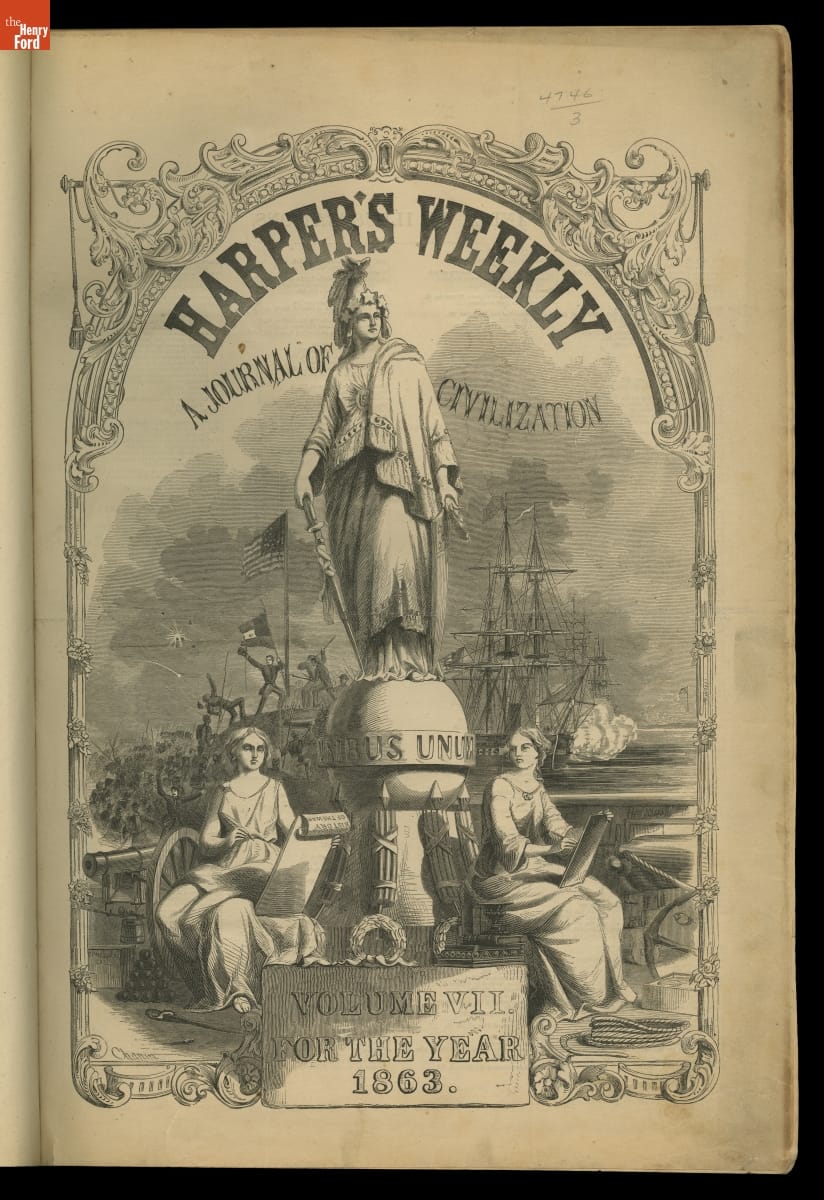
- "Harper's Weekly," Bound Volume of Issues from 1863 - <em>Harper's Weekly</em> began publishing in 1857. Published by Harper & Brothers, issues contained news articles, literary works, essays, and illustrations depicting life in America and around the world. <em> Harper's Weekly</em> ceased publication in 1916.
- January 1863-December 1863
- Collections - Artifact
"Harper's Weekly," Bound Volume of Issues from 1863
Harper's Weekly began publishing in 1857. Published by Harper & Brothers, issues contained news articles, literary works, essays, and illustrations depicting life in America and around the world. Harper's Weekly ceased publication in 1916.
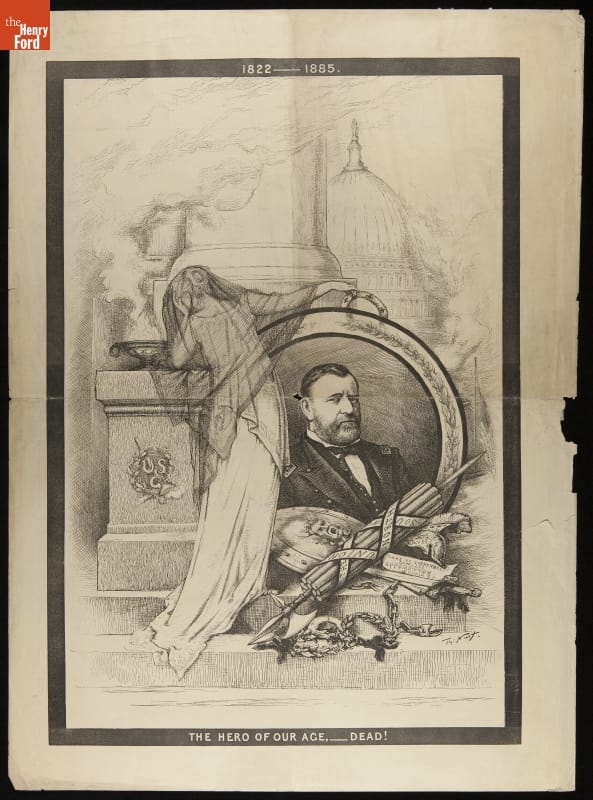
- Line Engraving from a Thomas Nast Drawing, "Hero of Our Age, -Dead!," 1885 - Thomas Nast (1840-1902) was an influential illustrator and political cartoonist. His illustrations -- especially those created during his 25-year career working for Harper & Brothers -- reflected his political and social leanings. Nast was a friend and supporter of Ulysses Grant. This engraving appeared in <EM>Harper's Weekly</EM> on August 1, 1885, about ten days after the former President's death.
- August 01, 1885
- Collections - Artifact
Line Engraving from a Thomas Nast Drawing, "Hero of Our Age, -Dead!," 1885
Thomas Nast (1840-1902) was an influential illustrator and political cartoonist. His illustrations -- especially those created during his 25-year career working for Harper & Brothers -- reflected his political and social leanings. Nast was a friend and supporter of Ulysses Grant. This engraving appeared in Harper's Weekly on August 1, 1885, about ten days after the former President's death.
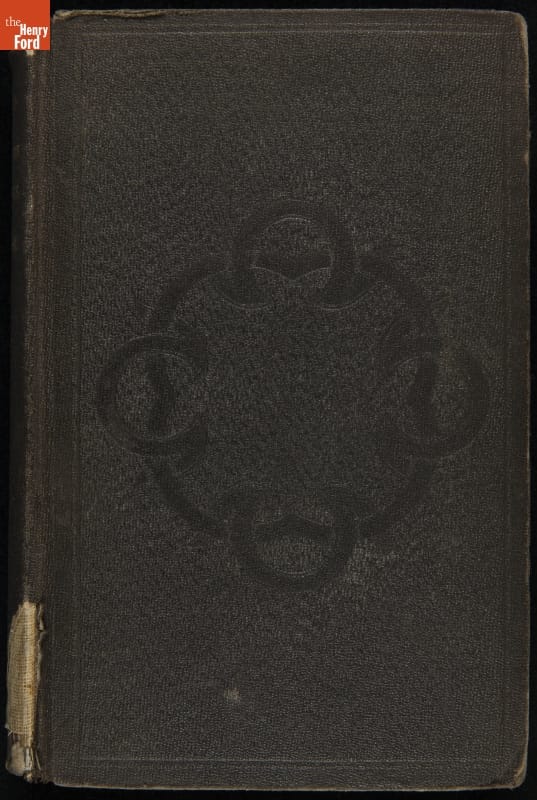
- Book Used by the Wright Family, "Memoirs of Celebrated Characters," Volume I, 1854 - Milton and Susan Wright encouraged an interest in learning in their children Reuchlin, Lorin, Wilbur, Orville, and Katharine -- though not necessarily in formal education. Katharine was the only Wright child to finish college, graduating from Oberlin in 1898. Neither Wilbur nor Orville finished high school, but they learned much from their father's extensive home library.
- 1854
- Collections - Artifact
Book Used by the Wright Family, "Memoirs of Celebrated Characters," Volume I, 1854
Milton and Susan Wright encouraged an interest in learning in their children Reuchlin, Lorin, Wilbur, Orville, and Katharine -- though not necessarily in formal education. Katharine was the only Wright child to finish college, graduating from Oberlin in 1898. Neither Wilbur nor Orville finished high school, but they learned much from their father's extensive home library.