
Search
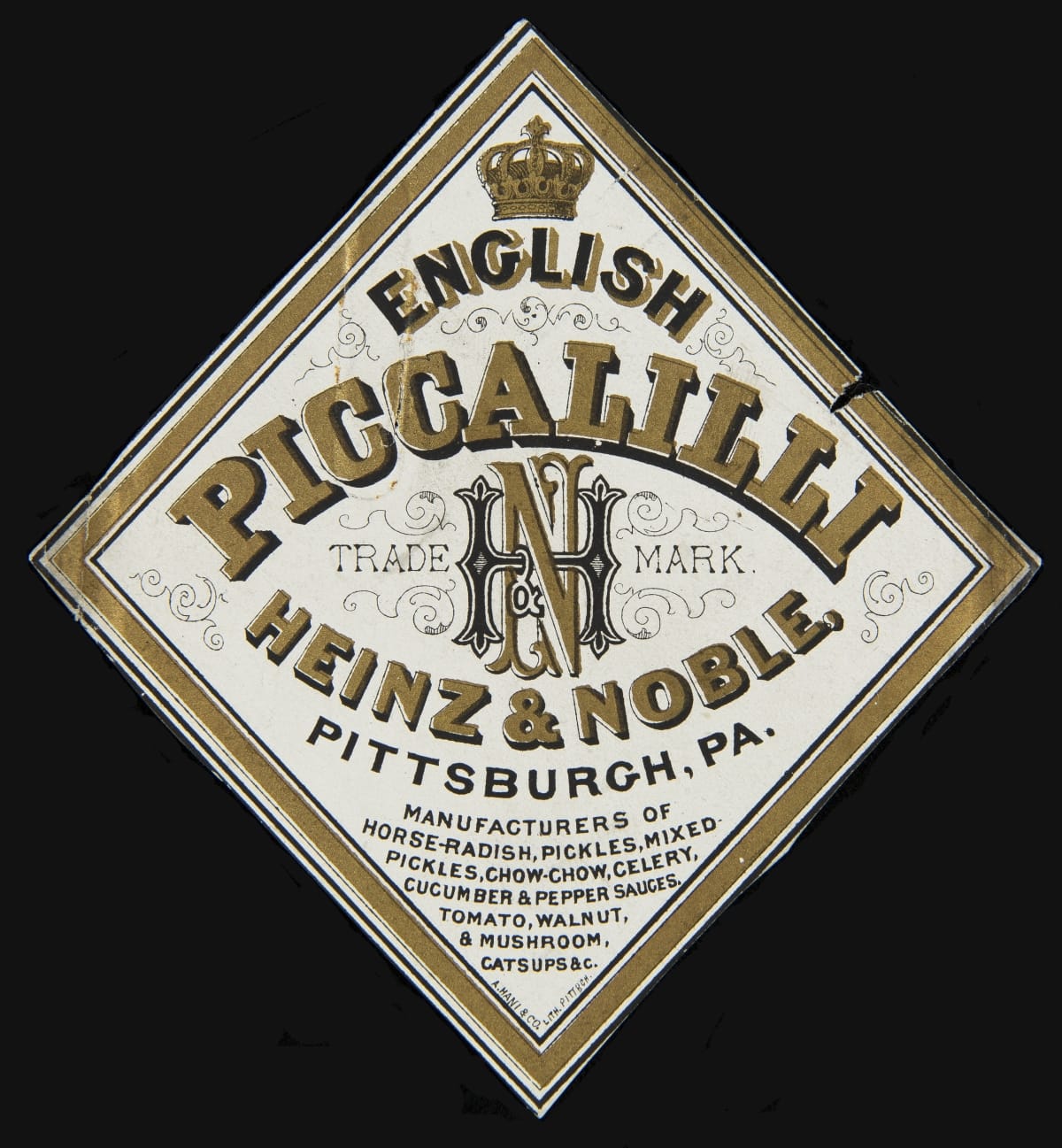
- Label, "Heinz & Noble Brand English Piccalilli," circa 1872 - In 1869, entrepreneur H.J. Heinz entered the processed food business with L.C. Noble to form Heinz & Noble. Horseradish was their first product, quickly followed by celery sauce and pickled cucumbers (pickles today). The company's product line continued to expand to include other varieties of pickled foods and condiments, like English Piccalilli, a type of relish.
- circa 1872
- Collections - Artifact
Label, "Heinz & Noble Brand English Piccalilli," circa 1872
In 1869, entrepreneur H.J. Heinz entered the processed food business with L.C. Noble to form Heinz & Noble. Horseradish was their first product, quickly followed by celery sauce and pickled cucumbers (pickles today). The company's product line continued to expand to include other varieties of pickled foods and condiments, like English Piccalilli, a type of relish.
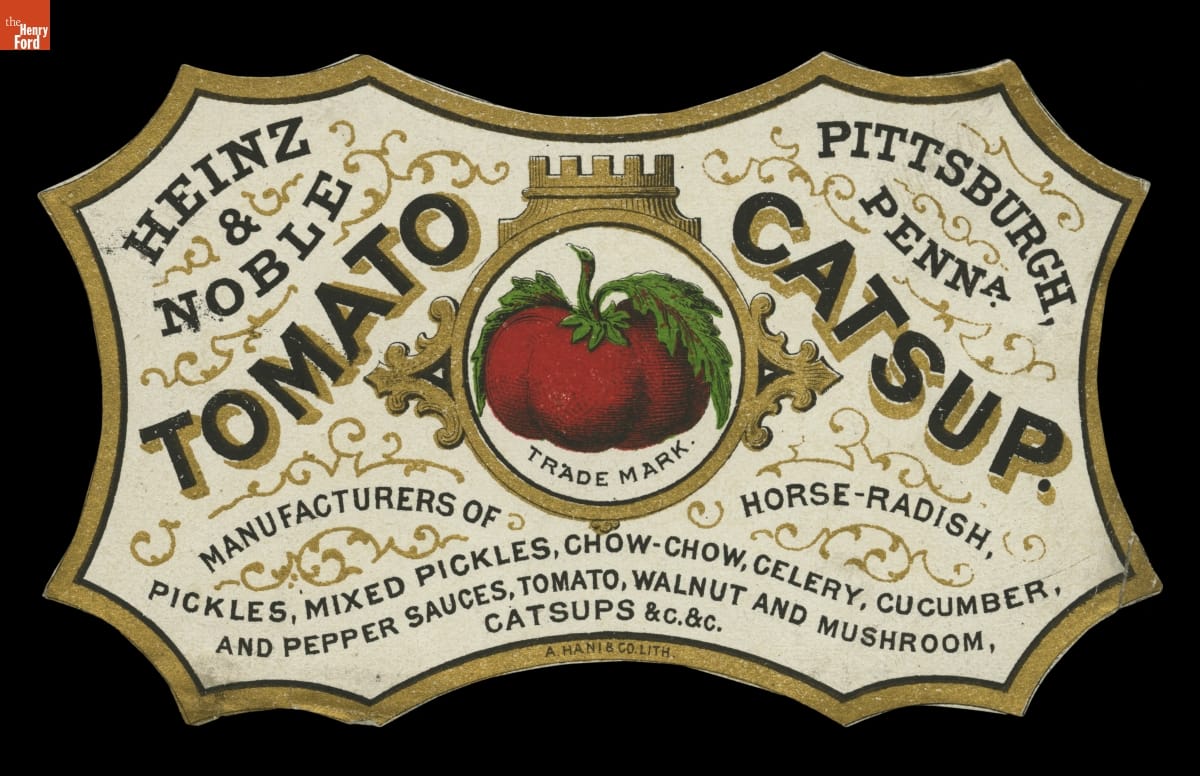
- Product Label for Bottled Tomato Catsup by Heinz, Noble & Company, circa 1873 - Henry J. Heinz introduced tomato ketchup as one of his first bottled condiments in the 1870s. To ensure his success among competing ketchup manufacturers, Heinz employed innovative product packaging. Eye-catching labels attracted customers, and clear glass bottles revealed a high-quality product. By about 1905, the H.J. Heinz Company had become the largest ketchup producer in the nation.
- circa 1873
- Collections - Artifact
Product Label for Bottled Tomato Catsup by Heinz, Noble & Company, circa 1873
Henry J. Heinz introduced tomato ketchup as one of his first bottled condiments in the 1870s. To ensure his success among competing ketchup manufacturers, Heinz employed innovative product packaging. Eye-catching labels attracted customers, and clear glass bottles revealed a high-quality product. By about 1905, the H.J. Heinz Company had become the largest ketchup producer in the nation.
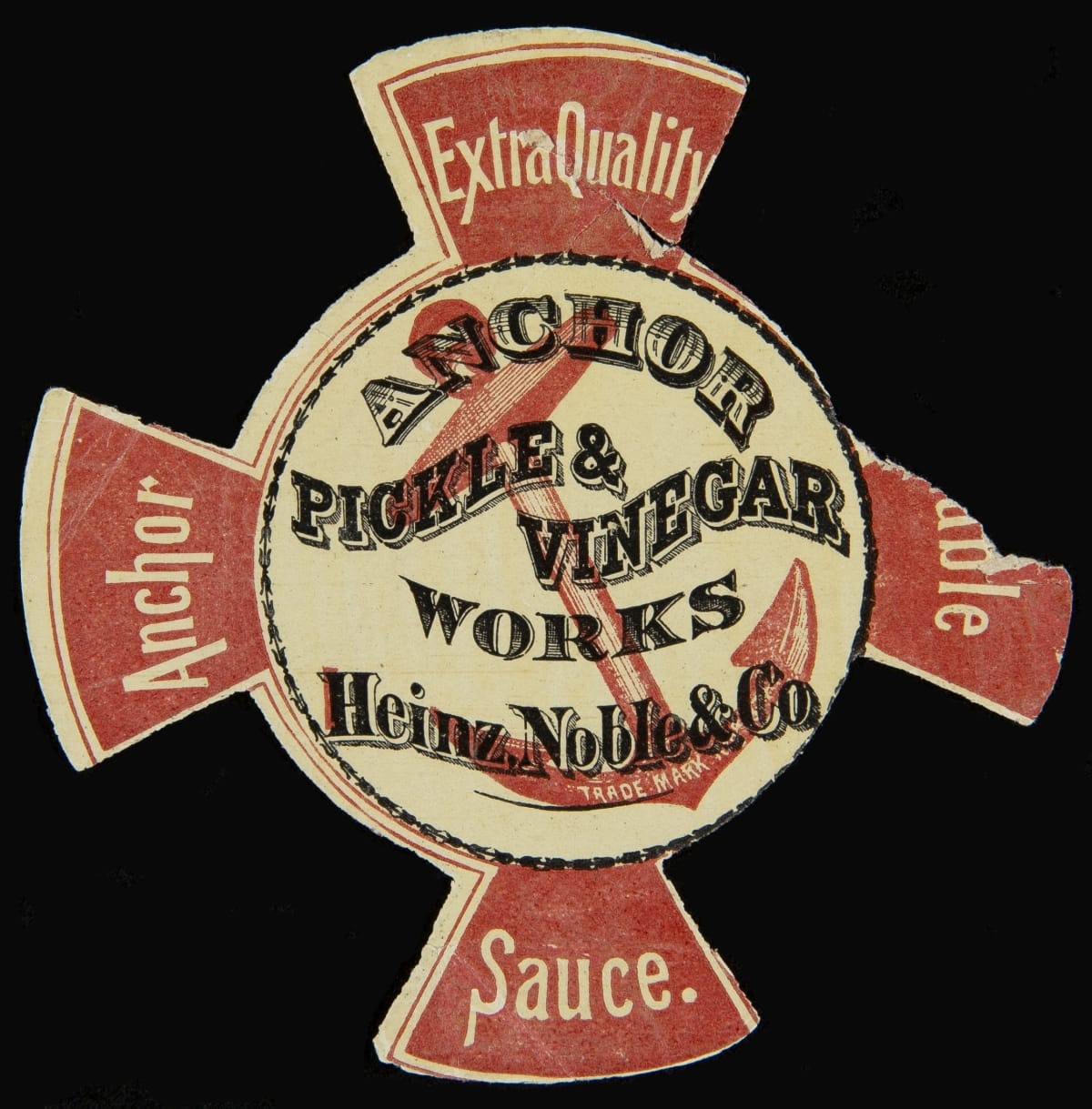
- Label, "Heinz, Noble & Company Brand Sauce Product," circa 1875 - In 1869, entrepreneur H.J. Heinz entered the processed food business with L.C. Noble selling products under the Anchor Brand. Horseradish was their first product, quickly followed by celery sauce and pickled cucumbers (pickles today) among other pickled foods and condiments. In 1872, L.C. Noble's brother joined the partnership and the company's name officially became Heinz, Noble & Co. until it went bankrupt in 1875.
- circa 1875
- Collections - Artifact
Label, "Heinz, Noble & Company Brand Sauce Product," circa 1875
In 1869, entrepreneur H.J. Heinz entered the processed food business with L.C. Noble selling products under the Anchor Brand. Horseradish was their first product, quickly followed by celery sauce and pickled cucumbers (pickles today) among other pickled foods and condiments. In 1872, L.C. Noble's brother joined the partnership and the company's name officially became Heinz, Noble & Co. until it went bankrupt in 1875.
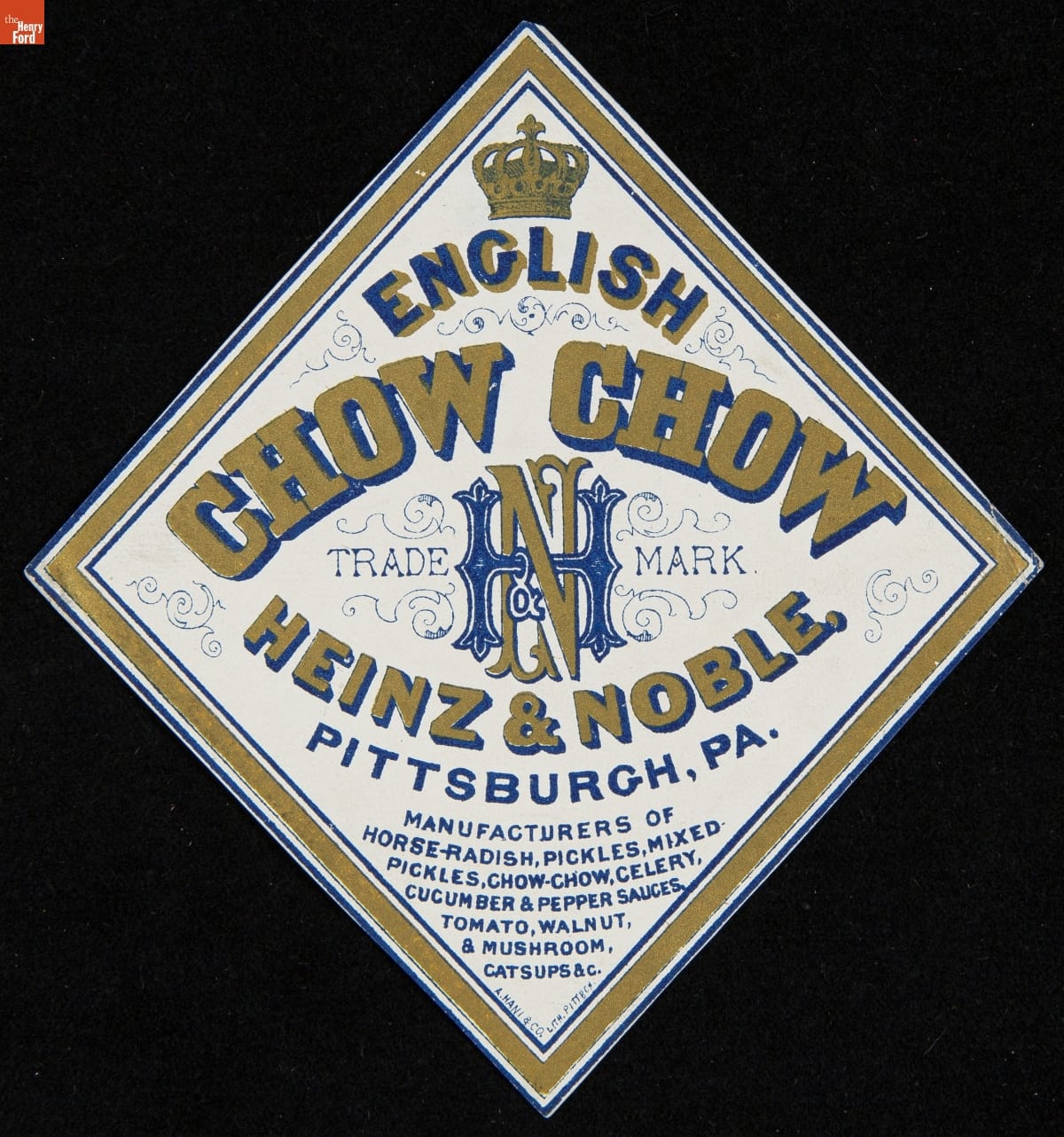
- Label, "Heinz & Noble Brand English Chow Chow," 1869-1872 - In 1869, entrepreneur H.J. Heinz entered the processed food business with L.C. Noble to form Heinz & Noble. Horseradish was their first product, quickly followed by celery sauce and pickled cucumbers (pickles today). The company's product line continued to expand to include other varieties of pickled foods and condiments, like English Chow Chow.
- 1869-1872
- Collections - Artifact
Label, "Heinz & Noble Brand English Chow Chow," 1869-1872
In 1869, entrepreneur H.J. Heinz entered the processed food business with L.C. Noble to form Heinz & Noble. Horseradish was their first product, quickly followed by celery sauce and pickled cucumbers (pickles today). The company's product line continued to expand to include other varieties of pickled foods and condiments, like English Chow Chow.
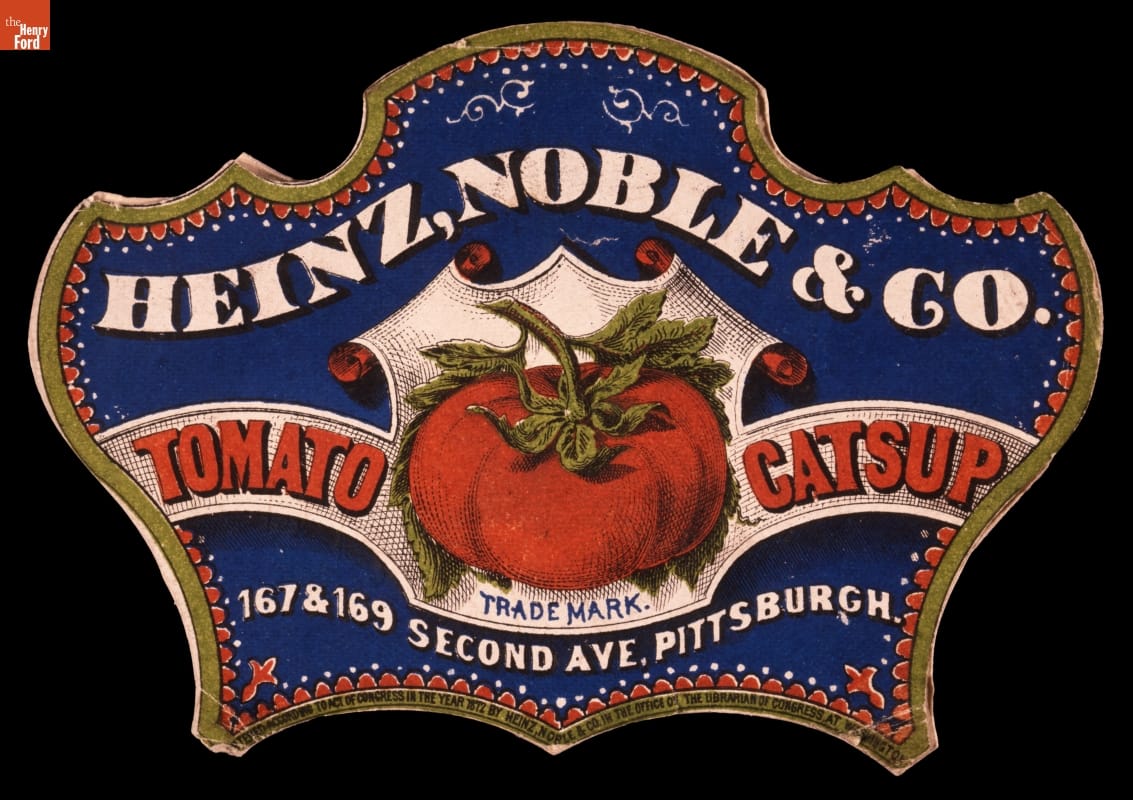
- Product Label for Tomato Catsup by Heinz, Noble & Co., 1872-1873 - Henry J. Heinz introduced tomato ketchup as one of his first bottled condiments in the 1870s. To ensure his success among competing ketchup manufacturers, Heinz employed innovative product packaging. Eye-catching labels attracted customers, and clear glass bottles revealed a high-quality product. By about 1905, the H.J. Heinz Company had become the largest ketchup producer in the nation.
- 1872-1873
- Collections - Artifact
Product Label for Tomato Catsup by Heinz, Noble & Co., 1872-1873
Henry J. Heinz introduced tomato ketchup as one of his first bottled condiments in the 1870s. To ensure his success among competing ketchup manufacturers, Heinz employed innovative product packaging. Eye-catching labels attracted customers, and clear glass bottles revealed a high-quality product. By about 1905, the H.J. Heinz Company had become the largest ketchup producer in the nation.
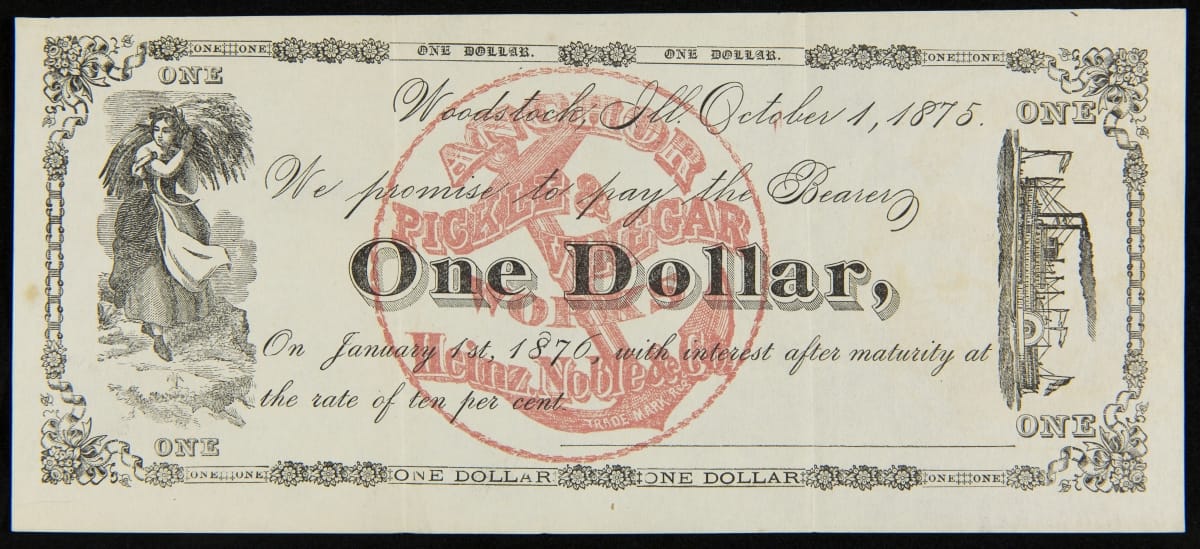
- One Dollar Promissory Note from Heinz, Noble & Company, Woodstock, Illinois, Issued October 1, 1875 - H.J. Heinz's first business began in 1869 exclusively selling horseradish. By 1872, the company was known as Heinz, Noble, & Company. This promissory note from the company promised the bearer the stated sum. The company was bankrupt by the end of 1875, but Heinz built back his reputation with an new company, F. & J. Heinz, which would later become the H.J. Heinz Company.
- October 01, 1875
- Collections - Artifact
One Dollar Promissory Note from Heinz, Noble & Company, Woodstock, Illinois, Issued October 1, 1875
H.J. Heinz's first business began in 1869 exclusively selling horseradish. By 1872, the company was known as Heinz, Noble, & Company. This promissory note from the company promised the bearer the stated sum. The company was bankrupt by the end of 1875, but Heinz built back his reputation with an new company, F. & J. Heinz, which would later become the H.J. Heinz Company.
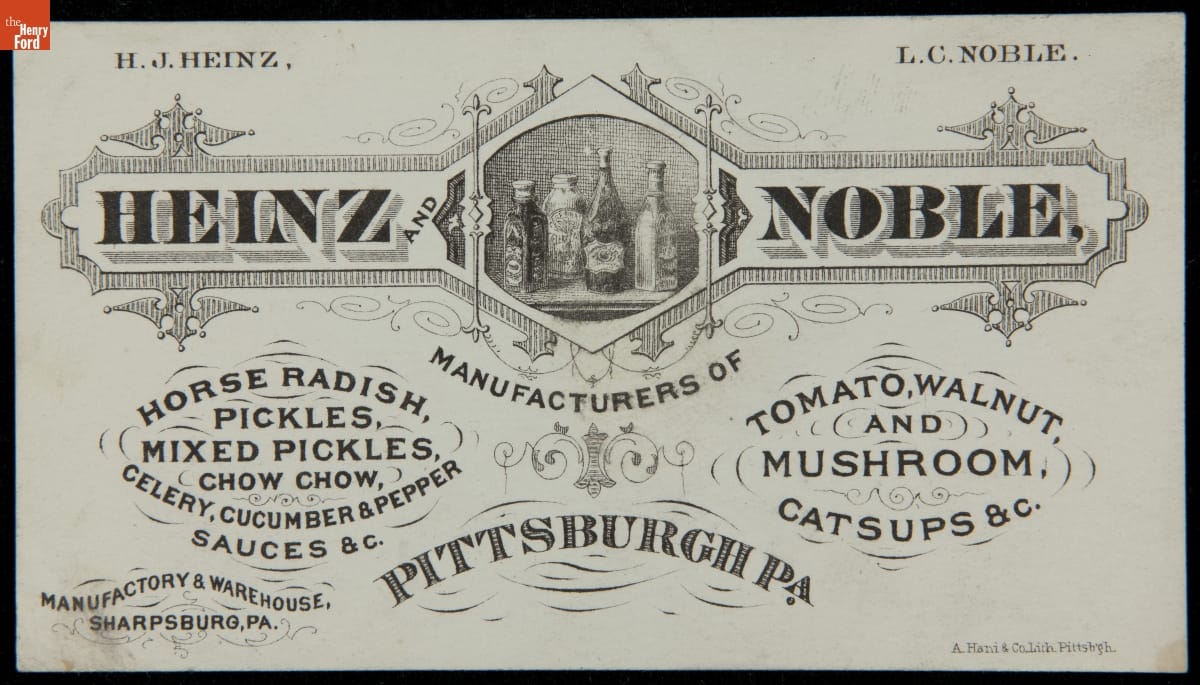
- Trade Card for Heinz & Noble, circa 1872 - In 1869, H.J. Heinz entered his first business partnership to form Heinz & Noble. It began by exclusively selling horseradish and within a few years expanded to include pickles and condiments such as celery sauce and "catsups." Heinz & Noble advertised its products in a variety of methods, including trade cards -- a medium that gained momentum in the late 19th century.
- circa 1872
- Collections - Artifact
Trade Card for Heinz & Noble, circa 1872
In 1869, H.J. Heinz entered his first business partnership to form Heinz & Noble. It began by exclusively selling horseradish and within a few years expanded to include pickles and condiments such as celery sauce and "catsups." Heinz & Noble advertised its products in a variety of methods, including trade cards -- a medium that gained momentum in the late 19th century.
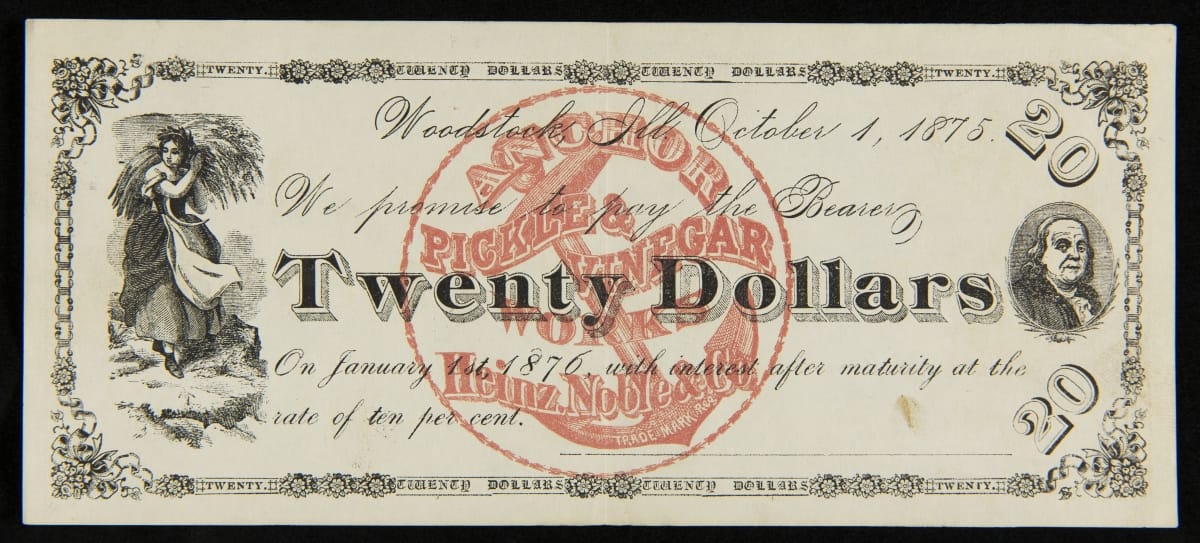
- Twenty Dollar Promissory Note from Heinz, Noble & Company, Woodstock, Illinois, Issued October 1, 1875 - H.J. Heinz's first business began in 1869 exclusively selling horseradish. By 1872, the company was known as Heinz, Noble, & Company. This promissory note from the company promised the bearer the stated sum. The company was bankrupt by the end of 1875, but Heinz built back his reputation with an new company, F. & J. Heinz, which would later become the H.J. Heinz Company.
- October 01, 1875
- Collections - Artifact
Twenty Dollar Promissory Note from Heinz, Noble & Company, Woodstock, Illinois, Issued October 1, 1875
H.J. Heinz's first business began in 1869 exclusively selling horseradish. By 1872, the company was known as Heinz, Noble, & Company. This promissory note from the company promised the bearer the stated sum. The company was bankrupt by the end of 1875, but Heinz built back his reputation with an new company, F. & J. Heinz, which would later become the H.J. Heinz Company.
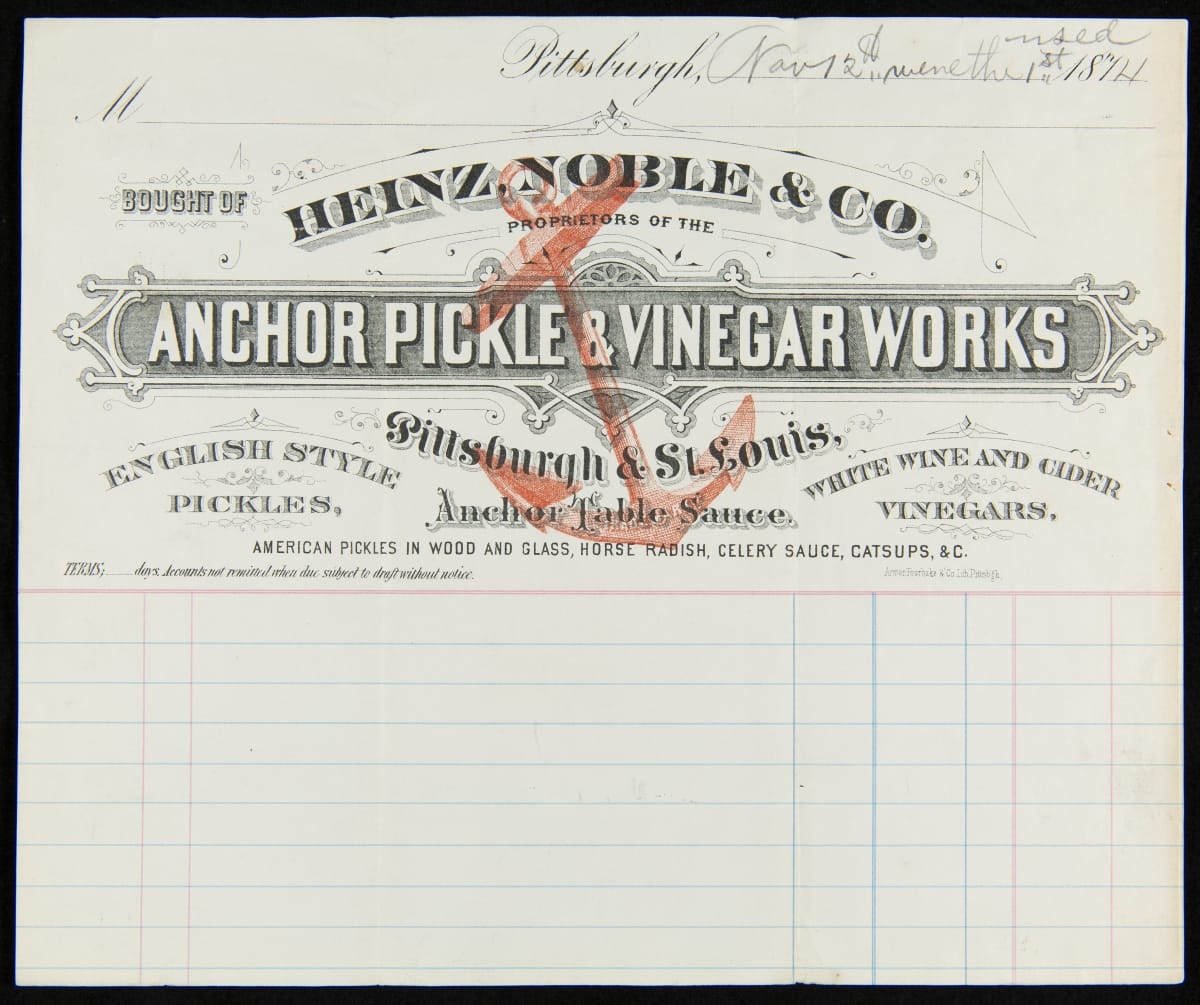
- Invoice from Heinz, Noble & Company, Pittsburgh, Pennsylvania, November 12, 1874 - H.J. Heinz entered his first business partnership in 1869 to form Heinz & Noble. Within several years the company gained a reputation for selling high-quality pickled foods and condiments. Operations expanded, leading to a name change in 1872. This invoice from 1874 for Heinz, Noble & Co. shows its "Anchor Pickle and Vinegar Works" brand logo.
- November 12, 1874
- Collections - Artifact
Invoice from Heinz, Noble & Company, Pittsburgh, Pennsylvania, November 12, 1874
H.J. Heinz entered his first business partnership in 1869 to form Heinz & Noble. Within several years the company gained a reputation for selling high-quality pickled foods and condiments. Operations expanded, leading to a name change in 1872. This invoice from 1874 for Heinz, Noble & Co. shows its "Anchor Pickle and Vinegar Works" brand logo.
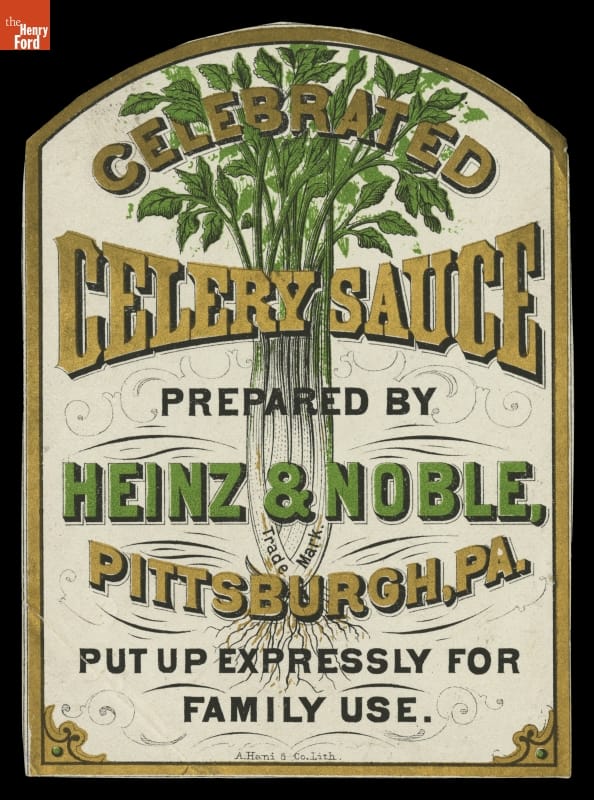
- Product Label for Celebrated Celery Sauce by Heinz & Noble, "Put Up Expressly for Family Use," 1871 - Henry J. Heinz began selling prepared horseradish to nearby grocery stores in 1869, and quickly expanded his product line to include a variety of pickled foods and condiments. To ensure his success among competitors, Heinz based his reputation on superior, consistent products and distinctive packaging. Eye-catching labels attracted customers, and clear glass bottles revealed a high-quality product.
- 1871
- Collections - Artifact
Product Label for Celebrated Celery Sauce by Heinz & Noble, "Put Up Expressly for Family Use," 1871
Henry J. Heinz began selling prepared horseradish to nearby grocery stores in 1869, and quickly expanded his product line to include a variety of pickled foods and condiments. To ensure his success among competitors, Heinz based his reputation on superior, consistent products and distinctive packaging. Eye-catching labels attracted customers, and clear glass bottles revealed a high-quality product.