
Search
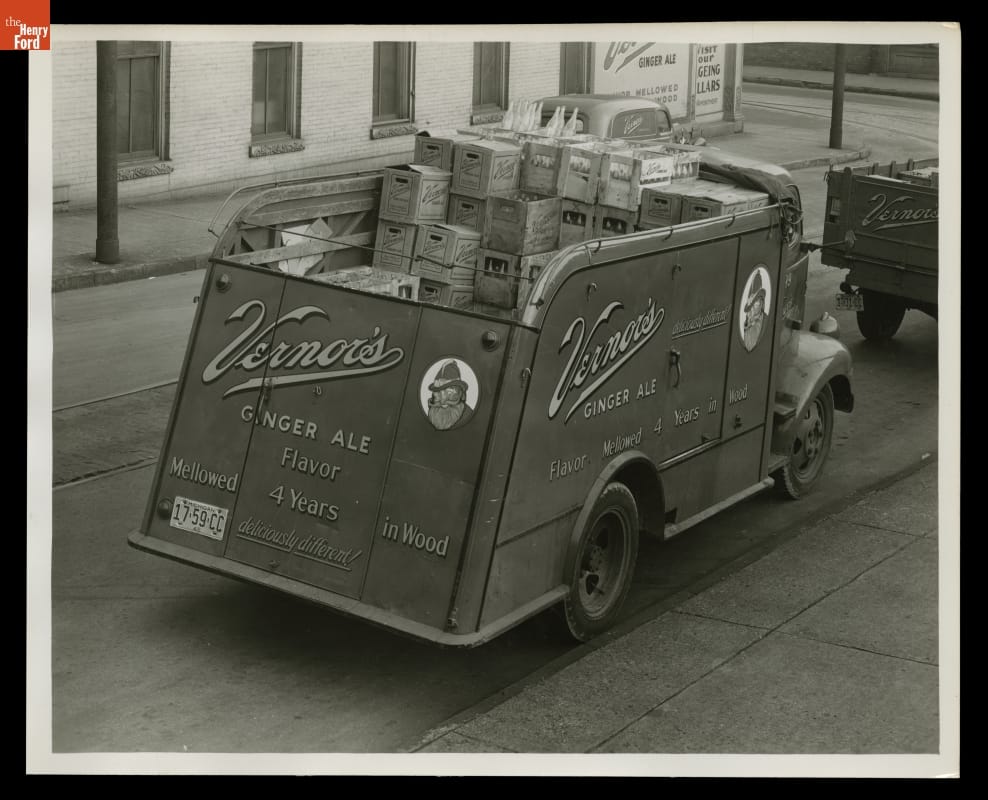
- 1946 Ford Delivery Truck for Vernor's Ginger Ale, November 20, 1945 - Vernor's Ginger Ale, one of the oldest surviving soft drinks in the United States, was created in Detroit. By the mid-1910s, innovations in bottling technology and the increasing affordability of the automobile allowed the company to begin delivery of the beverage. Vernor's Ginger Ale's first delivery fleet, purchased in 1916, included eight Ford Model T trucks. The company continued to use Ford vehicles for many years.
- November 20, 1945
- Collections - Artifact
1946 Ford Delivery Truck for Vernor's Ginger Ale, November 20, 1945
Vernor's Ginger Ale, one of the oldest surviving soft drinks in the United States, was created in Detroit. By the mid-1910s, innovations in bottling technology and the increasing affordability of the automobile allowed the company to begin delivery of the beverage. Vernor's Ginger Ale's first delivery fleet, purchased in 1916, included eight Ford Model T trucks. The company continued to use Ford vehicles for many years.
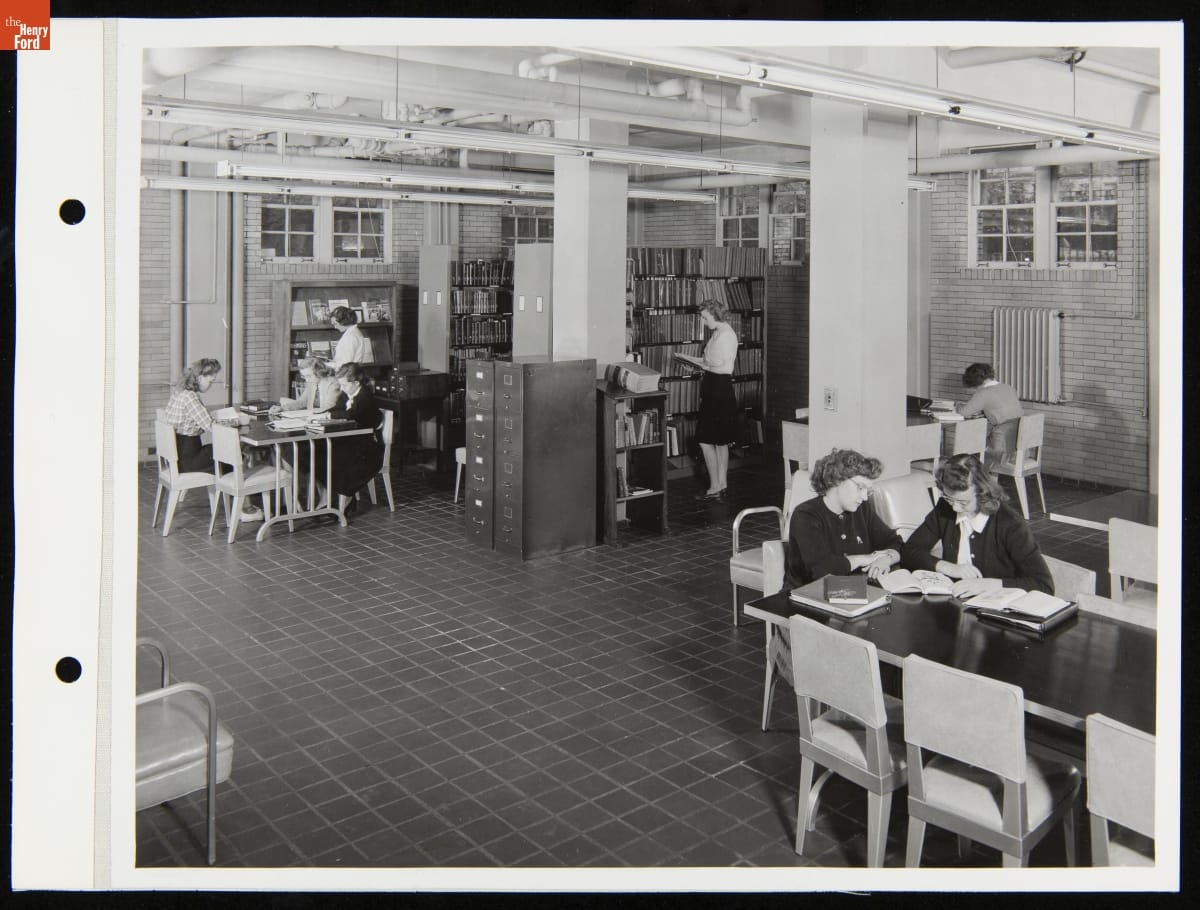
- Henry Ford Hospital Nursing Students Studying in the Clara Ford Nurses Home, November 4, 1947 - In June 1925, Henry Ford Hospital opened a School of Nursing. The two-story Education Building featured classrooms, lecture halls and a gymnasium. The six-story Clara Ford Nurses Home had living quarters for 300 students. The school's first class included 93 young women enrolled in the three-year, tuition-free program.
- November 04, 1947
- Collections - Artifact
Henry Ford Hospital Nursing Students Studying in the Clara Ford Nurses Home, November 4, 1947
In June 1925, Henry Ford Hospital opened a School of Nursing. The two-story Education Building featured classrooms, lecture halls and a gymnasium. The six-story Clara Ford Nurses Home had living quarters for 300 students. The school's first class included 93 young women enrolled in the three-year, tuition-free program.
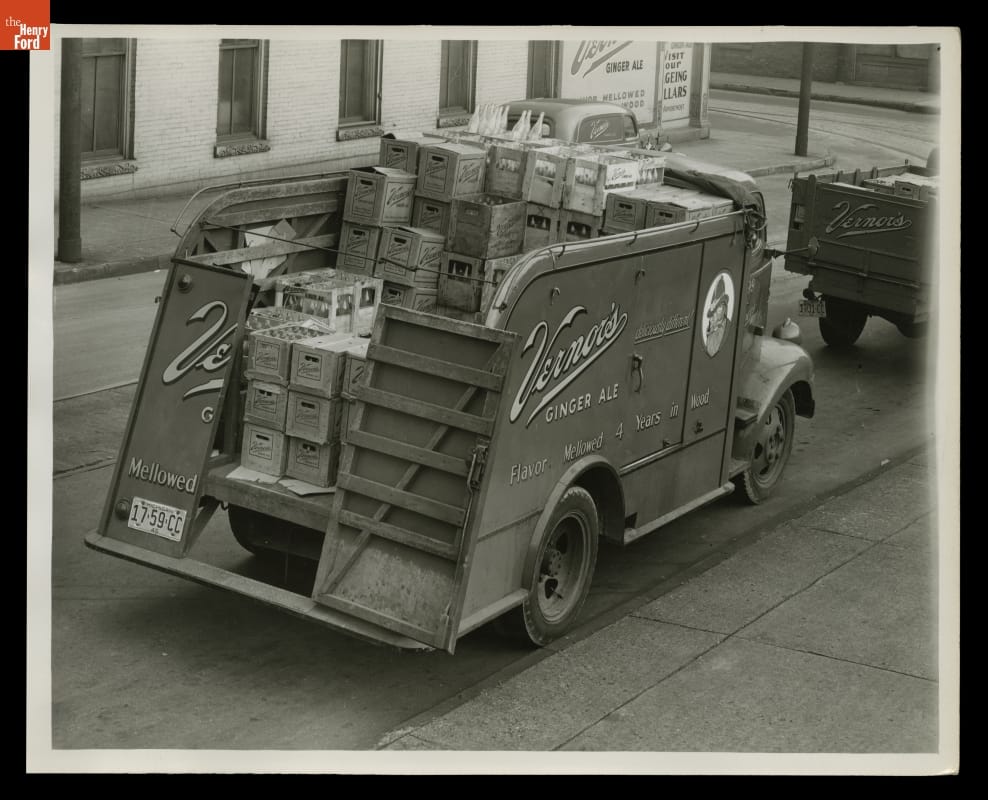
- 1946 Ford Delivery Truck for Vernor's Ginger Ale, November 20, 1945 - Vernor's Ginger Ale, one of the oldest surviving soft drinks in the United States, was created in Detroit. By the mid-1910s, innovations in bottling technology and the increasing affordability of the automobile allowed the company to begin delivery of the beverage. Vernor's Ginger Ale's first delivery fleet, purchased in 1916, included eight Ford Model T trucks. The company continued to use Ford vehicles for many years.
- November 20, 1945
- Collections - Artifact
1946 Ford Delivery Truck for Vernor's Ginger Ale, November 20, 1945
Vernor's Ginger Ale, one of the oldest surviving soft drinks in the United States, was created in Detroit. By the mid-1910s, innovations in bottling technology and the increasing affordability of the automobile allowed the company to begin delivery of the beverage. Vernor's Ginger Ale's first delivery fleet, purchased in 1916, included eight Ford Model T trucks. The company continued to use Ford vehicles for many years.
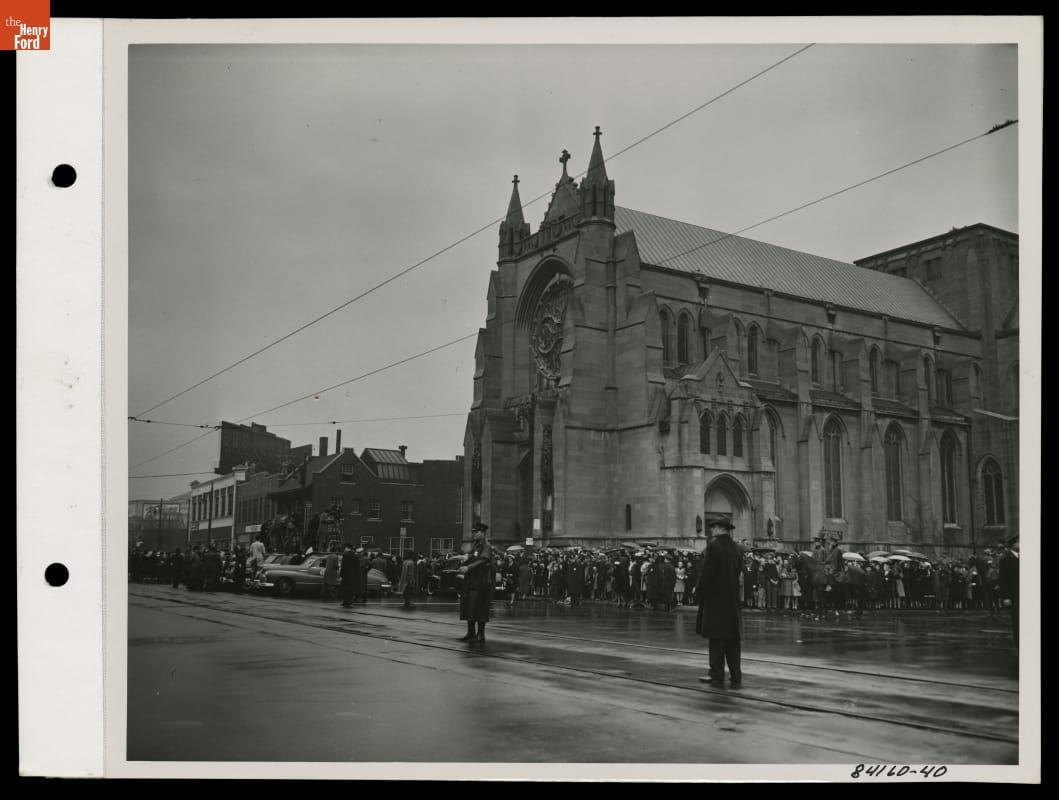
- St. Paul's Episcopal Cathedral during Henry Ford's Funeral, Detroit, Michigan, 1947 - Henry Ford died on April 7, 1947, at his Fair Lane estate in Dearborn, Michigan. Thousands mourned his death. Many waited in a mile-long line to pay their respects when Ford lay in repose at Greenfield Village. This photograph shows the crowd of mourners outside St. Paul's Cathedral on the day of his funeral.
- April 10, 1947
- Collections - Artifact
St. Paul's Episcopal Cathedral during Henry Ford's Funeral, Detroit, Michigan, 1947
Henry Ford died on April 7, 1947, at his Fair Lane estate in Dearborn, Michigan. Thousands mourned his death. Many waited in a mile-long line to pay their respects when Ford lay in repose at Greenfield Village. This photograph shows the crowd of mourners outside St. Paul's Cathedral on the day of his funeral.
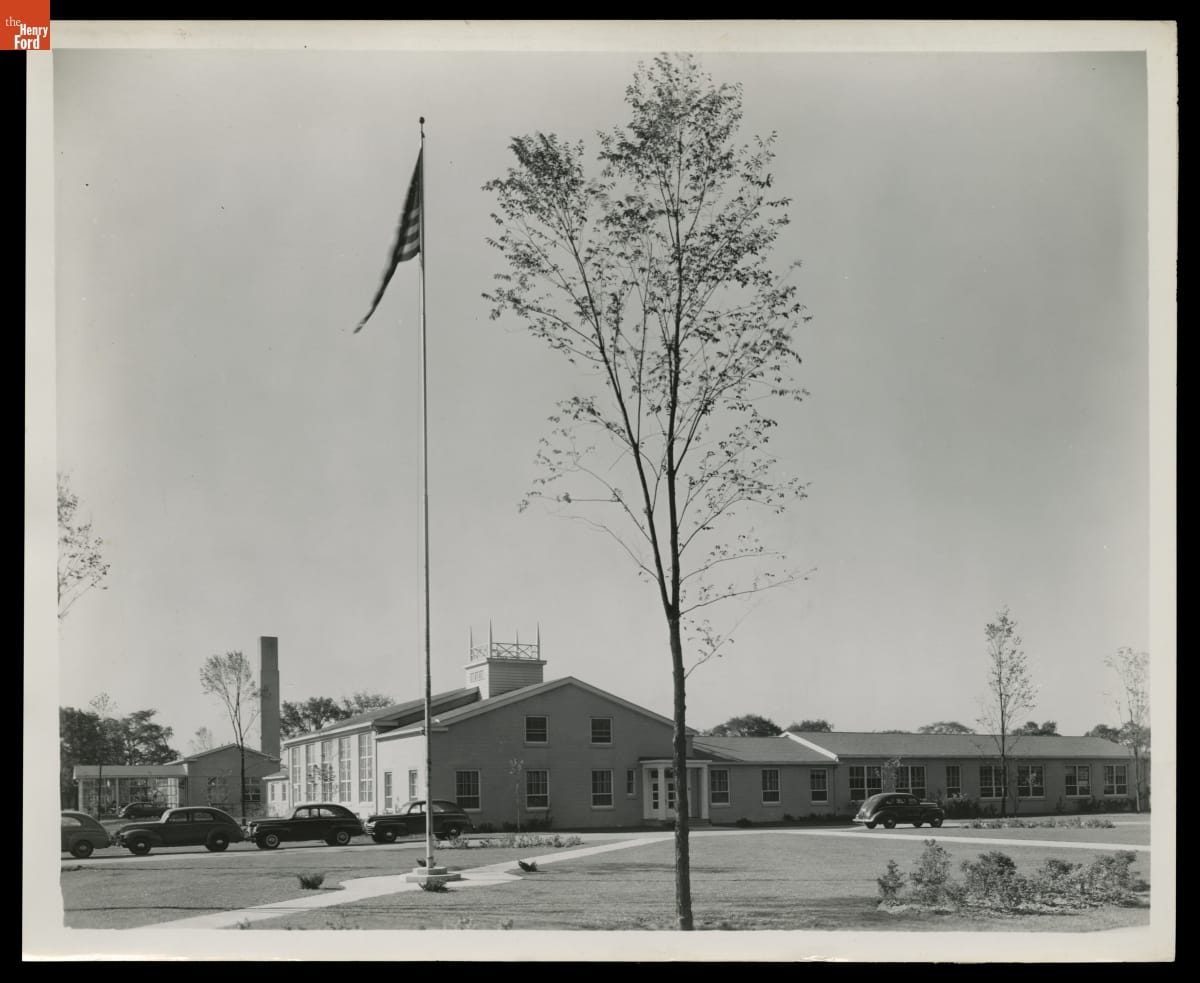
- Camp Legion School of Vocational Guidance, Dearborn, Michigan, September 1946 - Henry Ford opened Camp Legion, near Dearborn, Michigan, in 1938 for sons of dead or disabled World War I veterans. The young men earned steady wages working there seasonally from April-November. The camp's mission was modified in 1944 to include rehabilitation of World War II veterans with disabilities. Veterans learned new skills to help them reenter the workforce.
- September 27, 1946
- Collections - Artifact
Camp Legion School of Vocational Guidance, Dearborn, Michigan, September 1946
Henry Ford opened Camp Legion, near Dearborn, Michigan, in 1938 for sons of dead or disabled World War I veterans. The young men earned steady wages working there seasonally from April-November. The camp's mission was modified in 1944 to include rehabilitation of World War II veterans with disabilities. Veterans learned new skills to help them reenter the workforce.
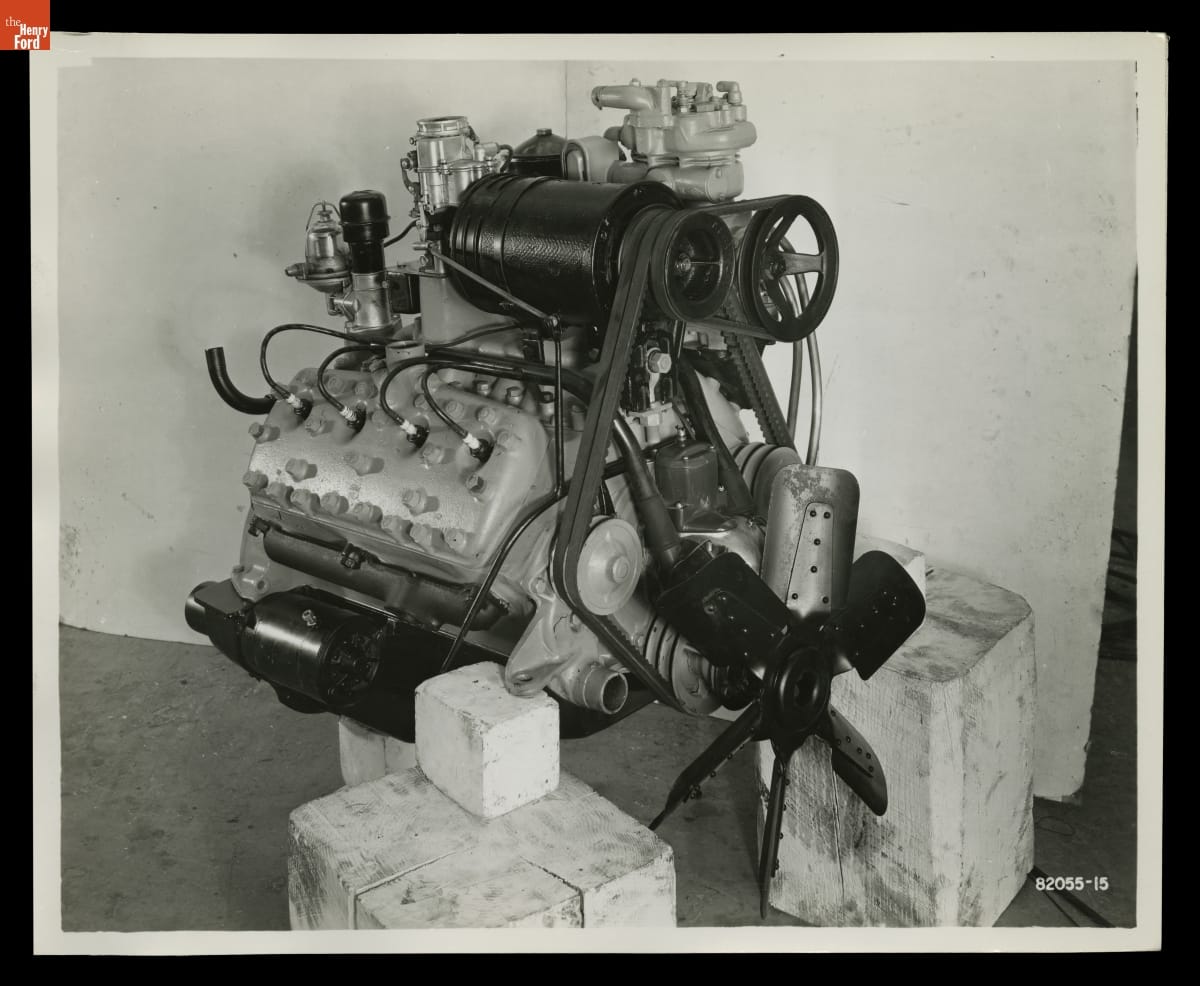
- Engine for 1946 Ford Transit Bus, October 1945 - Ford Motor Company's mid-1940s transit buses were powered by a version of the same V-8 engine found in its passenger cars. Typically, transit bus engines were mounted at the rear, which improved forward visibility for the driver. Ford continued building transit buses during World War II -- public transportation was essential -- but sales climbed after peace returned.
- October 02, 1945
- Collections - Artifact
Engine for 1946 Ford Transit Bus, October 1945
Ford Motor Company's mid-1940s transit buses were powered by a version of the same V-8 engine found in its passenger cars. Typically, transit bus engines were mounted at the rear, which improved forward visibility for the driver. Ford continued building transit buses during World War II -- public transportation was essential -- but sales climbed after peace returned.
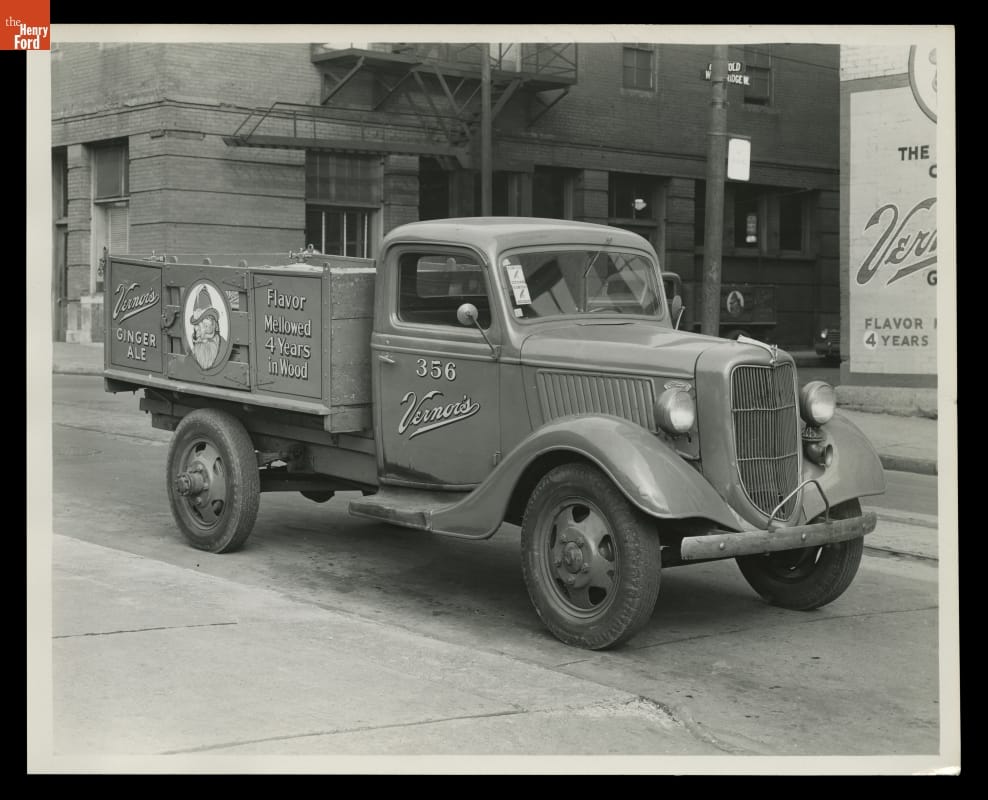
- 1946 Ford Delivery Truck for Vernor's Ginger Ale, November 20, 1945 - Vernor's Ginger Ale, one of the oldest surviving soft drinks in the United States, was created in Detroit. By the mid-1910s, innovations in bottling technology and the increasing affordability of the automobile allowed the company to begin delivery of the beverage. Vernor's Ginger Ale's first delivery fleet, purchased in 1916, included eight Ford Model T trucks. The company continued to use Ford vehicles for many years.
- November 20, 1945
- Collections - Artifact
1946 Ford Delivery Truck for Vernor's Ginger Ale, November 20, 1945
Vernor's Ginger Ale, one of the oldest surviving soft drinks in the United States, was created in Detroit. By the mid-1910s, innovations in bottling technology and the increasing affordability of the automobile allowed the company to begin delivery of the beverage. Vernor's Ginger Ale's first delivery fleet, purchased in 1916, included eight Ford Model T trucks. The company continued to use Ford vehicles for many years.
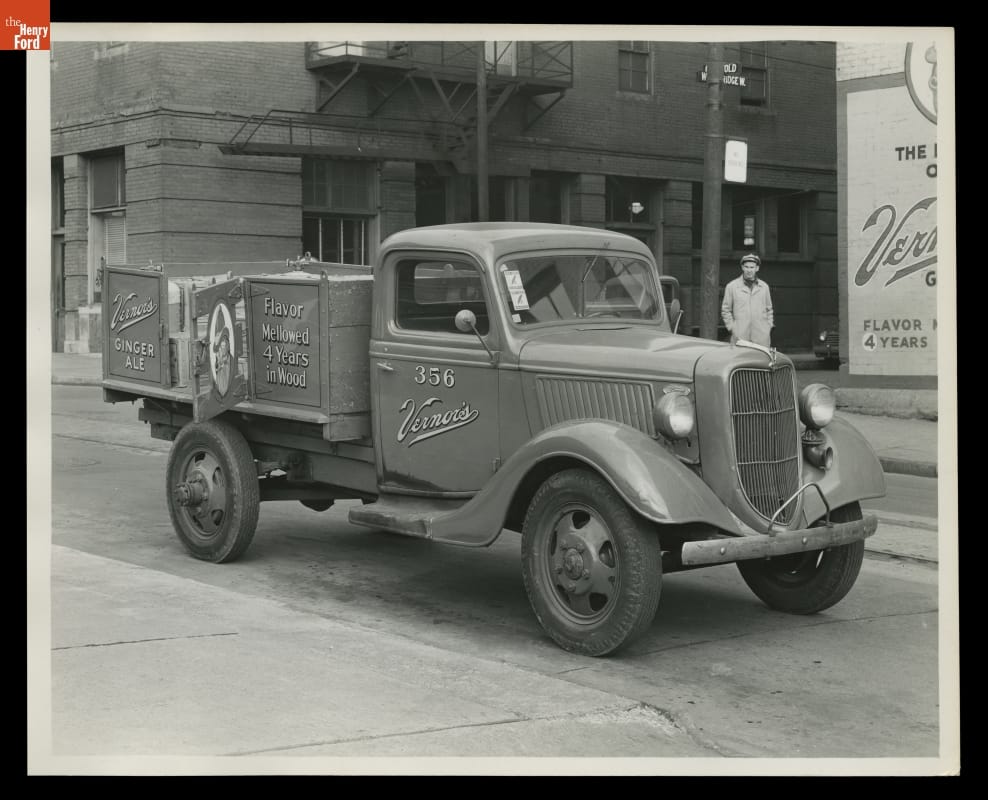
- 1946 Ford Delivery Truck for Vernor's Ginger Ale, November 20, 1945 - Vernor's Ginger Ale, one of the oldest surviving soft drinks in the United States, was created in Detroit. By the mid-1910s, innovations in bottling technology and the increasing affordability of the automobile allowed the company to begin delivery of the beverage. Vernor's Ginger Ale's first delivery fleet, purchased in 1916, included eight Ford Model T trucks. The company continued to use Ford vehicles for many years.
- November 20, 1945
- Collections - Artifact
1946 Ford Delivery Truck for Vernor's Ginger Ale, November 20, 1945
Vernor's Ginger Ale, one of the oldest surviving soft drinks in the United States, was created in Detroit. By the mid-1910s, innovations in bottling technology and the increasing affordability of the automobile allowed the company to begin delivery of the beverage. Vernor's Ginger Ale's first delivery fleet, purchased in 1916, included eight Ford Model T trucks. The company continued to use Ford vehicles for many years.
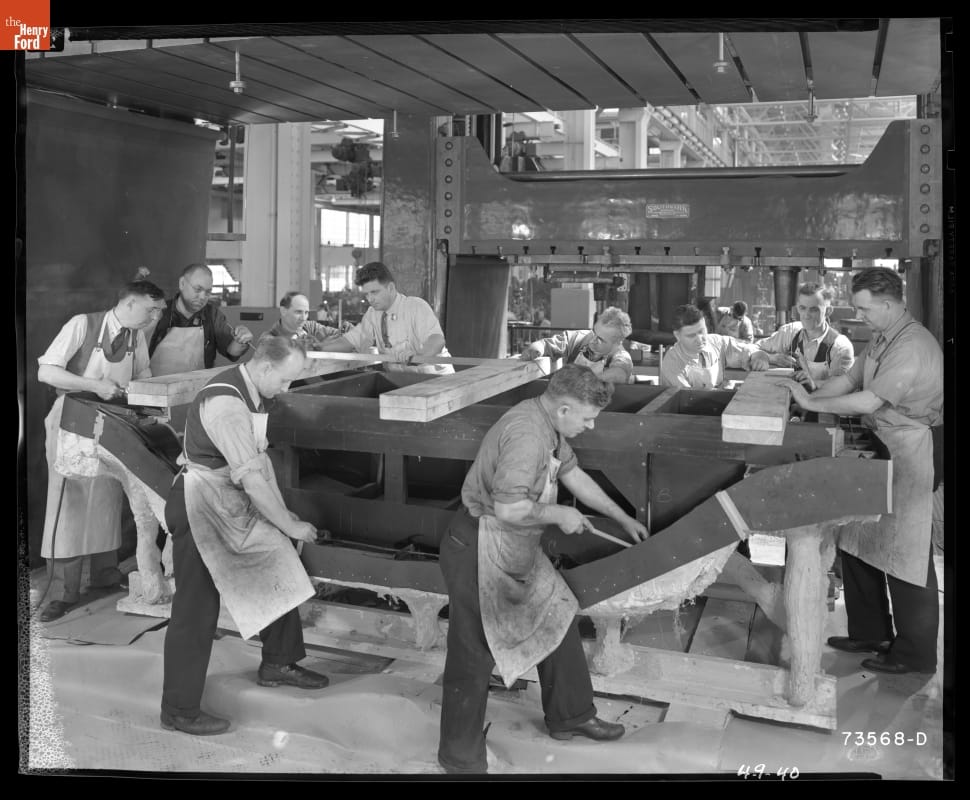
- Men Working in the Tool & Die Shop, Ford Rouge Plant, 1940 - Ford Motor Company constructed a new tool-and-die building at its massive Rouge factory complex in 1938. The employees who staffed the completed building were among the most skilled workers at the Rouge. They designed, built, and repaired the highly specialized tools and machines used throughout the plant. Many learned their crafts at the Henry Ford Trade School.
- April 09, 1940
- Collections - Artifact
Men Working in the Tool & Die Shop, Ford Rouge Plant, 1940
Ford Motor Company constructed a new tool-and-die building at its massive Rouge factory complex in 1938. The employees who staffed the completed building were among the most skilled workers at the Rouge. They designed, built, and repaired the highly specialized tools and machines used throughout the plant. Many learned their crafts at the Henry Ford Trade School.