
Search
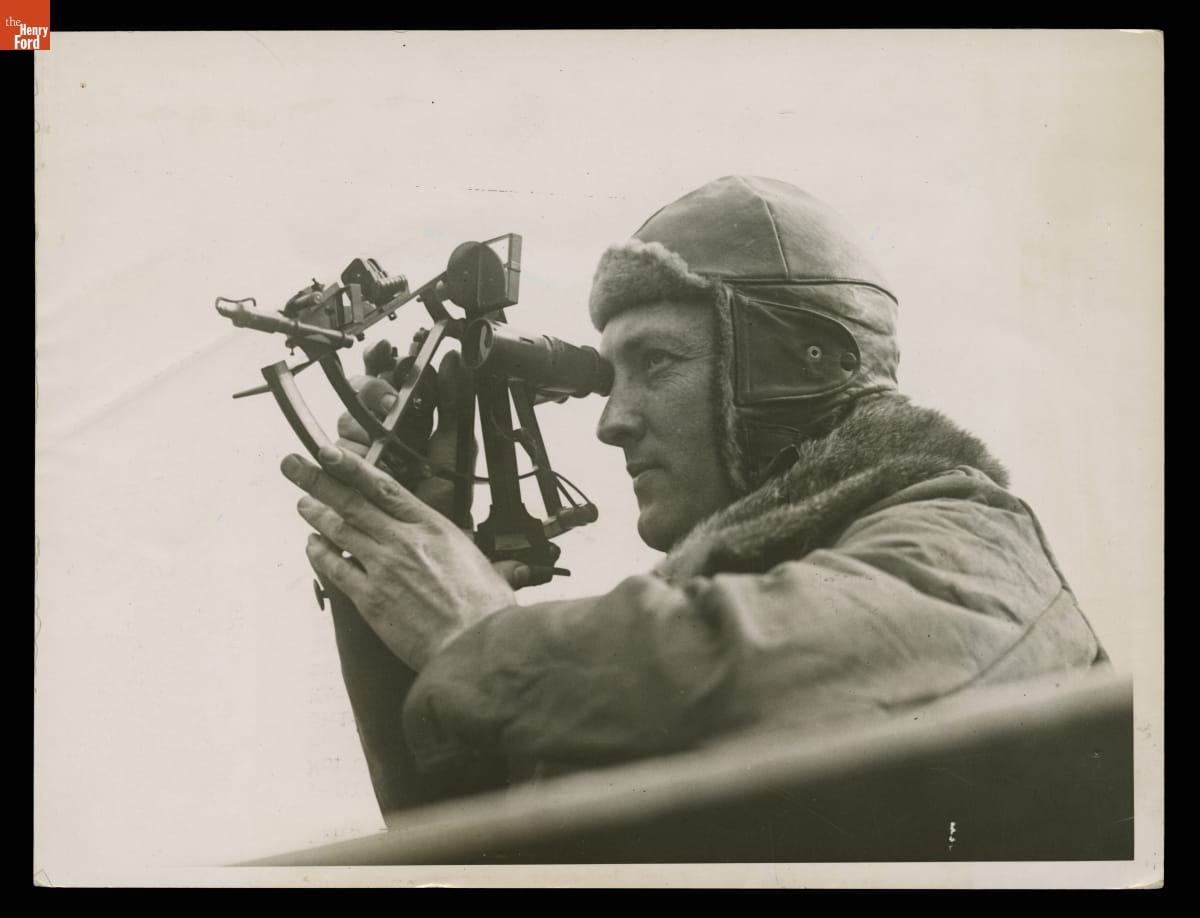
- Richard E. Byrd Using a Sextant, circa 1927 - During his polar expeditions, Richard E. Byrd relied on navigational instruments not much changed in 200 years. Byrd's sextant measured the angle between an astronomical object -- the Sun or a star -- and the horizon. Based on the time of day it was measured, this angle was used to determine Byrd's position on a navigational chart.
- circa 1927
- Collections - Artifact
Richard E. Byrd Using a Sextant, circa 1927
During his polar expeditions, Richard E. Byrd relied on navigational instruments not much changed in 200 years. Byrd's sextant measured the angle between an astronomical object -- the Sun or a star -- and the horizon. Based on the time of day it was measured, this angle was used to determine Byrd's position on a navigational chart.
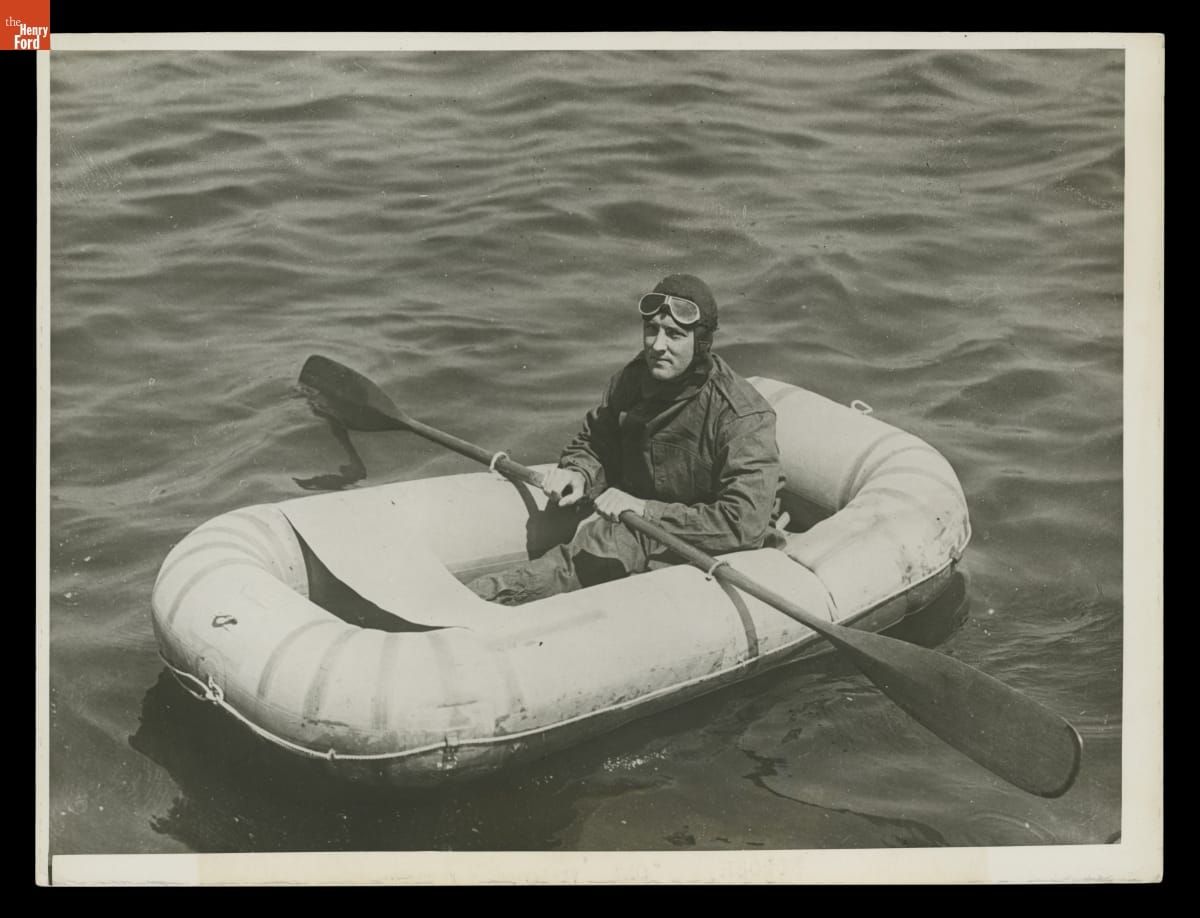
- Richard E. Byrd in a Lifeboat, 1927 - Richard Byrd, Bernt Balchen, Bert Acosta, and George Noville made a nonstop flight from New York to France in 1927 with their Fokker Tri-Motor <em>America</em>. They intended to land in Paris, but poor weather there forced them to land in shallow water off the Normandy coast. For this photo, Byrd recreated his arrival to France in a rubber lifeboat.
- 1927
- Collections - Artifact
Richard E. Byrd in a Lifeboat, 1927
Richard Byrd, Bernt Balchen, Bert Acosta, and George Noville made a nonstop flight from New York to France in 1927 with their Fokker Tri-Motor America. They intended to land in Paris, but poor weather there forced them to land in shallow water off the Normandy coast. For this photo, Byrd recreated his arrival to France in a rubber lifeboat.
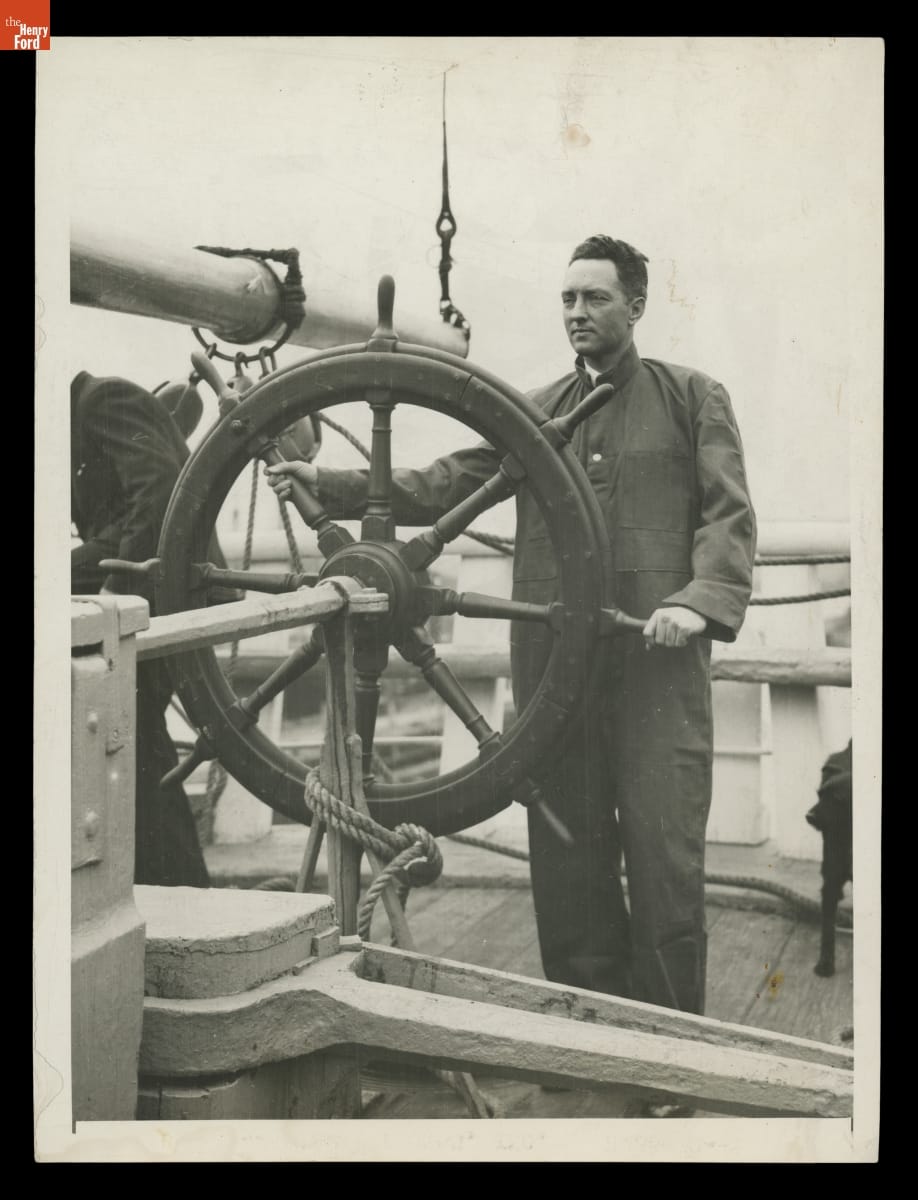
- Richard E. Byrd at the Wheel of the Icebreaker "Samson" in Brooklyn Drydock Prior to his First Antarctic Expedition, 1928 - From August 1928 to June 1930, Richard Byrd led an expedition to the Antarctic with 83 men, four ships, and three airplanes. The team operated from a base camp they called Little America. On November 28-29, 1929, Byrd and three crewmates took their Ford Tri-Motor <em>Floyd Bennett</em> on the first flight over the South Pole.
- 1928
- Collections - Artifact
Richard E. Byrd at the Wheel of the Icebreaker "Samson" in Brooklyn Drydock Prior to his First Antarctic Expedition, 1928
From August 1928 to June 1930, Richard Byrd led an expedition to the Antarctic with 83 men, four ships, and three airplanes. The team operated from a base camp they called Little America. On November 28-29, 1929, Byrd and three crewmates took their Ford Tri-Motor Floyd Bennett on the first flight over the South Pole.
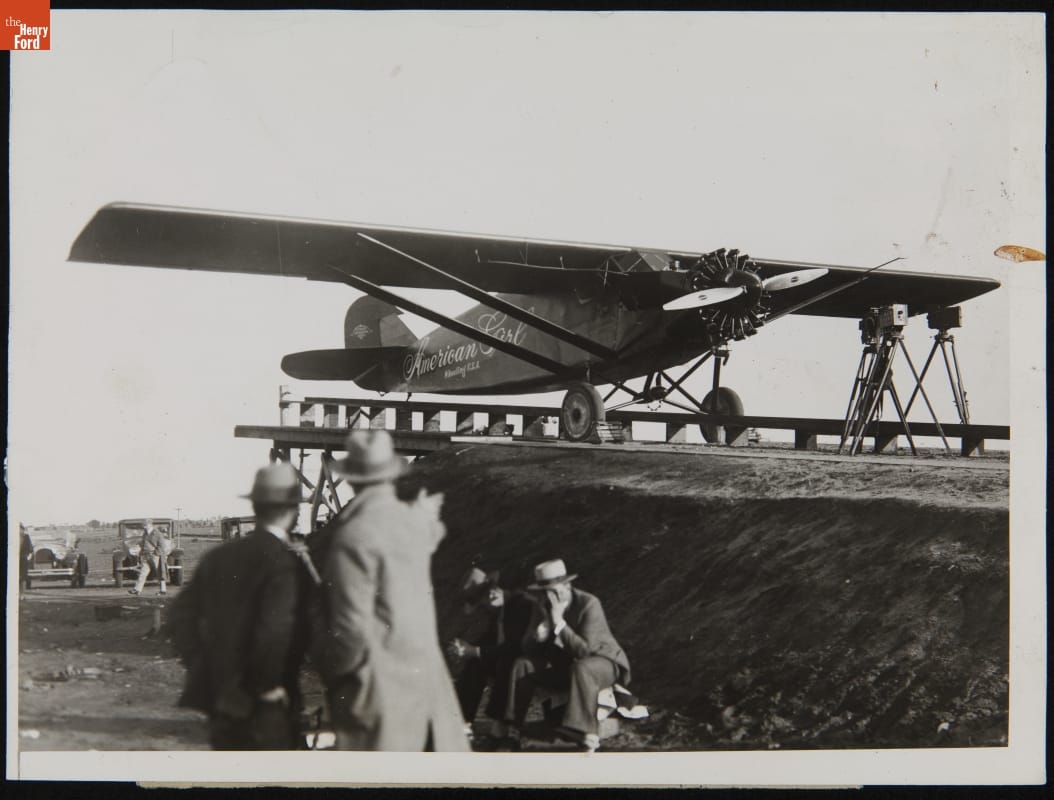
- Ruth Elder's Airplane, the "American Girl," before Take-off, October 11, 1927 - Ruth Elder planned to be the first woman to fly across the Atlantic. On October 11, 1927, Elder and co-pilot George Haldeman took off in their Stinson Detroiter <EM>American Girl</EM>. An oil leak forced them to ditch in the ocean some 360 miles short of land. Still, the 2,623 miles Elder covered set a new distance record for a female pilot.
- October 11, 1927
- Collections - Artifact
Ruth Elder's Airplane, the "American Girl," before Take-off, October 11, 1927
Ruth Elder planned to be the first woman to fly across the Atlantic. On October 11, 1927, Elder and co-pilot George Haldeman took off in their Stinson Detroiter American Girl. An oil leak forced them to ditch in the ocean some 360 miles short of land. Still, the 2,623 miles Elder covered set a new distance record for a female pilot.
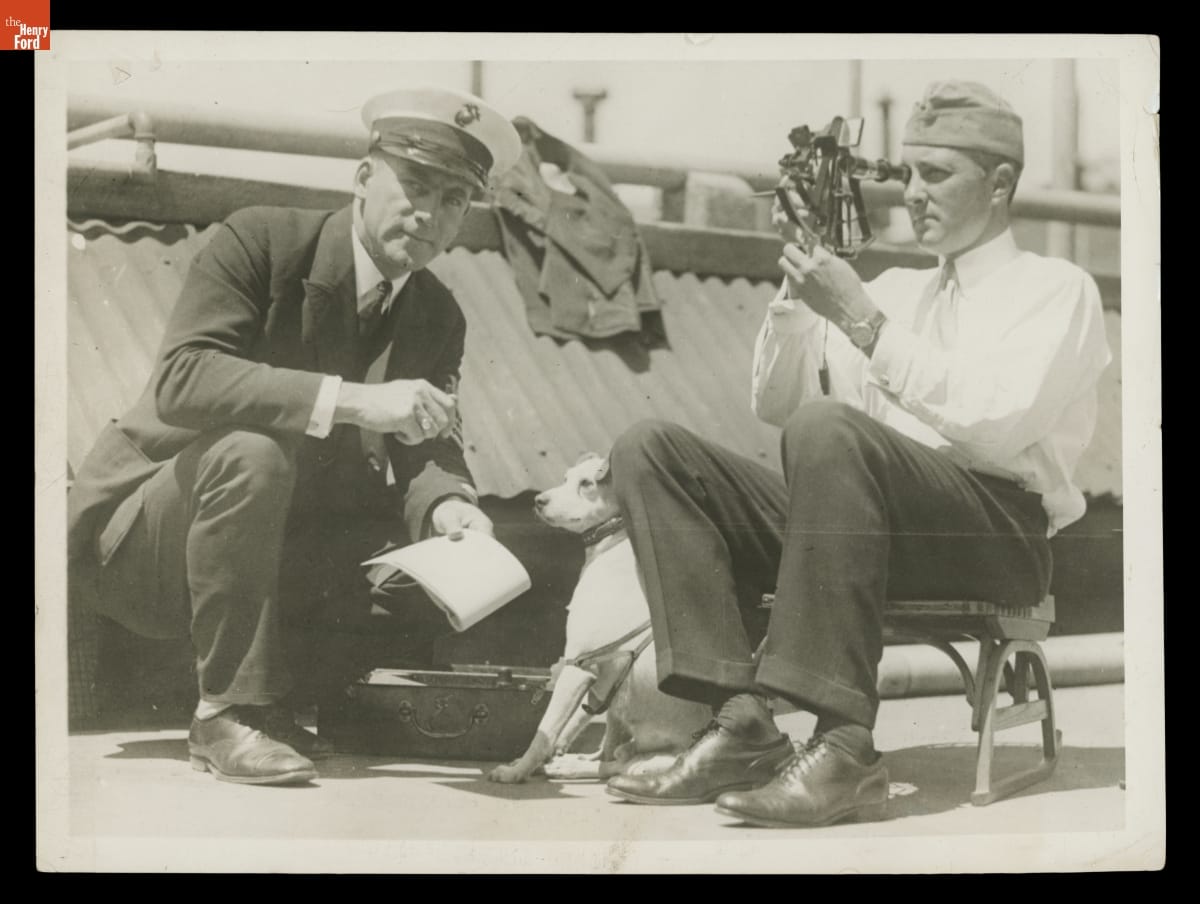
- Richard E. Byrd Holding a Sextant aboard the "Eleanor Bolling" in New Zealand before Traveling to Antarctica, 1928 - From August 1928 to June 1930, Richard Byrd led an expedition to the Antarctic with 83 men, four ships, and three airplanes. The team operated from a base camp they called Little America. On November 28-29, 1929, Byrd and three crewmates took their Ford Tri-Motor <em>Floyd Bennett</em> on the first flight over the South Pole.
- 1928
- Collections - Artifact
Richard E. Byrd Holding a Sextant aboard the "Eleanor Bolling" in New Zealand before Traveling to Antarctica, 1928
From August 1928 to June 1930, Richard Byrd led an expedition to the Antarctic with 83 men, four ships, and three airplanes. The team operated from a base camp they called Little America. On November 28-29, 1929, Byrd and three crewmates took their Ford Tri-Motor Floyd Bennett on the first flight over the South Pole.
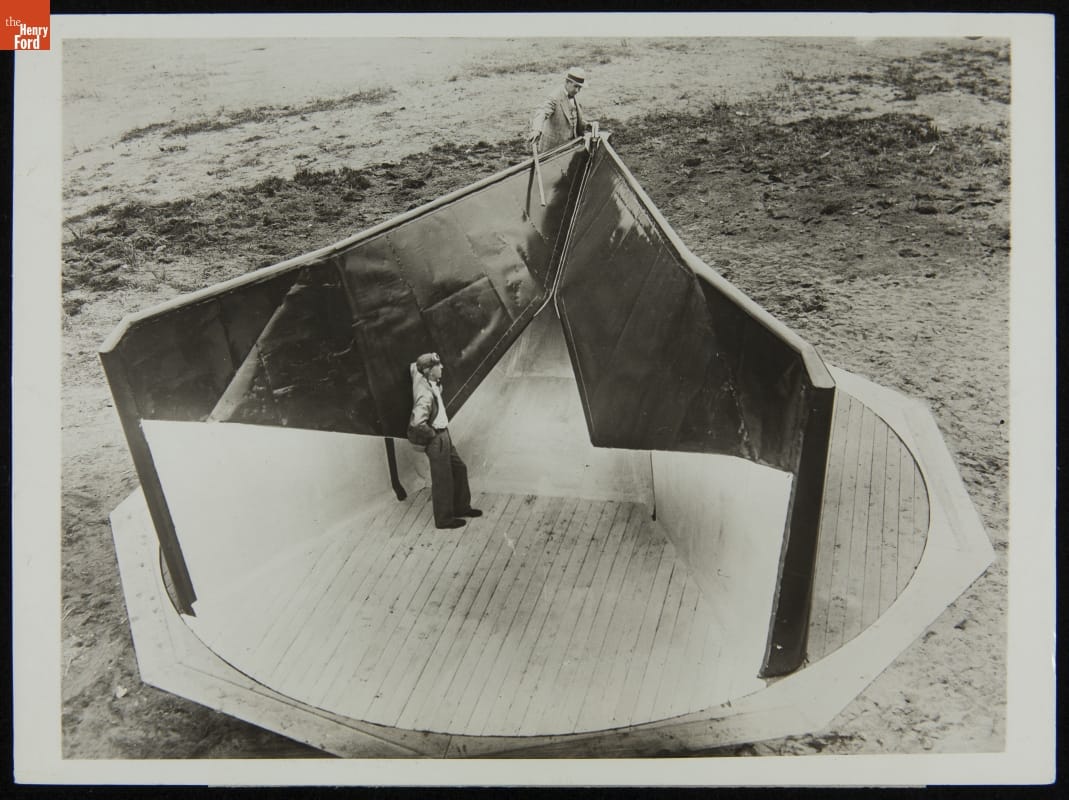
- Device Enabling Airplanes to Pick Up Mail Bags from the Ground, 1928 - Air mail service was intended to speed up mail transport and delivery. But landing an airplane to collect bags of mail slowed things down. Air mail operators experimented with a variety of unusual devices that would allow an airplane to pick up mail without stopping.
- 1928
- Collections - Artifact
Device Enabling Airplanes to Pick Up Mail Bags from the Ground, 1928
Air mail service was intended to speed up mail transport and delivery. But landing an airplane to collect bags of mail slowed things down. Air mail operators experimented with a variety of unusual devices that would allow an airplane to pick up mail without stopping.
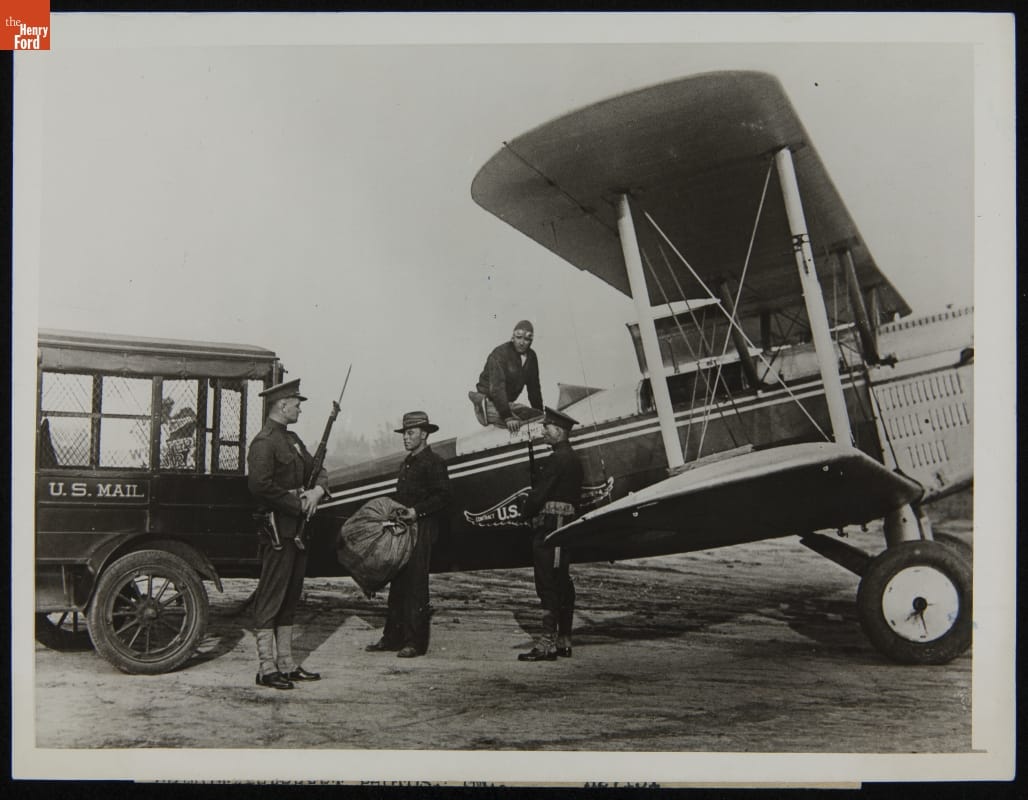
- U.S. Marines Guard Air Mail Delivery, Los Angeles, California, 1926 - Regular air mail service in the United States started in 1918. Initial air mail stamps cost 24 cents -- eight times more than ground service. But those fees helped subsidize the development of America's airways. After operating air mail flights itself for eight years, the U.S. Post Office Department contracted with commercial air carriers in 1926.
- 1926
- Collections - Artifact
U.S. Marines Guard Air Mail Delivery, Los Angeles, California, 1926
Regular air mail service in the United States started in 1918. Initial air mail stamps cost 24 cents -- eight times more than ground service. But those fees helped subsidize the development of America's airways. After operating air mail flights itself for eight years, the U.S. Post Office Department contracted with commercial air carriers in 1926.
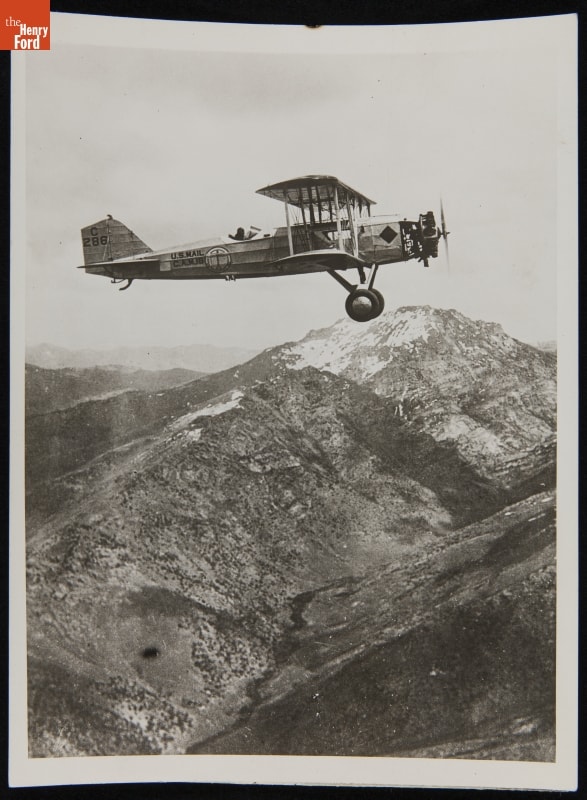
- Air Mail Service Boeing 40 Airplane Heading East over the Rocky Mountains, 1928 - Passenger accommodations were sparse on a Boeing 40, but the airplane primarily was designed to carry mail. Early in its production, the airplane's original water-cooled Liberty V-12 engine was replaced with an air-cooled Pratt & Whitney radial engine. The air-cooled motor eliminated the need -- and excess weight -- of a radiator and water, increasing the airplane's payload and profitability.
- 1928
- Collections - Artifact
Air Mail Service Boeing 40 Airplane Heading East over the Rocky Mountains, 1928
Passenger accommodations were sparse on a Boeing 40, but the airplane primarily was designed to carry mail. Early in its production, the airplane's original water-cooled Liberty V-12 engine was replaced with an air-cooled Pratt & Whitney radial engine. The air-cooled motor eliminated the need -- and excess weight -- of a radiator and water, increasing the airplane's payload and profitability.
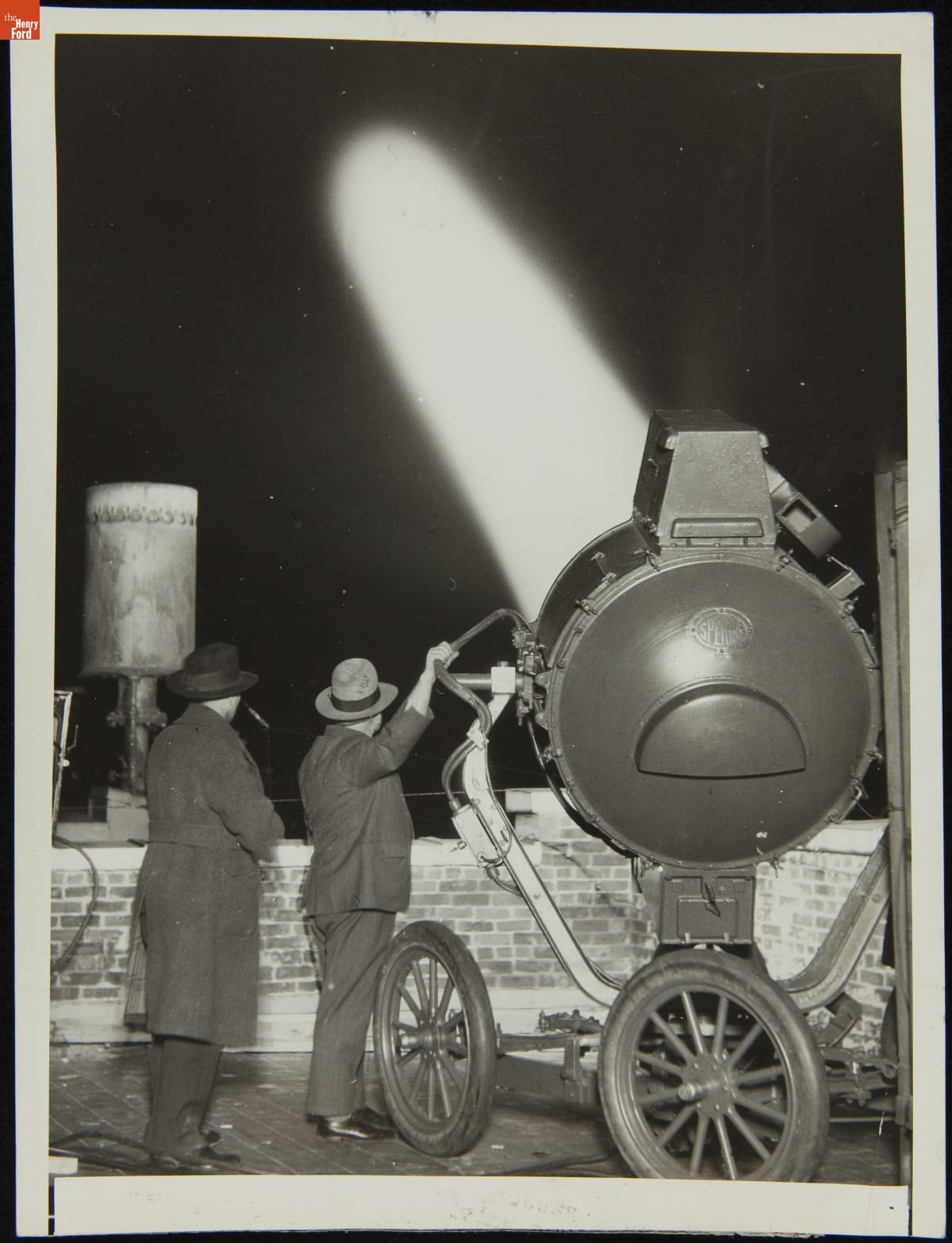
- Aircraft Beacon Atop Hotel St. George, Brooklyn, New York, 1928 -
- 1928
- Collections - Artifact
Aircraft Beacon Atop Hotel St. George, Brooklyn, New York, 1928