
Search
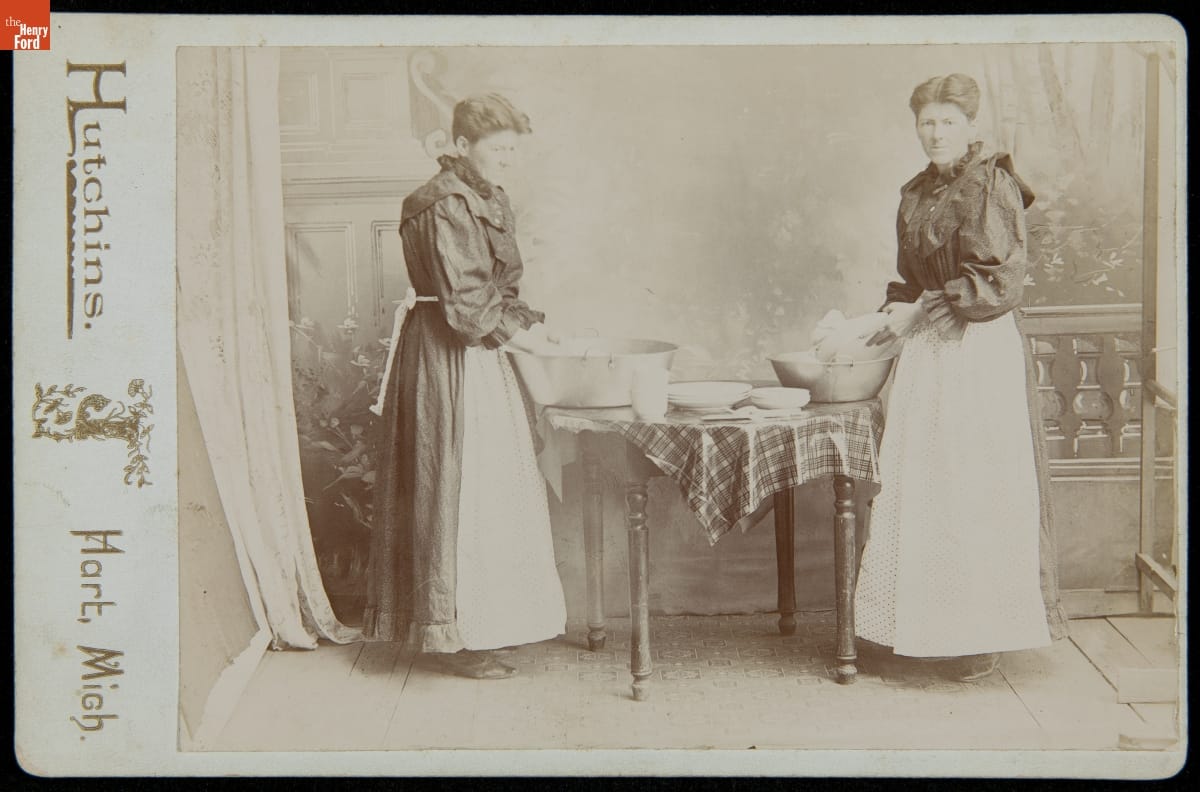
- Woman Washing Dishes, circa 1895 -
- circa 1895
- Collections - Artifact
Woman Washing Dishes, circa 1895
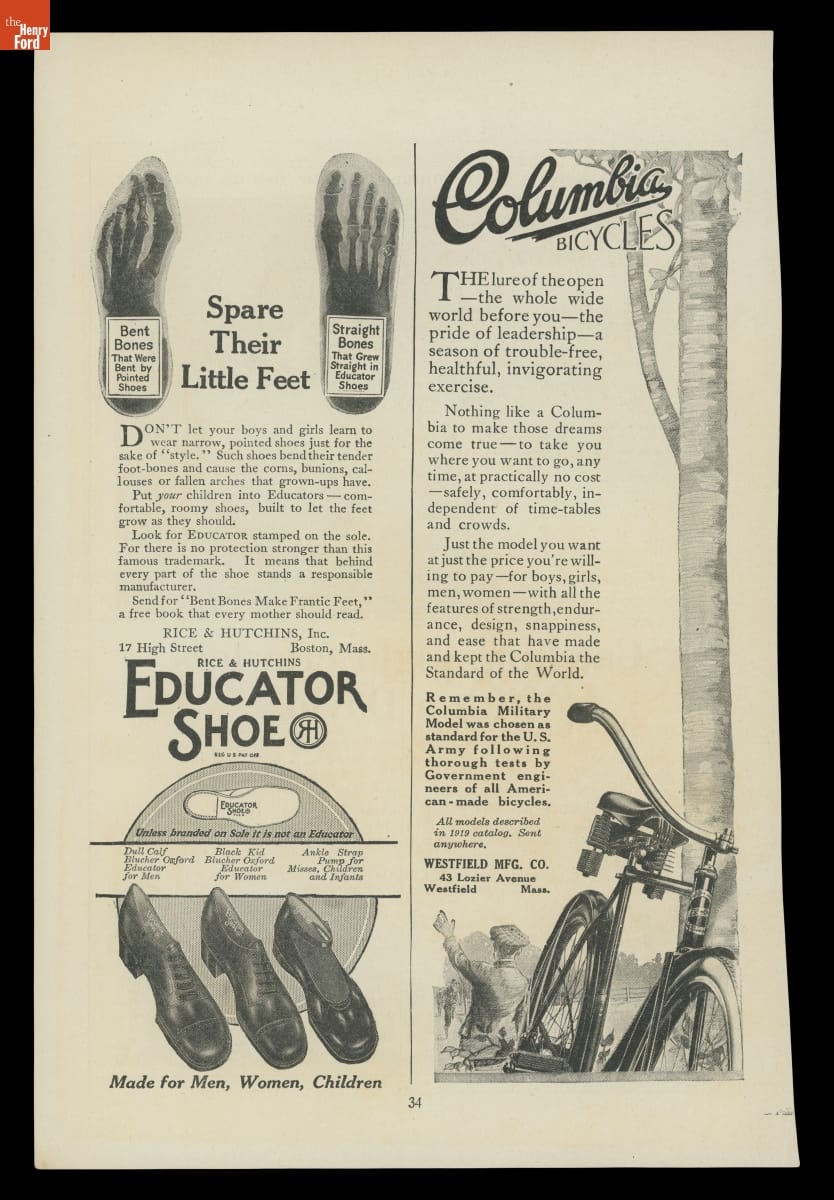
- "Spare Their Little Feet," 1917-1921 - Educator Shoe brand was a subsidiary of Massachusetts-based footwear manufacturer and wholesaler Rice & Hutchins. Although the brand was primarily for children, mothers were their target customers. Educator commonly took out advertisements in women's magazines that claimed the shoes "let feet grow as they should;" ads juxtaposed images of the brand's wide toebox with other popular styles of the time.
- 1917-1921
- Collections - Artifact
"Spare Their Little Feet," 1917-1921
Educator Shoe brand was a subsidiary of Massachusetts-based footwear manufacturer and wholesaler Rice & Hutchins. Although the brand was primarily for children, mothers were their target customers. Educator commonly took out advertisements in women's magazines that claimed the shoes "let feet grow as they should;" ads juxtaposed images of the brand's wide toebox with other popular styles of the time.
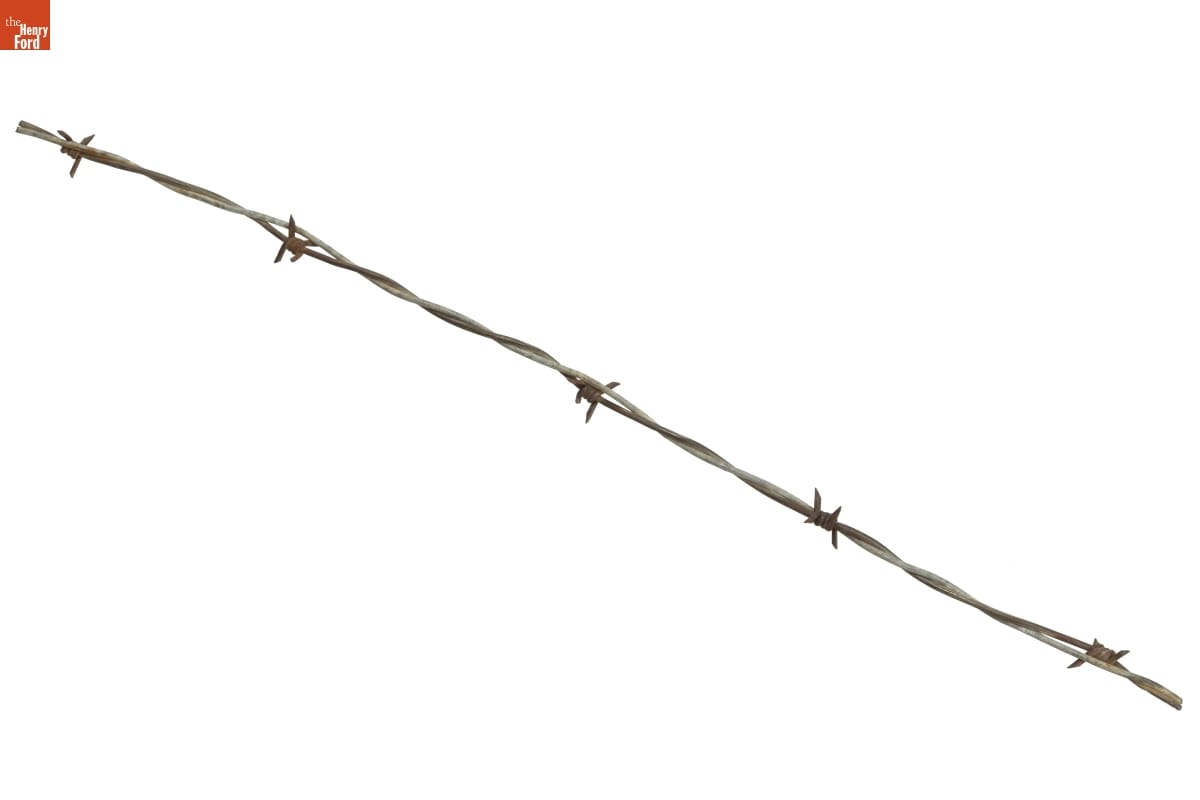
- Dodge-Washburn Three-Wrap Half-Round Variation Barbed Wire, Patented 1882 - Inventors received hundreds of patents for barbed wire during the late 1800s. Some innovators created strands of fencing with sharp metal points cut into the wire; others incorporated small wire spurs twisted and attached to the wire to create a painful barrier. Each inventor believed their variation made the best fencing to keep livestock out of crop fields or confine them to pastures.
- 1882
- Collections - Artifact
Dodge-Washburn Three-Wrap Half-Round Variation Barbed Wire, Patented 1882
Inventors received hundreds of patents for barbed wire during the late 1800s. Some innovators created strands of fencing with sharp metal points cut into the wire; others incorporated small wire spurs twisted and attached to the wire to create a painful barrier. Each inventor believed their variation made the best fencing to keep livestock out of crop fields or confine them to pastures.
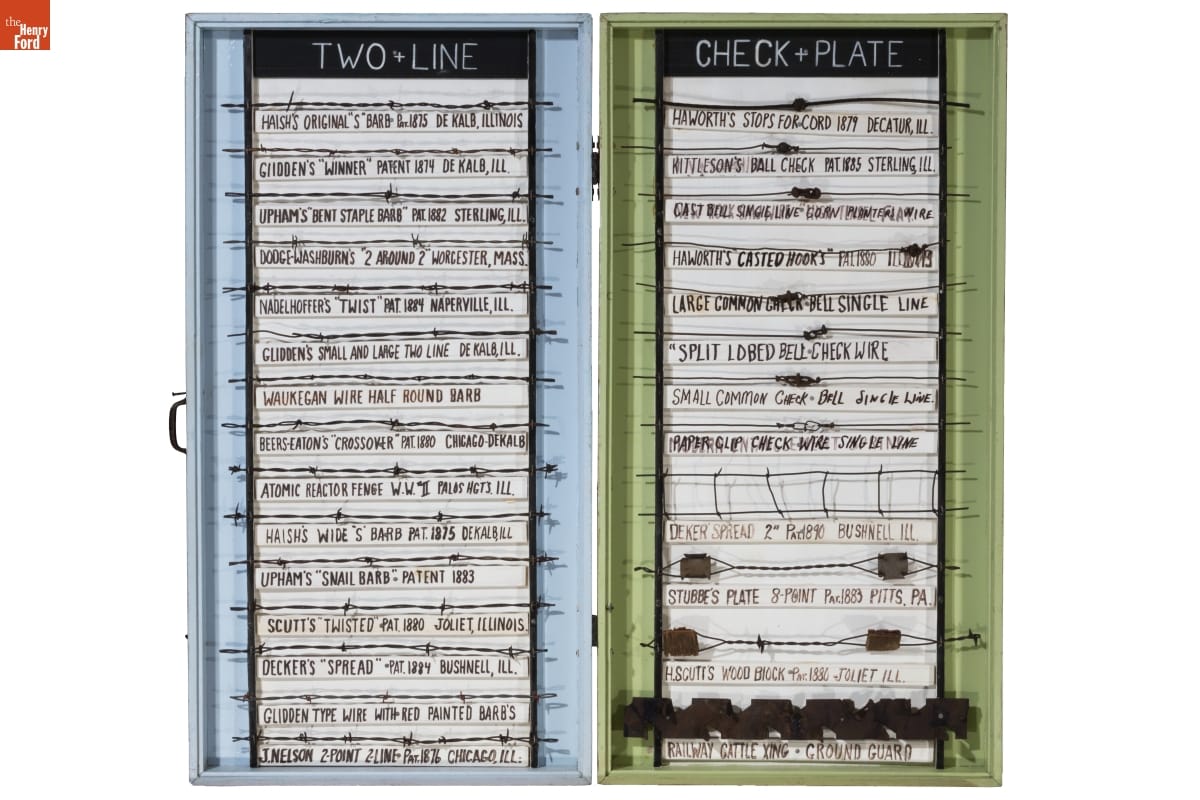
- Barbed Wire Collection Display, Patented 1874-1890 - Inventors received hundreds of patents for barbed wire during the late 1800s. Some innovators created strands of fencing with sharp metal points cut into the wire; others incorporated small wire spurs twisted and attached to the wire to create a painful barrier. Each inventor believed their variation made the best fencing to keep livestock out of crop fields or confine them to pastures.
- 1874-1890
- Collections - Artifact
Barbed Wire Collection Display, Patented 1874-1890
Inventors received hundreds of patents for barbed wire during the late 1800s. Some innovators created strands of fencing with sharp metal points cut into the wire; others incorporated small wire spurs twisted and attached to the wire to create a painful barrier. Each inventor believed their variation made the best fencing to keep livestock out of crop fields or confine them to pastures.
- Barbed Wire Collection Display, Patented 1874-1916 - Inventors received hundreds of patents for barbed wire during the late 1800s. Some innovators created strands of fencing with sharp metal points cut into the wire; others incorporated small wire spurs twisted and attached to the wire to create a painful barrier. Each inventor believed their variation made the best fencing to keep livestock out of crop fields or confine them to pastures.
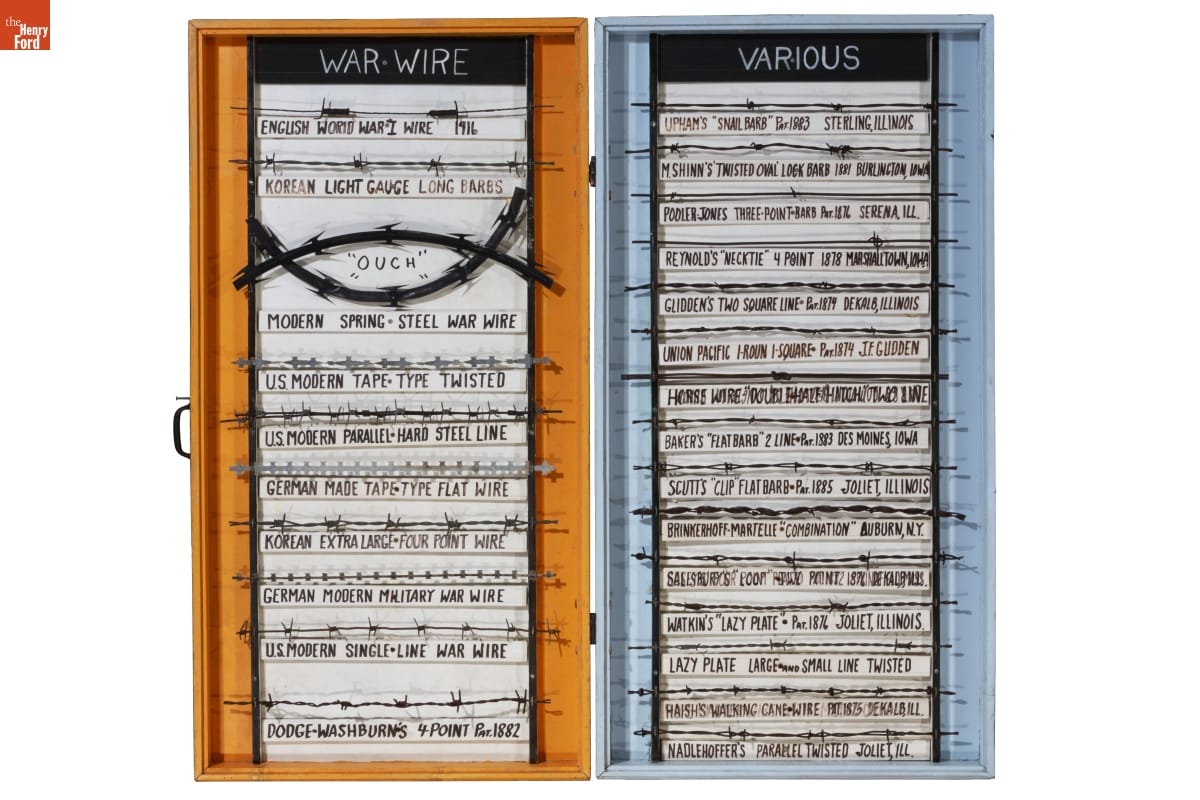
- 1874-1916
- Collections - Artifact
Barbed Wire Collection Display, Patented 1874-1916
Inventors received hundreds of patents for barbed wire during the late 1800s. Some innovators created strands of fencing with sharp metal points cut into the wire; others incorporated small wire spurs twisted and attached to the wire to create a painful barrier. Each inventor believed their variation made the best fencing to keep livestock out of crop fields or confine them to pastures.