
Search
- Postcard, "Happy Hallowe'en," 31 October 1909 - By 1900, articles in magazines and newspapers had helped spread and popularize Halloween customs and images like jack o-lanterns, black cats, witches, or bobbing for apples to a national audience. Some people marked the holiday by mailing a Halloween-themed postcard greeting to family or friends. During the first two decades of the 20th century, sending postcards was an easy--and popular--way to communicate.
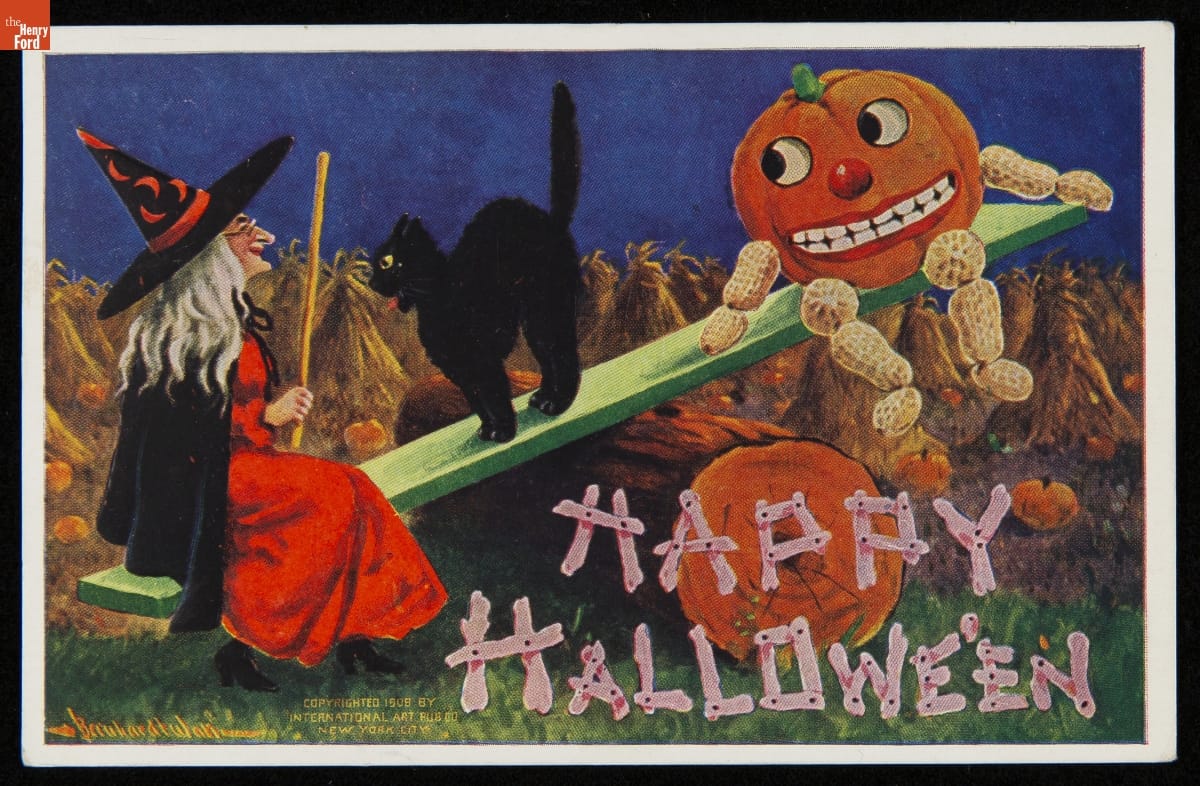
- October 31, 1909
- Collections - Artifact
Postcard, "Happy Hallowe'en," 31 October 1909
By 1900, articles in magazines and newspapers had helped spread and popularize Halloween customs and images like jack o-lanterns, black cats, witches, or bobbing for apples to a national audience. Some people marked the holiday by mailing a Halloween-themed postcard greeting to family or friends. During the first two decades of the 20th century, sending postcards was an easy--and popular--way to communicate.
- "A Merry Christmas," 1908 -
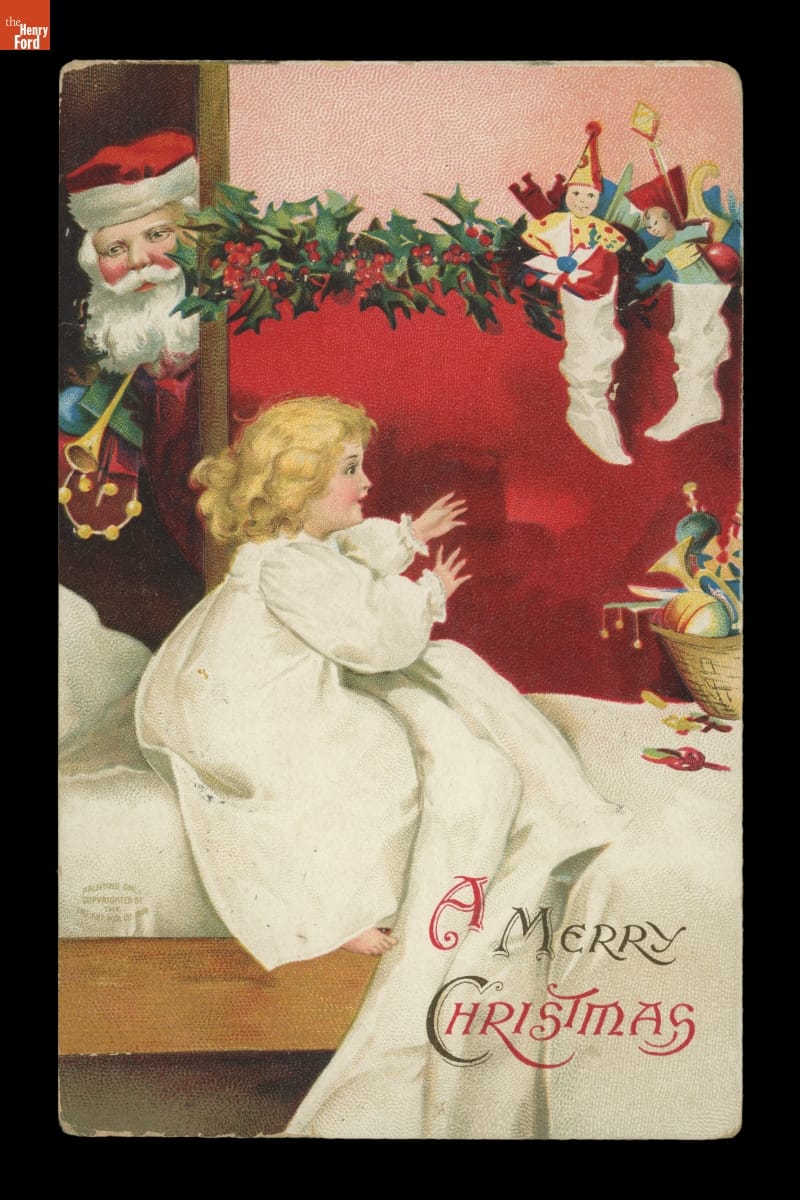
- 1908
- Collections - Artifact
"A Merry Christmas," 1908
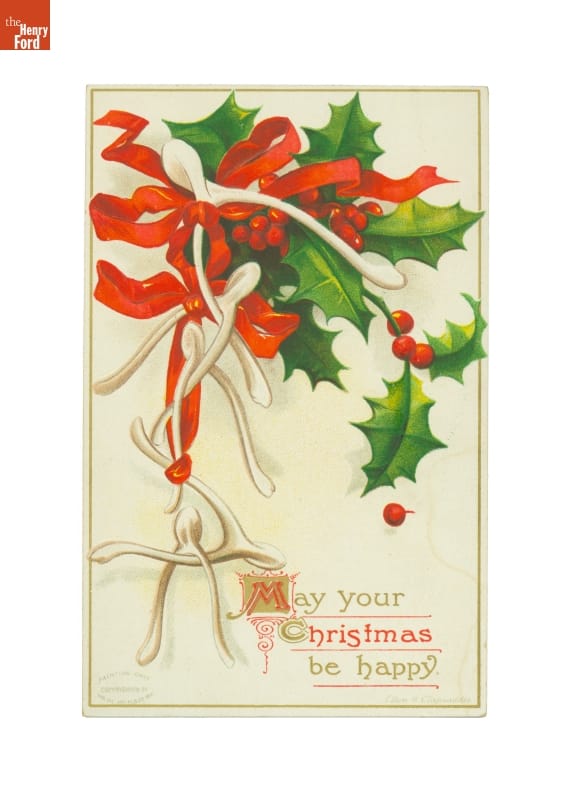
- "May your Christmas be happy," 1908 - Colorful, commercially designed greeting cards were popular in early 20th-century America--especially during the holidays. Friends and neighbors commonly exchanged cards wishing one another a Merry Christmas or Happy New Year. Publishers sometimes decorated these cards with images of greenery symbolic of the season.
- 1908
- Collections - Artifact
"May your Christmas be happy," 1908
Colorful, commercially designed greeting cards were popular in early 20th-century America--especially during the holidays. Friends and neighbors commonly exchanged cards wishing one another a Merry Christmas or Happy New Year. Publishers sometimes decorated these cards with images of greenery symbolic of the season.
- "Oh Flag Beloved Forever Dear!....." 1909 -
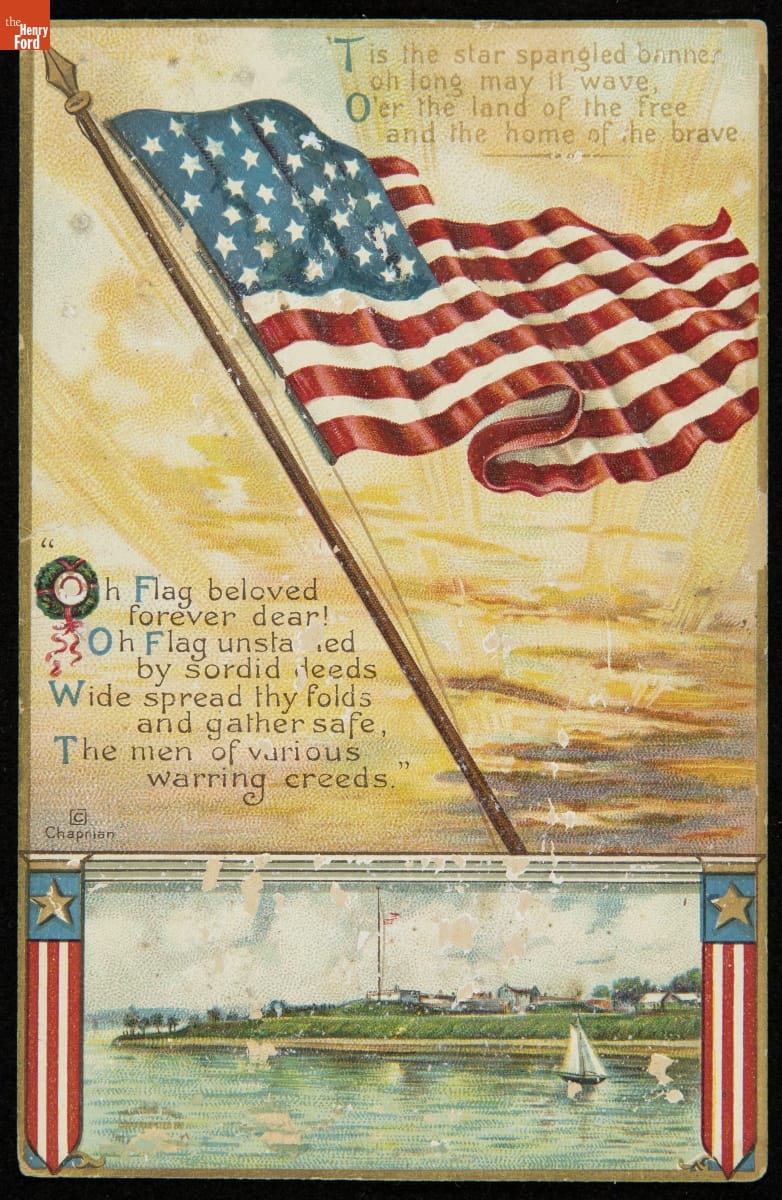
- 1909
- Collections - Artifact
"Oh Flag Beloved Forever Dear!....." 1909
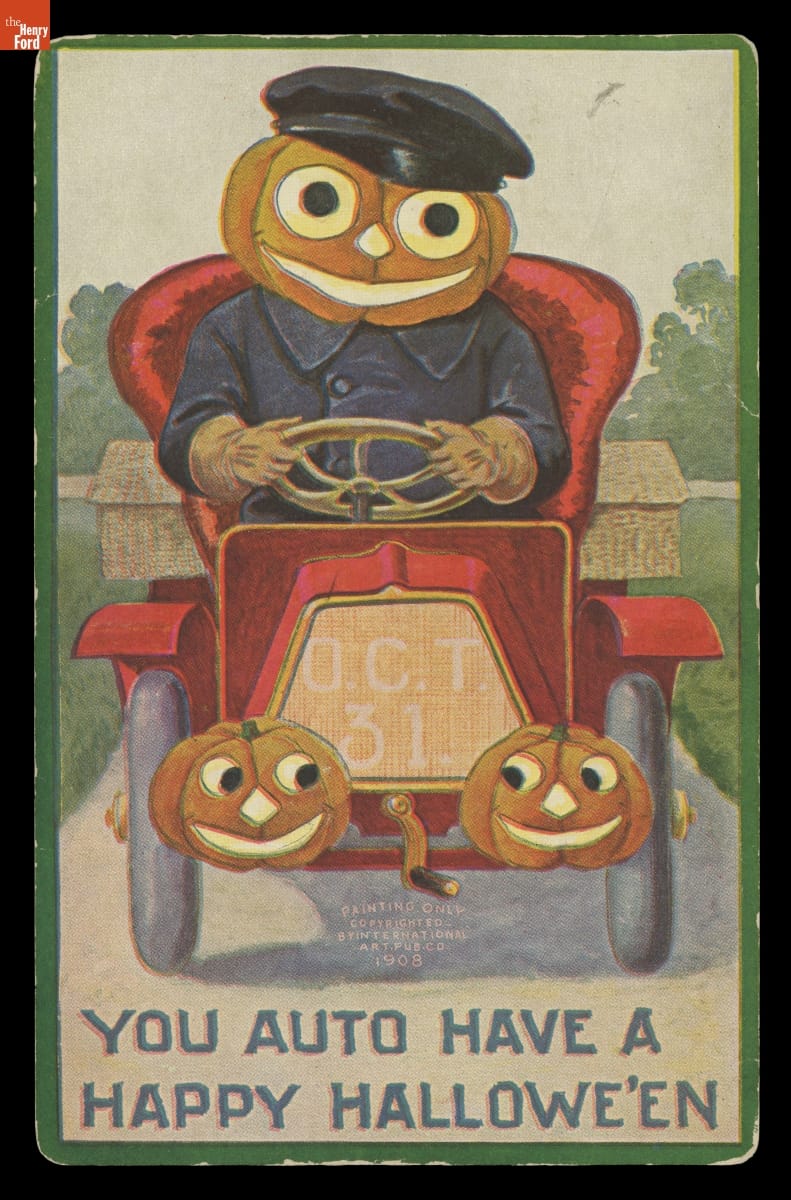
- "You Auto Have A Happy Hallowe'en," - Halloween's superstitious origins gave way to a national celebration of mystery and innocent fun in 20th-century America. Seasonal greeting cards commonly exchanged by friends and neighbors during Halloween reflect a distinctly American blend of olden customs and modern life. A traditional jack-o-lantern drives a contemporary automobile on this clever card from 1908.
- October 31, 1908
- Collections - Artifact
"You Auto Have A Happy Hallowe'en,"
Halloween's superstitious origins gave way to a national celebration of mystery and innocent fun in 20th-century America. Seasonal greeting cards commonly exchanged by friends and neighbors during Halloween reflect a distinctly American blend of olden customs and modern life. A traditional jack-o-lantern drives a contemporary automobile on this clever card from 1908.
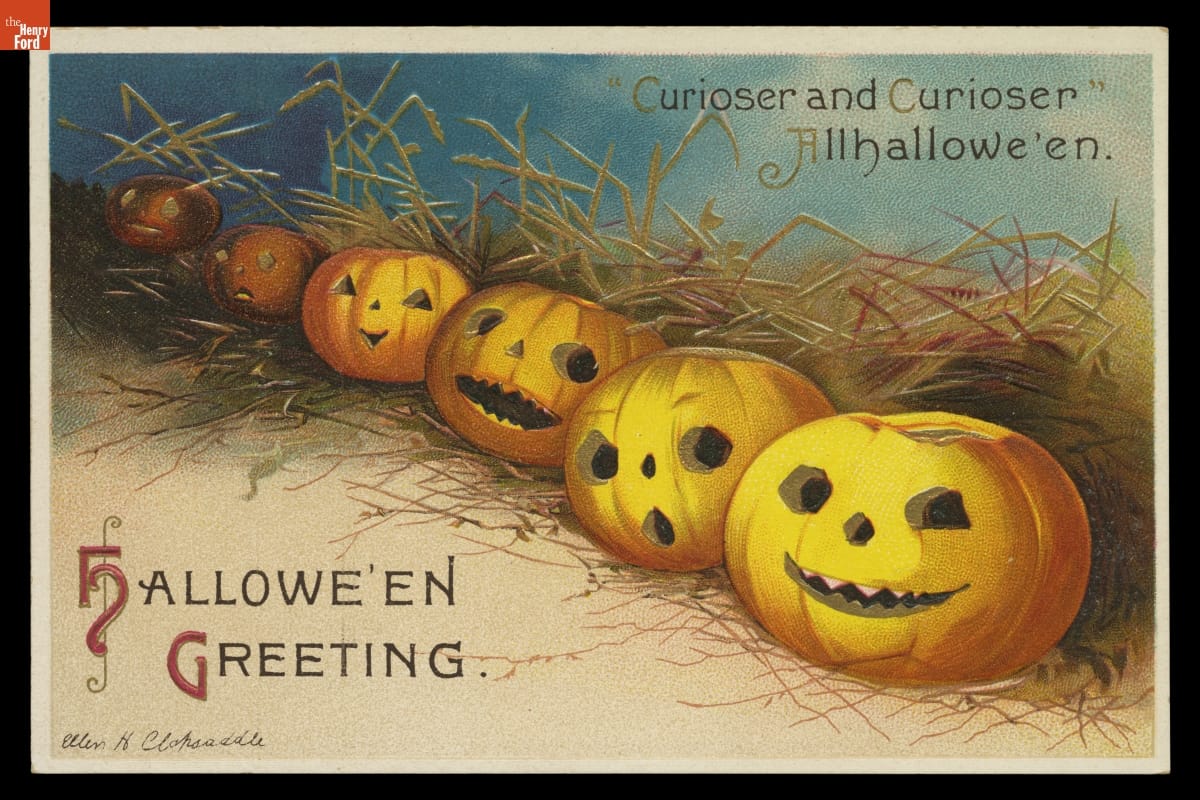
- "Curioser and Curioser Allhallowe'en Hallowe'en Greetings," 1907-1912 - During the 1800s, Irish immigrants had a great influence on the celebration of Halloween in the United States. They substituted traditional lanterns carved from hollowed-out turnips with pumpkins, a squash native to America. This colorful postcard features these jack-o-lanterns, which had become the symbol of the American Halloween by the turn of the 20th century.
- 1907-1912
- Collections - Artifact
"Curioser and Curioser Allhallowe'en Hallowe'en Greetings," 1907-1912
During the 1800s, Irish immigrants had a great influence on the celebration of Halloween in the United States. They substituted traditional lanterns carved from hollowed-out turnips with pumpkins, a squash native to America. This colorful postcard features these jack-o-lanterns, which had become the symbol of the American Halloween by the turn of the 20th century.
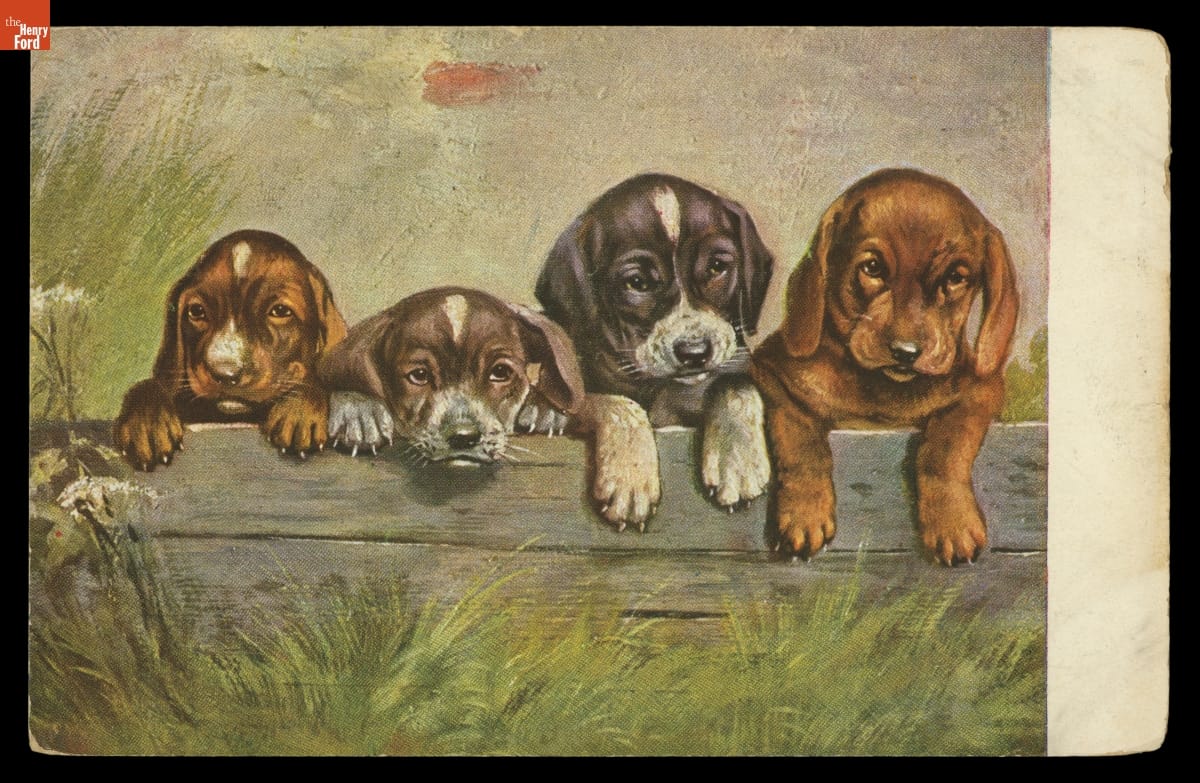
- Postcard, Puppies on a Fence, 1907 - Depictions of dogs and puppies often appeared in art and folk art in the United States. Inexpensive lithograph prints made in the mid-19th century emphasized people's relationship with dogs. Starting in the late 1890s picture postcards included these types of popular illustrations of dogs. Sending colorful postcards through the U.S. mail continued to be widespread well into the 1910s.
- May 28, 1907
- Collections - Artifact
Postcard, Puppies on a Fence, 1907
Depictions of dogs and puppies often appeared in art and folk art in the United States. Inexpensive lithograph prints made in the mid-19th century emphasized people's relationship with dogs. Starting in the late 1890s picture postcards included these types of popular illustrations of dogs. Sending colorful postcards through the U.S. mail continued to be widespread well into the 1910s.
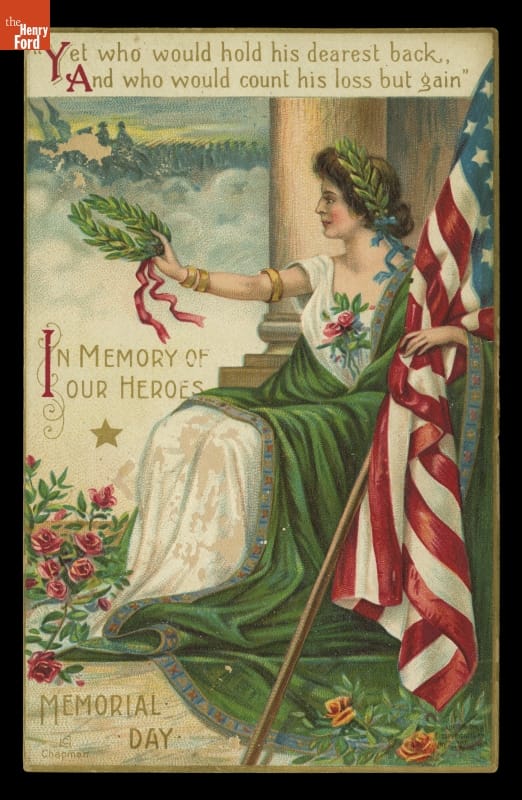
- "In Memory of Our Heroes," circa 1908 - Beginning in 1868, May 30 was proclaimed "Decoration Day" as a day for mourners to honor the Civil War dead by decorating their graves with flowers. After World War I, the observance became better known as Memorial Day, and it broadened to honor the dead of all America's wars. Memorial Day was declared a national holiday in 1971.
- circa 1908
- Collections - Artifact
"In Memory of Our Heroes," circa 1908
Beginning in 1868, May 30 was proclaimed "Decoration Day" as a day for mourners to honor the Civil War dead by decorating their graves with flowers. After World War I, the observance became better known as Memorial Day, and it broadened to honor the dead of all America's wars. Memorial Day was declared a national holiday in 1971.
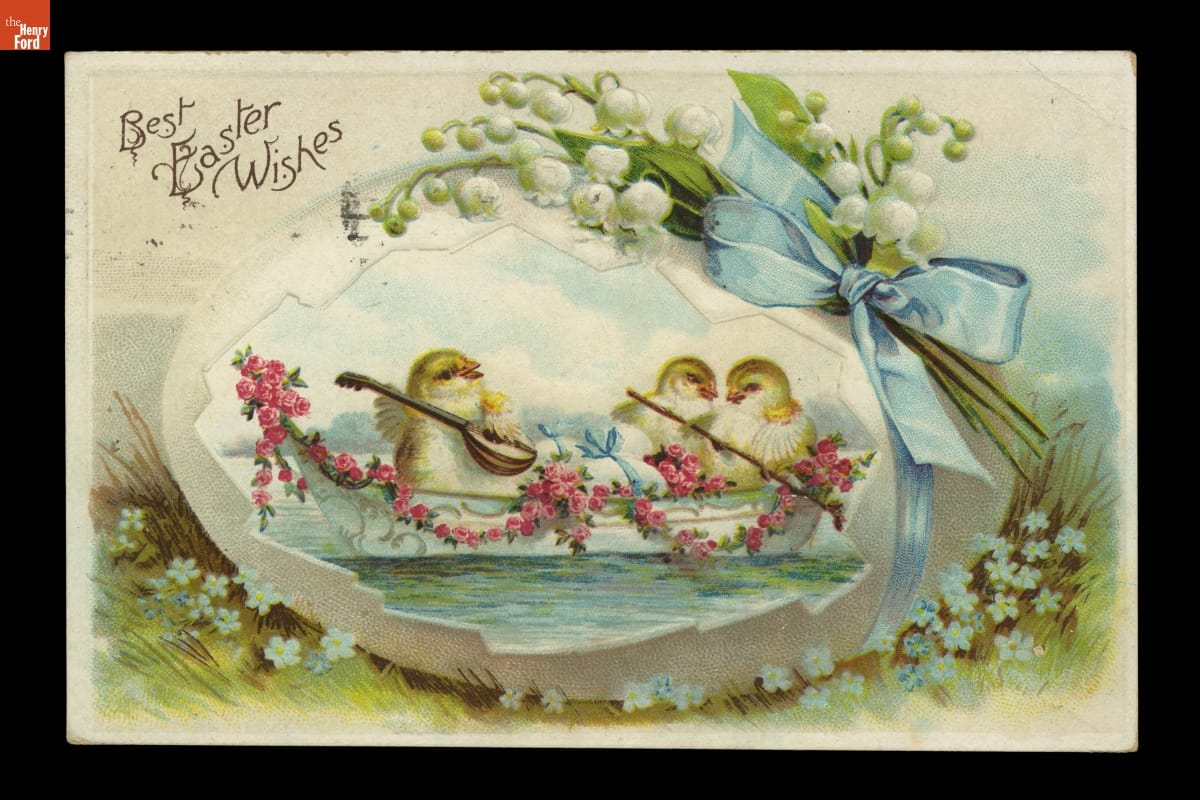
- "Best Easter Wishes," circa 1909 - Sending greeting cards and postcards for the Easter holiday became popular in the United States by the 1880s. Publishers made cards with themes of a religious nature as well as secular decorations to celebrate the arrival of spring. Artists working for these publishers illustrated the cards with images symbolic of the season, such as crosses, angels, flowers, eggs, children, birds, and rabbits.
- circa 1909
- Collections - Artifact
"Best Easter Wishes," circa 1909
Sending greeting cards and postcards for the Easter holiday became popular in the United States by the 1880s. Publishers made cards with themes of a religious nature as well as secular decorations to celebrate the arrival of spring. Artists working for these publishers illustrated the cards with images symbolic of the season, such as crosses, angels, flowers, eggs, children, birds, and rabbits.
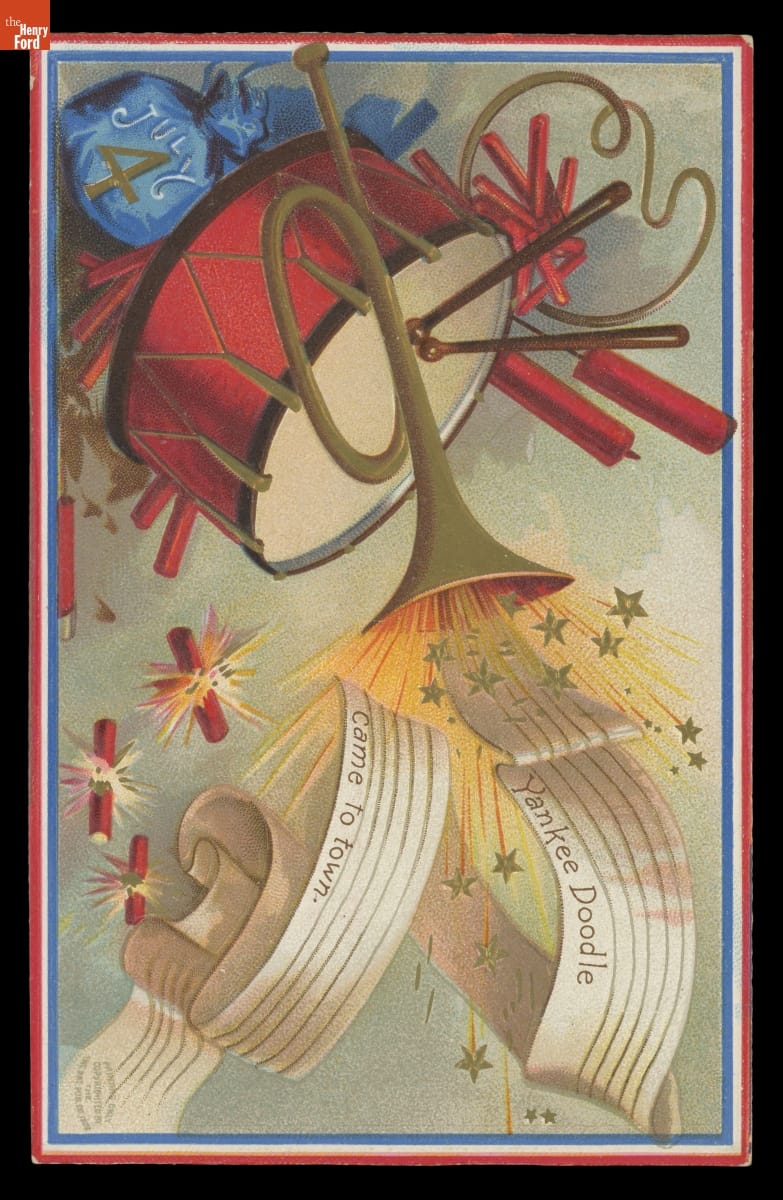
- "Yankee Doodle Came to Town," circa 1909 - In 1898, the United States Post Office reduced the cost of mailing privately printed postcards to one cent. As postcards caught the public's fancy in the first decade of the 20th century, these cards blossomed with colorful images, humorous messages, or holiday greetings. Colorful, printed Fourth of July postcards often depicted flags, fireworks, and scenes of Independence Day celebrations.
- circa 1909
- Collections - Artifact
"Yankee Doodle Came to Town," circa 1909
In 1898, the United States Post Office reduced the cost of mailing privately printed postcards to one cent. As postcards caught the public's fancy in the first decade of the 20th century, these cards blossomed with colorful images, humorous messages, or holiday greetings. Colorful, printed Fourth of July postcards often depicted flags, fireworks, and scenes of Independence Day celebrations.