
Search
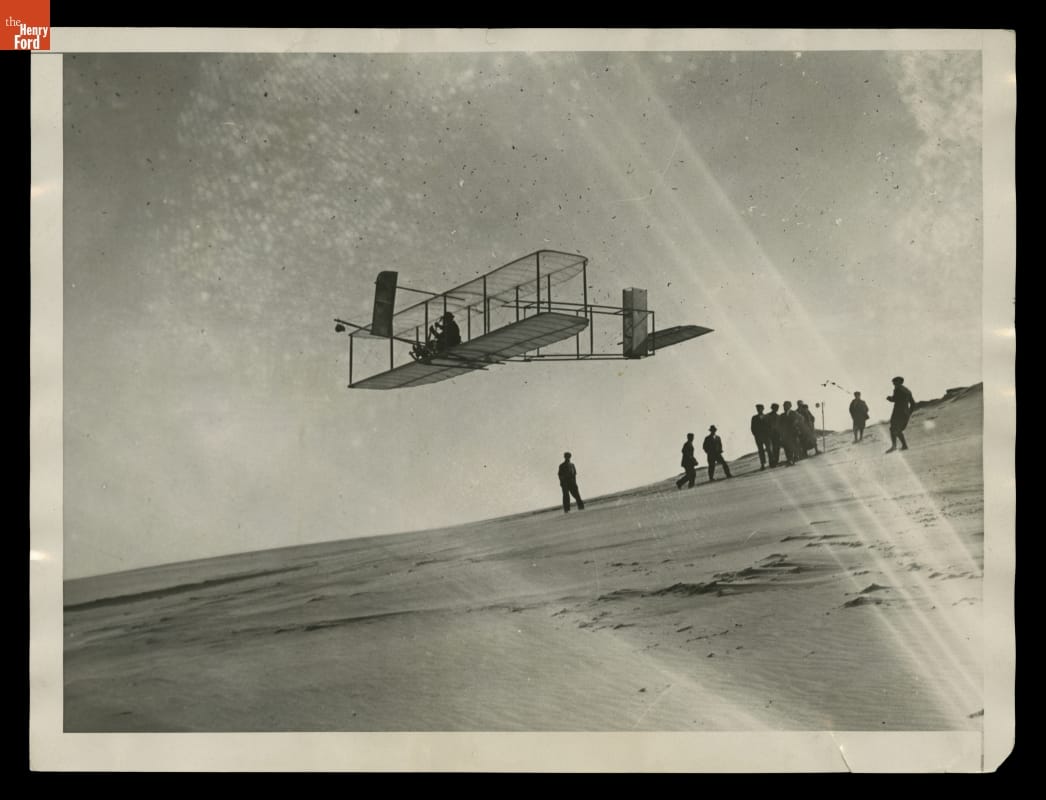
- Orville Wright Making Glider Tests at Kill Devil Hills, North Carolina, October 1911 - Orville Wright experimented with an automatic stability system to keep an airplane flying straight and level without any input from the pilot. Wright tested the apparatus in a glider at Kill Devil Hills in October 1911. On October 24, he set a record with a glide lasting 9 minutes, 45 seconds. Wright's stabilizer worked, but it was not a commercial success.
- October 01, 1911
- Collections - Artifact
Orville Wright Making Glider Tests at Kill Devil Hills, North Carolina, October 1911
Orville Wright experimented with an automatic stability system to keep an airplane flying straight and level without any input from the pilot. Wright tested the apparatus in a glider at Kill Devil Hills in October 1911. On October 24, he set a record with a glide lasting 9 minutes, 45 seconds. Wright's stabilizer worked, but it was not a commercial success.
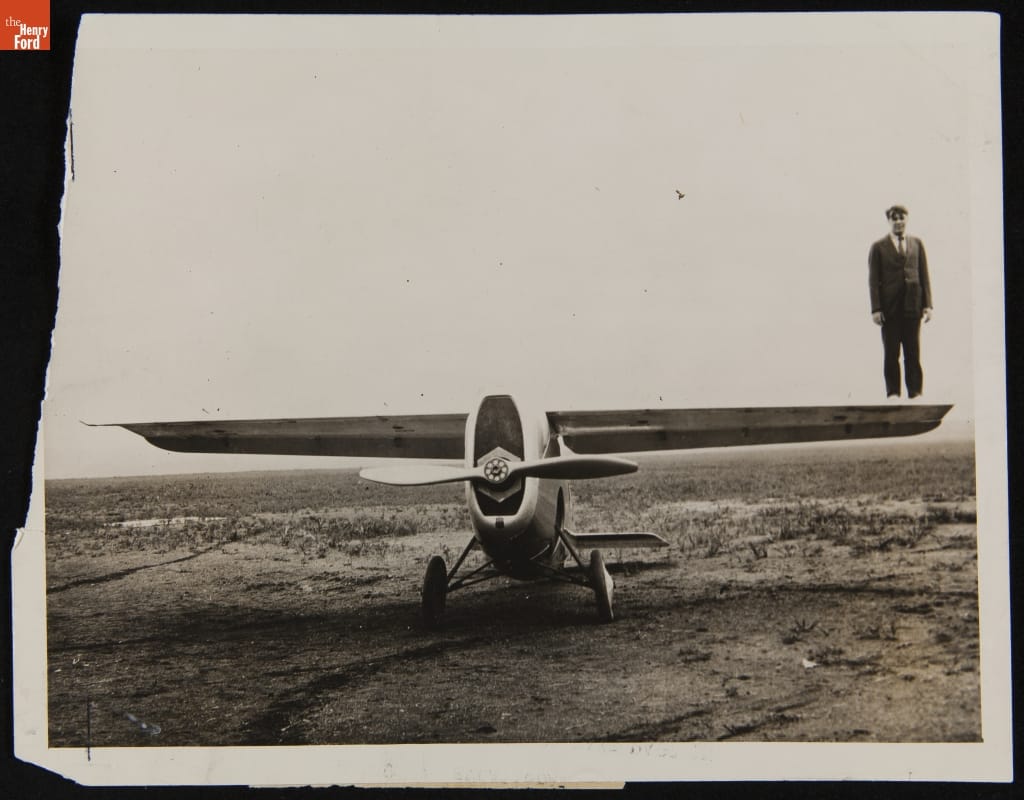
- Pilot Howard Rinehart Standing on Wing of the Dayton Wright RB-1 Racer, August 1920 - Howard Rinehart demonstrated the strength of the single cantilevered wing on his Dayton-Wright RB-1. Designed by Rinehart and Milton Baumann, the innovative airplane also featured movable wing flaps, retractable landing gear, and an enclosed cockpit. Rinehart hoped to win the 1920 Gordon Bennett Air Race flying the RB-1, but a failed control cable forced him out of the competition.
- August 19, 1920
- Collections - Artifact
Pilot Howard Rinehart Standing on Wing of the Dayton Wright RB-1 Racer, August 1920
Howard Rinehart demonstrated the strength of the single cantilevered wing on his Dayton-Wright RB-1. Designed by Rinehart and Milton Baumann, the innovative airplane also featured movable wing flaps, retractable landing gear, and an enclosed cockpit. Rinehart hoped to win the 1920 Gordon Bennett Air Race flying the RB-1, but a failed control cable forced him out of the competition.
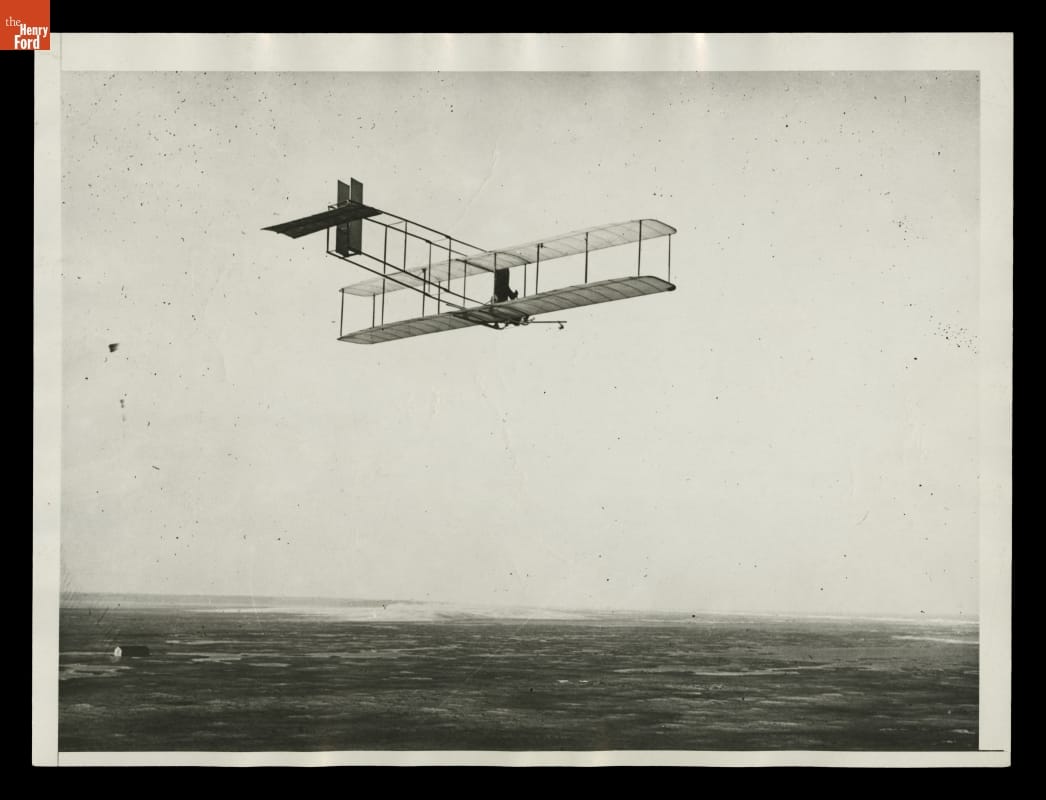
- Orville Wright Making Glider Tests at Kill Devil Hills, North Carolina, October 1911 - Orville Wright experimented with an automatic stability system to keep an airplane flying straight and level without any input from the pilot. Wright tested the apparatus in a glider at Kill Devil Hills in October 1911. On October 24, he set a record with a glide lasting 9 minutes, 45 seconds. Wright's stabilizer worked, but it was not a commercial success.
- October 01, 1911
- Collections - Artifact
Orville Wright Making Glider Tests at Kill Devil Hills, North Carolina, October 1911
Orville Wright experimented with an automatic stability system to keep an airplane flying straight and level without any input from the pilot. Wright tested the apparatus in a glider at Kill Devil Hills in October 1911. On October 24, he set a record with a glide lasting 9 minutes, 45 seconds. Wright's stabilizer worked, but it was not a commercial success.
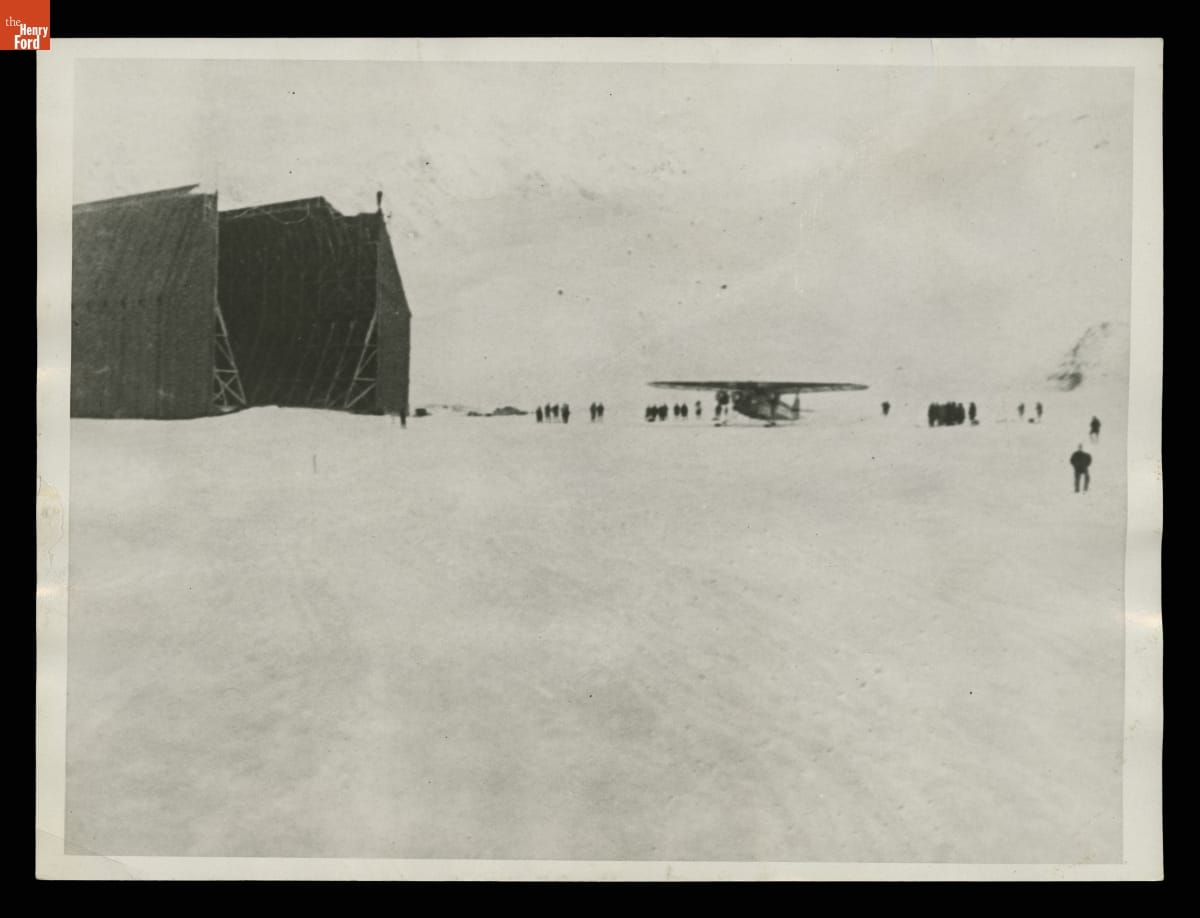
- The "Josephine Ford" Airplane outside the Hangar for Airship "Norge" during the Byrd Arctic Expedition, 1926 - On May 9, 1926, explorer Richard Byrd and pilot Floyd Bennett flew toward the North Pole in a Fokker F.VII Tri-Motor airplane. Edsel Ford provided considerable financial support to the expedition, and Byrd named his airplane <em>Josephine Ford</em> to honor Mr. Ford's young daughter. Though Byrd is generally credited with reaching the pole, controversy remains.
- 1926
- Collections - Artifact
The "Josephine Ford" Airplane outside the Hangar for Airship "Norge" during the Byrd Arctic Expedition, 1926
On May 9, 1926, explorer Richard Byrd and pilot Floyd Bennett flew toward the North Pole in a Fokker F.VII Tri-Motor airplane. Edsel Ford provided considerable financial support to the expedition, and Byrd named his airplane Josephine Ford to honor Mr. Ford's young daughter. Though Byrd is generally credited with reaching the pole, controversy remains.
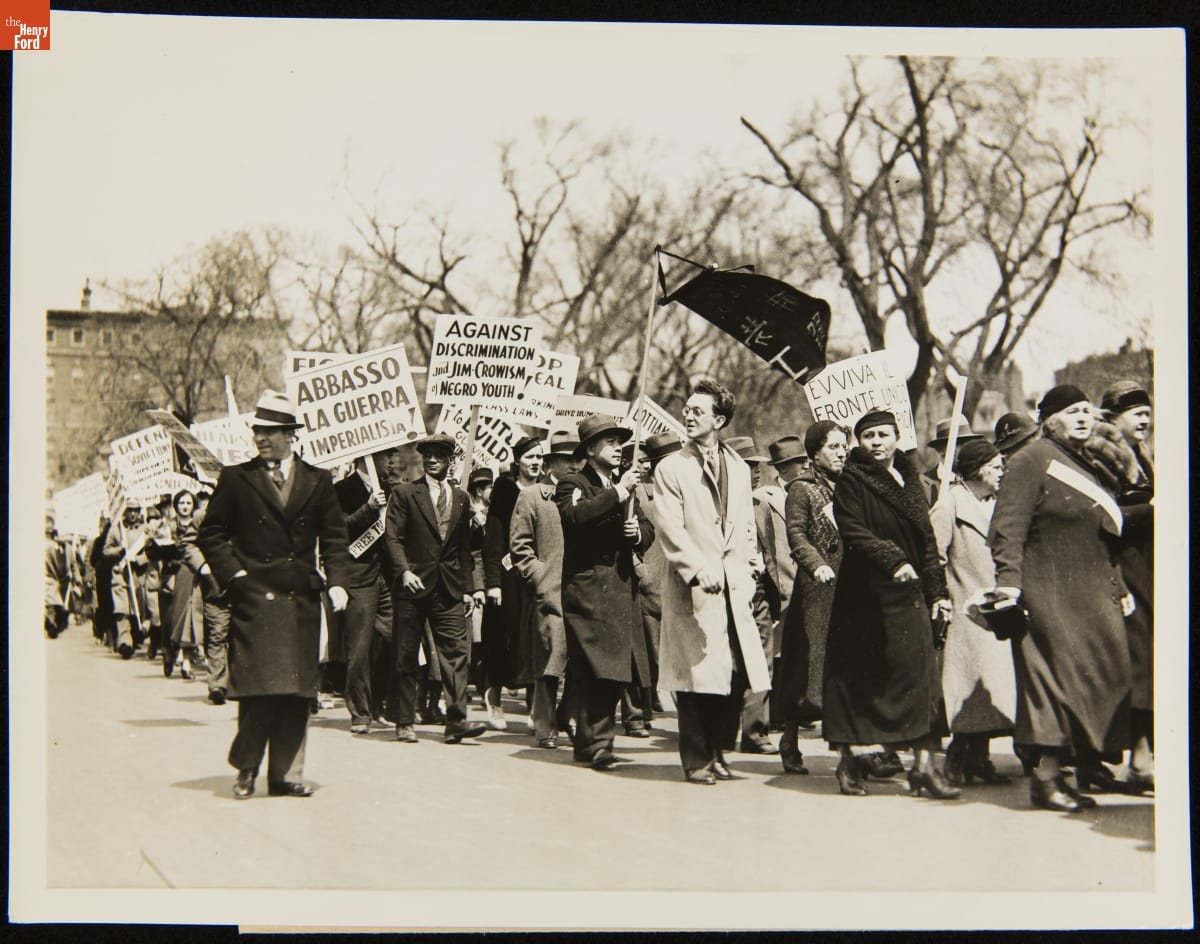
- May Day Civil Rights Demonstration on Boston Common, May 1, 1935 - Protest marchers paraded through Boston, Massachusetts, neighborhoods on May 1, 1935. The demonstrators lifted banners denouncing fascism, discrimination, and Jim-Crowism, and other messaging. The diverse group of activists marched peacefully to the Boston Commons, though some newspaper accounts stressed disturbances during the May Day event.
- May 01, 1935
- Collections - Artifact
May Day Civil Rights Demonstration on Boston Common, May 1, 1935
Protest marchers paraded through Boston, Massachusetts, neighborhoods on May 1, 1935. The demonstrators lifted banners denouncing fascism, discrimination, and Jim-Crowism, and other messaging. The diverse group of activists marched peacefully to the Boston Commons, though some newspaper accounts stressed disturbances during the May Day event.