
Search
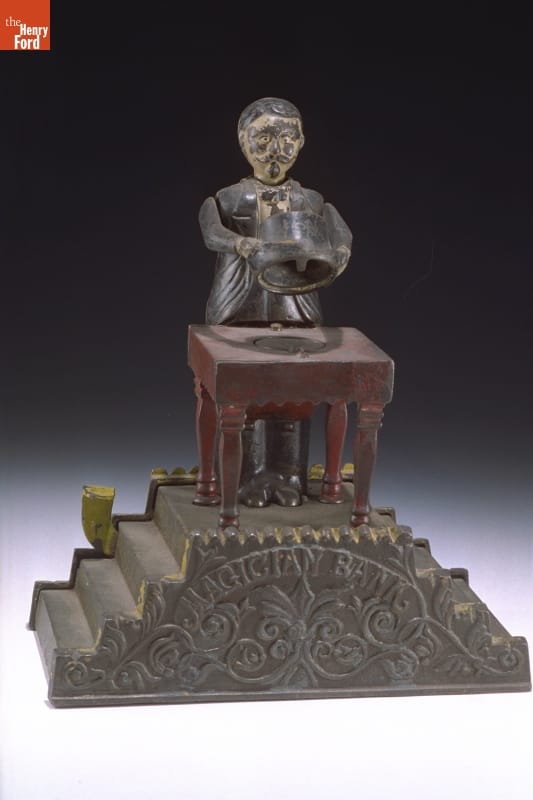
- Magician Bank, 1901-1920 - Cast iron mechanical banks, which used ingenious mechanisms to deposit money, became particularly popular between 1870 and 1930. Banks were produced in a variety of forms, such as this magician. When the lever on the step is depressed, a coin placed on the table "disappears" under the table while the magician lowers his hat over the coin and nods his head.
- 1901-1920
- Collections - Artifact
Magician Bank, 1901-1920
Cast iron mechanical banks, which used ingenious mechanisms to deposit money, became particularly popular between 1870 and 1930. Banks were produced in a variety of forms, such as this magician. When the lever on the step is depressed, a coin placed on the table "disappears" under the table while the magician lowers his hat over the coin and nods his head.
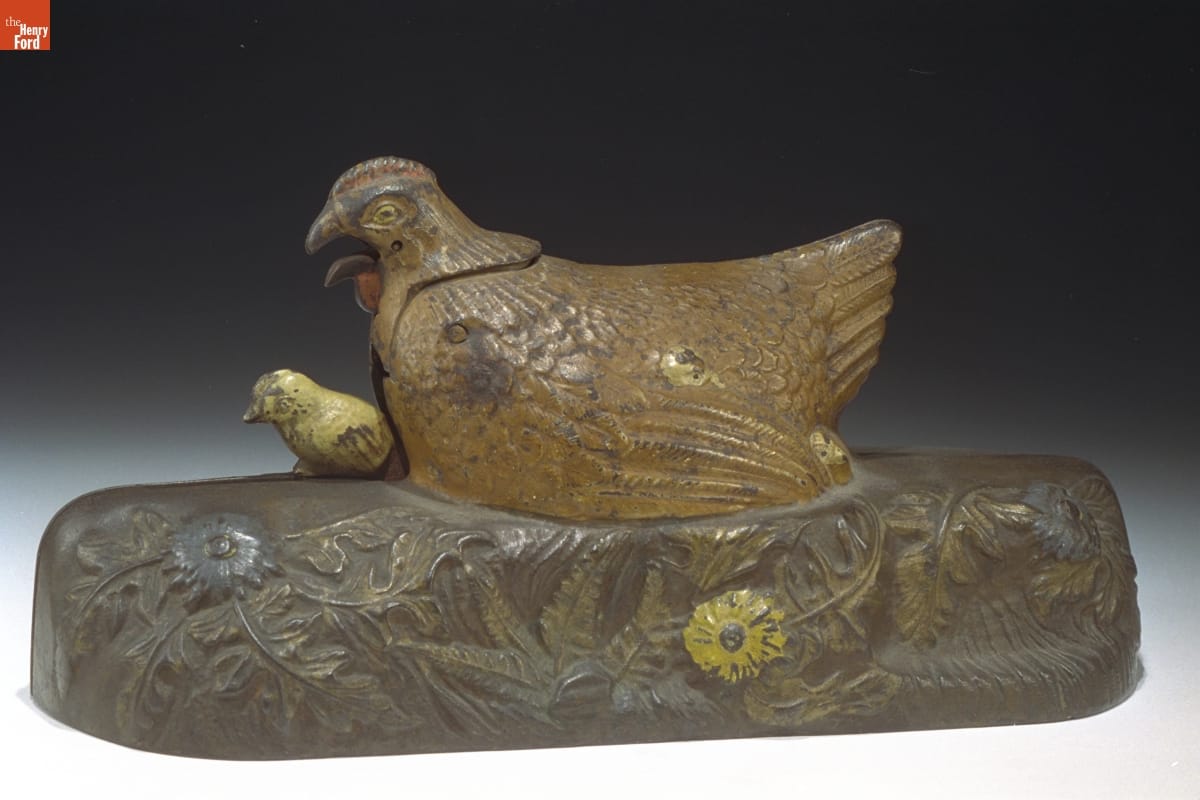
- "Hen and Chicken" Mechanical Bank, 1901-1928 - Banks with ingenious mechanisms made saving fun and were perfect gifts for children whose parents wanted to promote thrift. When a child placed a coin in front of this hen and activated a lever, a small chick emerged to peck at the coin. The mother hen's head nodded as she watched her thrifty child; her beak also moved as if to cluck approval.
- 1901-1928
- Collections - Artifact
"Hen and Chicken" Mechanical Bank, 1901-1928
Banks with ingenious mechanisms made saving fun and were perfect gifts for children whose parents wanted to promote thrift. When a child placed a coin in front of this hen and activated a lever, a small chick emerged to peck at the coin. The mother hen's head nodded as she watched her thrifty child; her beak also moved as if to cluck approval.
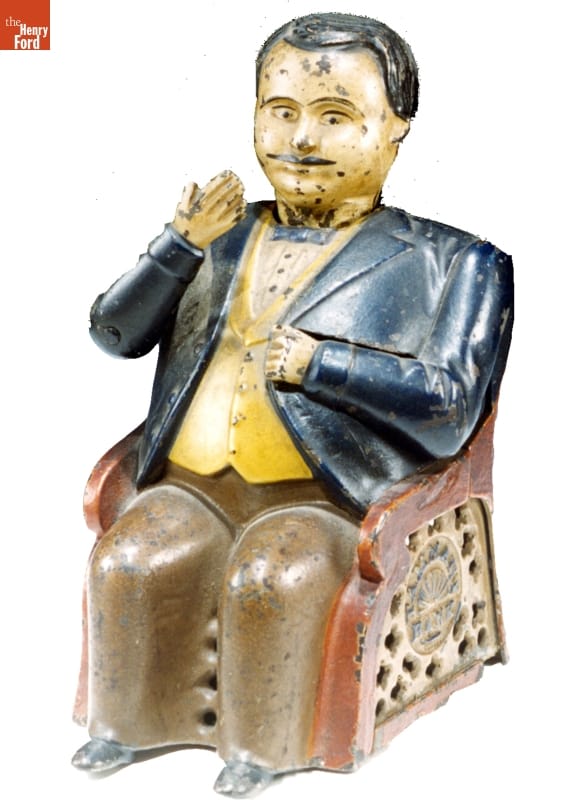
- "Tammany" Mechanical Bank, circa 1875 - This bank caricatures a typical corrupt politician of New York City's Tammany Hall, the seat of the city's Democratic Party at the time, nodding in appreciation with each coin deposited. The J. & E. Stevens Company, founded in 1843, began producing banks in 1869 and their line became the largest in the world during the 1870s and 1880s.
- circa 1875
- Collections - Artifact
"Tammany" Mechanical Bank, circa 1875
This bank caricatures a typical corrupt politician of New York City's Tammany Hall, the seat of the city's Democratic Party at the time, nodding in appreciation with each coin deposited. The J. & E. Stevens Company, founded in 1843, began producing banks in 1869 and their line became the largest in the world during the 1870s and 1880s.
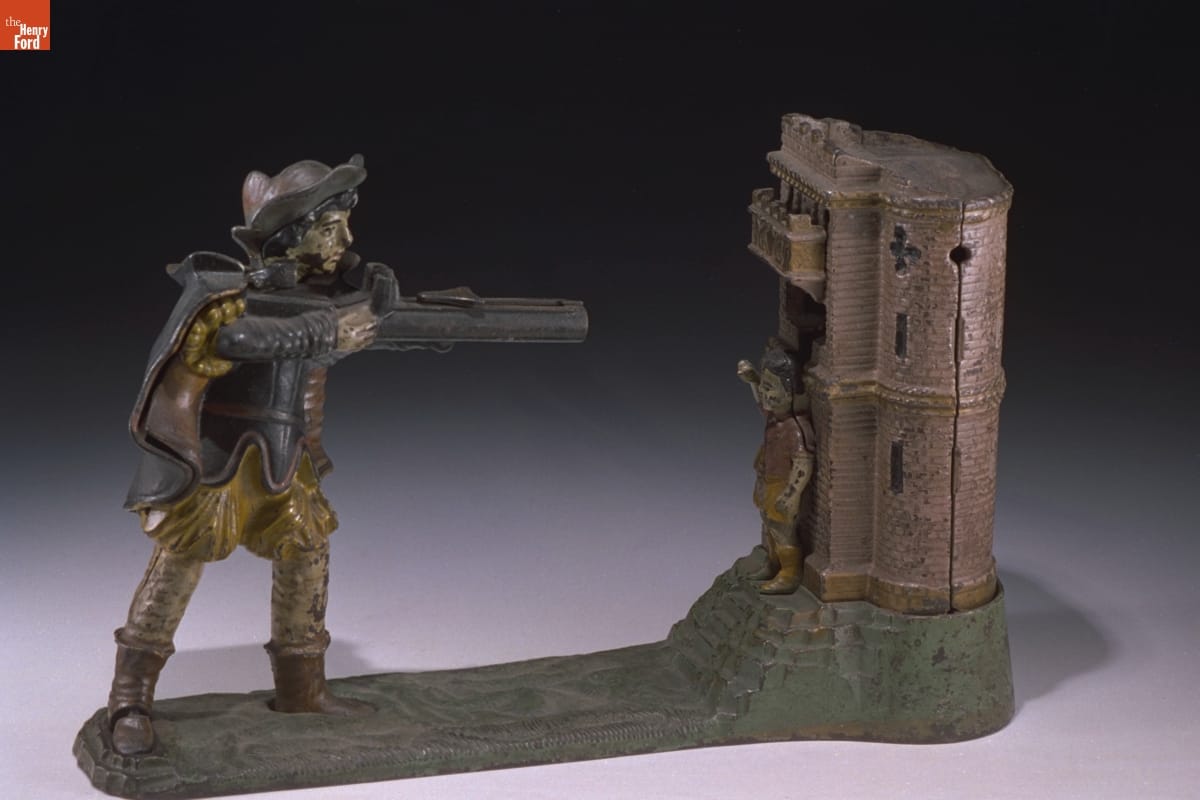
- "William Tell" Mechanical Bank, 1896-1930 - When William Tell's right foot is pressed, the coin shoots into the castle, knocking the apple off the boy's head. The bank is based on the legendary story of the Swiss patriot who was ordered to shoot an apple off his small son's head.
- 1896-1930
- Collections - Artifact
"William Tell" Mechanical Bank, 1896-1930
When William Tell's right foot is pressed, the coin shoots into the castle, knocking the apple off the boy's head. The bank is based on the legendary story of the Swiss patriot who was ordered to shoot an apple off his small son's head.
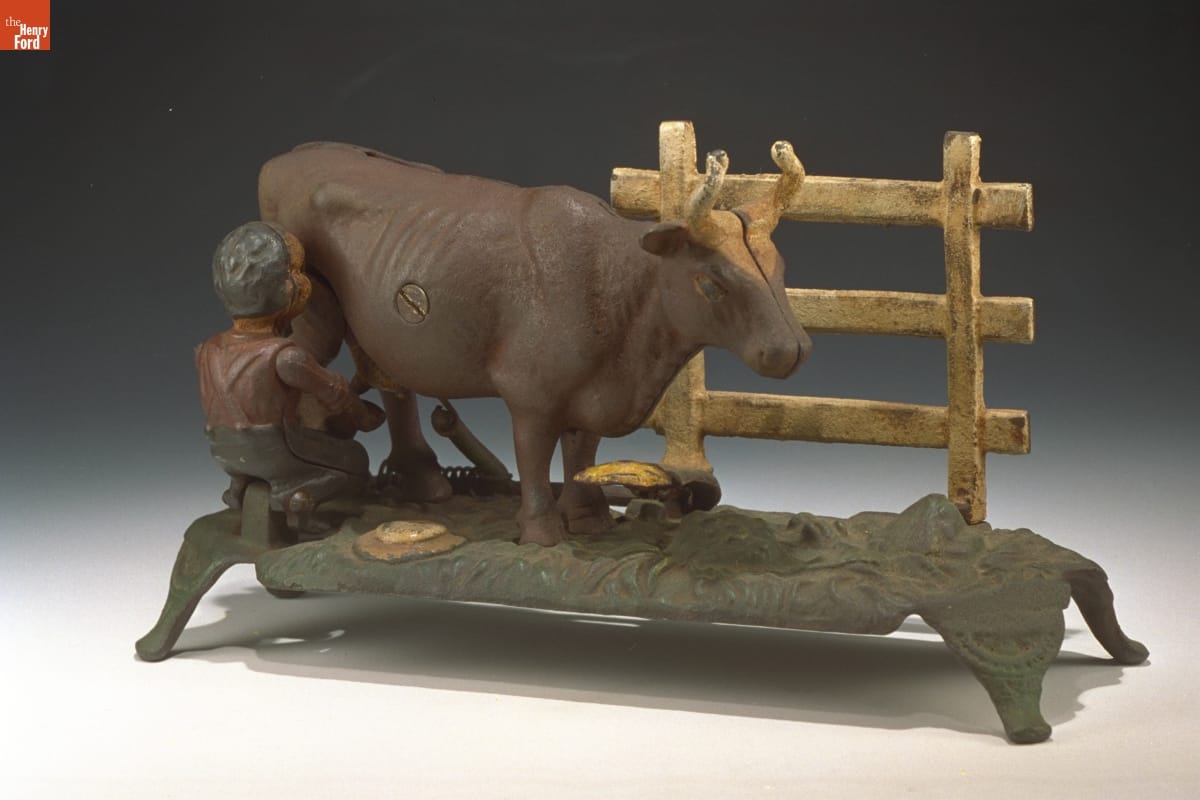
- "Kicking Cow" Mechanical Bank, 1888-1900 - Saving money can be fun. Beginning in the late 1800s, families could purchase mechanical banks. These banks used ingenious mechanisms to deposit money. This bank depicts a man milking a cow. When the saver deposits a coin, the cow kicks -- a real hazard if the animal was treated roughly -- and the man tumbles backwards.
- 1888-1900
- Collections - Artifact
"Kicking Cow" Mechanical Bank, 1888-1900
Saving money can be fun. Beginning in the late 1800s, families could purchase mechanical banks. These banks used ingenious mechanisms to deposit money. This bank depicts a man milking a cow. When the saver deposits a coin, the cow kicks -- a real hazard if the animal was treated roughly -- and the man tumbles backwards.
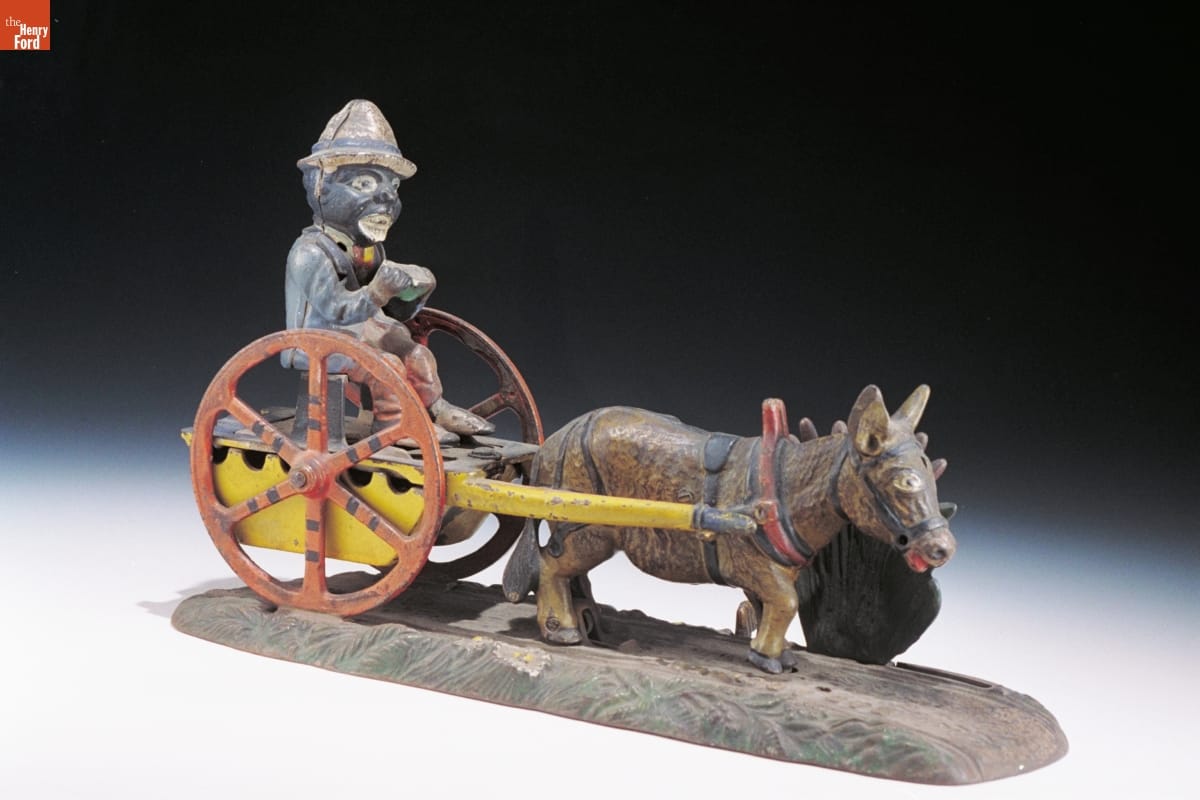
- Mechanical Bank, "Bad Accident," 1891-1911 - During the last quarter of the 1800s, America witnessed one of the worst eras of discrimination against African Americans. Degrading images -- like those portrayed in this bank -- were intended to convince white people that African Americans were inferior, second-class citizens. African-American leaders continually challenged these stereotypes and sought changes to the status quo.
- 1891-1911
- Collections - Artifact
Mechanical Bank, "Bad Accident," 1891-1911
During the last quarter of the 1800s, America witnessed one of the worst eras of discrimination against African Americans. Degrading images -- like those portrayed in this bank -- were intended to convince white people that African Americans were inferior, second-class citizens. African-American leaders continually challenged these stereotypes and sought changes to the status quo.
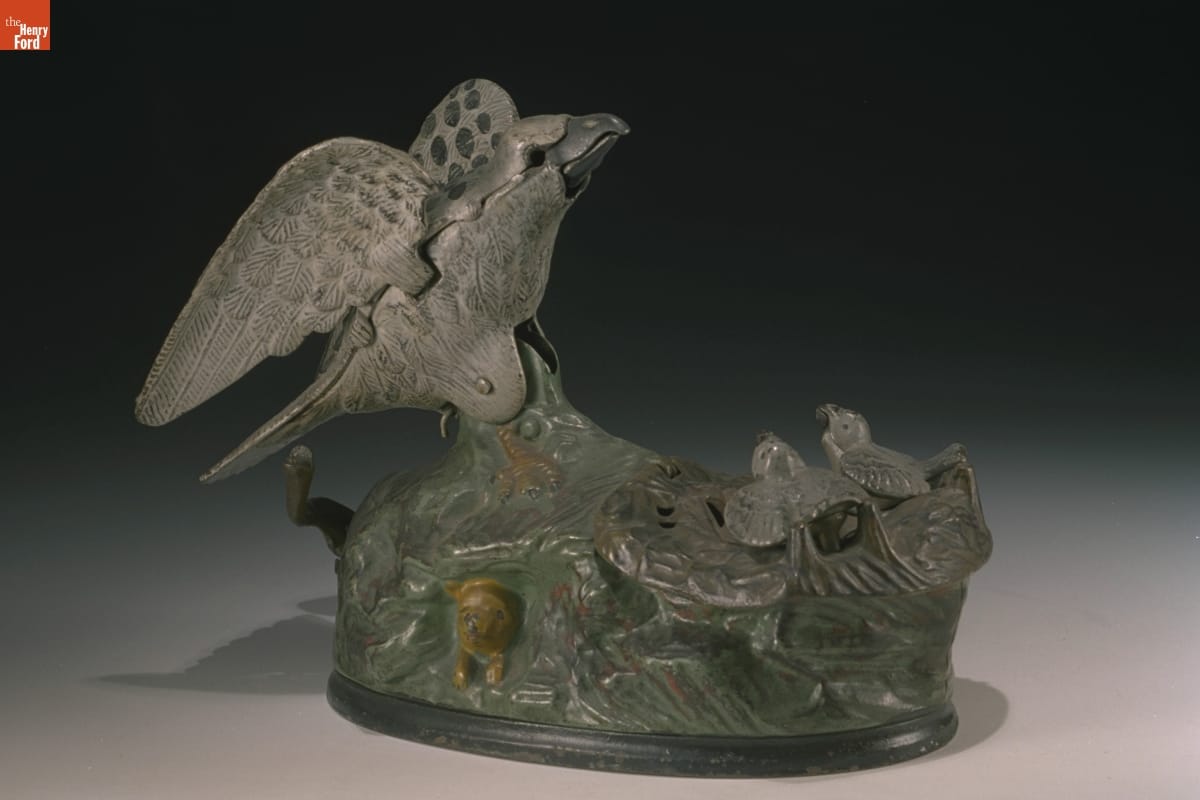
- "Eagle Bank" Mechanical Bank, 1883-1910 - Saving money can be fun. Beginning in the late 1800s, families could purchase banks that used ingenious mechanisms to deposit money. This mechanical bank has an eagle that looks as if it is feeding its young. Place a coin in the eagle's mouth and depress the lever; the eagle will lurch forward and deposit the coin.
- 1883-1910
- Collections - Artifact
"Eagle Bank" Mechanical Bank, 1883-1910
Saving money can be fun. Beginning in the late 1800s, families could purchase banks that used ingenious mechanisms to deposit money. This mechanical bank has an eagle that looks as if it is feeding its young. Place a coin in the eagle's mouth and depress the lever; the eagle will lurch forward and deposit the coin.
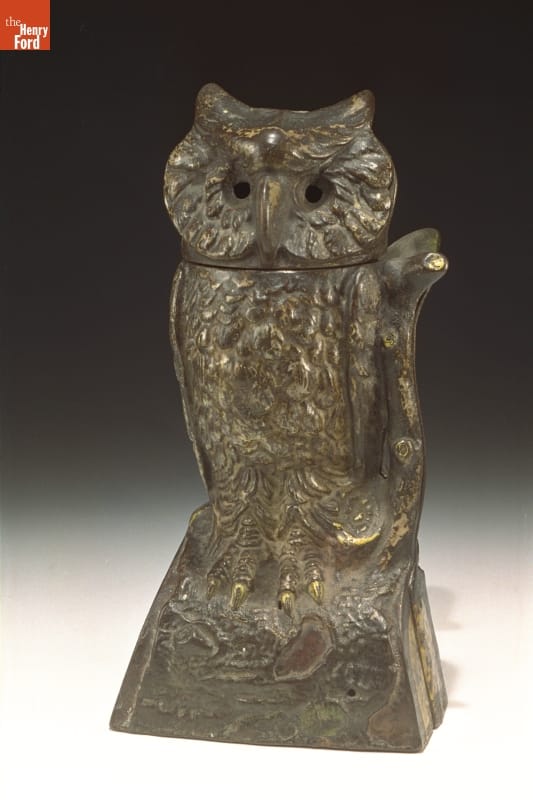
- Owl Mechanical Bank, 1880-1920 - Banks with ingenious mechanisms made saving fun and were perfect gifts for children whose parents wanted to promote thrift. These mechanical banks could have intricate movements or simple ones. This owl bank is simple. Place the coin in the tree near the owl's head and activate a lever; the owl's head turns and the coin disappears.
- 1880-1920
- Collections - Artifact
Owl Mechanical Bank, 1880-1920
Banks with ingenious mechanisms made saving fun and were perfect gifts for children whose parents wanted to promote thrift. These mechanical banks could have intricate movements or simple ones. This owl bank is simple. Place the coin in the tree near the owl's head and activate a lever; the owl's head turns and the coin disappears.
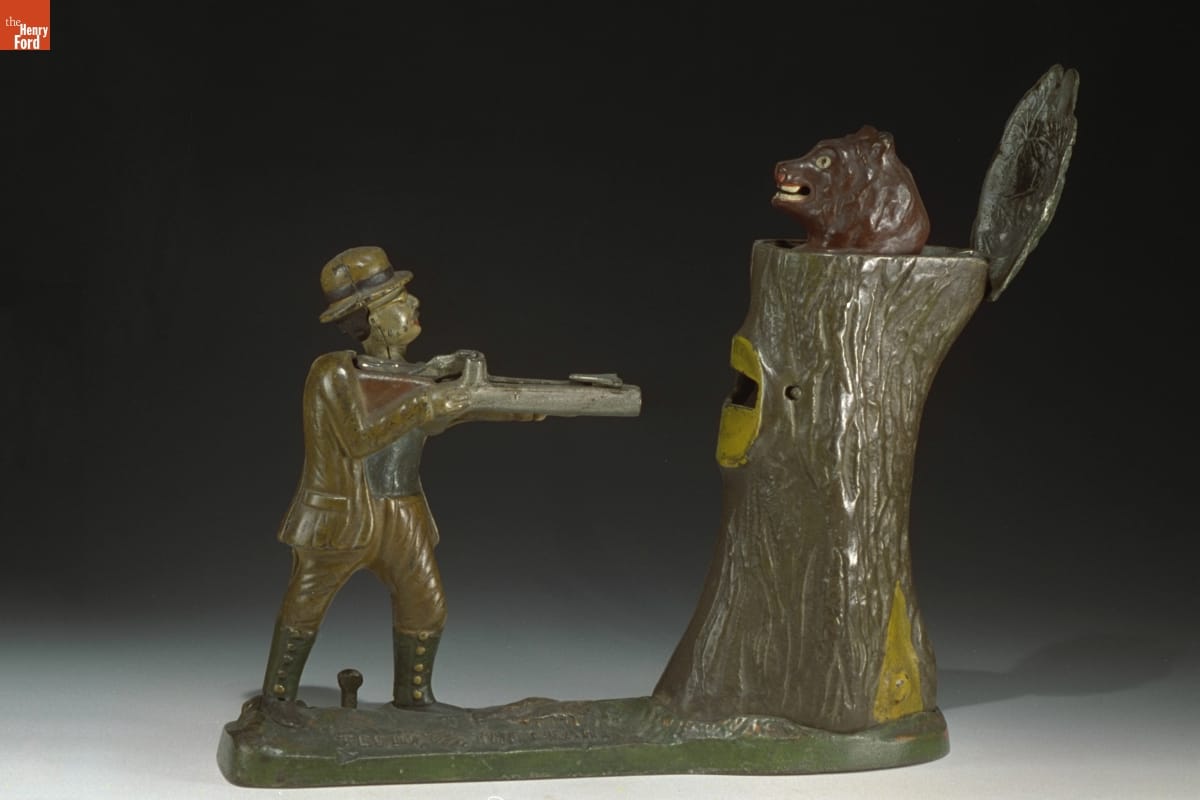
- "Teddy and the Bear" Mechanical Bank, 1907-1928 - When the lever on the base is pressed, the coin shoots into a slot in the tree trunk and the bear's head emerges from the top of the tree. This bank refers to the tale that Theodore Roosevelt refused to shoot a bear cub during a hunting trip in Mississippi, an event that also inspired the creation of the "Teddy" bear.
- 1907-1928
- Collections - Artifact
"Teddy and the Bear" Mechanical Bank, 1907-1928
When the lever on the base is pressed, the coin shoots into a slot in the tree trunk and the bear's head emerges from the top of the tree. This bank refers to the tale that Theodore Roosevelt refused to shoot a bear cub during a hunting trip in Mississippi, an event that also inspired the creation of the "Teddy" bear.
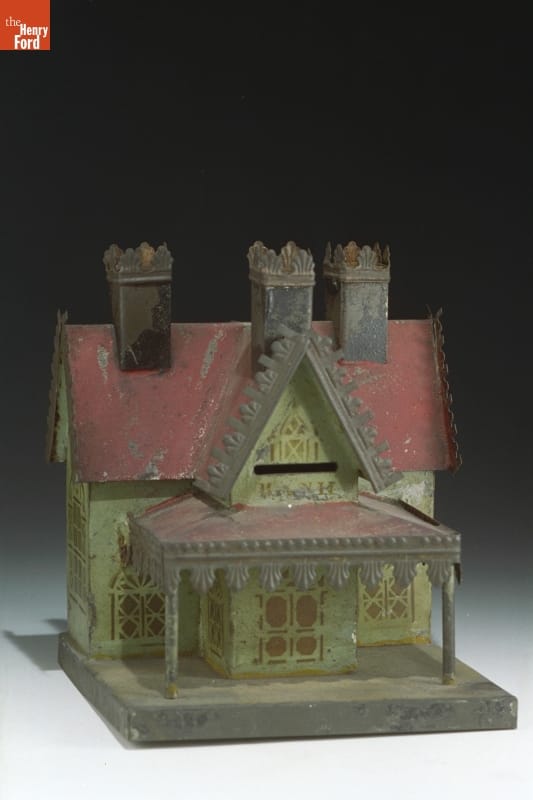
- House Bank, 1869-1880 - Cast iron mechanical banks, which used ingenious mechanisms to deposit the money, became particularly popular between 1870 and 1930. Banks were produced in a variety of forms, sometimes reflecting popular social attitudes or portraying events of the time. Toymakers Elisha Stevens and George Brown combined their tin and cast-iron toy lines during the 1870s, producing many innovative toys.
- 1869-1880
- Collections - Artifact
House Bank, 1869-1880
Cast iron mechanical banks, which used ingenious mechanisms to deposit the money, became particularly popular between 1870 and 1930. Banks were produced in a variety of forms, sometimes reflecting popular social attitudes or portraying events of the time. Toymakers Elisha Stevens and George Brown combined their tin and cast-iron toy lines during the 1870s, producing many innovative toys.