
Search
- Flask, 1822-1835 - Glass factories in America began producing inexpensive, mold-formed flasks in the early 1800s. These figured flasks, often decorated with symbols of national pride or political or cultural affiliation, appealed to America's common man. Membership in the Freemasons grew in the early decades of the 1800s. This flask combines Masonic imagery (arch and pavement) with an emblem of America's agrarian roots (farm tools and grain).
- 1822-1835
- Collections - Artifact
Flask, 1822-1835
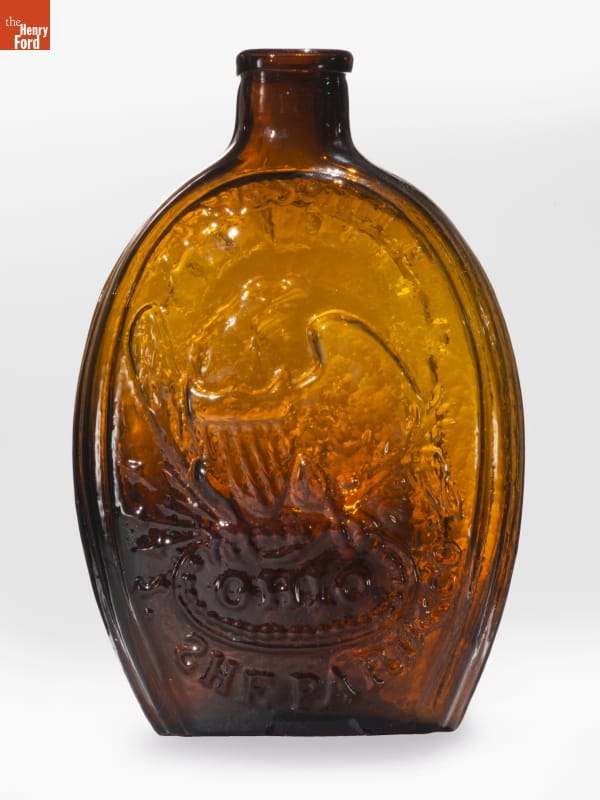
Glass factories in America began producing inexpensive, mold-formed flasks in the early 1800s. These figured flasks, often decorated with symbols of national pride or political or cultural affiliation, appealed to America's common man. Membership in the Freemasons grew in the early decades of the 1800s. This flask combines Masonic imagery (arch and pavement) with an emblem of America's agrarian roots (farm tools and grain).
- Flask, 1822-1835 - Glass factories in America began producing inexpensive, mold-formed flasks in the early 1800s. These figured flasks, often decorated with symbols of national pride or political or cultural affiliation, appealed to America's common man. Membership in the Freemasons grew in the early decades of the 1800s. This flask combines Masonic imagery (arch and pavement) with an emblem of America's agrarian roots (farm tools and grain).
- 1822-1835
- Collections - Artifact
Flask, 1822-1835
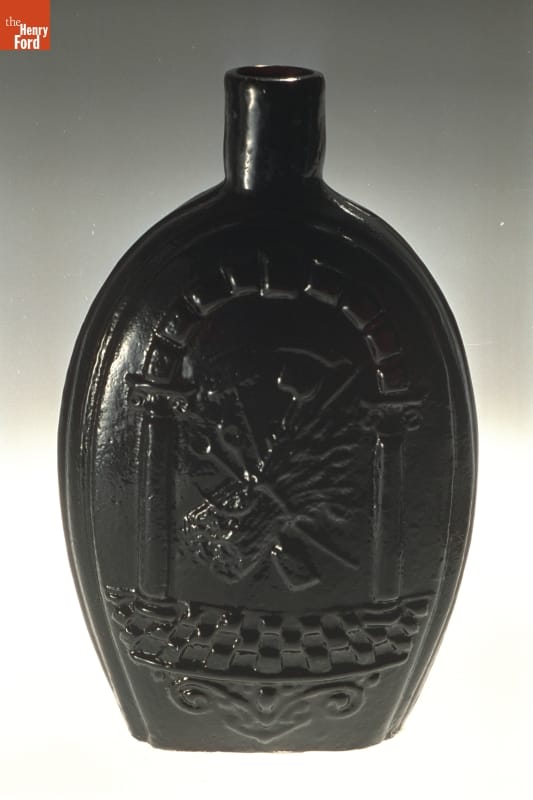
Glass factories in America began producing inexpensive, mold-formed flasks in the early 1800s. These figured flasks, often decorated with symbols of national pride or political or cultural affiliation, appealed to America's common man. Membership in the Freemasons grew in the early decades of the 1800s. This flask combines Masonic imagery (arch and pavement) with an emblem of America's agrarian roots (farm tools and grain).