
Search
- Confederate Currency, Confederate States of America, One Hundred Dollars, 1862 - When the Civil War broke out, the newly formed Confederate States of America needed to create a monetary system to finance the government and the war effort. The Confederate Treasury printed bank notes in 50-cent, $1, $2, $5, $10, $20, $50, $100, $500 and $1,000 denominations. Some were interest-bearing notes, others not.
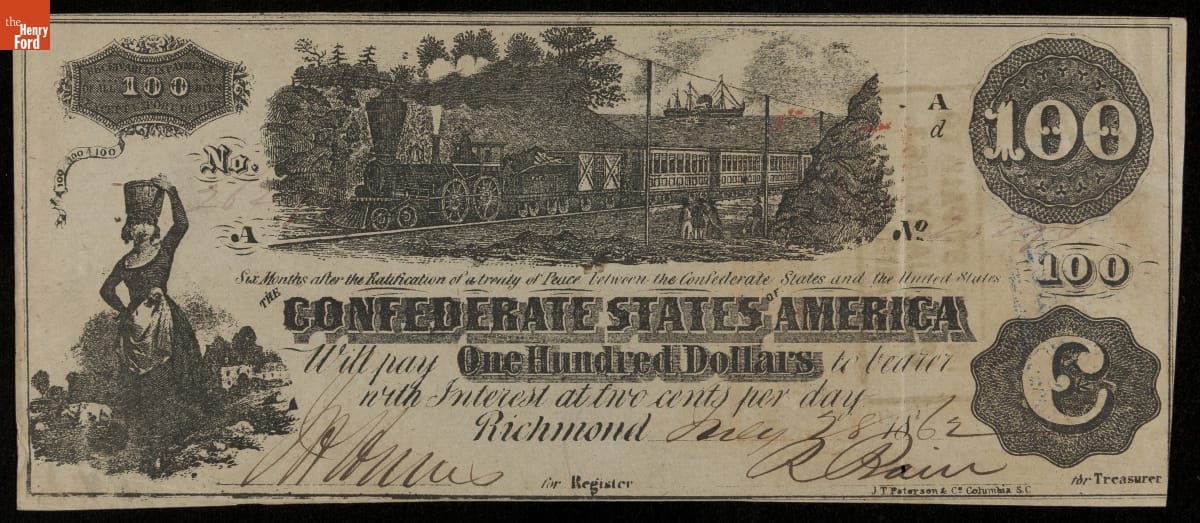
- July 28, 1862
- Collections - Artifact
Confederate Currency, Confederate States of America, One Hundred Dollars, 1862
When the Civil War broke out, the newly formed Confederate States of America needed to create a monetary system to finance the government and the war effort. The Confederate Treasury printed bank notes in 50-cent, $1, $2, $5, $10, $20, $50, $100, $500 and $1,000 denominations. Some were interest-bearing notes, others not.
- Confederate Bond, One Thousand Dollars, 1862 - To help raise money, the Confederate States of America issued bonds. Early in the Civil War, these bonds seemed a worthwhile, even patriotic, investment to the Southerners who bought them. The war was going well for the Confederacy and the bonds promised a tidy profit in interest. At war's end, Southerners were left holding now worthless Confederate bonds.
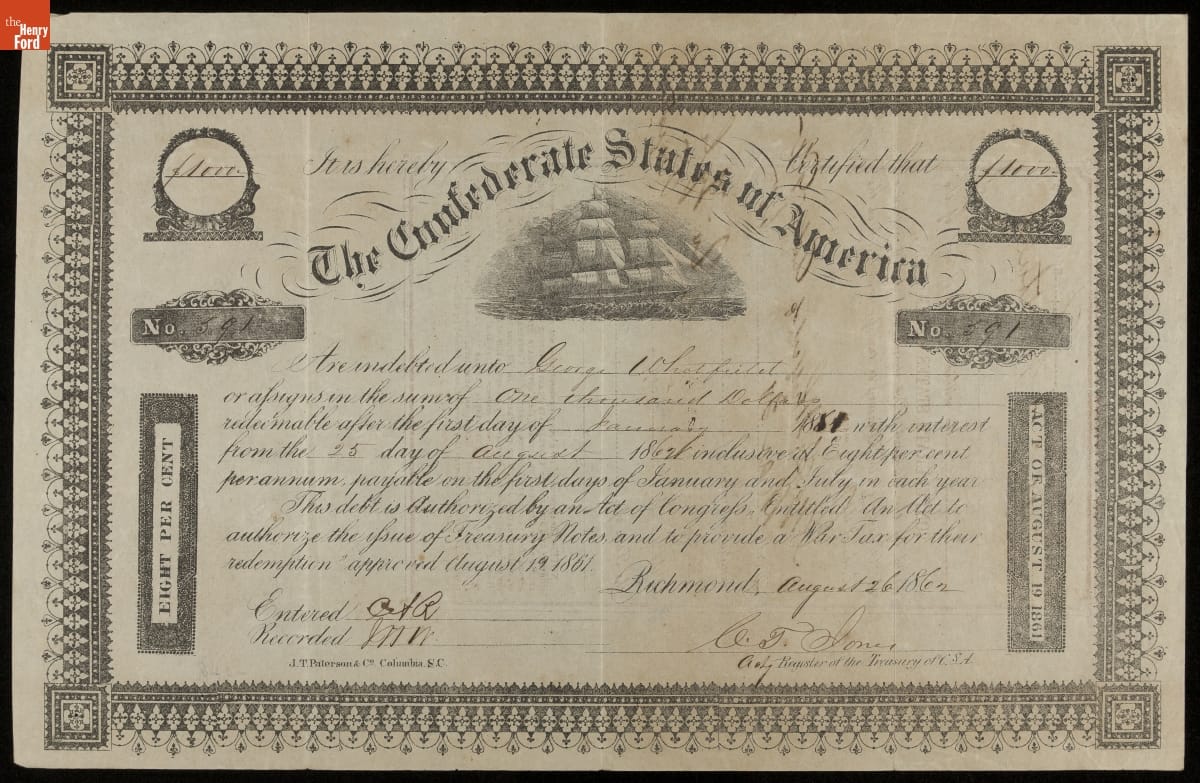
- 1862
- Collections - Artifact
Confederate Bond, One Thousand Dollars, 1862
To help raise money, the Confederate States of America issued bonds. Early in the Civil War, these bonds seemed a worthwhile, even patriotic, investment to the Southerners who bought them. The war was going well for the Confederacy and the bonds promised a tidy profit in interest. At war's end, Southerners were left holding now worthless Confederate bonds.
- Confederate Currency, Confederate States of America, One Hundred Dollars, 1862 - When the Civil War broke out, the newly formed Confederate States of America needed to create a monetary system to finance the government and the war effort. The Confederate Treasury printed bank notes in 50-cent, $1, $2, $5, $10, $20, $50, $100, $500 and $1,000 denominations. Some were interest-bearing notes, others not.
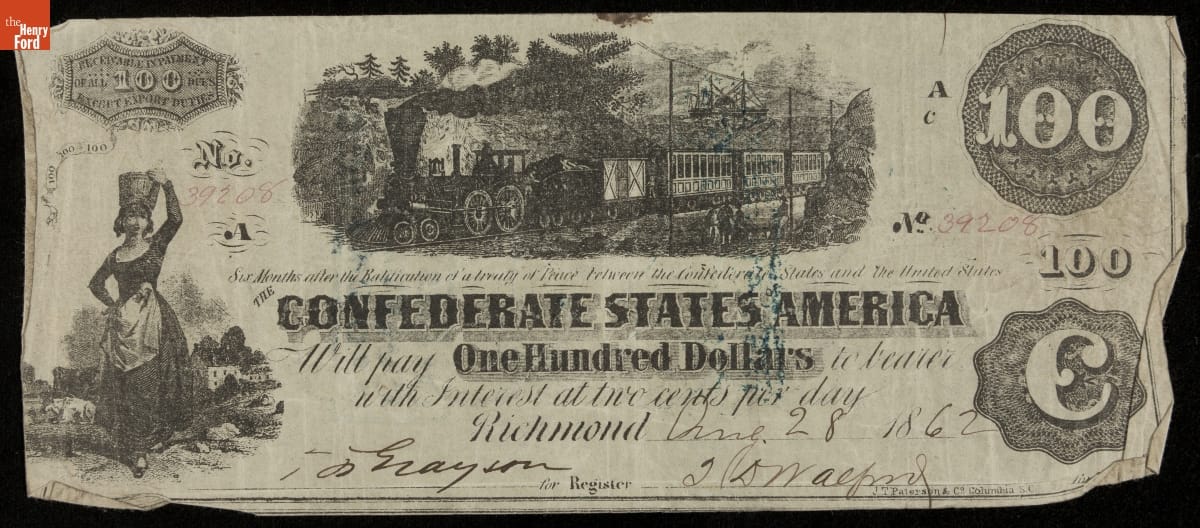
- June 28, 1862
- Collections - Artifact
Confederate Currency, Confederate States of America, One Hundred Dollars, 1862
When the Civil War broke out, the newly formed Confederate States of America needed to create a monetary system to finance the government and the war effort. The Confederate Treasury printed bank notes in 50-cent, $1, $2, $5, $10, $20, $50, $100, $500 and $1,000 denominations. Some were interest-bearing notes, others not.
- Confederate Bond, One Hundred Dollars, 1862 - To help raise money, the Confederate States of America issued bonds. Early in the Civil War, these bonds seemed a worthwhile, even patriotic, investment to the Southerners who bought them. The war was going well for the Confederacy and the bonds promised a tidy profit in interest. At war's end, Southerners were left holding now worthless Confederate bonds.
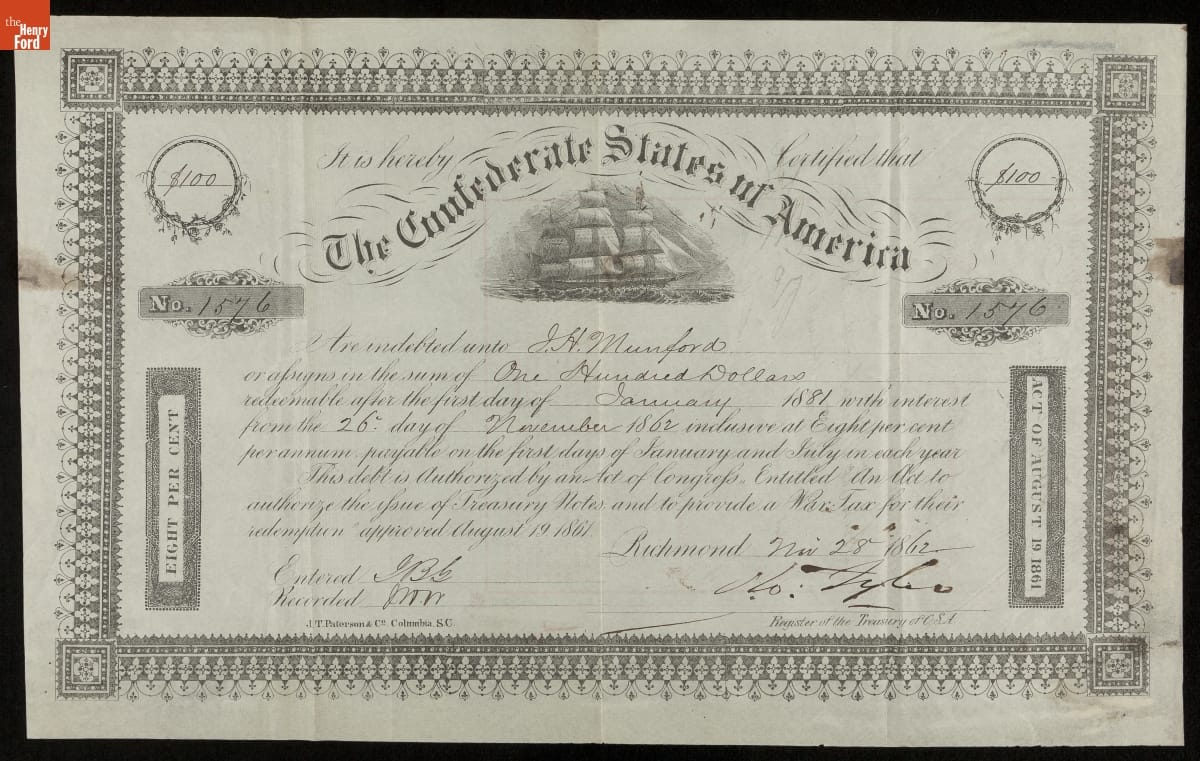
- 1862-1865
- Collections - Artifact
Confederate Bond, One Hundred Dollars, 1862
To help raise money, the Confederate States of America issued bonds. Early in the Civil War, these bonds seemed a worthwhile, even patriotic, investment to the Southerners who bought them. The war was going well for the Confederacy and the bonds promised a tidy profit in interest. At war's end, Southerners were left holding now worthless Confederate bonds.
- Confederate Currency, The State of Alabama, Five Dollars, 1864 - Confederate currency during the Civil War was anything but uniform -- it had various designs, numerous issuers, and was redeemable for payment in different ways. The Confederate Treasury printed bank notes. And individual states and cities issued their own paper currency, too. This decentralized Confederate monetary system reflected Southern values -- Southerners prized states' rights over a strong central government.
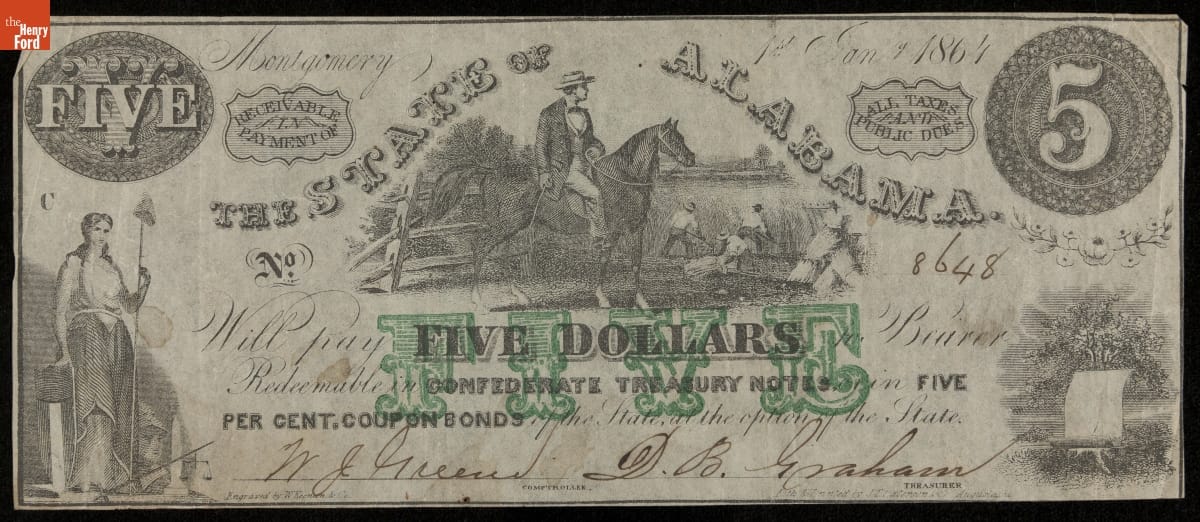
- January 01, 1864
- Collections - Artifact
Confederate Currency, The State of Alabama, Five Dollars, 1864
Confederate currency during the Civil War was anything but uniform -- it had various designs, numerous issuers, and was redeemable for payment in different ways. The Confederate Treasury printed bank notes. And individual states and cities issued their own paper currency, too. This decentralized Confederate monetary system reflected Southern values -- Southerners prized states' rights over a strong central government.
- Confederate Bond, Two Thousand Dollars, 1863 - To help raise money, the Confederate States of America issued bonds. Early in the Civil War, these bonds seemed a worthwhile, even patriotic, investment to the Southerners who bought them. The war was going well for the Confederacy and the bonds promised a tidy profit in interest. At war's end, Southerners were left holding now worthless Confederate bonds.
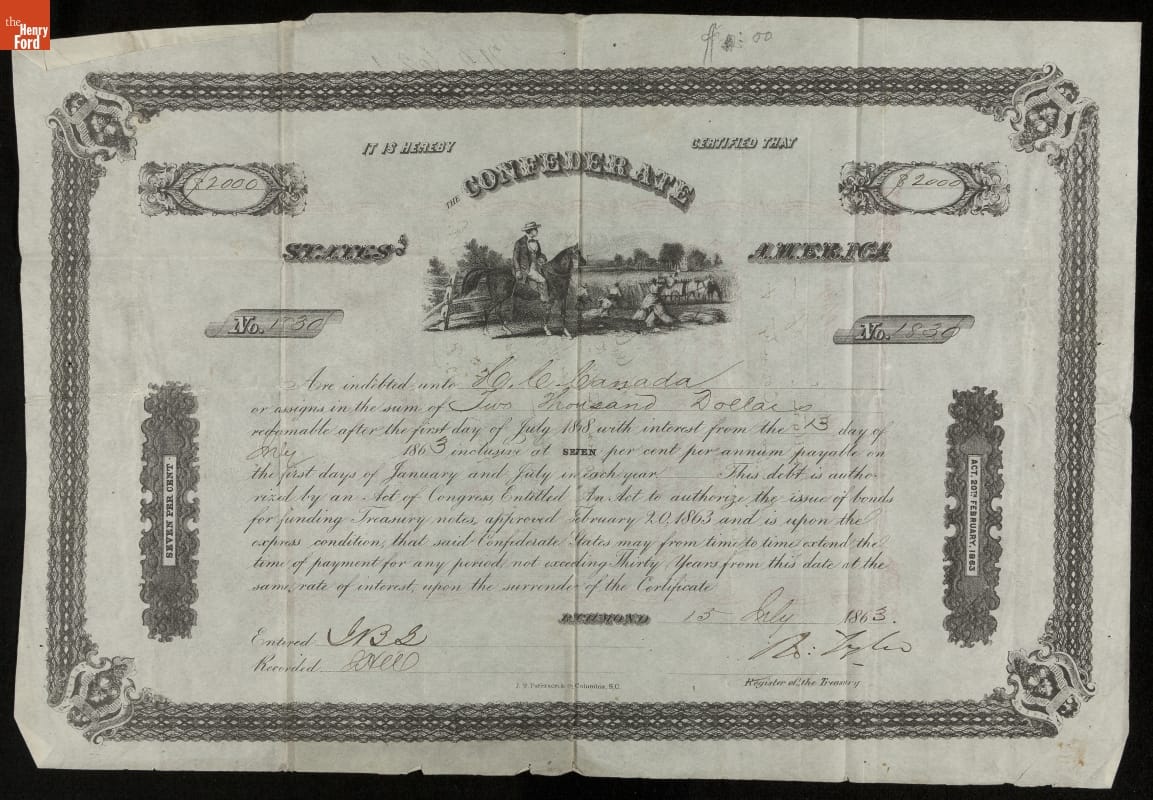
- July 15, 1863
- Collections - Artifact
Confederate Bond, Two Thousand Dollars, 1863
To help raise money, the Confederate States of America issued bonds. Early in the Civil War, these bonds seemed a worthwhile, even patriotic, investment to the Southerners who bought them. The war was going well for the Confederacy and the bonds promised a tidy profit in interest. At war's end, Southerners were left holding now worthless Confederate bonds.
- Confederate Currency, The State of North Carolina, Twenty-Five Cents, 1863 - Confederate currency during the Civil War was anything but uniform -- it had various designs, numerous issuers, and was redeemable for payment in different ways. The Confederate Treasury printed bank notes. And individual states and cities issued their own paper currency, too. This decentralized Confederate monetary system reflected Southern values -- Southerners prized states' rights over a strong central government.
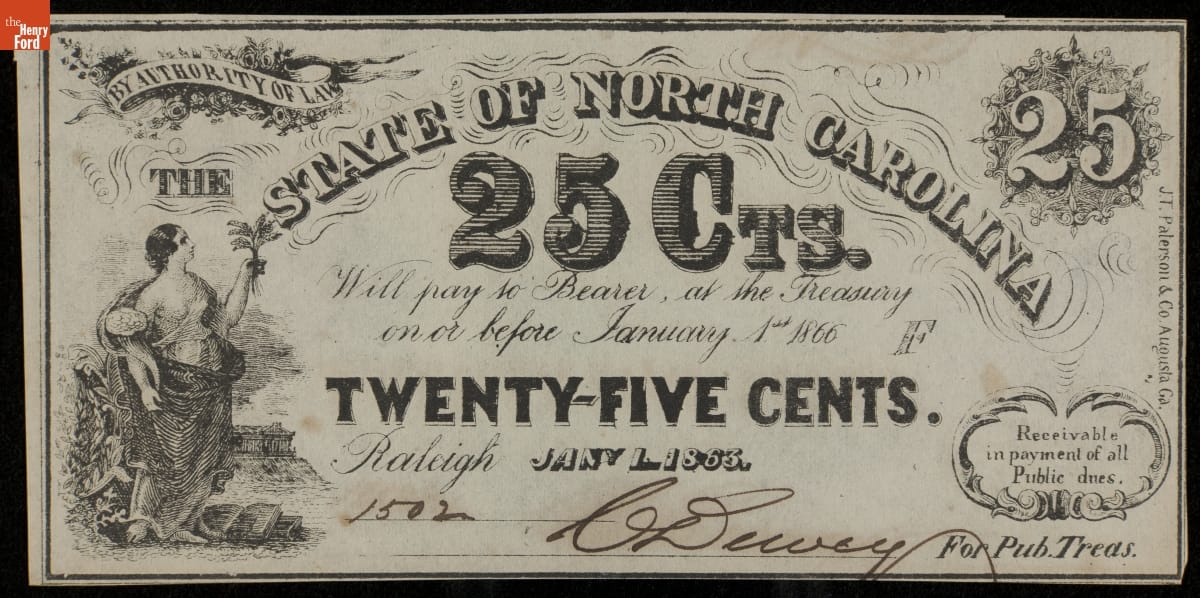
- January 01, 1863
- Collections - Artifact
Confederate Currency, The State of North Carolina, Twenty-Five Cents, 1863
Confederate currency during the Civil War was anything but uniform -- it had various designs, numerous issuers, and was redeemable for payment in different ways. The Confederate Treasury printed bank notes. And individual states and cities issued their own paper currency, too. This decentralized Confederate monetary system reflected Southern values -- Southerners prized states' rights over a strong central government.