
Search
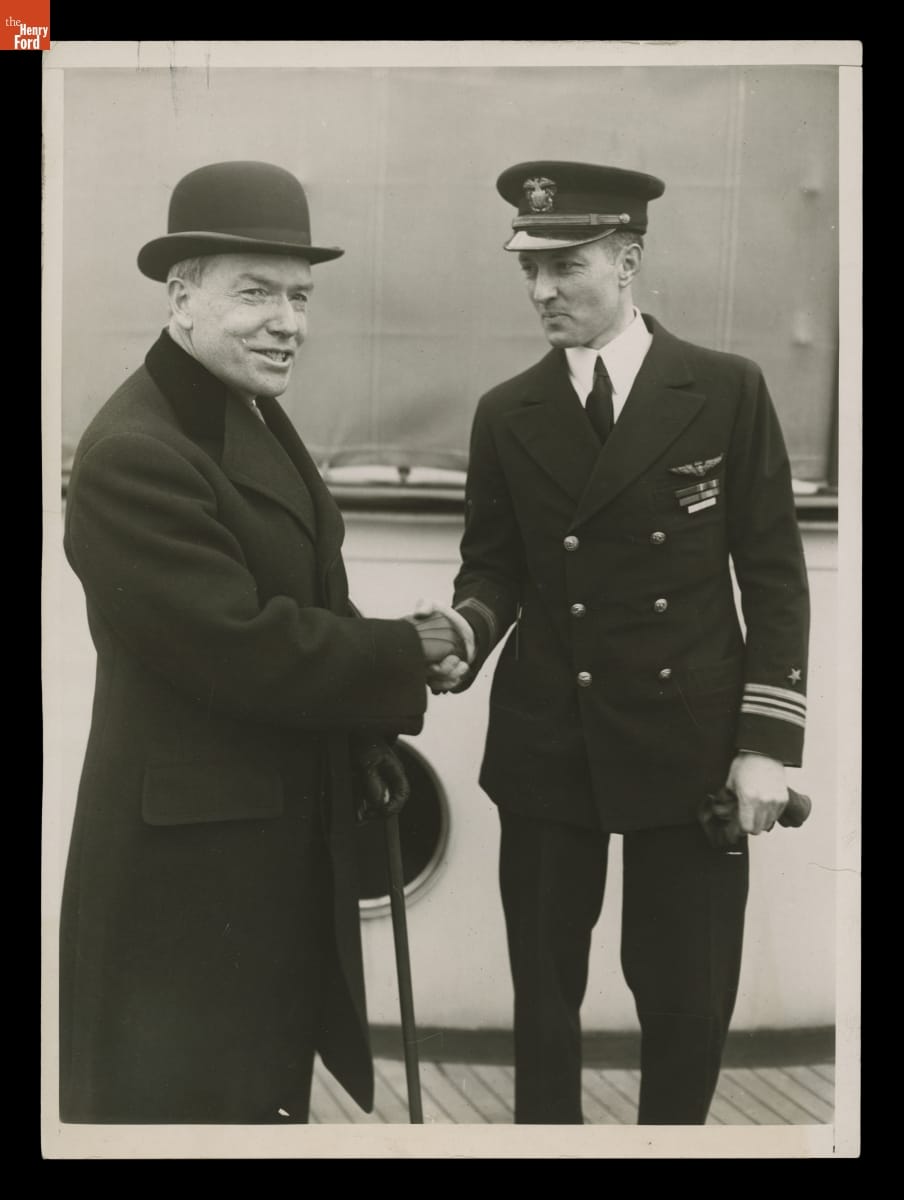
- John D. Rockefeller, Jr. and Rear Admiral Richard E. Byrd Shaking Hands before the Byrd Arctic Expedition, 1926 - When Richard E. Byrd proposed a flight over the North Pole in 1926, he turned to Edsel Ford for financial support. Not only did Ford provide considerable funding himself, he encouraged John D. Rockefeller, Jr., to contribute as well. Byrd is generally credited with reaching the pole on May 9, 1926, though controversy remains.
- 1926
- Collections - Artifact
John D. Rockefeller, Jr. and Rear Admiral Richard E. Byrd Shaking Hands before the Byrd Arctic Expedition, 1926
When Richard E. Byrd proposed a flight over the North Pole in 1926, he turned to Edsel Ford for financial support. Not only did Ford provide considerable funding himself, he encouraged John D. Rockefeller, Jr., to contribute as well. Byrd is generally credited with reaching the pole on May 9, 1926, though controversy remains.
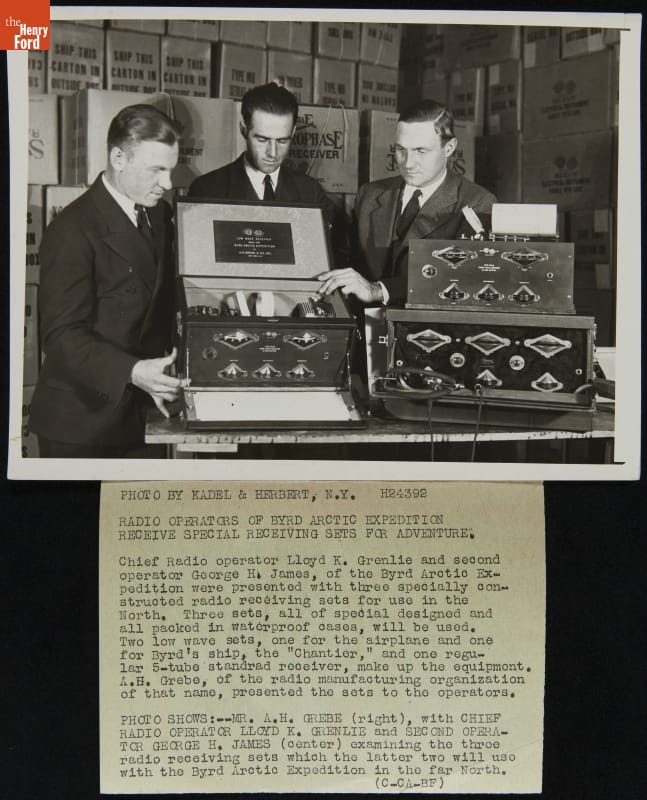
- A. H. Grebe Presents Radio Operators with Radio Receivers for Use on the Byrd Arctic Expedition, 1926 - Richard E. Byrd led an expedition to the Arctic in 1926, highlighted by a flight toward the North Pole on May 9. Special shortwave radio equipment allowed members of Byrd's team to communicate between their support ship, <em>Chantier</em>, and their Fokker Tri-Motor airplane, <em>Josephine Ford</em>. Though Byrd is generally credited with reaching the pole, controversy remains.
- 1926
- Collections - Artifact
A. H. Grebe Presents Radio Operators with Radio Receivers for Use on the Byrd Arctic Expedition, 1926
Richard E. Byrd led an expedition to the Arctic in 1926, highlighted by a flight toward the North Pole on May 9. Special shortwave radio equipment allowed members of Byrd's team to communicate between their support ship, Chantier, and their Fokker Tri-Motor airplane, Josephine Ford. Though Byrd is generally credited with reaching the pole, controversy remains.
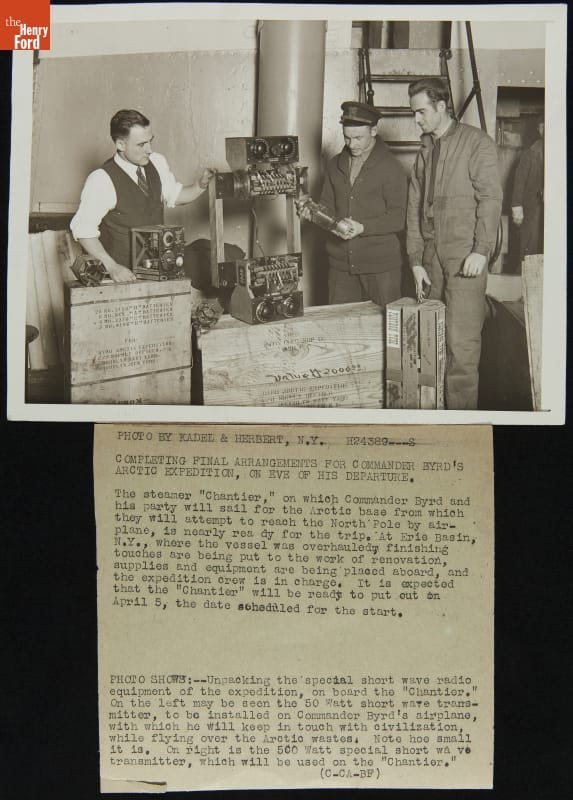
- Special Short Wave Radio Equipment for the Byrd Arctic Expedition, 1926 - Richard E. Byrd led an expedition to the Arctic in 1926, highlighted by a flight toward the North Pole on May 9. Special shortwave radio equipment allowed members of Byrd's team to communicate between their support ship, <em>Chantier</em>, and their Fokker Tri-Motor airplane, <em>Josephine Ford</em>. Though Byrd is generally credited with reaching the pole, controversy remains.
- 1926
- Collections - Artifact
Special Short Wave Radio Equipment for the Byrd Arctic Expedition, 1926
Richard E. Byrd led an expedition to the Arctic in 1926, highlighted by a flight toward the North Pole on May 9. Special shortwave radio equipment allowed members of Byrd's team to communicate between their support ship, Chantier, and their Fokker Tri-Motor airplane, Josephine Ford. Though Byrd is generally credited with reaching the pole, controversy remains.
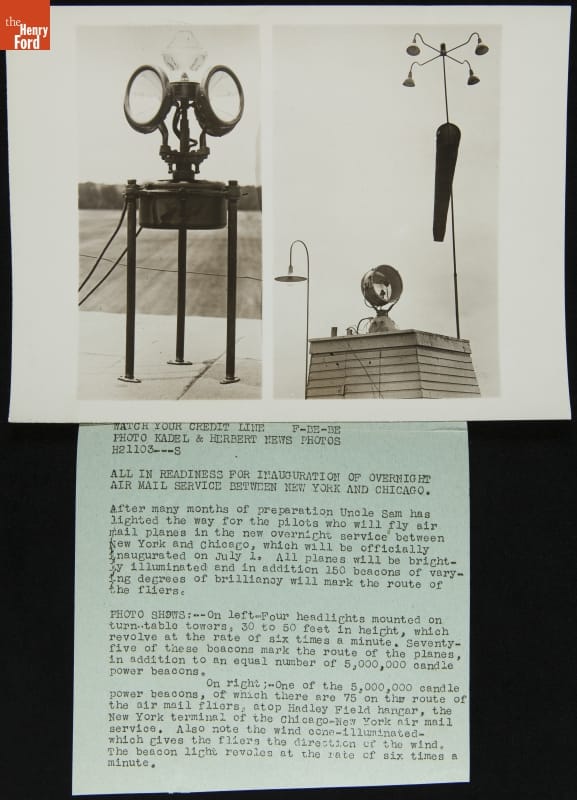
- Beacon Light and Wind Cone in Place for First Night Air Mail Service between New York and Chicago, 1925 - In 1924, with the success of experimental night operations and increasing business interest in next-day mail, the U.S. Air Mail Service announced plans to establish regular overnight flights between New York and Chicago. Preparations included mounting floodlights and searchlights at airfields and constructing a series of routing beacons and emergency landing fields along the route. The first official flights departed from both terminal cities on July 1, 1925.
- 1925
- Collections - Artifact
Beacon Light and Wind Cone in Place for First Night Air Mail Service between New York and Chicago, 1925
In 1924, with the success of experimental night operations and increasing business interest in next-day mail, the U.S. Air Mail Service announced plans to establish regular overnight flights between New York and Chicago. Preparations included mounting floodlights and searchlights at airfields and constructing a series of routing beacons and emergency landing fields along the route. The first official flights departed from both terminal cities on July 1, 1925.
- Night Air Mail Plane Test Flight Lands in New York, 1924 - In 1924, with the success of experimental night operations and increasing business interest in next-day mail, the U.S. Air Mail Service announced plans to establish regular overnight flights between New York and Chicago. Preparations included mounting floodlights and searchlights at airfields and constructing a series of routing beacons and emergency landing fields along the route. The first official flights departed from both terminal cities on July 1, 1925.
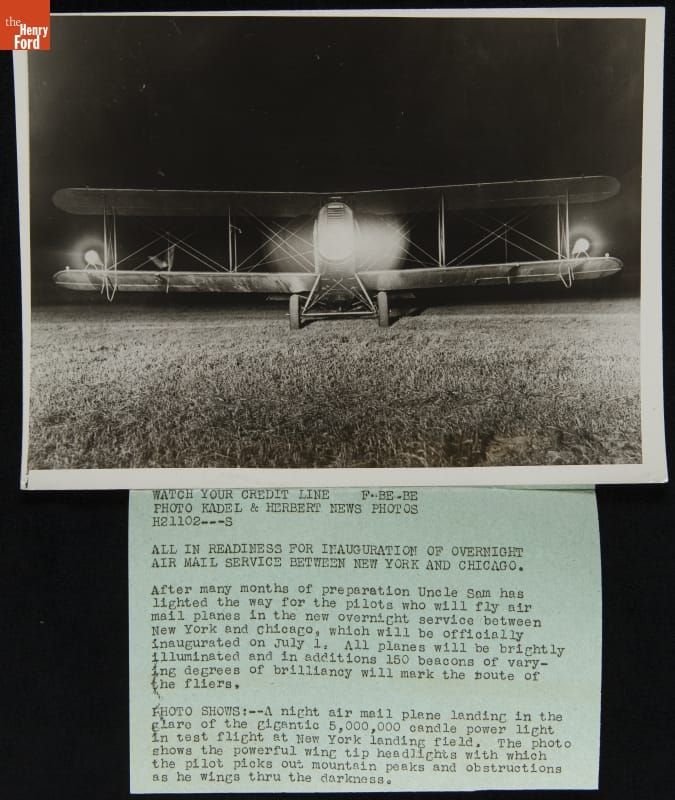
- 1924
- Collections - Artifact
Night Air Mail Plane Test Flight Lands in New York, 1924
In 1924, with the success of experimental night operations and increasing business interest in next-day mail, the U.S. Air Mail Service announced plans to establish regular overnight flights between New York and Chicago. Preparations included mounting floodlights and searchlights at airfields and constructing a series of routing beacons and emergency landing fields along the route. The first official flights departed from both terminal cities on July 1, 1925.
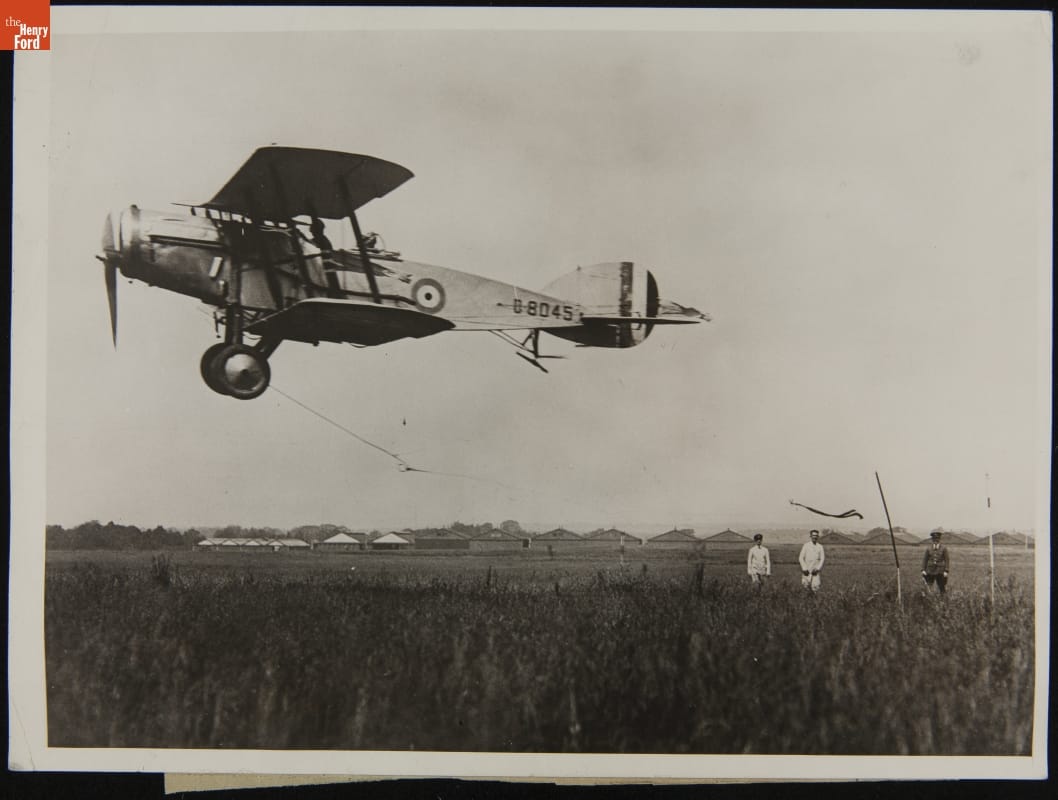
- New Method of Speeding Up Communications, The Non-Stop Aerial Postman," 1928 - Air mail service was intended to speed up mail delivery. But landing an airplane to collect bags of mail slowed things down. Air mail operators in the United Kingdom experimented with nonstop pickup. A mail bag was suspended just off the ground between two posts and then snagged by a hook hanging from a passing plane.
- 1928
- Collections - Artifact
New Method of Speeding Up Communications, The Non-Stop Aerial Postman," 1928
Air mail service was intended to speed up mail delivery. But landing an airplane to collect bags of mail slowed things down. Air mail operators in the United Kingdom experimented with nonstop pickup. A mail bag was suspended just off the ground between two posts and then snagged by a hook hanging from a passing plane.
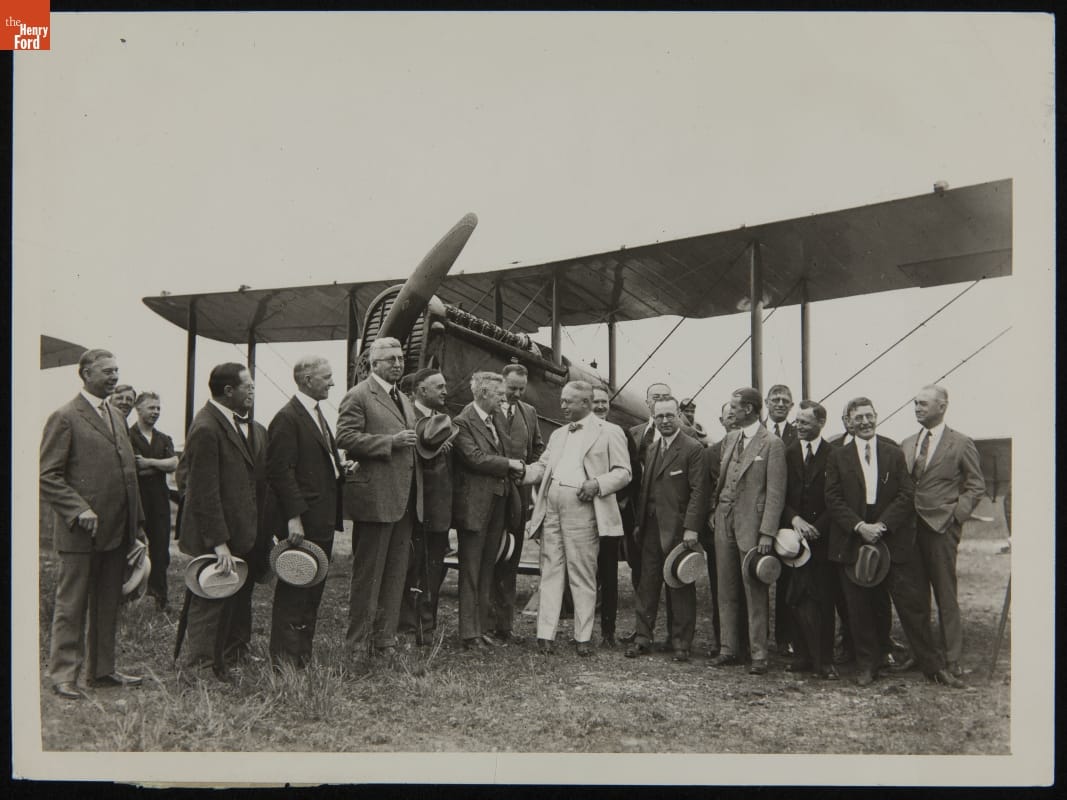
- Inauguration of Coast to Coast Air Mail Service by the U.S. Post Office Department, New York, July 1, 1924 - Regular air mail service in the United States started in 1918. Initial air mail stamps cost 24 cents -- eight times more than ground service. But those fees helped subsidize the development of America's airways. After operating air mail flights itself for eight years, the U.S. Post Office Department contracted with commercial air carriers in 1926.
- July 01, 1924
- Collections - Artifact
Inauguration of Coast to Coast Air Mail Service by the U.S. Post Office Department, New York, July 1, 1924
Regular air mail service in the United States started in 1918. Initial air mail stamps cost 24 cents -- eight times more than ground service. But those fees helped subsidize the development of America's airways. After operating air mail flights itself for eight years, the U.S. Post Office Department contracted with commercial air carriers in 1926.