
Search
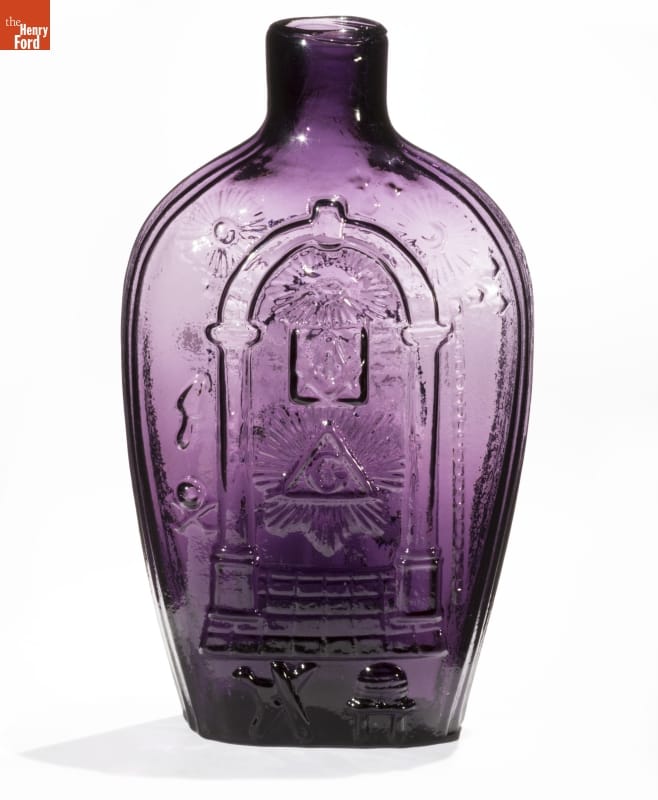
- Flask, 1815-1817 - Glass factories in America began producing inexpensive, mold-formed flasks in the early 1800s. These figured flasks, often decorated with symbols of national pride or political or cultural affiliation, appealed to America's common man. Membership in the Freemasons grew in the early decades of the 1800s. Supporters of the Masonic order would recognize the ritualistic symbols on this and other similar flasks.
- 1815-1817
- Collections - Artifact
Flask, 1815-1817
Glass factories in America began producing inexpensive, mold-formed flasks in the early 1800s. These figured flasks, often decorated with symbols of national pride or political or cultural affiliation, appealed to America's common man. Membership in the Freemasons grew in the early decades of the 1800s. Supporters of the Masonic order would recognize the ritualistic symbols on this and other similar flasks.
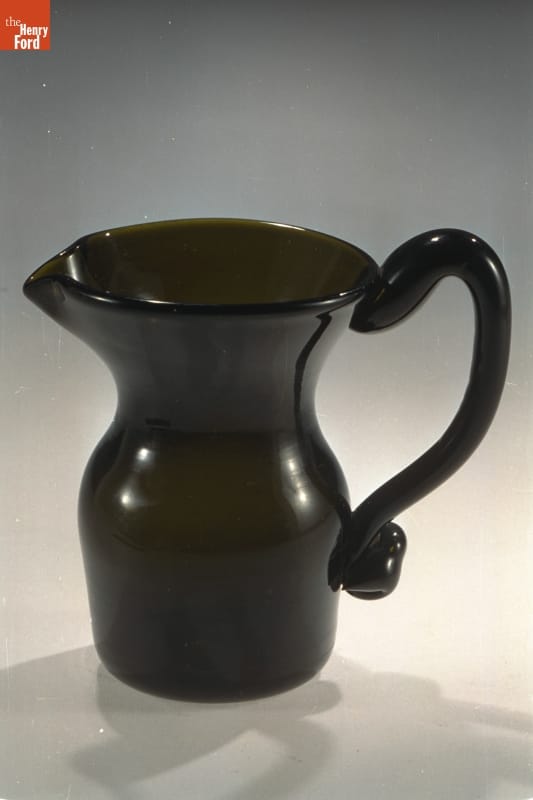
- Creamer, 1815-1825 - American glass factories made a variety of glass products for the early-nineteenth-century consumer. Glassblowers turned out bottles, flasks, tableware and other household items. Earlier products were affordable only to the well-to-do. But by the second quarter of the 19th century, a growing number of manufacturers made reasonably priced blown-glass items available to the expanding middle class.
- 1815-1825
- Collections - Artifact
Creamer, 1815-1825
American glass factories made a variety of glass products for the early-nineteenth-century consumer. Glassblowers turned out bottles, flasks, tableware and other household items. Earlier products were affordable only to the well-to-do. But by the second quarter of the 19th century, a growing number of manufacturers made reasonably priced blown-glass items available to the expanding middle class.
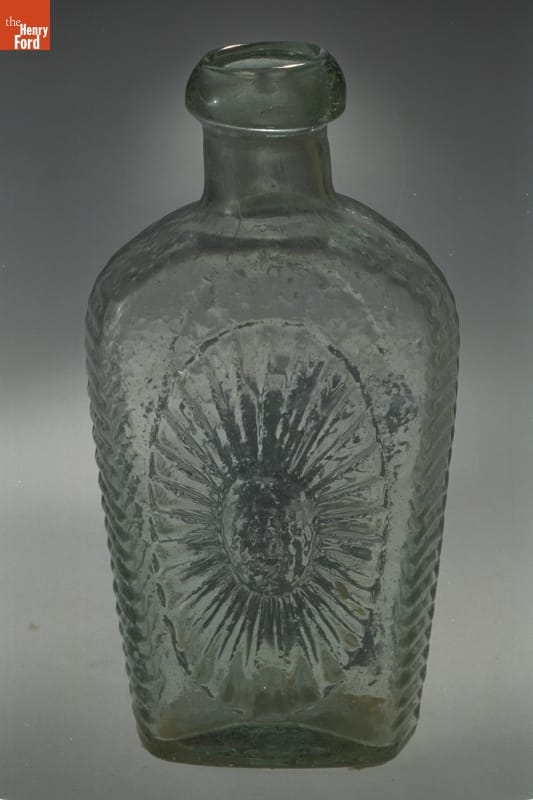
- Flask, 1822-1835 - Glass factories in America began producing inexpensive, mold-formed flasks in the early 1800s. These figured flasks, often embellished with symbols of national pride or political or cultural affiliation, appealed to America's common man. Purely decorative flasks, however, were another option. These flasks -- like this sunburst-pattern one -- held alcohol just as well as those with images of great men or patriotic emblems.
- 1822-1835
- Collections - Artifact
Flask, 1822-1835
Glass factories in America began producing inexpensive, mold-formed flasks in the early 1800s. These figured flasks, often embellished with symbols of national pride or political or cultural affiliation, appealed to America's common man. Purely decorative flasks, however, were another option. These flasks -- like this sunburst-pattern one -- held alcohol just as well as those with images of great men or patriotic emblems.
- Decanter, 1815-1835 -
- 1815-1835
- Collections - Artifact
Decanter, 1815-1835
- Bottle, 1815-1850 -
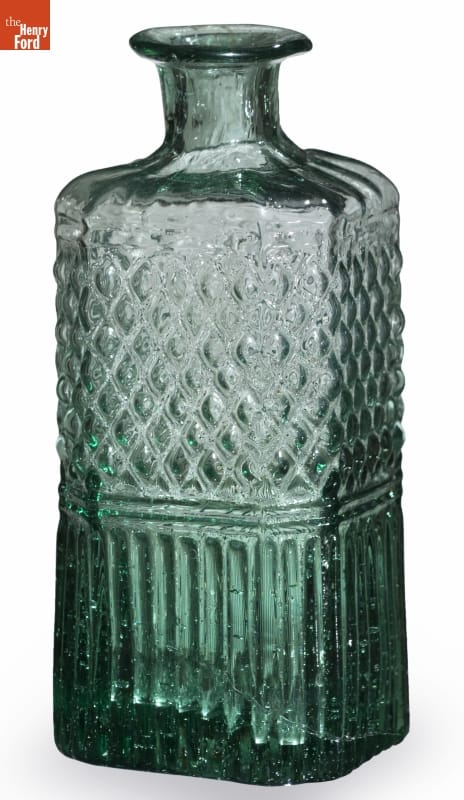
- 1815-1850
- Collections - Artifact
Bottle, 1815-1850
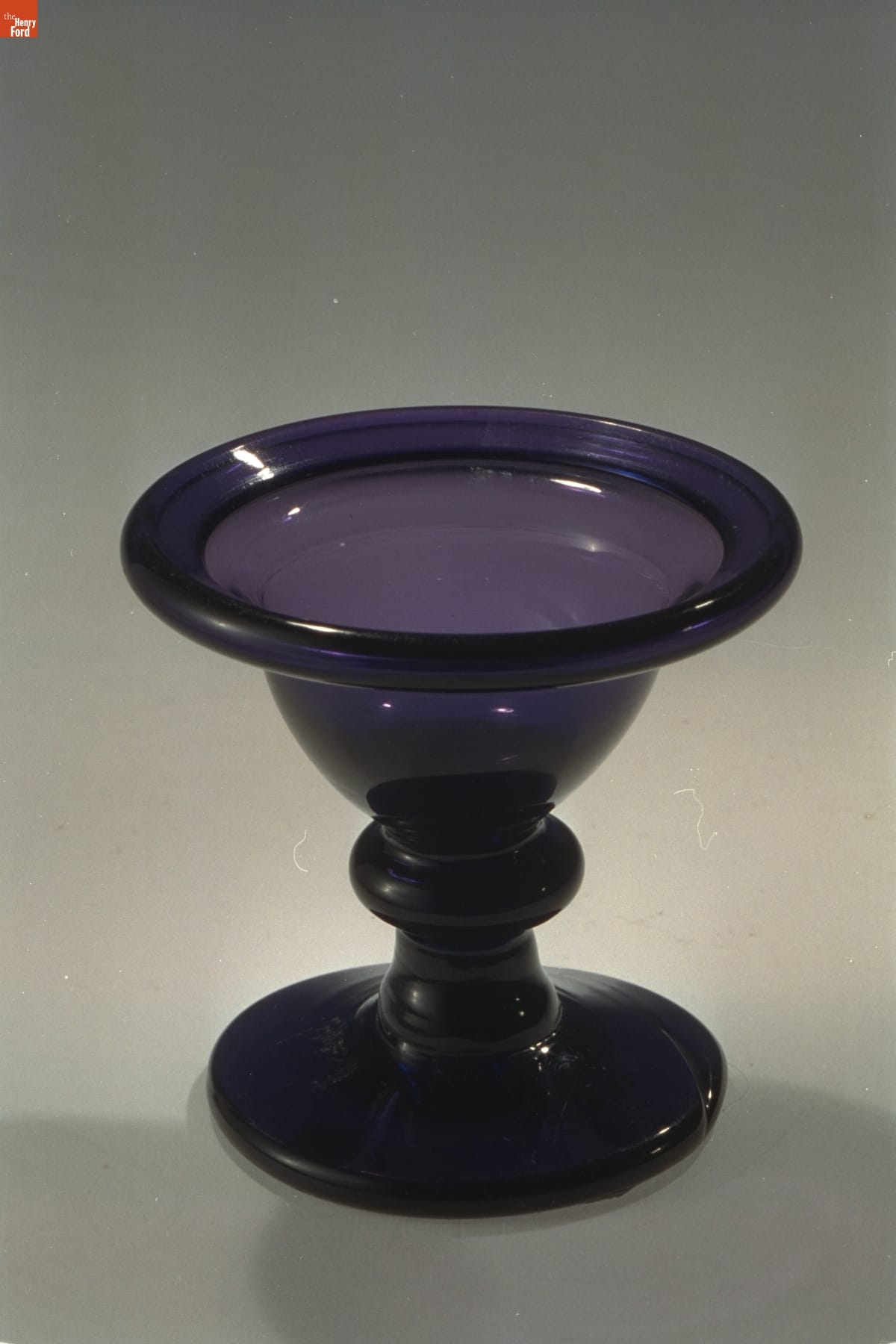
- Salt, 1815-1825 - Prior to the early 20th century, Americans would have put several small, open dishes filled with salt on their dining tables. These "salts" placed the necessary seasoning within easy reach of family and guests. In the early 1800s, pattern-molded or hand-blown "salts" became affordable to the general public from a growing number of regional American glass factories.
- 1815-1825
- Collections - Artifact
Salt, 1815-1825
Prior to the early 20th century, Americans would have put several small, open dishes filled with salt on their dining tables. These "salts" placed the necessary seasoning within easy reach of family and guests. In the early 1800s, pattern-molded or hand-blown "salts" became affordable to the general public from a growing number of regional American glass factories.
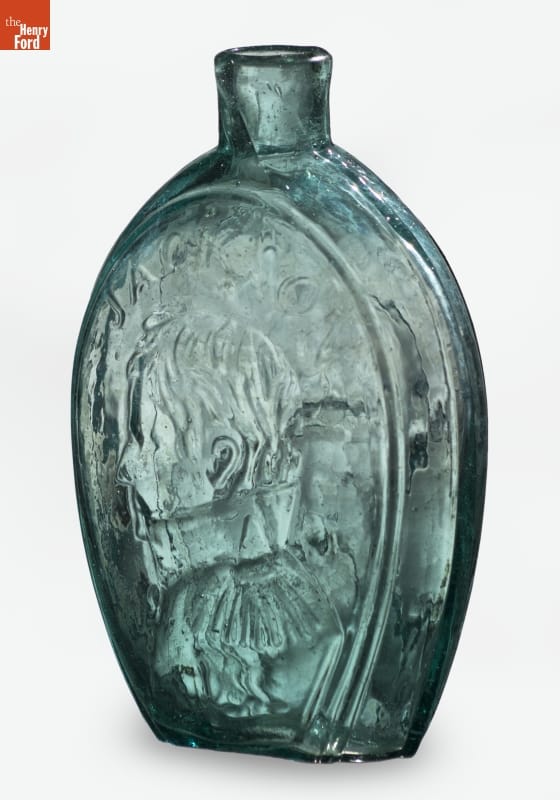
- Flask, 1828-1840 - Whether depicted as commander-in-chief of the Continental Army or the first president of the United States, George Washington is a common likeness on early American flasks. Washington appears on 72 recorded flask designs--more than any other person. This example depicts Washington and later president Andrew Jackson in military uniform.
- 1828-1840
- Collections - Artifact
Flask, 1828-1840
Whether depicted as commander-in-chief of the Continental Army or the first president of the United States, George Washington is a common likeness on early American flasks. Washington appears on 72 recorded flask designs--more than any other person. This example depicts Washington and later president Andrew Jackson in military uniform.
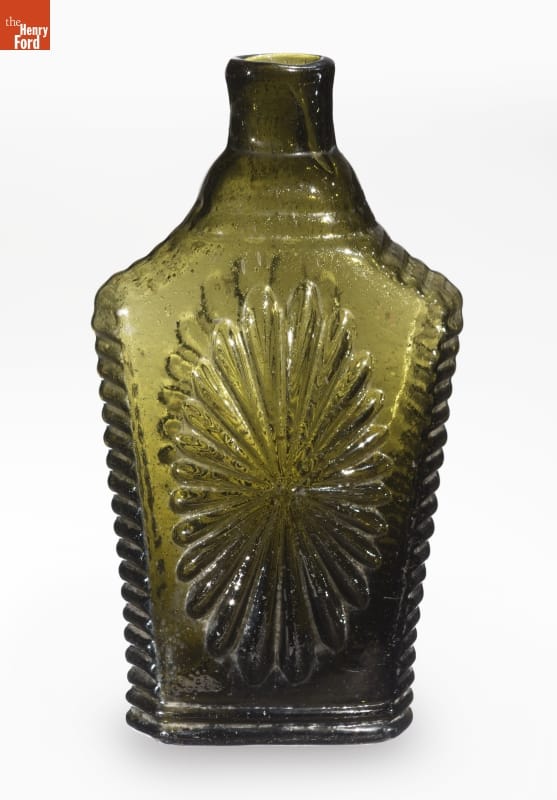
- Flask, 1820-1830 - Glass factories in America began producing inexpensive, mold-formed flasks in the early 1800s. These figured flasks, often embellished with symbols of national pride or political or cultural affiliation, appealed to America's common man. Purely decorative flasks, however, were another option. These flasks -- like this sunburst-pattern one -- held alcohol just as well as those with images of great men or patriotic emblems.
- 1820-1830
- Collections - Artifact
Flask, 1820-1830
Glass factories in America began producing inexpensive, mold-formed flasks in the early 1800s. These figured flasks, often embellished with symbols of national pride or political or cultural affiliation, appealed to America's common man. Purely decorative flasks, however, were another option. These flasks -- like this sunburst-pattern one -- held alcohol just as well as those with images of great men or patriotic emblems.
- Bottle, 1815-1850 -
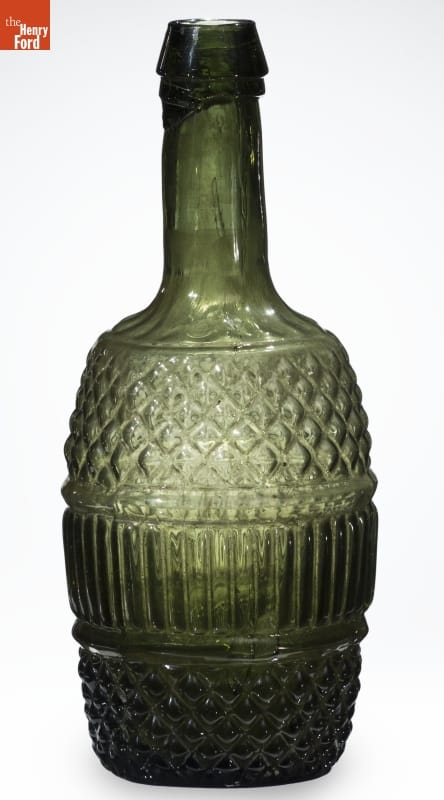
- 1815-1850
- Collections - Artifact
Bottle, 1815-1850
- Sugar Bowl, 1812-1830 -
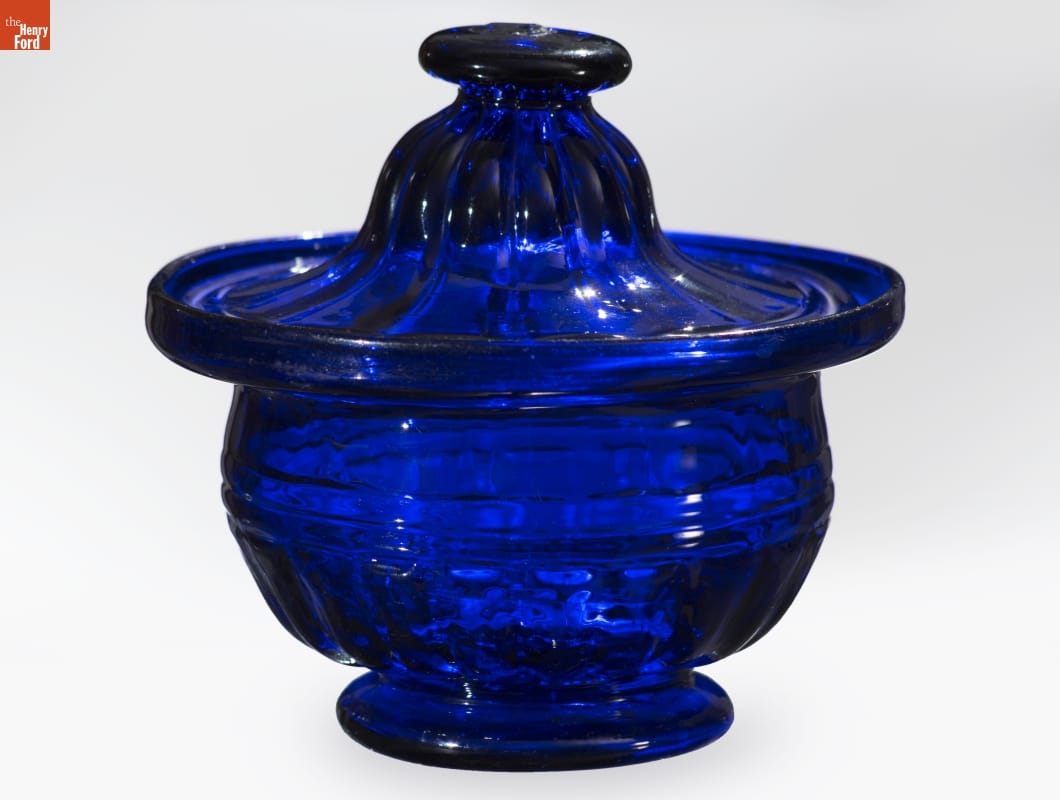
- 1812-1830
- Collections - Artifact
Sugar Bowl, 1812-1830