
Search
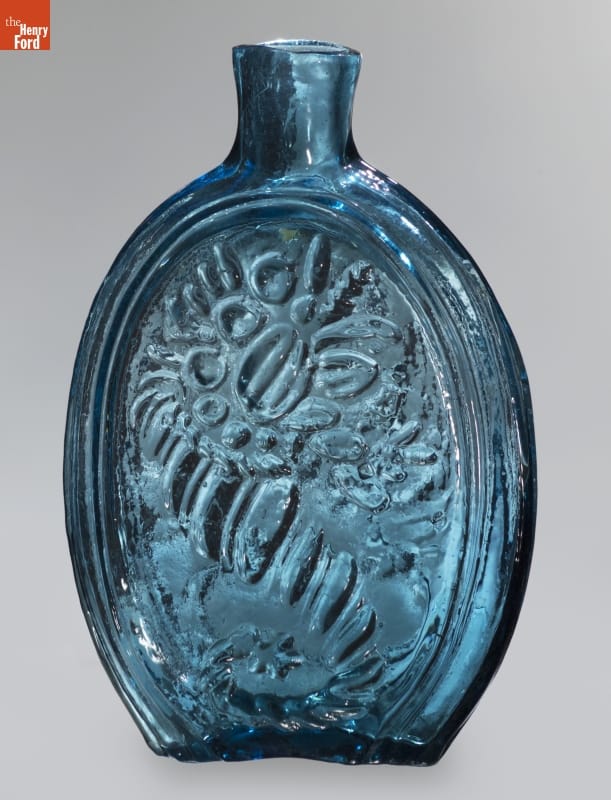
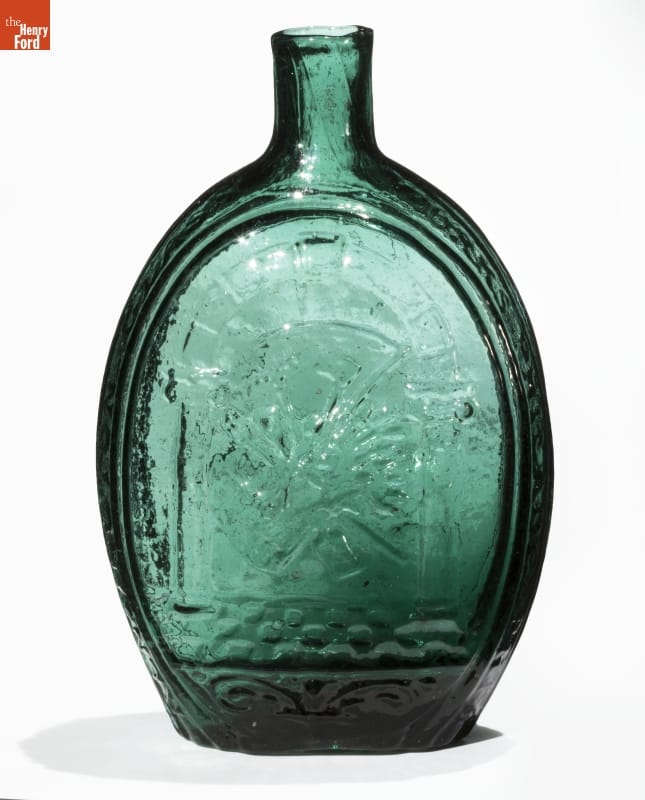
- Flask, 1824-1840 - Glass factories in America began producing inexpensive, mold-formed flasks in the early 1800s. These figured flasks, often decorated with symbols of national pride or political or cultural affiliation, appealed to America's common man. Many flasks, like this one, contain images of an eagle -- a traditional symbol for America. The overflowing cornucopia found on the other side of this flask alludes to America's bounty.
- 1824-1840
- Collections - Artifact
Flask, 1824-1840
Glass factories in America began producing inexpensive, mold-formed flasks in the early 1800s. These figured flasks, often decorated with symbols of national pride or political or cultural affiliation, appealed to America's common man. Many flasks, like this one, contain images of an eagle -- a traditional symbol for America. The overflowing cornucopia found on the other side of this flask alludes to America's bounty.
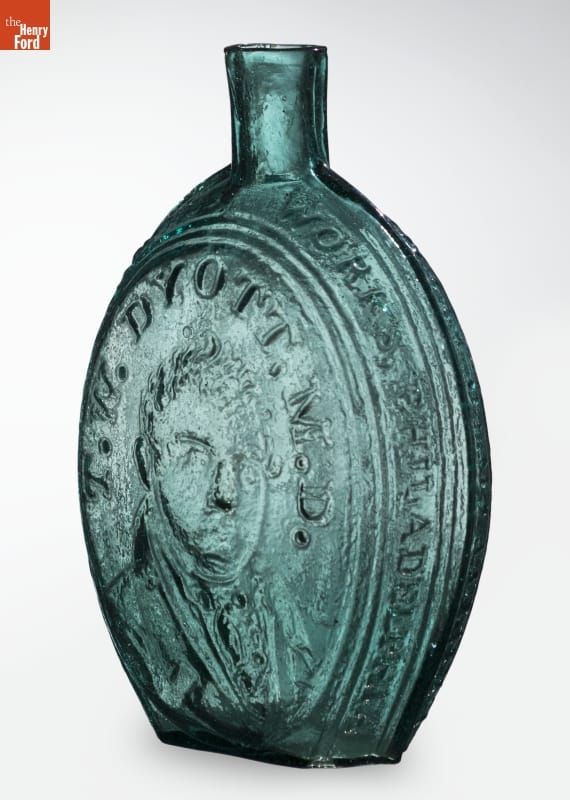
- Flask, 1824-1828 - Glass factories in America began producing inexpensive, mold-formed flasks in the early 1800s. These figured flasks, often decorated with symbols of national pride or political or cultural affiliation, appealed to America's common man. Some of these flasks contain images of revered Revolutionary War-era patriots. Benjamin Franklin -- writer, philosopher, statesman and diplomat -- adorns this flask from the early 1800s.
- 1824-1828
- Collections - Artifact
Flask, 1824-1828
Glass factories in America began producing inexpensive, mold-formed flasks in the early 1800s. These figured flasks, often decorated with symbols of national pride or political or cultural affiliation, appealed to America's common man. Some of these flasks contain images of revered Revolutionary War-era patriots. Benjamin Franklin -- writer, philosopher, statesman and diplomat -- adorns this flask from the early 1800s.
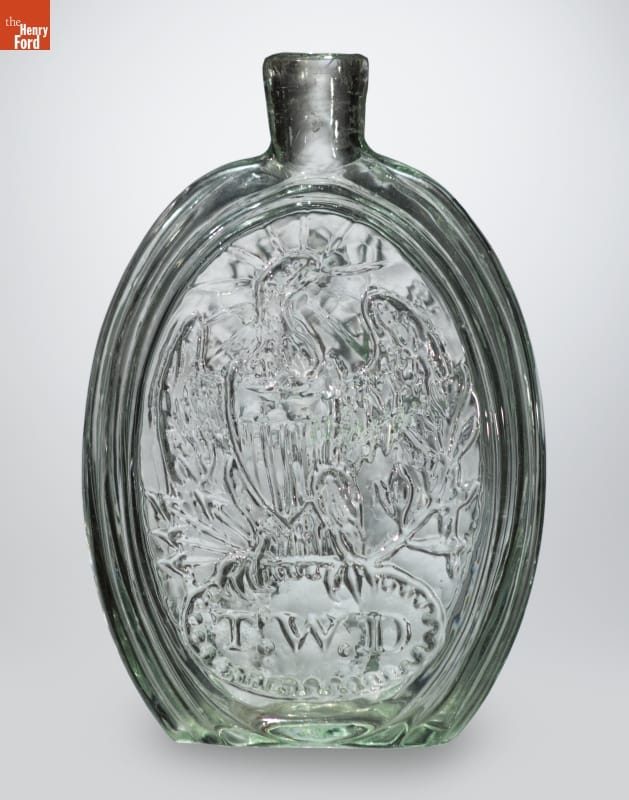
- Flask, 1822-1837 - Glass factories in America began producing inexpensive, mold-formed flasks in the early 1800s. These figured flasks, often decorated with symbols of national pride or political or cultural affiliation, appealed to America's common man. Many flasks, like this one, contain images of an eagle -- a traditional symbol for America. The overflowing cornucopia found on the other side of this flask alludes to America's bounty.
- 1822-1837
- Collections - Artifact
Flask, 1822-1837
Glass factories in America began producing inexpensive, mold-formed flasks in the early 1800s. These figured flasks, often decorated with symbols of national pride or political or cultural affiliation, appealed to America's common man. Many flasks, like this one, contain images of an eagle -- a traditional symbol for America. The overflowing cornucopia found on the other side of this flask alludes to America's bounty.
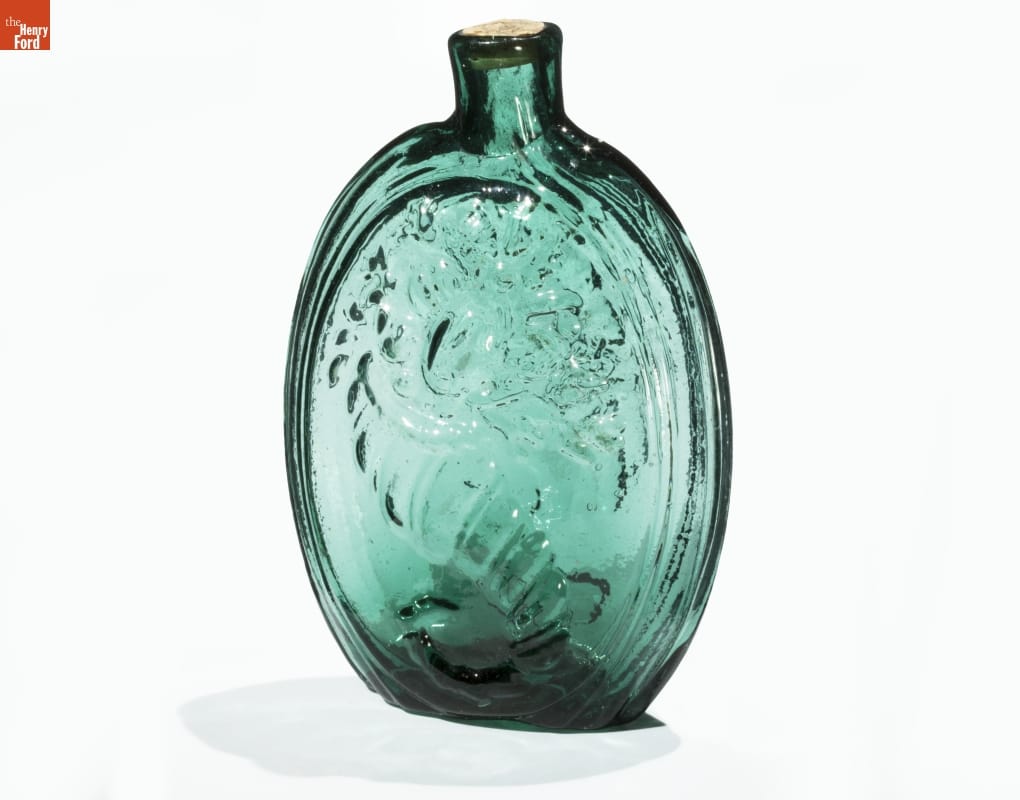
- Flask, 1824-1836 - Glass factories in America began producing inexpensive, mold-formed flasks in the early 1800s. These figured flasks, often decorated with symbols of national pride or political or cultural affiliation, appealed to America's common man. The overflowing cornucopia found on both sides of this flask alludes to America's bounty.
- 1824-1836
- Collections - Artifact
Flask, 1824-1836
Glass factories in America began producing inexpensive, mold-formed flasks in the early 1800s. These figured flasks, often decorated with symbols of national pride or political or cultural affiliation, appealed to America's common man. The overflowing cornucopia found on both sides of this flask alludes to America's bounty.
- Flask, 1822-1824 - Glass factories in America began producing inexpensive, mold-formed flasks in the early 1800s. These figured flasks, often decorated with phrases and symbols of national pride, appealed to the common man. The U. S. frigate <EM>Franklin</EM> and the War of 1812 slogan "Free Trade and Sailor's Rights" adorn this 1820s flask. Americans continued to use this patriotic slogan throughout the 19th century.
- 1822-1824
- Collections - Artifact
Flask, 1822-1824
Glass factories in America began producing inexpensive, mold-formed flasks in the early 1800s. These figured flasks, often decorated with phrases and symbols of national pride, appealed to the common man. The U. S. frigate Franklin and the War of 1812 slogan "Free Trade and Sailor's Rights" adorn this 1820s flask. Americans continued to use this patriotic slogan throughout the 19th century.
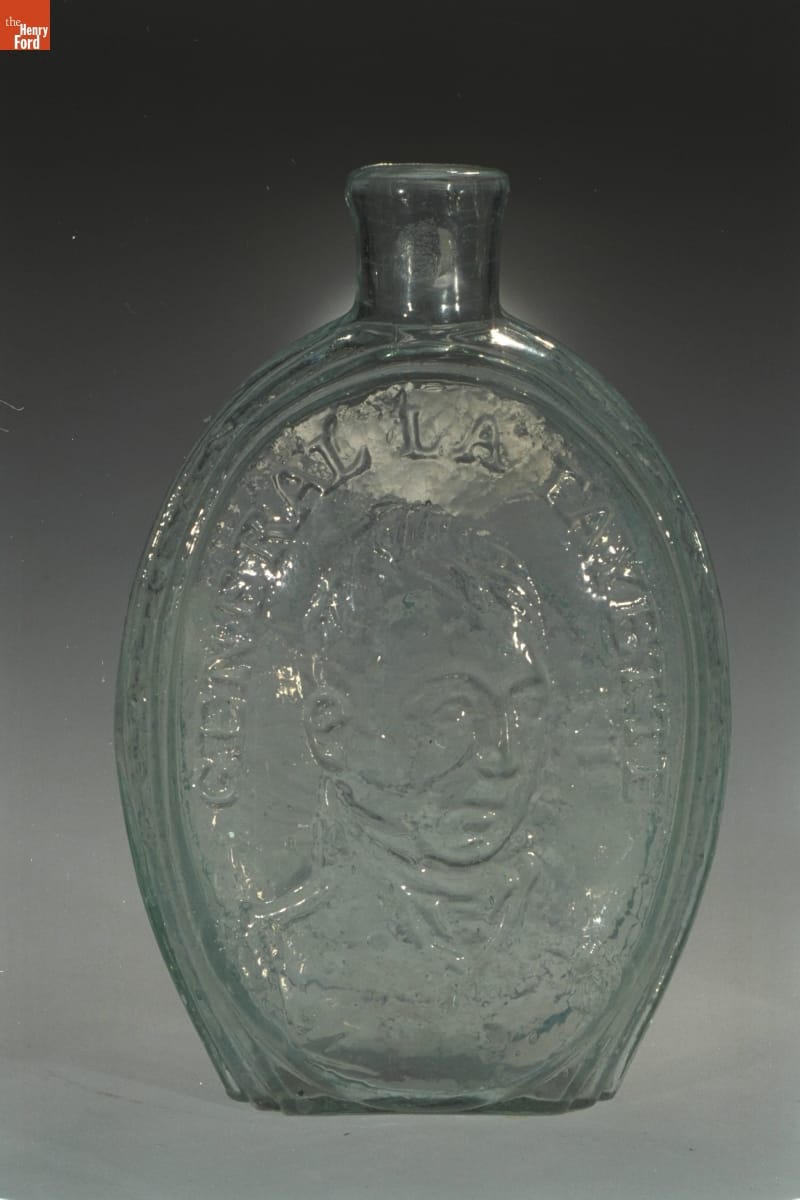
- Flask, 1824-1825 - Glass factories in America began producing inexpensive, mold-formed flasks in the early 1800s. These figured flasks, often decorated with symbols of national pride or political or cultural affiliation, appealed to America's common man. In the mid-1820s, General Lafayette, a French aristocrat who helped America win its independence, revisited the United States. His image adorned flasks commemorating his tour.
- 1824-1825
- Collections - Artifact
Flask, 1824-1825
Glass factories in America began producing inexpensive, mold-formed flasks in the early 1800s. These figured flasks, often decorated with symbols of national pride or political or cultural affiliation, appealed to America's common man. In the mid-1820s, General Lafayette, a French aristocrat who helped America win its independence, revisited the United States. His image adorned flasks commemorating his tour.
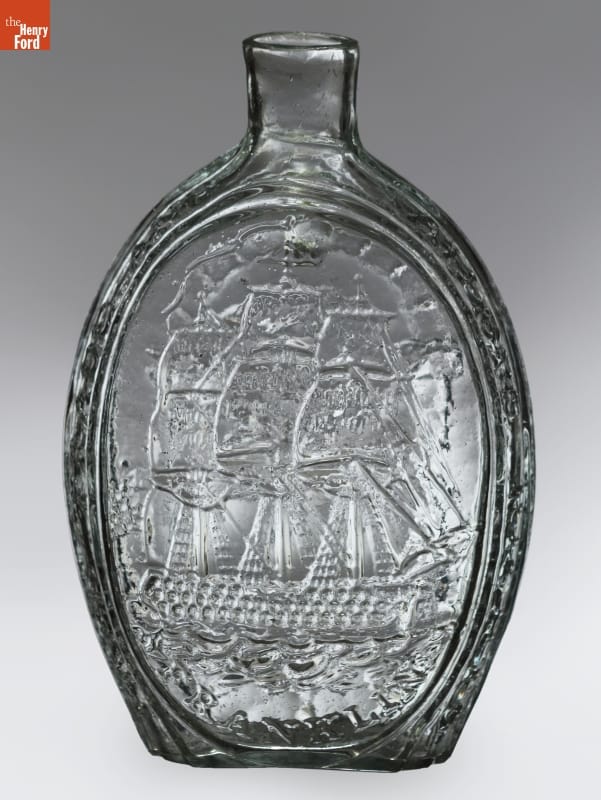
- Flask, 1815-1830 - Glass factories in America began producing inexpensive, mold-formed flasks in the early 1800s. These figured flasks, often decorated with phrases and symbols of national pride, appealed to the common man. The U. S. frigate <EM>Franklin</EM> and the War of 1812 slogan "Free Trade and Sailor's Rights" adorn this 1820s flask. Americans continued to use this patriotic slogan throughout the 19th century.
- 1815-1830
- Collections - Artifact
Flask, 1815-1830
Glass factories in America began producing inexpensive, mold-formed flasks in the early 1800s. These figured flasks, often decorated with phrases and symbols of national pride, appealed to the common man. The U. S. frigate Franklin and the War of 1812 slogan "Free Trade and Sailor's Rights" adorn this 1820s flask. Americans continued to use this patriotic slogan throughout the 19th century.
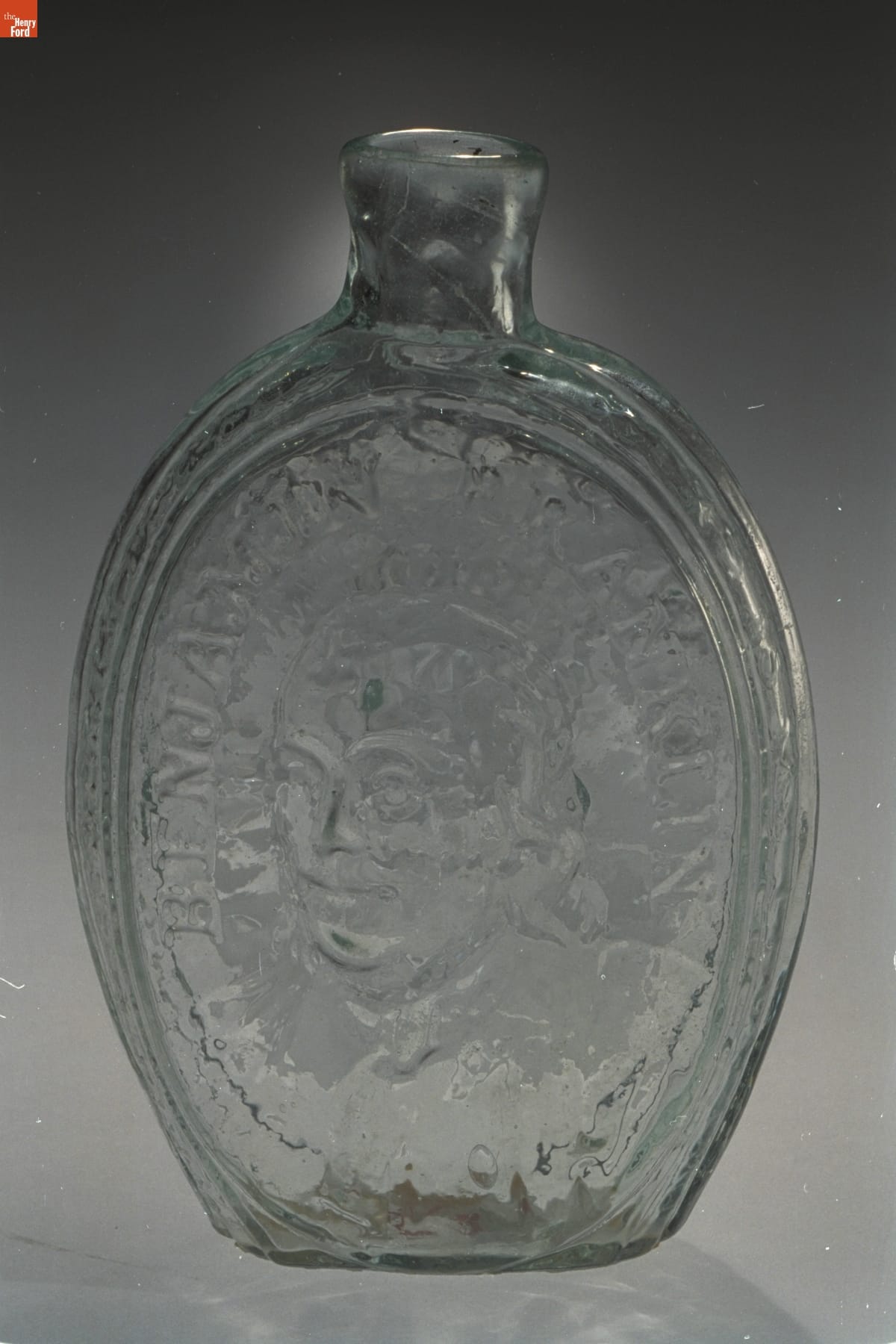
- Flask, 1824-1828 - Glass factories in America began producing inexpensive, mold-formed flasks in the early 1800s. These figured flasks, often decorated with symbols of national pride or political or cultural affiliation, appealed to America's common man. Some of these flasks contain images of revered Revolutionary War-era patriots. Benjamin Franklin -- writer, philosopher, statesman and diplomat -- adorns this flask from the early 1800s.
- 1824-1828
- Collections - Artifact
Flask, 1824-1828
Glass factories in America began producing inexpensive, mold-formed flasks in the early 1800s. These figured flasks, often decorated with symbols of national pride or political or cultural affiliation, appealed to America's common man. Some of these flasks contain images of revered Revolutionary War-era patriots. Benjamin Franklin -- writer, philosopher, statesman and diplomat -- adorns this flask from the early 1800s.
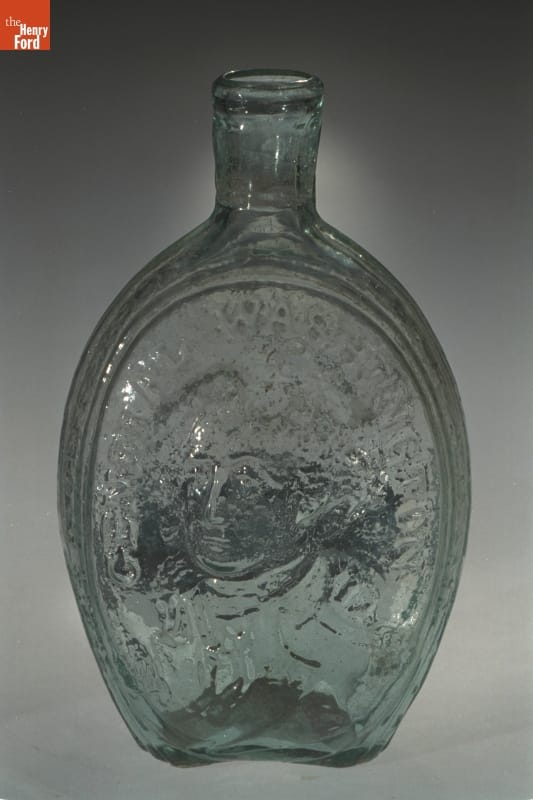
- Flask, 1826-1831 - This flask was made to commemorate July 4, 1826--the 50th anniversary of the adoption of the Declaration of Independence and the day former presidents John Adams and Thomas Jefferson died. It depicts George Washington in military uniform with an American eagle.
- 1826-1831
- Collections - Artifact
Flask, 1826-1831
This flask was made to commemorate July 4, 1826--the 50th anniversary of the adoption of the Declaration of Independence and the day former presidents John Adams and Thomas Jefferson died. It depicts George Washington in military uniform with an American eagle.