
Search
- Corn Planter, circa 1880 - Farmers started a year-round effort to raise food for livestock and the farm family by planting corn in hills. Double-row planters cut the time required to plant in half. Farmers cultivated with a shovel plow until corn was knee-high. They then planted squash or pumpkins to retain soil moisture (a form of double cropping). At harvest they husked ears (to feed pigs) and shocked stalks (to feed cattle).
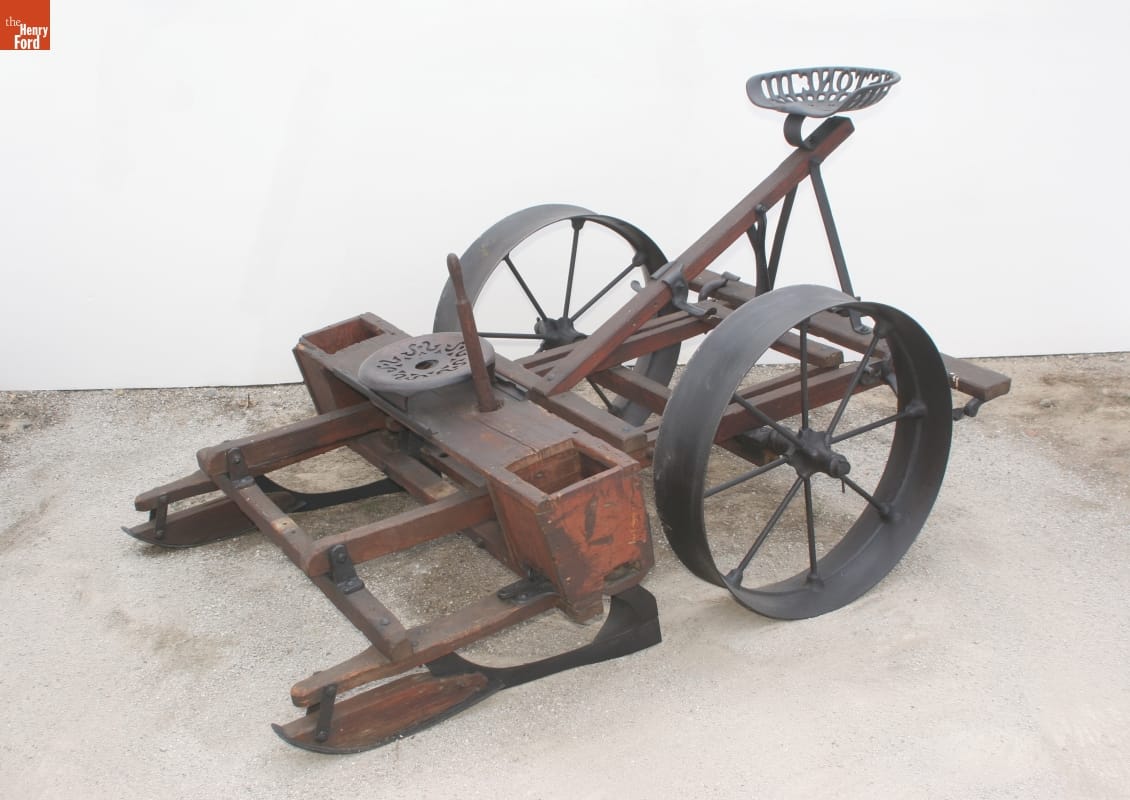
- circa 1880
- Collections - Artifact
Corn Planter, circa 1880
Farmers started a year-round effort to raise food for livestock and the farm family by planting corn in hills. Double-row planters cut the time required to plant in half. Farmers cultivated with a shovel plow until corn was knee-high. They then planted squash or pumpkins to retain soil moisture (a form of double cropping). At harvest they husked ears (to feed pigs) and shocked stalks (to feed cattle).
- Hay Loader, circa 1895 - By 1887, Keystone Manufacturing advertised its mower, tedder, rake, and hay loader as "the four best haying tools in America." Operators hooked the loader to the back of a hay wagon. The tines on the cylinder picked up dry hay and deposited it on the web-slatted apron or conveyor belt. The farmer unloaded the hay from the apron into the wagon.
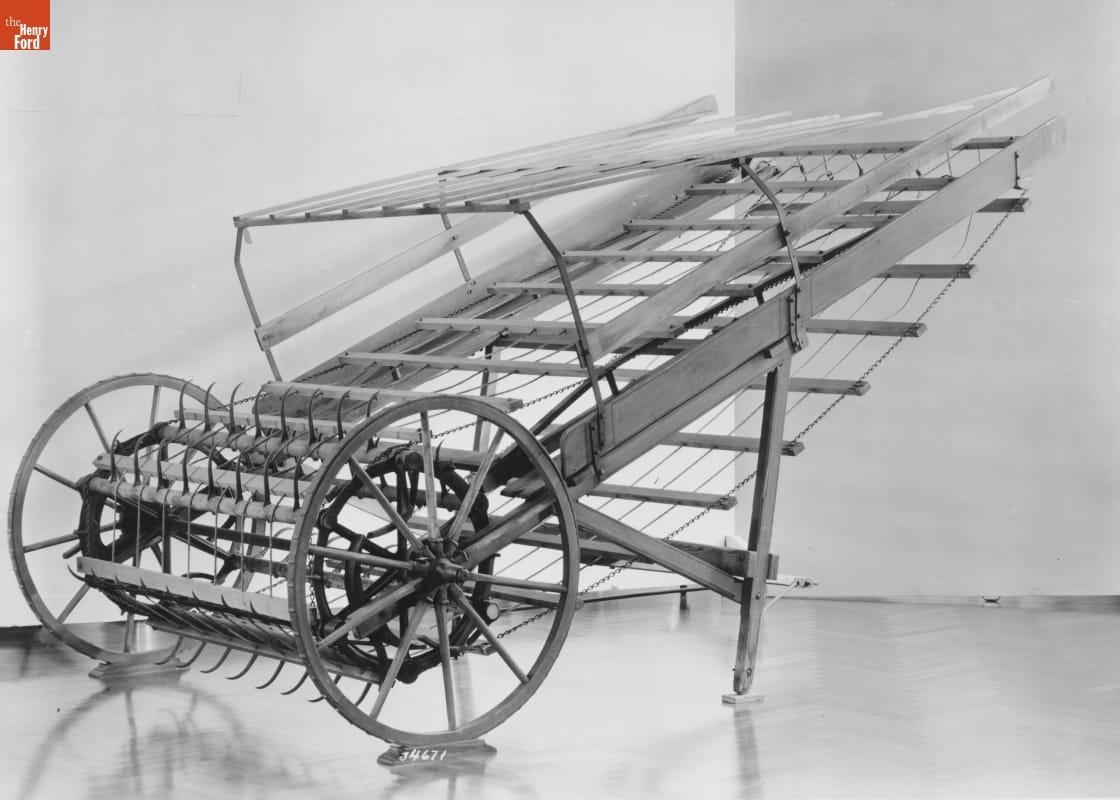
- circa 1895
- Collections - Artifact
Hay Loader, circa 1895
By 1887, Keystone Manufacturing advertised its mower, tedder, rake, and hay loader as "the four best haying tools in America." Operators hooked the loader to the back of a hay wagon. The tines on the cylinder picked up dry hay and deposited it on the web-slatted apron or conveyor belt. The farmer unloaded the hay from the apron into the wagon.