
Search
- "We's done all dis s'mornin'," 1899 - This stereograph features children with a full basket of cotton, the cash crop dominating southern agriculture at the time. The caption, in dialect, implied that these children were uneducated. Its translation into six languages conveyed that impression internationally. In reality, cotton pickers earned low wages (one penny per pound) and their impoverished condition undermined access to adequate education.
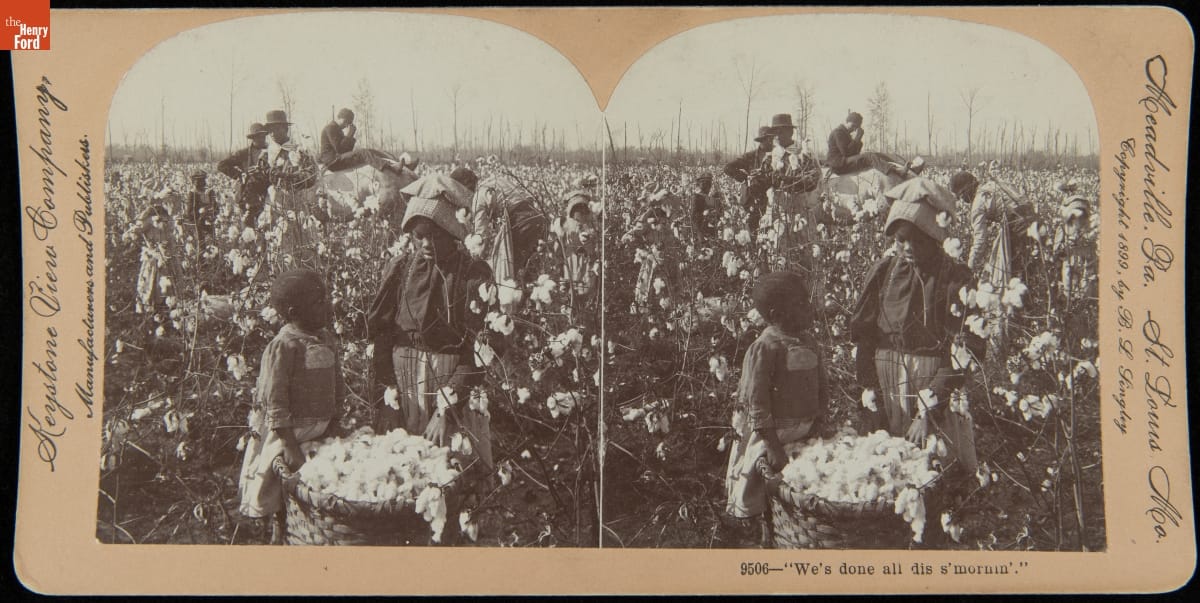
- 1899
- Collections - Artifact
"We's done all dis s'mornin'," 1899
This stereograph features children with a full basket of cotton, the cash crop dominating southern agriculture at the time. The caption, in dialect, implied that these children were uneducated. Its translation into six languages conveyed that impression internationally. In reality, cotton pickers earned low wages (one penny per pound) and their impoverished condition undermined access to adequate education.
- Cars Loaded with Cotton Bales on Levee, near Cotton Growing District, Texas, circa 1920 -
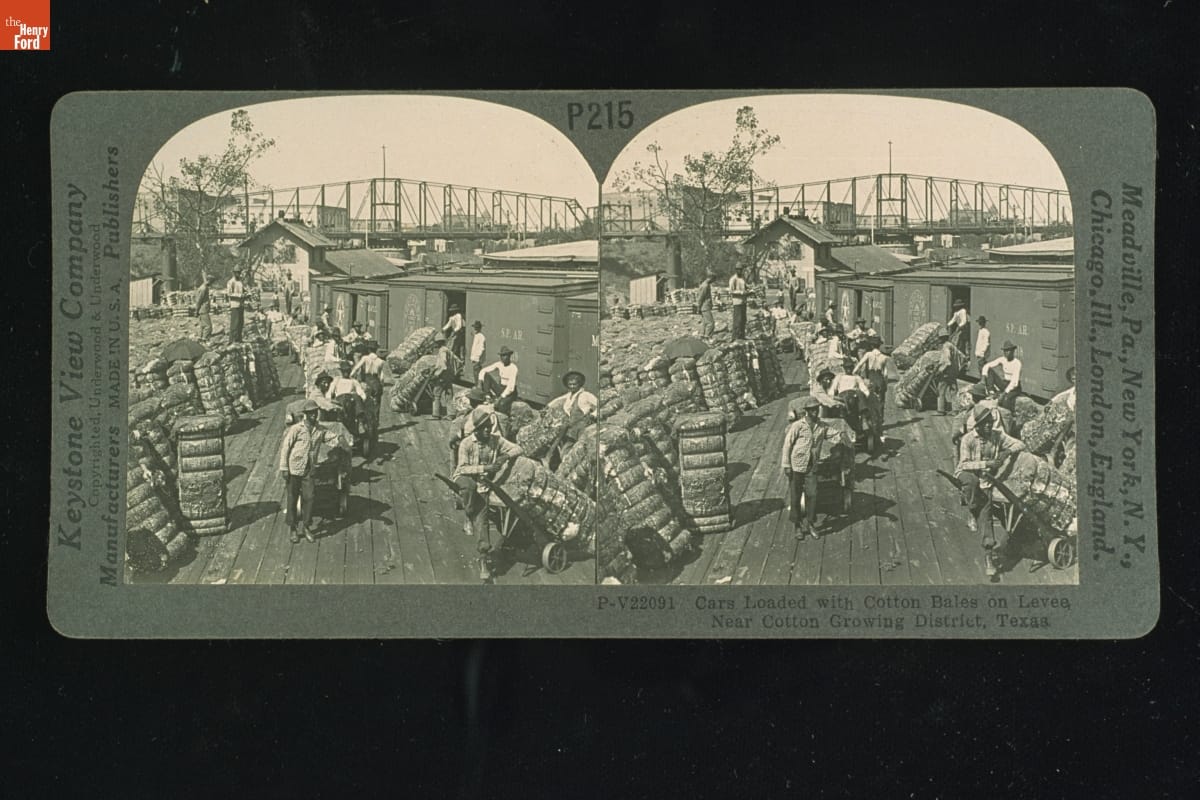
- circa 1920
- Collections - Artifact
Cars Loaded with Cotton Bales on Levee, near Cotton Growing District, Texas, circa 1920
- Stereograph, "Meteor in Constellation of Orion," 1904 - Americans loved stereographs -- millions were made from the mid-1800s through the 1930s. A stereograph consists of two offset photos that appear to have three-dimensional depth when viewed through a stereoscope. These images entertained and educated. Stereographs could transport viewers to distant events, exotic places, and even worlds beyond, like this image of the Orion constellation.
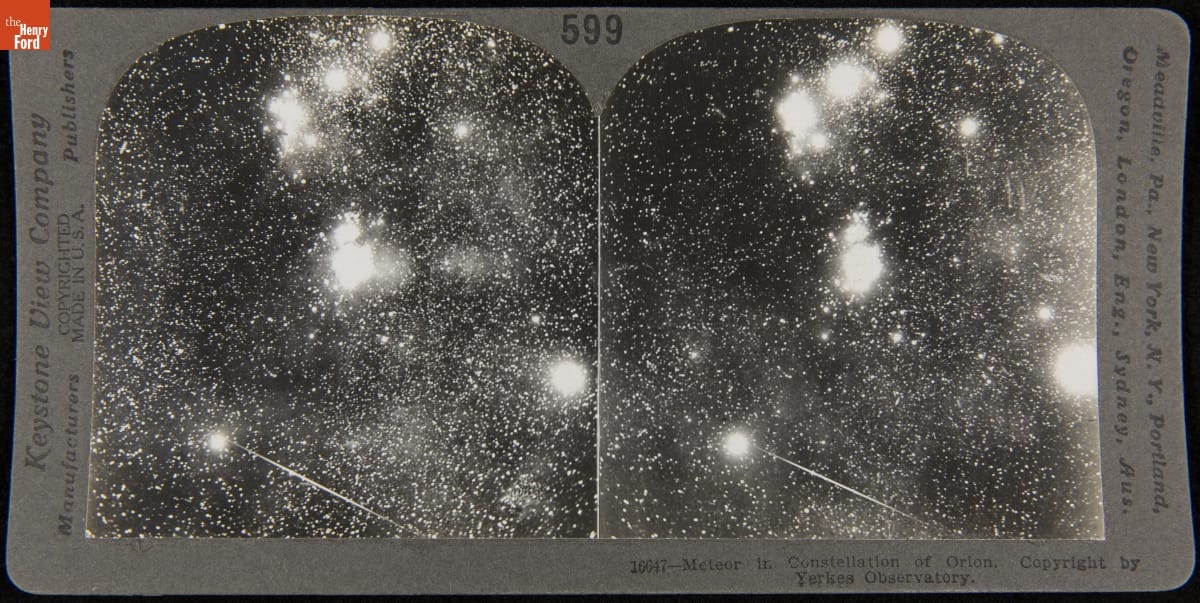
- November 15, 1904
- Collections - Artifact
Stereograph, "Meteor in Constellation of Orion," 1904
Americans loved stereographs -- millions were made from the mid-1800s through the 1930s. A stereograph consists of two offset photos that appear to have three-dimensional depth when viewed through a stereoscope. These images entertained and educated. Stereographs could transport viewers to distant events, exotic places, and even worlds beyond, like this image of the Orion constellation.
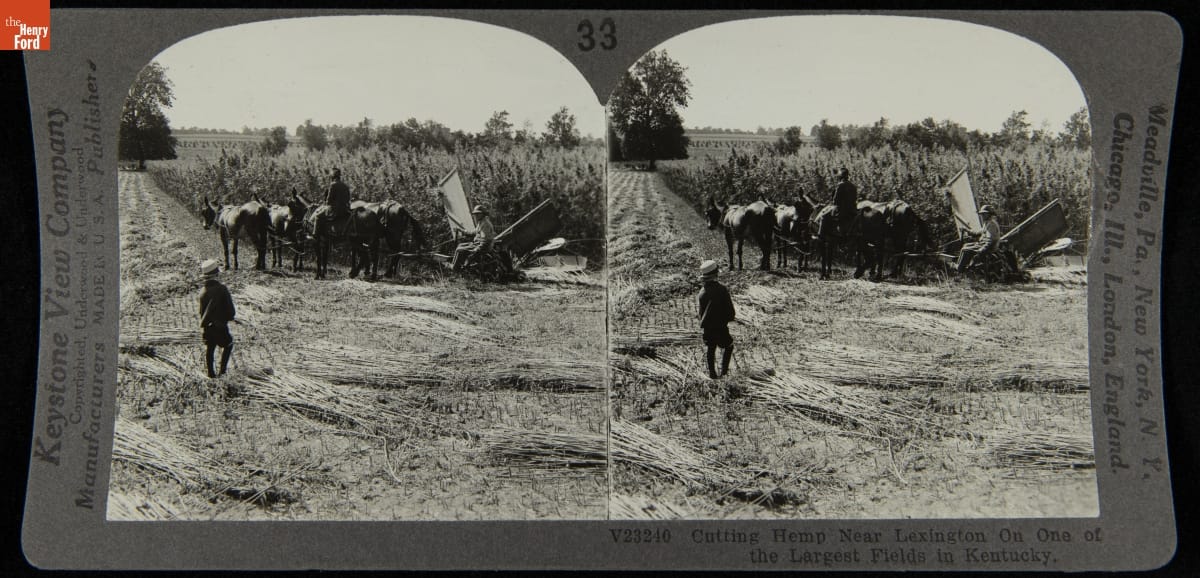
- Cutting Hemp near Lexington on One of the Largest Fields in Kentucky - This stereograph shows four mules, two men, and one self-rake reaper harvesting industrial hemp. The reaper, perhaps a McCormick-Deering model, was reinforced to cut the woody stalks and rake them onto the ground. The text incorrectly links hemp with other strains of Cannabis sativa and other species (Cannabis indica) from which medicinal or recreational products, including hashish, derive.
- Collections - Artifact
Cutting Hemp near Lexington on One of the Largest Fields in Kentucky
This stereograph shows four mules, two men, and one self-rake reaper harvesting industrial hemp. The reaper, perhaps a McCormick-Deering model, was reinforced to cut the woody stalks and rake them onto the ground. The text incorrectly links hemp with other strains of Cannabis sativa and other species (Cannabis indica) from which medicinal or recreational products, including hashish, derive.
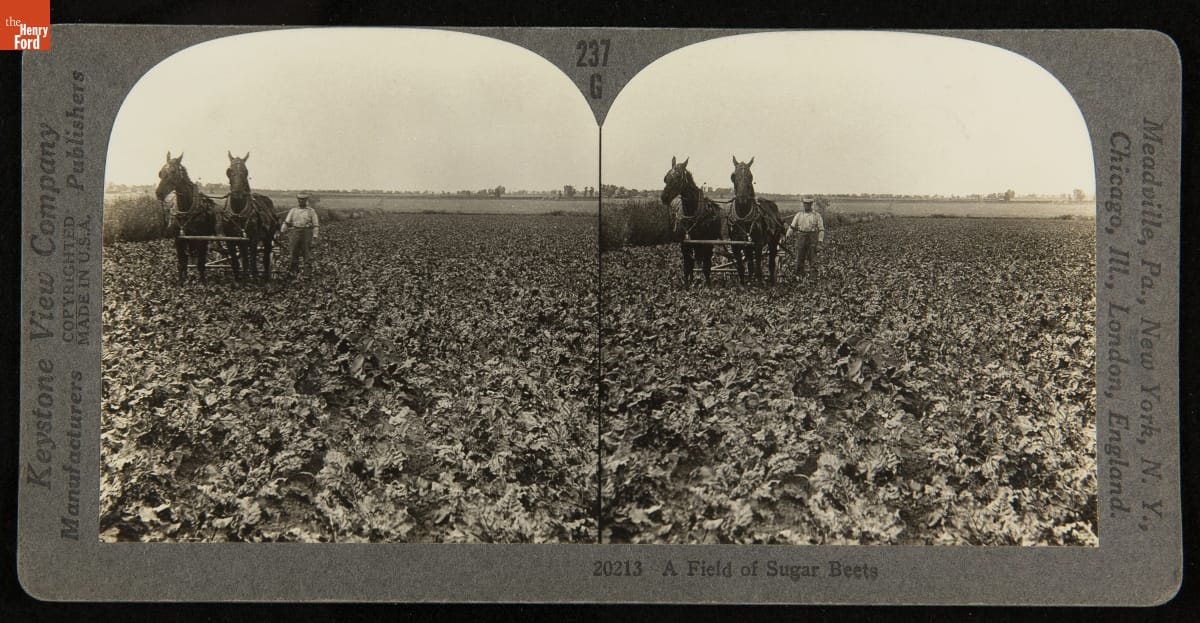
- A Field of Sugar Beets, 1909 -
- 1909
- Collections - Artifact
A Field of Sugar Beets, 1909
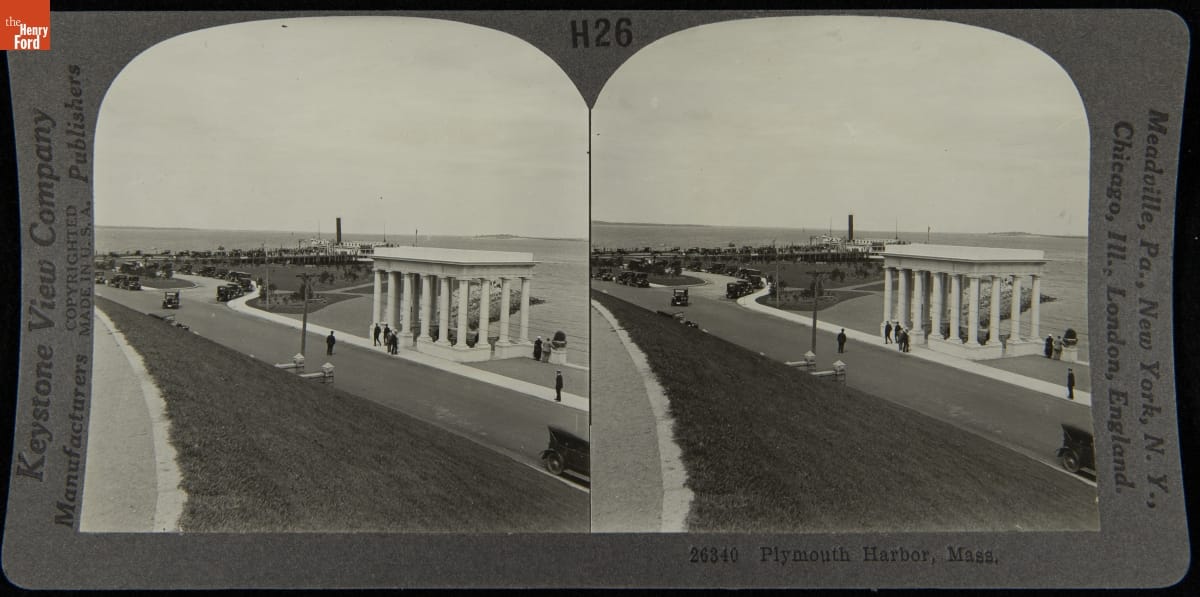
- Plymouth Harbor, Plymouth Massachusetts, 1925 -
- 1920-1925
- Collections - Artifact
Plymouth Harbor, Plymouth Massachusetts, 1925
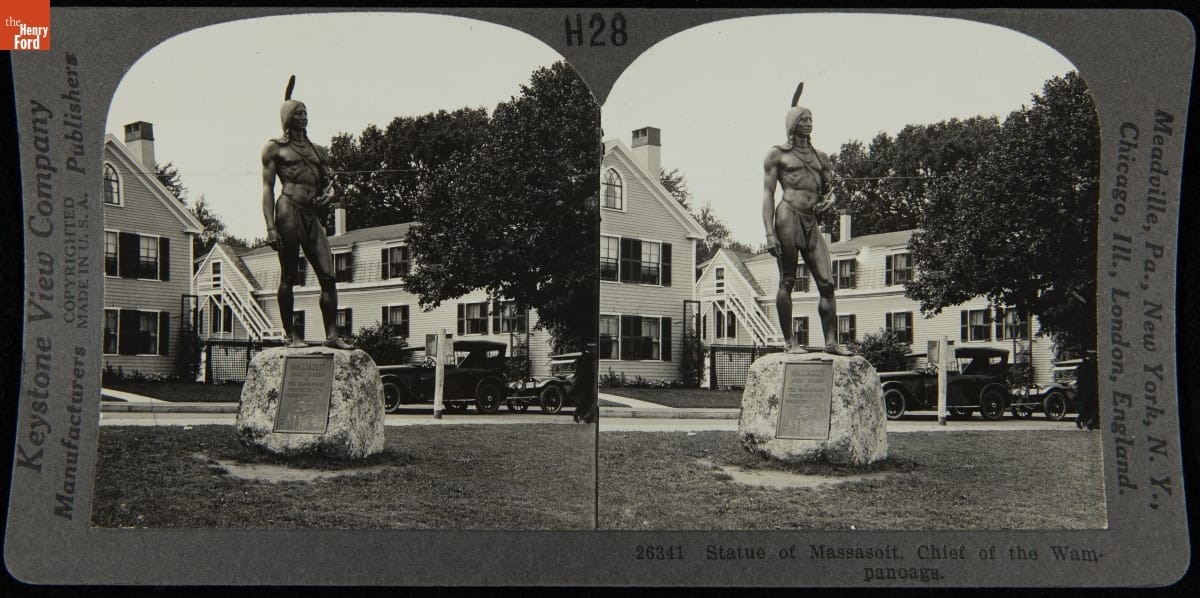
- Statue of Massasoit, Chief of the Wampanoags, 1925 -
- 1920-1925
- Collections - Artifact
Statue of Massasoit, Chief of the Wampanoags, 1925
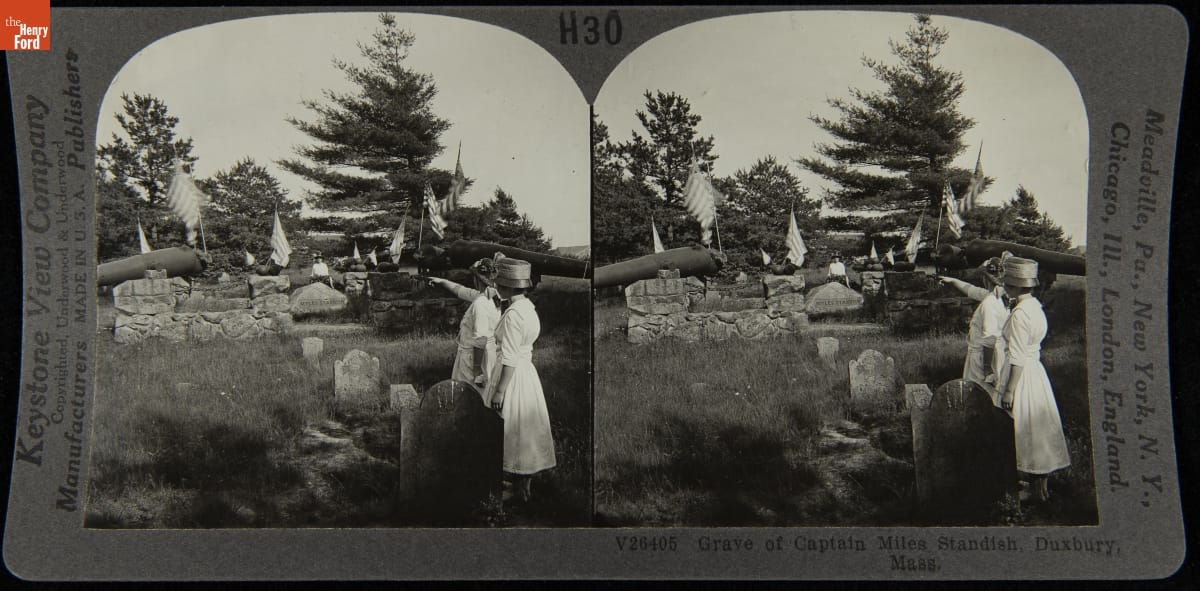
- Grave of Captain Miles Standish, 1926 -
- 1920-1926
- Collections - Artifact
Grave of Captain Miles Standish, 1926
- Redlands and Its Wealth of Orange Groves, Calif. -
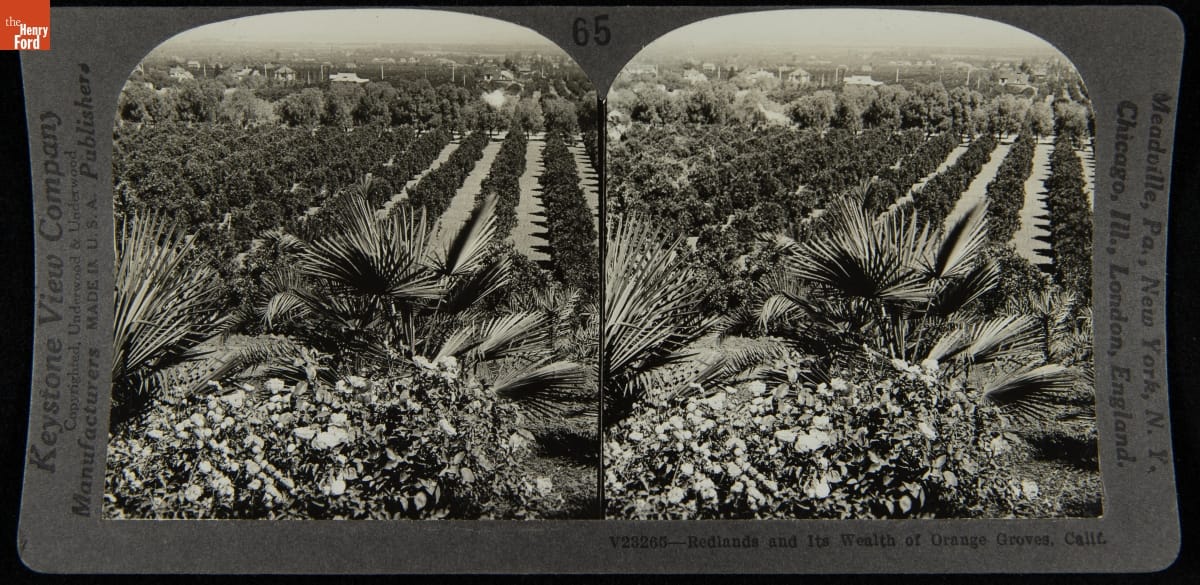
- circa 1909
- Collections - Artifact
Redlands and Its Wealth of Orange Groves, Calif.
- Cotton Farmers Waiting at the Gin, 1906-1922 -
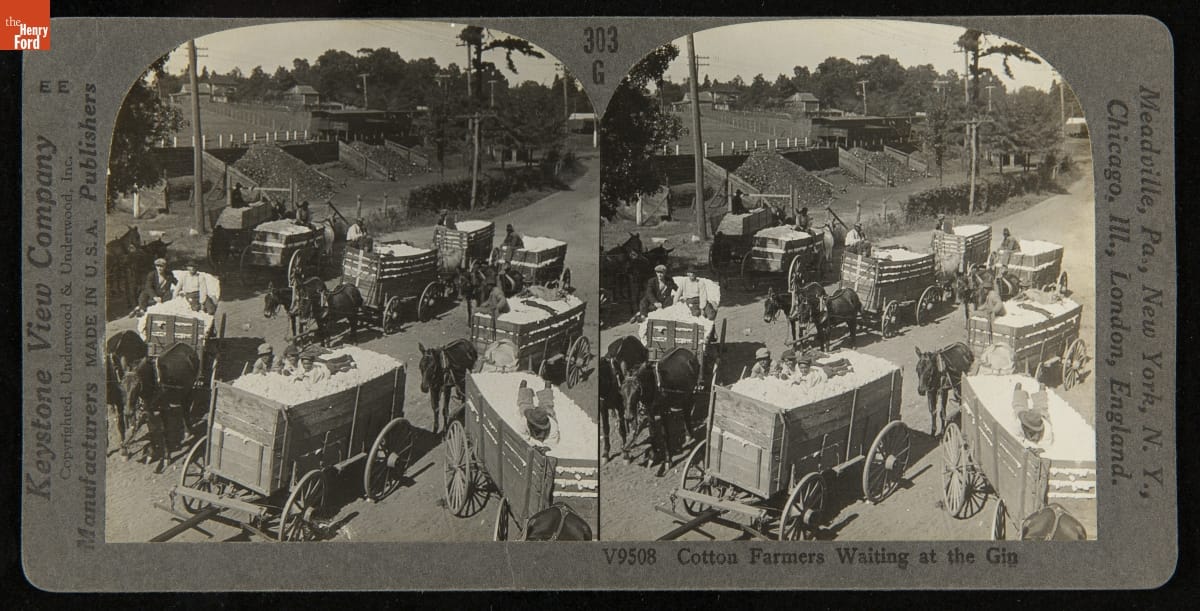
- 1906-1922
- Collections - Artifact
Cotton Farmers Waiting at the Gin, 1906-1922