
Search
- L.Q.C. Wishart's Pine Tree Tar Cordial, 1859-1880 -
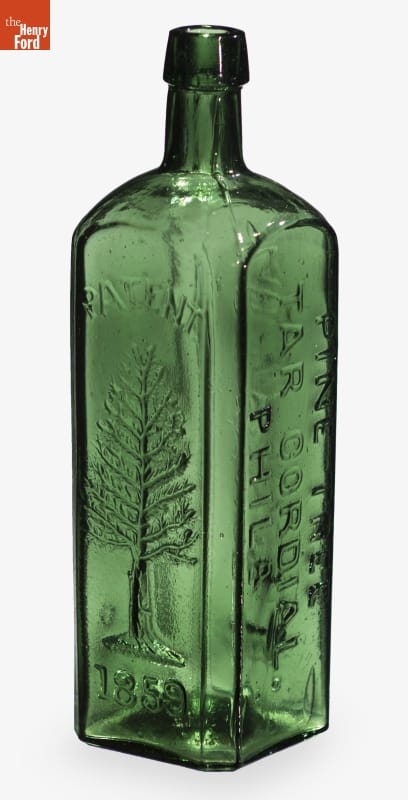
- 1859-1880
- Collections - Artifact
L.Q.C. Wishart's Pine Tree Tar Cordial, 1859-1880
- Flask, 1849-1860 - Glass factories in America began producing inexpensive, mold-formed flasks in the early 1800s. These figured flasks, often decorated with symbols of national pride or political or cultural affiliation, appealed to America's common man. The overflowing cornucopia and urn found on either side of this flask alludes to America's agricultural bounty.
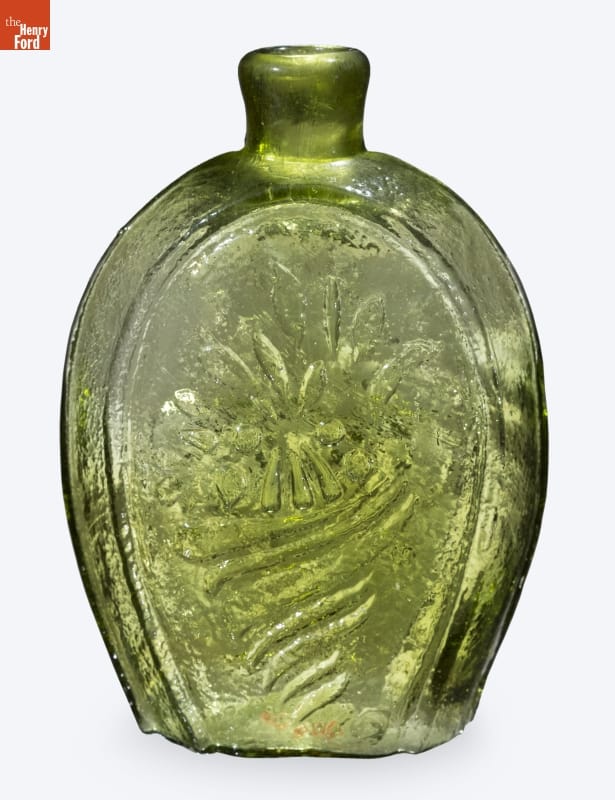
- 1849-1860
- Collections - Artifact
Flask, 1849-1860
Glass factories in America began producing inexpensive, mold-formed flasks in the early 1800s. These figured flasks, often decorated with symbols of national pride or political or cultural affiliation, appealed to America's common man. The overflowing cornucopia and urn found on either side of this flask alludes to America's agricultural bounty.
- Water Bottle, 1849-1866 -
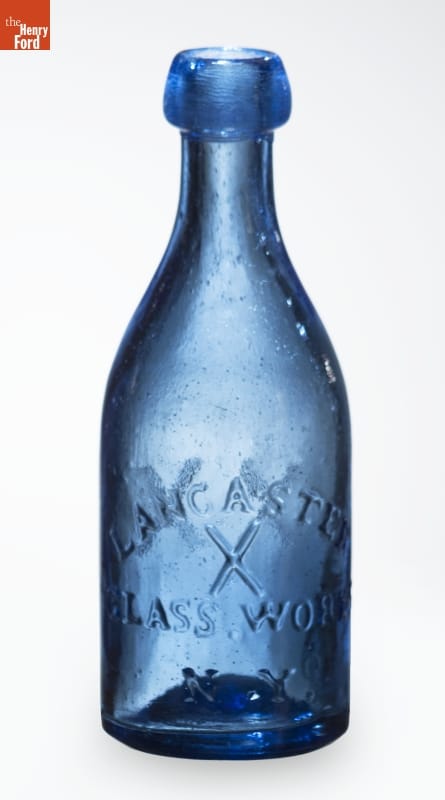
- 1849-1866
- Collections - Artifact
Water Bottle, 1849-1866
- Flask, 1859-1865 - Glass factories in America began producing inexpensive, mold-formed flasks in the early 1800s. Many figured flasks were decorated with symbols of national pride and images of famous individuals -- or in this case a famous racehorse. Flora Temple won 95 harness races during the 1850s and 1860s. Not only was this "bob-tailed" mare immortalized in glass, but also in the song "Camptown races."
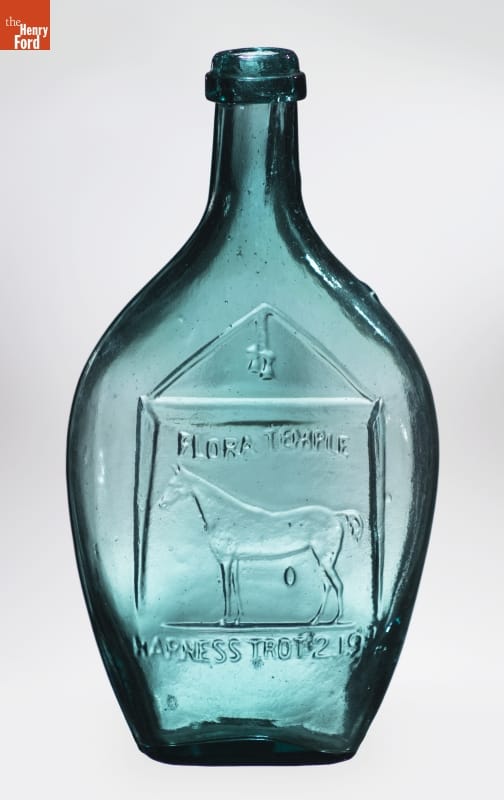
- 1859-1865
- Collections - Artifact
Flask, 1859-1865
Glass factories in America began producing inexpensive, mold-formed flasks in the early 1800s. Many figured flasks were decorated with symbols of national pride and images of famous individuals -- or in this case a famous racehorse. Flora Temple won 95 harness races during the 1850s and 1860s. Not only was this "bob-tailed" mare immortalized in glass, but also in the song "Camptown races."
- Water Bottle, 1849-1866 -
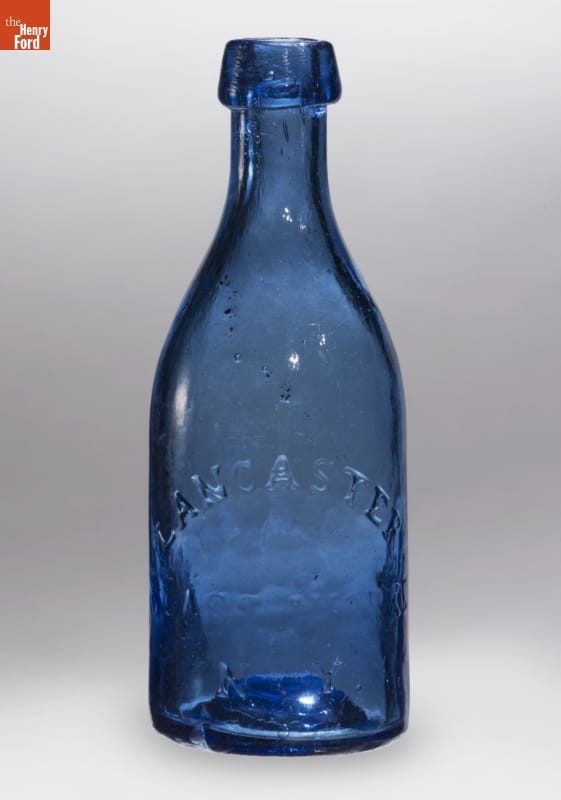
- 1849-1866
- Collections - Artifact
Water Bottle, 1849-1866
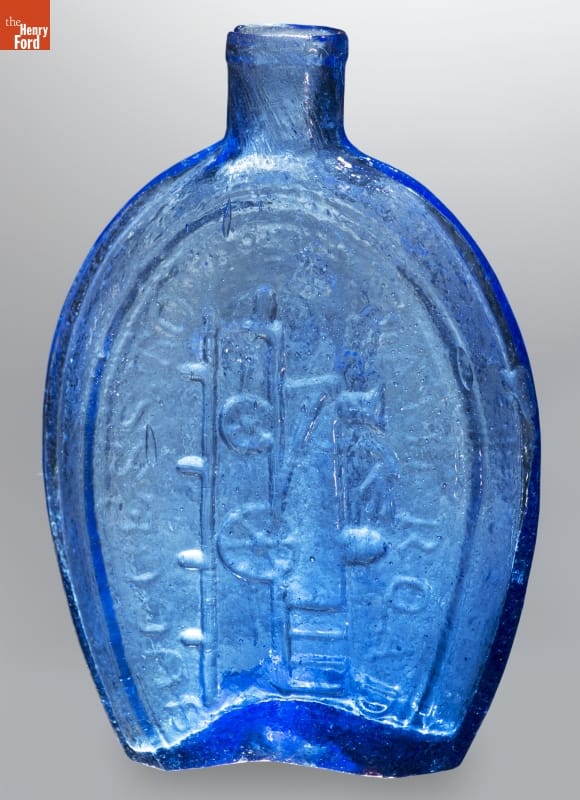
- Flask, 1849-1860 - Glass factories in America began producing inexpensive, mold-formed flasks in the early 1800s. These figured flasks, often decorated with symbols of national pride or political or cultural affiliation, appealed to America's common man. Americans' fascination with railroads began in the late 1820s when rail lines began connecting distant communities. This flask depicts a steam engine with the phrase "Success to the Railroad."
- 1849-1860
- Collections - Artifact
Flask, 1849-1860
Glass factories in America began producing inexpensive, mold-formed flasks in the early 1800s. These figured flasks, often decorated with symbols of national pride or political or cultural affiliation, appealed to America's common man. Americans' fascination with railroads began in the late 1820s when rail lines began connecting distant communities. This flask depicts a steam engine with the phrase "Success to the Railroad."
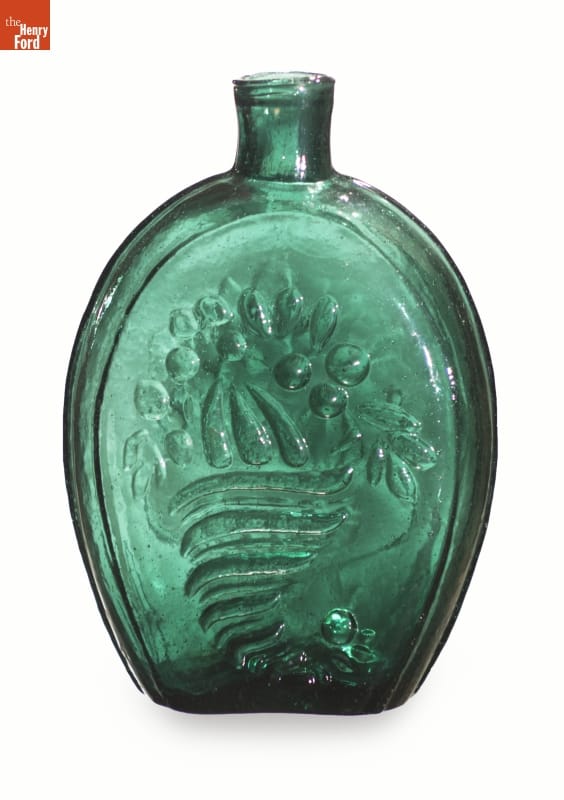
- Flask, 1849-1855 - Glass factories in America began producing inexpensive, mold-formed flasks in the early 1800s. These figured flasks, often decorated with symbols of national pride or political or cultural affiliation, appealed to America's common man. The overflowing cornucopia and urn found on either side of this flask alludes to America's agricultural bounty.
- 1849-1855
- Collections - Artifact
Flask, 1849-1855
Glass factories in America began producing inexpensive, mold-formed flasks in the early 1800s. These figured flasks, often decorated with symbols of national pride or political or cultural affiliation, appealed to America's common man. The overflowing cornucopia and urn found on either side of this flask alludes to America's agricultural bounty.
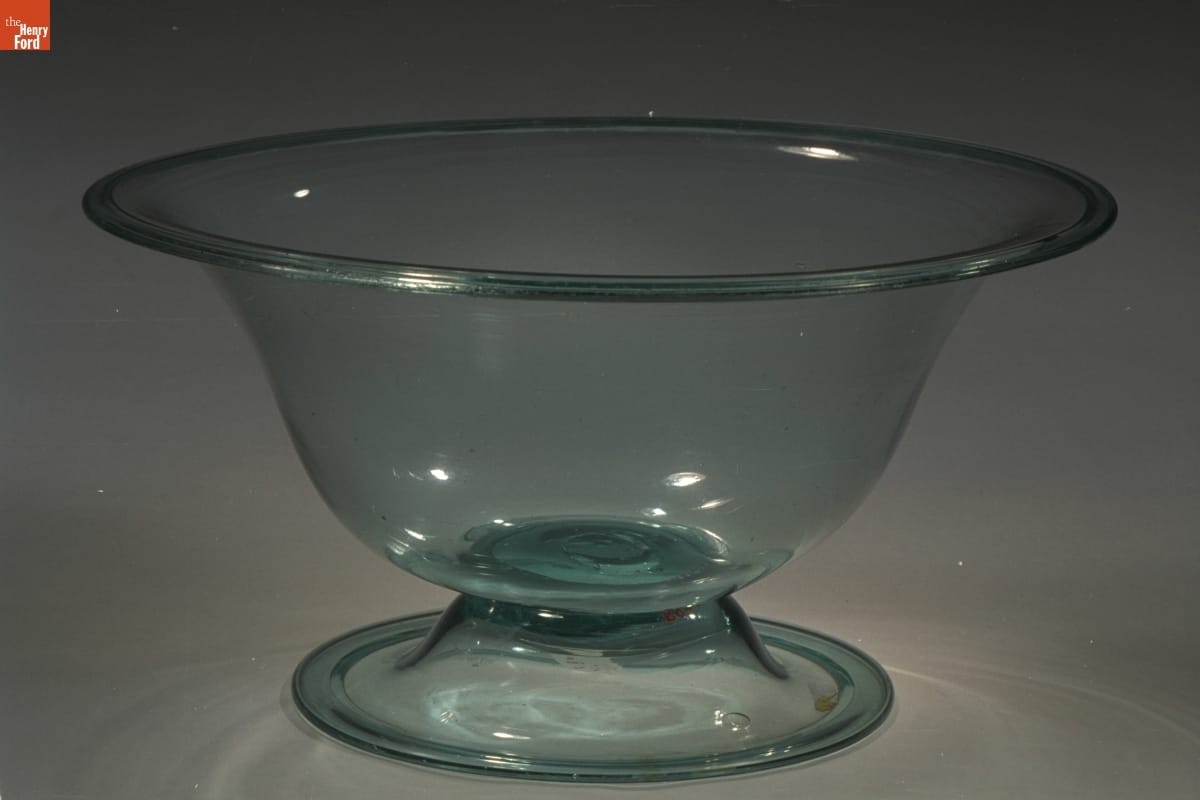
- Footed Bowl, circa 1850 - American glass factories made a variety of glass products for the early-nineteenth-century consumer. Glassblowers turned out bottles, flasks, tableware and other household items. Earlier products were affordable only to the well-to-do. But by the second quarter of the 19th century, a growing number of manufacturers made reasonably priced blown-glass items available to the expanding middle class.
- circa 1850
- Collections - Artifact
Footed Bowl, circa 1850
American glass factories made a variety of glass products for the early-nineteenth-century consumer. Glassblowers turned out bottles, flasks, tableware and other household items. Earlier products were affordable only to the well-to-do. But by the second quarter of the 19th century, a growing number of manufacturers made reasonably priced blown-glass items available to the expanding middle class.
- L.Q.C. Wishart's Pine Tree Tar Cordial, 1859-1880 -
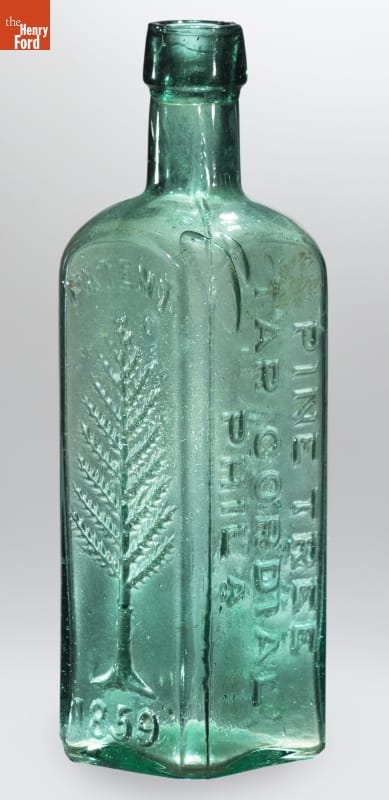
- 1859-1880
- Collections - Artifact
L.Q.C. Wishart's Pine Tree Tar Cordial, 1859-1880