
Search
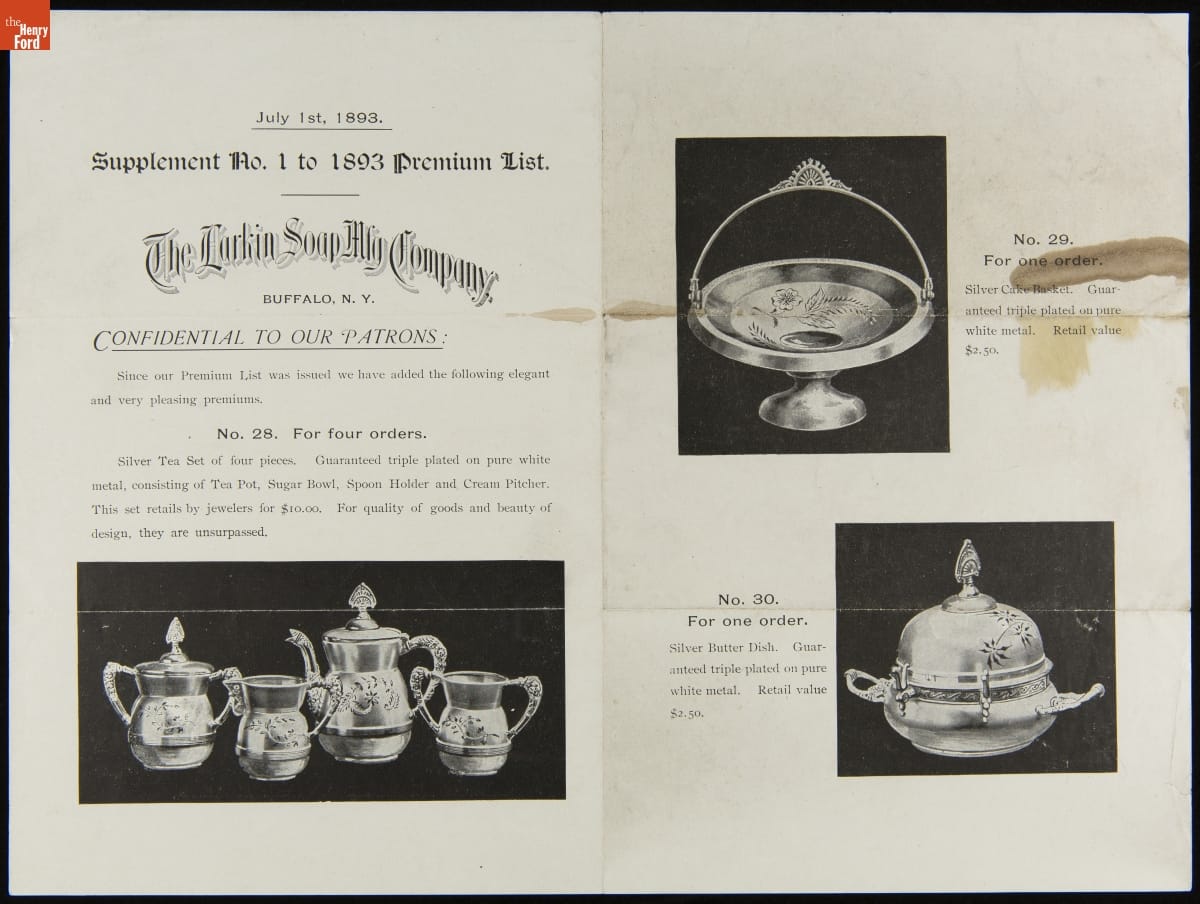
- Larkin Company, "Supplement No. 1 to 1893 Premium List," July 1, 1893 - John D. Larkin established a soap manufacturing company in 1875. He hired his brother-in-law, Elbert Hubbard, as a salesman. Hubbard developed "The Larkin Idea," a plan that sold goods directly to consumers through mail-order catalogs and offered incentivizing giveaways. It was a success. By the early 1900s, Larkin's catalogs contained pages of products and even more pages of premiums from which customers could choose.
- July 01, 1893
- Collections - Artifact
Larkin Company, "Supplement No. 1 to 1893 Premium List," July 1, 1893
John D. Larkin established a soap manufacturing company in 1875. He hired his brother-in-law, Elbert Hubbard, as a salesman. Hubbard developed "The Larkin Idea," a plan that sold goods directly to consumers through mail-order catalogs and offered incentivizing giveaways. It was a success. By the early 1900s, Larkin's catalogs contained pages of products and even more pages of premiums from which customers could choose.
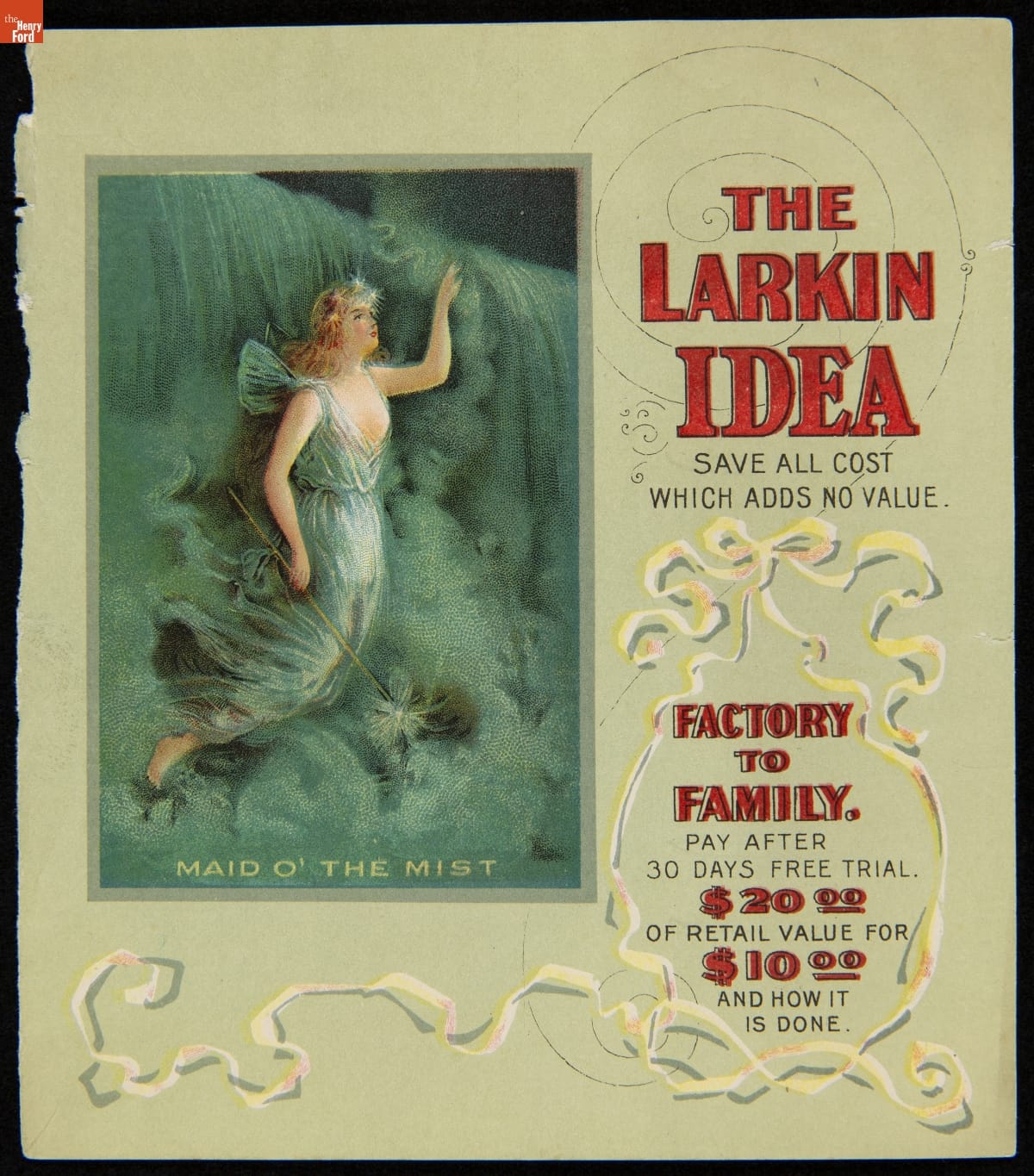
- Trade Card for the Larkin Idea, Larkin Soap Company, 1900 - As color printing gained momentum in the late 19th century, trade cards became a major means of advertising goods and services. In 1885, the Larkin Soap Company developed a marketing strategy known as "The Larkin Idea," which offered giveaways with the purchase of particular items from the company's mail order catalog. This trade card promotes and explains "The Larkin Idea."
- circa 1900
- Collections - Artifact
Trade Card for the Larkin Idea, Larkin Soap Company, 1900
As color printing gained momentum in the late 19th century, trade cards became a major means of advertising goods and services. In 1885, the Larkin Soap Company developed a marketing strategy known as "The Larkin Idea," which offered giveaways with the purchase of particular items from the company's mail order catalog. This trade card promotes and explains "The Larkin Idea."
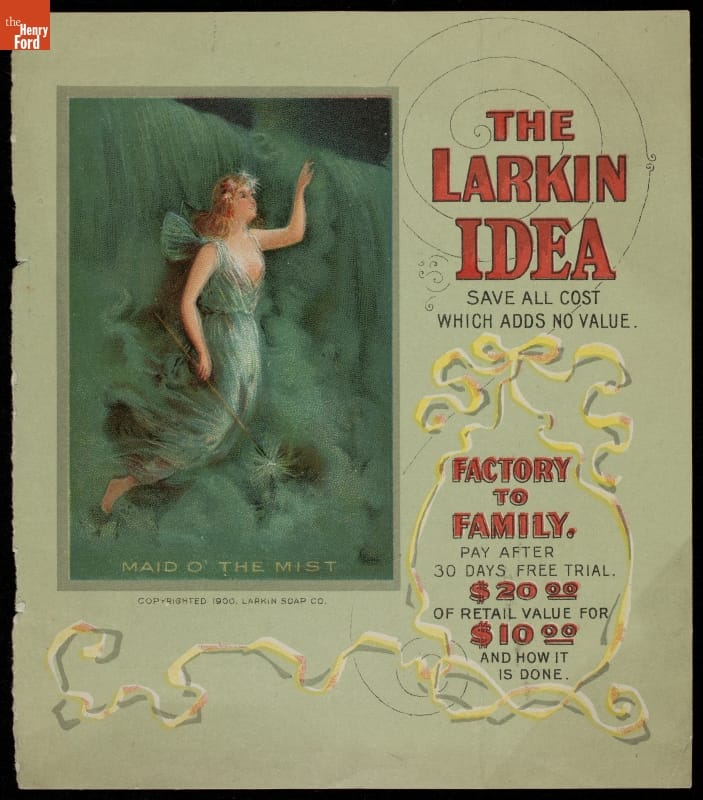
- Trade Card for the Larkin Soap Company, 1900 - In the last third of the nineteenth century, an unprecedented variety of consumer goods and services flooded the American market. Advertisers, armed with new methods of color printing, bombarded potential customers with trade cards. Americans enjoyed and often saved the vibrant little advertisements found in product packages or distributed by local merchants. Many survive as historical records of commercialism in the United States.
- 1901
- Collections - Artifact
Trade Card for the Larkin Soap Company, 1900
In the last third of the nineteenth century, an unprecedented variety of consumer goods and services flooded the American market. Advertisers, armed with new methods of color printing, bombarded potential customers with trade cards. Americans enjoyed and often saved the vibrant little advertisements found in product packages or distributed by local merchants. Many survive as historical records of commercialism in the United States.