
Search
- Tattoo Flash Portfolio, circa 1918 - Tattoos communicate stories. Their content ranges from deeply personal and traditional--to regrettable and frivolous. In the early 1900s, "Professor" Waters apprenticed as a tattoo artist in carnivals and New York's Bowery District. He ran a successful supply shop in Detroit (1918-1939), patenting the standard "two-coil" tattoo machine in 1929. Designs from his flash sheets continue to inspire tattooists today.
- circa 1918
- Collections - Artifact
Tattoo Flash Portfolio, circa 1918
Tattoos communicate stories. Their content ranges from deeply personal and traditional--to regrettable and frivolous. In the early 1900s, "Professor" Waters apprenticed as a tattoo artist in carnivals and New York's Bowery District. He ran a successful supply shop in Detroit (1918-1939), patenting the standard "two-coil" tattoo machine in 1929. Designs from his flash sheets continue to inspire tattooists today.
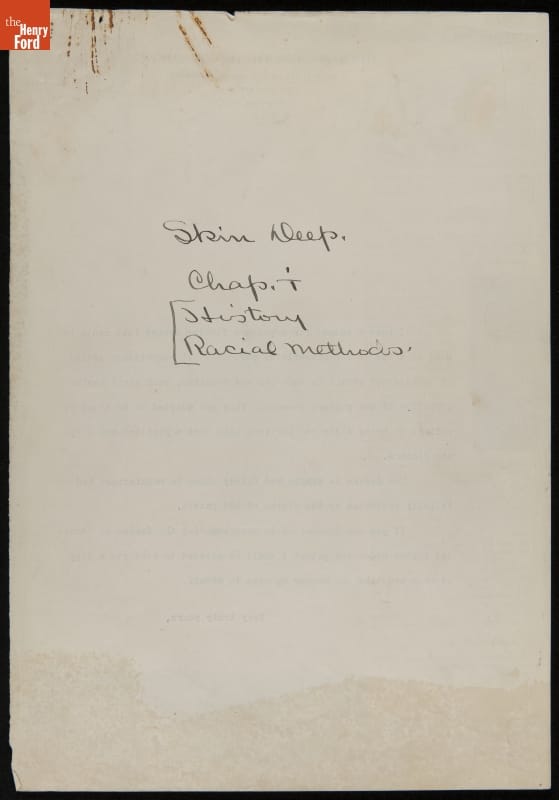
- Manuscript for the Book "Skin Deep," circa 1926 - Tattoos communicate stories. Their content ranges from deeply personal and traditional--to regrettable and frivolous. In the early 1900s, "Professor" Waters apprenticed as a tattoo artist in carnivals and New York's Bowery District. He ran a successful supply shop in Detroit (1918-1939), patenting the standard "two-coil" tattoo machine in 1929. Designs from his flash sheets continue to inspire tattooists today.
- circa 1926
- Collections - Artifact
Manuscript for the Book "Skin Deep," circa 1926
Tattoos communicate stories. Their content ranges from deeply personal and traditional--to regrettable and frivolous. In the early 1900s, "Professor" Waters apprenticed as a tattoo artist in carnivals and New York's Bowery District. He ran a successful supply shop in Detroit (1918-1939), patenting the standard "two-coil" tattoo machine in 1929. Designs from his flash sheets continue to inspire tattooists today.
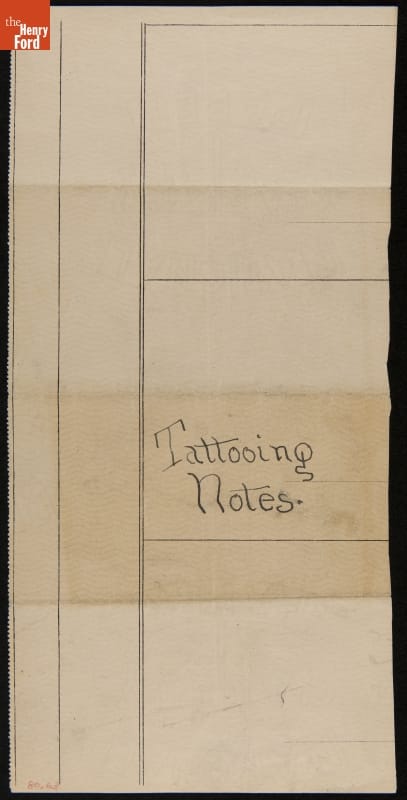
- Manuscript, "Tattooing Notes," by Harry V. Lawson, circa 1920 - Lawson's pamphlet, How to Do Tattooing, explains that a tattoo business can be started with just "a little nerve and a small bank roll." He encourages tattooists to be "ready for any emergency" with a collection of "flash" to apply to first time patients and circus sideshow hopefuls alike. A handwritten manuscript outlining tattoo removal remedies is also included here.
- circa 1920
- Collections - Artifact
Manuscript, "Tattooing Notes," by Harry V. Lawson, circa 1920
Lawson's pamphlet, How to Do Tattooing, explains that a tattoo business can be started with just "a little nerve and a small bank roll." He encourages tattooists to be "ready for any emergency" with a collection of "flash" to apply to first time patients and circus sideshow hopefuls alike. A handwritten manuscript outlining tattoo removal remedies is also included here.
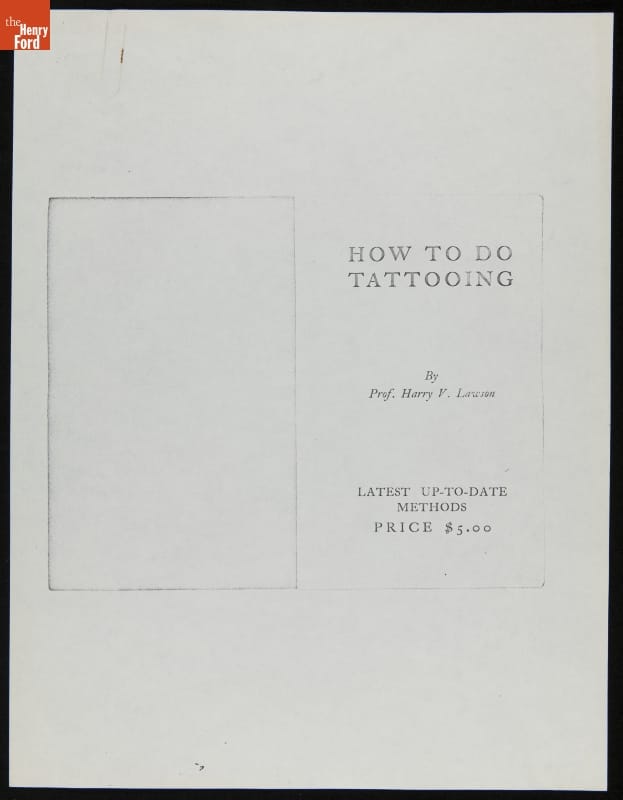
- Photocopy of Booklet, "How to Do Tattooing," by Harry V. Lawson - Lawson's pamphlet, How to Do Tattooing, explains that a tattoo business can be started with just "a little nerve and a small bank roll." He encourages tattooists to be "ready for any emergency" with a collection of "flash" to apply to first time patients and circus sideshow hopefuls alike. A handwritten manuscript outlining tattoo removal remedies is also included here.
- circa 1921
- Collections - Artifact
Photocopy of Booklet, "How to Do Tattooing," by Harry V. Lawson
Lawson's pamphlet, How to Do Tattooing, explains that a tattoo business can be started with just "a little nerve and a small bank roll." He encourages tattooists to be "ready for any emergency" with a collection of "flash" to apply to first time patients and circus sideshow hopefuls alike. A handwritten manuscript outlining tattoo removal remedies is also included here.