
Search
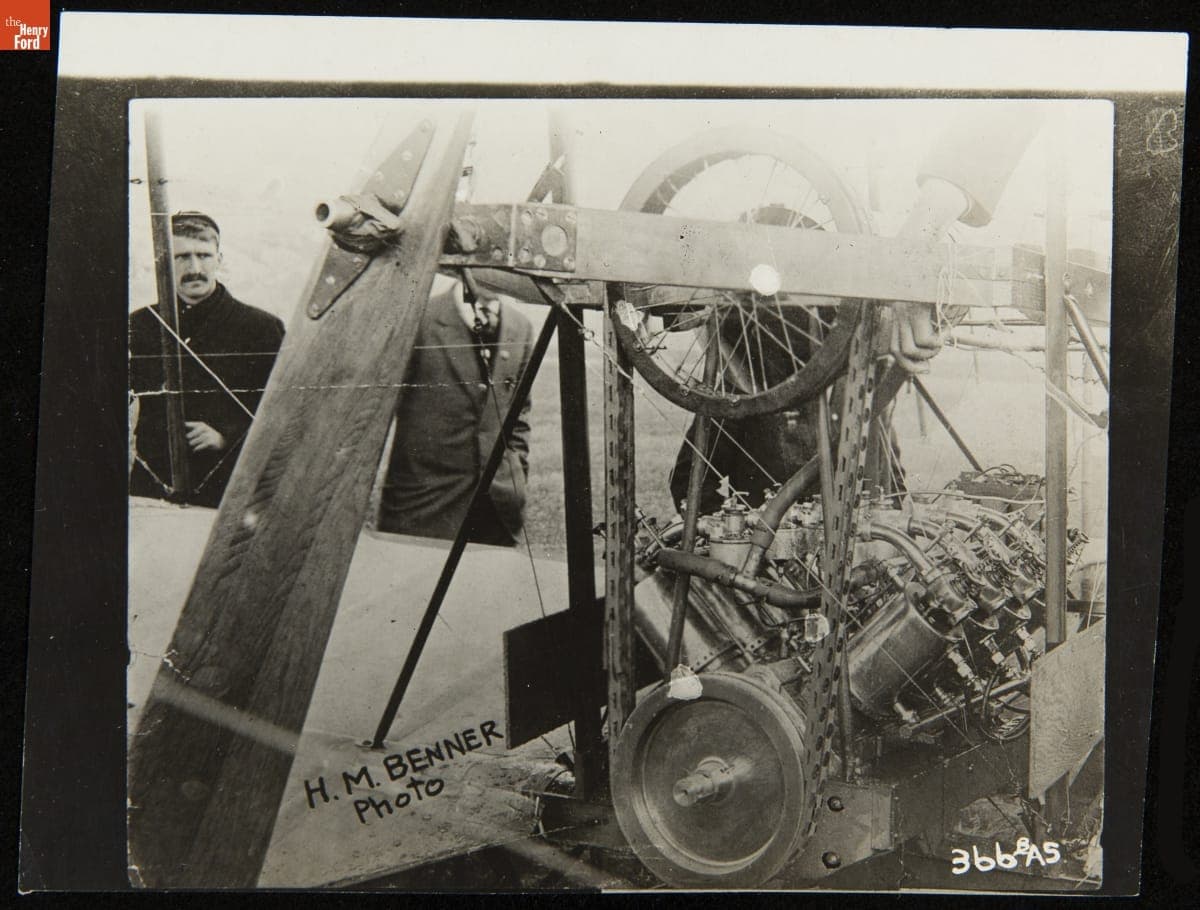
- Engine Designed by Glenn Curtiss for the Aerial Experiment Association's "Silver Dart" Airplane, 1908-1909 - In 1907, Alexander Graham Bell recruited a team of young aviation enthusiasts for his elite Aerial Experiment Association (AEA). The group produced a string of airplanes that ultimately achieved manned flight and contributed key developments to the fledgling field of aviation. AEA "motor expert" Glenn Curtiss designed this water-cooled engine to prevent overheating and allow for longer flights.
- 1908-1909
- Collections - Artifact
Engine Designed by Glenn Curtiss for the Aerial Experiment Association's "Silver Dart" Airplane, 1908-1909
In 1907, Alexander Graham Bell recruited a team of young aviation enthusiasts for his elite Aerial Experiment Association (AEA). The group produced a string of airplanes that ultimately achieved manned flight and contributed key developments to the fledgling field of aviation. AEA "motor expert" Glenn Curtiss designed this water-cooled engine to prevent overheating and allow for longer flights.
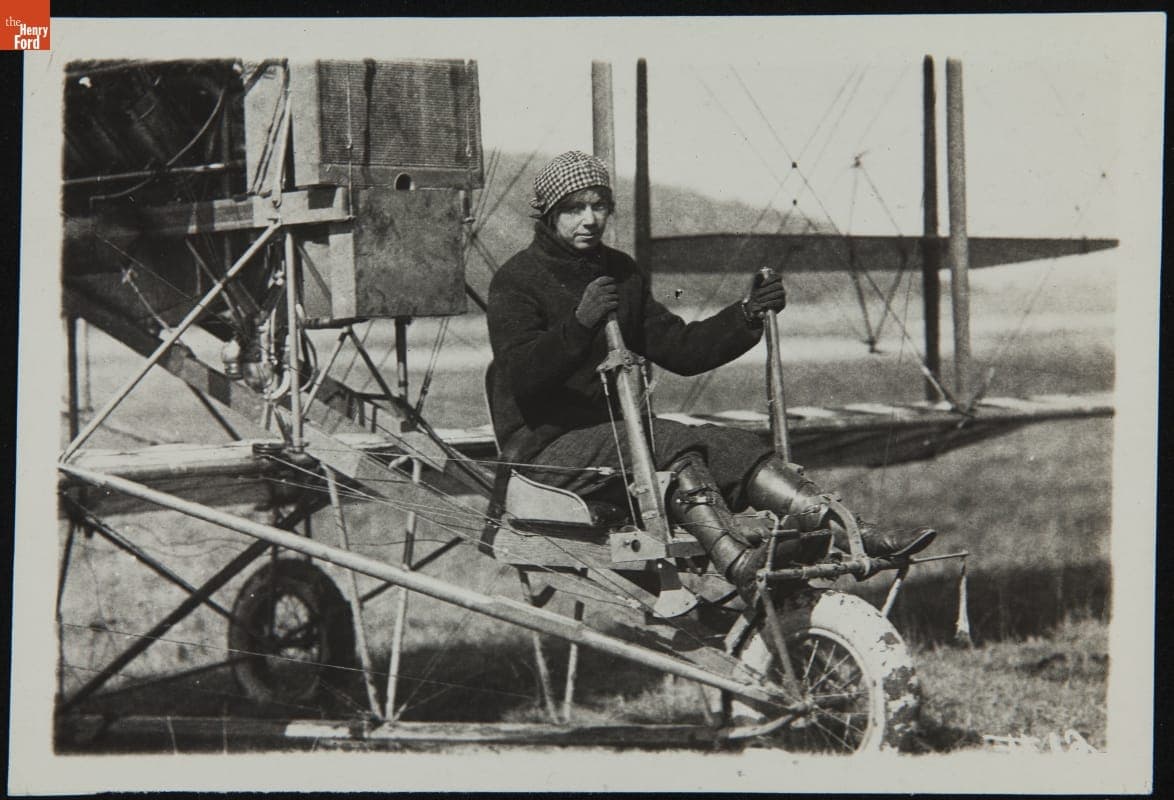
- Ruth Law in Curtiss Pusher Aircraft, circa 1915 - Ruth Law earned her pilot's license in 1912 and soon developed a taste for aerobatics and record breaking. In 1916 she flew 590 nonstop miles from Chicago to the state of New York. During World War I, Law argued unsuccessfully for women to fly in combat roles. Law continued to set records until she retired from flying in 1922.
- circa 1915
- Collections - Artifact
Ruth Law in Curtiss Pusher Aircraft, circa 1915
Ruth Law earned her pilot's license in 1912 and soon developed a taste for aerobatics and record breaking. In 1916 she flew 590 nonstop miles from Chicago to the state of New York. During World War I, Law argued unsuccessfully for women to fly in combat roles. Law continued to set records until she retired from flying in 1922.
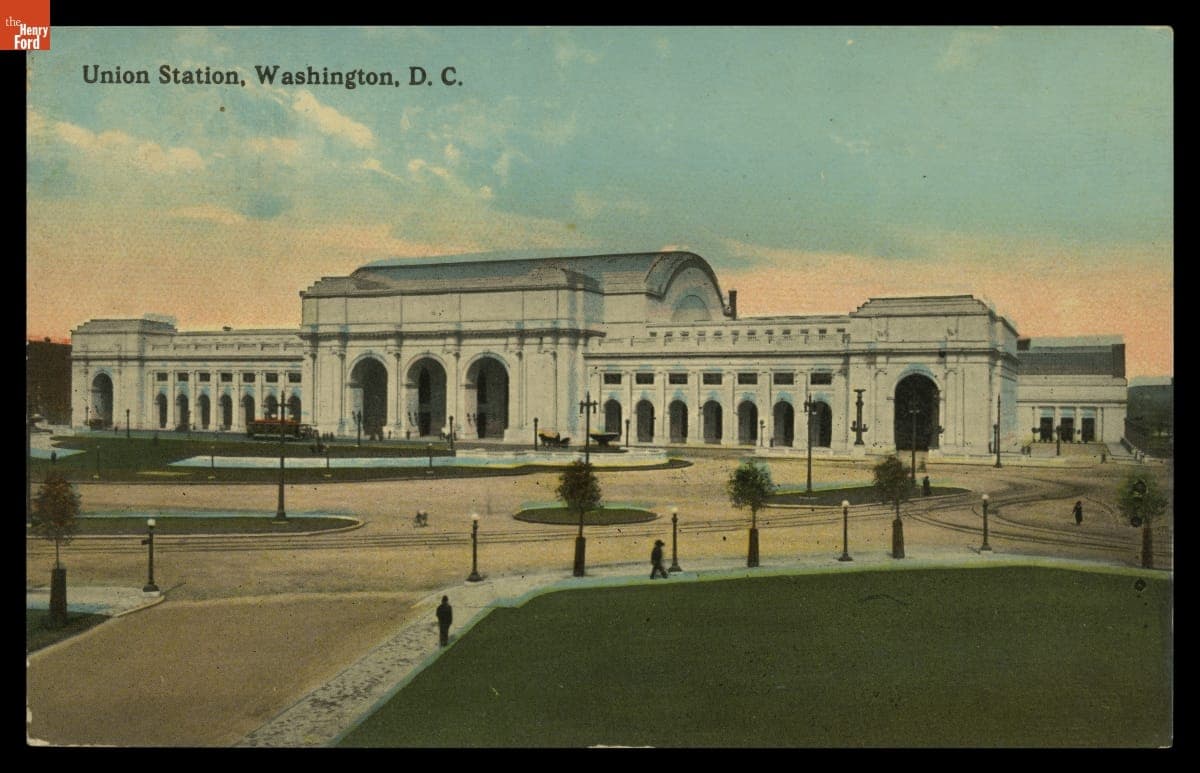
- Union Station, Washington, D.C., circa 1913 - Washington's Union Station was opened by the Baltimore & Ohio and Pennsylvania Railroads in 1907. The monumental building -- well suited to a city of monuments -- was part of a larger project to beautify the nation's capital in the early 1900s. Removal of the Pennsylvania Railroad's previous station, located directly on the National Mall, was a major component of the plan.
- April 27, 1913
- Collections - Artifact
Union Station, Washington, D.C., circa 1913
Washington's Union Station was opened by the Baltimore & Ohio and Pennsylvania Railroads in 1907. The monumental building -- well suited to a city of monuments -- was part of a larger project to beautify the nation's capital in the early 1900s. Removal of the Pennsylvania Railroad's previous station, located directly on the National Mall, was a major component of the plan.
- "Bell-Cap-Sic Plasters Stop Pain, Trial is Proof," 1891 - Inexpensive lithograph prints made in the mid-19th century emphasized people's relationship with dogs. Starting in the late 1890s picture postcards included these types of popular illustrations of dogs. Many companies used these images to advertise a variety of products, ranging from medicinal goods to automobiles.

- 1891
- Collections - Artifact
"Bell-Cap-Sic Plasters Stop Pain, Trial is Proof," 1891
Inexpensive lithograph prints made in the mid-19th century emphasized people's relationship with dogs. Starting in the late 1890s picture postcards included these types of popular illustrations of dogs. Many companies used these images to advertise a variety of products, ranging from medicinal goods to automobiles.
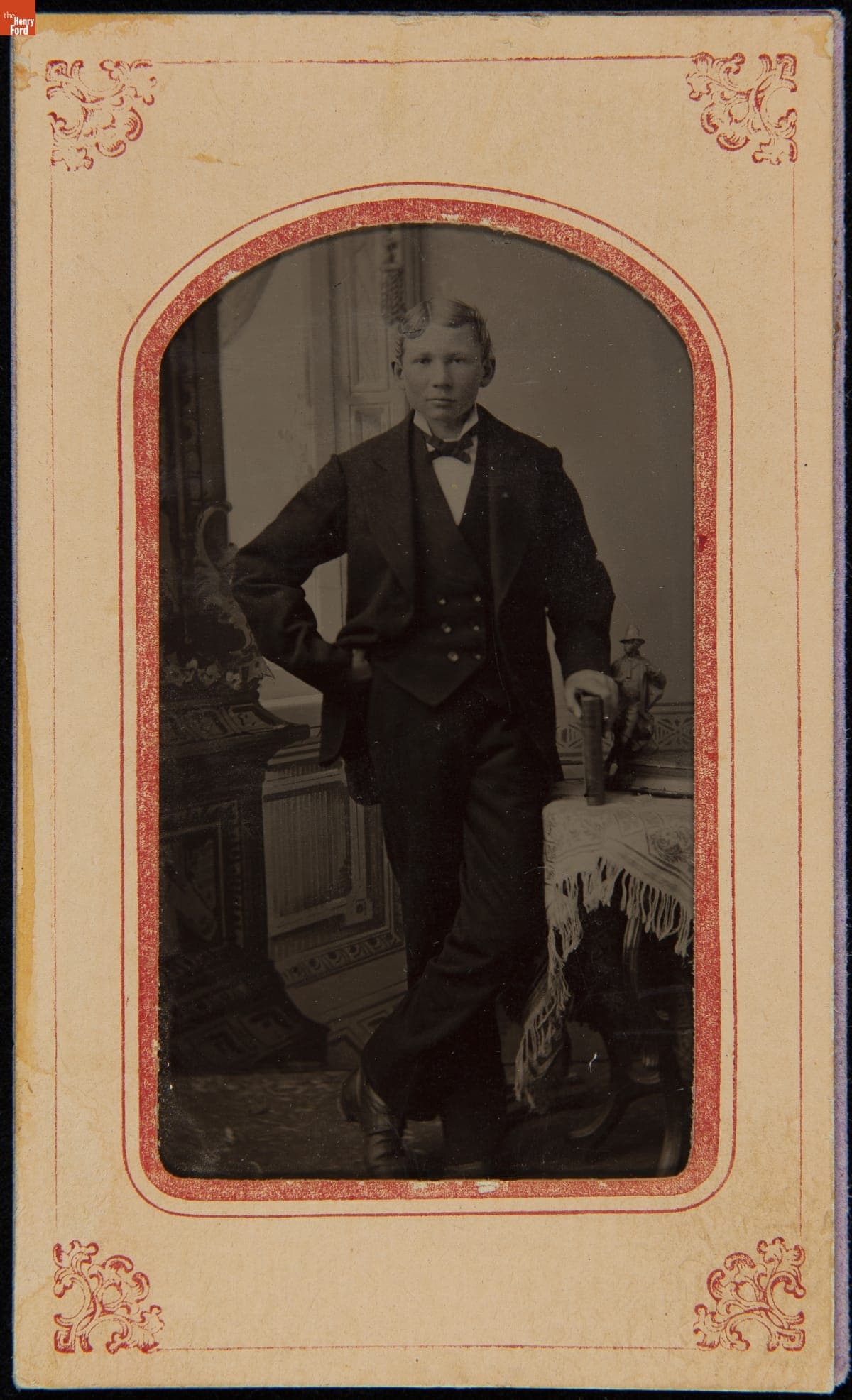
- Young Man with a Book, circa 1875 - Tintypes, the popular "instant photographs" of the 19th century, could be produced in a matter of minutes at a price most people could afford. Tintypes democratized photography. Beginning in the mid-1850s, they gave more people than ever before the chance to have a real likeness of themselves--capturing unique glimpses of how everyday Americans looked and lived.
- circa 1875
- Collections - Artifact
Young Man with a Book, circa 1875
Tintypes, the popular "instant photographs" of the 19th century, could be produced in a matter of minutes at a price most people could afford. Tintypes democratized photography. Beginning in the mid-1850s, they gave more people than ever before the chance to have a real likeness of themselves--capturing unique glimpses of how everyday Americans looked and lived.
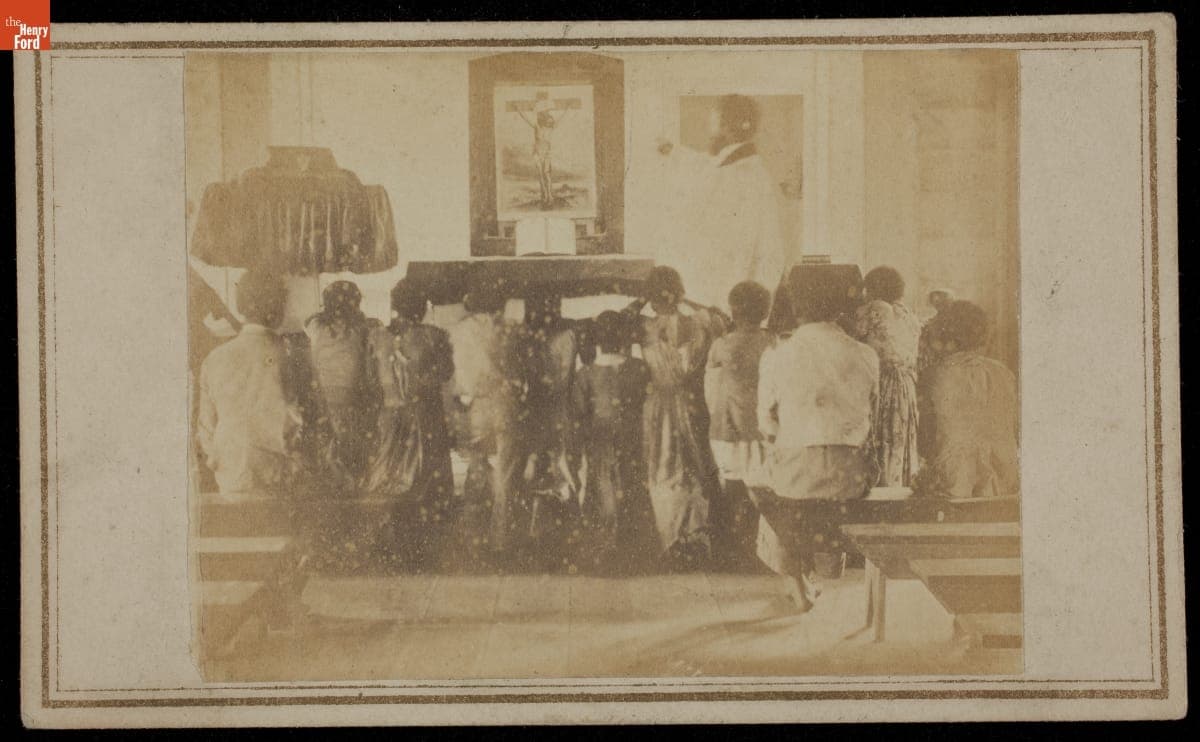
- Worship Service at African-American Church, Charleston, South Carolina, circa 1862 -
- circa 1862
- Collections - Artifact
Worship Service at African-American Church, Charleston, South Carolina, circa 1862
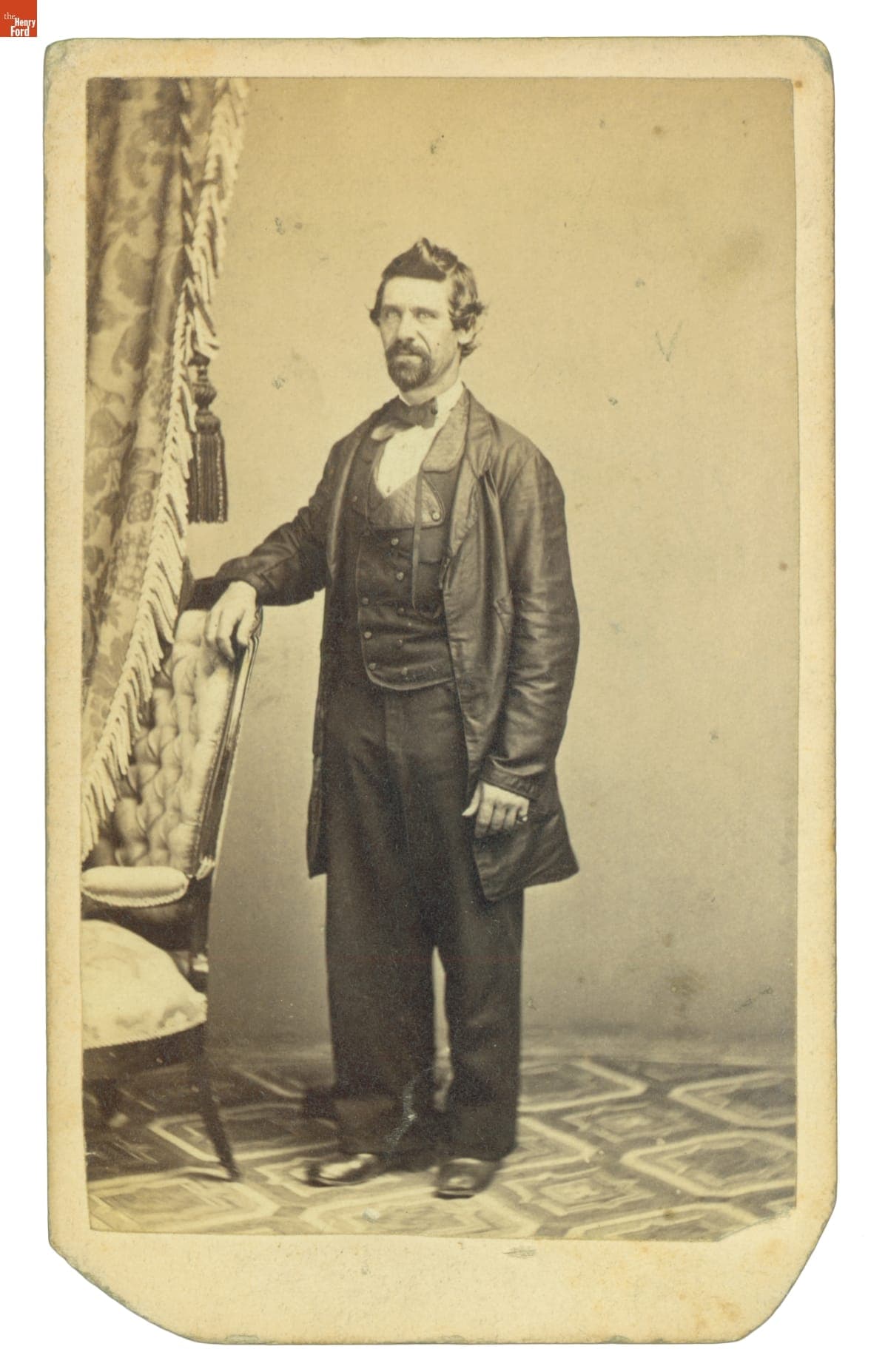
- Man Wearing a Frock Coat, 1864-1866 -
- 1864-1866
- Collections - Artifact
Man Wearing a Frock Coat, 1864-1866
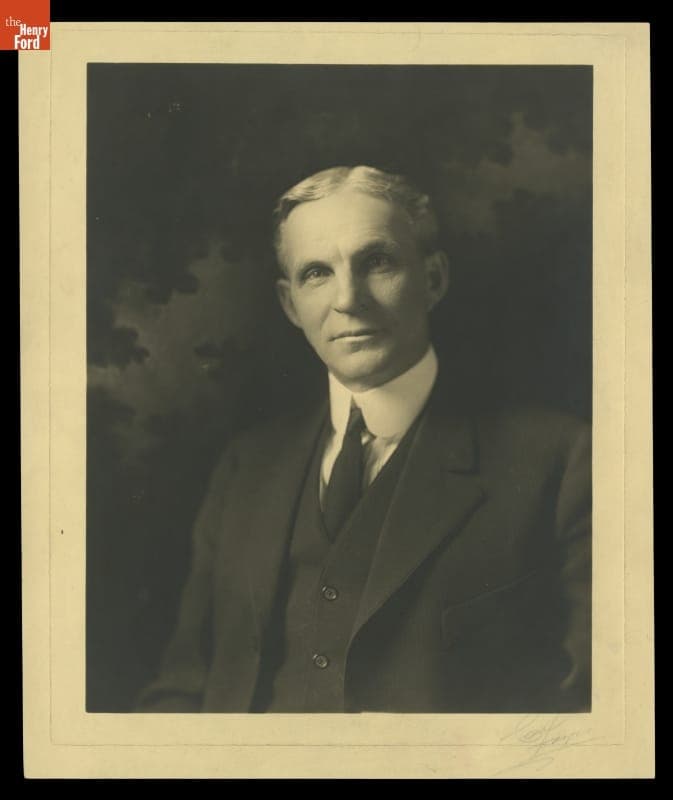
- Portrait of Henry Ford, 1913 - Henry Ford was near the peak of his manufacturing creativity when this portrait was made in 1913. The Model T, his car for the masses, was a tremendous sales success. The moving assembly line, which allowed Ford to build cars in unprecedented numbers, was being implemented. The Five Dollar Day, which revolutionized worker pay, was just on the horizon.
- June 01, 1913
- Collections - Artifact
Portrait of Henry Ford, 1913
Henry Ford was near the peak of his manufacturing creativity when this portrait was made in 1913. The Model T, his car for the masses, was a tremendous sales success. The moving assembly line, which allowed Ford to build cars in unprecedented numbers, was being implemented. The Five Dollar Day, which revolutionized worker pay, was just on the horizon.
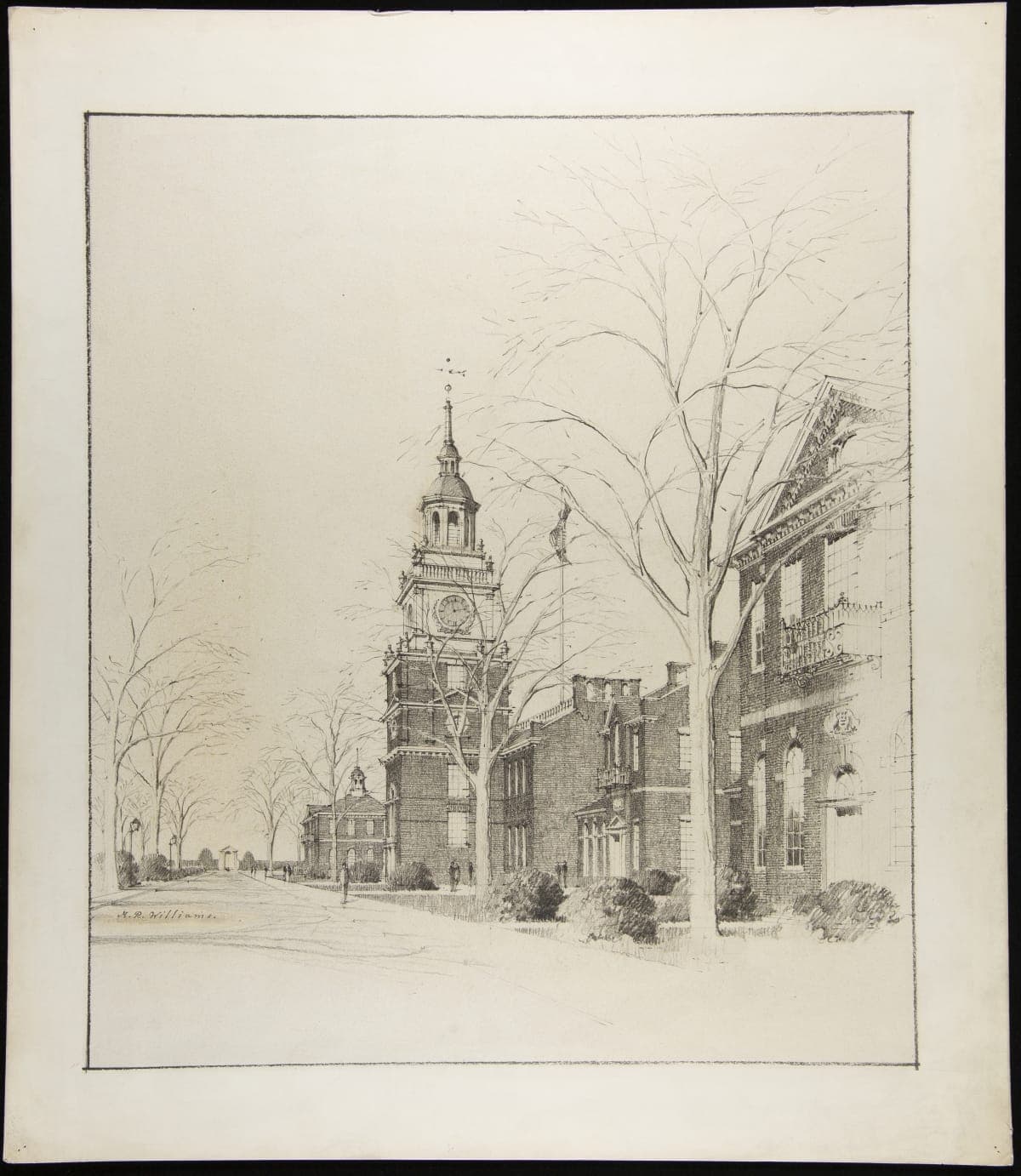
- Henry Ford Museum, East Facade, Clock Tower, 1928 - One of a series of views of the Museum as built, this black and white drawing shows the front façade of the Museum. A reproduction of Independence Hall is at the center, but the entire building was reproduced in reverse, with the clock tower as the focal point. This concession to history serves to provide balance to the extended series of buildings which comprise the front of the Museum.
- 1928
- Collections - Artifact
Henry Ford Museum, East Facade, Clock Tower, 1928
One of a series of views of the Museum as built, this black and white drawing shows the front façade of the Museum. A reproduction of Independence Hall is at the center, but the entire building was reproduced in reverse, with the clock tower as the focal point. This concession to history serves to provide balance to the extended series of buildings which comprise the front of the Museum.
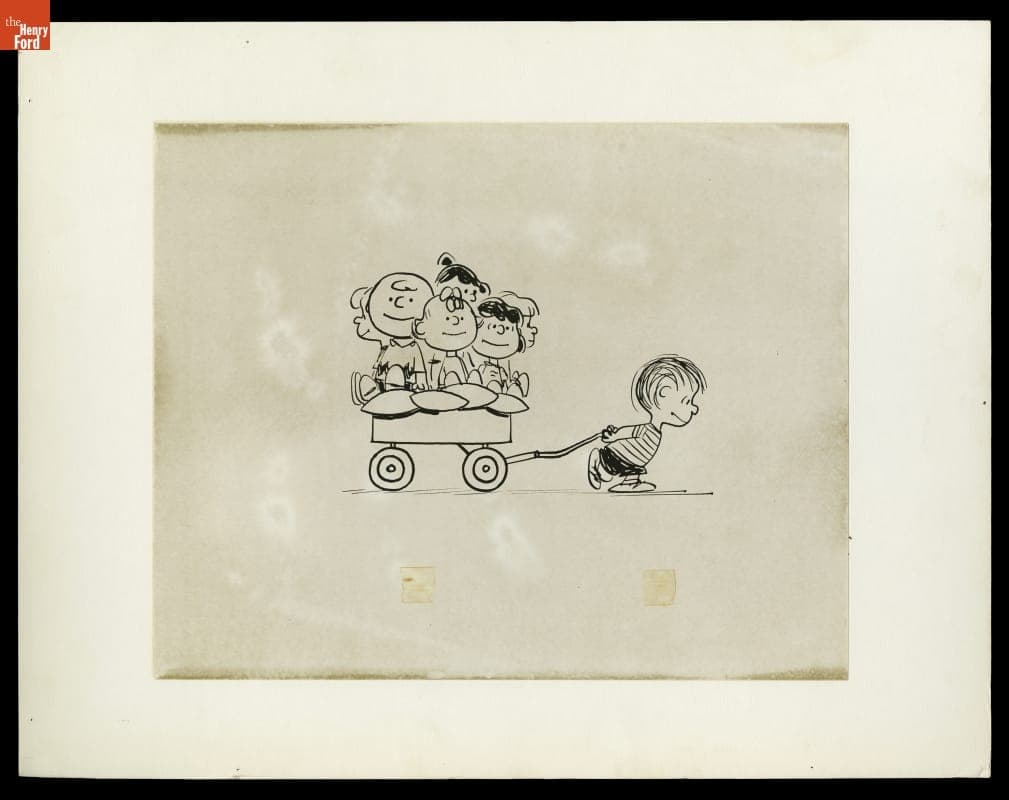
- Illustration of Peanuts Characters for 1964 Ford Falcon Advertising Campaign, 1963 - From the 1960 to the 1965 model years, Ford Motor Company paid an annual licensing fee for exclusive rights to have the Peanuts gang speak for their new compact model, the Falcon, in ads, billboards, animated TV commercials, and sales brochures. This 1963 drawing was submitted by Ford's advertising agency, J. Walter Thompson, with Peanuts characters drawn by Charles Schulz.
- July 31, 1963
- Collections - Artifact
Illustration of Peanuts Characters for 1964 Ford Falcon Advertising Campaign, 1963
From the 1960 to the 1965 model years, Ford Motor Company paid an annual licensing fee for exclusive rights to have the Peanuts gang speak for their new compact model, the Falcon, in ads, billboards, animated TV commercials, and sales brochures. This 1963 drawing was submitted by Ford's advertising agency, J. Walter Thompson, with Peanuts characters drawn by Charles Schulz.