
Search
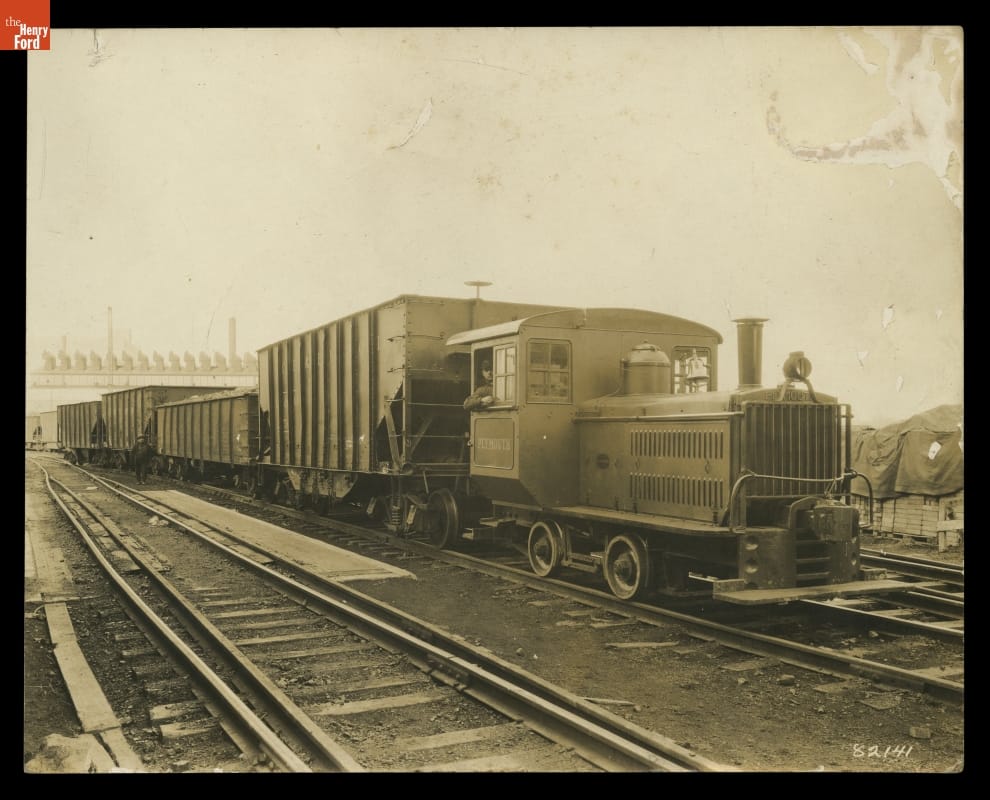
- Engineer Charles Vaughn in Plymouth Locomotive at Mistersky Power Plant, West Jefferson Avenue, Detroit, Michigan, circa 1930 - Engineer Charles Vaughn shuttles carloads of coal at Detroit's Mistersky Power Plant around 1930. The gasoline-powered Plymouth locomotive did not require the coal and water used by steam engines, and it could be operated by one person. The locomotive's light weight and simple operation made it ideal for small industrial railroads. This engine joined The Henry Ford's collection in 1979.
- circa 1930
- Collections - Artifact
Engineer Charles Vaughn in Plymouth Locomotive at Mistersky Power Plant, West Jefferson Avenue, Detroit, Michigan, circa 1930
Engineer Charles Vaughn shuttles carloads of coal at Detroit's Mistersky Power Plant around 1930. The gasoline-powered Plymouth locomotive did not require the coal and water used by steam engines, and it could be operated by one person. The locomotive's light weight and simple operation made it ideal for small industrial railroads. This engine joined The Henry Ford's collection in 1979.
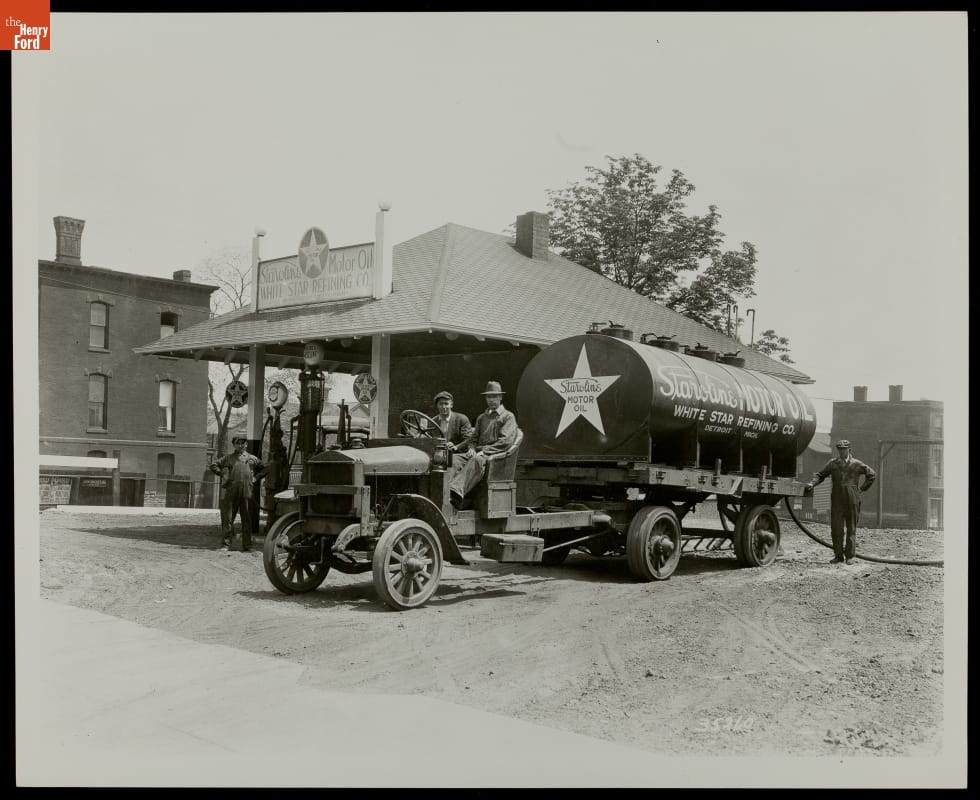
- Staroline Motor Oil Service Station, Tank Truck and Workers, circa 1925 - At first, motorists had to buy gasoline at grocery or hardware stores. But by the 1920s, service and repair stations had become a fixture of American roadsides and cityscapes. Here, a White Star Refining Company tank truck delivers gasoline to one of its stations. Station customers would also have been able to purchases the Detroit-based company's motor oil.
- circa 1925
- Collections - Artifact
Staroline Motor Oil Service Station, Tank Truck and Workers, circa 1925
At first, motorists had to buy gasoline at grocery or hardware stores. But by the 1920s, service and repair stations had become a fixture of American roadsides and cityscapes. Here, a White Star Refining Company tank truck delivers gasoline to one of its stations. Station customers would also have been able to purchases the Detroit-based company's motor oil.
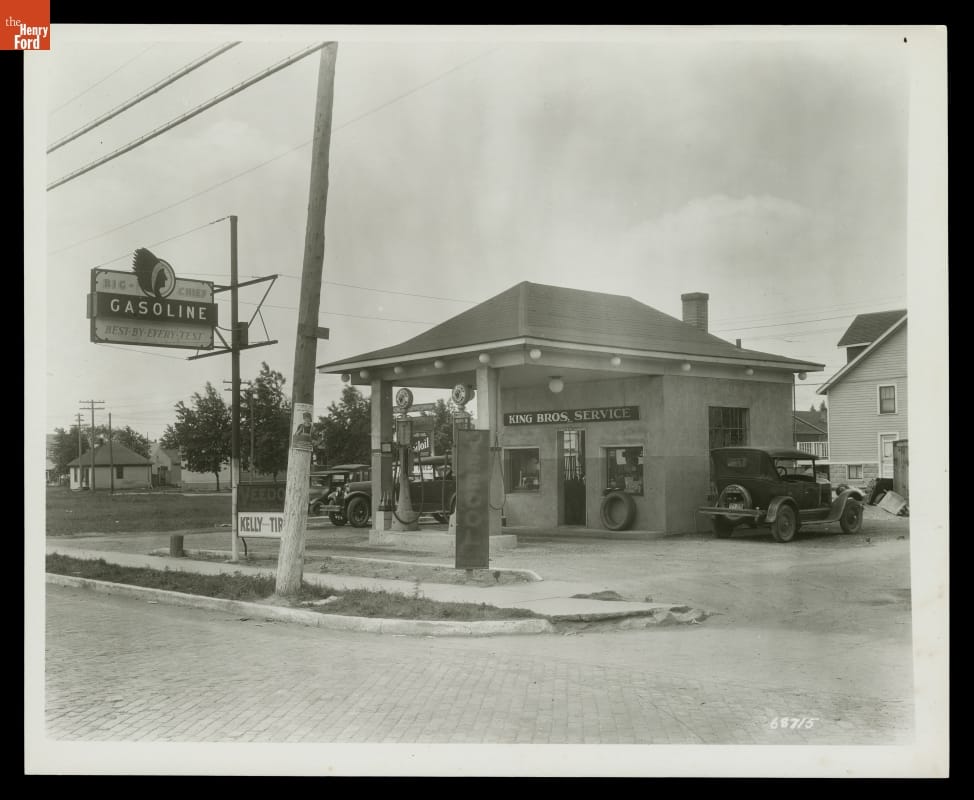
- King Brothers Service Station, circa 1925 - At first, motorists had to buy gasoline at grocery or hardware stores. But by the 1920s, service and repair stations had become a fixture of American roadsides and cityscapes. This roadside station offered drivers gasoline and an array of automotive services. It was also one of the few places they could stop to use the restroom.
- circa 1925
- Collections - Artifact
King Brothers Service Station, circa 1925
At first, motorists had to buy gasoline at grocery or hardware stores. But by the 1920s, service and repair stations had become a fixture of American roadsides and cityscapes. This roadside station offered drivers gasoline and an array of automotive services. It was also one of the few places they could stop to use the restroom.