
Search
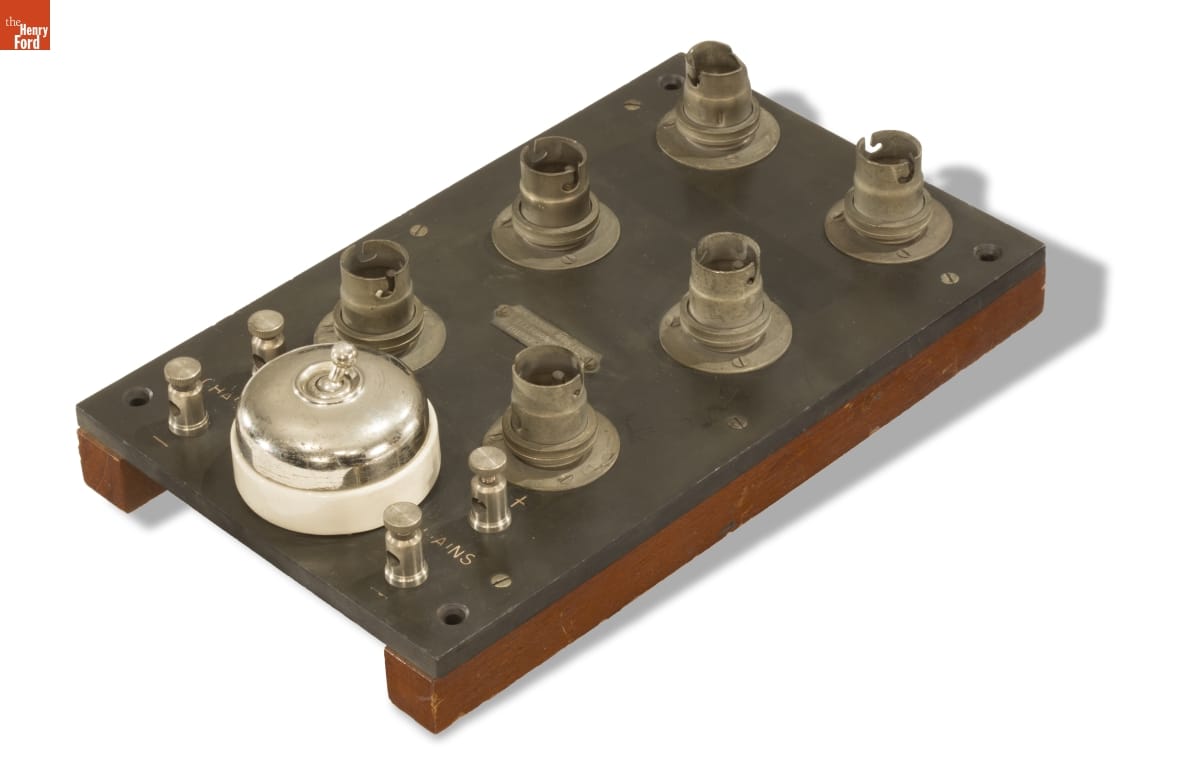
- Marconi Battery Charging Switchboard, circa 1915 - This device uses six light bulbs, wired in series, to step down a 110 volt input--the current from a wall socket--to an output of 6 volts--that of an "A" radio battery. Conceivably, it could also function as a "battery eliminator," which allowed a radio set designed to run on batteries to be powered from a wall socket.
- circa 1915
- Collections - Artifact
Marconi Battery Charging Switchboard, circa 1915
This device uses six light bulbs, wired in series, to step down a 110 volt input--the current from a wall socket--to an output of 6 volts--that of an "A" radio battery. Conceivably, it could also function as a "battery eliminator," which allowed a radio set designed to run on batteries to be powered from a wall socket.
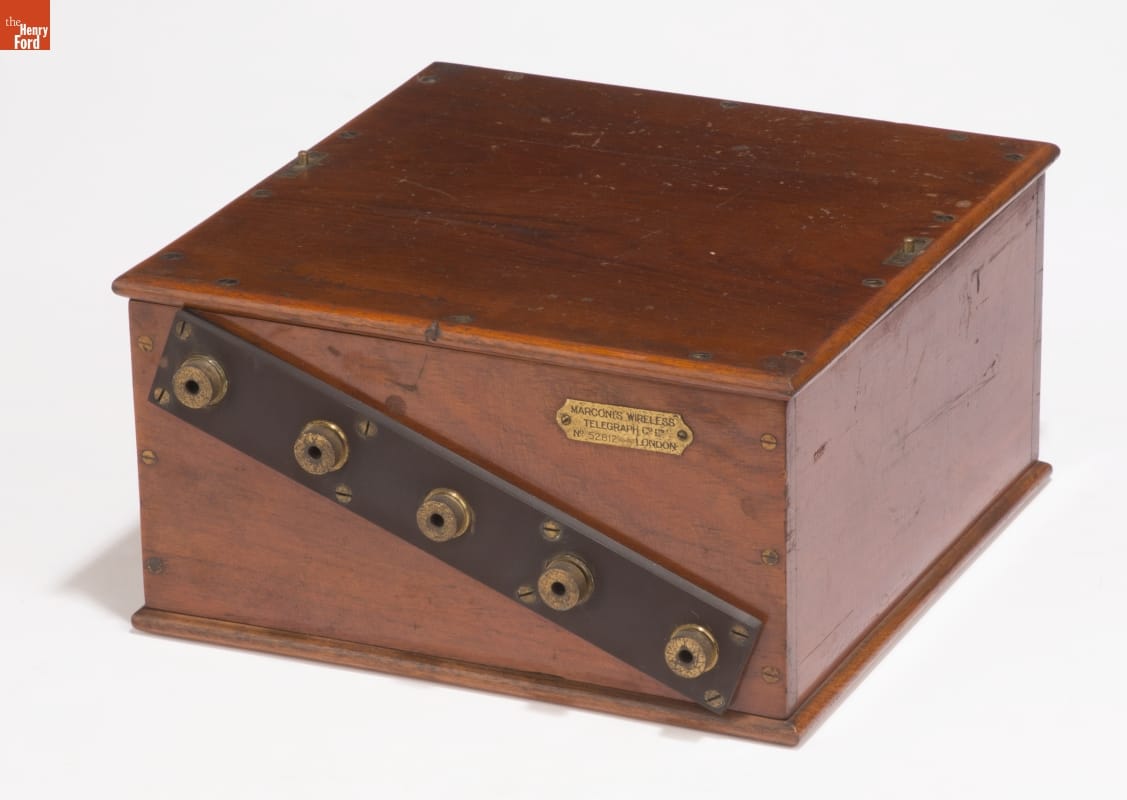
- Marconi Induction Coil, circa 1910 - An induction coil creates a high-voltage, pulsating current which arcs across a "spark gap." The spark creates electromagnetic waves, which can then be detected by a radio receiver. Induction coils were essential to the first decades of wireless and radio. Used from the late 1880s until the 1920s, spark gap powered radios were replaced as vacuum tube transmitters became available.
- circa 1910
- Collections - Artifact
Marconi Induction Coil, circa 1910
An induction coil creates a high-voltage, pulsating current which arcs across a "spark gap." The spark creates electromagnetic waves, which can then be detected by a radio receiver. Induction coils were essential to the first decades of wireless and radio. Used from the late 1880s until the 1920s, spark gap powered radios were replaced as vacuum tube transmitters became available.
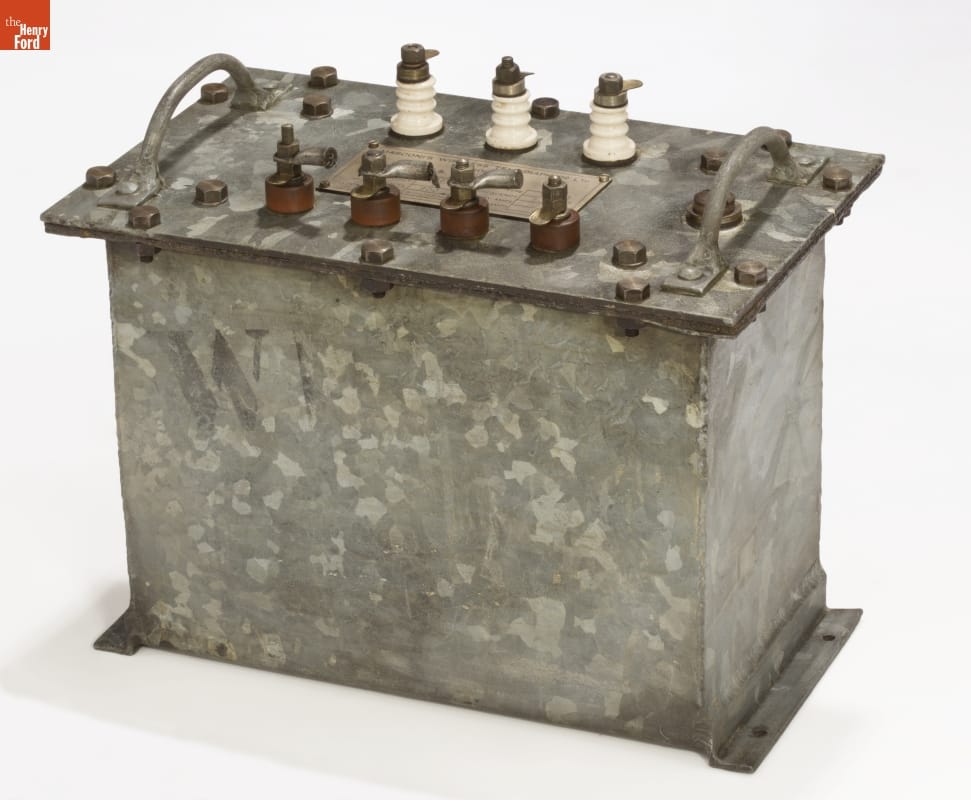
- Marconi Spark Transformer, Type 96, 1917-1918 -
- 1917-1918
- Collections - Artifact
Marconi Spark Transformer, Type 96, 1917-1918
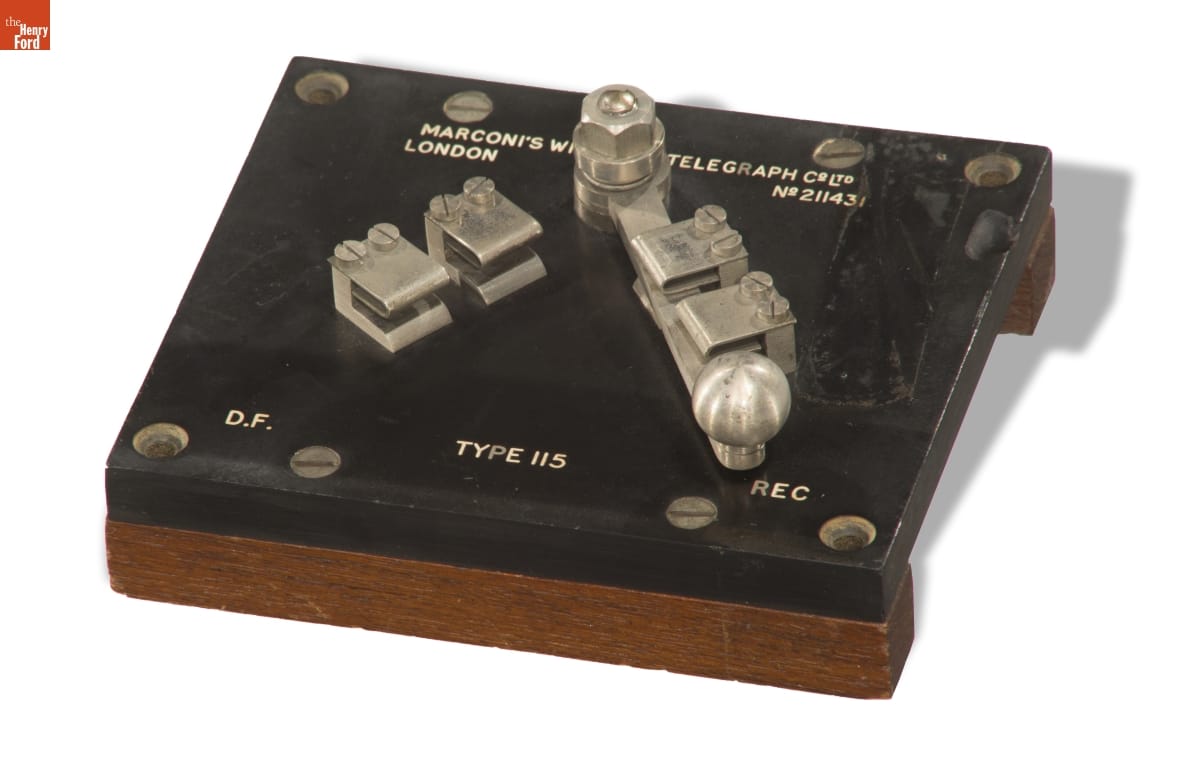
- Marconi Knife Switch, 1900-1920 -
- 1900-1920
- Collections - Artifact
Marconi Knife Switch, 1900-1920
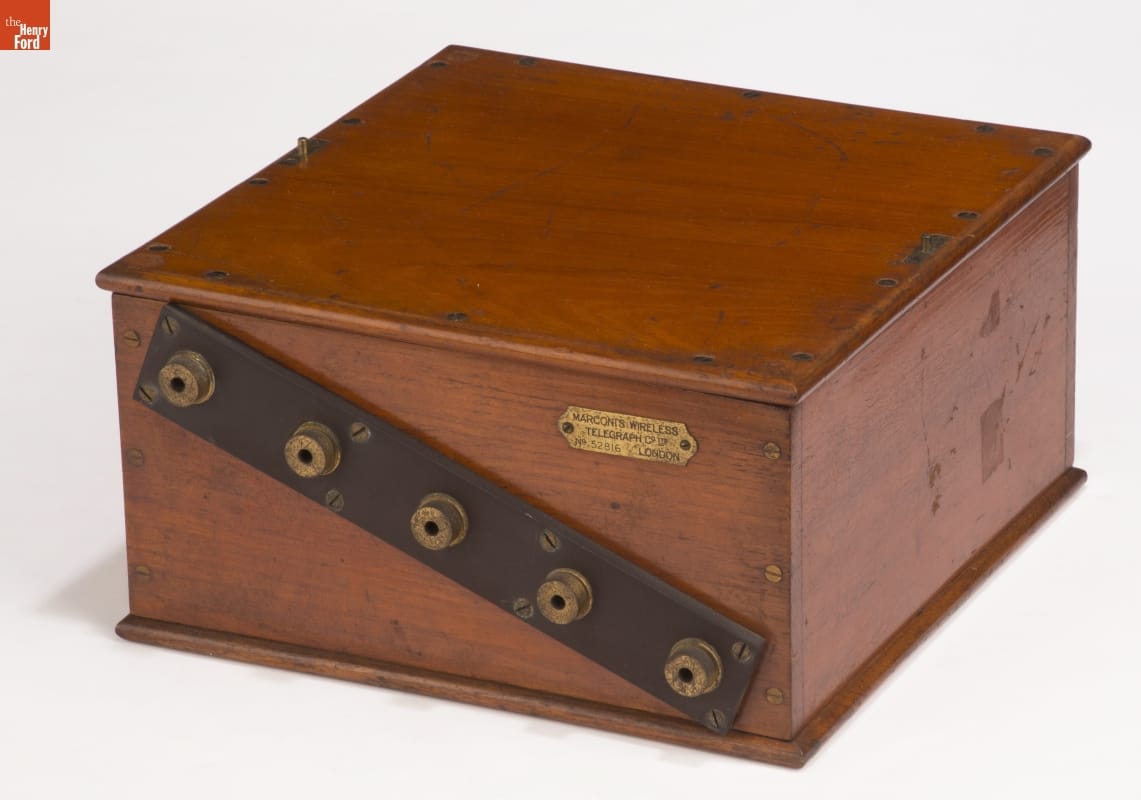
- Marconi Induction Coil, circa 1910 - An induction coil creates a high-voltage, pulsating current which arcs across a "spark gap." The spark creates electromagnetic waves, which can then be detected by a radio receiver. Induction coils were essential to the first decades of wireless and radio. Used from the late 1880s until the 1920s, spark gap powered radios were replaced as vacuum tube transmitters became available.
- circa 1910
- Collections - Artifact
Marconi Induction Coil, circa 1910
An induction coil creates a high-voltage, pulsating current which arcs across a "spark gap." The spark creates electromagnetic waves, which can then be detected by a radio receiver. Induction coils were essential to the first decades of wireless and radio. Used from the late 1880s until the 1920s, spark gap powered radios were replaced as vacuum tube transmitters became available.
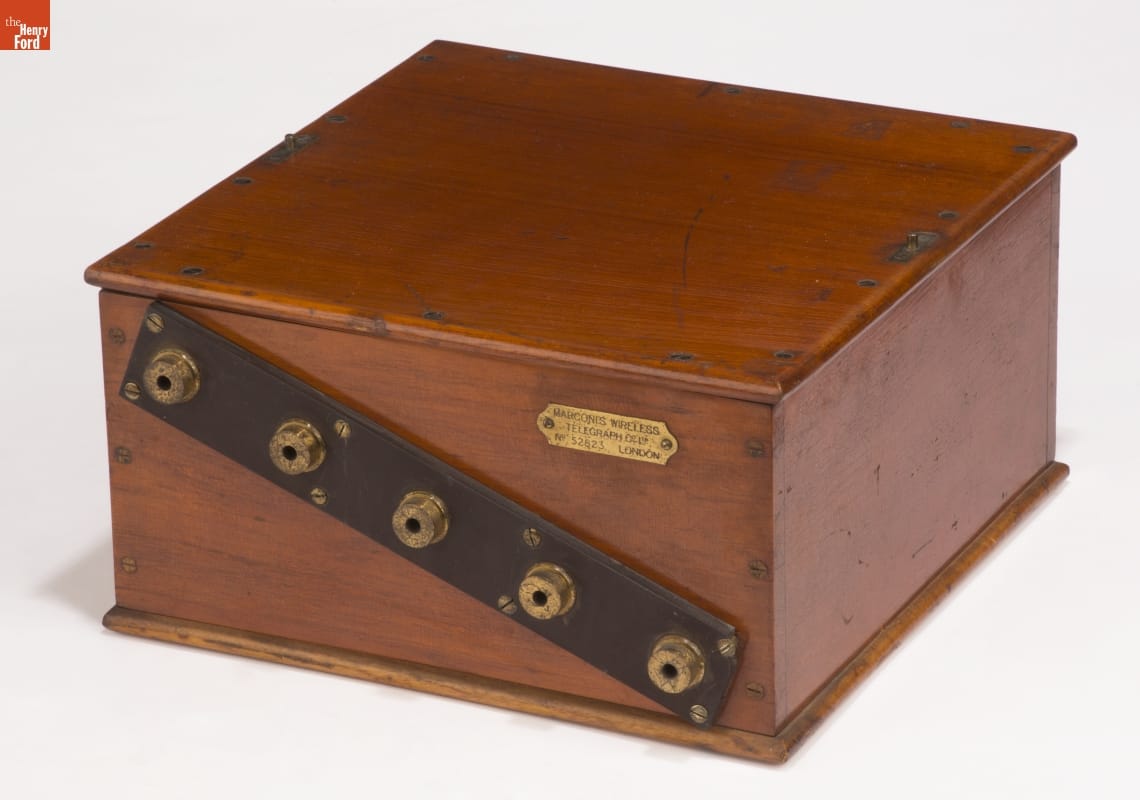
- Marconi Induction Coil, circa 1910 - An induction coil creates a high-voltage, pulsating current which arcs across a "spark gap." The spark creates electromagnetic waves, which can then be detected by a radio receiver. Induction coils were essential to the first decades of wireless and radio. Used from the late 1880s until the 1920s, spark gap powered radios were replaced as vacuum tube transmitters became available.
- circa 1910
- Collections - Artifact
Marconi Induction Coil, circa 1910
An induction coil creates a high-voltage, pulsating current which arcs across a "spark gap." The spark creates electromagnetic waves, which can then be detected by a radio receiver. Induction coils were essential to the first decades of wireless and radio. Used from the late 1880s until the 1920s, spark gap powered radios were replaced as vacuum tube transmitters became available.