
Search
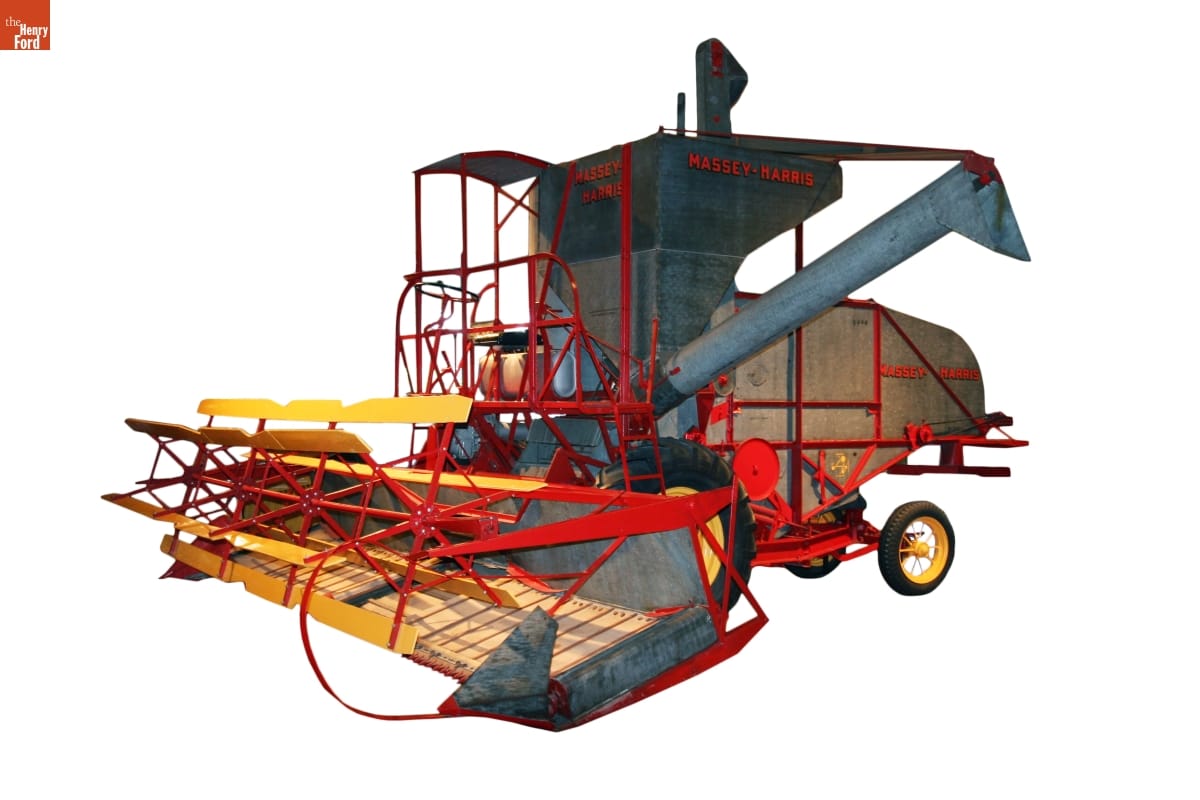
- Massey-Harris Model 20 Self-Propelled Combine, 1938 - "Combines" combine the major tasks of grain harvest: cutting and gathering the crop, threshing and separating the kernels from the chaff, and disposing of the straw. The Massey-Harris Model 20, introduced in 1938, culminated over 100 years of mechanical improvements. One driver operated the self-propelled machine, which reduced the need for hired help during the labor shortages of World War II.
- 1938
- Collections - Artifact
Massey-Harris Model 20 Self-Propelled Combine, 1938
"Combines" combine the major tasks of grain harvest: cutting and gathering the crop, threshing and separating the kernels from the chaff, and disposing of the straw. The Massey-Harris Model 20, introduced in 1938, culminated over 100 years of mechanical improvements. One driver operated the self-propelled machine, which reduced the need for hired help during the labor shortages of World War II.
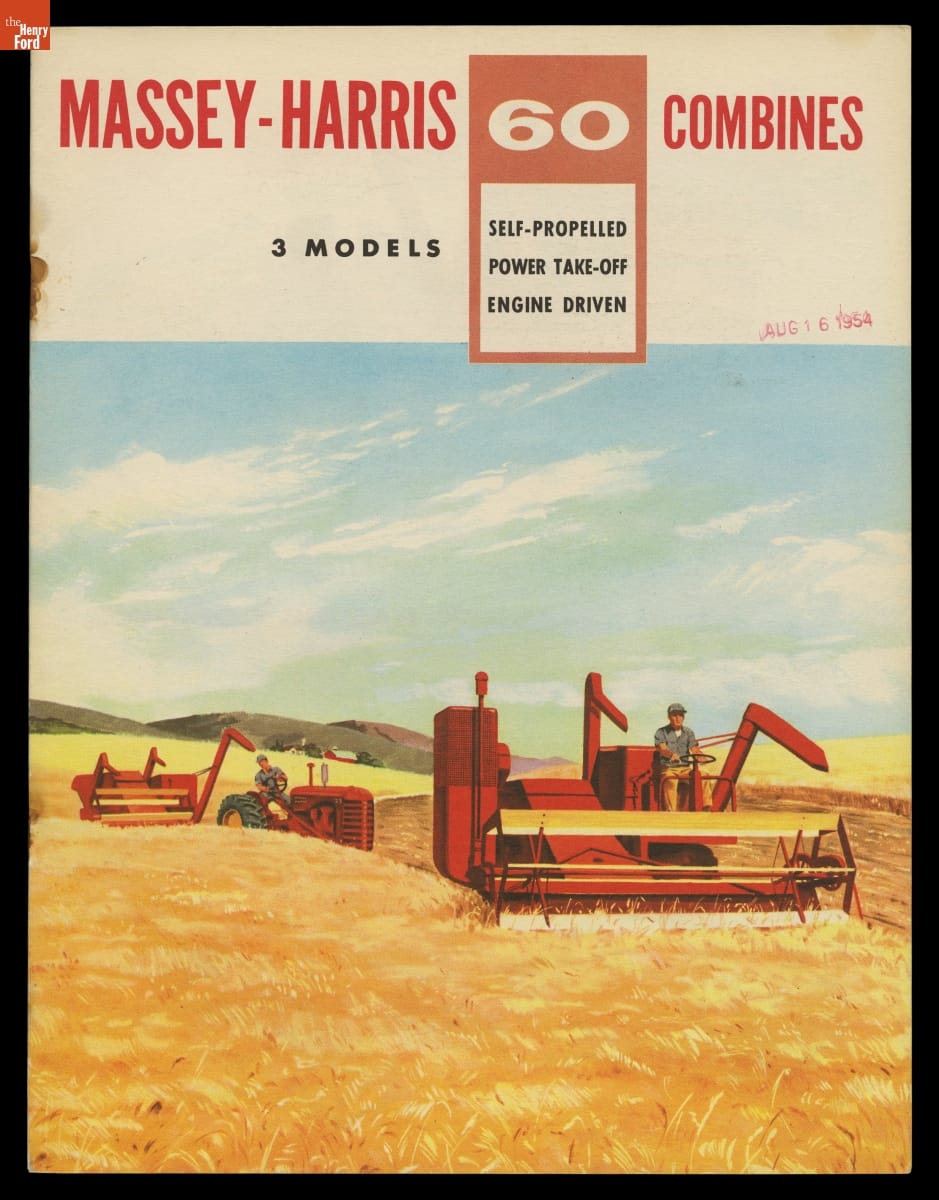
- Massey-Harris 60 Combines: 3 models, Self-propelled, Power Take-off, Engine Driven, 1954 - For centuries, manufacturers worked to perfect machinery that could combine the three major steps of harvesting grain: reaping, or cutting the crop; threshing to loosen the grain from the chaff; and disposing of the straw while retaining the grain. Massey-Harris introduced self-propelled combines in 1938 that helped relieve labor shortages during World War II. This catalog advertised Massey-Harris combines to meet postwar farmers' wide-ranging needs.
- 1954
- Collections - Artifact
Massey-Harris 60 Combines: 3 models, Self-propelled, Power Take-off, Engine Driven, 1954
For centuries, manufacturers worked to perfect machinery that could combine the three major steps of harvesting grain: reaping, or cutting the crop; threshing to loosen the grain from the chaff; and disposing of the straw while retaining the grain. Massey-Harris introduced self-propelled combines in 1938 that helped relieve labor shortages during World War II. This catalog advertised Massey-Harris combines to meet postwar farmers' wide-ranging needs.
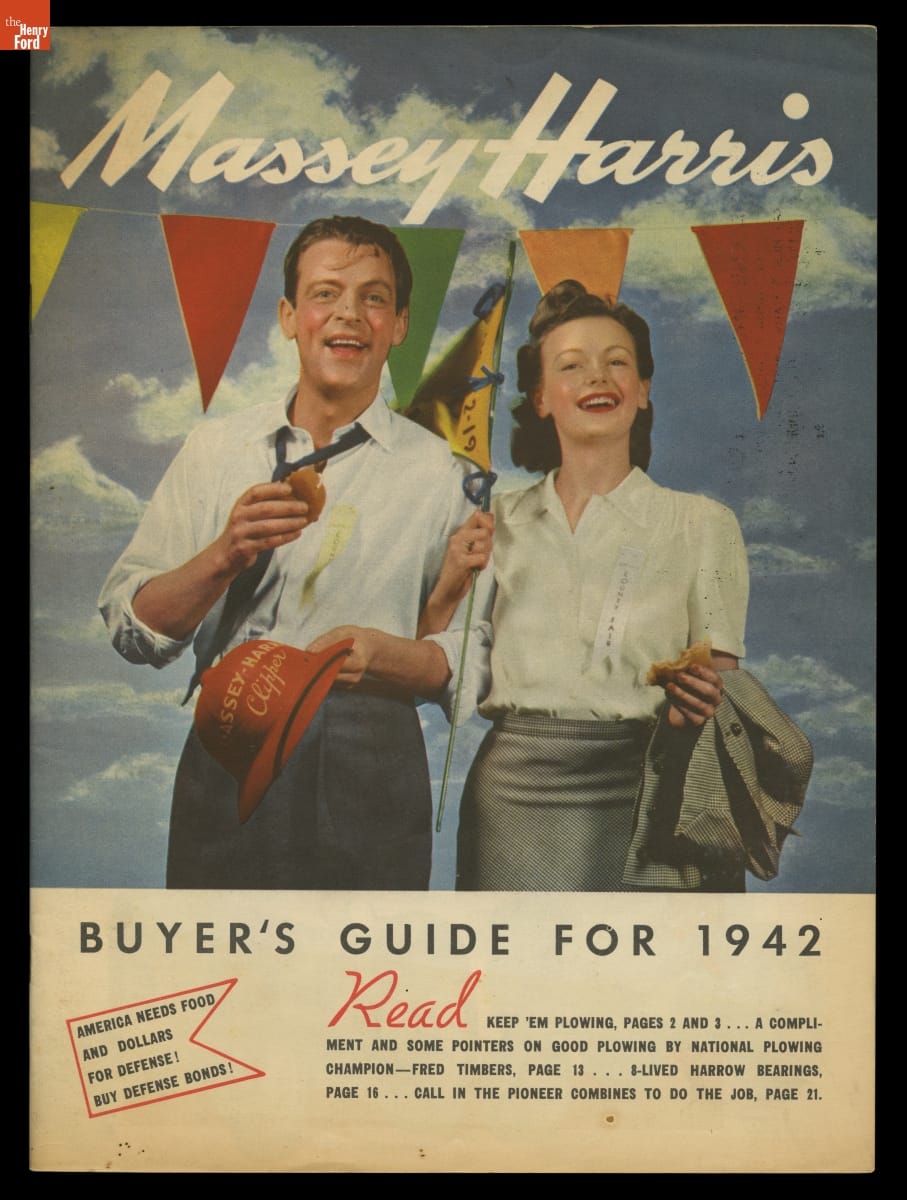
- Massey-Harris Buyer's Guide for 1942 - It took hundreds of years to perfect machinery that could combine the three major steps of harvesting grain: reaping, or cutting the crop; threshing to loosen the grain from the chaff; and disposing of the straw while retaining the grain. Massey-Harris introduced practical self-propelled "combines" in 1938. One driver could operate them, reducing the need for hired help during the labor shortages of World War II.
- 1942
- Collections - Artifact
Massey-Harris Buyer's Guide for 1942
It took hundreds of years to perfect machinery that could combine the three major steps of harvesting grain: reaping, or cutting the crop; threshing to loosen the grain from the chaff; and disposing of the straw while retaining the grain. Massey-Harris introduced practical self-propelled "combines" in 1938. One driver could operate them, reducing the need for hired help during the labor shortages of World War II.
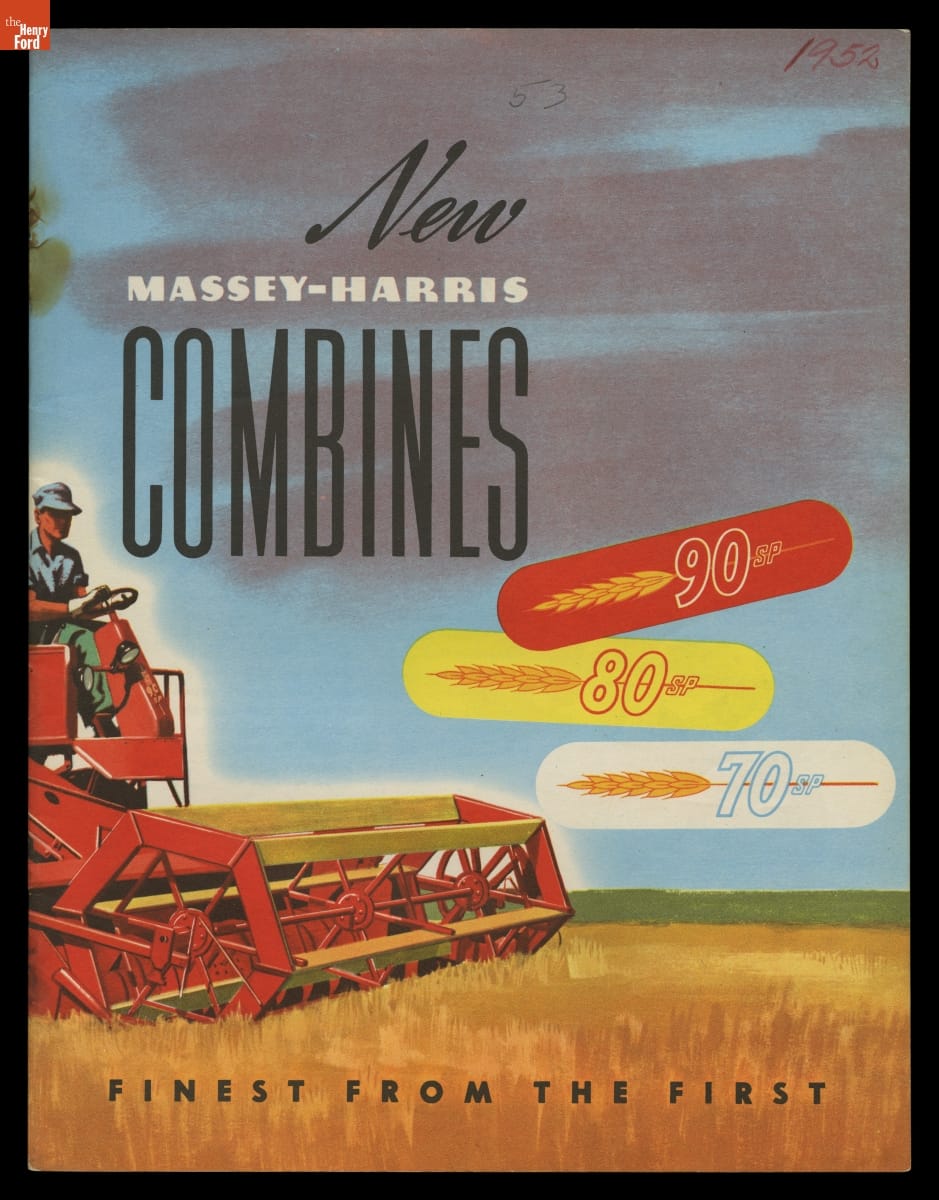
- New Massey-Harris Combines: 90SP, 80SP, 70SP, Finest from the First, 1952 - For centuries, manufacturers worked to perfect machinery that could combine the three major steps of harvesting grain: reaping, or cutting the crop; threshing to loosen the grain from the chaff; and disposing of the straw while retaining the grain. Massey-Harris, which had developed a self-propelled combine that helped relieve labor shortages during World War II, advertised an improved line of combines for postwar farmers.
- 1952
- Collections - Artifact
New Massey-Harris Combines: 90SP, 80SP, 70SP, Finest from the First, 1952
For centuries, manufacturers worked to perfect machinery that could combine the three major steps of harvesting grain: reaping, or cutting the crop; threshing to loosen the grain from the chaff; and disposing of the straw while retaining the grain. Massey-Harris, which had developed a self-propelled combine that helped relieve labor shortages during World War II, advertised an improved line of combines for postwar farmers.