
Search
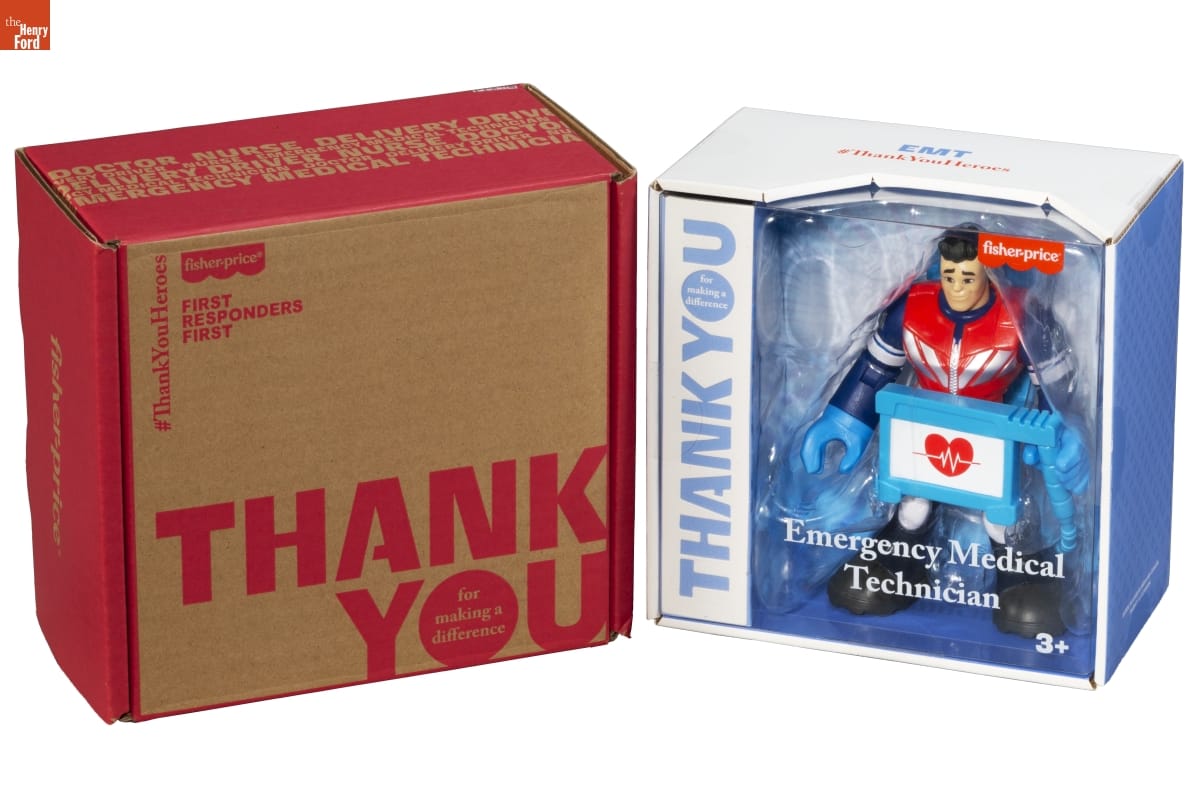
- Fisher-Price "#ThankYouHeroes: Emergency Medical Technician" Action Figure, 2020 - Fisher Price created the #ThankYouHeroes collection of Superhero Action Figures in the spring of 2020 to express gratitude and support for frontline workers during the early months of the COVID-19 pandemic. Figures included healthcare workers, grocery store employees, and people who delivered essential products to homes and families. Fisher Price donated proceeds from the sales to support these frontline heroes.
- 2020
- Collections - Artifact
Fisher-Price "#ThankYouHeroes: Emergency Medical Technician" Action Figure, 2020
Fisher Price created the #ThankYouHeroes collection of Superhero Action Figures in the spring of 2020 to express gratitude and support for frontline workers during the early months of the COVID-19 pandemic. Figures included healthcare workers, grocery store employees, and people who delivered essential products to homes and families. Fisher Price donated proceeds from the sales to support these frontline heroes.
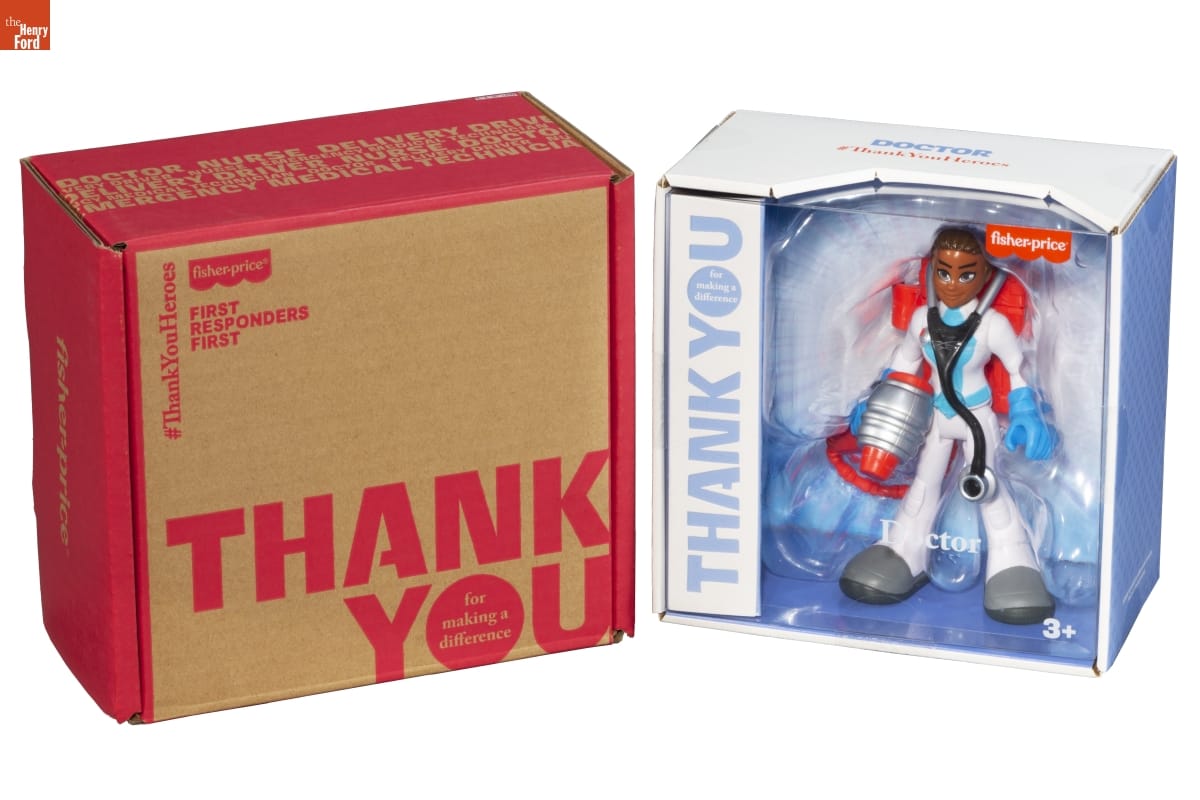
- Fisher-Price "#ThankYouHeroes: Doctor" Action Figure, 2020 - Fisher Price created the #ThankYouHeroes collection of Superhero Action Figures in the spring of 2020 to express gratitude and support for frontline workers during the early months of the COVID-19 pandemic. Figures included healthcare workers, grocery store employees, and people who delivered essential products to homes and families. Fisher Price donated proceeds from the sales to support these frontline heroes.
- 2020
- Collections - Artifact
Fisher-Price "#ThankYouHeroes: Doctor" Action Figure, 2020
Fisher Price created the #ThankYouHeroes collection of Superhero Action Figures in the spring of 2020 to express gratitude and support for frontline workers during the early months of the COVID-19 pandemic. Figures included healthcare workers, grocery store employees, and people who delivered essential products to homes and families. Fisher Price donated proceeds from the sales to support these frontline heroes.
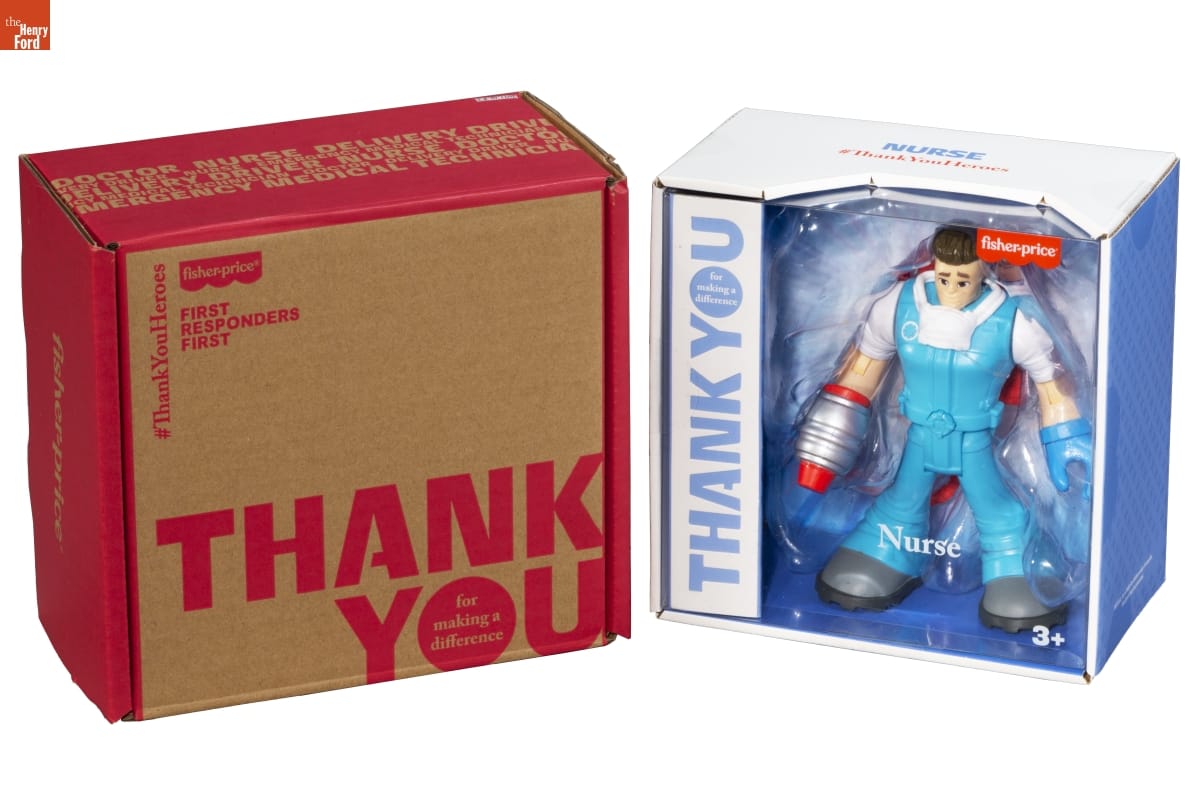
- Fisher-Price "#ThankYouHeroes: Nurse" Action Figure, 2020 - Fisher Price created the #ThankYouHeroes collection of Superhero Action Figures in the spring of 2020 to express gratitude and support for frontline workers during the early months of the COVID-19 pandemic. Figures included healthcare workers, grocery store employees, and people who delivered essential products to homes and families. Fisher Price donated proceeds from the sales to support these frontline heroes.
- 2020
- Collections - Artifact
Fisher-Price "#ThankYouHeroes: Nurse" Action Figure, 2020
Fisher Price created the #ThankYouHeroes collection of Superhero Action Figures in the spring of 2020 to express gratitude and support for frontline workers during the early months of the COVID-19 pandemic. Figures included healthcare workers, grocery store employees, and people who delivered essential products to homes and families. Fisher Price donated proceeds from the sales to support these frontline heroes.
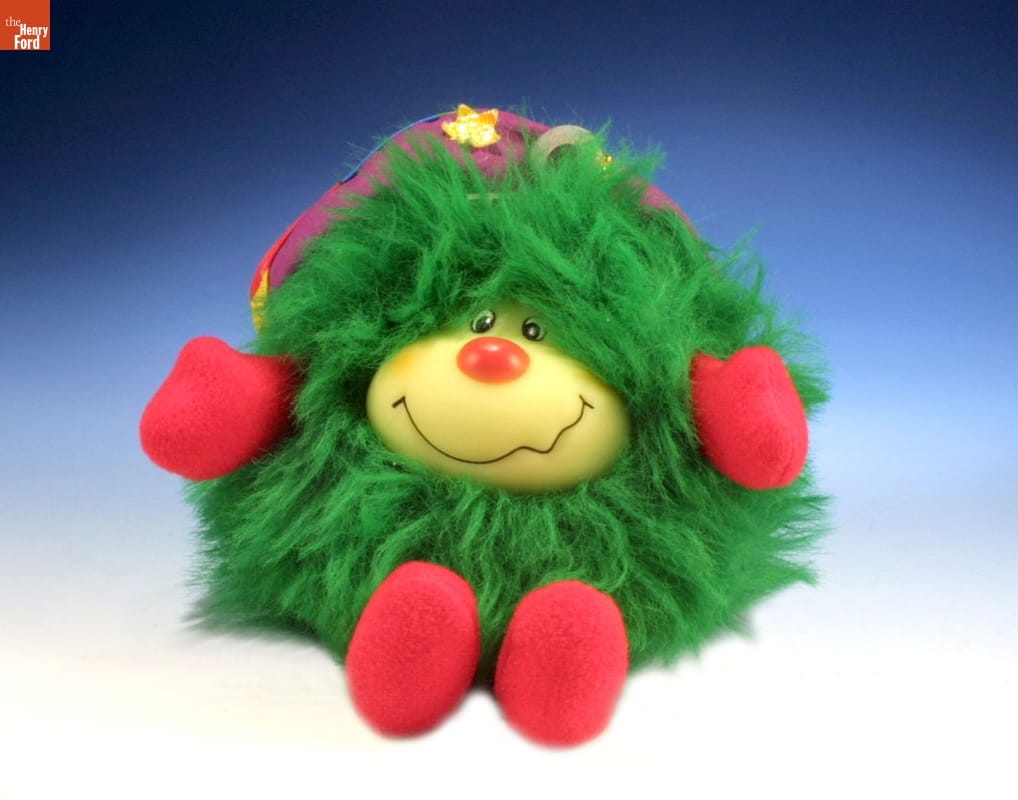
- Toy, Lucky Sprite, 1984-1986 - In the 1980s, toy companies began producing commercial television programs to market dolls and other toys to children. Hallmark sponsored the Rainbow Brite series which debuted in 1984. The company sold a colorful range of program-based plush toys, such as this green furry Sprite named Lucky. Sprites mine color crystals and help Rainbow Brite return color to her world.
- 1984-1986
- Collections - Artifact
Toy, Lucky Sprite, 1984-1986
In the 1980s, toy companies began producing commercial television programs to market dolls and other toys to children. Hallmark sponsored the Rainbow Brite series which debuted in 1984. The company sold a colorful range of program-based plush toys, such as this green furry Sprite named Lucky. Sprites mine color crystals and help Rainbow Brite return color to her world.
- Barbie Doll, 1960-1961 - Mattel's Barbie doll, introduced in 1959, was a teenage fashion model with an enviable lifestyle of teenage freedom, representing a radical break from the baby and companion dolls that had dominated doll play since the early 1900s. Sophisticated and stylish, this teenager had no visible ties to parents or domesticity, offering fantasy play of an endless round of enjoyable, grown-up activities.
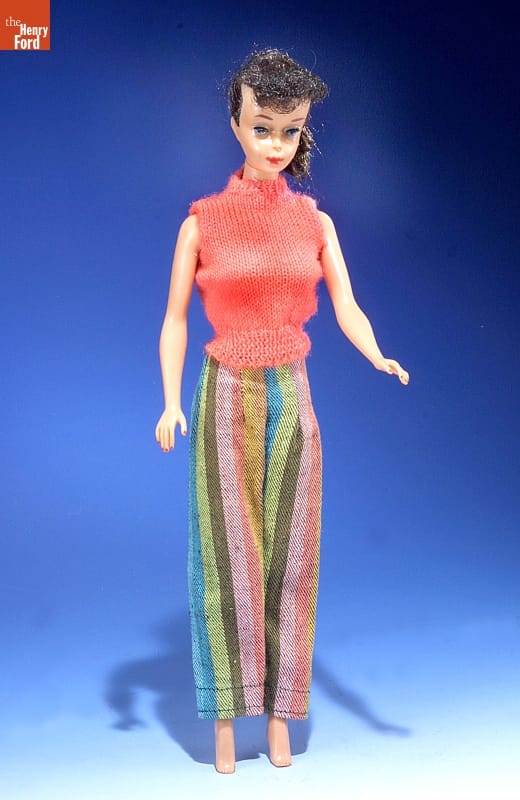
- 1960-1961
- Collections - Artifact
Barbie Doll, 1960-1961
Mattel's Barbie doll, introduced in 1959, was a teenage fashion model with an enviable lifestyle of teenage freedom, representing a radical break from the baby and companion dolls that had dominated doll play since the early 1900s. Sophisticated and stylish, this teenager had no visible ties to parents or domesticity, offering fantasy play of an endless round of enjoyable, grown-up activities.
- Barbie Doll Dressed in "Busy Girl" Outfit, 1960-1961 - Mattel's Ruth Handler noticed that her daughter Barbara preferred to play make-believe with paper dolls of adult women, rather than baby dolls. Inspired, Ruth created Barbie--named after her daughter--in 1959. A fashion model doll with a great wardrobe and interesting accessories, Barbie let young girls imagine a future of teenage freedom. Barbie's cultural impact was huge--sales of baby dolls declined. By 1965, Mattel was a Fortune 500 company.
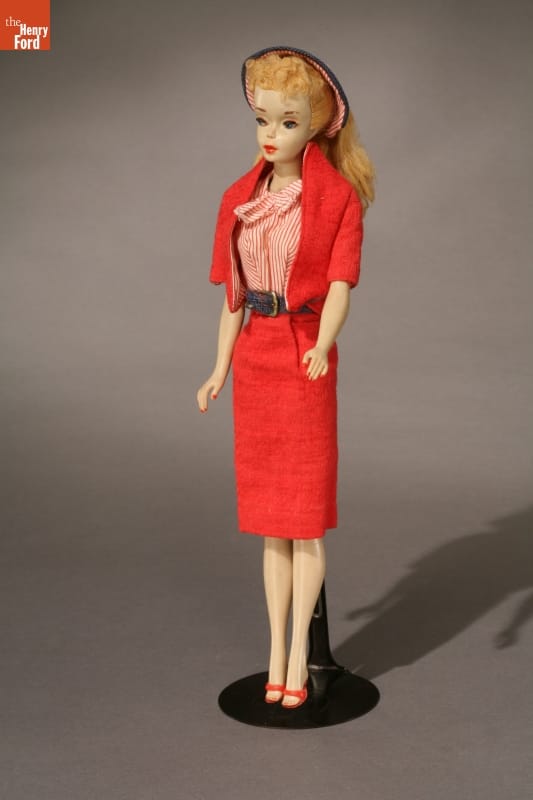
- 1960-1961
- Collections - Artifact
Barbie Doll Dressed in "Busy Girl" Outfit, 1960-1961
Mattel's Ruth Handler noticed that her daughter Barbara preferred to play make-believe with paper dolls of adult women, rather than baby dolls. Inspired, Ruth created Barbie--named after her daughter--in 1959. A fashion model doll with a great wardrobe and interesting accessories, Barbie let young girls imagine a future of teenage freedom. Barbie's cultural impact was huge--sales of baby dolls declined. By 1965, Mattel was a Fortune 500 company.
- Cecil (The Seasick Sea Serpent)-in-the-Music-Box, 1961 - Toys based on children's television, movie and cartoon characters became increasingly popular with kids during the mid-twentieth century. Bob Clampett created Cecil the Seasick Sea Serpent and a cast of other puppet characters in the late 1940s for the <EM>Time for Beany</EM> television show. Cecil and Beany were best friends. This <EM>Cecil</EM>-in-the-box depicts many of the animated characters from their 1960s cartoon adventures.
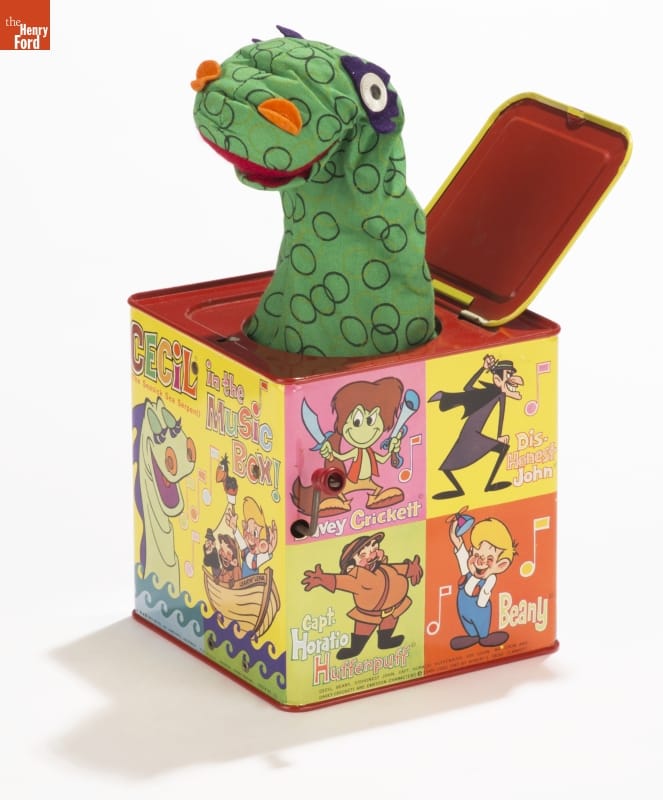
- 1961
- Collections - Artifact
Cecil (The Seasick Sea Serpent)-in-the-Music-Box, 1961
Toys based on children's television, movie and cartoon characters became increasingly popular with kids during the mid-twentieth century. Bob Clampett created Cecil the Seasick Sea Serpent and a cast of other puppet characters in the late 1940s for the Time for Beany television show. Cecil and Beany were best friends. This Cecil-in-the-box depicts many of the animated characters from their 1960s cartoon adventures.
- Barbie's Dream House, 1962 - By the early 1960s, Barbie dolls could have play environments, including this Barbie Dream House. Introduced in 1962, the Barbie Dream House was filled with sleek, modern furniture that included a combination television/stereo console. While relaxing in her very own "space," Barbie could watch herself on television or listen to albums by Nat King Cole, Frank Sinatra, or the Lettermen.
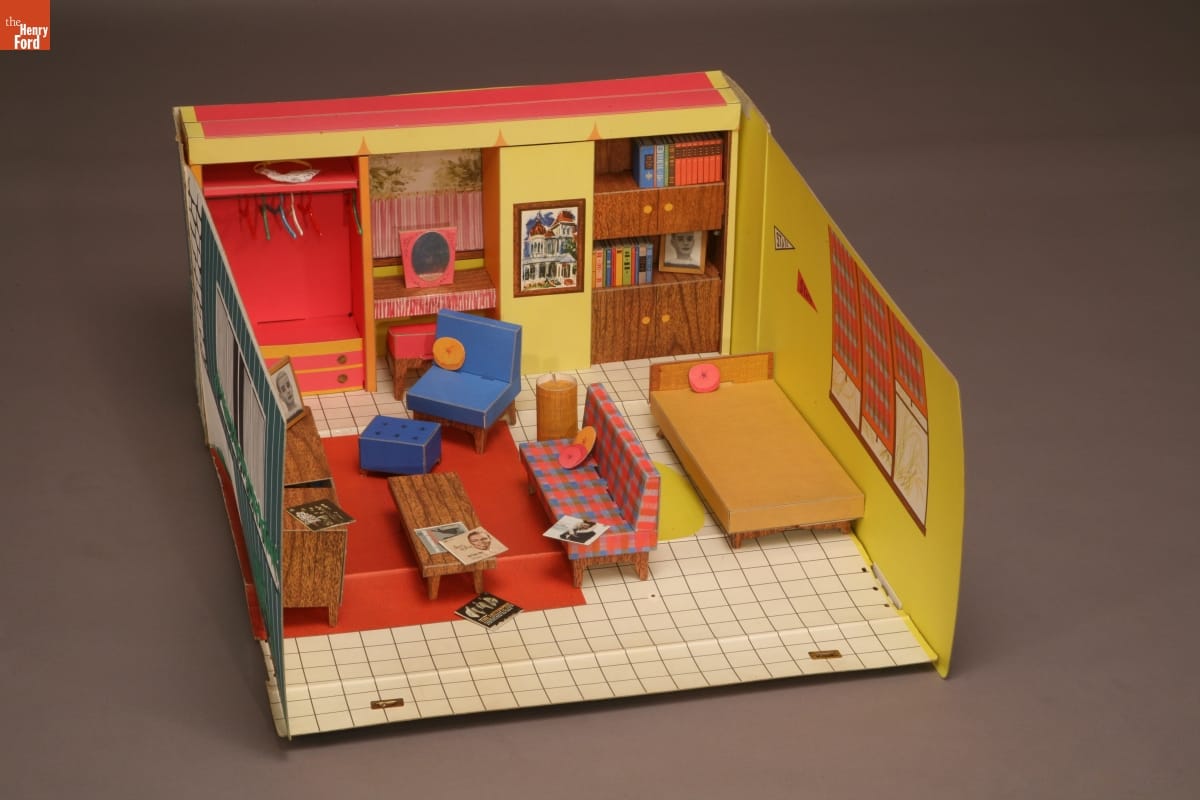
- 1962
- Collections - Artifact
Barbie's Dream House, 1962
By the early 1960s, Barbie dolls could have play environments, including this Barbie Dream House. Introduced in 1962, the Barbie Dream House was filled with sleek, modern furniture that included a combination television/stereo console. While relaxing in her very own "space," Barbie could watch herself on television or listen to albums by Nat King Cole, Frank Sinatra, or the Lettermen.
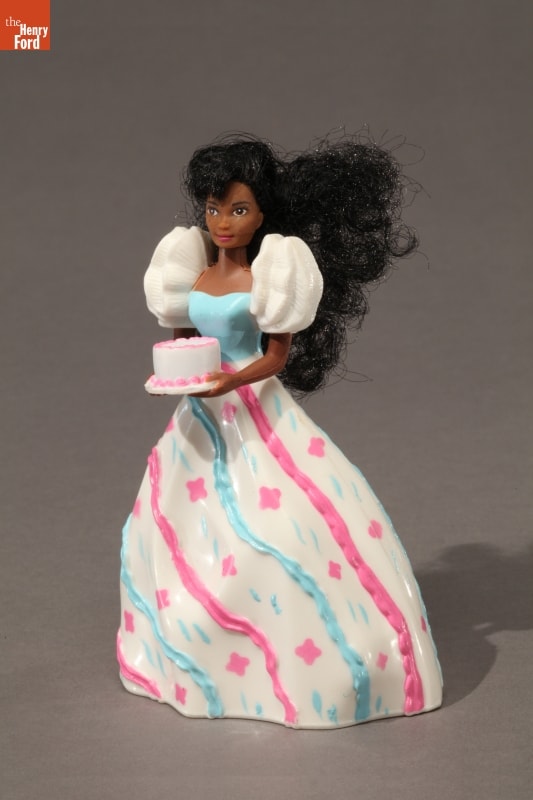
- McDonald's "Birthday Party" Barbie Happy Meal Toy, 1993 - During the summer of 1993, McDonald's Happy Meals had gender-specific toy choices; boys could receive a Hot Wheels car while girls could receive this Barbie doll.
- 1993
- Collections - Artifact
McDonald's "Birthday Party" Barbie Happy Meal Toy, 1993
During the summer of 1993, McDonald's Happy Meals had gender-specific toy choices; boys could receive a Hot Wheels car while girls could receive this Barbie doll.
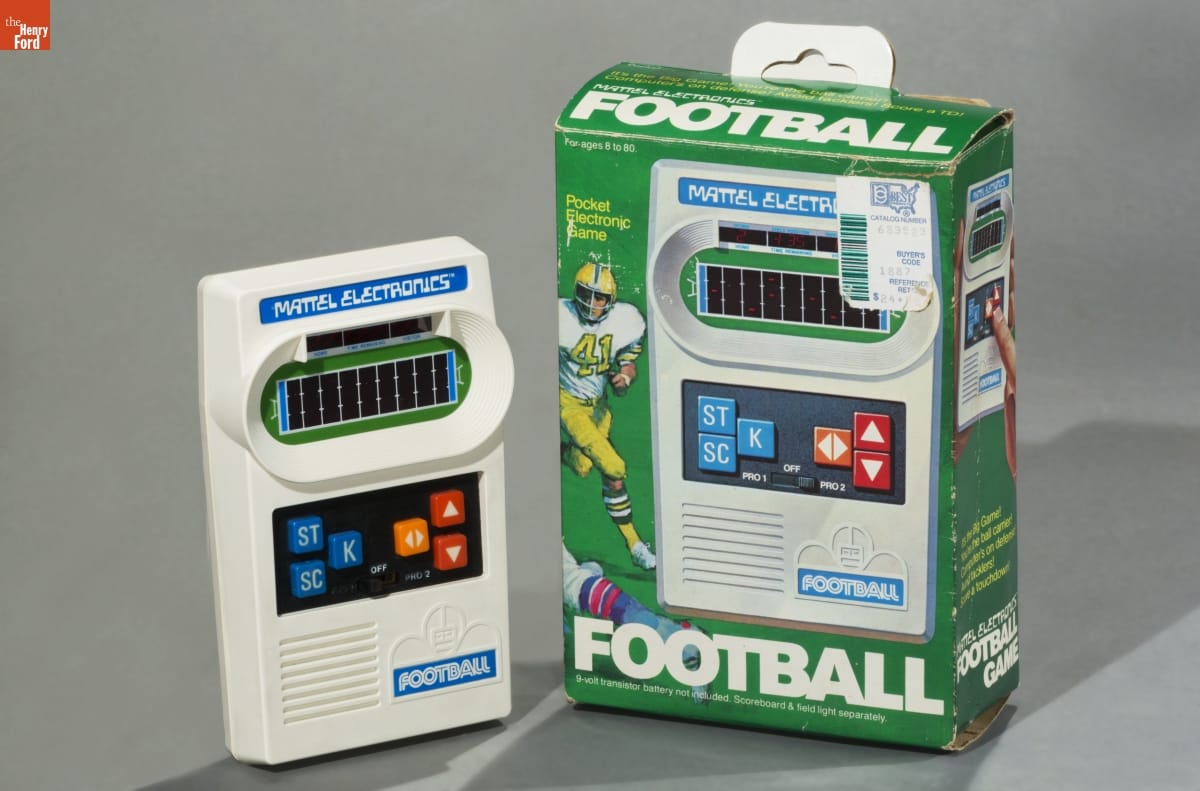
- Mattel "Football" Pocket Electronic Game Packaging, 1978 - <body><i>Football</i>, produced by Mattel in 1977, was one of the first handheld video games. It was a simulation of American football with red LED lights representing player positions. To play <i>Football</i>, gamers used arrows to direct their light across the football field screen, evade opponents, and score field goals and touchdowns. </body>
- 1978
- Collections - Artifact
Mattel "Football" Pocket Electronic Game Packaging, 1978
Football, produced by Mattel in 1977, was one of the first handheld video games. It was a simulation of American football with red LED lights representing player positions. To play Football, gamers used arrows to direct their light across the football field screen, evade opponents, and score field goals and touchdowns.