
Search
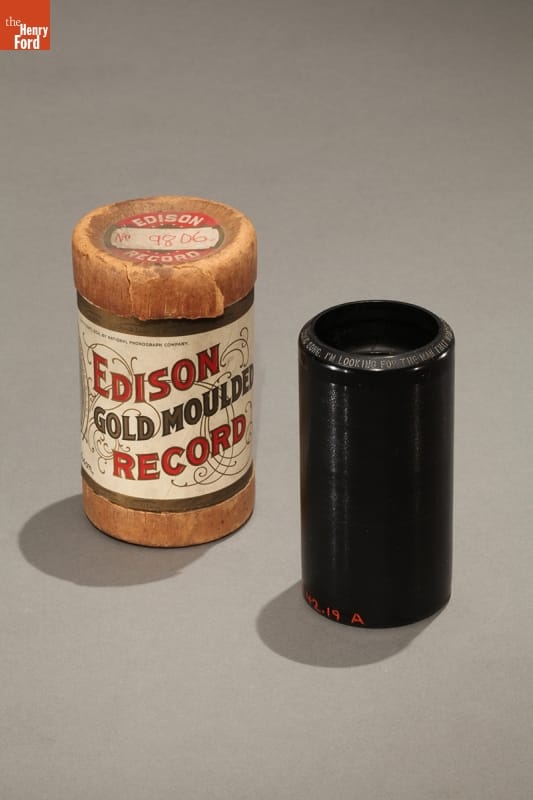
- Edison Gold Moulded Cylinder Record, "I'm Looking for the Man that Wrote the Merry Widow Waltz," 1908 - Edward M. Favor, a performer in Broadway musicals in the mid-1890s, had a clear, crisp voice that recorded well. "The Merry Widow Waltz" is from the extremely popular 1905 Franz Lehar operetta "The Merry Widow." In this song parody, a young man laments that this tune "oozes from cellars, and all the flat dwellers," -- and that his girl can't stop dancing to it!
- 1908
- Collections - Artifact
Edison Gold Moulded Cylinder Record, "I'm Looking for the Man that Wrote the Merry Widow Waltz," 1908
Edward M. Favor, a performer in Broadway musicals in the mid-1890s, had a clear, crisp voice that recorded well. "The Merry Widow Waltz" is from the extremely popular 1905 Franz Lehar operetta "The Merry Widow." In this song parody, a young man laments that this tune "oozes from cellars, and all the flat dwellers," -- and that his girl can't stop dancing to it!
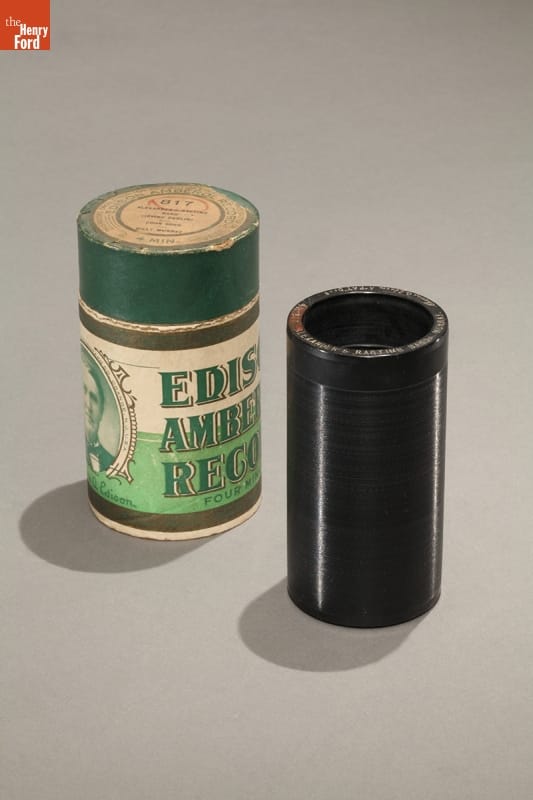
- Edison Amberol Record, "Alexander's Ragtime Band," 1913 - This catchy 1911 tune capitalized on the popularity of ragtime music during the early 20th century. It was composer Irving Berlin's first big hit. The song was recorded by numerous artists over the years, including Billy Murray -- the most popular recording artist at the time. About 1920 the Victor Company stated that, through his recordings, Murray's was likely the most familiar voice in the world!
- 1913
- Collections - Artifact
Edison Amberol Record, "Alexander's Ragtime Band," 1913
This catchy 1911 tune capitalized on the popularity of ragtime music during the early 20th century. It was composer Irving Berlin's first big hit. The song was recorded by numerous artists over the years, including Billy Murray -- the most popular recording artist at the time. About 1920 the Victor Company stated that, through his recordings, Murray's was likely the most familiar voice in the world!
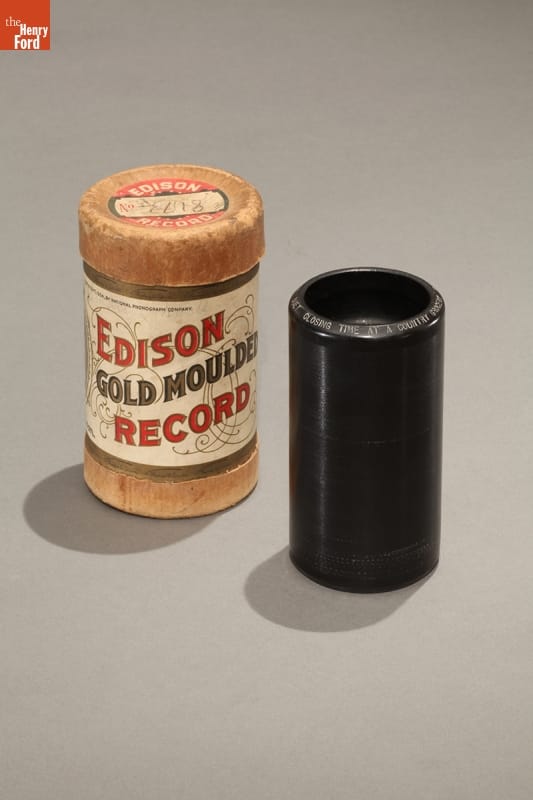
- Edison Gold Moulded Cylinder Record, "Closing Time at a Country Grocery," 1902 -
- 1902
- Collections - Artifact
Edison Gold Moulded Cylinder Record, "Closing Time at a Country Grocery," 1902
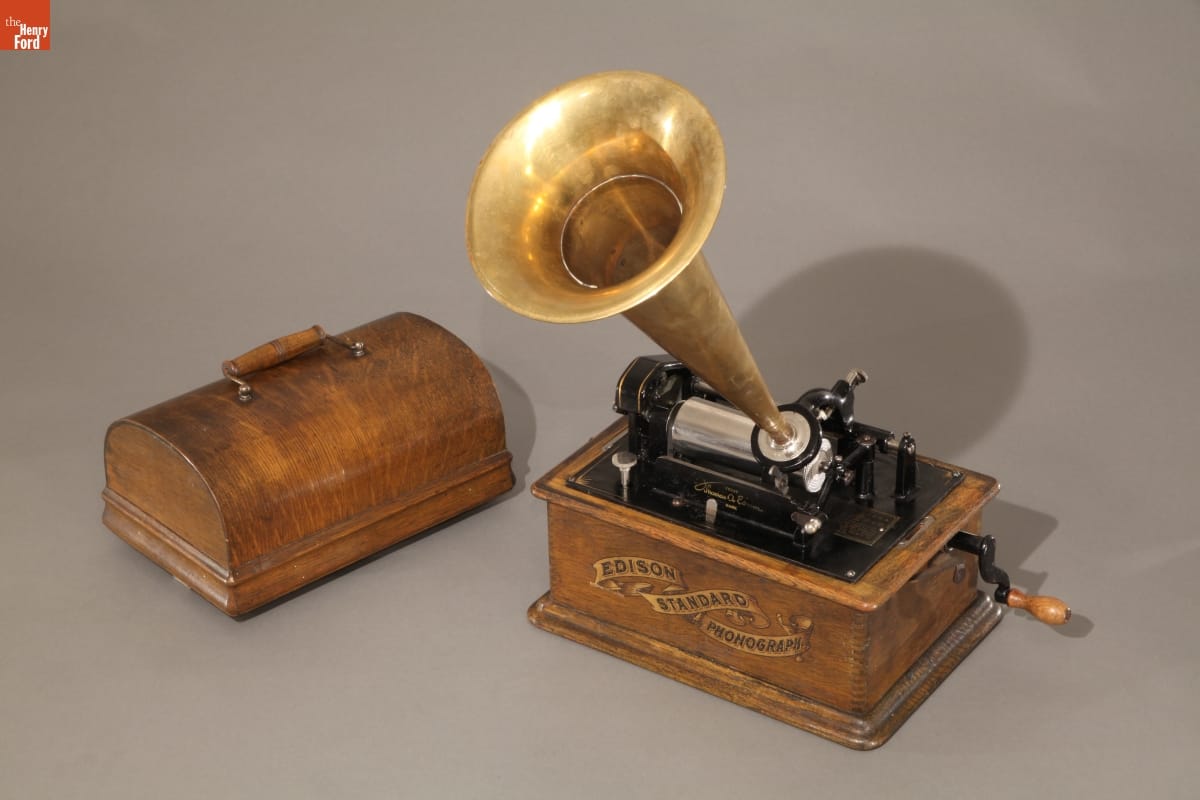
- Edison Standard Phonograph, Model A, 1901-1905 -
- 1905-1908
- Collections - Artifact
Edison Standard Phonograph, Model A, 1901-1905
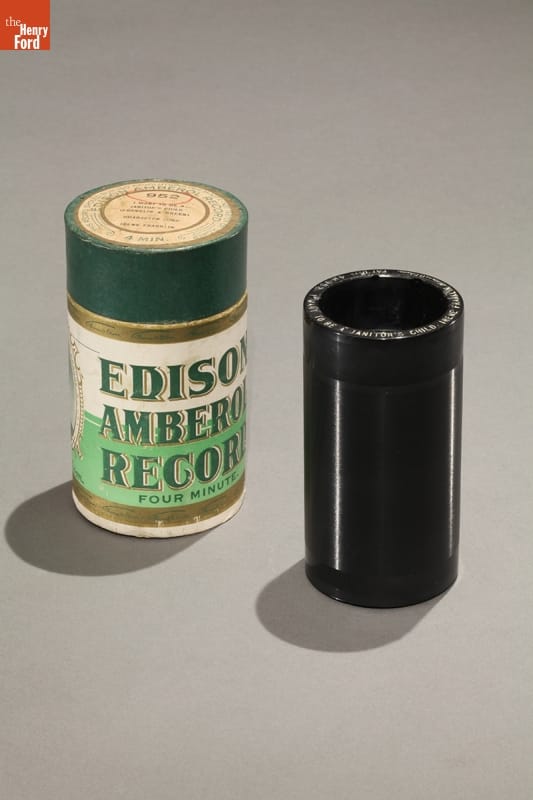
- Edison Amberol Record, "I Want to be a Janitor's Child," 1912 - In this comic song about class distinctions, a wealthy stockbroker's daughter envies the janitor's girl. This wealthy child lives an overly protected lifestyle and "has" to go to Europe once a year. She prefers the freedom and simpler activities of the lower class janitor's child who doesn't "wear fussed up clothes" and enjoys the amusements at Coney Island twice a week.
- 1912
- Collections - Artifact
Edison Amberol Record, "I Want to be a Janitor's Child," 1912
In this comic song about class distinctions, a wealthy stockbroker's daughter envies the janitor's girl. This wealthy child lives an overly protected lifestyle and "has" to go to Europe once a year. She prefers the freedom and simpler activities of the lower class janitor's child who doesn't "wear fussed up clothes" and enjoys the amusements at Coney Island twice a week.
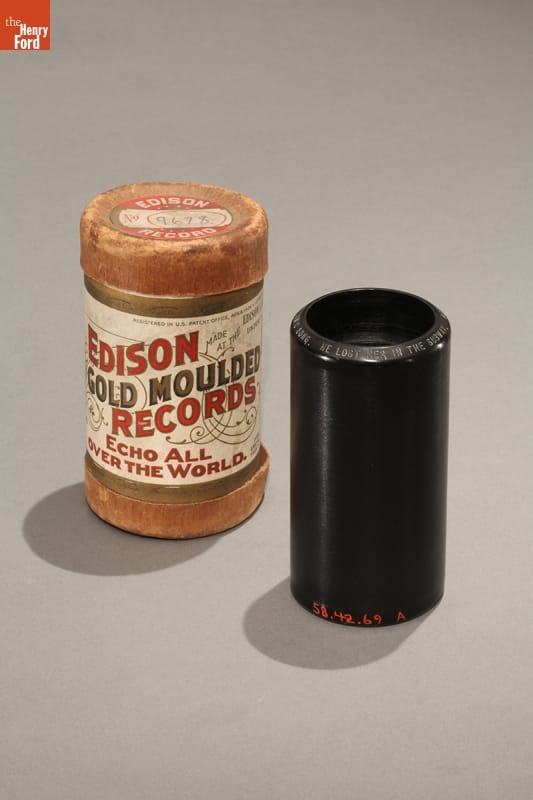
- Edison Gold Moulded Cylinder Record, "He Lost Her in the Subway," 1907 - Ada Jones was the first female popular singer to have a career making records. Her popular song recordings were largely humorous ones wherein she demonstrated her skill at using dialects. In this song, "the train began to swerve, we went around a curve" and 14 men fell into her lap! She found a man she liked more than her brand new husband!
- 1907
- Collections - Artifact
Edison Gold Moulded Cylinder Record, "He Lost Her in the Subway," 1907
Ada Jones was the first female popular singer to have a career making records. Her popular song recordings were largely humorous ones wherein she demonstrated her skill at using dialects. In this song, "the train began to swerve, we went around a curve" and 14 men fell into her lap! She found a man she liked more than her brand new husband!
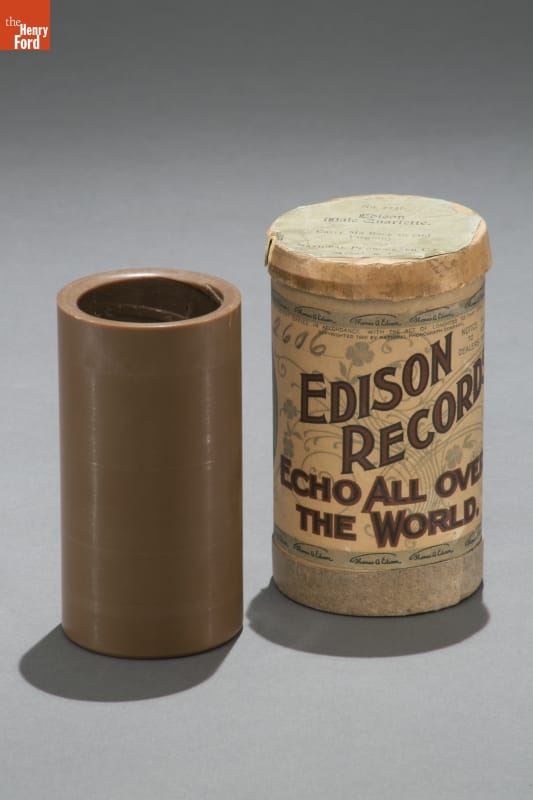
- Wax Cylinder Record, "Carry Me Back to Old Virginny," 1896-1901 - In 1878, African-American composer James A. Bland -- born in the North into an educated, middle-class family -- wrote this ballad sentimentalizing the Old South for the minstrel stage. Bland's skill as a composer made this song a popular piece in the late 19th century. With the introduction of affordable phonographs and recordings, favorite songs could be now enjoyed at the drop of a phonograph needle.
- 1896-1901
- Collections - Artifact
Wax Cylinder Record, "Carry Me Back to Old Virginny," 1896-1901
In 1878, African-American composer James A. Bland -- born in the North into an educated, middle-class family -- wrote this ballad sentimentalizing the Old South for the minstrel stage. Bland's skill as a composer made this song a popular piece in the late 19th century. With the introduction of affordable phonographs and recordings, favorite songs could be now enjoyed at the drop of a phonograph needle.
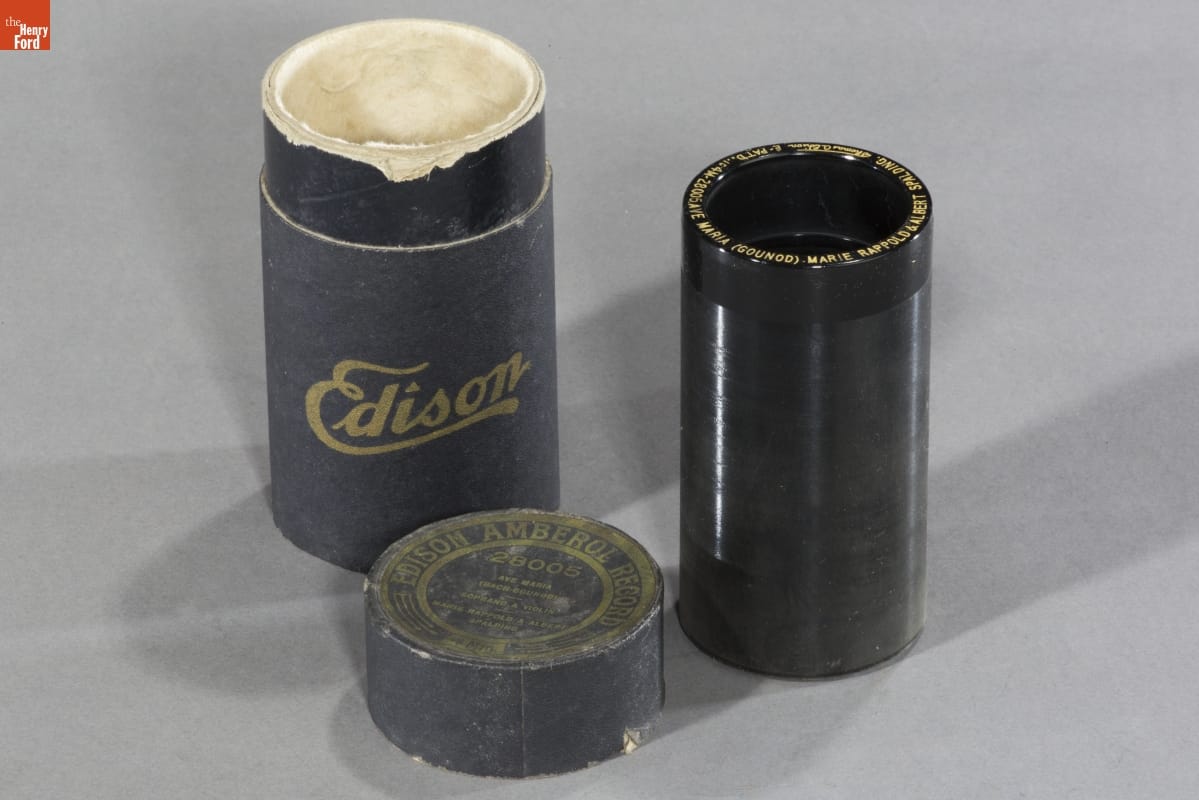
- Edison Amberol Record, "Ave Maria", 1911 -
- 1911
- Collections - Artifact
Edison Amberol Record, "Ave Maria", 1911
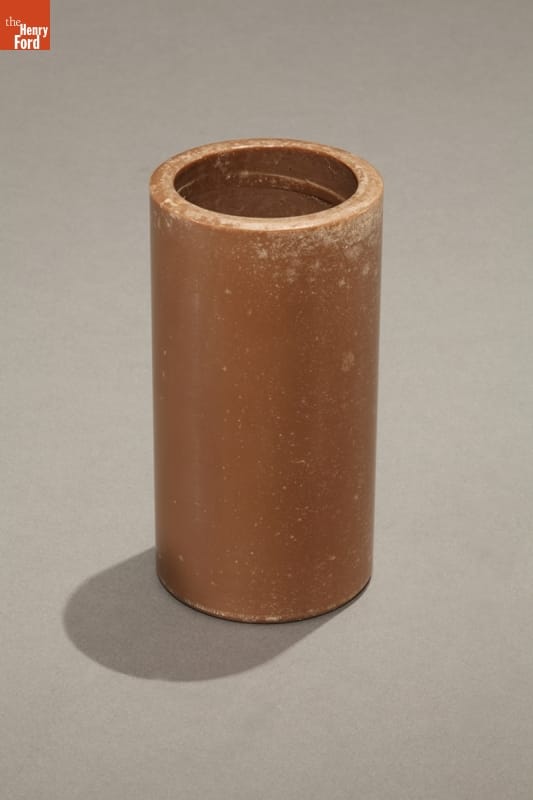
- Wax Cylinder Record, "Just One Girl" and "Sweet Rosie O'Grady," 1896 - Recording technology in the late 19th and early 20th century made it easy for amateurs who owned a phonograph to make home recordings--even if the singers weren't always the best! Here, a man sings popular songs of the early 1900s. Home recordings like this one capture an ephemeral moment in time--a rare auditory slice of the everyday past.
- 1896
- Collections - Artifact
Wax Cylinder Record, "Just One Girl" and "Sweet Rosie O'Grady," 1896
Recording technology in the late 19th and early 20th century made it easy for amateurs who owned a phonograph to make home recordings--even if the singers weren't always the best! Here, a man sings popular songs of the early 1900s. Home recordings like this one capture an ephemeral moment in time--a rare auditory slice of the everyday past.
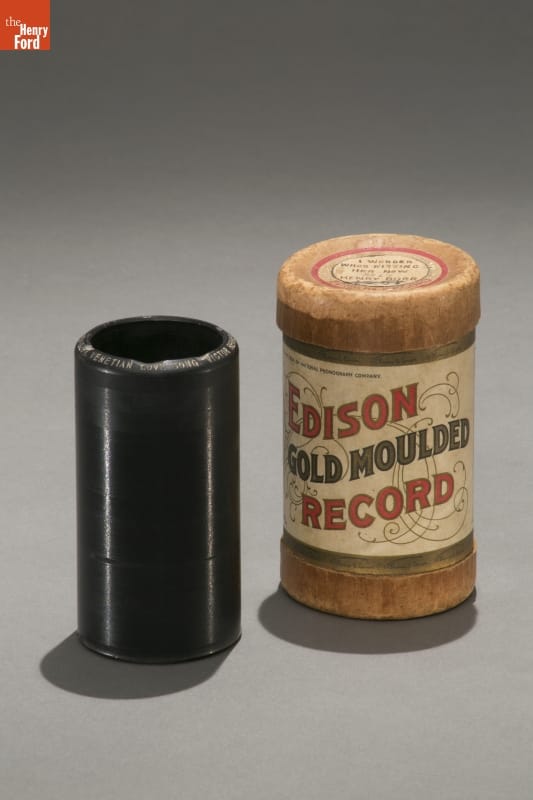
- Edison Gold Moulded Cylinder Record, "Venetian Love Song," 1909 - Victor Herbert, popular composer and conductor, served as music critic for Thomas A. Edison, Inc from 1909-1911. Herbert's job was to select music and performers to be heard on Edison records (Herbert also personally conducted his own orchestra's Edison records.) Herbert's selections evidently did not match Thomas Edison's musical tastes. Herbert resigned and began recording for the Victor Company.
- October 01, 1909
- Collections - Artifact
Edison Gold Moulded Cylinder Record, "Venetian Love Song," 1909
Victor Herbert, popular composer and conductor, served as music critic for Thomas A. Edison, Inc from 1909-1911. Herbert's job was to select music and performers to be heard on Edison records (Herbert also personally conducted his own orchestra's Edison records.) Herbert's selections evidently did not match Thomas Edison's musical tastes. Herbert resigned and began recording for the Victor Company.