
Search
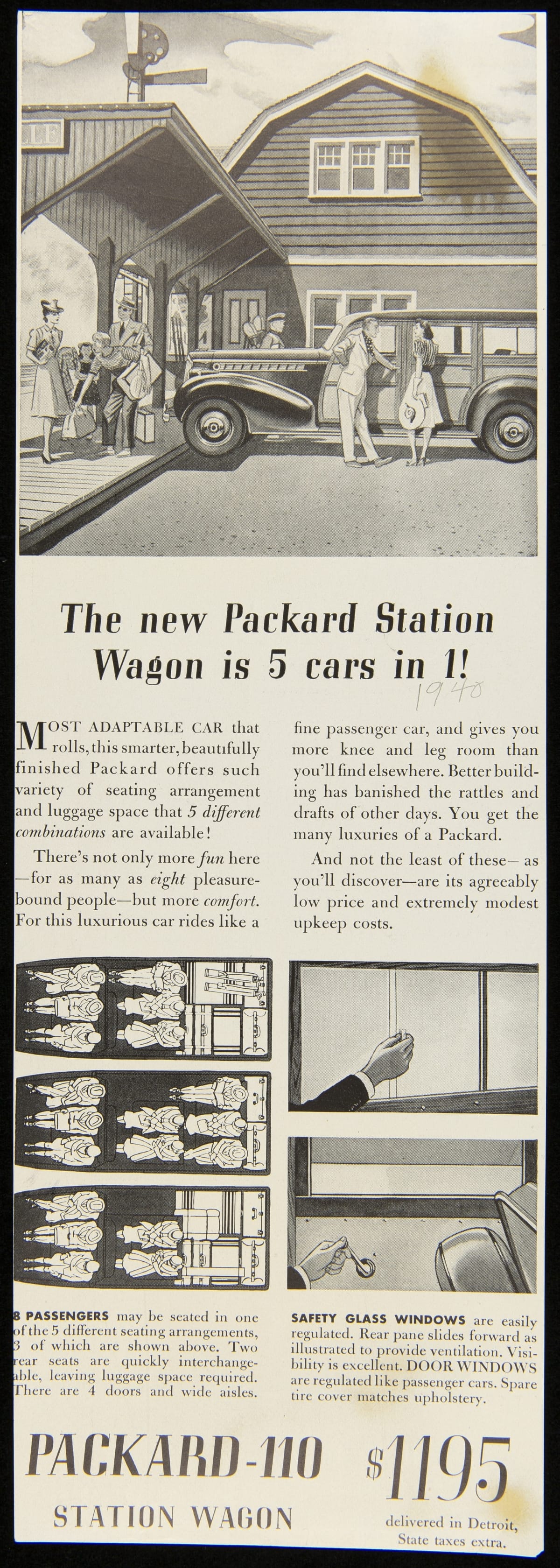
- "New Packard Station Wagon is 5 Cars In 1!," 1940 - Flexibility is generally a strong selling point when it comes to marketing automobiles. This 1940 advertisement from Packard claimed that the company's station wagons could be arranged in five different seating and cargo-carrying configurations. The 110 series cars were a more affordable option in the upmarket automaker's lineup -- but still with "the many luxuries of a Packard."
- 1940
- Collections - Artifact
"New Packard Station Wagon is 5 Cars In 1!," 1940
Flexibility is generally a strong selling point when it comes to marketing automobiles. This 1940 advertisement from Packard claimed that the company's station wagons could be arranged in five different seating and cargo-carrying configurations. The 110 series cars were a more affordable option in the upmarket automaker's lineup -- but still with "the many luxuries of a Packard."
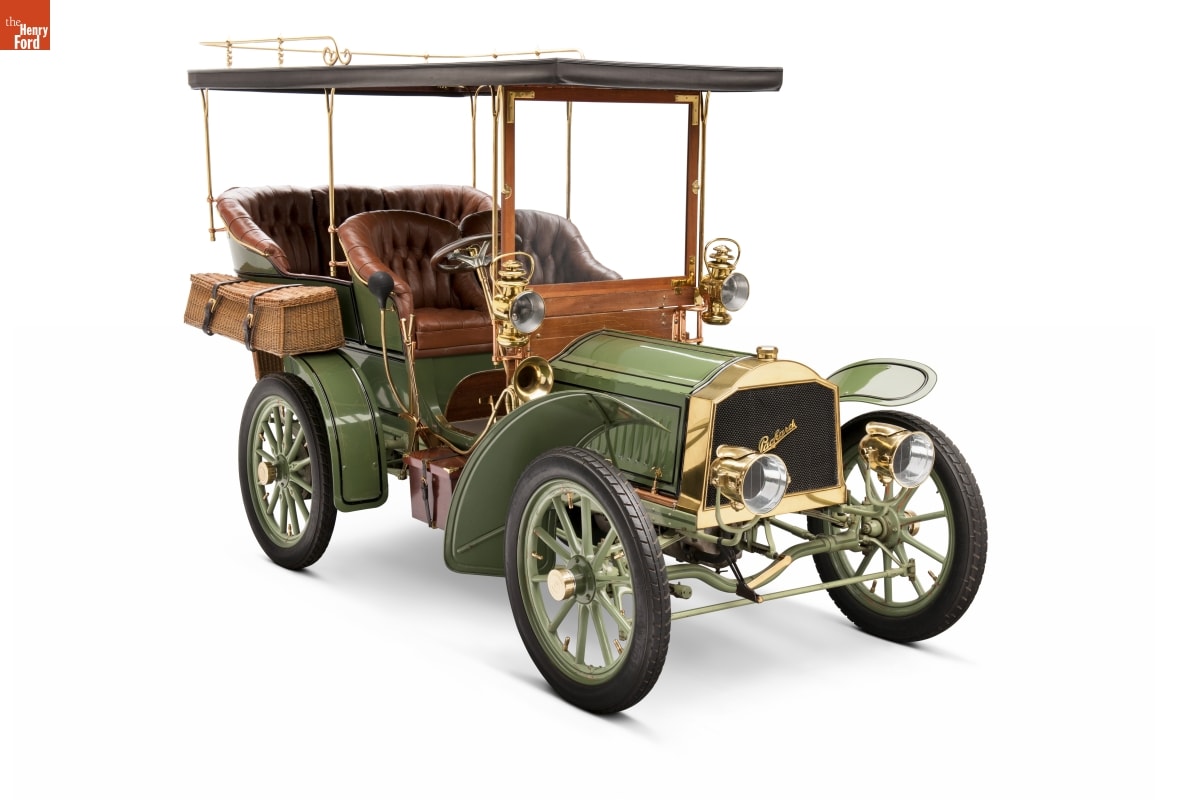
- 1904 Packard Model L Touring Car - James Ward Packard built his first car in Warren, Ohio, in 1899. By 1903 a group of Detroit investors had purchased the company and moved the operation to a new factory in Detroit. One of the first cars built there was the Model L touring car. It was the first four-cylinder Packard and the first with the tombstone-shaped radiator shell that became a Packard trademark.
- 1904
- Collections - Artifact
1904 Packard Model L Touring Car
James Ward Packard built his first car in Warren, Ohio, in 1899. By 1903 a group of Detroit investors had purchased the company and moved the operation to a new factory in Detroit. One of the first cars built there was the Model L touring car. It was the first four-cylinder Packard and the first with the tombstone-shaped radiator shell that became a Packard trademark.
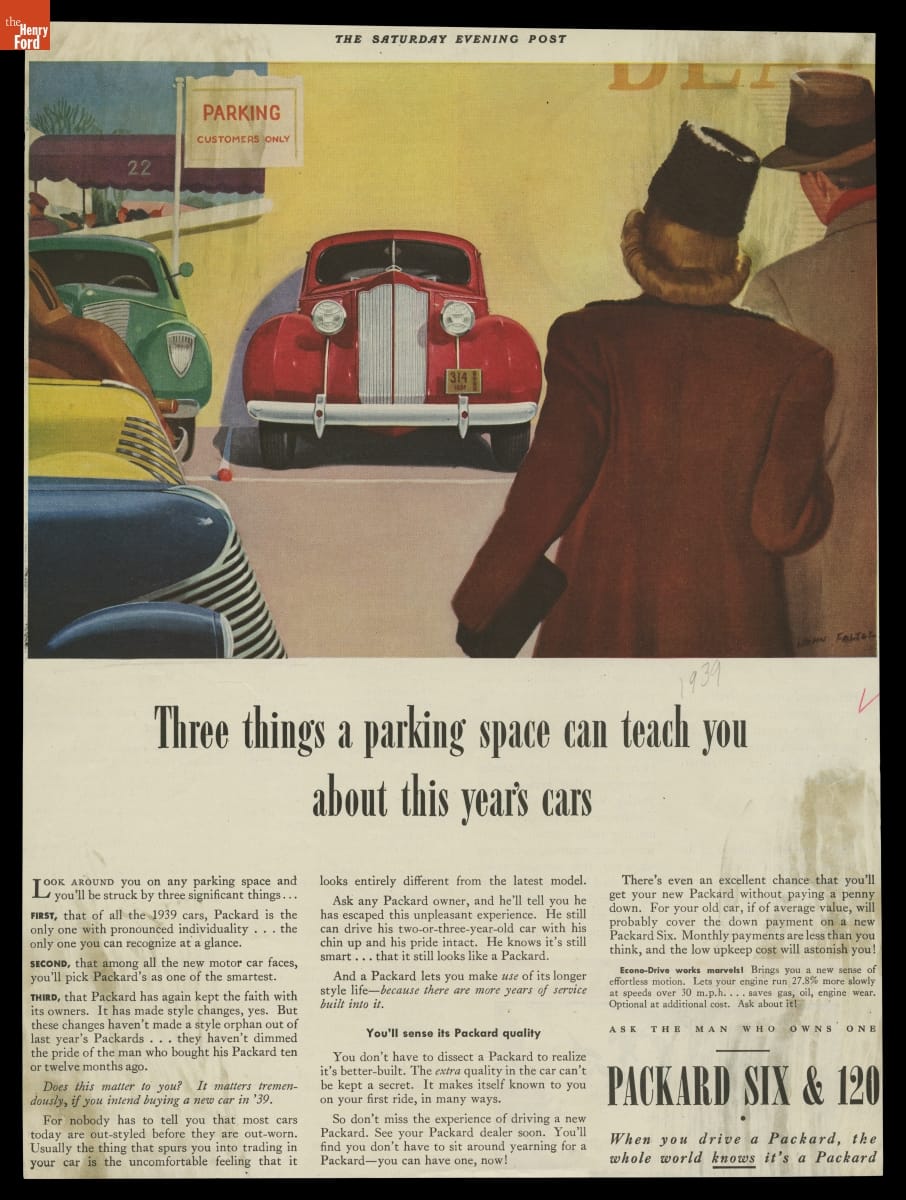
- Packard Advertisement, "Three Things a Parking Space Can Teach You About This Year's Cars," February 1939 - Packard automobiles stood apart from the rest -- or at least that's what this 1939 advertisement for the luxury automaker wanted you to believe. Certainly, Packard's tombstone-shaped radiator was distinctive. The company first used the design in 1904, and it remained a Packard trademark until the firm ended operations in 1958.
- February 11, 1939
- Collections - Artifact
Packard Advertisement, "Three Things a Parking Space Can Teach You About This Year's Cars," February 1939
Packard automobiles stood apart from the rest -- or at least that's what this 1939 advertisement for the luxury automaker wanted you to believe. Certainly, Packard's tombstone-shaped radiator was distinctive. The company first used the design in 1904, and it remained a Packard trademark until the firm ended operations in 1958.
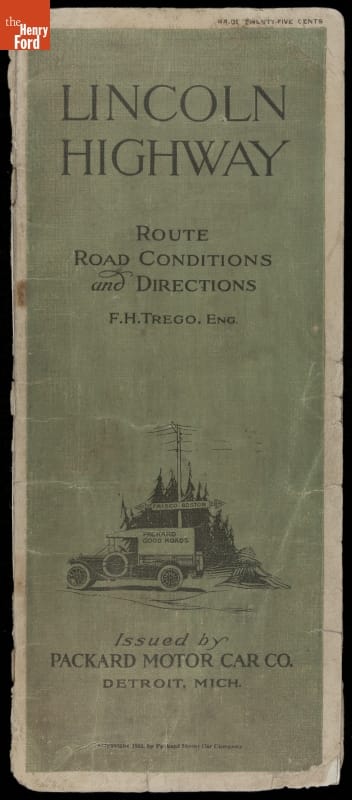
- "Lincoln Highway, Route, Road Conditions and Directions," 1913 - The Lincoln Highway, the first improved transcontinental highway in the United States, connected New York City with San Francisco and passed through 13 states on its original 1913 routing. This guidebook gave motorists a detailed description of the route. It's no coincidence that Packard Motor Car Company published this guide -- Packard's president, Henry B. Joy, headed the Lincoln Highway Association.
- 1913
- Collections - Artifact
"Lincoln Highway, Route, Road Conditions and Directions," 1913
The Lincoln Highway, the first improved transcontinental highway in the United States, connected New York City with San Francisco and passed through 13 states on its original 1913 routing. This guidebook gave motorists a detailed description of the route. It's no coincidence that Packard Motor Car Company published this guide -- Packard's president, Henry B. Joy, headed the Lincoln Highway Association.
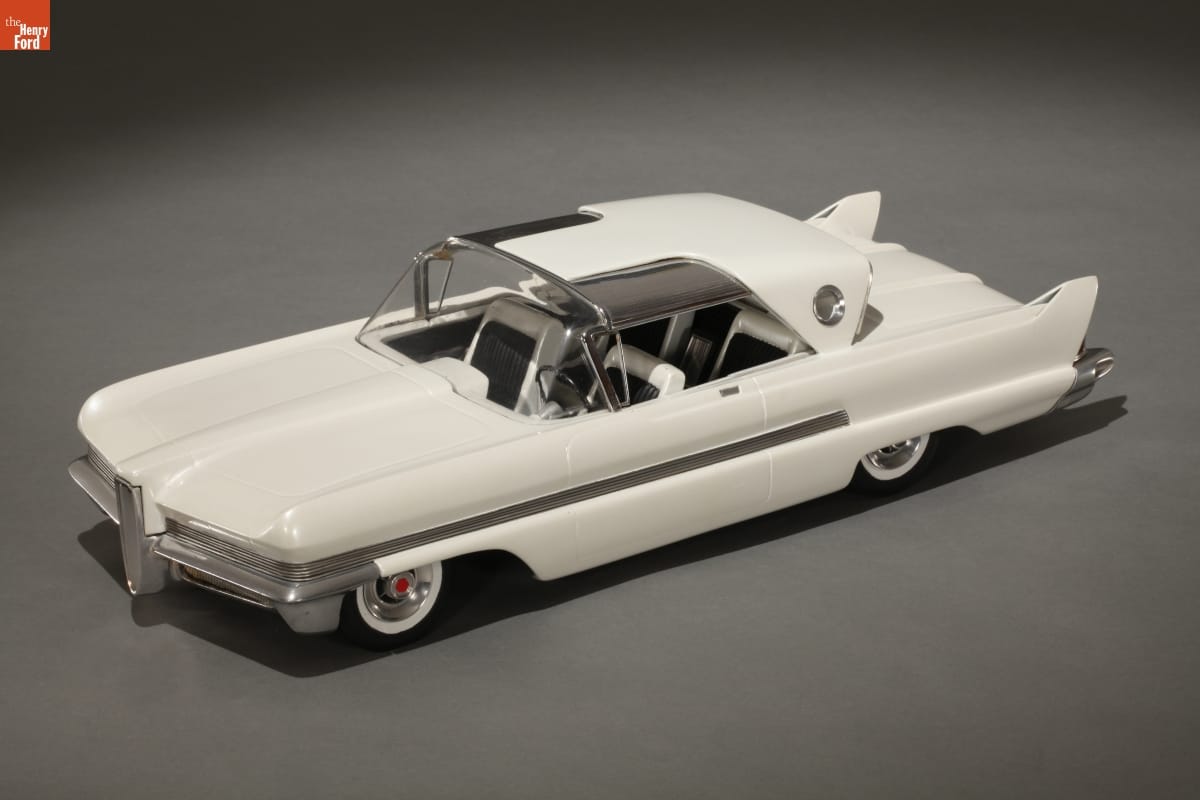
- Packard Predictor Scale Model, 1956 - This 1/16-scale model depicts the Packard Predicator, a concept car designed by William Schmidt and Richard Teague. The Packard Predictor concept was a 1956 exercise to visualize a future design direction for Packard. But by 1959, the Packard brand was history.
- 1956
- Collections - Artifact
Packard Predictor Scale Model, 1956
This 1/16-scale model depicts the Packard Predicator, a concept car designed by William Schmidt and Richard Teague. The Packard Predictor concept was a 1956 exercise to visualize a future design direction for Packard. But by 1959, the Packard brand was history.
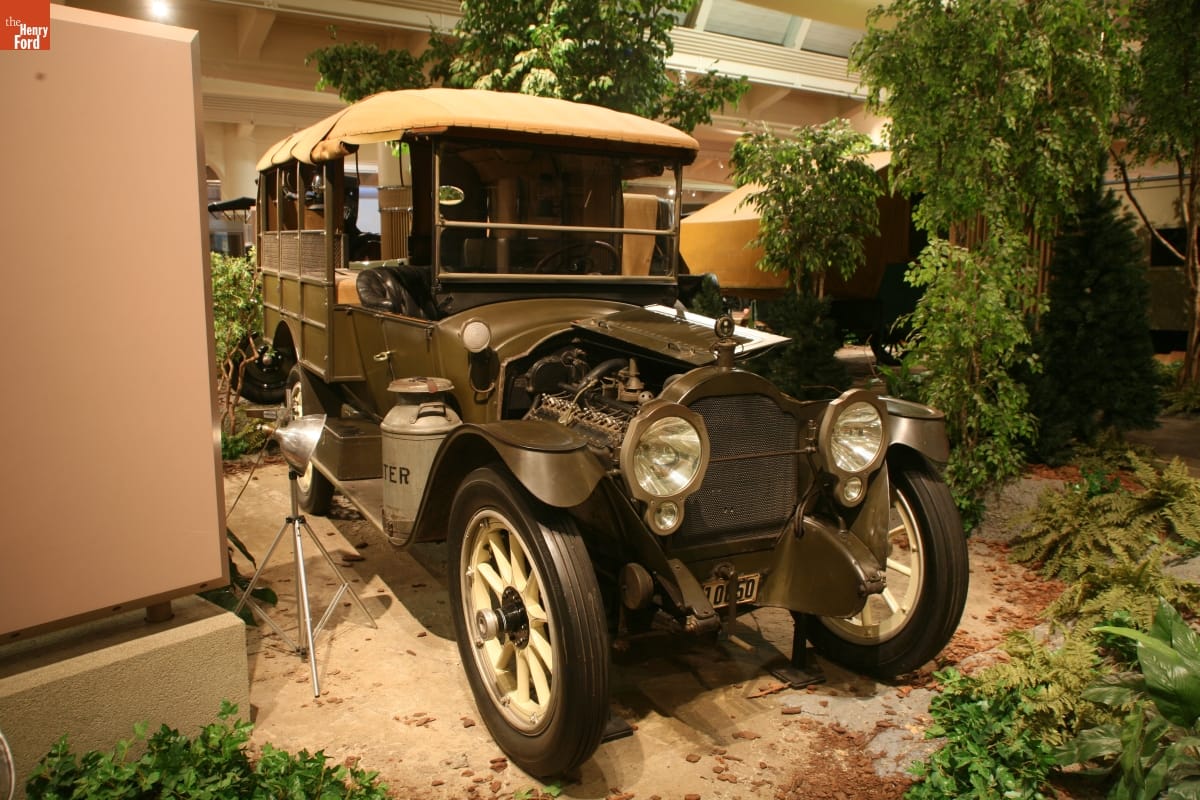
- 1916 Packard Twin Six Camp Truck, Used by Henry B. Joy - When the U.S. Army placed an order for 27 Packard transport trucks in 1916, company president Henry B. Joy traveled to Mexico to see the vehicles in action. General John J. Pershing employed the Packards in his pursuit of Pancho Villa. Joy used this truck on his Mexican trip. Later, Joy's family took it on camping trips in the United States.
- 1916
- Collections - Artifact
1916 Packard Twin Six Camp Truck, Used by Henry B. Joy
When the U.S. Army placed an order for 27 Packard transport trucks in 1916, company president Henry B. Joy traveled to Mexico to see the vehicles in action. General John J. Pershing employed the Packards in his pursuit of Pancho Villa. Joy used this truck on his Mexican trip. Later, Joy's family took it on camping trips in the United States.
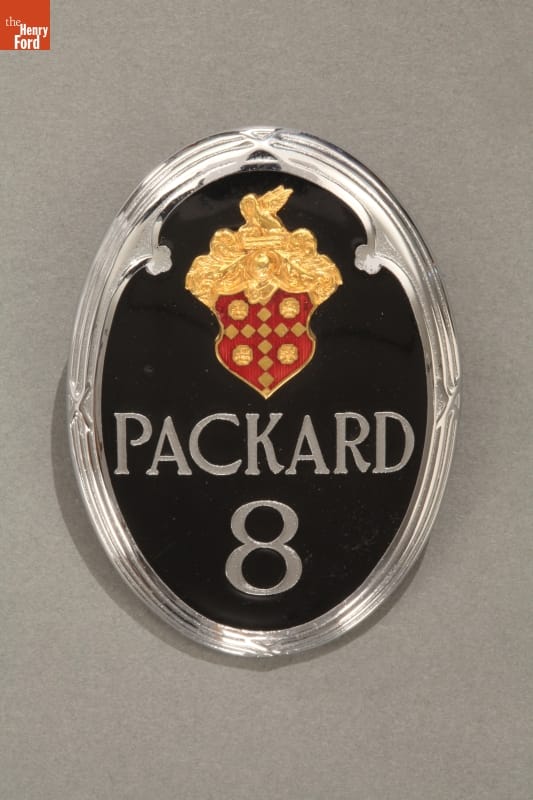
- Packard 8 Radiator Emblem, circa 1935 - Several automobile emblems incorporated family coat of arms. Packard, claiming relationship to the Packers of England, incorporated their coat of arms into this oval emblem.
- circa 1935
- Collections - Artifact
Packard 8 Radiator Emblem, circa 1935
Several automobile emblems incorporated family coat of arms. Packard, claiming relationship to the Packers of England, incorporated their coat of arms into this oval emblem.
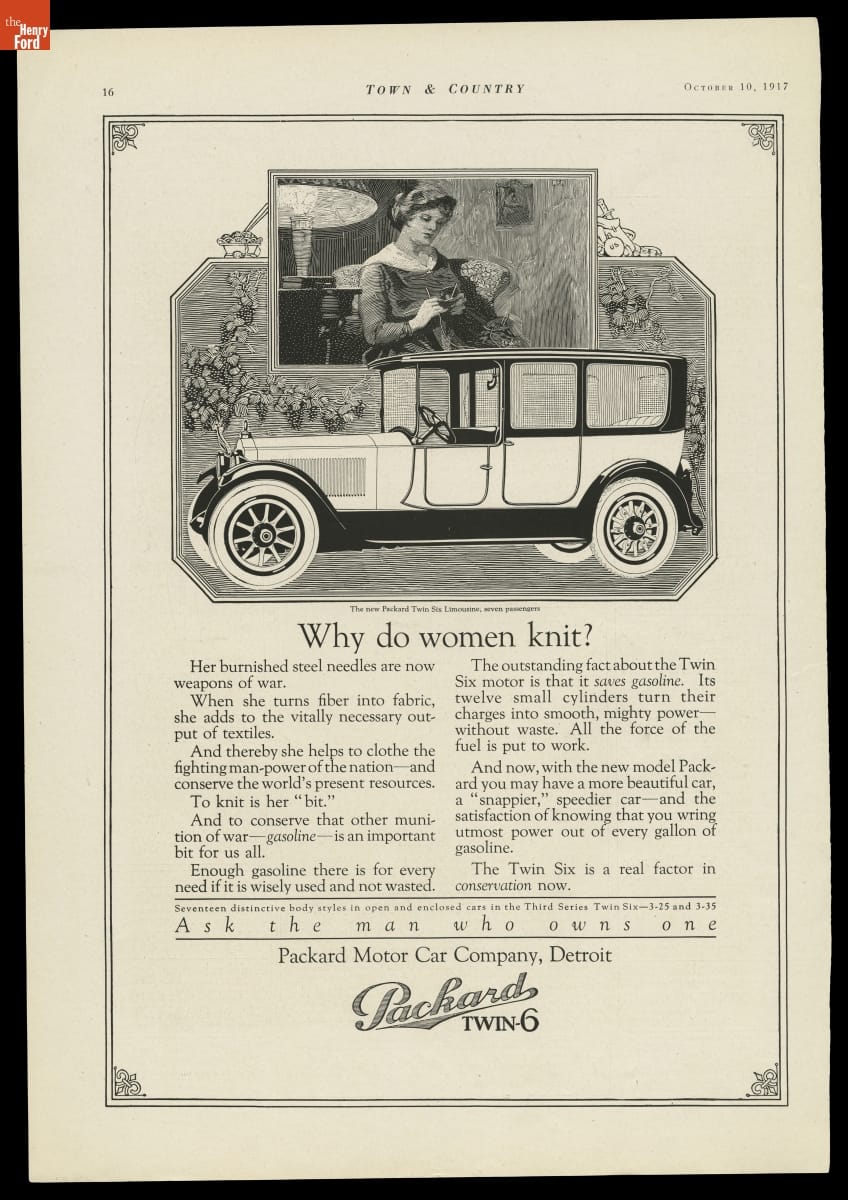
- Packard Twin-6 Advertisement, "Why Do Women Knit?," October 10, 1917 - The question asked by this 1917 Packard advertisement, "Why Do Women Knit," referred to women's efforts to knit vital clothing items for American soldiers fighting in World War I. The ad also mentioned the need to conserve gasoline -- something that Packard's 12-cylinder Twin Six engine was claimed to do for its owners.
- October 10, 1917
- Collections - Artifact
Packard Twin-6 Advertisement, "Why Do Women Knit?," October 10, 1917
The question asked by this 1917 Packard advertisement, "Why Do Women Knit," referred to women's efforts to knit vital clothing items for American soldiers fighting in World War I. The ad also mentioned the need to conserve gasoline -- something that Packard's 12-cylinder Twin Six engine was claimed to do for its owners.
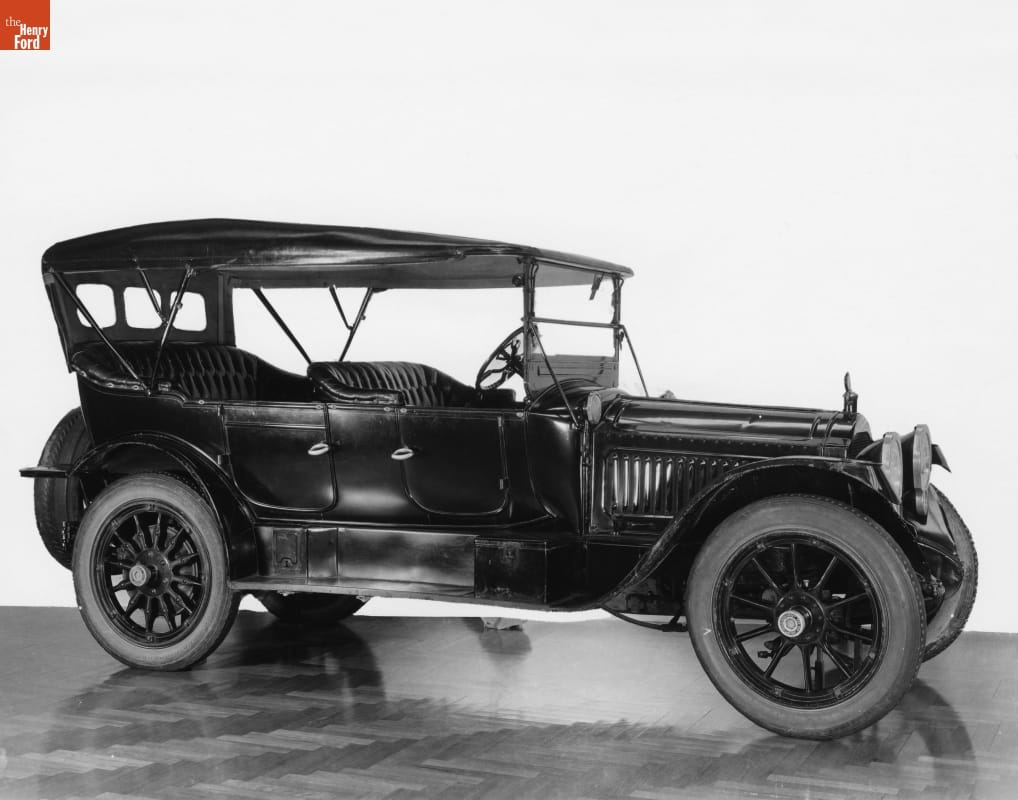
- 1916 Packard Twin Six Touring Car - Packard Motor Car Company, already established as America's premier luxury automaker, stunned the industry when it introduced a 12-cylinder "Twin Six" engine for 1916. The new engine produced less vibration and a smoother ride. The V-12's smaller cylinders, aluminum alloy pistons and light connecting rods weighed half as much as their counterparts in the previous six-cylinder engine.
- 1916
- Collections - Artifact
1916 Packard Twin Six Touring Car
Packard Motor Car Company, already established as America's premier luxury automaker, stunned the industry when it introduced a 12-cylinder "Twin Six" engine for 1916. The new engine produced less vibration and a smoother ride. The V-12's smaller cylinders, aluminum alloy pistons and light connecting rods weighed half as much as their counterparts in the previous six-cylinder engine.
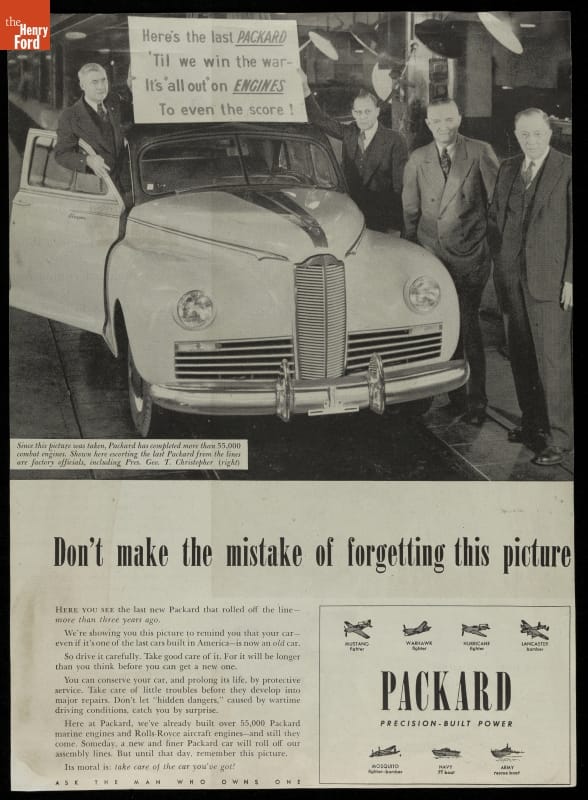
- "Don't Make the Mistake of Forgetting This Picture" Packard Motor Company Advertisement, 1945 - World War II paused all production of civilian automobiles in 1942. Packard published this ad in 1945, reminding readers that <EM>every</EM> car in the United States was an "old" car at the time. Drivers were advised to take good care of their vehicles until peace returned. Packard built engines for military boats and airplanes during the war.
- 1945
- Collections - Artifact
"Don't Make the Mistake of Forgetting This Picture" Packard Motor Company Advertisement, 1945
World War II paused all production of civilian automobiles in 1942. Packard published this ad in 1945, reminding readers that every car in the United States was an "old" car at the time. Drivers were advised to take good care of their vehicles until peace returned. Packard built engines for military boats and airplanes during the war.