
Search
- QSL Card Artwork for Amateur Radio Station W6DQZ, Los Angeles, California, 1941 - Hamid (Charlie) Durmisevich, call sign W6DQZ, connected to the world from his ham radio station in Los Angeles. Amateur radio operators use two-way radios to talk to global networks of other "hams" about technology, weather, emergency preparedness and daily life. This ham, who emigrated from Eastern Europe in 1920, was active in amateur radio communities from the 1930s to 1990s.
- 1941
- Collections - Artifact
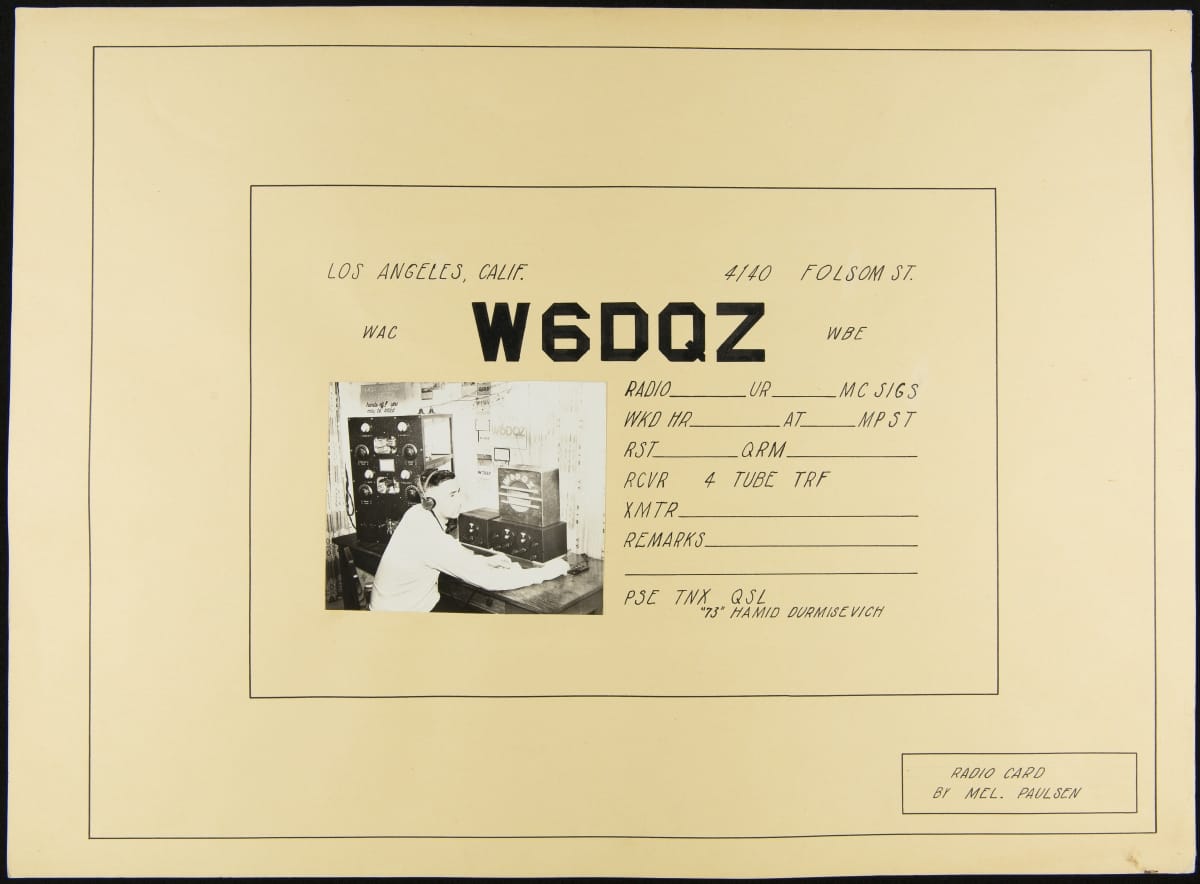
QSL Card Artwork for Amateur Radio Station W6DQZ, Los Angeles, California, 1941
Hamid (Charlie) Durmisevich, call sign W6DQZ, connected to the world from his ham radio station in Los Angeles. Amateur radio operators use two-way radios to talk to global networks of other "hams" about technology, weather, emergency preparedness and daily life. This ham, who emigrated from Eastern Europe in 1920, was active in amateur radio communities from the 1930s to 1990s.
- QSL Card Artwork for Amateur Radio Station W6DQZ, 1941 - Hamid (Charlie) Durmisevich, call sign W6DQZ, connected to the world from his ham radio station in Los Angeles. Amateur radio operators use two-way radios to talk to global networks of other "hams" about technology, weather, emergency preparedness and daily life. This ham, who emigrated from Eastern Europe in 1920, was active in amateur radio communities from the 1930s to 1990s.
- 1941
- Collections - Artifact
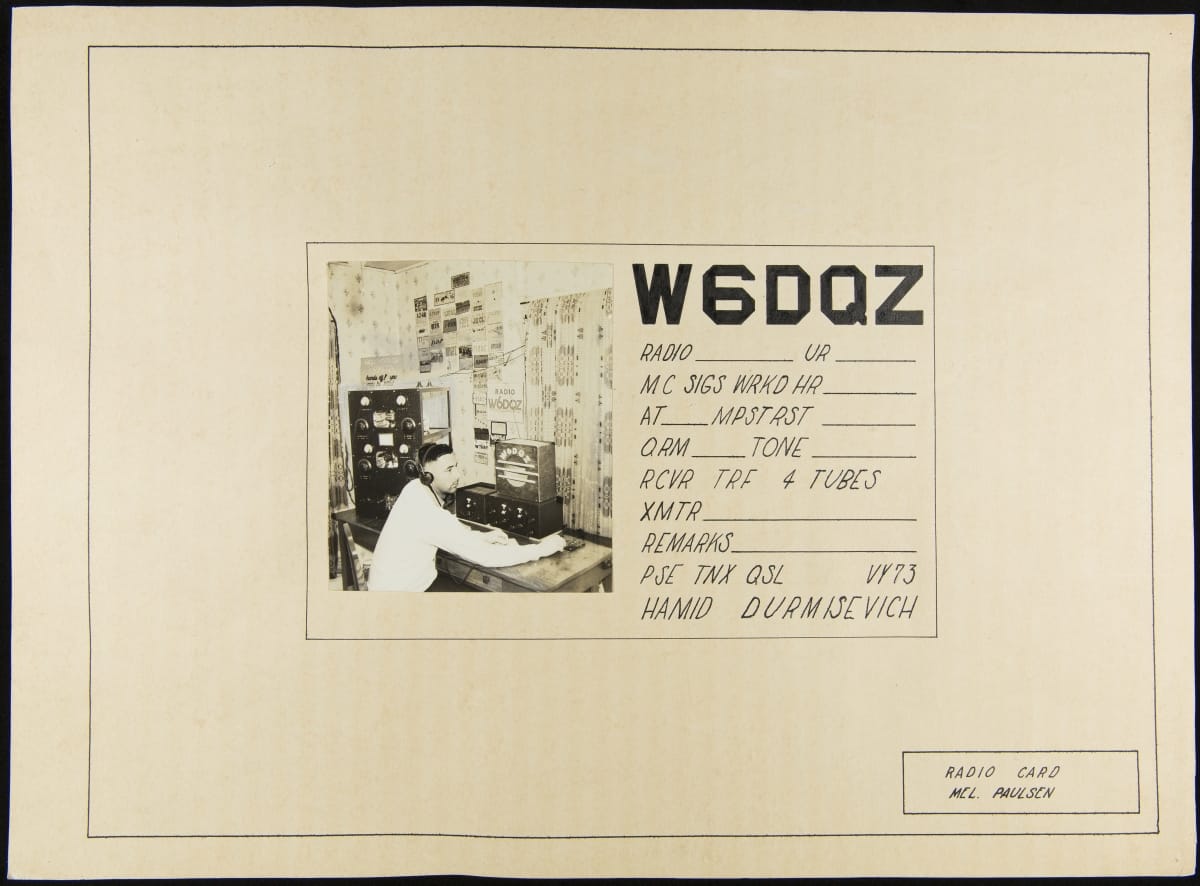
QSL Card Artwork for Amateur Radio Station W6DQZ, 1941
Hamid (Charlie) Durmisevich, call sign W6DQZ, connected to the world from his ham radio station in Los Angeles. Amateur radio operators use two-way radios to talk to global networks of other "hams" about technology, weather, emergency preparedness and daily life. This ham, who emigrated from Eastern Europe in 1920, was active in amateur radio communities from the 1930s to 1990s.