
Search
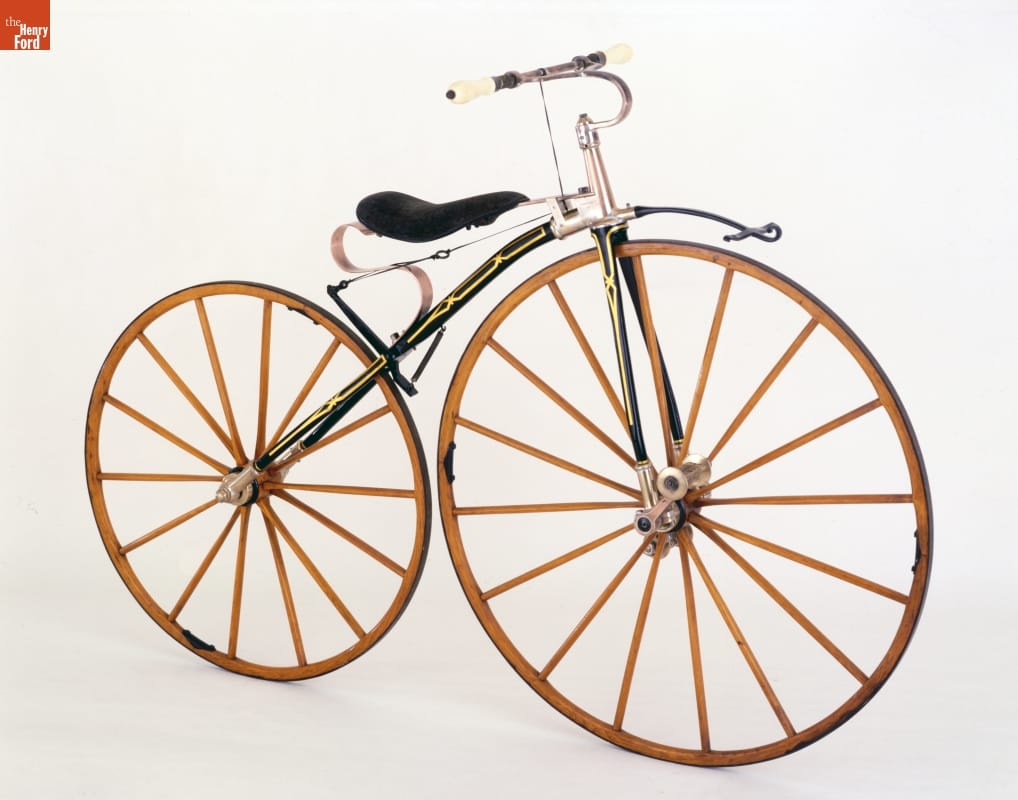
- Pickering Velocipede, circa 1870 - Pickering and Davis of New York developed this velocipede to be durable enough to travel the American roads of the late 1860s. It featured smaller wheels, a lower frame, and sprung handlebars to reduce road shock. The machine's backbone was made from an iron tube rather than cast iron, creating a slightly lighter yet strong vehicle.
- circa 1870
- Collections - Artifact
Pickering Velocipede, circa 1870
Pickering and Davis of New York developed this velocipede to be durable enough to travel the American roads of the late 1860s. It featured smaller wheels, a lower frame, and sprung handlebars to reduce road shock. The machine's backbone was made from an iron tube rather than cast iron, creating a slightly lighter yet strong vehicle.
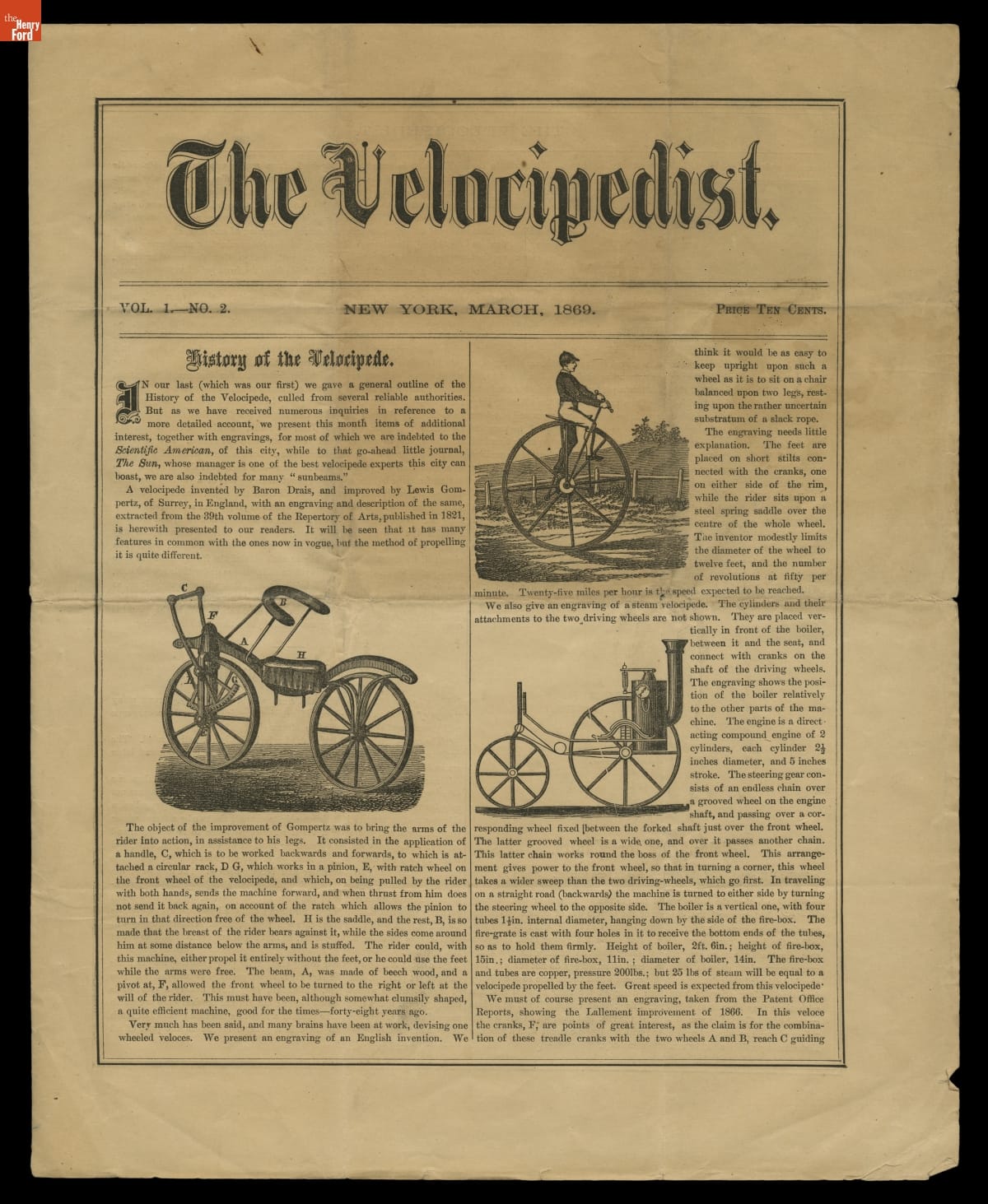
- The Velocipedist, Vol. 1, No. 2, March 1869 - The first forerunners to the bicycle appeared in the 1810s. These two-wheeled vehicles were commonly called velocipedes -- an adaptation of the Latin phrase "velox pedis," meaning "swift of foot." The earliest versions had no pedals or drive mechanisms. Riders simply scooted along using foot power. By 1869 velocipedes were popular enough to inspire the publication of <em>The Velocipedist</em> magazine.
- March 01, 1869
- Collections - Artifact
The Velocipedist, Vol. 1, No. 2, March 1869
The first forerunners to the bicycle appeared in the 1810s. These two-wheeled vehicles were commonly called velocipedes -- an adaptation of the Latin phrase "velox pedis," meaning "swift of foot." The earliest versions had no pedals or drive mechanisms. Riders simply scooted along using foot power. By 1869 velocipedes were popular enough to inspire the publication of The Velocipedist magazine.