
Search
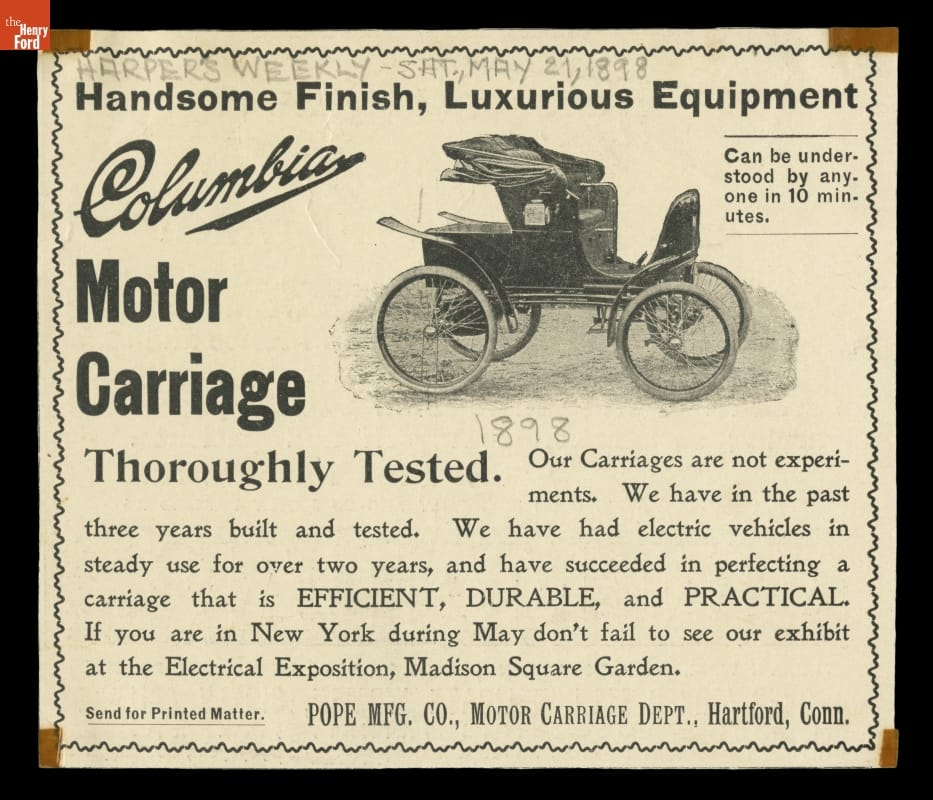
- Advertisement for Pope Manufacturing Company's Columbia Motor Carriage, 1898 - Albert Augustus Pope formed Pope Manufacturing Company in 1876. Two years later, it began producing bicycles. Pope kept up with the times, introducing electric automobiles in 1897 and motorcycles in 1902. When electric-car sales declined, so too did Pope's fortunes. The company filed for bankruptcy in 1915.
- May 21, 1898
- Collections - Artifact
Advertisement for Pope Manufacturing Company's Columbia Motor Carriage, 1898
Albert Augustus Pope formed Pope Manufacturing Company in 1876. Two years later, it began producing bicycles. Pope kept up with the times, introducing electric automobiles in 1897 and motorcycles in 1902. When electric-car sales declined, so too did Pope's fortunes. The company filed for bankruptcy in 1915.
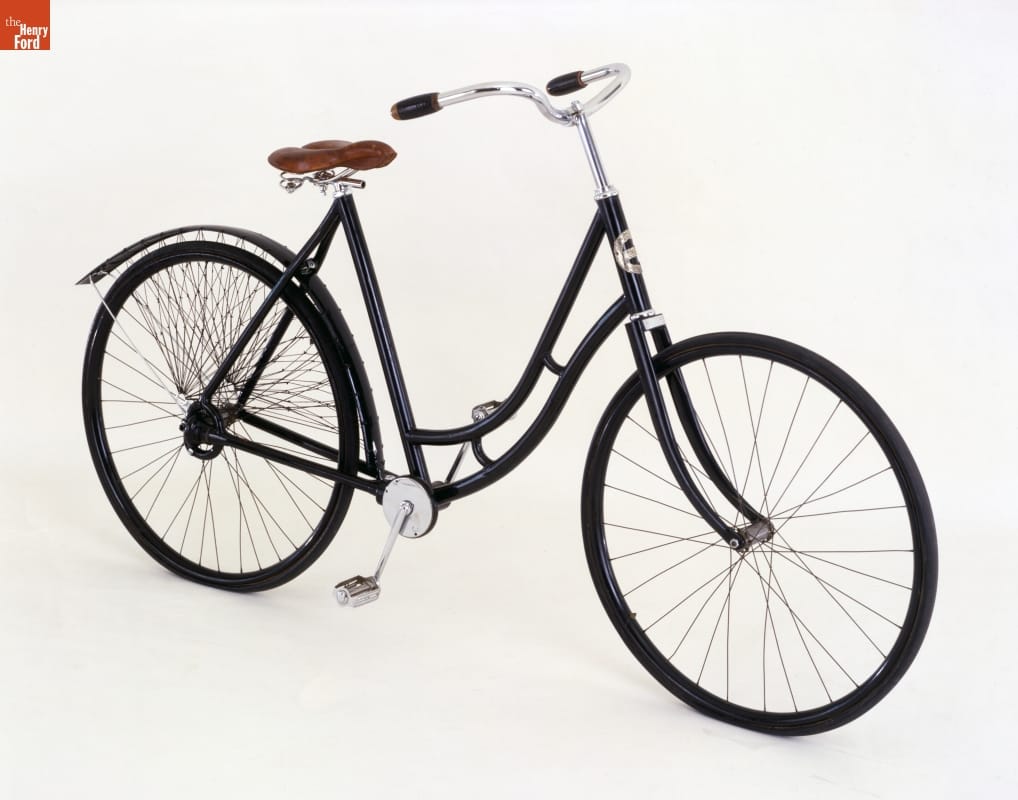
- Columbia Model 60 Women's Bicycle, 1898 - Pope Manufacturing Company introduced its "chainless" bicycle in 1897. The driveshaft with bevel gears needed less maintenance than chain drives and was cleaner -- no greasy stains on your clothes. Unfortunately, a shaft drive was heavier and lost a bit of power. It was also more expensive -- not helpful when sales were lagging. Early shaft-driven, chainless bicycles failed to catch on with buyers.
- 1898
- Collections - Artifact
Columbia Model 60 Women's Bicycle, 1898
Pope Manufacturing Company introduced its "chainless" bicycle in 1897. The driveshaft with bevel gears needed less maintenance than chain drives and was cleaner -- no greasy stains on your clothes. Unfortunately, a shaft drive was heavier and lost a bit of power. It was also more expensive -- not helpful when sales were lagging. Early shaft-driven, chainless bicycles failed to catch on with buyers.
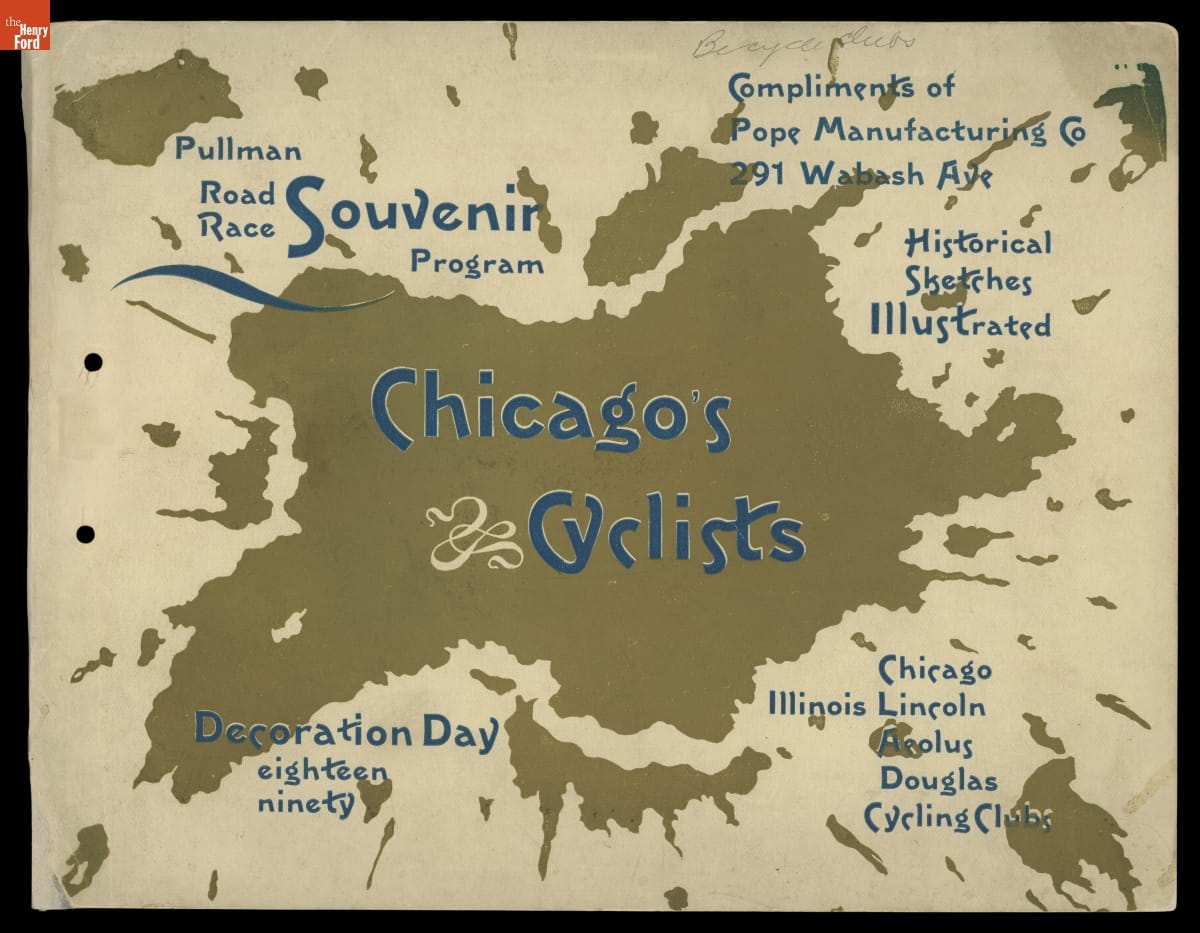
- Pullman Road Race Souvenir Program, 1890 - Chicago, Illinois, cycling clubs produced this souvenir program for the 1890 Pullman Road Race. The program contains local club information and rosters, a history of the original race, and numerous bicycle advertisements. In addition to the road race, track races were scheduled at the Exposition Building. The races -- on high-wheel ordinaries, safeties, and tandems -- were open only to amateurs.
- June 01, 1890
- Collections - Artifact
Pullman Road Race Souvenir Program, 1890
Chicago, Illinois, cycling clubs produced this souvenir program for the 1890 Pullman Road Race. The program contains local club information and rosters, a history of the original race, and numerous bicycle advertisements. In addition to the road race, track races were scheduled at the Exposition Building. The races -- on high-wheel ordinaries, safeties, and tandems -- were open only to amateurs.
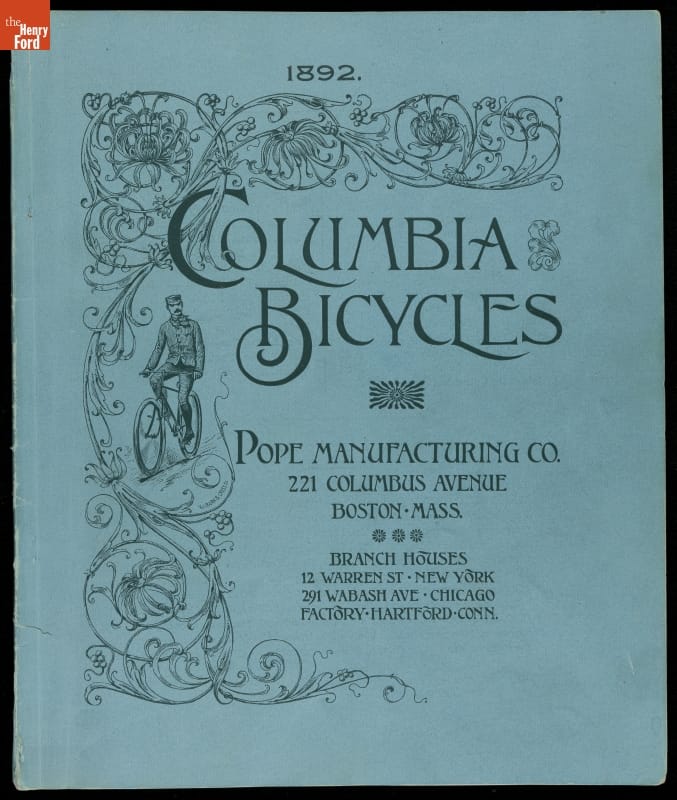
- Columbia Bicycles Sales Catalog, 1892 - The Pope Manufacturing Company produced this catalog to sell Columbia bicycles in 1892. Buyers could choose between a number of "safety" and high-wheel cycles after paging through the catalog. The company also provided descriptions of bicycle accessories available. And if you were unsure about this new mode of transportation, check out page 38 on why you should ride a bicycle.
- 1892
- Collections - Artifact
Columbia Bicycles Sales Catalog, 1892
The Pope Manufacturing Company produced this catalog to sell Columbia bicycles in 1892. Buyers could choose between a number of "safety" and high-wheel cycles after paging through the catalog. The company also provided descriptions of bicycle accessories available. And if you were unsure about this new mode of transportation, check out page 38 on why you should ride a bicycle.
- Expert Columbia High-Wheel Bicycle, 1884 - Pope Manufacturing Company manufactured this Expert Columbia bicycle in 1884. By the mid-1880s, the high-wheel ordinary incorporated many innovations such as steel-tube-frame construction, ball bearings, and wire wheels with rubber tires. These improvements made the ordinary a popular recreational and sporting machine. But the difficulty in mounting and safety concerns tended to limit its use mainly to athletic young men.
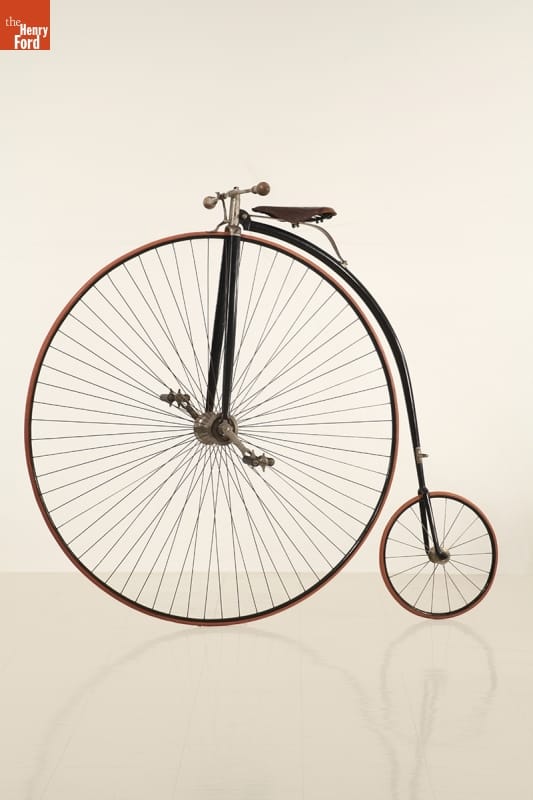
- 1884
- Collections - Artifact
Expert Columbia High-Wheel Bicycle, 1884
Pope Manufacturing Company manufactured this Expert Columbia bicycle in 1884. By the mid-1880s, the high-wheel ordinary incorporated many innovations such as steel-tube-frame construction, ball bearings, and wire wheels with rubber tires. These improvements made the ordinary a popular recreational and sporting machine. But the difficulty in mounting and safety concerns tended to limit its use mainly to athletic young men.
- Trade Card for the Pope Manufacturing Company, "Columbia Bicycle," circa 1887 - The Pope Manufacturing Company handed out this trade card depicting a nighttime parade of bicycle club members on Columbia bicycles. Trade cards, like this one, usually had colorful and interesting scenes on the front and product information on the back.
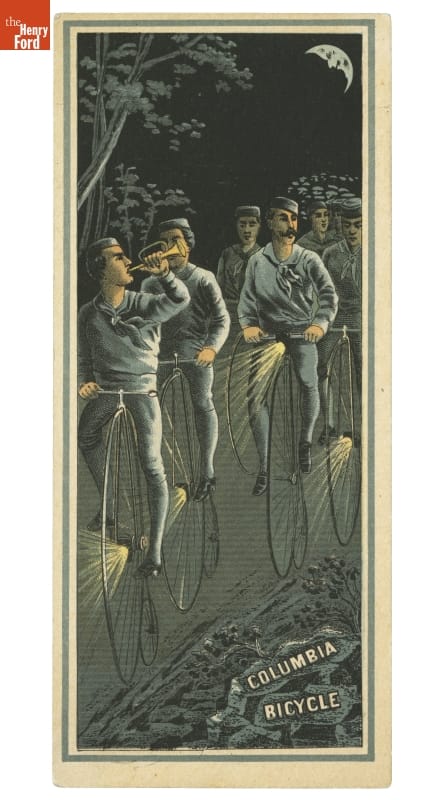
- circa 1880
- Collections - Artifact
Trade Card for the Pope Manufacturing Company, "Columbia Bicycle," circa 1887
The Pope Manufacturing Company handed out this trade card depicting a nighttime parade of bicycle club members on Columbia bicycles. Trade cards, like this one, usually had colorful and interesting scenes on the front and product information on the back.
- "After You have Satisfied Yourself that the Pope-Hartford Has No Superior in Any Feature, Consider the Price," October 1911 - The automobile is a paradox -- a practical tool that plays host to both human needs and fantasies. Like car consumers, automotive ads seem to land somewhere between fantasy and reality, emotions and rationality. Many ads incorporate apparent opposites: fantasy can sell practicality, and vice versa. Sometimes the car has disappeared completely -- an emotional appeal prompts us to complete the ad.
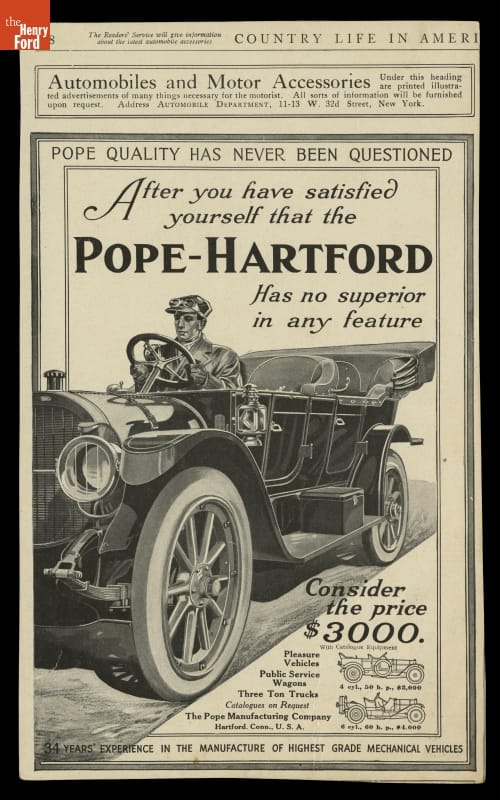
- October 01, 1911
- Collections - Artifact
"After You have Satisfied Yourself that the Pope-Hartford Has No Superior in Any Feature, Consider the Price," October 1911
The automobile is a paradox -- a practical tool that plays host to both human needs and fantasies. Like car consumers, automotive ads seem to land somewhere between fantasy and reality, emotions and rationality. Many ads incorporate apparent opposites: fantasy can sell practicality, and vice versa. Sometimes the car has disappeared completely -- an emotional appeal prompts us to complete the ad.
- Columbia Motor Carriage Advertisement, 1898 - Albert Augustus Pope formed Pope Manufacturing Company in 1876. Two years later, it began producing bicycles. Pope kept up with the times, introducing electric automobiles in 1897 and motorcycles in 1902. When electric-car sales declined, so too did Pope's fortunes. The company filed for bankruptcy in 1915.
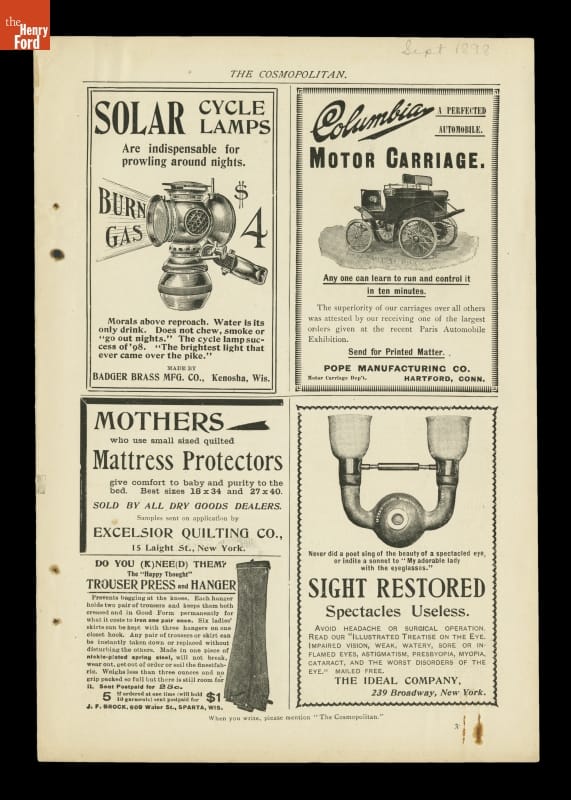
- September 01, 1898
- Collections - Artifact
Columbia Motor Carriage Advertisement, 1898
Albert Augustus Pope formed Pope Manufacturing Company in 1876. Two years later, it began producing bicycles. Pope kept up with the times, introducing electric automobiles in 1897 and motorcycles in 1902. When electric-car sales declined, so too did Pope's fortunes. The company filed for bankruptcy in 1915.
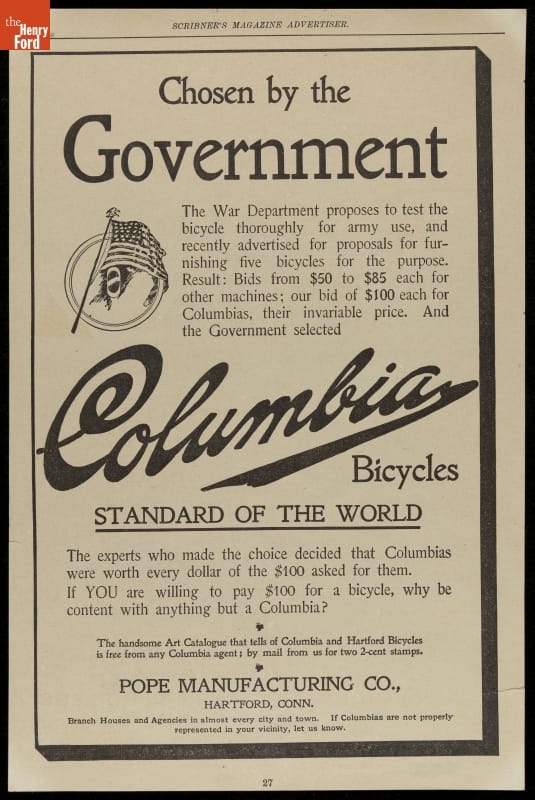
- Columbia Bicycle Advertisement, "Chosen by the Government," 1896 - The U.S. War Department began testing the military utility of bicycles in the mid-1890s. The Pope Manufacturing Company used this patriotic connection to help sell bikes. This ad from 1896 encouraged civilians to buy a Columbia -- even if it seemed expensive at $100 -- because it had been chosen by U.S. Government experts.
- 1896
- Collections - Artifact
Columbia Bicycle Advertisement, "Chosen by the Government," 1896
The U.S. War Department began testing the military utility of bicycles in the mid-1890s. The Pope Manufacturing Company used this patriotic connection to help sell bikes. This ad from 1896 encouraged civilians to buy a Columbia -- even if it seemed expensive at $100 -- because it had been chosen by U.S. Government experts.
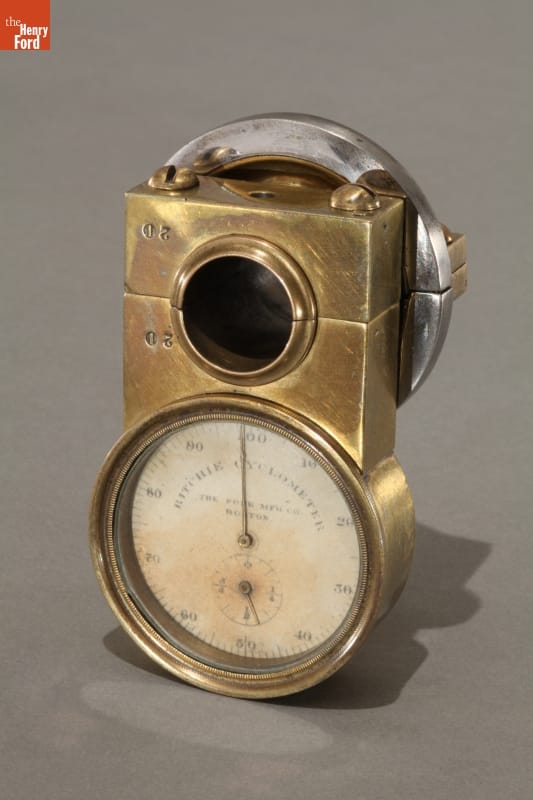
- Ritchie Cyclometer, 1881-1890 - A cyclometer tells cyclists how far they have traveled. Cyclists placed this brass and steel device on the axle of their high-wheel vehicles. A magnet within the sealed case revolved with the turning axle and moved a needle. This cyclometer, invented by Edward S. Ritchie, was produced by the Pope Manufacturing Company, a leading bicycle maker in the late 1800s.
- 1881-1890
- Collections - Artifact
Ritchie Cyclometer, 1881-1890
A cyclometer tells cyclists how far they have traveled. Cyclists placed this brass and steel device on the axle of their high-wheel vehicles. A magnet within the sealed case revolved with the turning axle and moved a needle. This cyclometer, invented by Edward S. Ritchie, was produced by the Pope Manufacturing Company, a leading bicycle maker in the late 1800s.