
Search
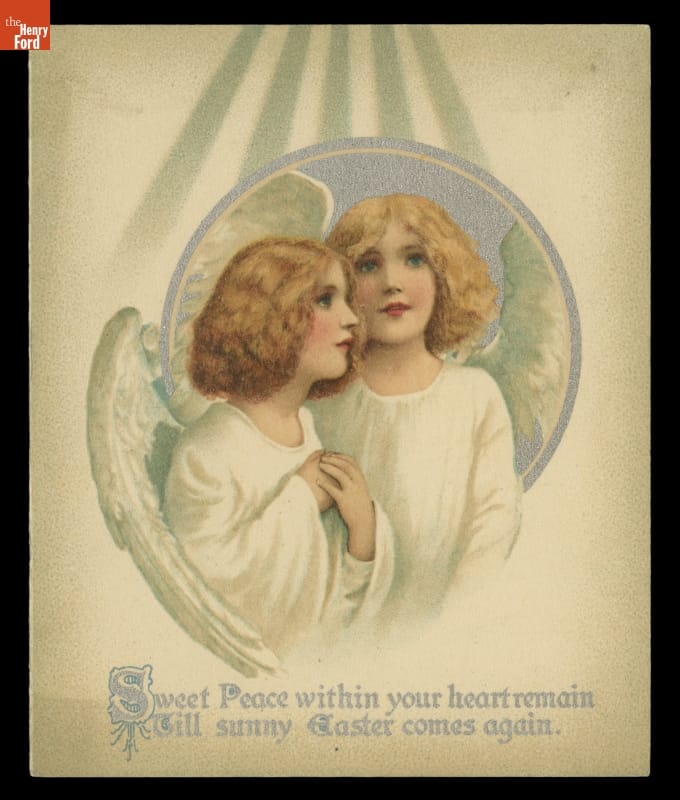
- Easter Greeting Card, "Sweet Peace Within Your Heart Remain Till Sunny Easter Comes Again," 1905 - Sending greeting cards and postcards for the Easter holiday became popular in the United States by the 1880s. Publishers made cards with themes of a religious nature as well as secular decorations to celebrate the arrival of spring. Artists working for these publishers illustrated the cards with images symbolic of the season, such as crosses, angels, flowers, eggs, children, birds, and rabbits.
- circa 1905
- Collections - Artifact
Easter Greeting Card, "Sweet Peace Within Your Heart Remain Till Sunny Easter Comes Again," 1905
Sending greeting cards and postcards for the Easter holiday became popular in the United States by the 1880s. Publishers made cards with themes of a religious nature as well as secular decorations to celebrate the arrival of spring. Artists working for these publishers illustrated the cards with images symbolic of the season, such as crosses, angels, flowers, eggs, children, birds, and rabbits.
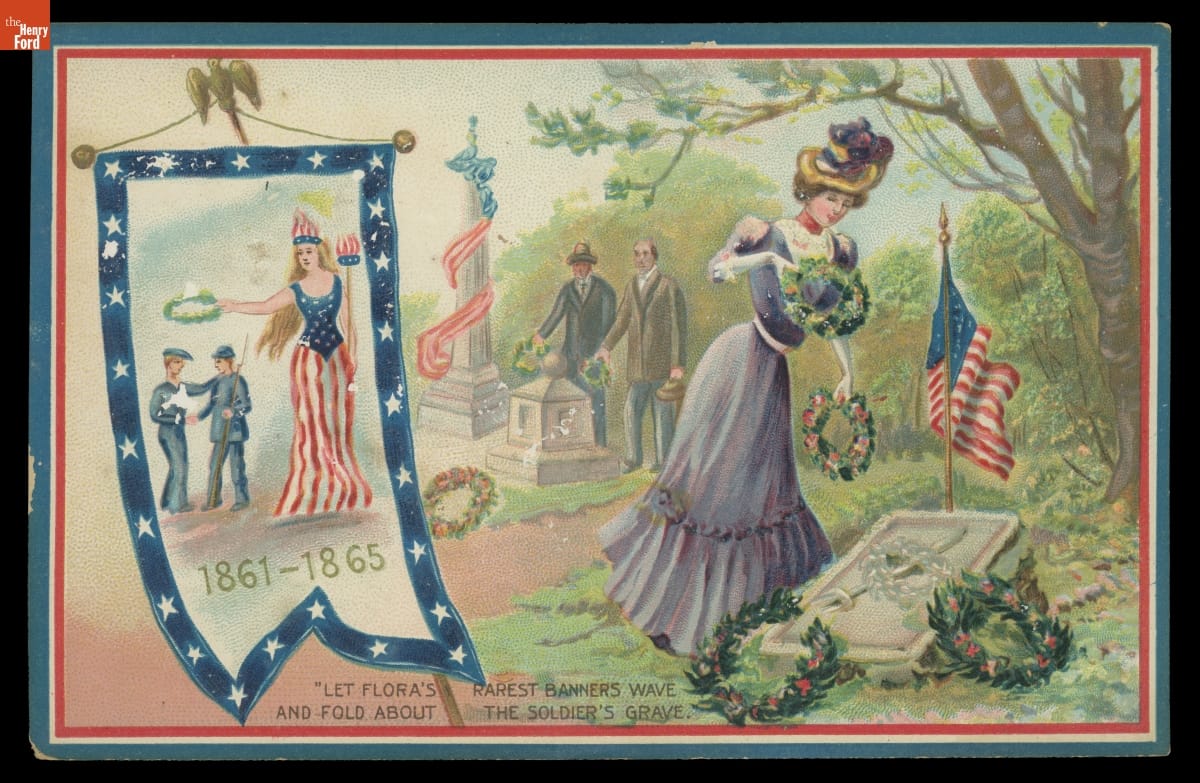
- Decoration Day Postcard, "Let Flora's Rarest Banners Wave and Fold about the Soldier's Grave," 1908 - Beginning in 1868, May 30 was proclaimed "Decoration Day" as a day for mourners to honor the Civil War dead by decorating their graves with flowers. After World War I, the observance became better known as Memorial Day, and it broadened to honor the dead of all America's wars. Memorial Day was declared a national holiday in 1971.
- 1905
- Collections - Artifact
Decoration Day Postcard, "Let Flora's Rarest Banners Wave and Fold about the Soldier's Grave," 1908
Beginning in 1868, May 30 was proclaimed "Decoration Day" as a day for mourners to honor the Civil War dead by decorating their graves with flowers. After World War I, the observance became better known as Memorial Day, and it broadened to honor the dead of all America's wars. Memorial Day was declared a national holiday in 1971.
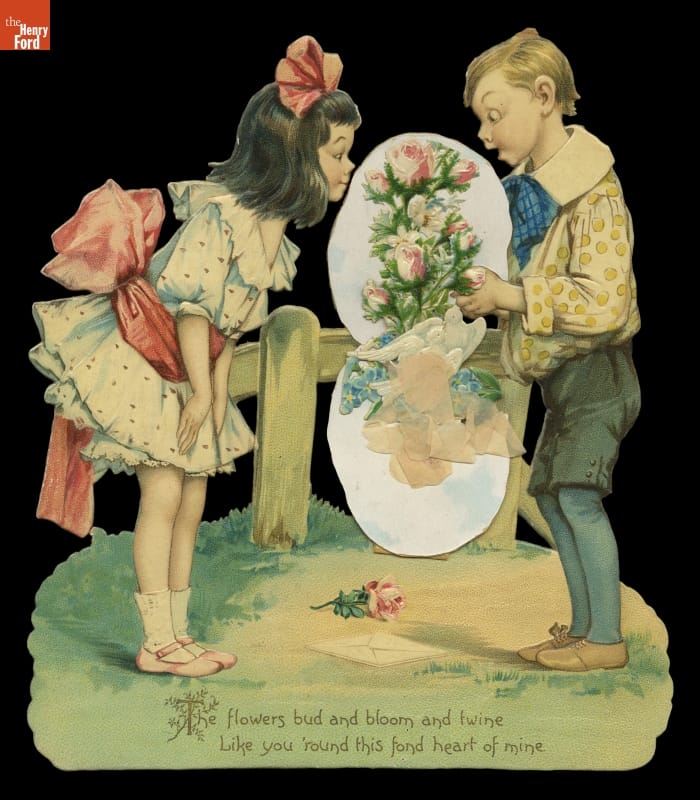
- Valentine Card, circa 1905 - The custom of sending messages of affection on February 14 dates back to Roman times, when mid-February was a time to meet and court prospective mates. The earliest American valentines were labors of love, handmade by the sender. The spread of commercially produced valentines in the second half of the nineteenth century made sending and receiving Valentine's Day cards a more lighthearted activity.
- circa 1905
- Collections - Artifact
Valentine Card, circa 1905
The custom of sending messages of affection on February 14 dates back to Roman times, when mid-February was a time to meet and court prospective mates. The earliest American valentines were labors of love, handmade by the sender. The spread of commercially produced valentines in the second half of the nineteenth century made sending and receiving Valentine's Day cards a more lighthearted activity.
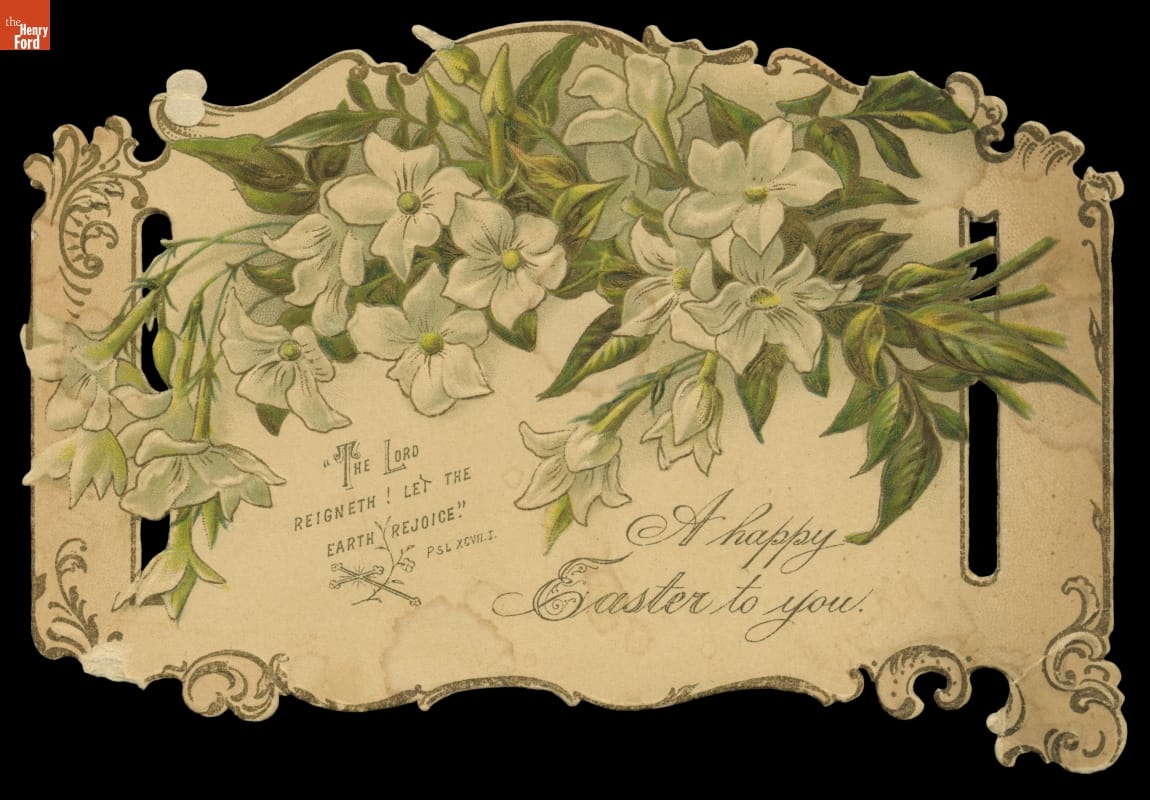
- Easter Greeting Card, "A Happy Easter to You," circa 1885 - Sending greeting cards and postcards for the Easter holiday became popular in the United States by the 1880s. Publishers made cards with themes of a religious nature as well as secular decorations to celebrate the arrival of spring. Artists working for these publishers illustrated the cards with images symbolic of the season, such as crosses, angels, flowers, eggs, children, birds, and rabbits.
- circa 1885
- Collections - Artifact
Easter Greeting Card, "A Happy Easter to You," circa 1885
Sending greeting cards and postcards for the Easter holiday became popular in the United States by the 1880s. Publishers made cards with themes of a religious nature as well as secular decorations to celebrate the arrival of spring. Artists working for these publishers illustrated the cards with images symbolic of the season, such as crosses, angels, flowers, eggs, children, birds, and rabbits.
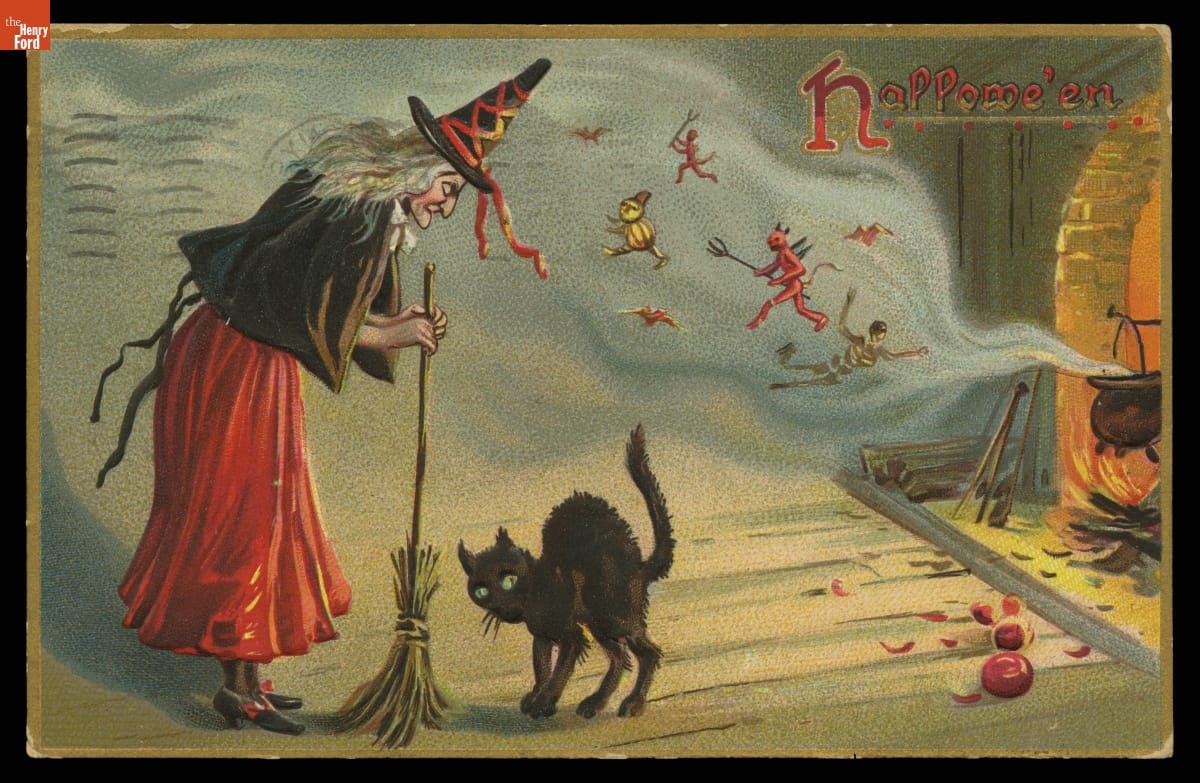
- "Hallowe'en," circa 1910 - A distinctly American blend of Halloween traditions emerged by the late 1800s. Into the 20th century, the holiday was mostly an innocent celebration of mystery and fun, but friends and neighbors often exchanged seasonal greeting cards that evoked Halloween's superstitious origins. This colorful example alludes to olden customs and beliefs involving witchcraft and black cats.
- circa 1910
- Collections - Artifact
"Hallowe'en," circa 1910
A distinctly American blend of Halloween traditions emerged by the late 1800s. Into the 20th century, the holiday was mostly an innocent celebration of mystery and fun, but friends and neighbors often exchanged seasonal greeting cards that evoked Halloween's superstitious origins. This colorful example alludes to olden customs and beliefs involving witchcraft and black cats.
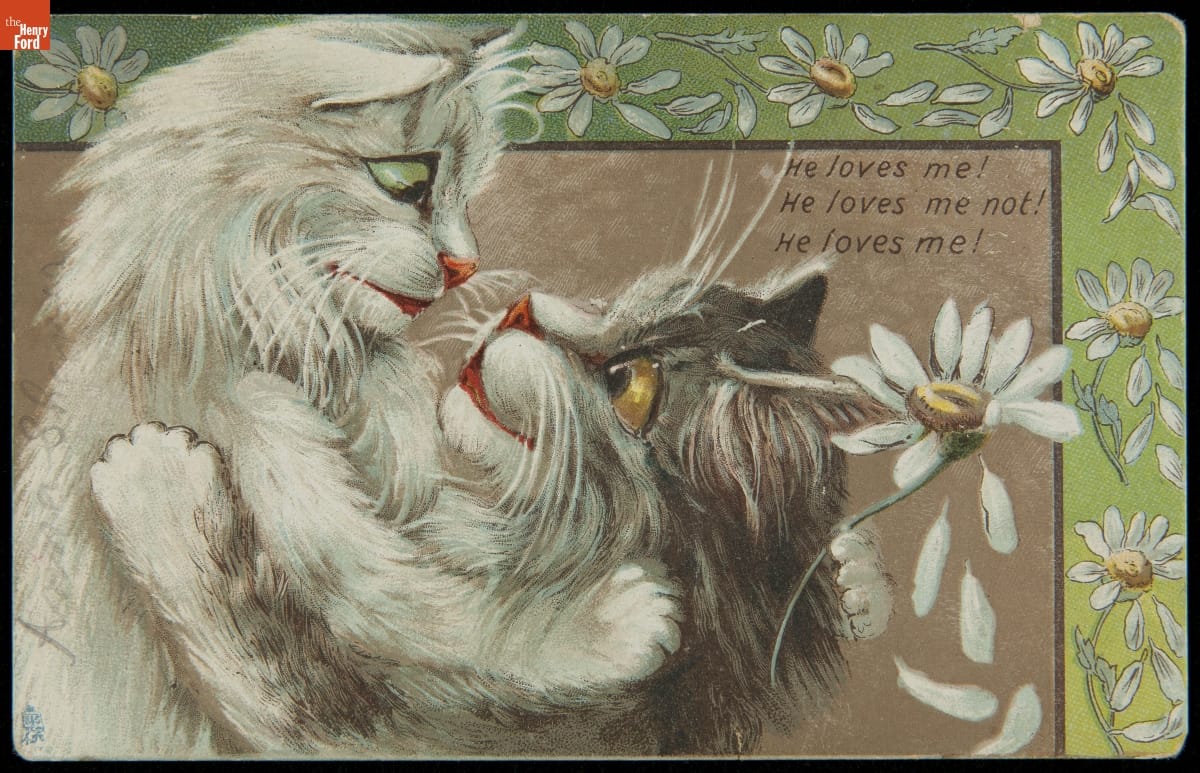
- Postcard, Cats Embracing, "He Loves Me! He Loves Me Not!," 1907 - Depictions of cats and kittens often appeared in art and folk art in the United States. Inexpensive lithograph prints made in the mid-19th century helped to make this topic popular. Starting in the late 1890s picture postcards included these types of popular illustrations of cats. Sending colorful postcards through the U.S. mail continued to be widespread well into the 1910s.
- 1907
- Collections - Artifact
Postcard, Cats Embracing, "He Loves Me! He Loves Me Not!," 1907
Depictions of cats and kittens often appeared in art and folk art in the United States. Inexpensive lithograph prints made in the mid-19th century helped to make this topic popular. Starting in the late 1890s picture postcards included these types of popular illustrations of cats. Sending colorful postcards through the U.S. mail continued to be widespread well into the 1910s.
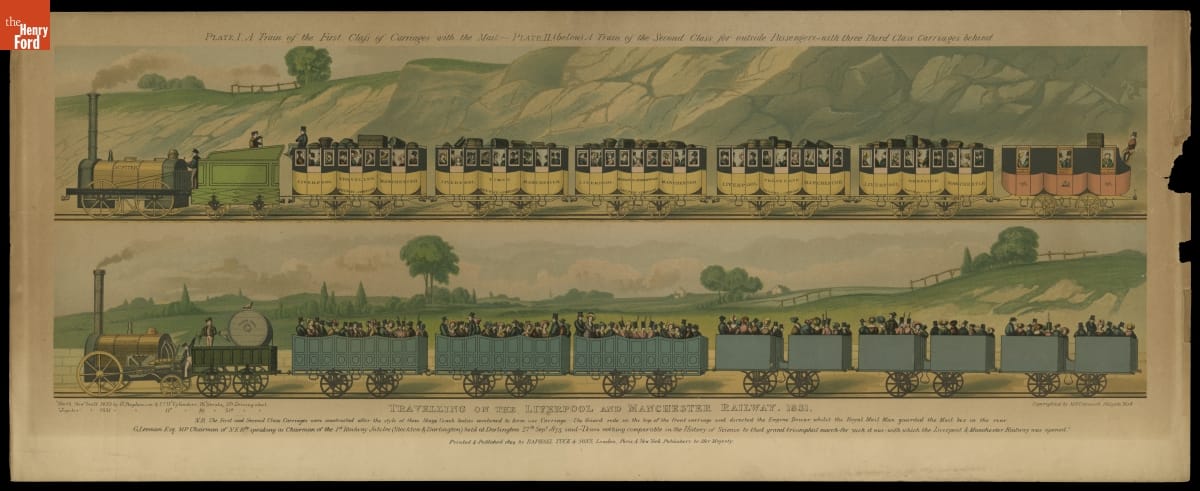
- Lithograph, "Traveling on the Liverpool and Manchester Railway, 1831," 1894 - The Liverpool and Manchester Railway, connecting its namesake cities in the United Kingdom, opened in 1830. It was the world's first inter-city railroad, and the first to operate exclusively with steam locomotives. The 31-mile, double-track line was built to a high standard. Engineering highlights included Wapping Tunnel under Liverpool and the 600-foot-long Sankey Viaduct across the Sankey Valley.
- 1894
- Collections - Artifact
Lithograph, "Traveling on the Liverpool and Manchester Railway, 1831," 1894
The Liverpool and Manchester Railway, connecting its namesake cities in the United Kingdom, opened in 1830. It was the world's first inter-city railroad, and the first to operate exclusively with steam locomotives. The 31-mile, double-track line was built to a high standard. Engineering highlights included Wapping Tunnel under Liverpool and the 600-foot-long Sankey Viaduct across the Sankey Valley.
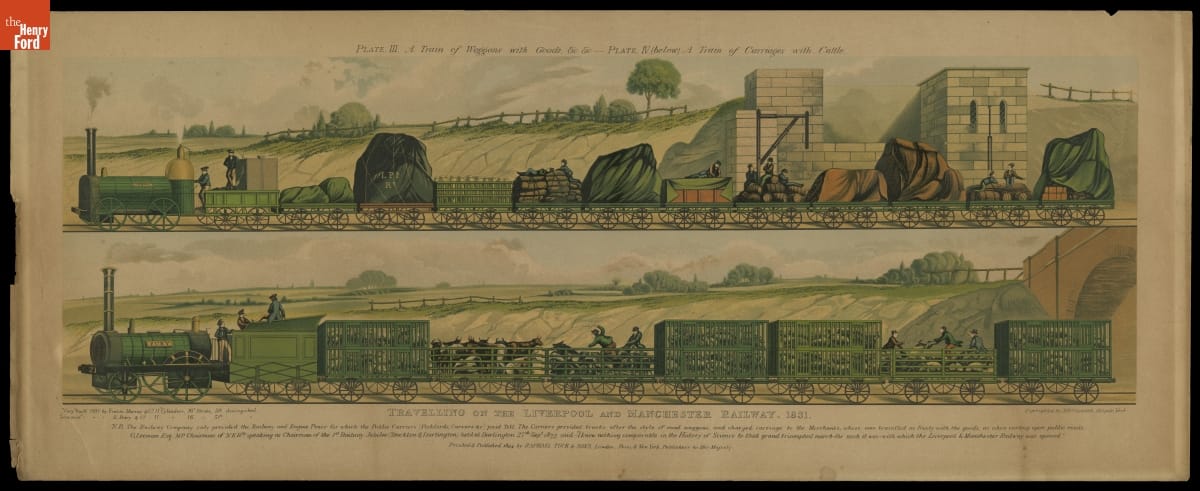
- Lithograph, "Traveling on the Liverpool and Manchester Railway, 1831" - The Liverpool and Manchester Railway, connecting its namesake cities in the United Kingdom, opened in 1830. It was the world's first inter-city railroad, and the first to operate exclusively with steam locomotives. The 31-mile, double-track line was built to a high standard. Engineering highlights included Wapping Tunnel under Liverpool and the 600-foot-long Sankey Viaduct across the Sankey Valley.
- 1831
- Collections - Artifact
Lithograph, "Traveling on the Liverpool and Manchester Railway, 1831"
The Liverpool and Manchester Railway, connecting its namesake cities in the United Kingdom, opened in 1830. It was the world's first inter-city railroad, and the first to operate exclusively with steam locomotives. The 31-mile, double-track line was built to a high standard. Engineering highlights included Wapping Tunnel under Liverpool and the 600-foot-long Sankey Viaduct across the Sankey Valley.
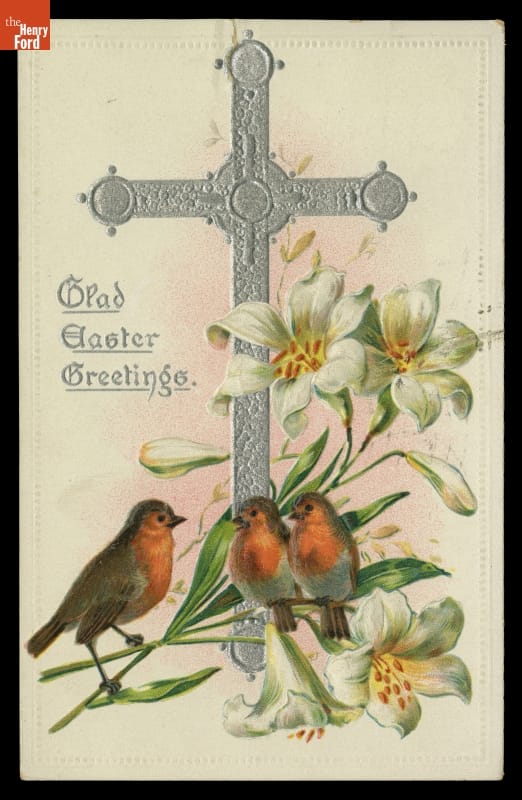
- "Glad Easter Greetings," 1909 - Sending greeting cards and postcards for the Easter holiday became popular in the United States by the 1880s. Publishers made cards with themes of a religious nature as well as secular decorations to celebrate the arrival of spring. Artists working for these publishers illustrated the cards with images symbolic of the season, such as crosses, angels, flowers, eggs, children, birds, and rabbits.
- 1909
- Collections - Artifact
"Glad Easter Greetings," 1909
Sending greeting cards and postcards for the Easter holiday became popular in the United States by the 1880s. Publishers made cards with themes of a religious nature as well as secular decorations to celebrate the arrival of spring. Artists working for these publishers illustrated the cards with images symbolic of the season, such as crosses, angels, flowers, eggs, children, birds, and rabbits.
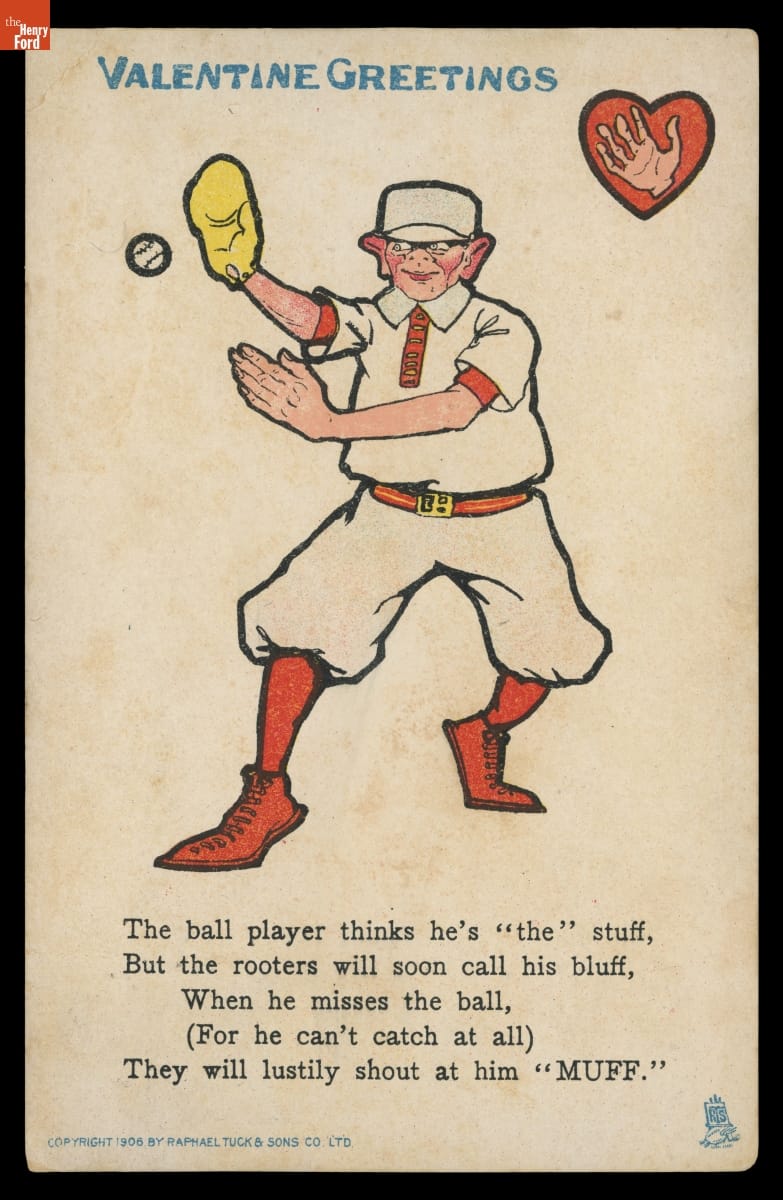
- Postcard, "Valentine Greetings," 1906 - The custom of sending messages of affection on February 14 dates back to Roman times, when mid-February was a time to meet and court prospective mates. The earliest American valentines were labors of love, handmade by the sender. The spread of commercially produced valentines in the second half of the nineteenth century made sending and receiving Valentine's Day cards a more lighthearted activity.
- 1906
- Collections - Artifact
Postcard, "Valentine Greetings," 1906
The custom of sending messages of affection on February 14 dates back to Roman times, when mid-February was a time to meet and court prospective mates. The earliest American valentines were labors of love, handmade by the sender. The spread of commercially produced valentines in the second half of the nineteenth century made sending and receiving Valentine's Day cards a more lighthearted activity.