
Search
- Postcard, "The Free Library of Philadelphia," circa 1930 - Until the 20th century, most book collections were not available to everyday Americans. They were either privately owned, accessible only by paid subscription, or stored away haphazardly. In some communities, wealthy citizens funded libraries. Philadelphia philanthropist George Seckel Pepper bequeathed $225,000 in 1889 to establish The Free Library of Philadelphia. The Free Library system's massive Central Library, pictured here, opened in 1927.
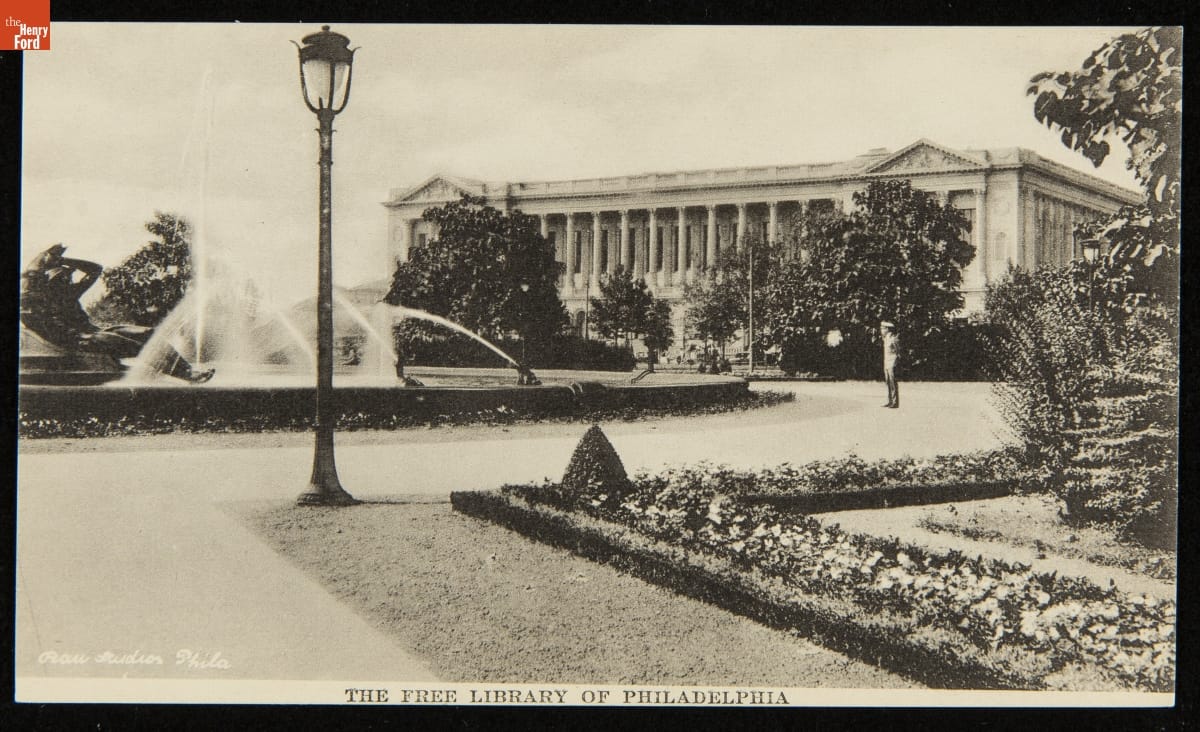
- circa 1930
- Collections - Artifact
Postcard, "The Free Library of Philadelphia," circa 1930
Until the 20th century, most book collections were not available to everyday Americans. They were either privately owned, accessible only by paid subscription, or stored away haphazardly. In some communities, wealthy citizens funded libraries. Philadelphia philanthropist George Seckel Pepper bequeathed $225,000 in 1889 to establish The Free Library of Philadelphia. The Free Library system's massive Central Library, pictured here, opened in 1927.
- Postcard, "The Free Library of Philadelphia, Frankford Branch, Frankford Avenue and Overington Street," circa 1915 - Until the 20th century, most book collections were not available to everyday Americans. They were either privately owned, accessible only by paid subscription, or stored away haphazardly. In some communities, wealthy citizens funded libraries. Philadelphia philanthropist George Seckel Pepper bequeathed $225,000 to establish The Free Library of Philadelphia in 1889. Over time, the Free Library system grew to include many neighborhood branches.
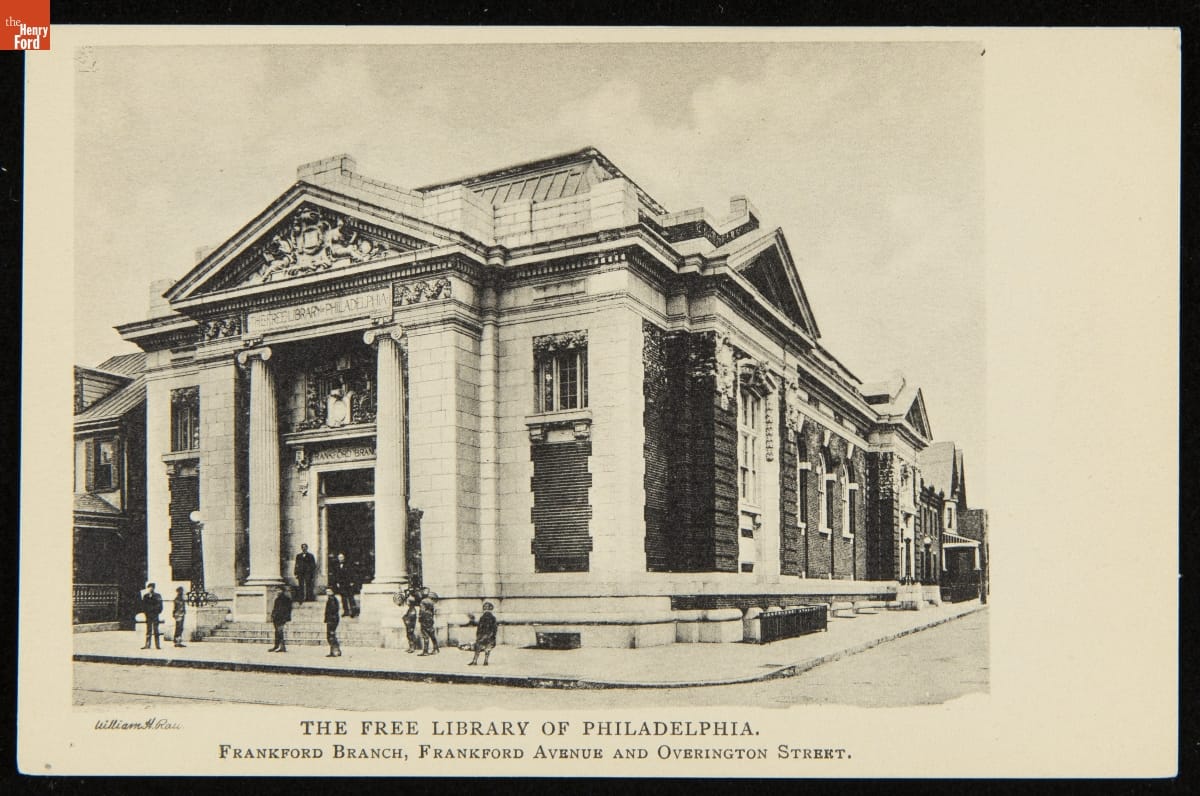
- circa 1915
- Collections - Artifact
Postcard, "The Free Library of Philadelphia, Frankford Branch, Frankford Avenue and Overington Street," circa 1915
Until the 20th century, most book collections were not available to everyday Americans. They were either privately owned, accessible only by paid subscription, or stored away haphazardly. In some communities, wealthy citizens funded libraries. Philadelphia philanthropist George Seckel Pepper bequeathed $225,000 to establish The Free Library of Philadelphia in 1889. Over time, the Free Library system grew to include many neighborhood branches.
- Postcard, "The Free Library of Philadelphia, Logan Branch, Wagner Avenue and Old York Road," circa 1910 - Until the 20th century, most book collections were not available to everyday Americans. They were either privately owned, accessible only by paid subscription, or stored away haphazardly. In some communities, wealthy citizens funded libraries. Philadelphia philanthropist George Seckel Pepper bequeathed $225,000 to establish The Free Library of Philadelphia in 1889. Over time, the Free Library system grew to include many neighborhood branches.
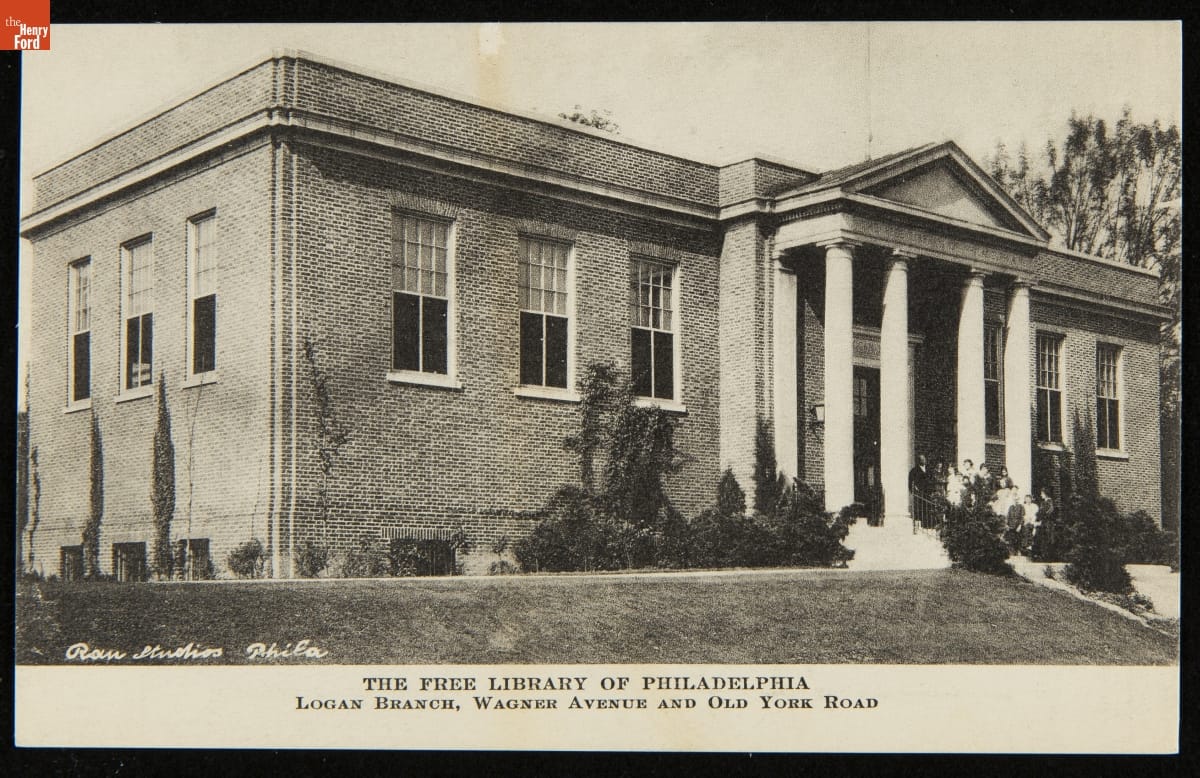
- circa 1910
- Collections - Artifact
Postcard, "The Free Library of Philadelphia, Logan Branch, Wagner Avenue and Old York Road," circa 1910
Until the 20th century, most book collections were not available to everyday Americans. They were either privately owned, accessible only by paid subscription, or stored away haphazardly. In some communities, wealthy citizens funded libraries. Philadelphia philanthropist George Seckel Pepper bequeathed $225,000 to establish The Free Library of Philadelphia in 1889. Over time, the Free Library system grew to include many neighborhood branches.
- Postcard, "The Free Library of Philadelphia, Kingsessing Branch, Fifty-First Street Below Chester Avenue," circa 1918 - Until the 20th century, most book collections were not available to everyday Americans. They were either privately owned, accessible only by paid subscription, or stored away haphazardly. In some communities, wealthy citizens funded libraries. Philadelphia philanthropist George Seckel Pepper bequeathed $225,000 to establish The Free Library of Philadelphia in 1889. Over time, the Free Library system grew to include many neighborhood branches.
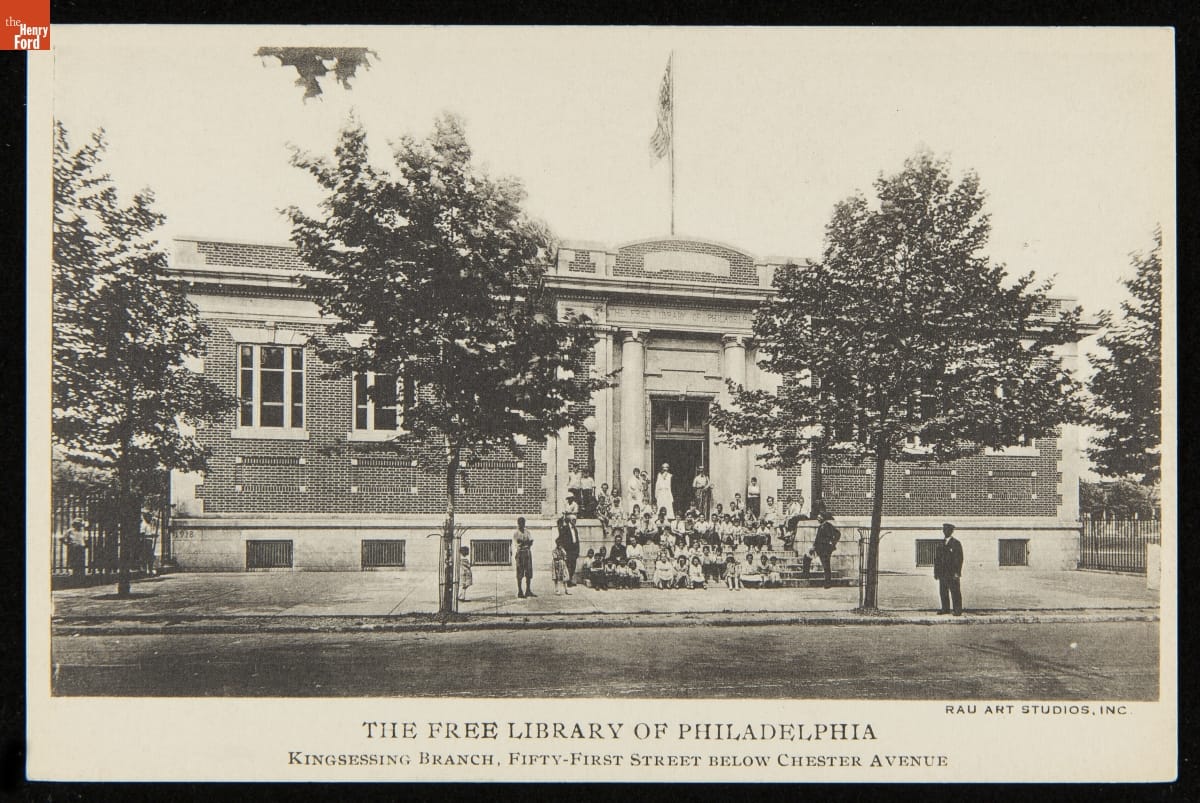
- circa 1915
- Collections - Artifact
Postcard, "The Free Library of Philadelphia, Kingsessing Branch, Fifty-First Street Below Chester Avenue," circa 1918
Until the 20th century, most book collections were not available to everyday Americans. They were either privately owned, accessible only by paid subscription, or stored away haphazardly. In some communities, wealthy citizens funded libraries. Philadelphia philanthropist George Seckel Pepper bequeathed $225,000 to establish The Free Library of Philadelphia in 1889. Over time, the Free Library system grew to include many neighborhood branches.
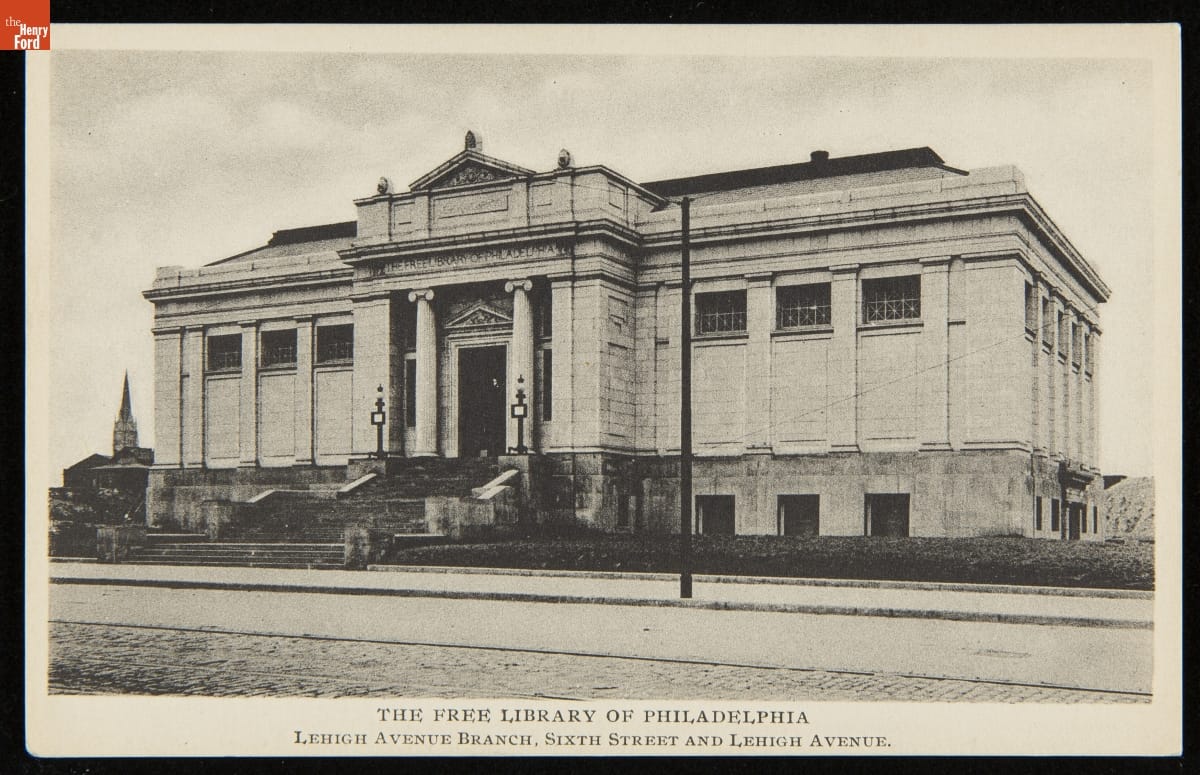
- Postcard, "The Free Library of Philadelphia, Lehigh Avenue Branch, Sixth Street and Lehigh Avenue," circa 1915 - Until the 20th century, most book collections were not available to everyday Americans. They were either privately owned, accessible only by paid subscription, or stored away haphazardly. In some communities, wealthy citizens funded libraries. Philadelphia philanthropist George Seckel Pepper bequeathed $225,000 to establish The Free Library of Philadelphia in 1889. Over time, the Free Library system grew to include many neighborhood branches.
- circa 1915
- Collections - Artifact
Postcard, "The Free Library of Philadelphia, Lehigh Avenue Branch, Sixth Street and Lehigh Avenue," circa 1915
Until the 20th century, most book collections were not available to everyday Americans. They were either privately owned, accessible only by paid subscription, or stored away haphazardly. In some communities, wealthy citizens funded libraries. Philadelphia philanthropist George Seckel Pepper bequeathed $225,000 to establish The Free Library of Philadelphia in 1889. Over time, the Free Library system grew to include many neighborhood branches.
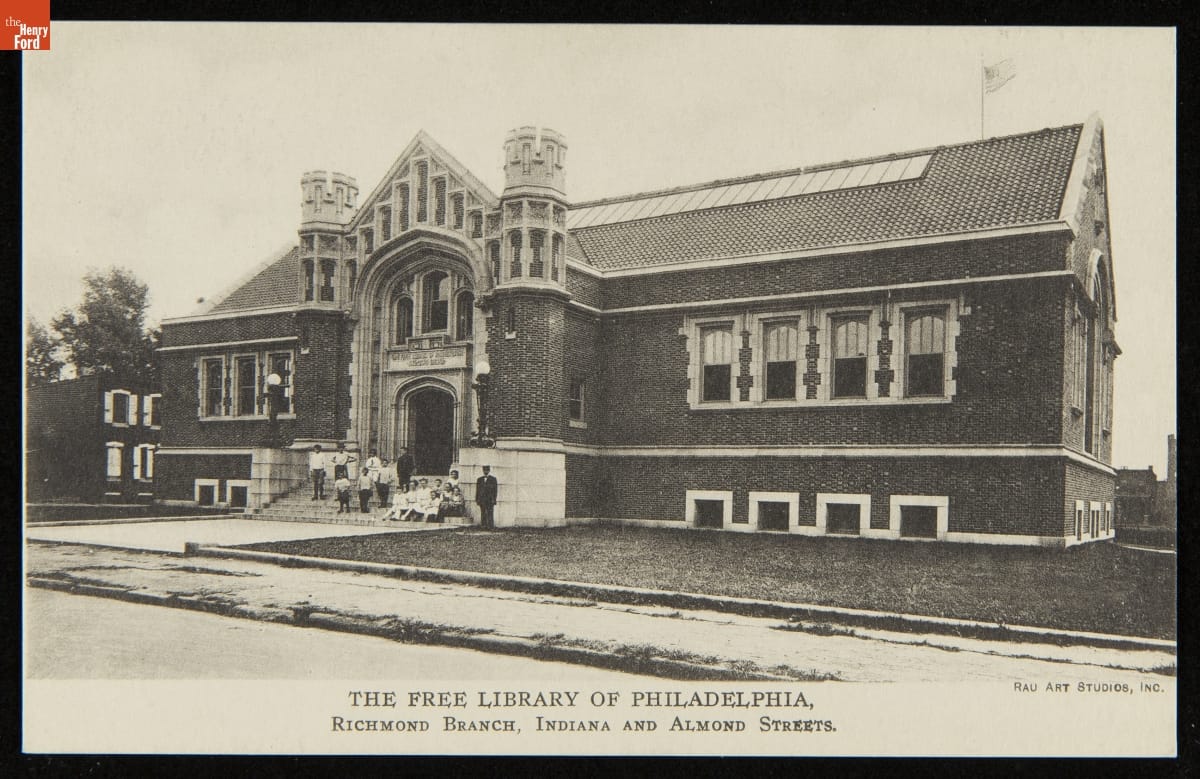
- Postcard, "The Free Library of Philadelphia, Richmond Branch, Indiana and Almond Streets," circa 1915 - Until the 20th century, most book collections were not available to everyday Americans. They were either privately owned, accessible only by paid subscription, or stored away haphazardly. In some communities, wealthy citizens funded libraries. Philadelphia philanthropist George Seckel Pepper bequeathed $225,000 to establish The Free Library of Philadelphia in 1889. Over time, the Free Library system grew to include many neighborhood branches.
- circa 1915
- Collections - Artifact
Postcard, "The Free Library of Philadelphia, Richmond Branch, Indiana and Almond Streets," circa 1915
Until the 20th century, most book collections were not available to everyday Americans. They were either privately owned, accessible only by paid subscription, or stored away haphazardly. In some communities, wealthy citizens funded libraries. Philadelphia philanthropist George Seckel Pepper bequeathed $225,000 to establish The Free Library of Philadelphia in 1889. Over time, the Free Library system grew to include many neighborhood branches.
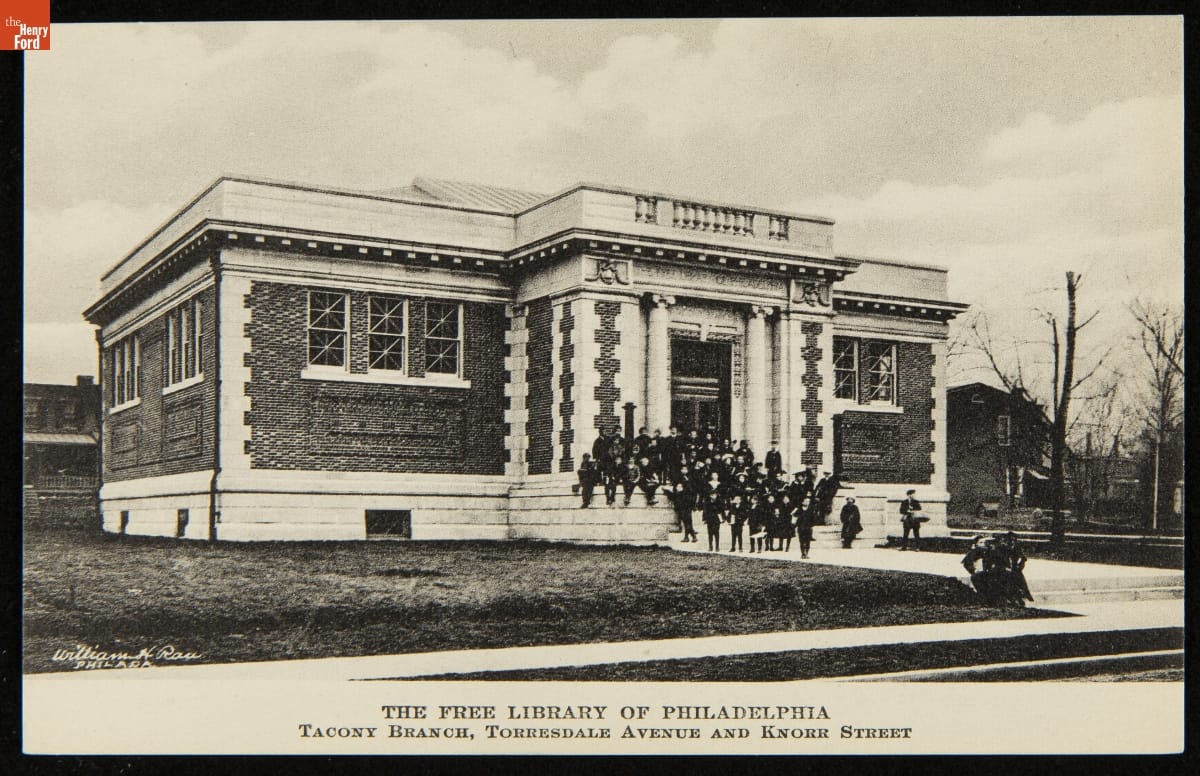
- Postcard, "The Free Library of Philadelphia, Tacony Branch, Torresdale Avenue and Knorr Street," 1906 - Until the 20th century, most book collections were not available to everyday Americans. They were either privately owned, accessible only by paid subscription, or stored away haphazardly. In some communities, wealthy citizens funded libraries. Philadelphia philanthropist George Seckel Pepper bequeathed $225,000 to establish The Free Library of Philadelphia in 1889. Over time, the Free Library system grew to include many neighborhood branches.
- 1906
- Collections - Artifact
Postcard, "The Free Library of Philadelphia, Tacony Branch, Torresdale Avenue and Knorr Street," 1906
Until the 20th century, most book collections were not available to everyday Americans. They were either privately owned, accessible only by paid subscription, or stored away haphazardly. In some communities, wealthy citizens funded libraries. Philadelphia philanthropist George Seckel Pepper bequeathed $225,000 to establish The Free Library of Philadelphia in 1889. Over time, the Free Library system grew to include many neighborhood branches.
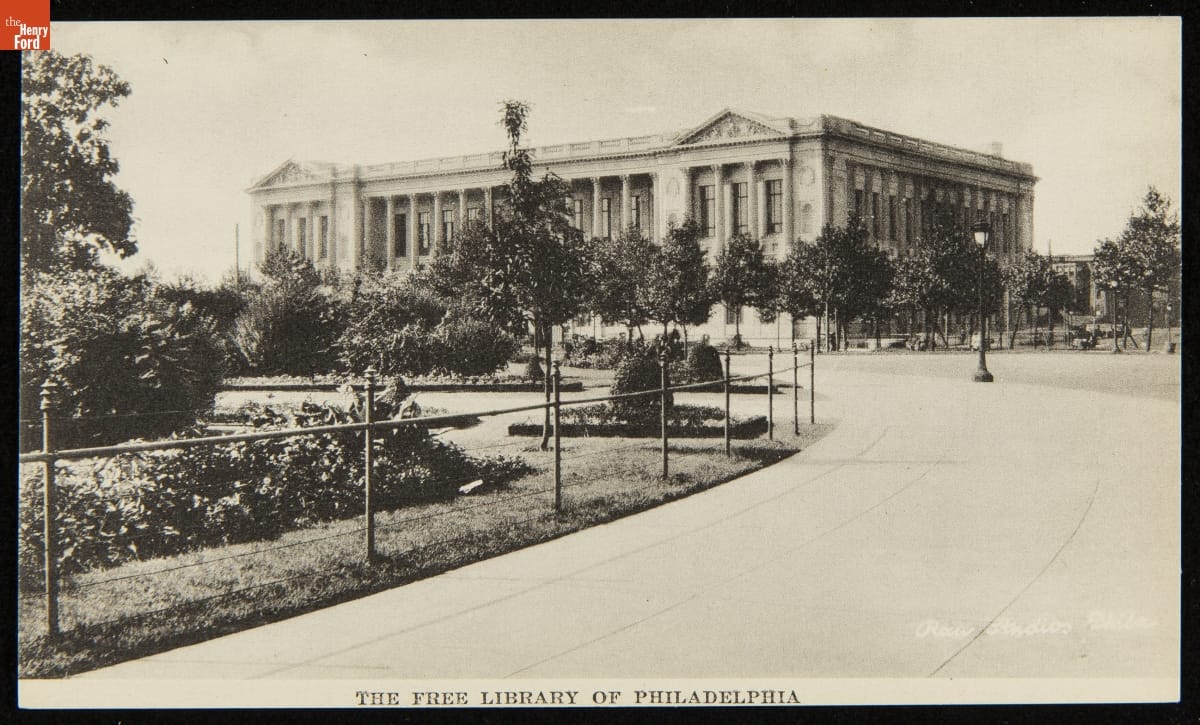
- Postcard, "The Free Library of Philadelphia," circa 1930 - Until the 20th century, most book collections were not available to everyday Americans. They were either privately owned, accessible only by paid subscription, or stored away haphazardly. In some communities, wealthy citizens funded libraries. Philadelphia philanthropist George Seckel Pepper bequeathed $225,000 in 1889 to establish The Free Library of Philadelphia. The Free Library system's massive Central Library, pictured here, opened in 1927.
- circa 1930
- Collections - Artifact
Postcard, "The Free Library of Philadelphia," circa 1930
Until the 20th century, most book collections were not available to everyday Americans. They were either privately owned, accessible only by paid subscription, or stored away haphazardly. In some communities, wealthy citizens funded libraries. Philadelphia philanthropist George Seckel Pepper bequeathed $225,000 in 1889 to establish The Free Library of Philadelphia. The Free Library system's massive Central Library, pictured here, opened in 1927.
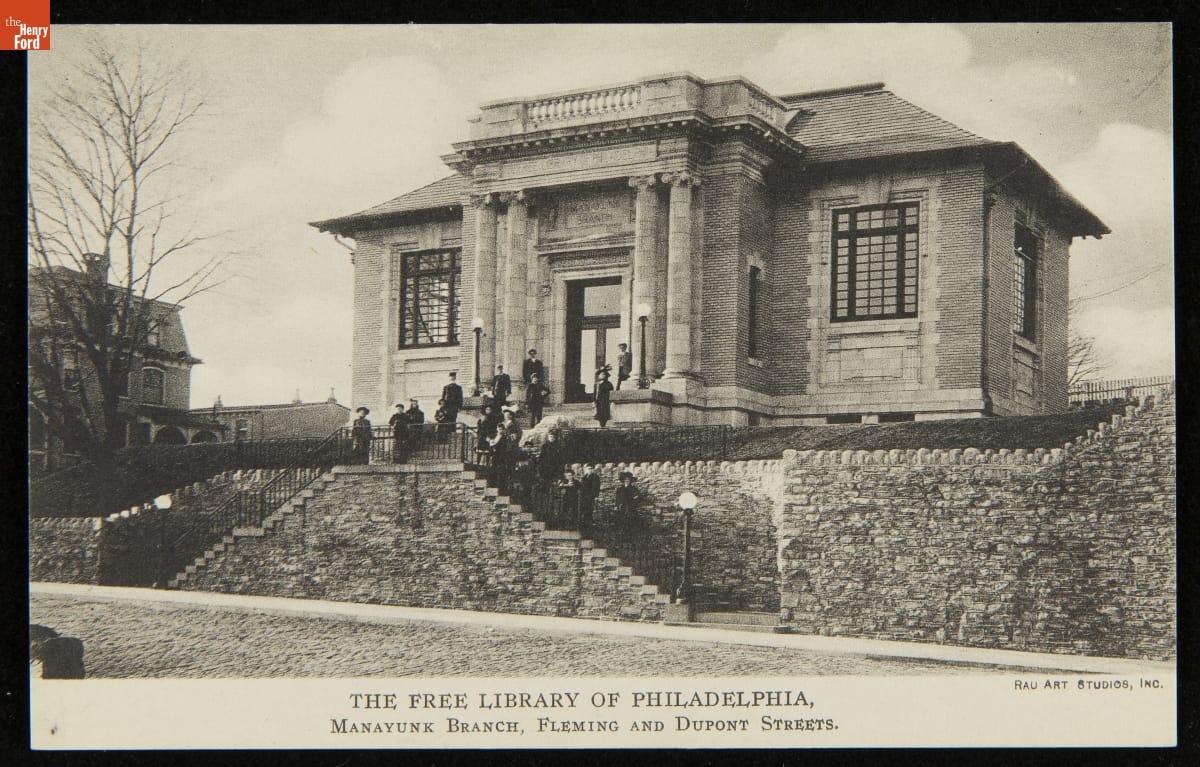
- Postcard, "The Free Library of Philadelphia, Manayunk Branch, Fleming and Dupont Streets," circa 1915 - Until the 20th century, most book collections were not available to everyday Americans. They were either privately owned, accessible only by paid subscription, or stored away haphazardly. In some communities, wealthy citizens funded libraries. Philadelphia philanthropist George Seckel Pepper bequeathed $225,000 to establish The Free Library of Philadelphia in 1889. Over time, the Free Library system grew to include many neighborhood branches.
- circa 1915
- Collections - Artifact
Postcard, "The Free Library of Philadelphia, Manayunk Branch, Fleming and Dupont Streets," circa 1915
Until the 20th century, most book collections were not available to everyday Americans. They were either privately owned, accessible only by paid subscription, or stored away haphazardly. In some communities, wealthy citizens funded libraries. Philadelphia philanthropist George Seckel Pepper bequeathed $225,000 to establish The Free Library of Philadelphia in 1889. Over time, the Free Library system grew to include many neighborhood branches.
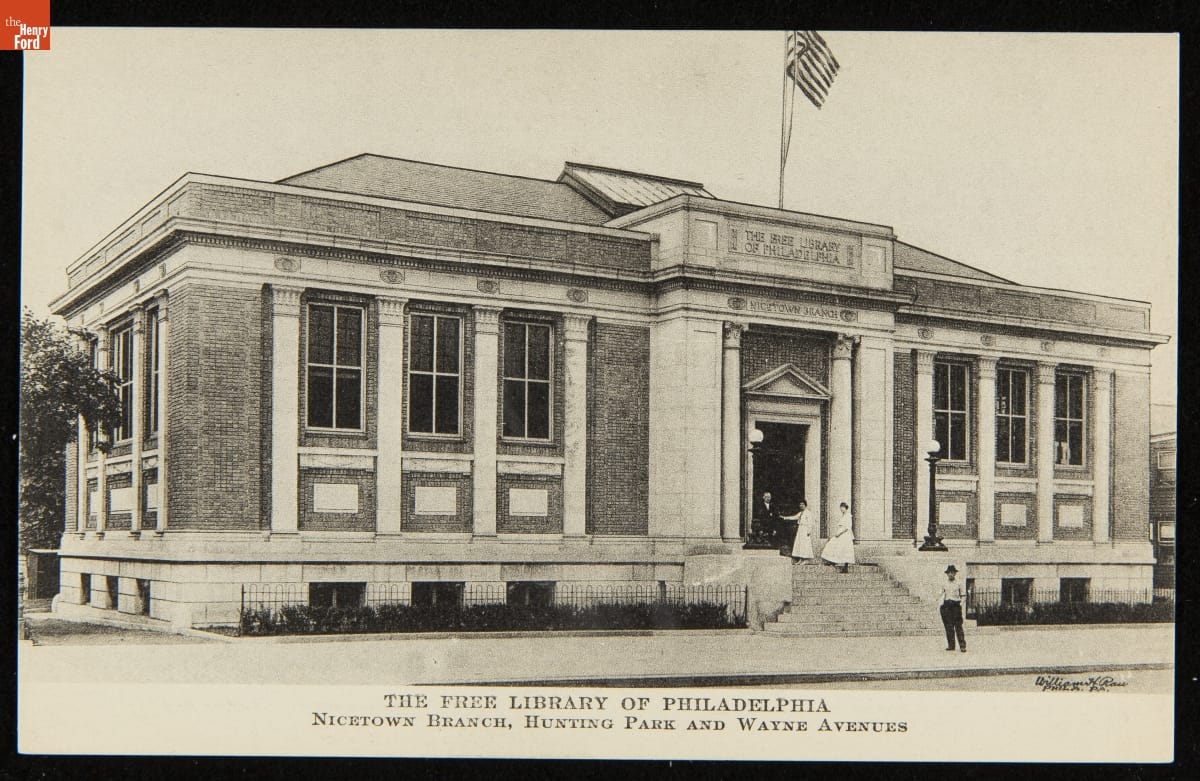
- Postcard, "The Free Library of Philadelphia, Nicetown Branch, Huntington Park & Wayne Avenues," circa 1915 - Until the 20th century, most book collections were not available to everyday Americans. They were either privately owned, accessible only by paid subscription, or stored away haphazardly. In some communities, wealthy citizens funded libraries. Philadelphia philanthropist George Seckel Pepper bequeathed $225,000 to establish The Free Library of Philadelphia in 1889. Over time, the Free Library system grew to include many neighborhood branches.
- circa 1915
- Collections - Artifact
Postcard, "The Free Library of Philadelphia, Nicetown Branch, Huntington Park & Wayne Avenues," circa 1915
Until the 20th century, most book collections were not available to everyday Americans. They were either privately owned, accessible only by paid subscription, or stored away haphazardly. In some communities, wealthy citizens funded libraries. Philadelphia philanthropist George Seckel Pepper bequeathed $225,000 to establish The Free Library of Philadelphia in 1889. Over time, the Free Library system grew to include many neighborhood branches.