
Search
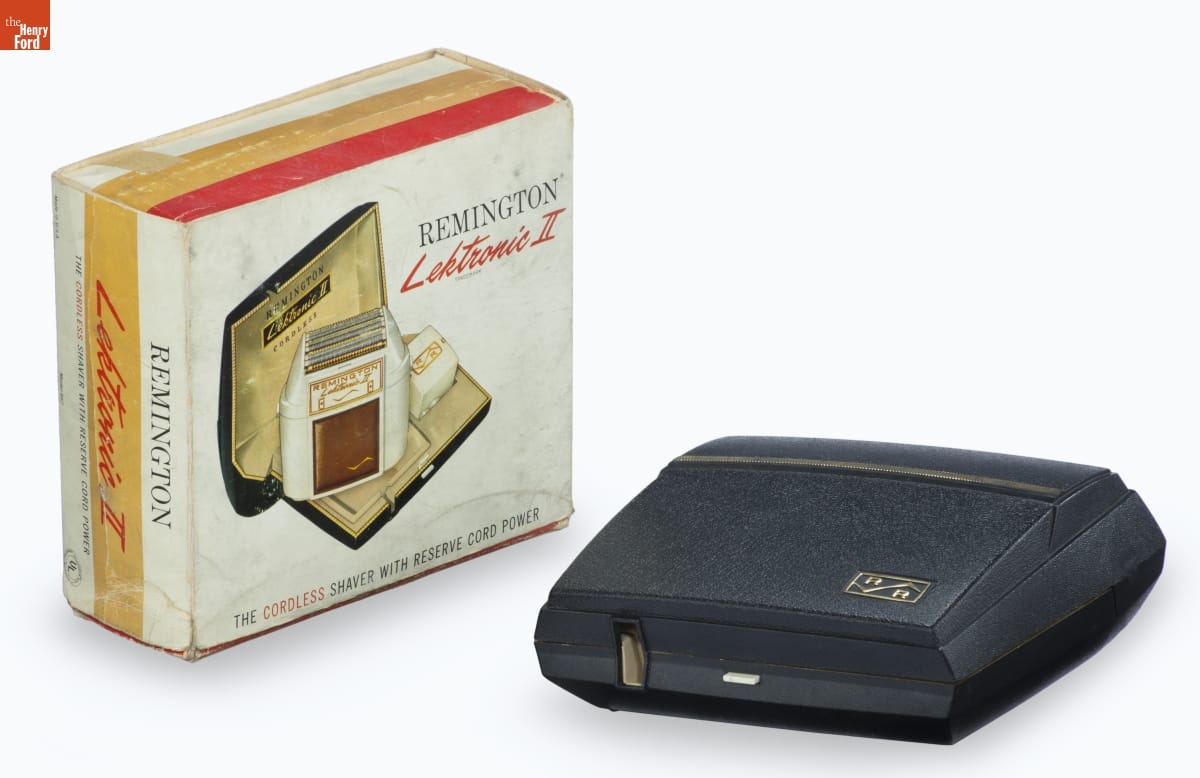
- Remington Lektronic II Electric Razor, circa 1962 - Remington sold its first electric razor in 1937. It had a thin metal foil covering the cutting blades, a feature that would become standard on other electric razors. The company continued to innovate and produce new designs. In 1960, Remington introduced the Lektronic, the first cordless shaver. The company also contracted with Mel Boldt and Associates to design its products' distinctive look.
- circa 1962
- Collections - Artifact
Remington Lektronic II Electric Razor, circa 1962
Remington sold its first electric razor in 1937. It had a thin metal foil covering the cutting blades, a feature that would become standard on other electric razors. The company continued to innovate and produce new designs. In 1960, Remington introduced the Lektronic, the first cordless shaver. The company also contracted with Mel Boldt and Associates to design its products' distinctive look.
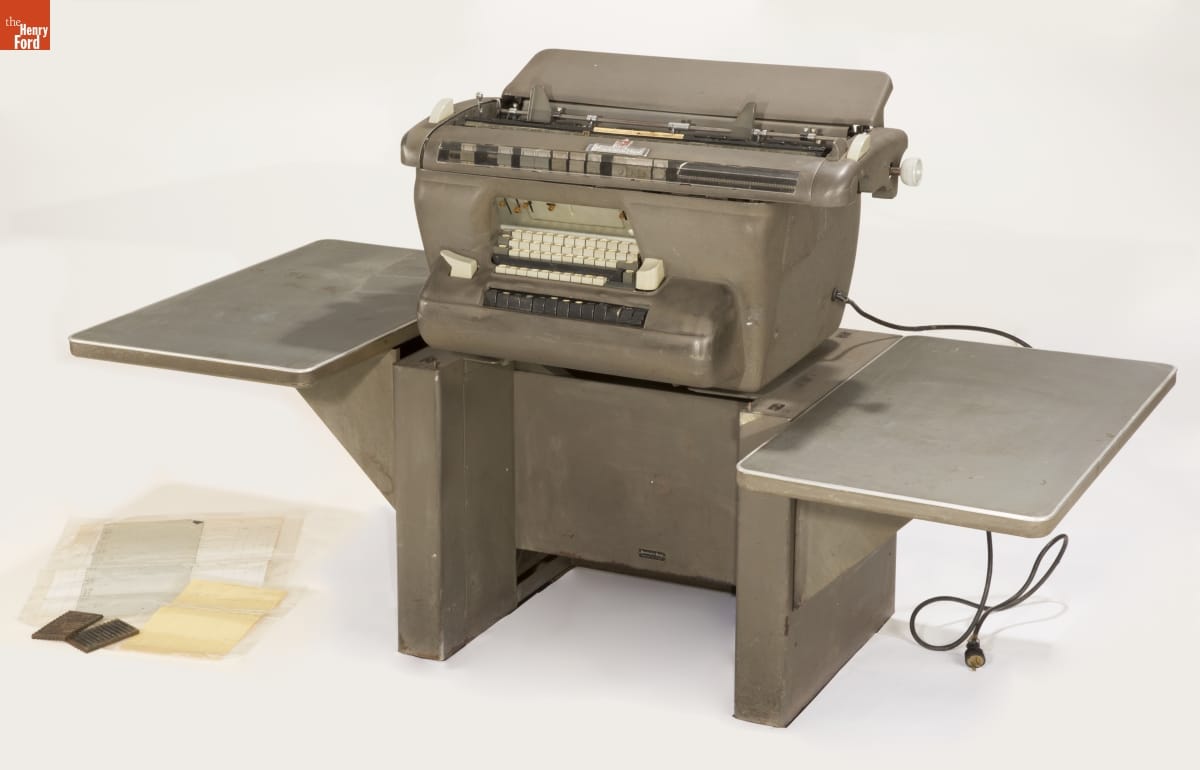
- Remington Rand Bookkeeping Machine and Stand, Model 685, 1945-1955 - Bookkeeping machines were the precursors to the computer -- they processed and moved complex numeric and alphabetic data. Combining elements of typewriters, adding machines, and calculators, bookkeeping machines processed payroll, taxes, and recorded payments and billing. Efficient and reliable, these devices eased the workload of office workers. They were also used as vote tabulators and for complex calculation of scientific data.
- 1945-1955
- Collections - Artifact
Remington Rand Bookkeeping Machine and Stand, Model 685, 1945-1955
Bookkeeping machines were the precursors to the computer -- they processed and moved complex numeric and alphabetic data. Combining elements of typewriters, adding machines, and calculators, bookkeeping machines processed payroll, taxes, and recorded payments and billing. Efficient and reliable, these devices eased the workload of office workers. They were also used as vote tabulators and for complex calculation of scientific data.
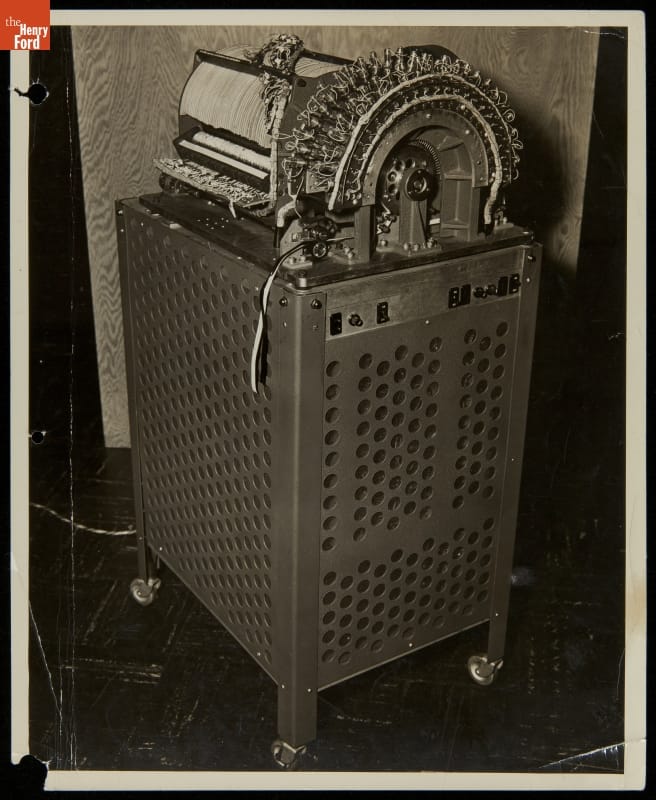
- Machinery, Remington Rand, Inc., 1953 - George Devol was a problem solver and prolific inventor -- particularly in the area of automation. After the Second World War, Devol patented a magnetic control system -- a memory system for machines. With this reprogrammable system, manufacturers could "teach" a machine to perform repetitive tasks. Devol's innovation led to his most notable invention -- the first industrial robot.
- January 08, 1953
- Collections - Artifact
Machinery, Remington Rand, Inc., 1953
George Devol was a problem solver and prolific inventor -- particularly in the area of automation. After the Second World War, Devol patented a magnetic control system -- a memory system for machines. With this reprogrammable system, manufacturers could "teach" a machine to perform repetitive tasks. Devol's innovation led to his most notable invention -- the first industrial robot.
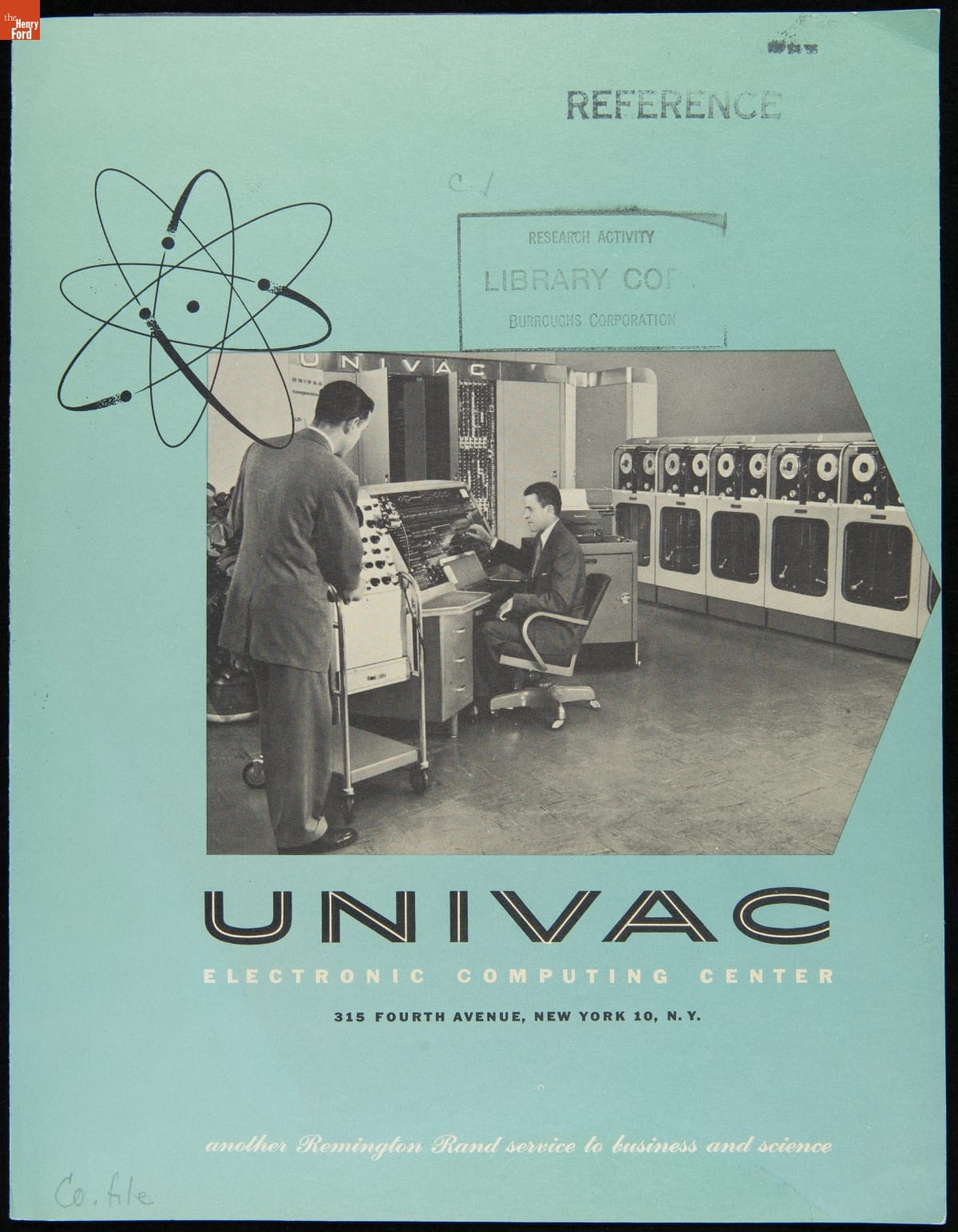
- Univac Electronic Computer Center, circa 1954 -
- circa 1954
- Collections - Artifact
Univac Electronic Computer Center, circa 1954
- A Piece of Machinery, Remington Rand, Inc., 1953 - George Devol was a problem solver and prolific inventor -- particularly in the area of automation. After the Second World War, Devol patented a magnetic control system -- a memory system for machines. With this reprogrammable system, manufacturers could "teach" a machine to perform repetitive tasks. Devol's innovation led to his most notable invention -- the first industrial robot.
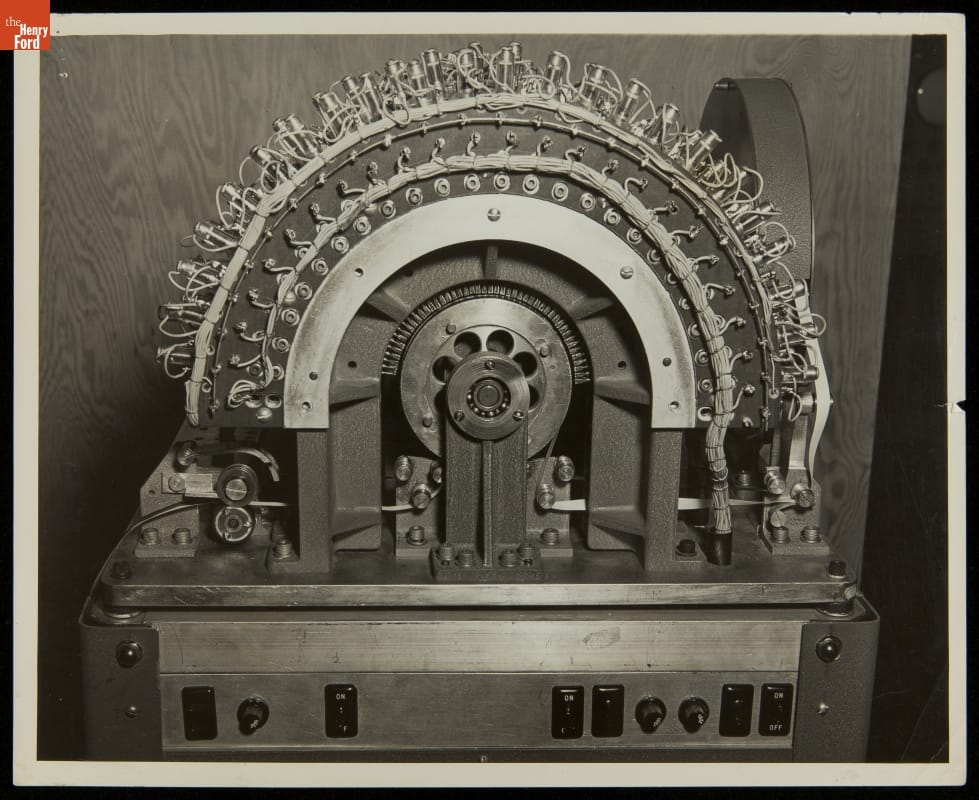
- January 08, 1953
- Collections - Artifact
A Piece of Machinery, Remington Rand, Inc., 1953
George Devol was a problem solver and prolific inventor -- particularly in the area of automation. After the Second World War, Devol patented a magnetic control system -- a memory system for machines. With this reprogrammable system, manufacturers could "teach" a machine to perform repetitive tasks. Devol's innovation led to his most notable invention -- the first industrial robot.
- Machinery, Remington Rand, Inc., 1953 - George Devol was a problem solver and prolific inventor -- particularly in the area of automation. After the Second World War, Devol patented a magnetic control system -- a memory system for machines. With this reprogrammable system, manufacturers could "teach" a machine to perform repetitive tasks. Devol's innovation led to his most notable invention -- the first industrial robot.
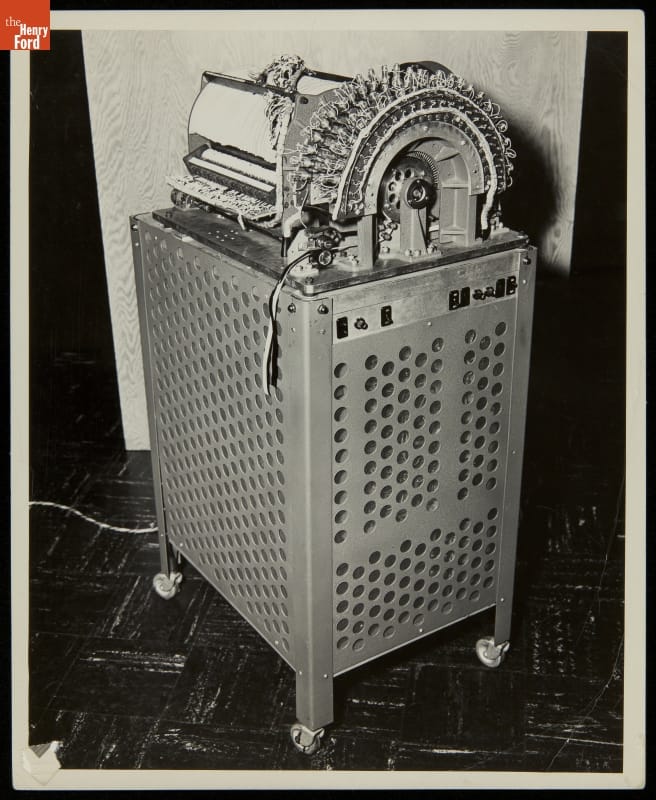
- January 08, 1953
- Collections - Artifact
Machinery, Remington Rand, Inc., 1953
George Devol was a problem solver and prolific inventor -- particularly in the area of automation. After the Second World War, Devol patented a magnetic control system -- a memory system for machines. With this reprogrammable system, manufacturers could "teach" a machine to perform repetitive tasks. Devol's innovation led to his most notable invention -- the first industrial robot.
- Remington Portable Typewriter, Model No. 3, 1930-1935 - Sholes & Glidden introduced the first practical typewriter in 1874. By the 1880s, there were several companies mass producing these machines, including rifle manufacturer Remington & Sons. Typewriters were part of the "information explosion" that included technologies like the phonograph and telephone. They modernized offices by helping workers--increasingly women--reproduce and organize information more neatly and quickly than handwriting.
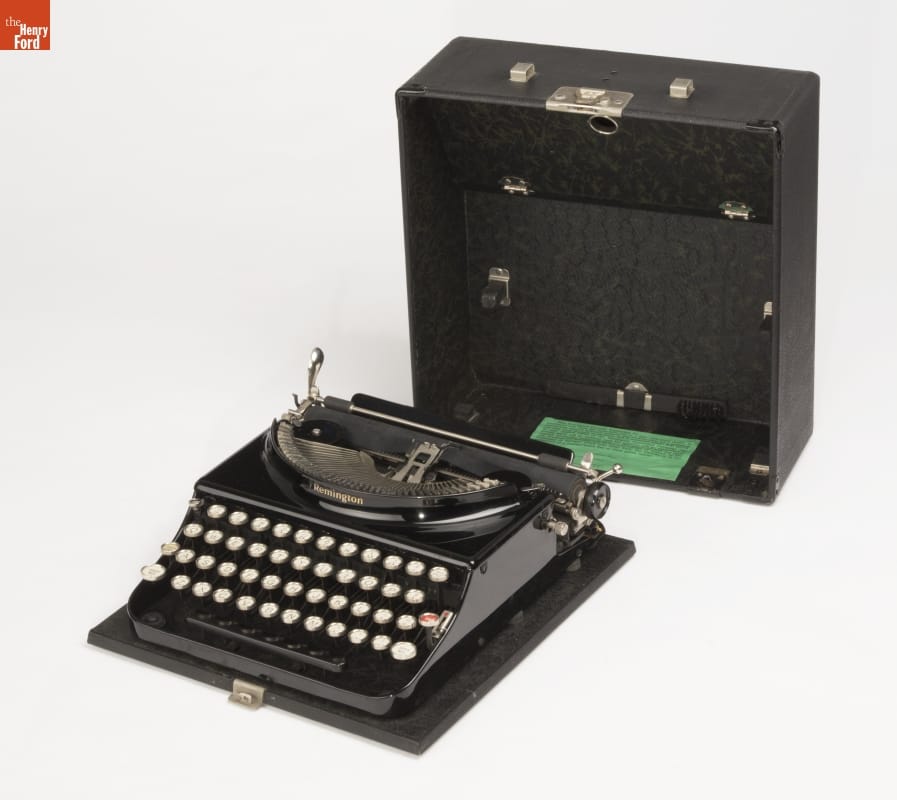
- 1930-1935
- Collections - Artifact
Remington Portable Typewriter, Model No. 3, 1930-1935
Sholes & Glidden introduced the first practical typewriter in 1874. By the 1880s, there were several companies mass producing these machines, including rifle manufacturer Remington & Sons. Typewriters were part of the "information explosion" that included technologies like the phonograph and telephone. They modernized offices by helping workers--increasingly women--reproduce and organize information more neatly and quickly than handwriting.
- A Piece of Machinery, Remington Rand, Inc., 1953 - George Devol was a problem solver and prolific inventor -- particularly in the area of automation. After the Second World War, Devol patented a magnetic control system -- a memory system for machines. With this reprogrammable system, manufacturers could "teach" a machine to perform repetitive tasks. Devol's innovation led to his most notable invention -- the first industrial robot.
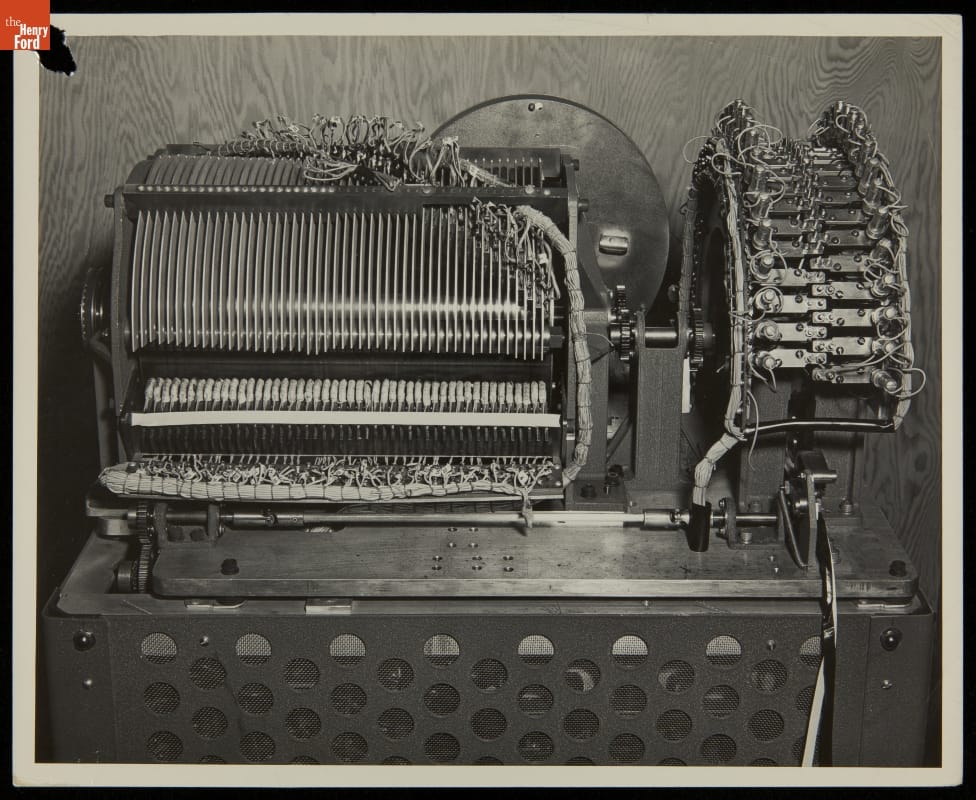
- January 08, 1953
- Collections - Artifact
A Piece of Machinery, Remington Rand, Inc., 1953
George Devol was a problem solver and prolific inventor -- particularly in the area of automation. After the Second World War, Devol patented a magnetic control system -- a memory system for machines. With this reprogrammable system, manufacturers could "teach" a machine to perform repetitive tasks. Devol's innovation led to his most notable invention -- the first industrial robot.
- Remington Deluxe Noiseless Typewriter, 1938 - Sholes & Glidden introduced the first practical typewriter in 1874. By the 1880s, there were several companies mass producing these machines, including rifle manufacturer Remington & Sons. Typewriters were part of the "information explosion" that included technologies like the phonograph and telephone. They modernized offices by helping workers--increasingly women--reproduce and organize information more neatly and quickly than handwriting.
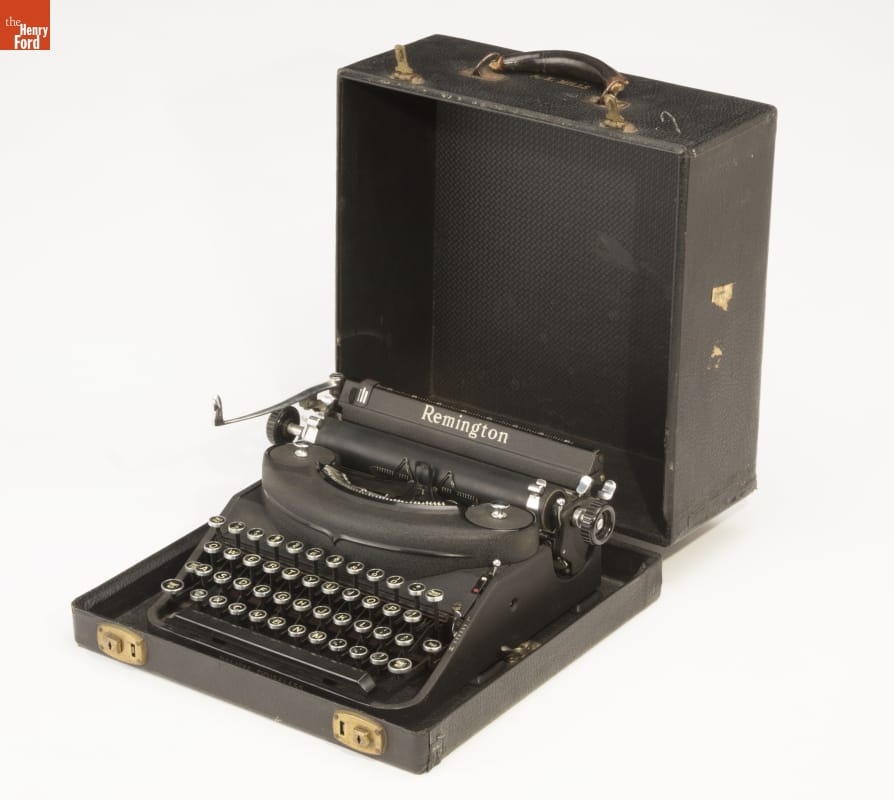
- 1938
- Collections - Artifact
Remington Deluxe Noiseless Typewriter, 1938
Sholes & Glidden introduced the first practical typewriter in 1874. By the 1880s, there were several companies mass producing these machines, including rifle manufacturer Remington & Sons. Typewriters were part of the "information explosion" that included technologies like the phonograph and telephone. They modernized offices by helping workers--increasingly women--reproduce and organize information more neatly and quickly than handwriting.
- Remington Model 7 Noiseless Typewriter, 1931 - Sholes & Glidden introduced the first practical typewriter in 1874. By the 1880s, there were several companies mass producing these machines, including rifle manufacturer Remington & Sons. Typewriters were part of the "information explosion" that included technologies like the phonograph and telephone. They modernized offices by helping workers--increasingly women--reproduce and organize information more neatly and quickly than handwriting.
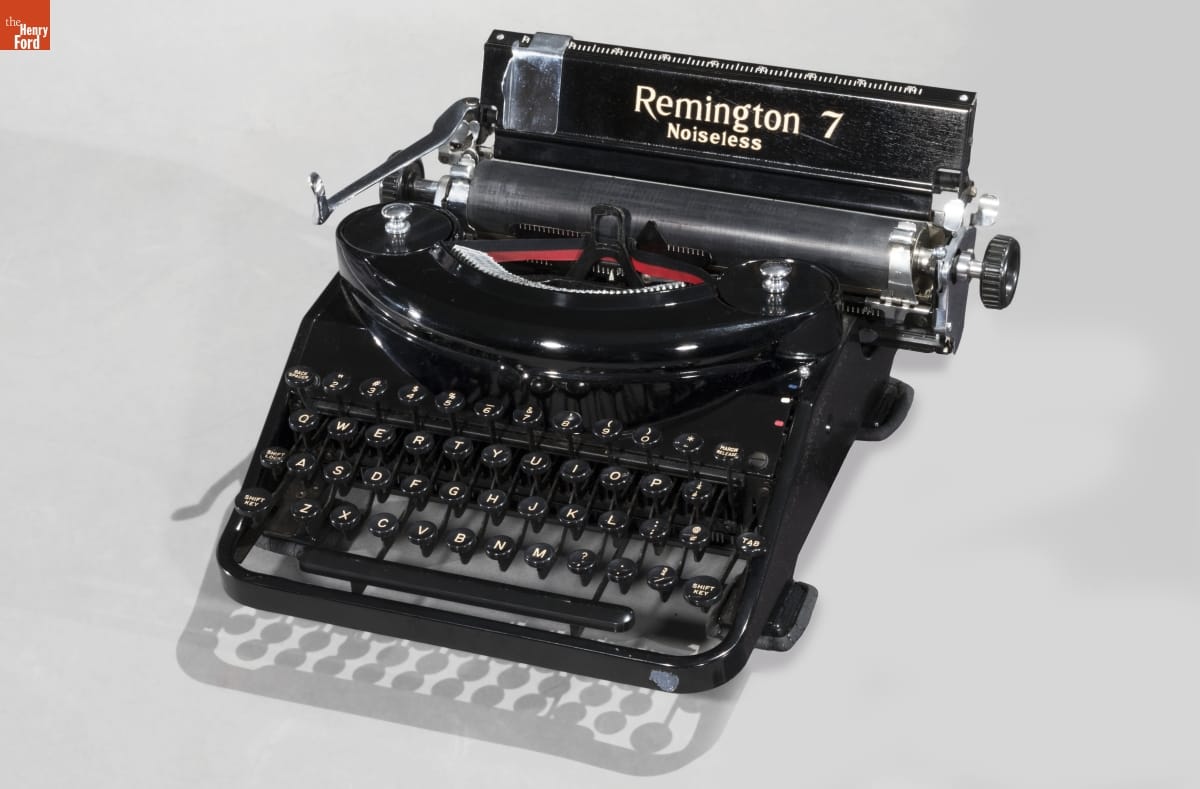
- 1931
- Collections - Artifact
Remington Model 7 Noiseless Typewriter, 1931
Sholes & Glidden introduced the first practical typewriter in 1874. By the 1880s, there were several companies mass producing these machines, including rifle manufacturer Remington & Sons. Typewriters were part of the "information explosion" that included technologies like the phonograph and telephone. They modernized offices by helping workers--increasingly women--reproduce and organize information more neatly and quickly than handwriting.