
Search
- Set of Melamine Tableware, 1950-1960 - During the early 1950s, plastic dinnerware in the form of melamine was introduced to the American market. By 1956, twenty-five percent of Americans owned at least a pair of these plates. Industrial designers Russel and Mary Wright were famous for producing aesthetically pleasing ceramic dinnerware as early as the 1930s. This set, in fashionable turquoise, was the Wrights' first design in plastic.

- 1950-1960
- Collections - Artifact
Set of Melamine Tableware, 1950-1960
During the early 1950s, plastic dinnerware in the form of melamine was introduced to the American market. By 1956, twenty-five percent of Americans owned at least a pair of these plates. Industrial designers Russel and Mary Wright were famous for producing aesthetically pleasing ceramic dinnerware as early as the 1930s. This set, in fashionable turquoise, was the Wrights' first design in plastic.
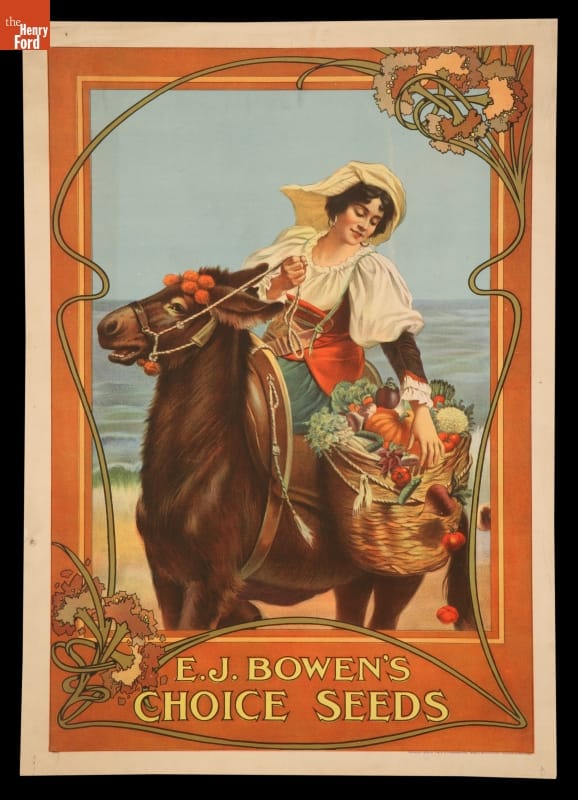
- Advertising Poster, "E.J. Bowen's Choice Seeds," 1904 -
- 1904
- Collections - Artifact
Advertising Poster, "E.J. Bowen's Choice Seeds," 1904
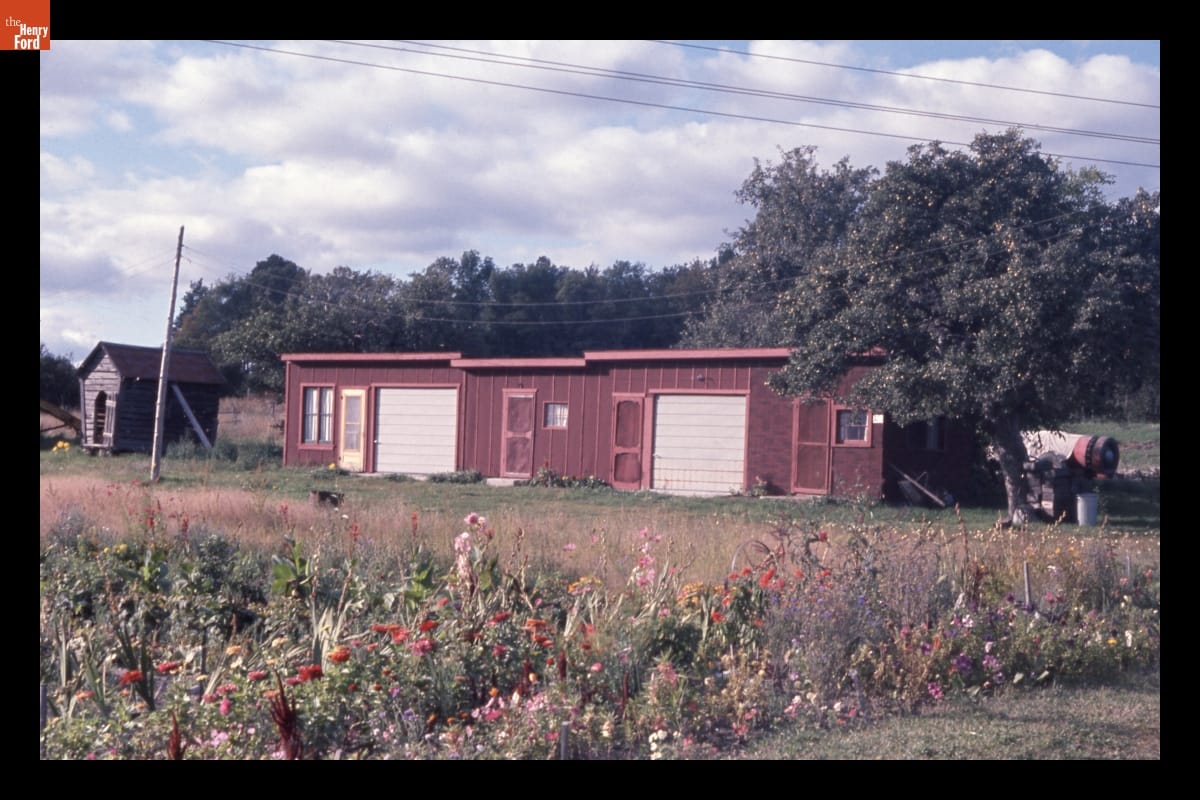
- Living Quarters for Migrant Workers on the Gee Family Farm, 1960-1970 - Cherry orchard owners provided seasonal housing for migrant workers during harvests. The quality of the living spaces varied from grower to grower. This slide shows the exterior of the living quarters provided by the Gee family on their farm around Traverse City, Michigan, in the 1960s.
- 1960-1970
- Collections - Artifact
Living Quarters for Migrant Workers on the Gee Family Farm, 1960-1970
Cherry orchard owners provided seasonal housing for migrant workers during harvests. The quality of the living spaces varied from grower to grower. This slide shows the exterior of the living quarters provided by the Gee family on their farm around Traverse City, Michigan, in the 1960s.
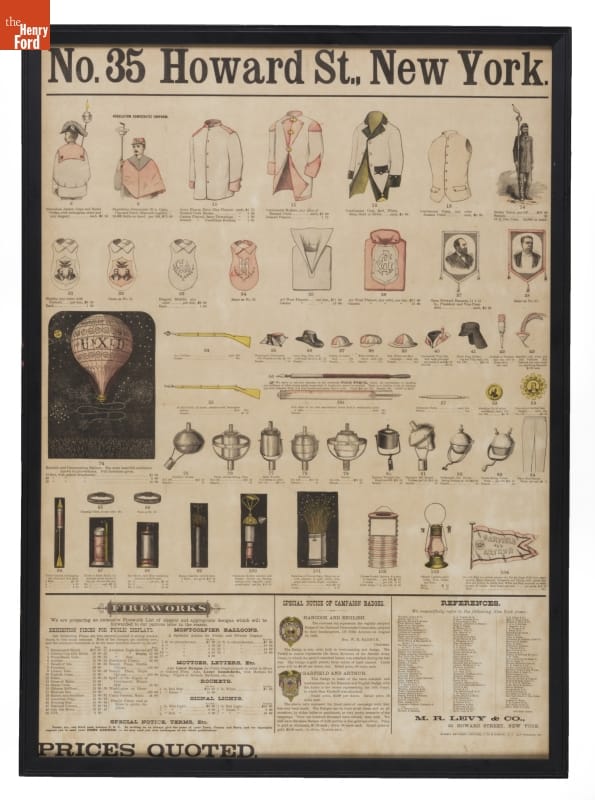
- Advertisement for Political Campaign Supplies, Equipment and Clothing, 1880 - M. R. Levy & Company presented its line of political campaign material for 1880 with this broadside advertisement. Supporters of Democratic and Republican Party candidates could find a range of products -- uniforms, parade torches, badges, banners, and fireworks -- available at Levy's New York City location.
- August 18, 1880
- Collections - Artifact
Advertisement for Political Campaign Supplies, Equipment and Clothing, 1880
M. R. Levy & Company presented its line of political campaign material for 1880 with this broadside advertisement. Supporters of Democratic and Republican Party candidates could find a range of products -- uniforms, parade torches, badges, banners, and fireworks -- available at Levy's New York City location.
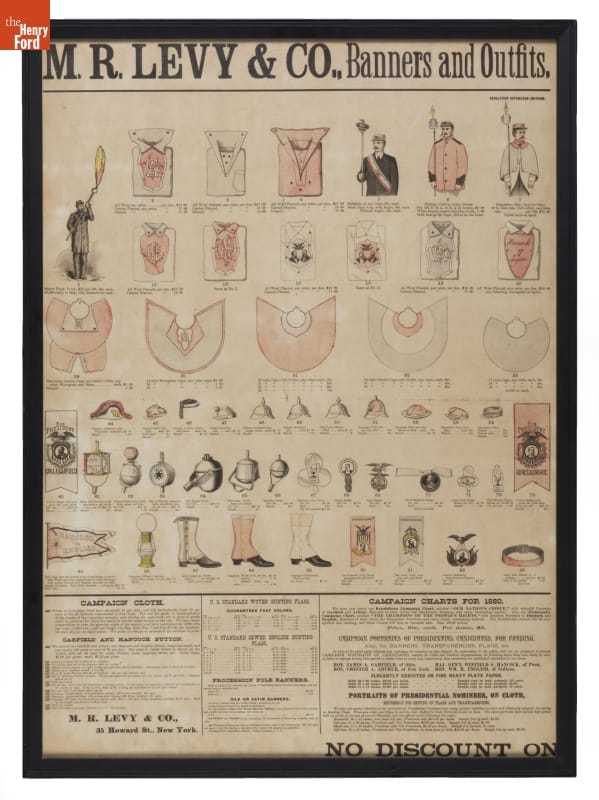
- Framed Advertisement for Political Campaign Supplies, Equipment and Clothing, 1880 - M. R. Levy & Company presented its line of political campaign material for 1880 with this broadside advertisement. Supporters of Democratic and Republican Party candidates could find a range of products -- uniforms, parade torches, badges, and banners -- available at Levy's New York City location.
- August 18, 1880
- Collections - Artifact
Framed Advertisement for Political Campaign Supplies, Equipment and Clothing, 1880
M. R. Levy & Company presented its line of political campaign material for 1880 with this broadside advertisement. Supporters of Democratic and Republican Party candidates could find a range of products -- uniforms, parade torches, badges, and banners -- available at Levy's New York City location.
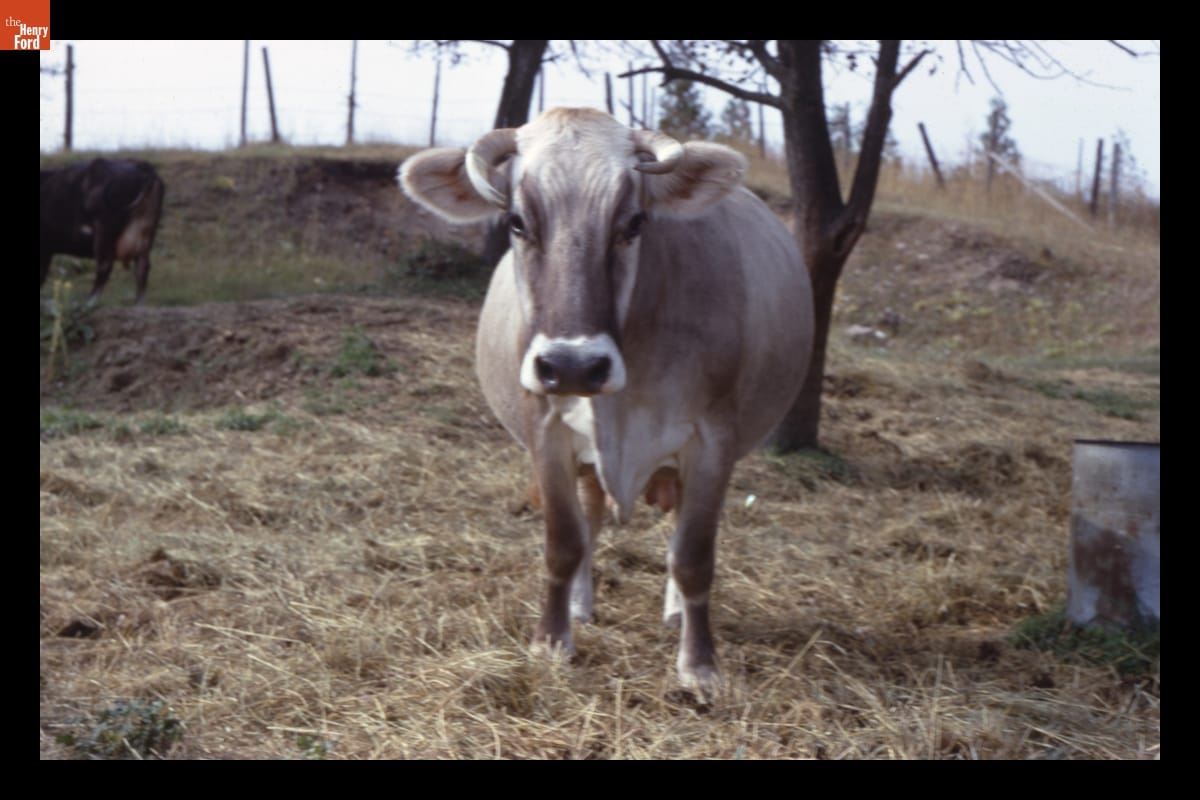
- Brown Swiss Dairy Cow, 1960-1965 -
- 1960-1965
- Collections - Artifact
Brown Swiss Dairy Cow, 1960-1965
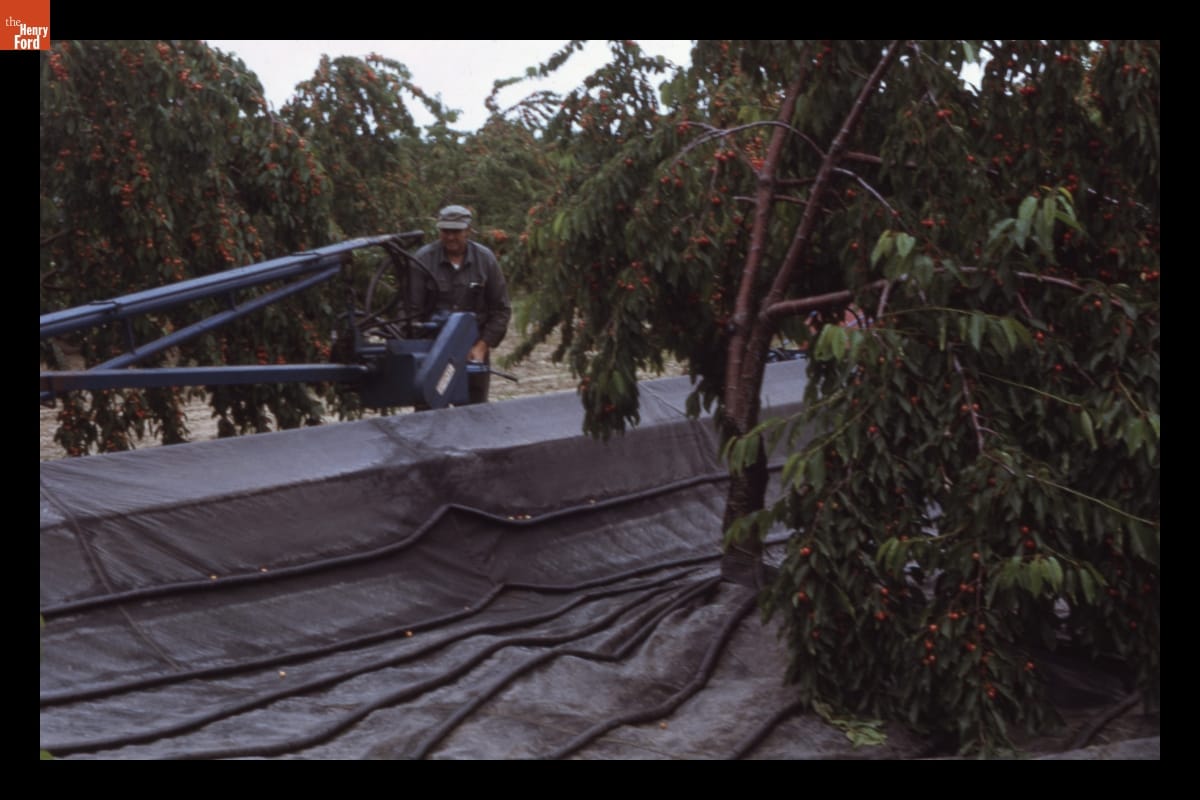
- Henry Gee Preparing the Tree Shaker during Cherry Harvest, 1972 - Cherry growers hired pickers (often migrant laborers) to harvest their crops, but growers sought faster, less labor-intensive solutions. Agricultural engineers developed mechanical harvesters by the late 1960s. These machines shook the trees, causing the ripe fruit to drop onto collecting mats. This slide shows a stage in a mechanical harvest on a family farm in Michigan's cherry-growing region near Traverse City.
- 1972
- Collections - Artifact
Henry Gee Preparing the Tree Shaker during Cherry Harvest, 1972
Cherry growers hired pickers (often migrant laborers) to harvest their crops, but growers sought faster, less labor-intensive solutions. Agricultural engineers developed mechanical harvesters by the late 1960s. These machines shook the trees, causing the ripe fruit to drop onto collecting mats. This slide shows a stage in a mechanical harvest on a family farm in Michigan's cherry-growing region near Traverse City.
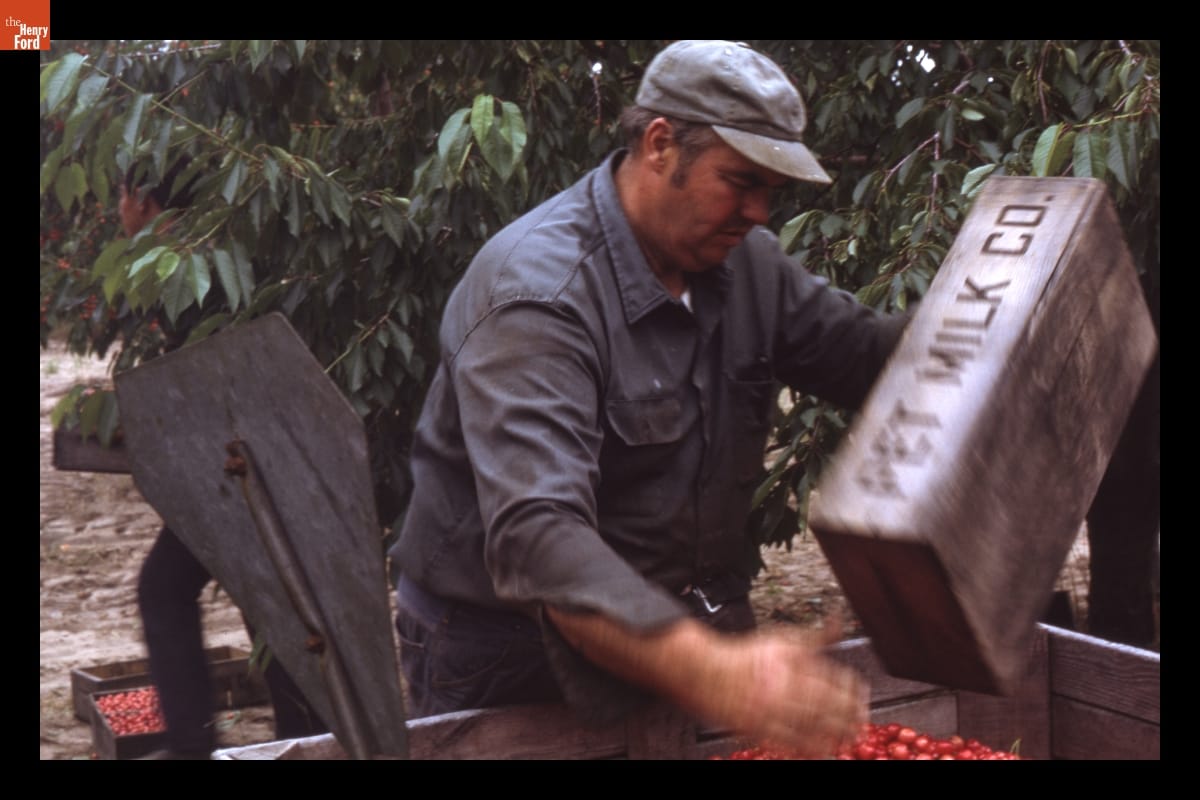
- Henry Gee Loading Cherries into a Crate, 1972 - Cherry growers hired pickers (often migrant laborers) to harvest their crops, but growers sought faster, less labor-intensive solutions. Agricultural engineers developed mechanical harvesters by the late 1960s. These machines shook the trees, causing the ripe fruit to drop onto collecting mats. This slide shows a stage in a mechanical harvest on a family farm in Michigan's cherry-growing region near Traverse City.
- 1972
- Collections - Artifact
Henry Gee Loading Cherries into a Crate, 1972
Cherry growers hired pickers (often migrant laborers) to harvest their crops, but growers sought faster, less labor-intensive solutions. Agricultural engineers developed mechanical harvesters by the late 1960s. These machines shook the trees, causing the ripe fruit to drop onto collecting mats. This slide shows a stage in a mechanical harvest on a family farm in Michigan's cherry-growing region near Traverse City.
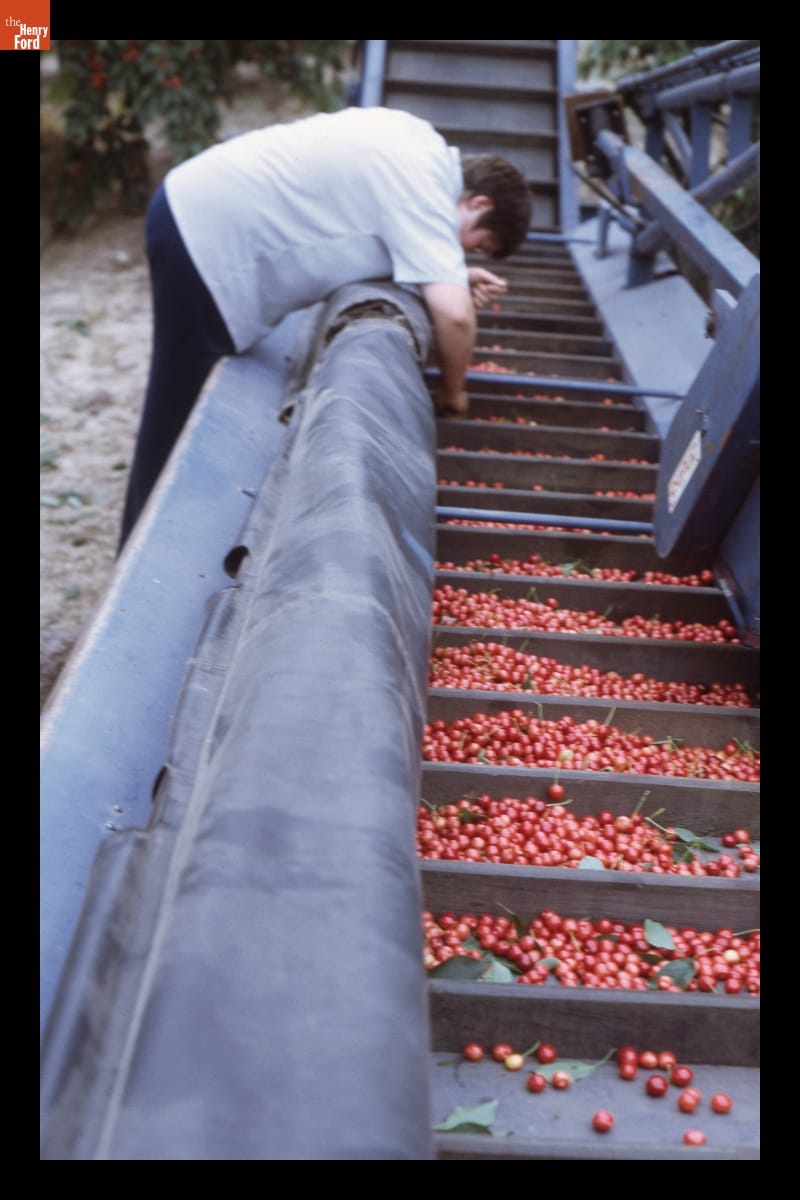
- Linda Malosh Gee Removing Leaves and Debris from Harvested Cherries, 1972 - Cherry growers hired pickers (often migrant laborers) to harvest their crops, but growers sought faster, less labor-intensive solutions. Agricultural engineers developed mechanical harvesters by the late 1960s. These machines shook the trees, causing the ripe fruit to drop onto collecting mats. This slide shows a stage in a mechanical harvest on a family farm in Michigan's cherry-growing region near Traverse City.
- 1972
- Collections - Artifact
Linda Malosh Gee Removing Leaves and Debris from Harvested Cherries, 1972
Cherry growers hired pickers (often migrant laborers) to harvest their crops, but growers sought faster, less labor-intensive solutions. Agricultural engineers developed mechanical harvesters by the late 1960s. These machines shook the trees, causing the ripe fruit to drop onto collecting mats. This slide shows a stage in a mechanical harvest on a family farm in Michigan's cherry-growing region near Traverse City.
- Worker Driving Tractor through Cherry Orchard, 1972 - Cherry growers hired pickers (often migrant laborers) to harvest their crops, but growers sought faster, less labor-intensive solutions. Agricultural engineers developed mechanical harvesters by the late 1960s. These machines shook the trees, causing the ripe fruit to drop onto collecting mats. This slide shows a stage in a mechanical harvest on a family farm in Michigan's cherry-growing region near Traverse City.
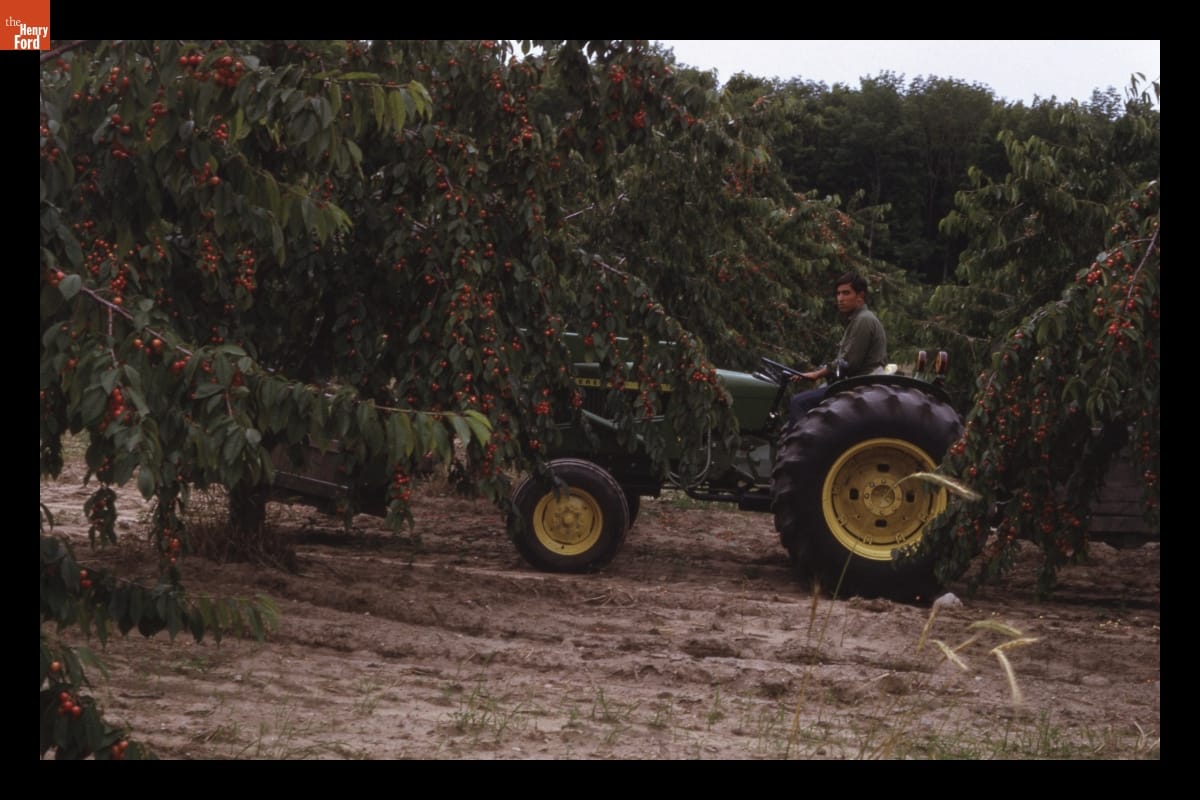
- 1972
- Collections - Artifact
Worker Driving Tractor through Cherry Orchard, 1972
Cherry growers hired pickers (often migrant laborers) to harvest their crops, but growers sought faster, less labor-intensive solutions. Agricultural engineers developed mechanical harvesters by the late 1960s. These machines shook the trees, causing the ripe fruit to drop onto collecting mats. This slide shows a stage in a mechanical harvest on a family farm in Michigan's cherry-growing region near Traverse City.