
Search
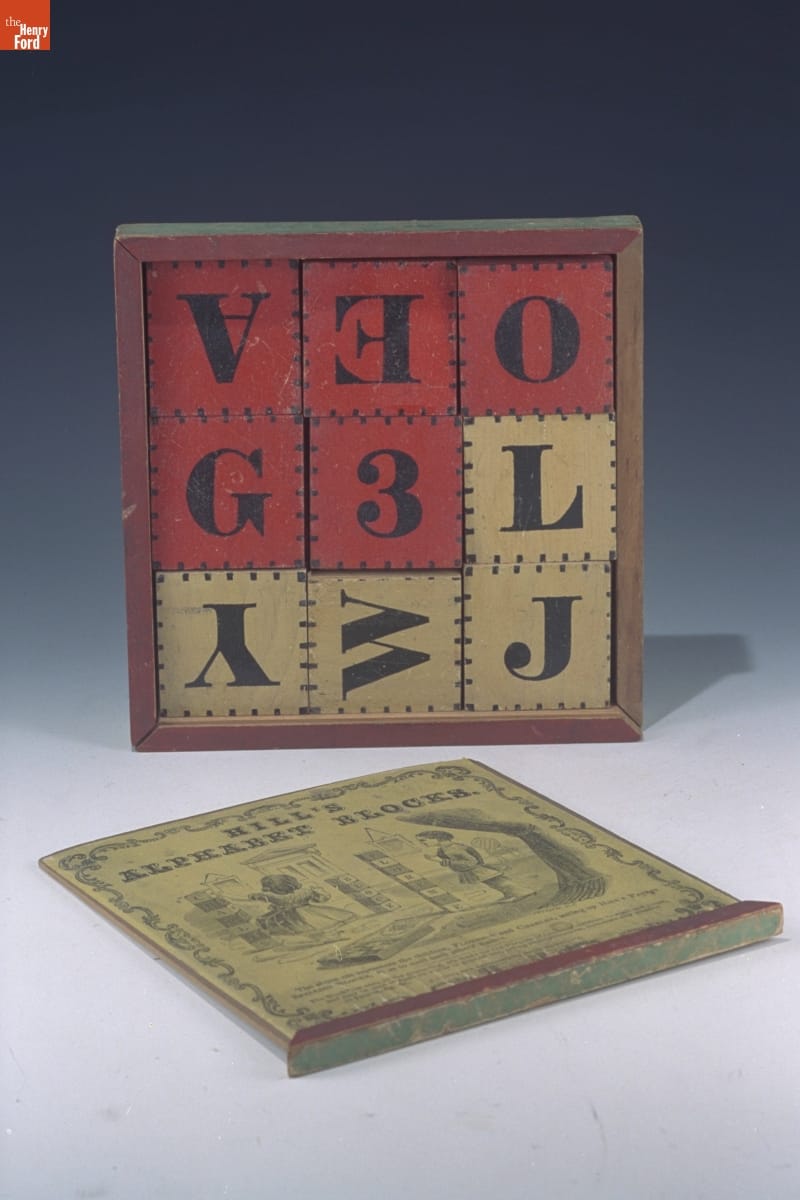
- Alphabet Blocks, 1865-1875 - Mid-nineteenth-century companies drew on new technologies to produce and distribute inexpensive toys. In 1858, New York firm S. L. Hill patented "a new and Improved Spelling-Block" with imagery applied directly to the wood. Hill became the first American manufacturer to mass produce toy alphabet blocks. These popular toys helped children learn letters and numbers and practice spelling. They also served as stackable building blocks.
- 1865-1875
- Collections - Artifact
Alphabet Blocks, 1865-1875
Mid-nineteenth-century companies drew on new technologies to produce and distribute inexpensive toys. In 1858, New York firm S. L. Hill patented "a new and Improved Spelling-Block" with imagery applied directly to the wood. Hill became the first American manufacturer to mass produce toy alphabet blocks. These popular toys helped children learn letters and numbers and practice spelling. They also served as stackable building blocks.
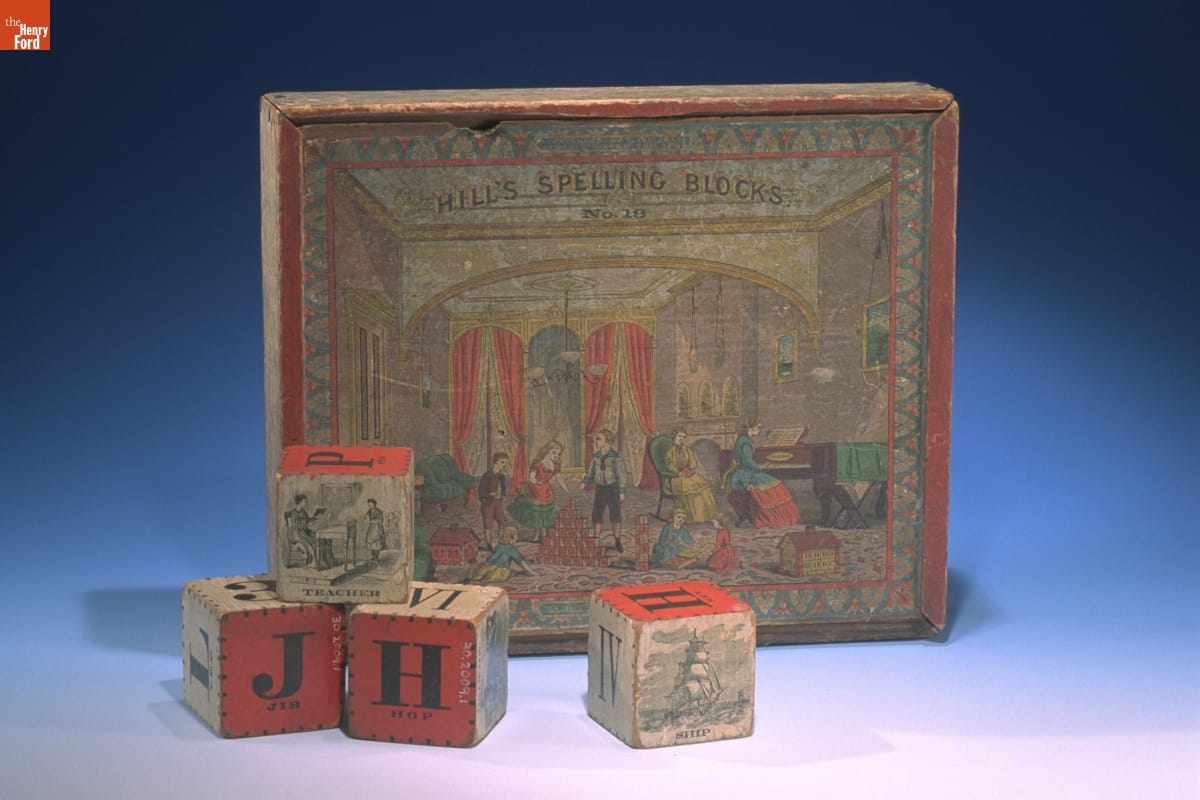
- Hill's Spelling Blocks, 1867-1880 - There have always been toys intended to have an "instructive" purpose. Educational toys for young children taught concepts like learning letters and numbers as well as telling time. S.L. Hill was the first manufacturer in the United States to produce blocks in great quantity. The blocks in this set contain numbers, letters, and pictures.
- 1867-1880
- Collections - Artifact
Hill's Spelling Blocks, 1867-1880
There have always been toys intended to have an "instructive" purpose. Educational toys for young children taught concepts like learning letters and numbers as well as telling time. S.L. Hill was the first manufacturer in the United States to produce blocks in great quantity. The blocks in this set contain numbers, letters, and pictures.
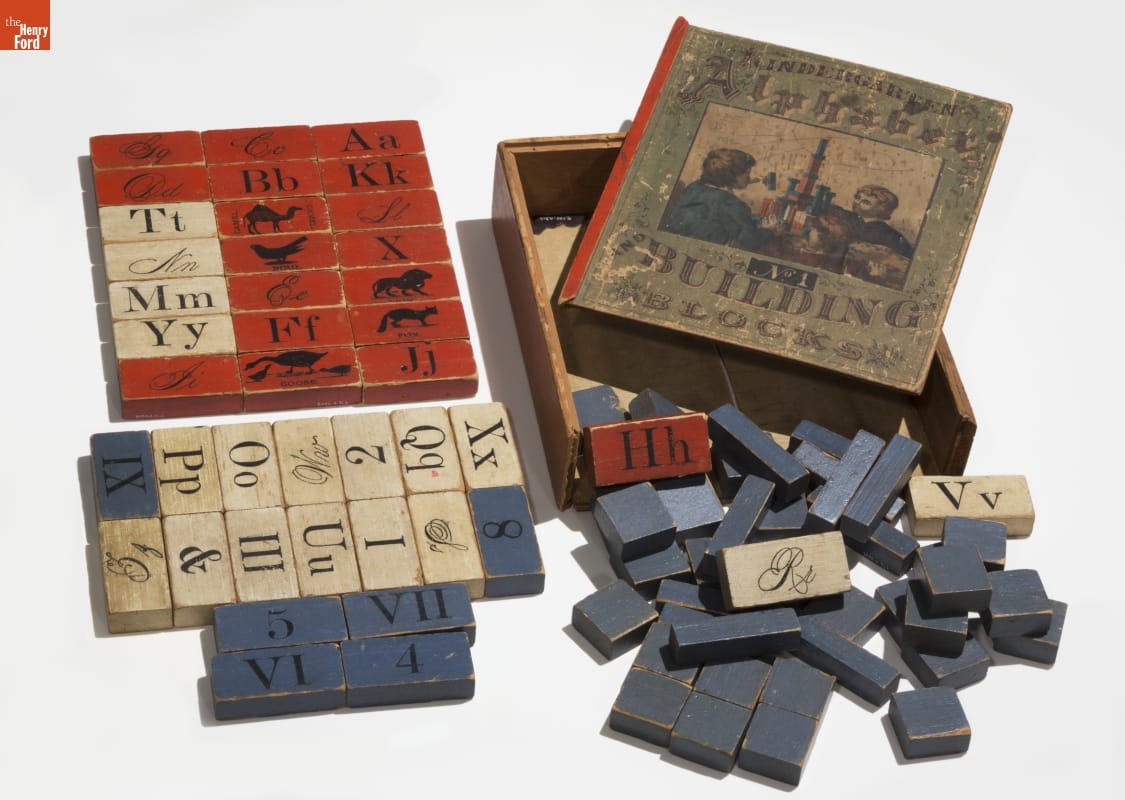
- Hill's Kindergarten Building and Spelling Blocks, 1880-1890 - Educational toys in the late nineteenth century often served multiple purposes. This set of building and alphabet blocks included different shapes and colors for creative stacking. It also offered a variety of learning opportunities. With upper and lowercase letters in print and cursive, images of animals with printed names, and Roman and Arabic numerals, children could practice spelling and counting while they played.
- 1880-1890
- Collections - Artifact
Hill's Kindergarten Building and Spelling Blocks, 1880-1890
Educational toys in the late nineteenth century often served multiple purposes. This set of building and alphabet blocks included different shapes and colors for creative stacking. It also offered a variety of learning opportunities. With upper and lowercase letters in print and cursive, images of animals with printed names, and Roman and Arabic numerals, children could practice spelling and counting while they played.
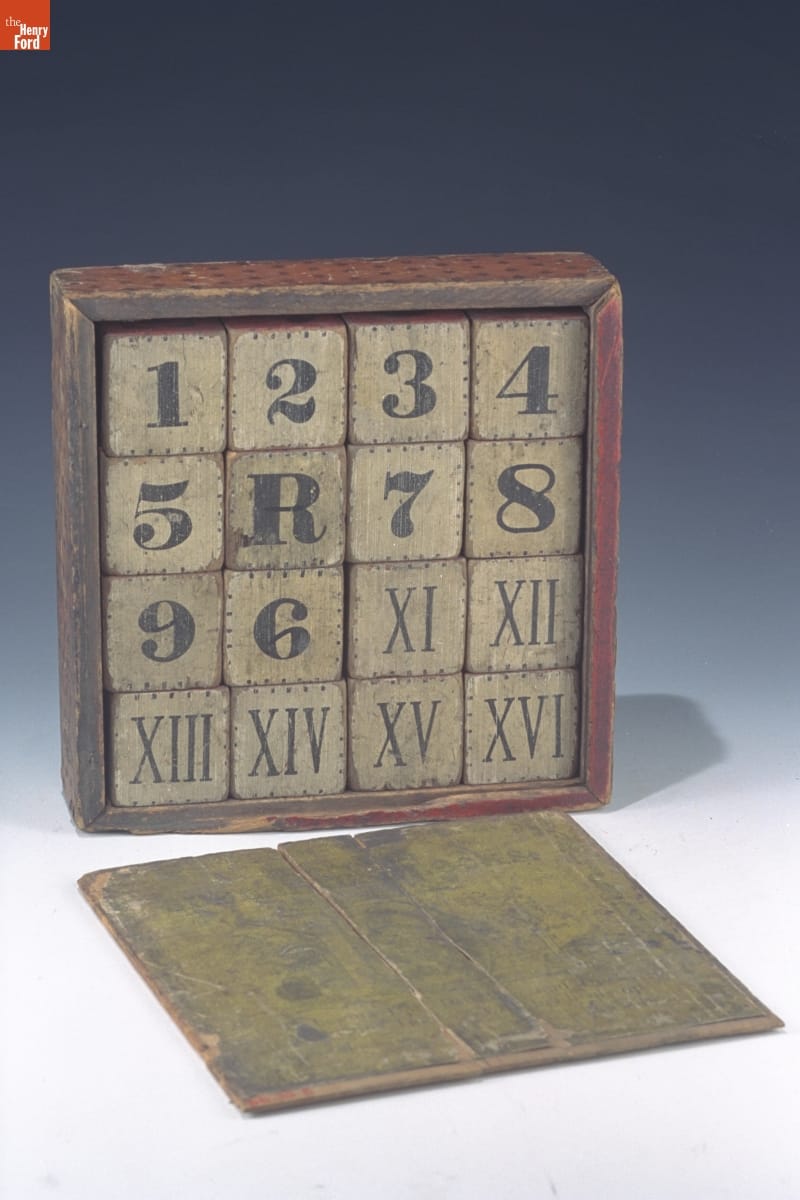
- Alphabet Blocks, 1867-1875 - Mid-nineteenth-century companies drew on new technologies to produce and distribute inexpensive toys. In 1858, New York firm S. L. Hill patented "a new and Improved Spelling-Block" with imagery applied directly to the wood. Hill became the first American manufacturer to mass produce toy alphabet blocks. These popular toys helped children learn letters and numbers and practice spelling. They also served as stackable building blocks.
- 1867-1875
- Collections - Artifact
Alphabet Blocks, 1867-1875
Mid-nineteenth-century companies drew on new technologies to produce and distribute inexpensive toys. In 1858, New York firm S. L. Hill patented "a new and Improved Spelling-Block" with imagery applied directly to the wood. Hill became the first American manufacturer to mass produce toy alphabet blocks. These popular toys helped children learn letters and numbers and practice spelling. They also served as stackable building blocks.