
Search
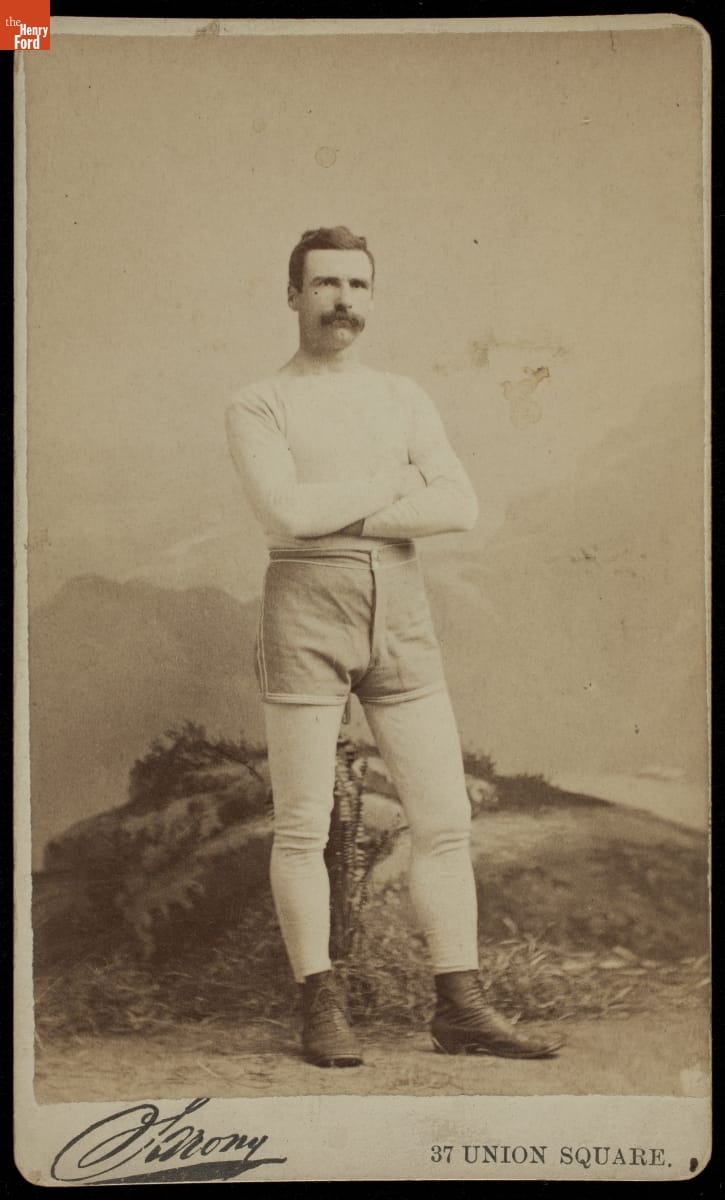
- Portrait of John Ennis, Long-Distance Competitive Walker, 1871-1885 - John Ennis was a well-known long-distance walker in the 1870s and 80s. Competitive walking at that time was a popular spectator sport. Fans crowded into arenas to watch athletes race around a track. Ennis competed in many six-day races and distance events; and his energy never waned. In 1910, at the age of 68, Ennis walked from New York to San Francisco.
- 1871-1885
- Collections - Artifact
Portrait of John Ennis, Long-Distance Competitive Walker, 1871-1885
John Ennis was a well-known long-distance walker in the 1870s and 80s. Competitive walking at that time was a popular spectator sport. Fans crowded into arenas to watch athletes race around a track. Ennis competed in many six-day races and distance events; and his energy never waned. In 1910, at the age of 68, Ennis walked from New York to San Francisco.
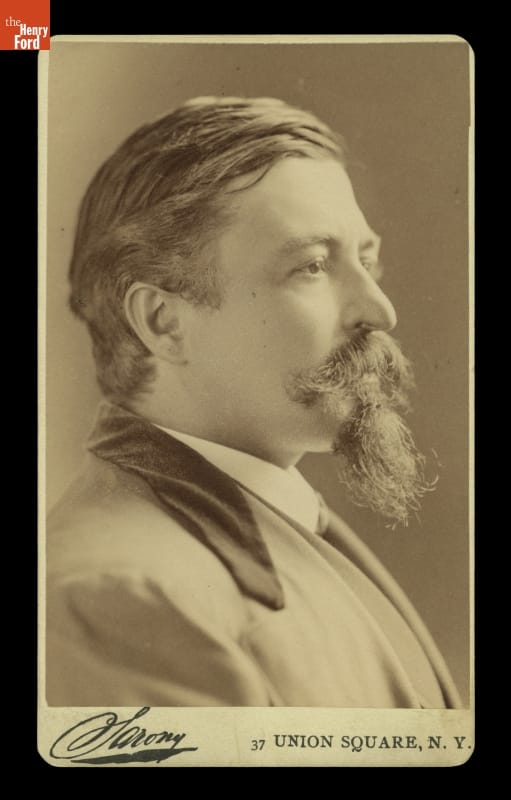
- Portrait of Thomas Nast, circa 1870 - Thomas Nast (1840-1902) was an influential illustrator and political cartoonist. His illustrations -- especially those created during his 25-year career working for Harper & Brothers -- impacted American political and social life. Nast's works lampooned governmental officials and attacked corruption. He popularized characters like the Republican elephant and Democratic donkey. But his most enduring legacy is the creation of our modern image of Santa Claus.
- circa 1870
- Collections - Artifact
Portrait of Thomas Nast, circa 1870
Thomas Nast (1840-1902) was an influential illustrator and political cartoonist. His illustrations -- especially those created during his 25-year career working for Harper & Brothers -- impacted American political and social life. Nast's works lampooned governmental officials and attacked corruption. He popularized characters like the Republican elephant and Democratic donkey. But his most enduring legacy is the creation of our modern image of Santa Claus.
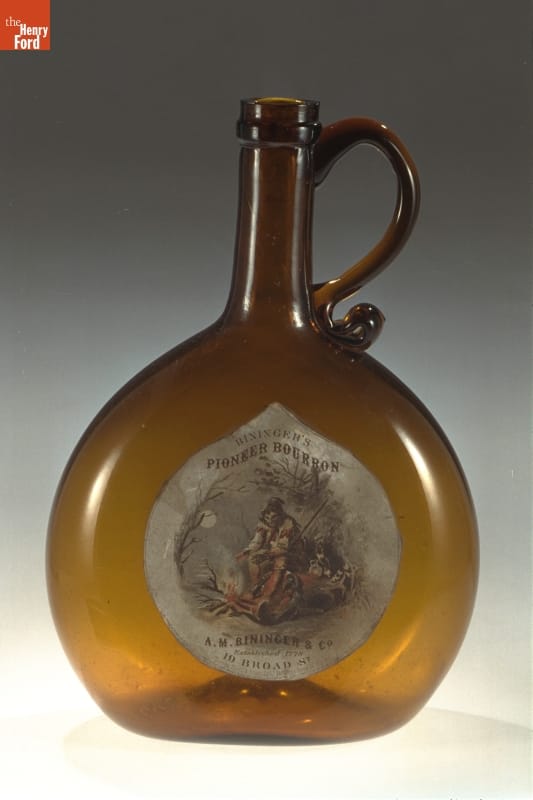
- Whiskey Bottle, 1859-1870 - Abraham Bininger established a grocery business in New York City in the late 1700s. Family descendants carried on the trade into the late 1800s, selling alcoholic spirits in bottles with a variety of shapes. The bottles were often embossed with Bininger's name and description of the contents. Other bottles, like this one, sported printed labels.
- 1859-1870
- Collections - Artifact
Whiskey Bottle, 1859-1870
Abraham Bininger established a grocery business in New York City in the late 1700s. Family descendants carried on the trade into the late 1800s, selling alcoholic spirits in bottles with a variety of shapes. The bottles were often embossed with Bininger's name and description of the contents. Other bottles, like this one, sported printed labels.
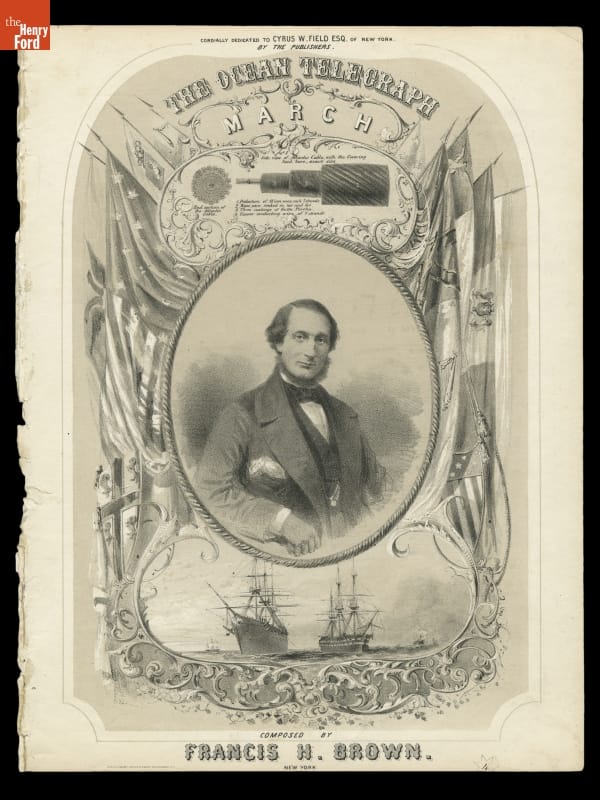
- Music Sheet, "Ocean Telegraph March," 1858 - This sheet music celebrates the first transatlantic cable. The ships depicted are the USS <em>Niagara</em> and HMS <em>Agamemnon</em>. These vessels met in the middle of the Atlantic Ocean, spliced their cable payloads together, and set off to separate shores in Ireland and Canada. The man at center is likely Cyrus W. Field, financier of the first and second transatlantic cables.
- 1858
- Collections - Artifact
Music Sheet, "Ocean Telegraph March," 1858
This sheet music celebrates the first transatlantic cable. The ships depicted are the USS Niagara and HMS Agamemnon. These vessels met in the middle of the Atlantic Ocean, spliced their cable payloads together, and set off to separate shores in Ireland and Canada. The man at center is likely Cyrus W. Field, financier of the first and second transatlantic cables.
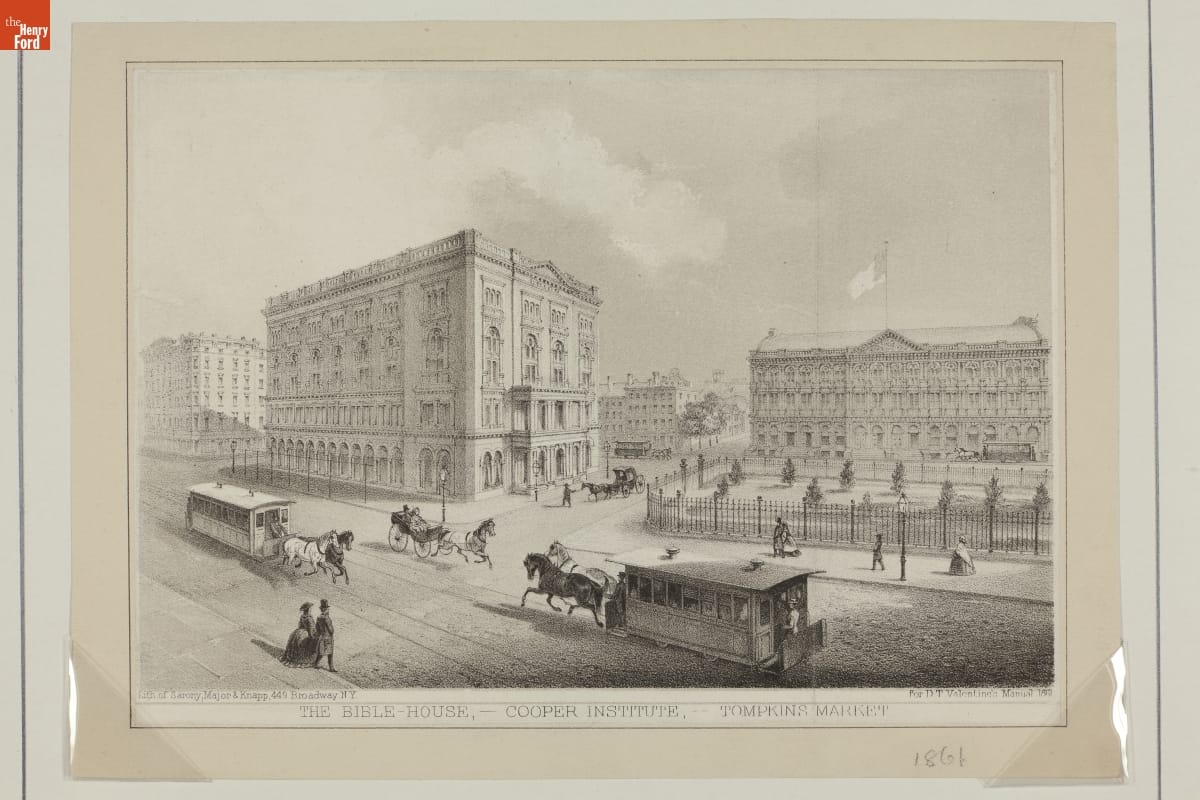
- "Bible-House - Cooper Institute - Tompkins Market," 1861 - This 1861 lithograph depicts the streetcars traversing the streets at Cooper Union in New York City. Horse-drawn rail cars pass by the Tompkins Market and Armory, the Bible House, and the Cooper Institute.
- 1861
- Collections - Artifact
"Bible-House - Cooper Institute - Tompkins Market," 1861
This 1861 lithograph depicts the streetcars traversing the streets at Cooper Union in New York City. Horse-drawn rail cars pass by the Tompkins Market and Armory, the Bible House, and the Cooper Institute.
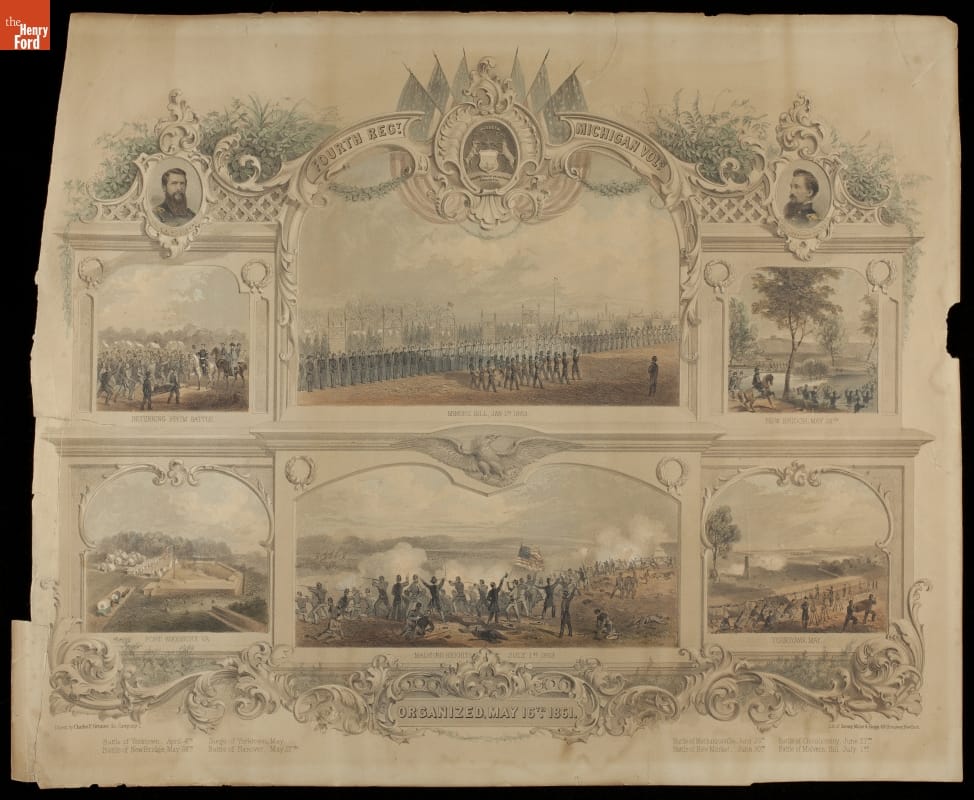
- Lithograph, Battles of the Fourth Regiment Michigan Volunteers, circa 1865 - Charles Gruner, a soldier in the 4th Michigan Volunteer Infantry during the Civil War, sketched some of his regiment's early wartime experiences. These include standing at attention during winter encampment, digging earthworks, and returning from a successful skirmish at New Bridge, Virginia, in May 1862 -- a fight that gained the regiment national publicity. These sketches were later published in this print.
- 1862-1863
- Collections - Artifact
Lithograph, Battles of the Fourth Regiment Michigan Volunteers, circa 1865
Charles Gruner, a soldier in the 4th Michigan Volunteer Infantry during the Civil War, sketched some of his regiment's early wartime experiences. These include standing at attention during winter encampment, digging earthworks, and returning from a successful skirmish at New Bridge, Virginia, in May 1862 -- a fight that gained the regiment national publicity. These sketches were later published in this print.
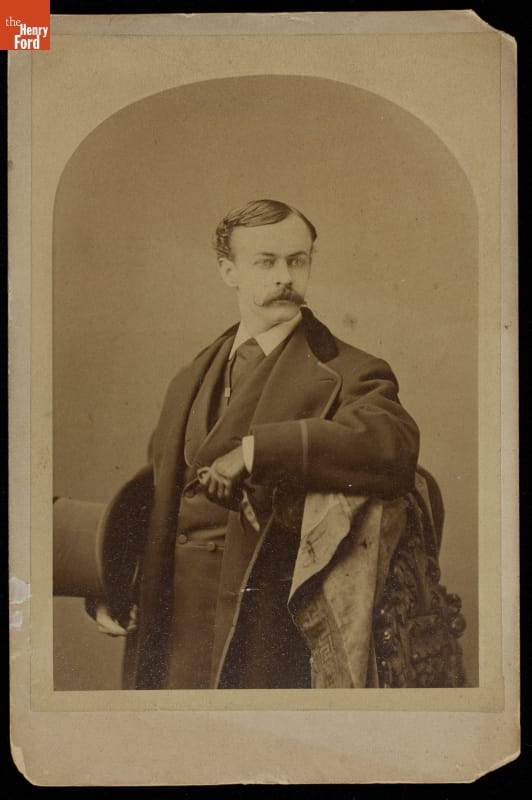
- Portrait of a Man, circa 1875 - Professional photographers began producing cabinet cards in 1867. Consumers quickly preferred them over earlier cartes-de-visite, which were mounted on smaller cardboard stock. Through the early 1900s, Americans commonly exchanged and collected cabinet photographs--often to commemorate friends, family, or celebrities. This circa 1875 example was made by Napoleon Sarony, a popular photographer among contemporary actors and actresses.
- circa 1875
- Collections - Artifact
Portrait of a Man, circa 1875
Professional photographers began producing cabinet cards in 1867. Consumers quickly preferred them over earlier cartes-de-visite, which were mounted on smaller cardboard stock. Through the early 1900s, Americans commonly exchanged and collected cabinet photographs--often to commemorate friends, family, or celebrities. This circa 1875 example was made by Napoleon Sarony, a popular photographer among contemporary actors and actresses.
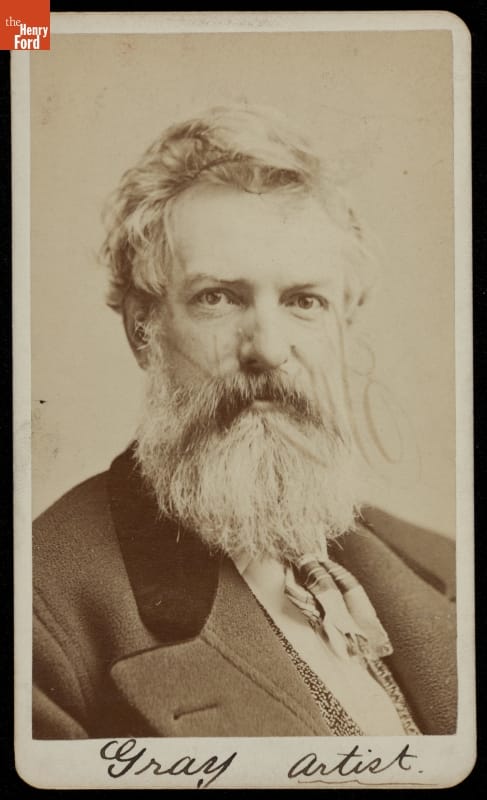
- Portrait of the Artist, Henry Peters Gray, circa 1870 - American painter Henry Peters Gray posed for this carte-de-visite around 1865. The carte-de-visite was a small photographic print on cardboard stock made by professional photographers. People exchanged and collected portrait cartes-de-visite, popular in the United States from the Civil War in the 1860s through the 1880s, to help them remember family and celebrities.
- circa 1870
- Collections - Artifact
Portrait of the Artist, Henry Peters Gray, circa 1870
American painter Henry Peters Gray posed for this carte-de-visite around 1865. The carte-de-visite was a small photographic print on cardboard stock made by professional photographers. People exchanged and collected portrait cartes-de-visite, popular in the United States from the Civil War in the 1860s through the 1880s, to help them remember family and celebrities.
- Portrait of a Clergyman, 1877-1896 -
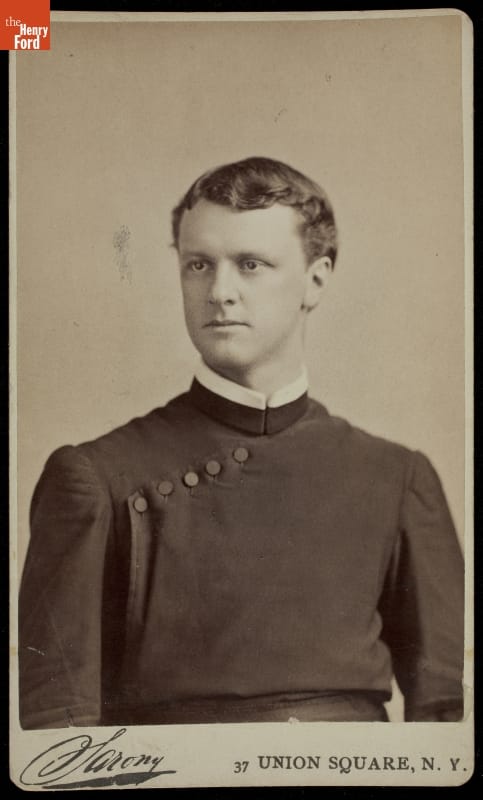
- 1877-1896
- Collections - Artifact
Portrait of a Clergyman, 1877-1896
- Young Man in Clerical Robes, Wearing a Large Crucifix, 1877-1896 -
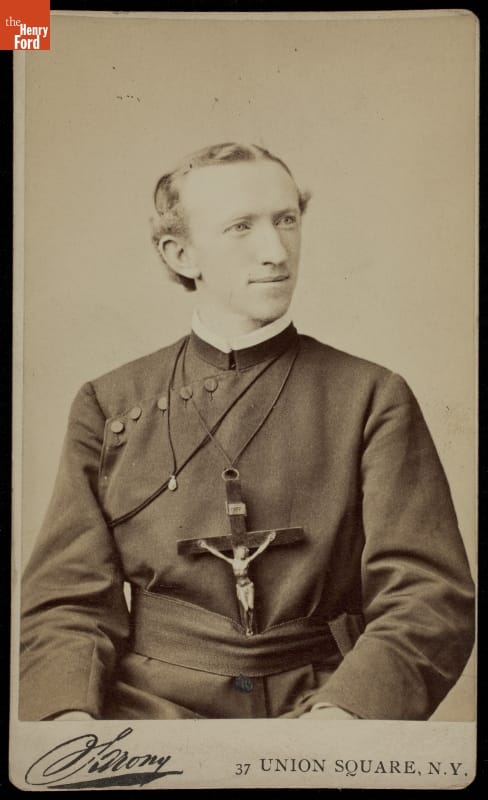
- 1877-1896
- Collections - Artifact
Young Man in Clerical Robes, Wearing a Large Crucifix, 1877-1896