
Search
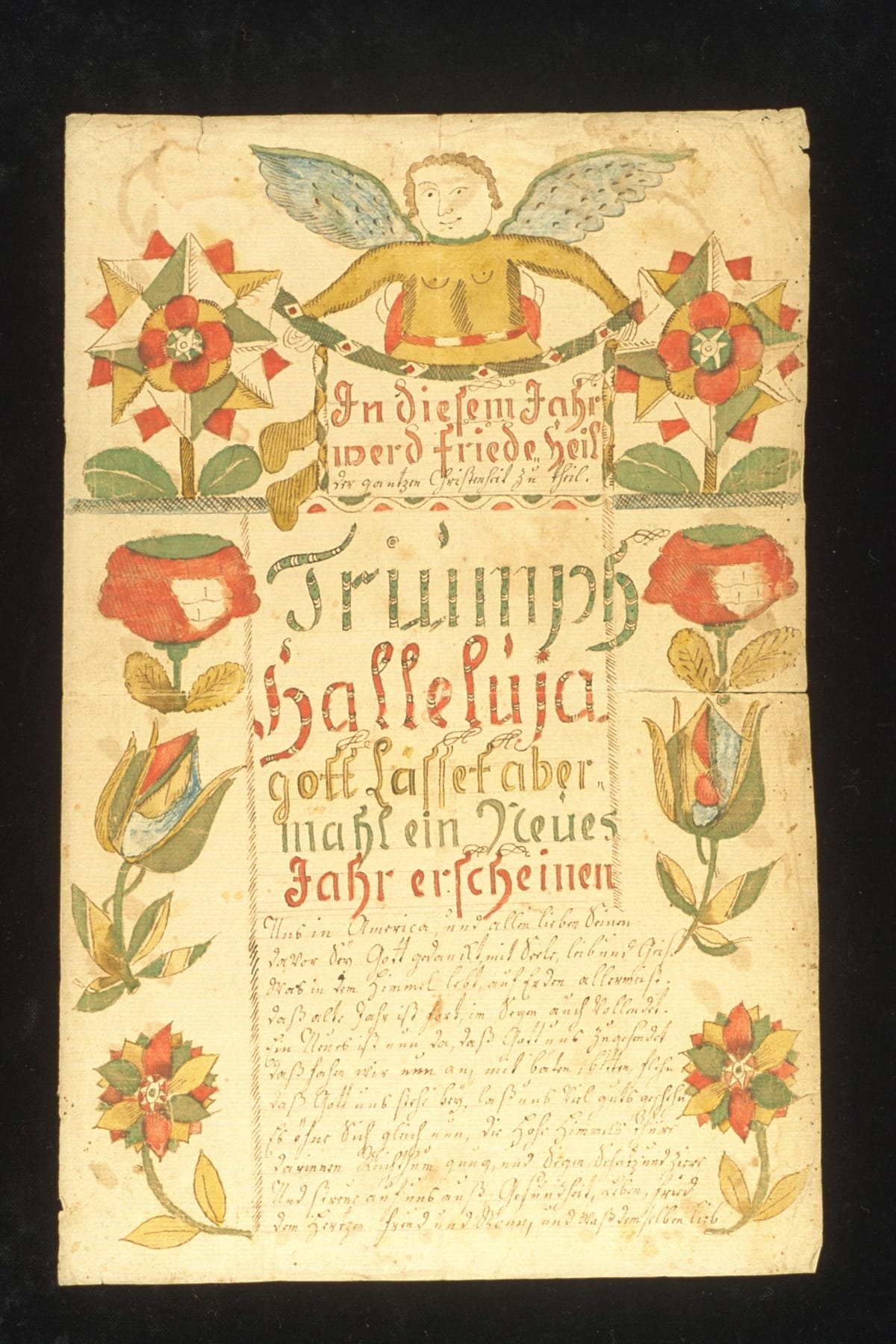
- New Year's Wish for Jacob Grimm and Family, circa 1775 - Early German immigrants created decorative documents, known as Fraktur, for a variety of reasons. Many commemorated a child's birth and baptism. Others were made as keepsakes, symbols of achievement or expressions of the immigrant's heritage or religion. Jacob Grimm received this New Year's greeting from Daniel Schumacher, the minister at his church. The pastor embellished his greeting with an angel and a border of colorful flowers.
- circa 1775
- Collections - Artifact
New Year's Wish for Jacob Grimm and Family, circa 1775
Early German immigrants created decorative documents, known as Fraktur, for a variety of reasons. Many commemorated a child's birth and baptism. Others were made as keepsakes, symbols of achievement or expressions of the immigrant's heritage or religion. Jacob Grimm received this New Year's greeting from Daniel Schumacher, the minister at his church. The pastor embellished his greeting with an angel and a border of colorful flowers.
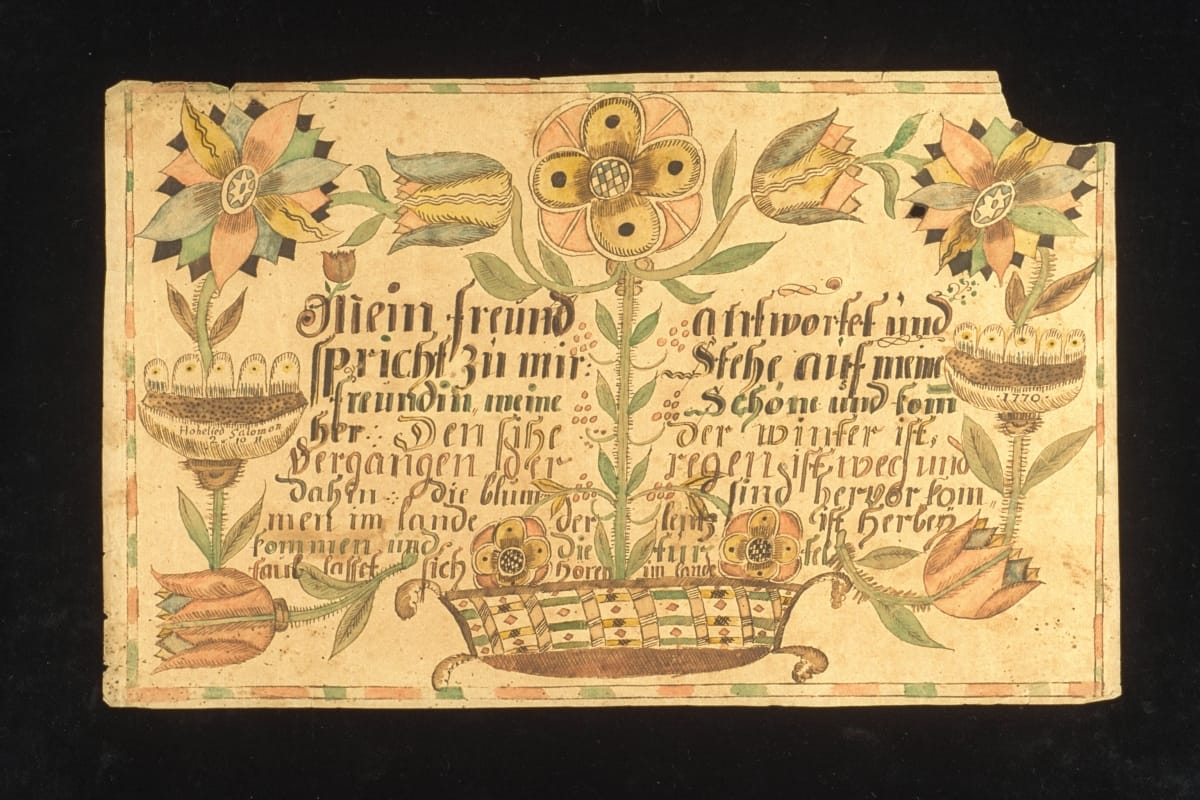
- Fraktur, 1770 - Early German immigrants created decorative documents, known as Fraktur, for a variety of reasons. Many commemorated a child's birth and baptism. Others were made as keepsakes, symbols of achievement or expressions of the immigrant's heritage or religion. Daniel Schumaker created this decorative bible verse in 1770. This document, like similar Fraktur, incorporates intricate lettering and colorful drawings of flowers.
- 1770
- Collections - Artifact
Fraktur, 1770
Early German immigrants created decorative documents, known as Fraktur, for a variety of reasons. Many commemorated a child's birth and baptism. Others were made as keepsakes, symbols of achievement or expressions of the immigrant's heritage or religion. Daniel Schumaker created this decorative bible verse in 1770. This document, like similar Fraktur, incorporates intricate lettering and colorful drawings of flowers.
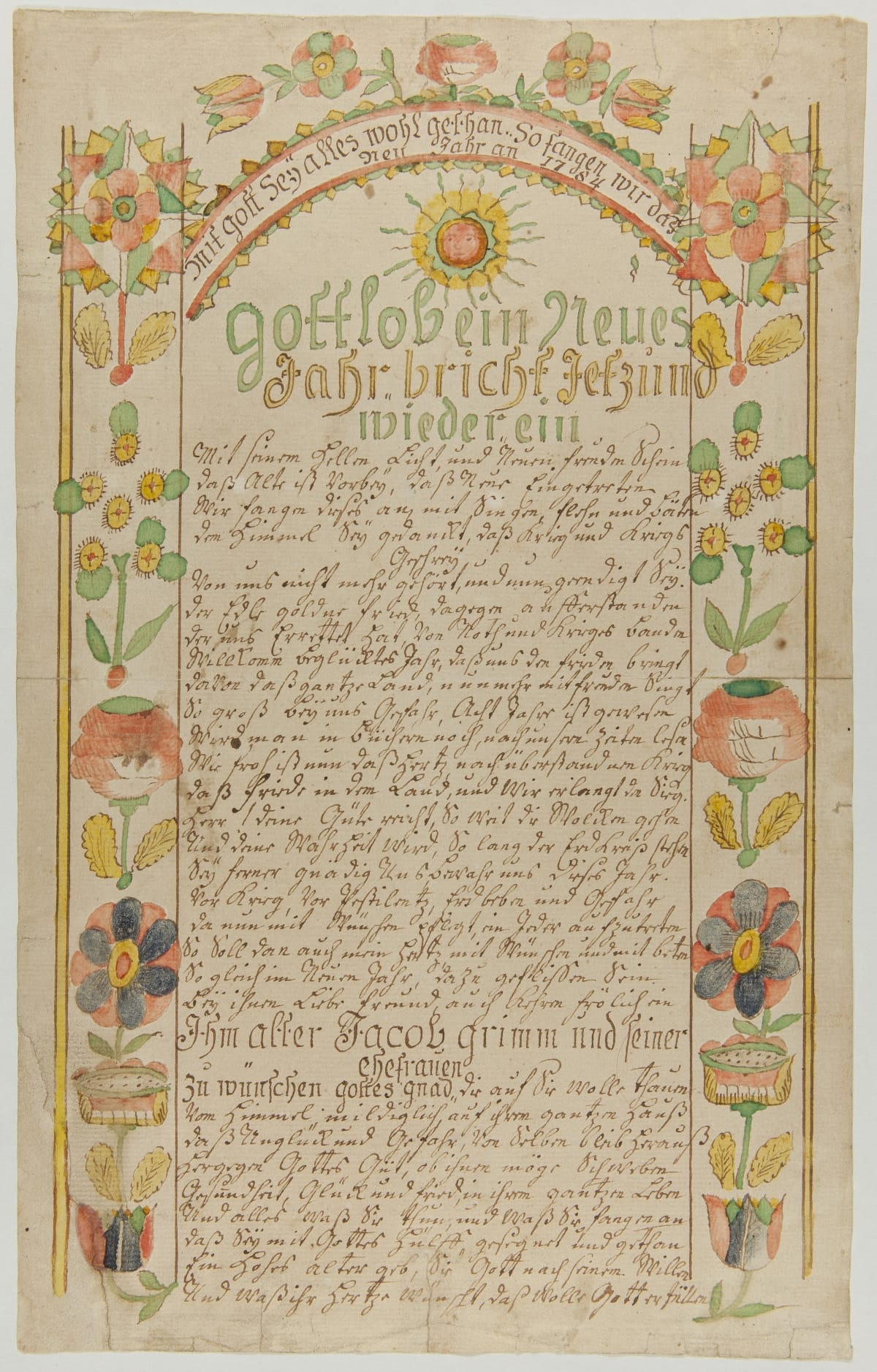
- New Year's Wish for Jacob Grimm and Family, 1784 - Early German immigrants created decorative documents, known as Fraktur, for a variety of reasons. Many commemorated a child's birth and baptism. Others were made as keepsakes, symbols of achievement or expressions of the immigrant's heritage or religion. Jacob Grimm received this New Year's greeting from Daniel Schumacher, the minister at his church. The pastor embellished his greeting with a border of colorful flowers.
- 1784
- Collections - Artifact
New Year's Wish for Jacob Grimm and Family, 1784
Early German immigrants created decorative documents, known as Fraktur, for a variety of reasons. Many commemorated a child's birth and baptism. Others were made as keepsakes, symbols of achievement or expressions of the immigrant's heritage or religion. Jacob Grimm received this New Year's greeting from Daniel Schumacher, the minister at his church. The pastor embellished his greeting with a border of colorful flowers.