
Search
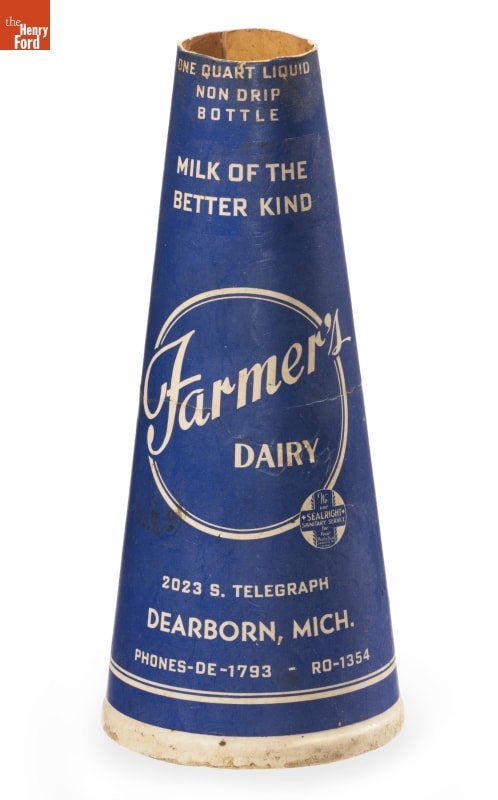
- Farmer's Dairy Paper Milk Bottle, 1935-1950 -
- 1935-1950
- Collections - Artifact
Farmer's Dairy Paper Milk Bottle, 1935-1950
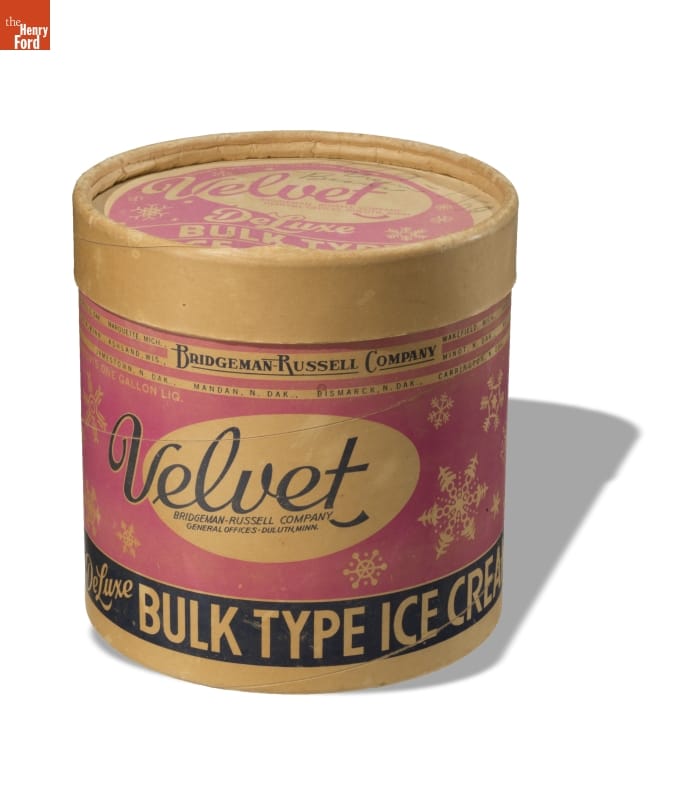
- Velvet Ice Cream Tub, 1946-1950 - Some ice cream manufacturers produced their own cartons for customers to take home their freshly made ice cream. These might be available at ice cream parlors, grocery stores, or their own retail outlets. These cartons were hygienic and their wax-coated cardboard offered some insulation. Velvet brand ice cream was marketed by the Bridgeman-Russell Creamery of Duluth, Minnesota.
- 1946-1950
- Collections - Artifact
Velvet Ice Cream Tub, 1946-1950
Some ice cream manufacturers produced their own cartons for customers to take home their freshly made ice cream. These might be available at ice cream parlors, grocery stores, or their own retail outlets. These cartons were hygienic and their wax-coated cardboard offered some insulation. Velvet brand ice cream was marketed by the Bridgeman-Russell Creamery of Duluth, Minnesota.
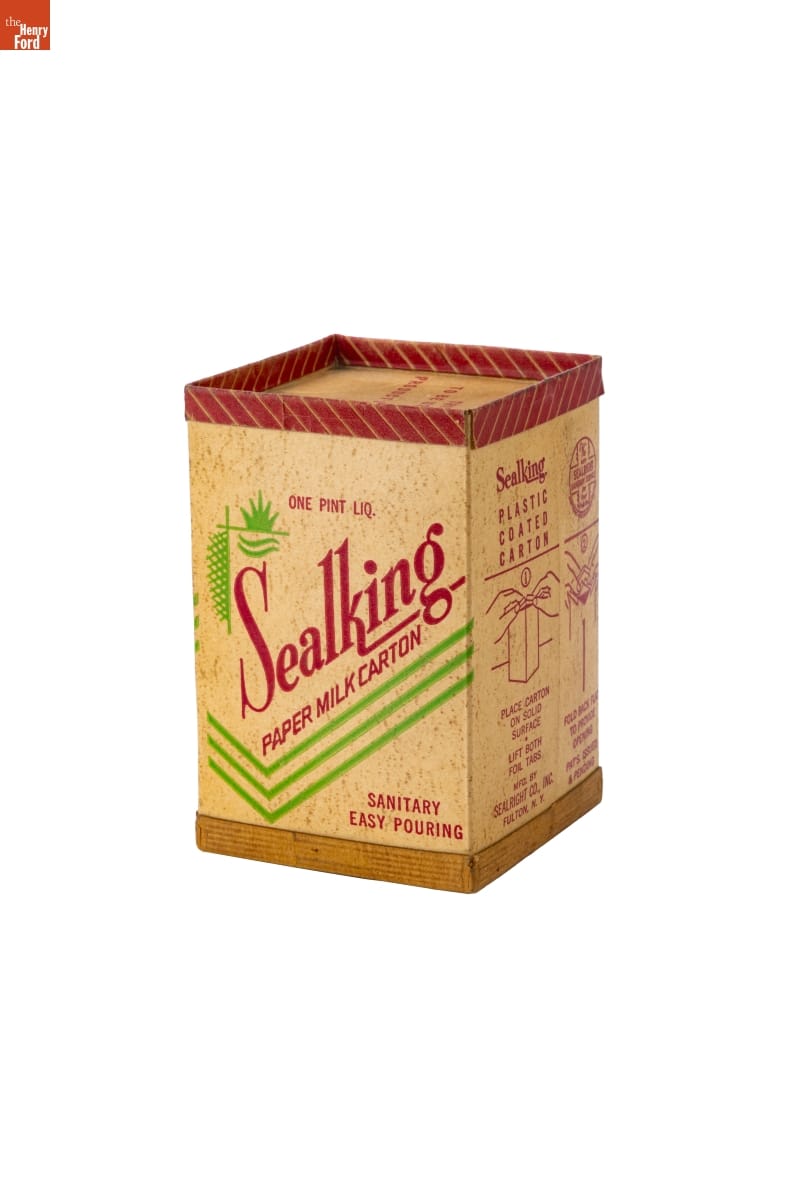
- Sealking Sample Milk Carton, circa 1932 -
- circa 1932
- Collections - Artifact
Sealking Sample Milk Carton, circa 1932
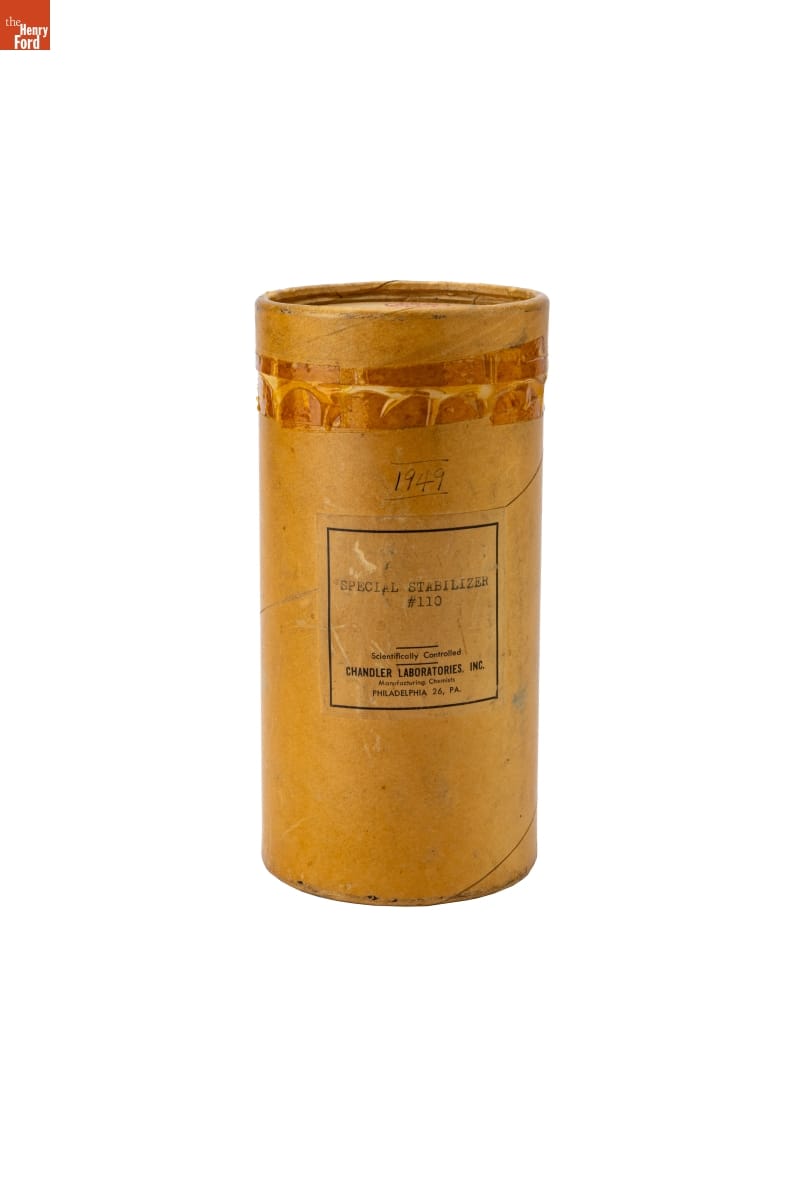
- Chandler Laboratories, Inc. Stabilizer Carton, 1949 -
- 1949
- Collections - Artifact
Chandler Laboratories, Inc. Stabilizer Carton, 1949
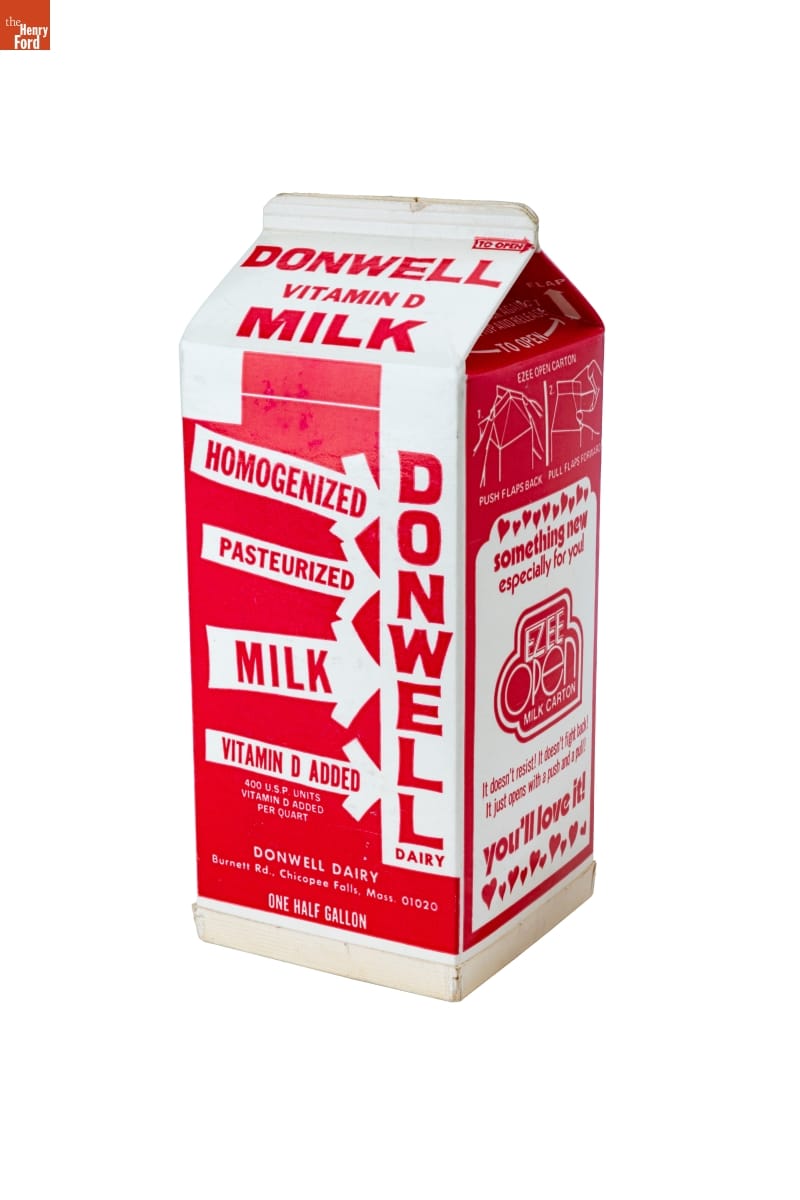
- Donwell Dairy Milk Carton - The quest for a shatter-proof milk container prompted John Van Wormer to patent a paper carton in 1915. Many processors and distributors continued to use breakable glass bottles, but, after 1937, mechanized production made the disposable, wax-coated folded cartons inexpensive and indispensable liquid containers. The iconic design, a box with a gable-end top that, when opened, creates a pouring spout, remains the industry standard today.
- Collections - Artifact
Donwell Dairy Milk Carton
The quest for a shatter-proof milk container prompted John Van Wormer to patent a paper carton in 1915. Many processors and distributors continued to use breakable glass bottles, but, after 1937, mechanized production made the disposable, wax-coated folded cartons inexpensive and indispensable liquid containers. The iconic design, a box with a gable-end top that, when opened, creates a pouring spout, remains the industry standard today.
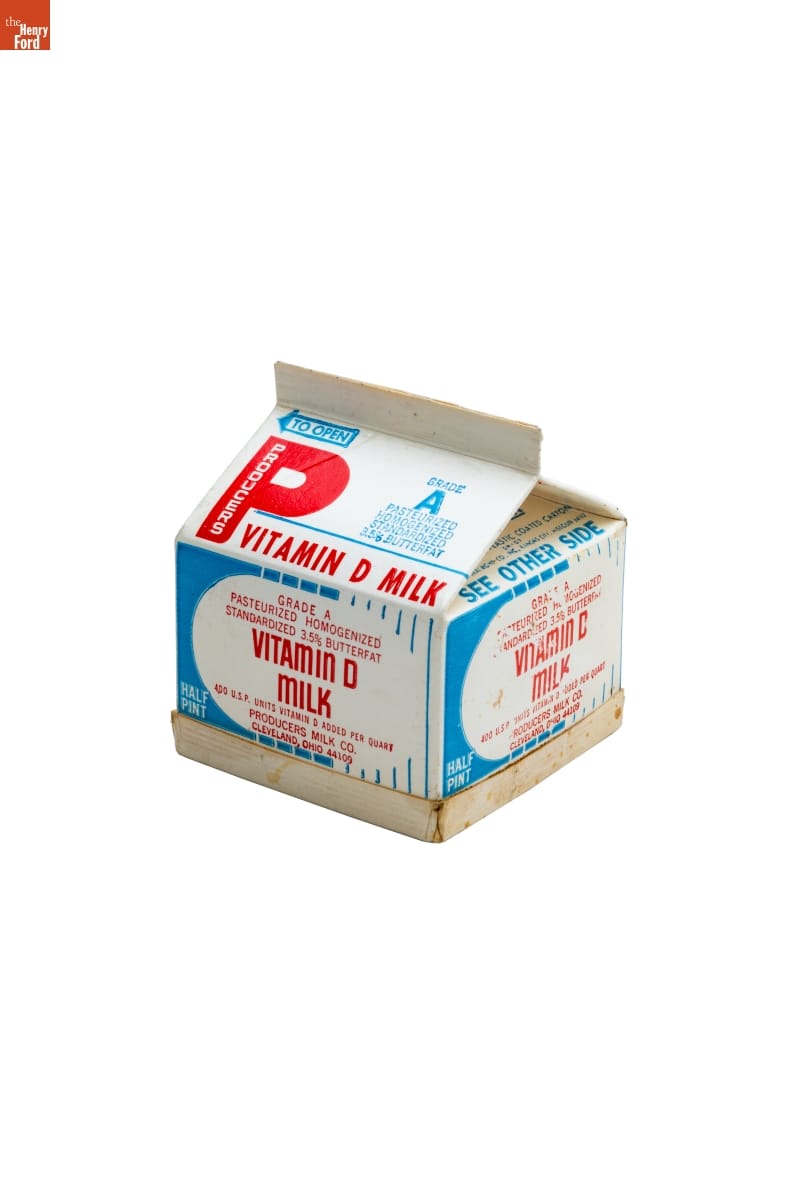
- Producers Milk Co. Milk Carton - The quest for a shatter-proof milk container prompted John Van Wormer to patent a paper carton in 1915. Many processors and distributors continued to use breakable glass bottles, but, after 1937, mechanized production made the disposable, wax-coated folded cartons inexpensive and indispensable liquid containers. The iconic design, a box with a gable-end top that, when opened, creates a pouring spout, remains the industry standard today.
- Collections - Artifact
Producers Milk Co. Milk Carton
The quest for a shatter-proof milk container prompted John Van Wormer to patent a paper carton in 1915. Many processors and distributors continued to use breakable glass bottles, but, after 1937, mechanized production made the disposable, wax-coated folded cartons inexpensive and indispensable liquid containers. The iconic design, a box with a gable-end top that, when opened, creates a pouring spout, remains the industry standard today.
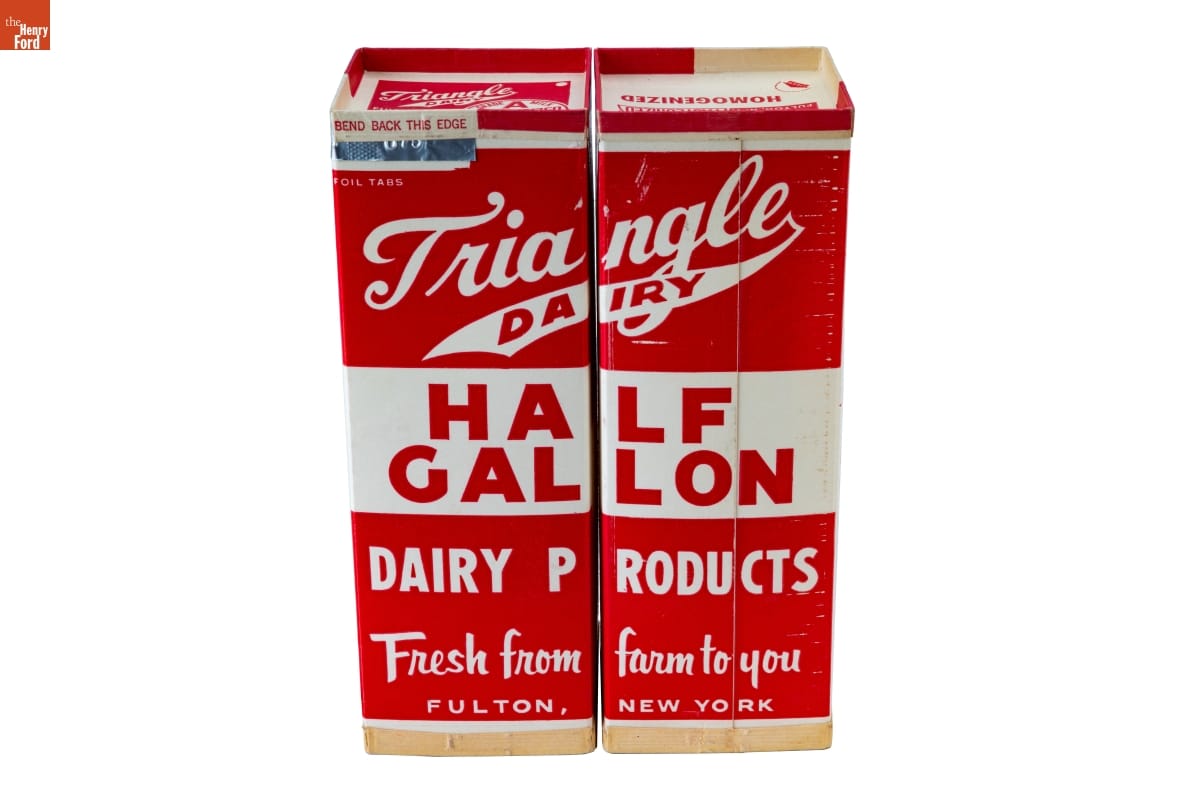
- Triangle Dairy Twin Quart Milk Cartons -
- Collections - Artifact
Triangle Dairy Twin Quart Milk Cartons
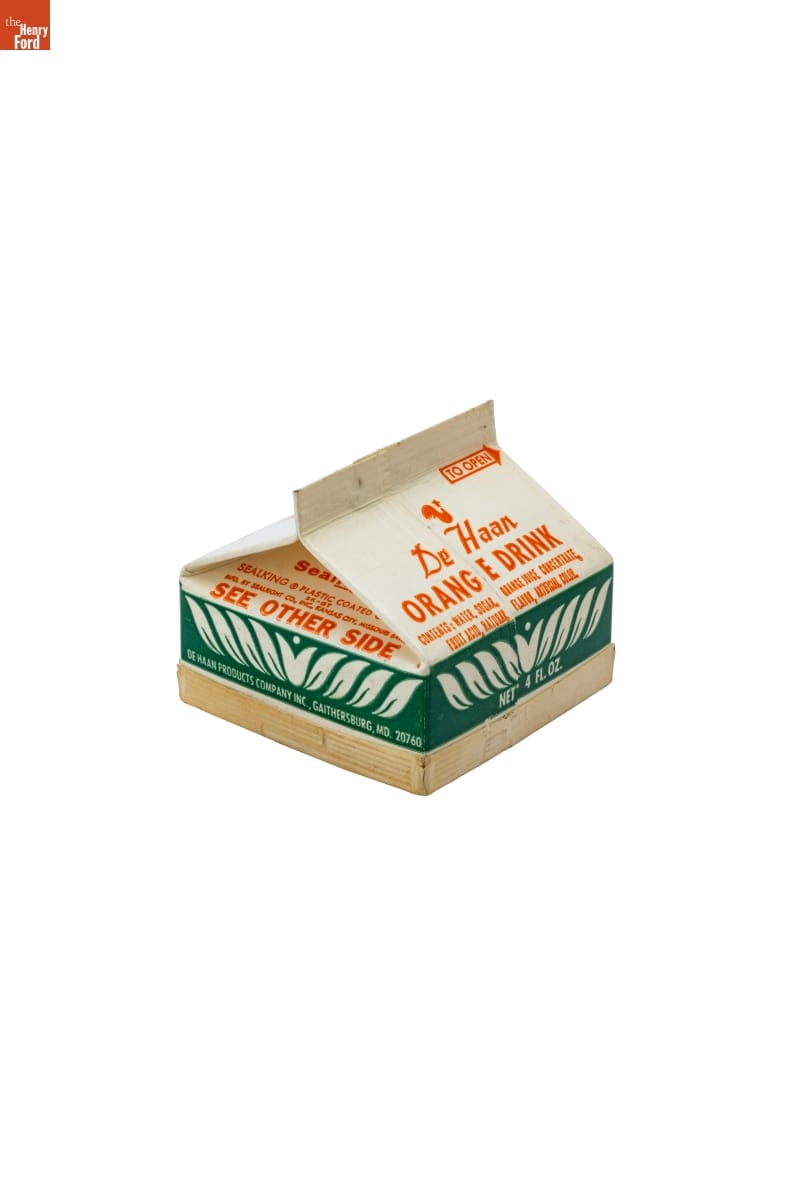
- DeHaan Orange Drink Carton - The quest for a shatter-proof milk container prompted John Van Wormer to patent a paper carton in 1915. Many processors and distributors continued to use breakable glass bottles, but, after 1937, mechanized production made the disposable, wax-coated folded cartons inexpensive and indispensable liquid containers. The iconic design, a box with a gable-end top that, when opened, creates a pouring spout, remains the industry standard today.
- Collections - Artifact
DeHaan Orange Drink Carton
The quest for a shatter-proof milk container prompted John Van Wormer to patent a paper carton in 1915. Many processors and distributors continued to use breakable glass bottles, but, after 1937, mechanized production made the disposable, wax-coated folded cartons inexpensive and indispensable liquid containers. The iconic design, a box with a gable-end top that, when opened, creates a pouring spout, remains the industry standard today.
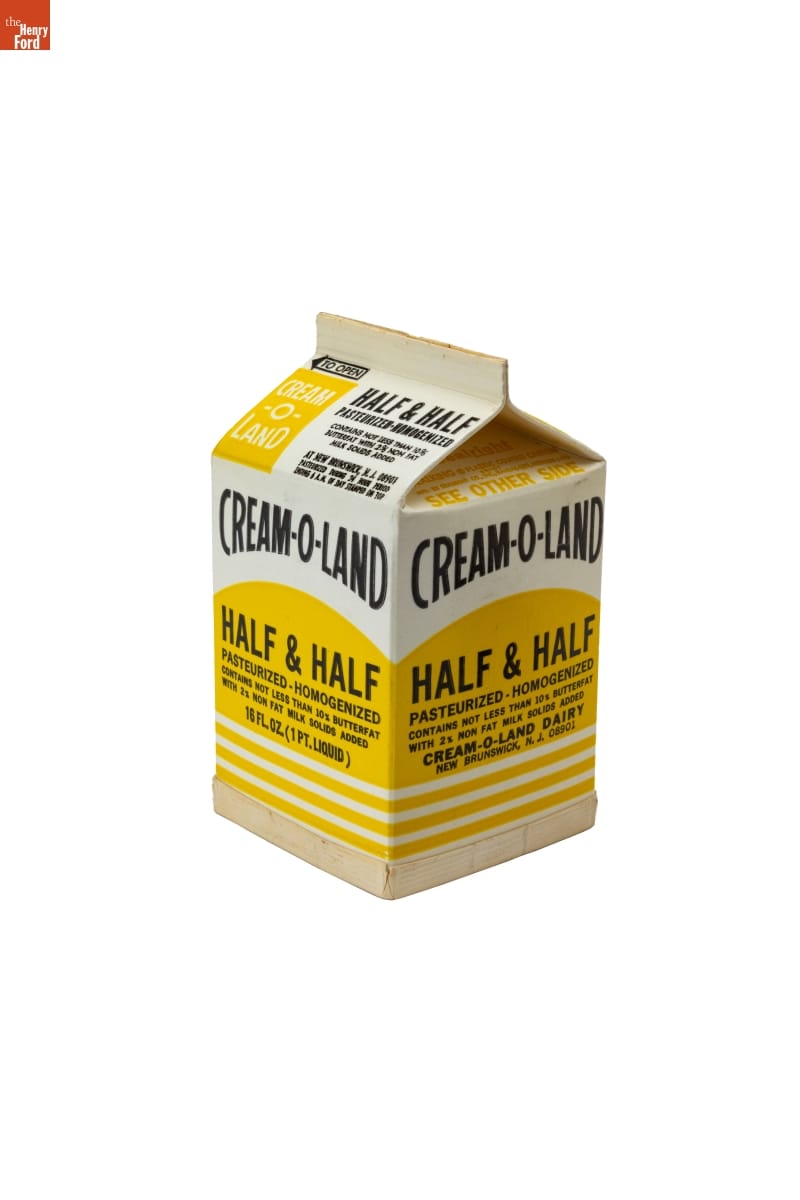
- Cream-O-Land Dairy Half & Half Carton - The quest for a shatter-proof milk container prompted John Van Wormer to patent a paper carton in 1915. Many processors and distributors continued to use breakable glass bottles, but, after 1937, mechanized production made the disposable, wax-coated folded cartons inexpensive and indispensable liquid containers. The iconic design, a box with a gable-end top that, when opened, creates a pouring spout, remains the industry standard today.
- Collections - Artifact
Cream-O-Land Dairy Half & Half Carton
The quest for a shatter-proof milk container prompted John Van Wormer to patent a paper carton in 1915. Many processors and distributors continued to use breakable glass bottles, but, after 1937, mechanized production made the disposable, wax-coated folded cartons inexpensive and indispensable liquid containers. The iconic design, a box with a gable-end top that, when opened, creates a pouring spout, remains the industry standard today.
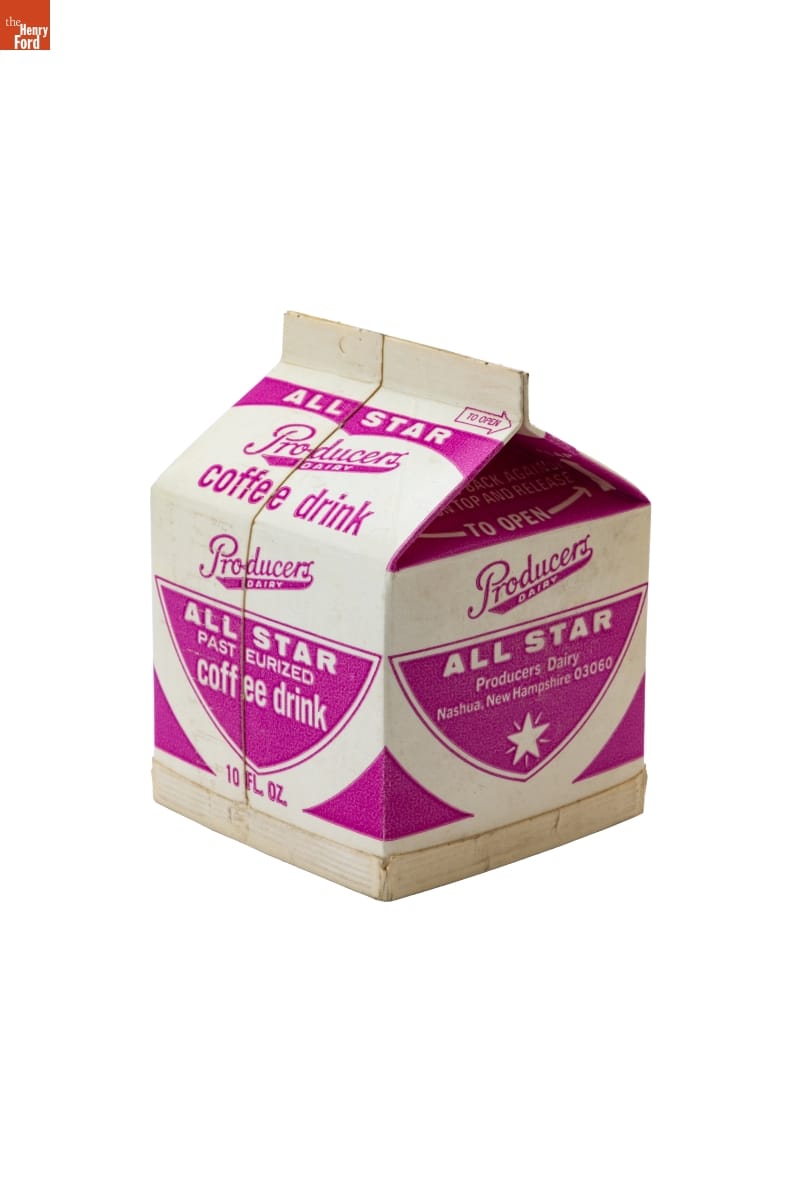
- Producers Dairy Coffee Drink Carton - The quest for a shatter-proof milk container prompted John Van Wormer to patent a paper carton in 1915. Many processors and distributors continued to use breakable glass bottles, but, after 1937, mechanized production made the disposable, wax-coated folded cartons inexpensive and indispensable liquid containers. The iconic design, a box with a gable-end top that, when opened, creates a pouring spout, remains the industry standard today.
- Collections - Artifact
Producers Dairy Coffee Drink Carton
The quest for a shatter-proof milk container prompted John Van Wormer to patent a paper carton in 1915. Many processors and distributors continued to use breakable glass bottles, but, after 1937, mechanized production made the disposable, wax-coated folded cartons inexpensive and indispensable liquid containers. The iconic design, a box with a gable-end top that, when opened, creates a pouring spout, remains the industry standard today.