
Search
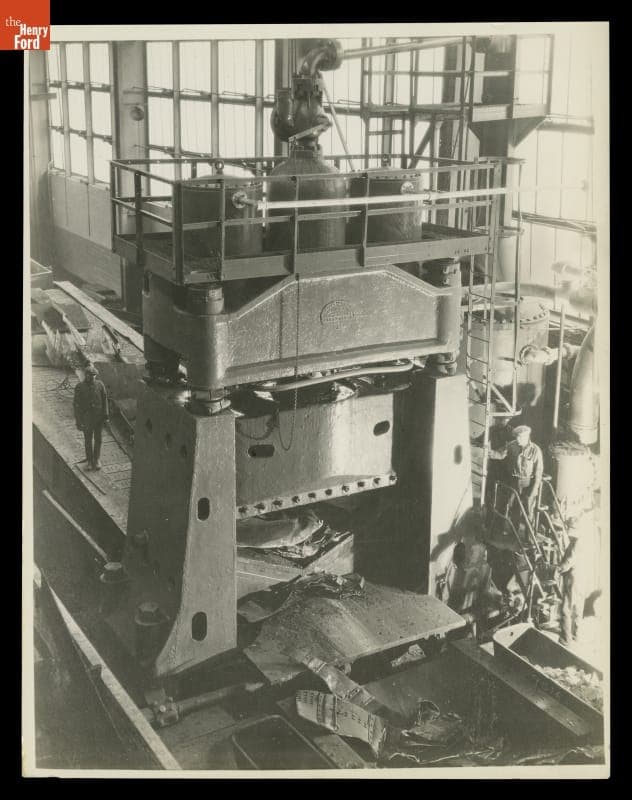
- Hydraulic Shear at Ford Rouge Plant, 1927 - To produce steel for Rouge plant operations, Ford used ten open-hearth furnaces. The furnaces, each with a capacity of at least 180 tons, resided here in the open-hearth building. These workers used a steam-powered shearer to smash scrap metal into small pieces. The bits of metal joined with molten iron in one of the furnaces and eventually became steel.
- 1927
- Collections - Artifact
Hydraulic Shear at Ford Rouge Plant, 1927
To produce steel for Rouge plant operations, Ford used ten open-hearth furnaces. The furnaces, each with a capacity of at least 180 tons, resided here in the open-hearth building. These workers used a steam-powered shearer to smash scrap metal into small pieces. The bits of metal joined with molten iron in one of the furnaces and eventually became steel.
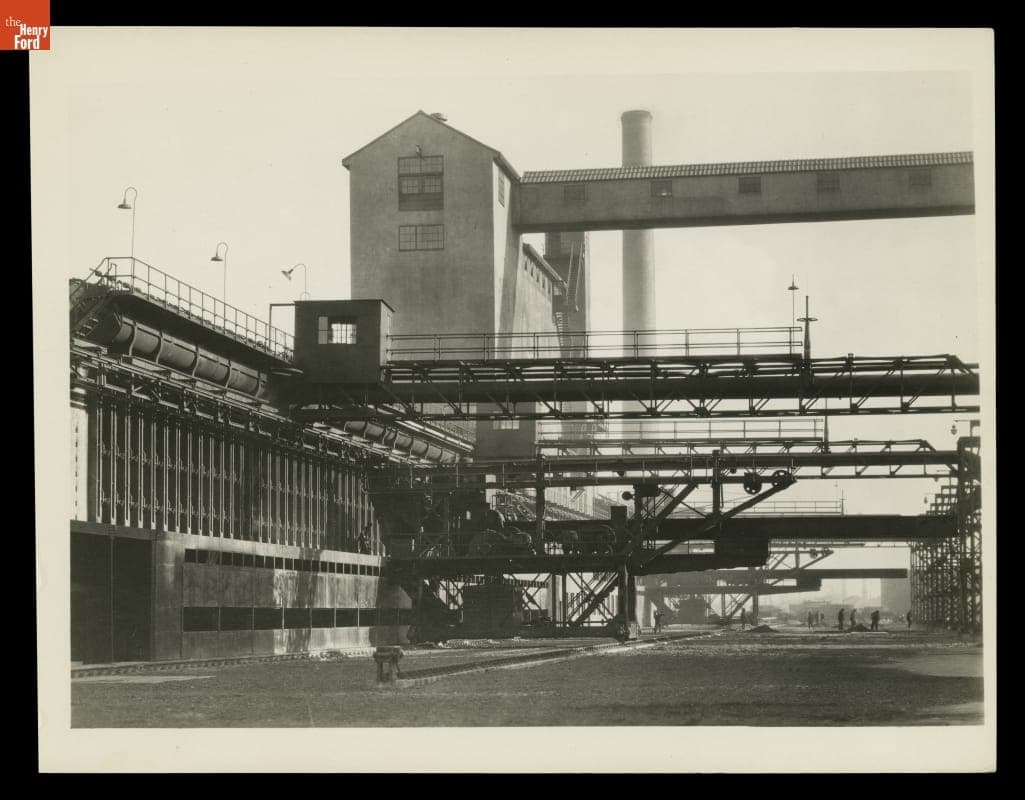
- Ford Motor Company Rouge Plant Coke Ovens, 1927 - Coke ovens at Ford Motor Company's Rouge plant converted coal into high-carbon coke, used in the factory's blast furnaces to produce iron. In 1921, the Rouge's ovens could produce up to 3,600 tons of coke daily. New, more efficient coke ovens opened in 1937. The coking process also produced gas used to heat some of the factory's other furnaces.
- 1927
- Collections - Artifact
Ford Motor Company Rouge Plant Coke Ovens, 1927
Coke ovens at Ford Motor Company's Rouge plant converted coal into high-carbon coke, used in the factory's blast furnaces to produce iron. In 1921, the Rouge's ovens could produce up to 3,600 tons of coke daily. New, more efficient coke ovens opened in 1937. The coking process also produced gas used to heat some of the factory's other furnaces.
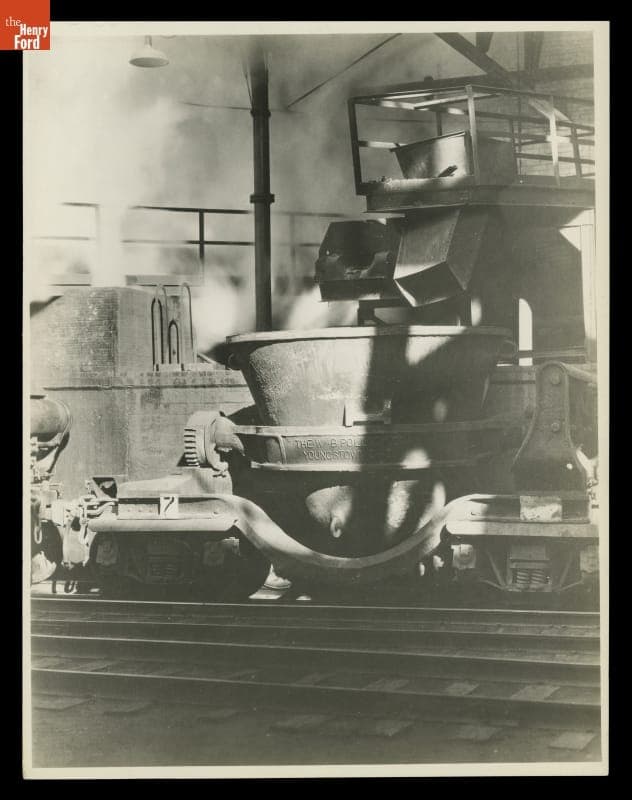
- Blast Furnace at Ford Rouge Plant, 1927 - Steel production at Ford's Rouge Plant encompassed every step from start to finish. Two massive blast furnaces operated 24 hours a day to feed a unique process that rarely allowed molten iron to cool before steelmaking or casting. Instead, ladles on railroad tracks waited below the furnaces to be filled with up to 75 tons of the lava-like metal for transport.
- 1927
- Collections - Artifact
Blast Furnace at Ford Rouge Plant, 1927
Steel production at Ford's Rouge Plant encompassed every step from start to finish. Two massive blast furnaces operated 24 hours a day to feed a unique process that rarely allowed molten iron to cool before steelmaking or casting. Instead, ladles on railroad tracks waited below the furnaces to be filled with up to 75 tons of the lava-like metal for transport.
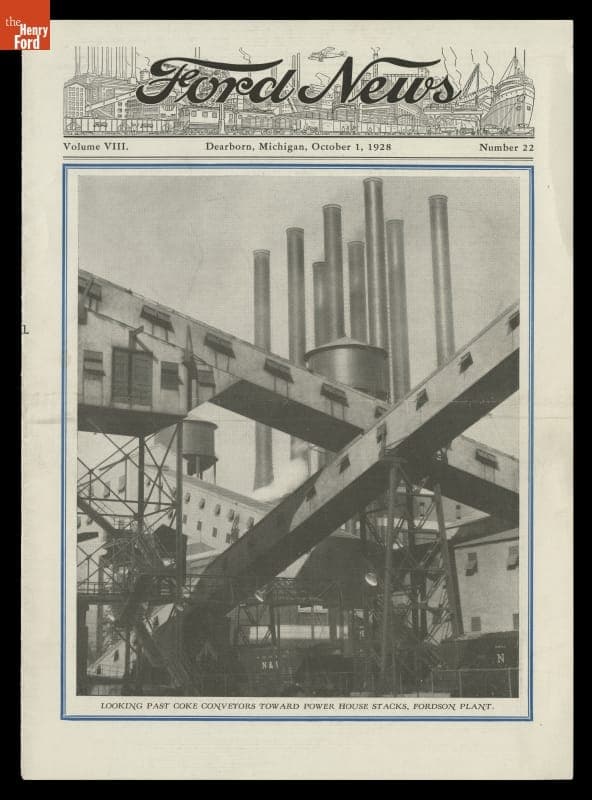
- "Ford News," October 1, 1928 - Ford Motor Company published <em>Ford News</em> from 1920 to 1942. The magazine kept employees and dealers informed on the automaker's products and activities. Each issue contained general-interest stories as well. Editors described the publication as "holding at heart the interests of the Company and employee, a digest of events in the Ford world."
- October 01, 1928
- Collections - Artifact
"Ford News," October 1, 1928
Ford Motor Company published Ford News from 1920 to 1942. The magazine kept employees and dealers informed on the automaker's products and activities. Each issue contained general-interest stories as well. Editors described the publication as "holding at heart the interests of the Company and employee, a digest of events in the Ford world."
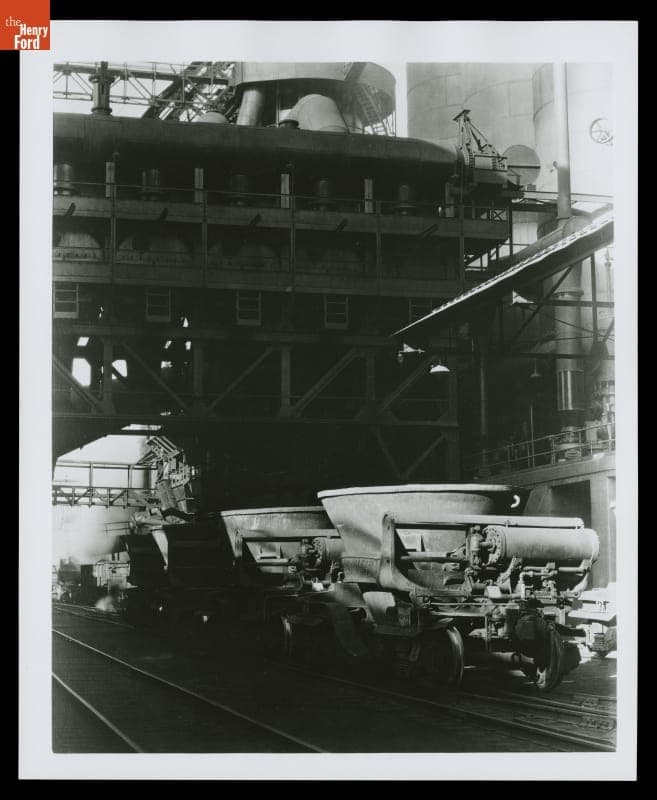
- Slag Buggies at Ford Rouge Plant, 1927 - These slag pots transported white-hot slag to cooling pits at Ford's River Rouge Plant. Slag is a by-product of the iron-making process. It was skimmed from the blast furnaces and caught in the buggies waiting below. After it cooled, workers recovered the slag to produce cement for plant use and sale to the public.
- 1927
- Collections - Artifact
Slag Buggies at Ford Rouge Plant, 1927
These slag pots transported white-hot slag to cooling pits at Ford's River Rouge Plant. Slag is a by-product of the iron-making process. It was skimmed from the blast furnaces and caught in the buggies waiting below. After it cooled, workers recovered the slag to produce cement for plant use and sale to the public.
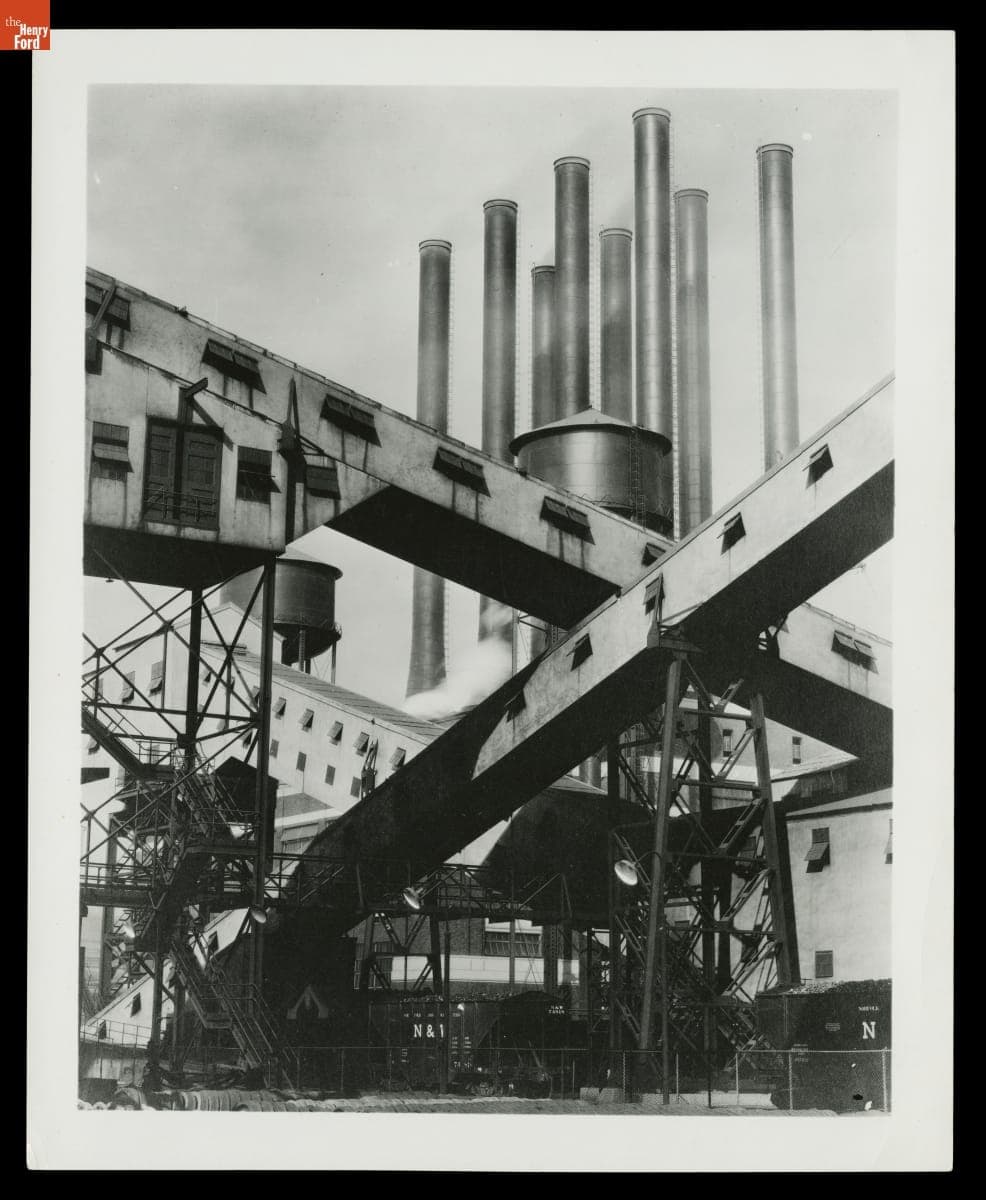
- Criss-crossed Conveyors at Ford Rouge Plant, 1927 - In 1927, Ford Motor Company commissioned Charles Sheeler to do a series of documentary photographs of its River Rouge industrial complex near Dearborn, Michigan. The conveyors moved coal and coke to the pulverizing building and screening stations. Coke made from coal was used in the steelmaking process of the blast furnaces. This vigorous photograph shows Sheeler's ability to form a compelling image from a complicated scene.
- 1927
- Collections - Artifact
Criss-crossed Conveyors at Ford Rouge Plant, 1927
In 1927, Ford Motor Company commissioned Charles Sheeler to do a series of documentary photographs of its River Rouge industrial complex near Dearborn, Michigan. The conveyors moved coal and coke to the pulverizing building and screening stations. Coke made from coal was used in the steelmaking process of the blast furnaces. This vigorous photograph shows Sheeler's ability to form a compelling image from a complicated scene.
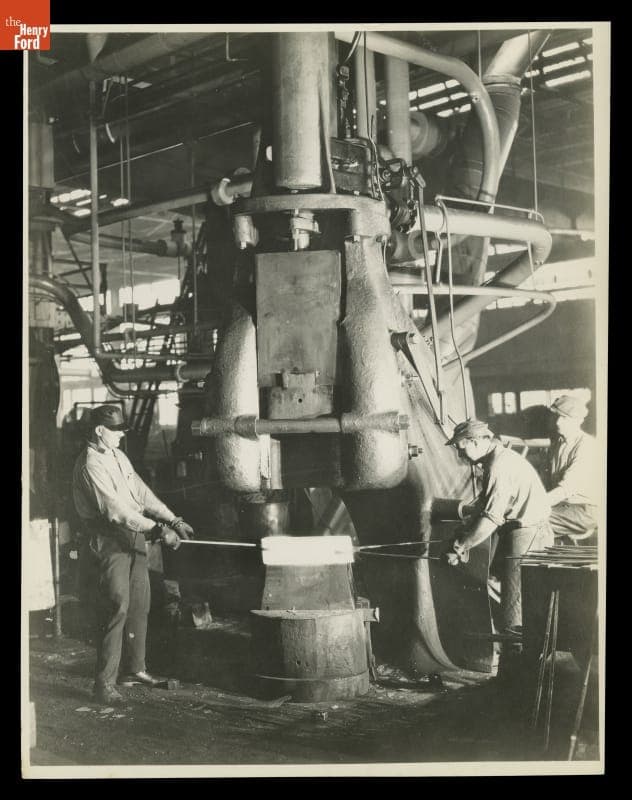
- Forging Die Blocks at Ford Rouge Plant, 1927 - Charles Sheeler was commissioned to photograph Ford Motor Company's brand new River Rouge plant in 1927. This portrait of an enormous forging die is one of the few shots showing workers. Sheeler focused instead on the buildings and machinery that he considered "incomparably the most thrilling" subjects he had ever photographed. His Rouge work quickly became an icon of modern industry.
- 1927
- Collections - Artifact
Forging Die Blocks at Ford Rouge Plant, 1927
Charles Sheeler was commissioned to photograph Ford Motor Company's brand new River Rouge plant in 1927. This portrait of an enormous forging die is one of the few shots showing workers. Sheeler focused instead on the buildings and machinery that he considered "incomparably the most thrilling" subjects he had ever photographed. His Rouge work quickly became an icon of modern industry.
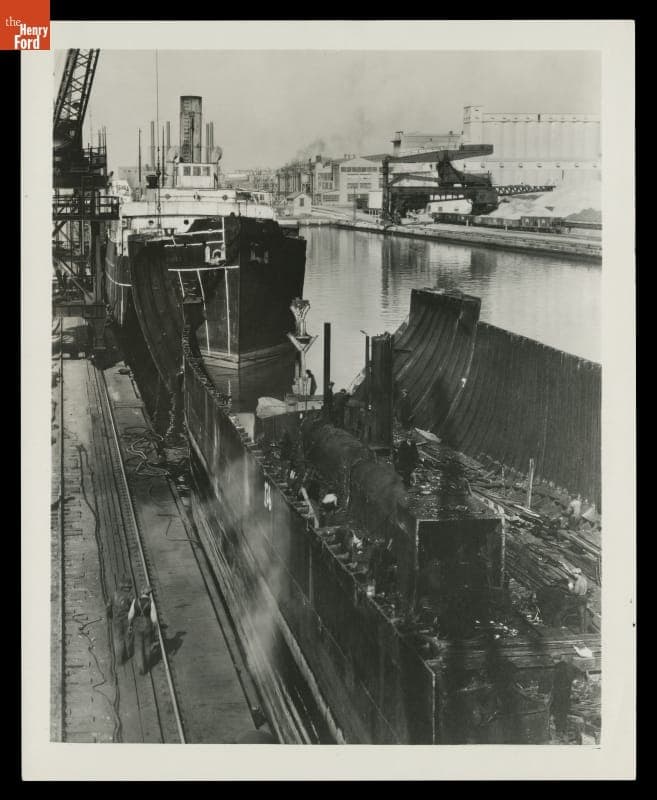
- Salvaging Metal from Ships at Ford Rouge Plant, 1927 - In 1927 Ford Motor Company commissioned Charles Sheeler to do a series of documentary photographs of their River Rouge industrial complex near Dearborn, Michigan. This photograph focuses on the dismantling of surplus ships in the boat slip. After reclaiming usable parts, the steel is cut into scrap and melted down in the production foundry. Sheeler balances this activity with a landscape background of factory buildings.
- 1927
- Collections - Artifact
Salvaging Metal from Ships at Ford Rouge Plant, 1927
In 1927 Ford Motor Company commissioned Charles Sheeler to do a series of documentary photographs of their River Rouge industrial complex near Dearborn, Michigan. This photograph focuses on the dismantling of surplus ships in the boat slip. After reclaiming usable parts, the steel is cut into scrap and melted down in the production foundry. Sheeler balances this activity with a landscape background of factory buildings.
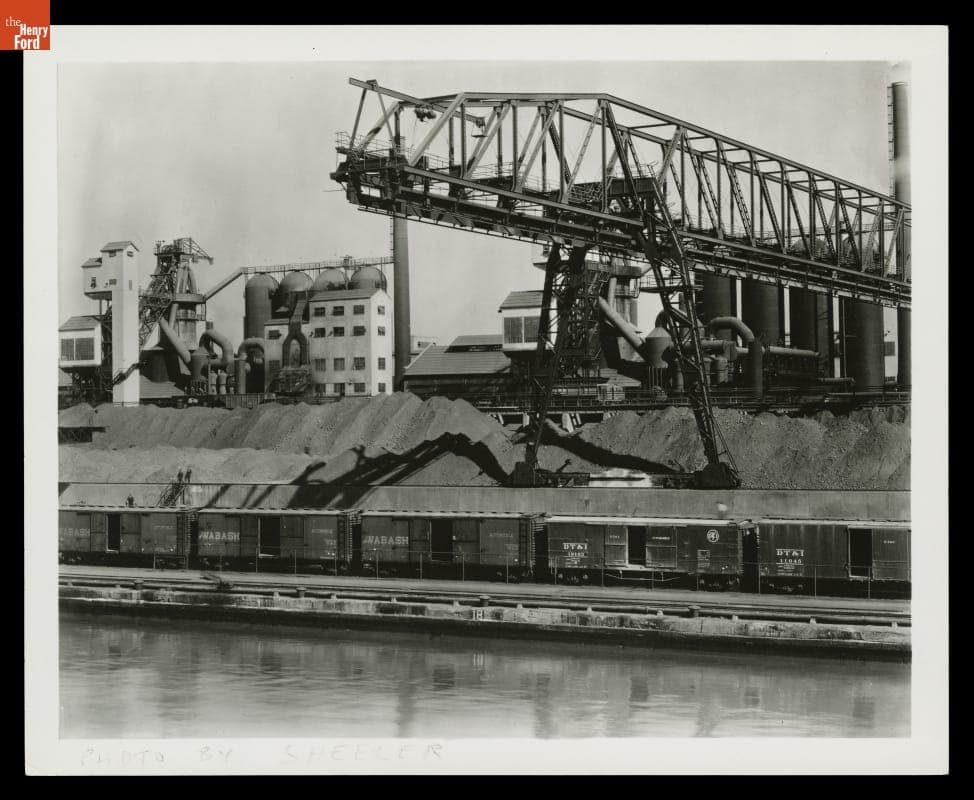
- Boat Slip at Ford Rouge Plant, 1927 - In 1927 Ford Motor Company commissioned Charles Sheeler to do a series of documentary photographs of its River Rouge industrial complex near Dearborn, Michigan. The enormous traveling bridge crane dominates this photograph of the storage bins next to the boat slip. It unloads iron ore, limestone, and coal from ships and trains. The railroad cars in front contrast with the background architectural elements.
- 1927
- Collections - Artifact
Boat Slip at Ford Rouge Plant, 1927
In 1927 Ford Motor Company commissioned Charles Sheeler to do a series of documentary photographs of its River Rouge industrial complex near Dearborn, Michigan. The enormous traveling bridge crane dominates this photograph of the storage bins next to the boat slip. It unloads iron ore, limestone, and coal from ships and trains. The railroad cars in front contrast with the background architectural elements.
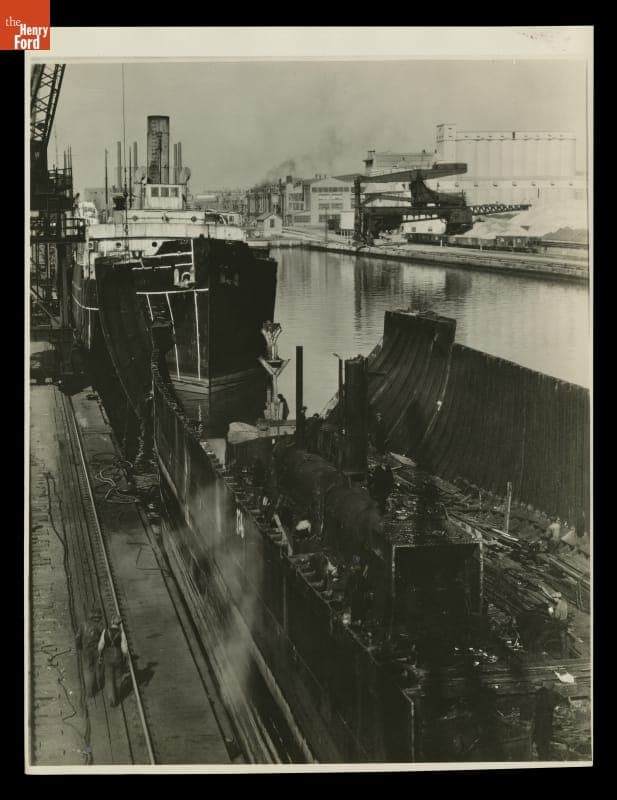
- Salvaging Metal from Ships at Ford Rouge Plant, 1927 - Completed in 1928 along the newly dredged River Rouge, Ford Motor Company's Rouge Plant quickly became an icon of modern industrial productivity. The factory's ship salvaging project exemplified Henry Ford's vision of efficiency at the plant. Workers disassembled surplus vessels, saving hardware and reconditioning functional machinery. Then, in the Rouge's production foundry, they melted down remaining scraps into reusable steel.
- 1927
- Collections - Artifact
Salvaging Metal from Ships at Ford Rouge Plant, 1927
Completed in 1928 along the newly dredged River Rouge, Ford Motor Company's Rouge Plant quickly became an icon of modern industrial productivity. The factory's ship salvaging project exemplified Henry Ford's vision of efficiency at the plant. Workers disassembled surplus vessels, saving hardware and reconditioning functional machinery. Then, in the Rouge's production foundry, they melted down remaining scraps into reusable steel.