
Search
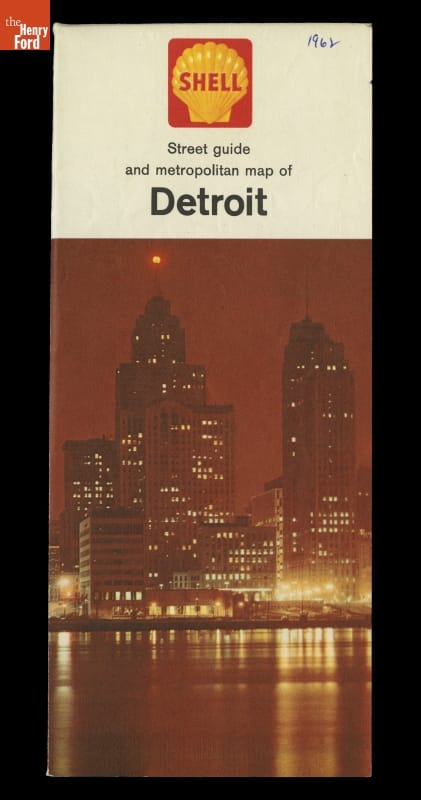
- Street Guide and Metropolitan map of Detroit - By the mid-20th century, progressive Detroit leaders boasted of the city's modern freeway system. The I-375 freeway, the southernmost spur of Detroit's Chrysler Freeway, was marked out on this map with a dotted line. When completed in 1964, this freeway contributed to the almost complete obliteration of the once-thriving African-American neighborhoods of Black Bottom and Paradise Valley.
- 1962
- Collections - Artifact
Street Guide and Metropolitan map of Detroit
By the mid-20th century, progressive Detroit leaders boasted of the city's modern freeway system. The I-375 freeway, the southernmost spur of Detroit's Chrysler Freeway, was marked out on this map with a dotted line. When completed in 1964, this freeway contributed to the almost complete obliteration of the once-thriving African-American neighborhoods of Black Bottom and Paradise Valley.
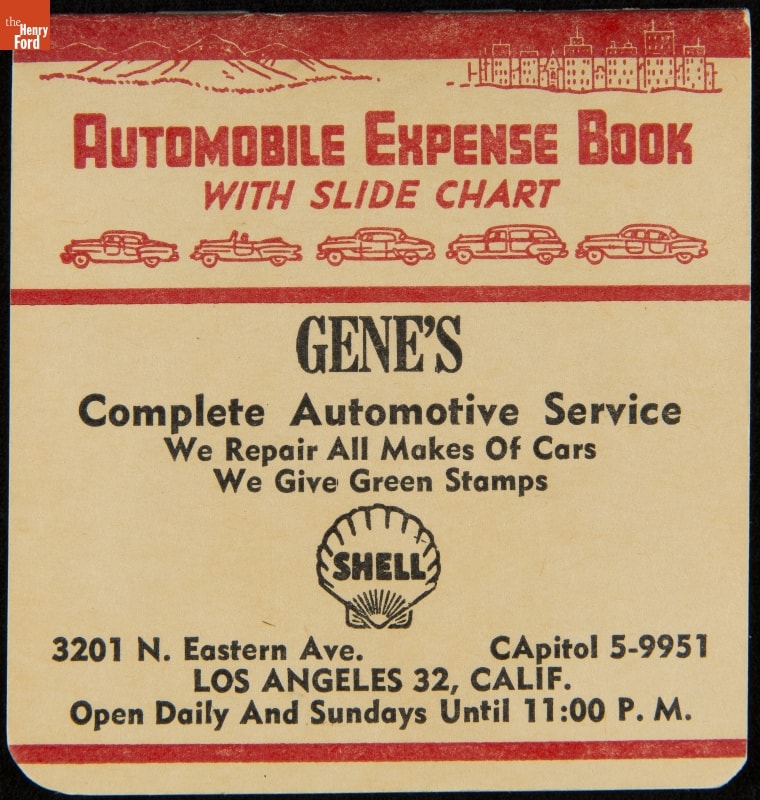
- Gene's Complete Automotive Service Promotional Giveaway, "Automobile Expense Book with Slide Chart," 1945-1960 - Gas station operators and mechanics advertised their services with promotional giveaways aimed at motorists. Expense books allowed a driver to detail a car's operating costs, while record books provided a place to document both routine maintenance and unexpected repairs. Savings account books could be used to track money stashed in the bank -- perhaps when saving for a new car.
- 1945-1960
- Collections - Artifact
Gene's Complete Automotive Service Promotional Giveaway, "Automobile Expense Book with Slide Chart," 1945-1960
Gas station operators and mechanics advertised their services with promotional giveaways aimed at motorists. Expense books allowed a driver to detail a car's operating costs, while record books provided a place to document both routine maintenance and unexpected repairs. Savings account books could be used to track money stashed in the bank -- perhaps when saving for a new car.
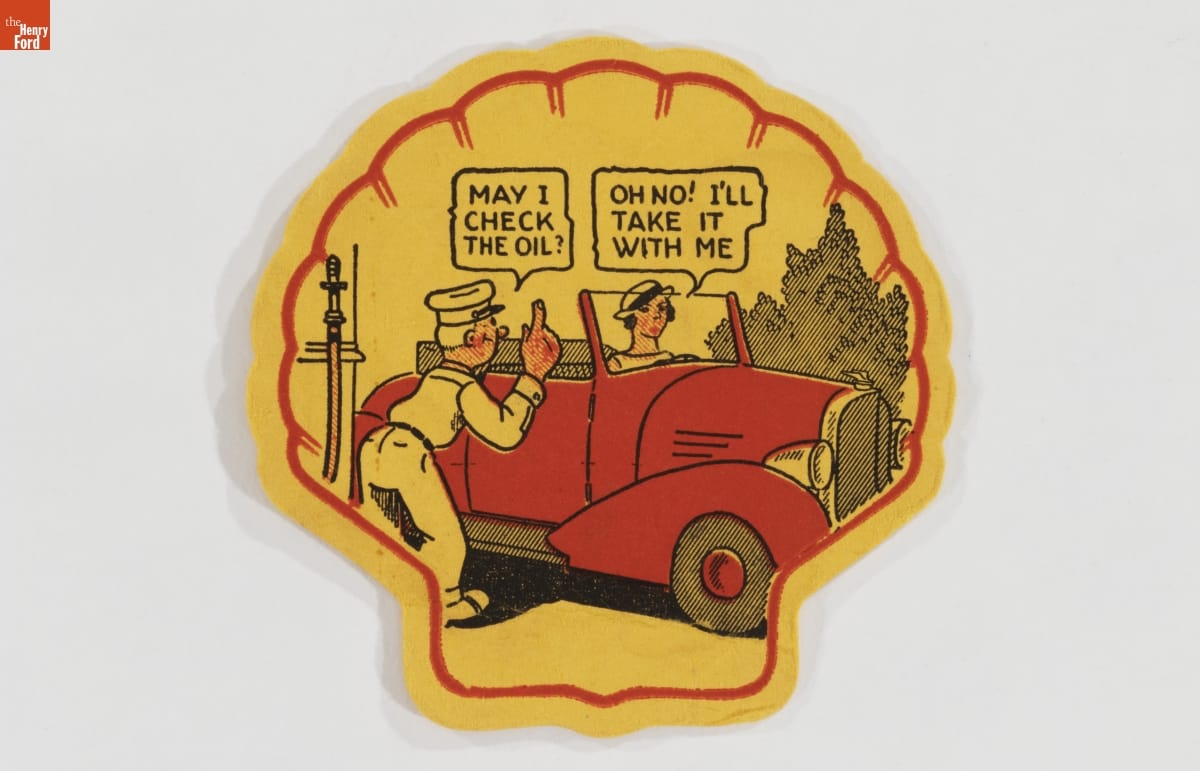
- Shell Coaster, 1934-1939 - The Royal Dutch Shell Group was formed in 1907. From its home market in Europe, Shell came to the United States in stages between 1912 and 1929. The company's distinctive logo, a yellow and red pecten shell, helped establish its identity in America. Shell advertised its fuels and motor oils with promotional giveaways like buttons, coasters, and hang tags.
- 1934-1939
- Collections - Artifact
Shell Coaster, 1934-1939
The Royal Dutch Shell Group was formed in 1907. From its home market in Europe, Shell came to the United States in stages between 1912 and 1929. The company's distinctive logo, a yellow and red pecten shell, helped establish its identity in America. Shell advertised its fuels and motor oils with promotional giveaways like buttons, coasters, and hang tags.
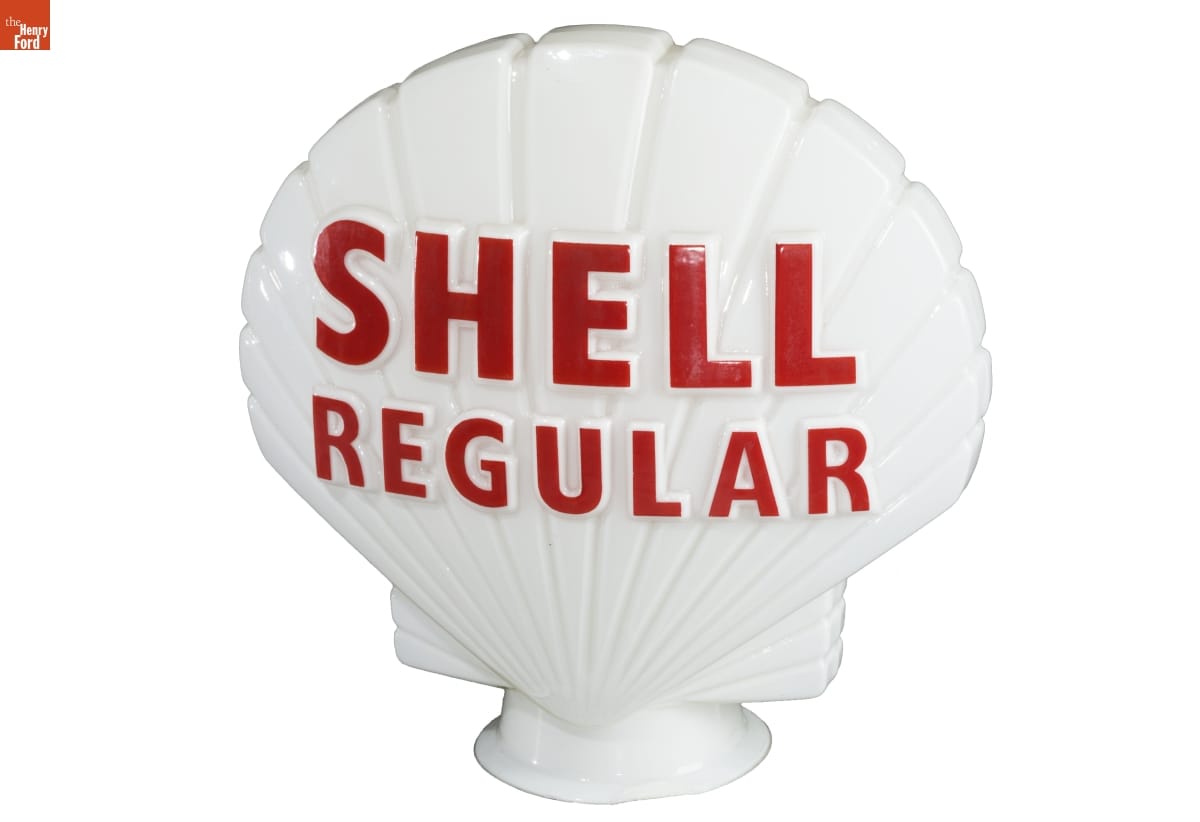
- "Shell Regular" Gasoline Pump Globe, 1948-1959 - Illuminated globes first appeared atop American gasoline pumps in 1912. They evolved over time from simple ball or pill shapes to more elaborate sculptures. Royal Dutch Shell Group used globes in the shape of the company's distinctive pecten shell logo. These globes not only attracted customers, they also provided light for pump attendants working at night.
- 1948-1959
- Collections - Artifact
"Shell Regular" Gasoline Pump Globe, 1948-1959
Illuminated globes first appeared atop American gasoline pumps in 1912. They evolved over time from simple ball or pill shapes to more elaborate sculptures. Royal Dutch Shell Group used globes in the shape of the company's distinctive pecten shell logo. These globes not only attracted customers, they also provided light for pump attendants working at night.
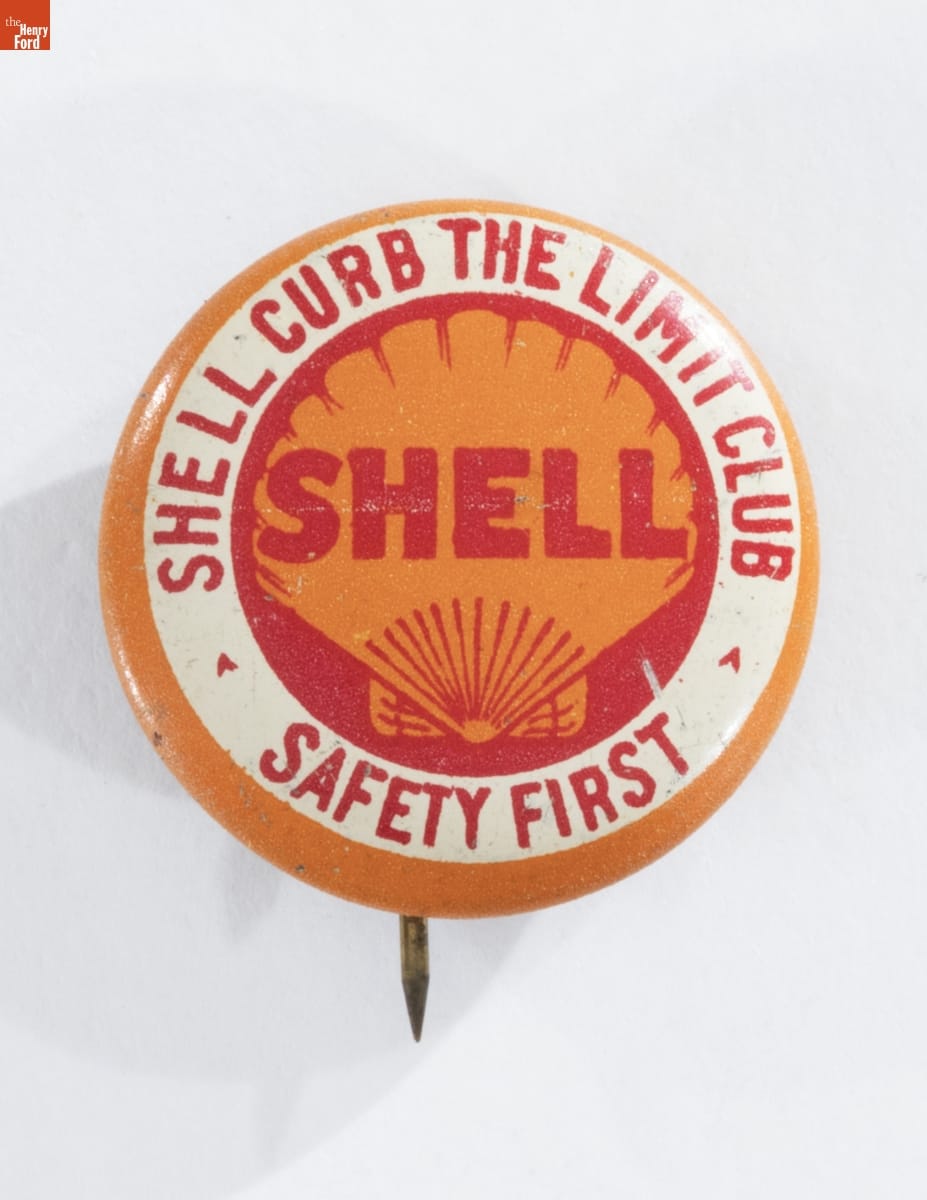
- "Shell Curb the Limit Club" Button, 1934-1939 - The Royal Dutch Shell Group was formed in 1907. From its home market in Europe, Shell came to the United States in stages between 1912 and 1929. The company's distinctive logo, a yellow and red pecten shell, helped establish its identity in America. Shell advertised its fuels and motor oils with promotional giveaways like buttons, coasters, and hang tags.
- 1934-1939
- Collections - Artifact
"Shell Curb the Limit Club" Button, 1934-1939
The Royal Dutch Shell Group was formed in 1907. From its home market in Europe, Shell came to the United States in stages between 1912 and 1929. The company's distinctive logo, a yellow and red pecten shell, helped establish its identity in America. Shell advertised its fuels and motor oils with promotional giveaways like buttons, coasters, and hang tags.
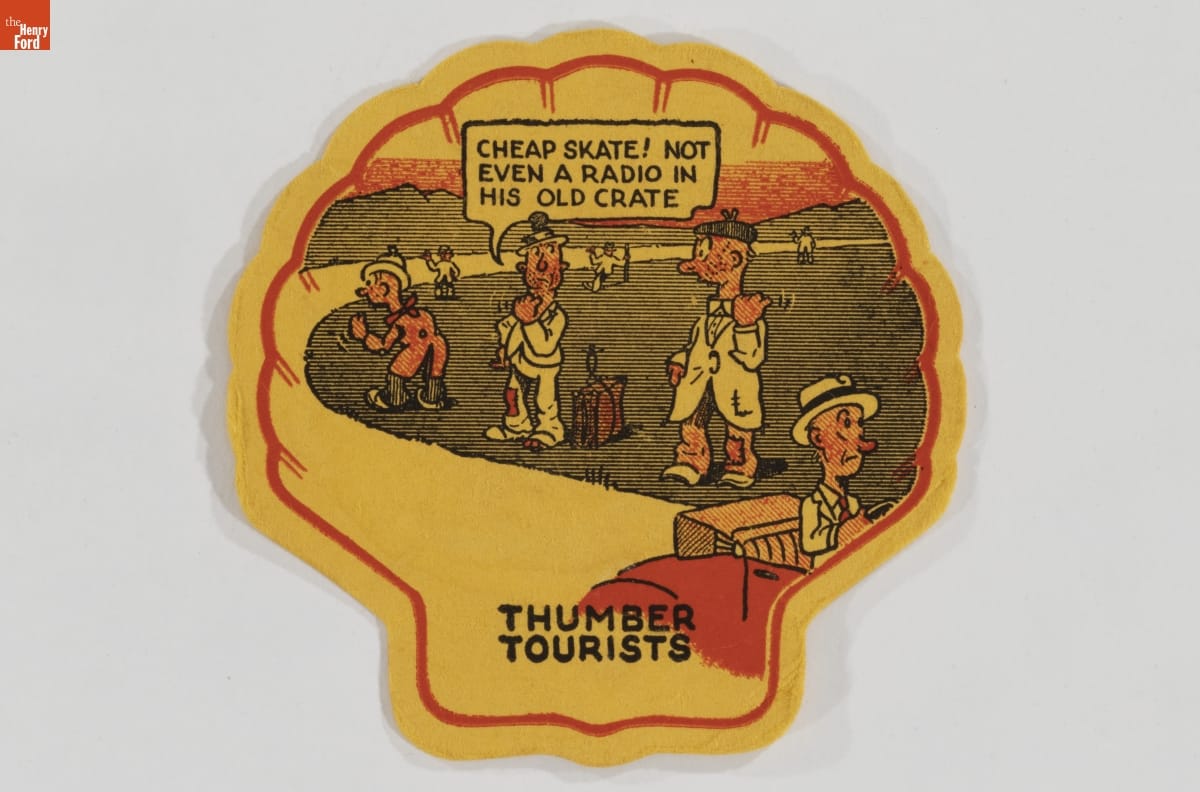
- Shell Coaster, 1934-1939 - The Royal Dutch Shell Group was formed in 1907. From its home market in Europe, Shell came to the United States in stages between 1912 and 1929. The company's distinctive logo, a yellow and red pecten shell, helped establish its identity in America. Shell advertised its fuels and motor oils with promotional giveaways like buttons, coasters, and hang tags.
- 1934-1939
- Collections - Artifact
Shell Coaster, 1934-1939
The Royal Dutch Shell Group was formed in 1907. From its home market in Europe, Shell came to the United States in stages between 1912 and 1929. The company's distinctive logo, a yellow and red pecten shell, helped establish its identity in America. Shell advertised its fuels and motor oils with promotional giveaways like buttons, coasters, and hang tags.
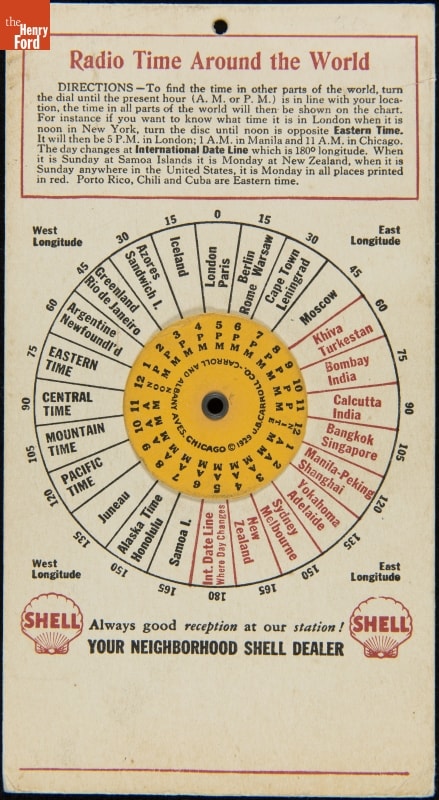
- "Radio Time Around the World" Wheel Chart Promotional Giveaway, 1929 - Gas station operators and mechanics advertised their services with promotional giveaways. This circa 1929 chart capitalized on the growing popularity of amateur or ham radio. By adjusting the wheel accordingly, a radio operator could determine the current time anywhere in the world. Broadcast AM radios were just making their way into cars at the time too.
- 1929
- Collections - Artifact
"Radio Time Around the World" Wheel Chart Promotional Giveaway, 1929
Gas station operators and mechanics advertised their services with promotional giveaways. This circa 1929 chart capitalized on the growing popularity of amateur or ham radio. By adjusting the wheel accordingly, a radio operator could determine the current time anywhere in the world. Broadcast AM radios were just making their way into cars at the time too.
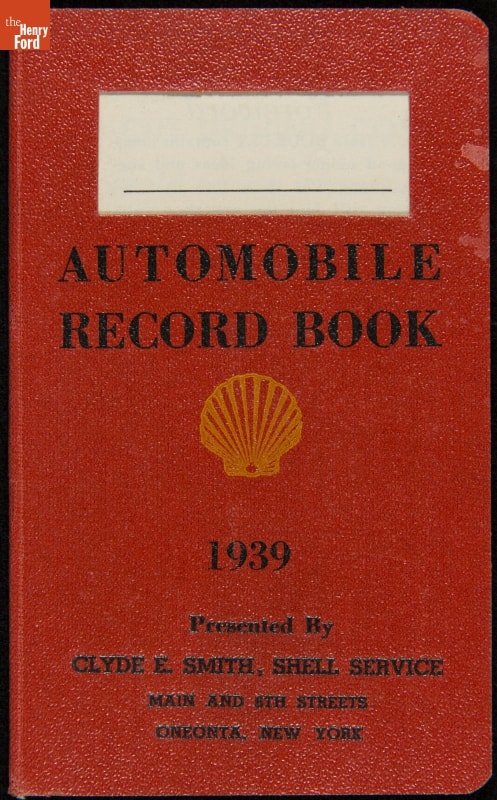
- Promotional Giveaway, "Automobile Record Book," 1939 - Gas station operators and mechanics advertised their services with promotional giveaways aimed at motorists. Expense books allowed a driver to detail a car's operating costs, while record books provided a place to document both routine maintenance and unexpected repairs. Savings account books could be used to track money stashed in the bank -- perhaps when saving for a new car.
- 1939
- Collections - Artifact
Promotional Giveaway, "Automobile Record Book," 1939
Gas station operators and mechanics advertised their services with promotional giveaways aimed at motorists. Expense books allowed a driver to detail a car's operating costs, while record books provided a place to document both routine maintenance and unexpected repairs. Savings account books could be used to track money stashed in the bank -- perhaps when saving for a new car.
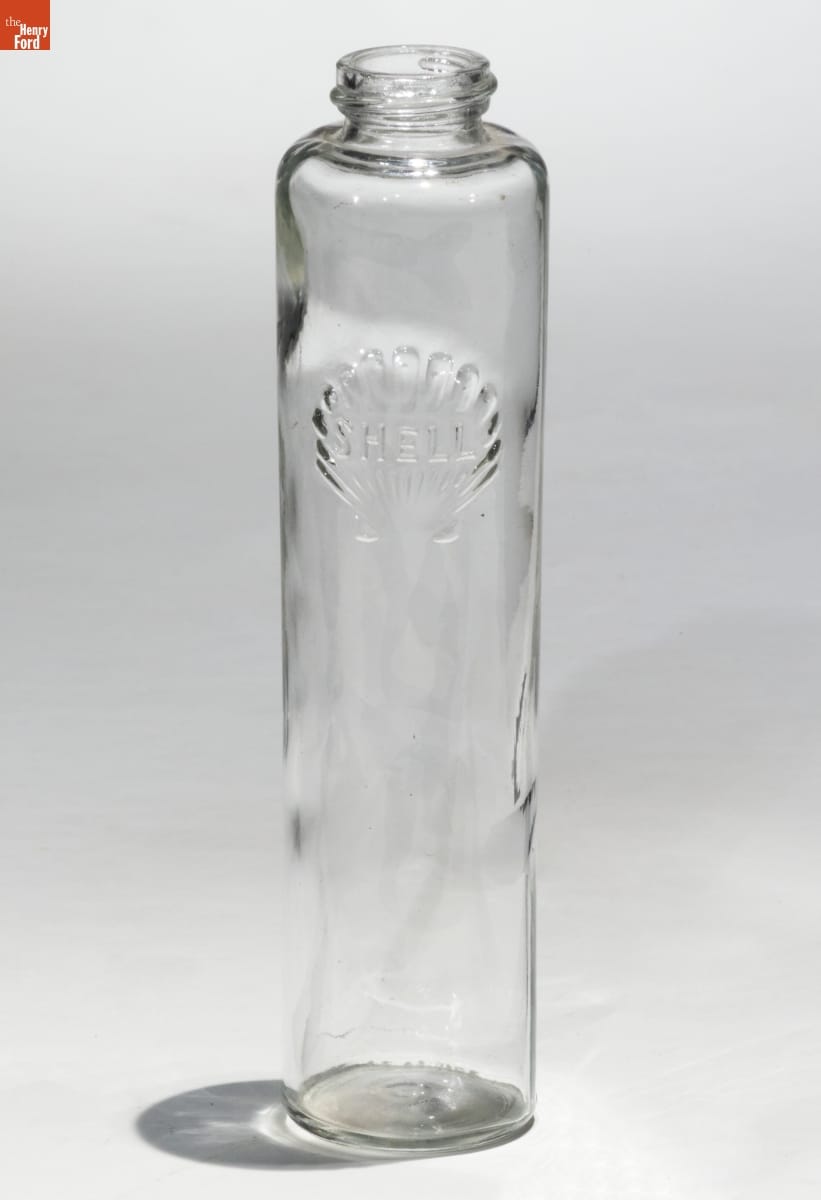
- Shell Sample Bottle, 1928-1939 - The Royal Dutch Shell Group was formed in 1907. From its home market in Europe, Shell came to the United States in stages between 1912 and 1929. The company's distinctive logo, a yellow and red pecten shell, helped establish its identity as a national brand in America. Shell marketed everything from gasoline to motor oil to floor wax.
- 1928-1939
- Collections - Artifact
Shell Sample Bottle, 1928-1939
The Royal Dutch Shell Group was formed in 1907. From its home market in Europe, Shell came to the United States in stages between 1912 and 1929. The company's distinctive logo, a yellow and red pecten shell, helped establish its identity as a national brand in America. Shell marketed everything from gasoline to motor oil to floor wax.
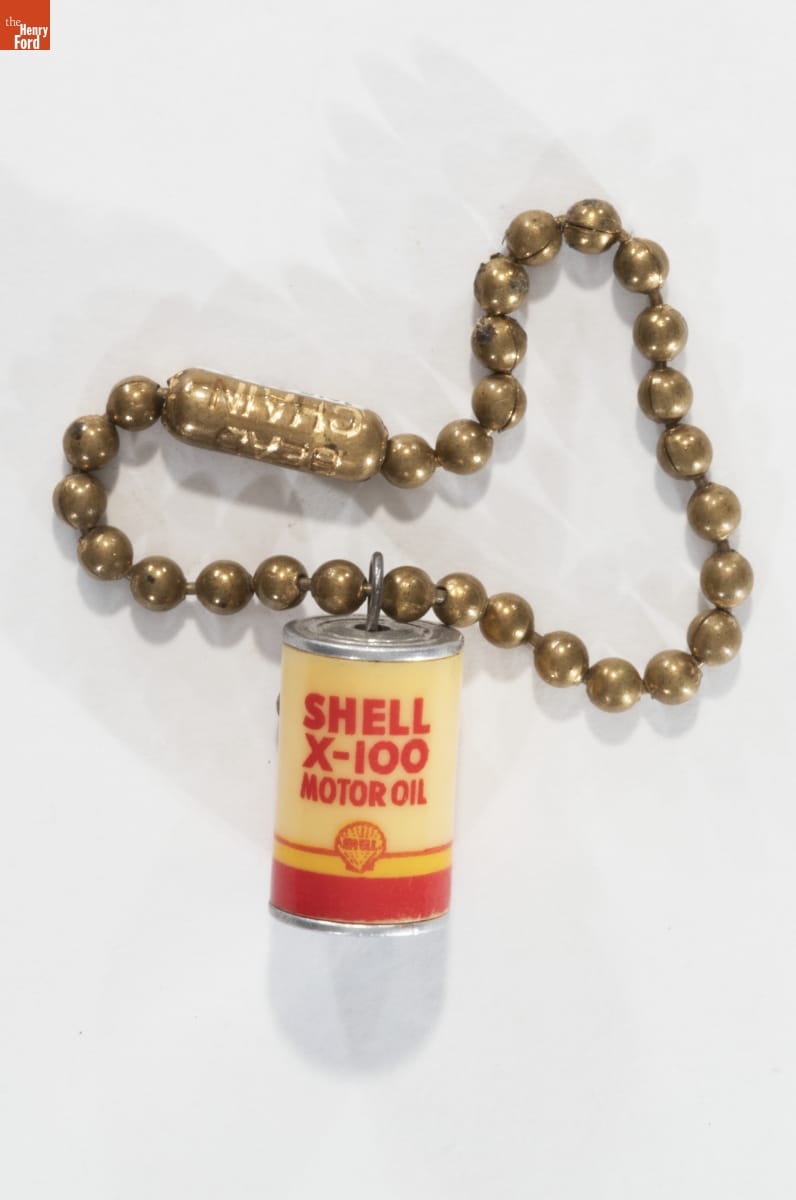
- Shell "X-100" Keychain, 1934-1939 - The Royal Dutch Shell Group was formed in 1907. From its home market in Europe, Shell came to the United States in stages between 1912 and 1929. The company's distinctive logo, a yellow and red pecten shell, helped establish its identity as a national brand in America. Shell advertised that its X-100 motor oil left no ashy deposits in an engine's combustion chambers.
- 1934-1939
- Collections - Artifact
Shell "X-100" Keychain, 1934-1939
The Royal Dutch Shell Group was formed in 1907. From its home market in Europe, Shell came to the United States in stages between 1912 and 1929. The company's distinctive logo, a yellow and red pecten shell, helped establish its identity as a national brand in America. Shell advertised that its X-100 motor oil left no ashy deposits in an engine's combustion chambers.