
Search
- Silsa Milk Carton, circa 1950 - The quest for a shatter-proof milk container prompted John Van Wormer to patent a paper carton in 1915. Many processors and distributors continued to use breakable glass bottles, but, after 1937, mechanized production made the disposable, wax-coated folded cartons inexpensive and indispensable liquid containers. The iconic design, a box with a gable-end top with a pouring or drinking spout, remains the industry standard today.
- circa 1950
- Collections - Artifact
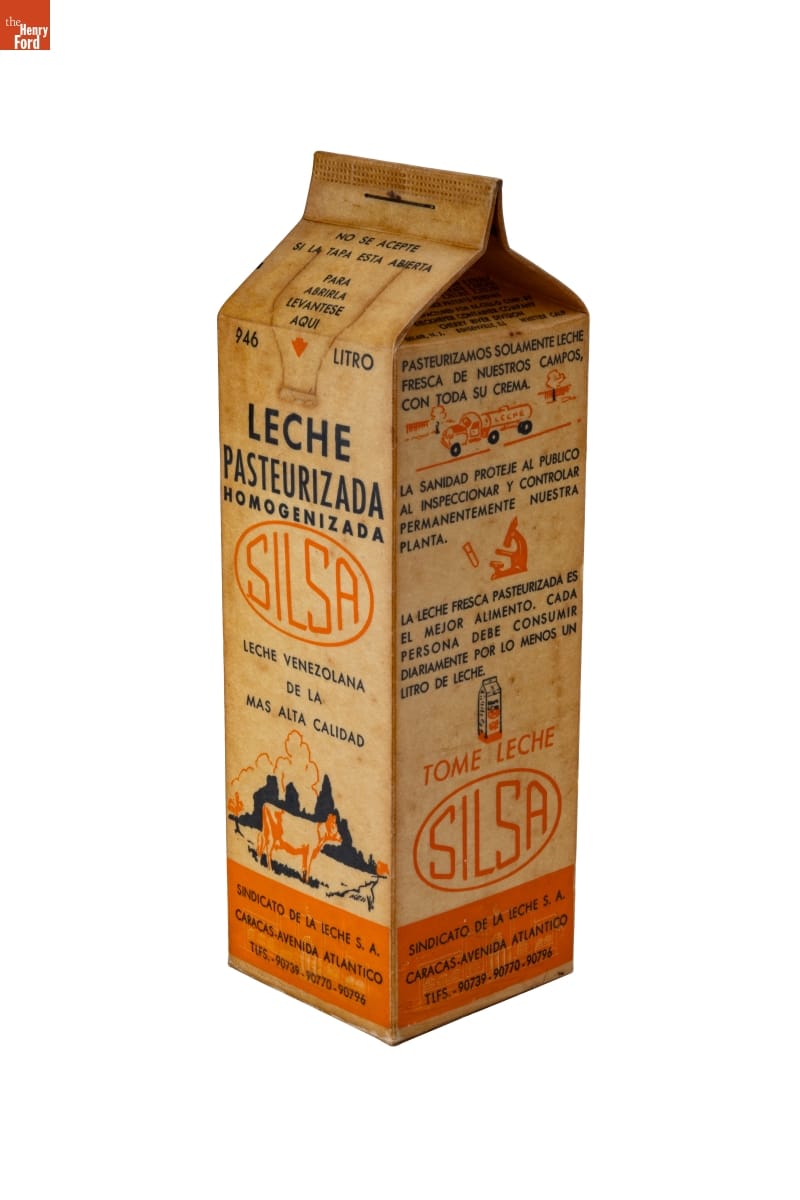
Silsa Milk Carton, circa 1950
The quest for a shatter-proof milk container prompted John Van Wormer to patent a paper carton in 1915. Many processors and distributors continued to use breakable glass bottles, but, after 1937, mechanized production made the disposable, wax-coated folded cartons inexpensive and indispensable liquid containers. The iconic design, a box with a gable-end top with a pouring or drinking spout, remains the industry standard today.
- Silsa Milk Carton, circa 1950 - The quest for a shatter-proof milk container prompted John Van Wormer to patent a paper carton in 1915. Many processors and distributors continued to use breakable glass bottles, but, after 1937, mechanized production made the disposable, wax-coated folded cartons inexpensive and indispensable liquid containers. The iconic design, a box with a gable-end top with a pouring or drinking spout, remains the industry standard today.
- circa 1950
- Collections - Artifact
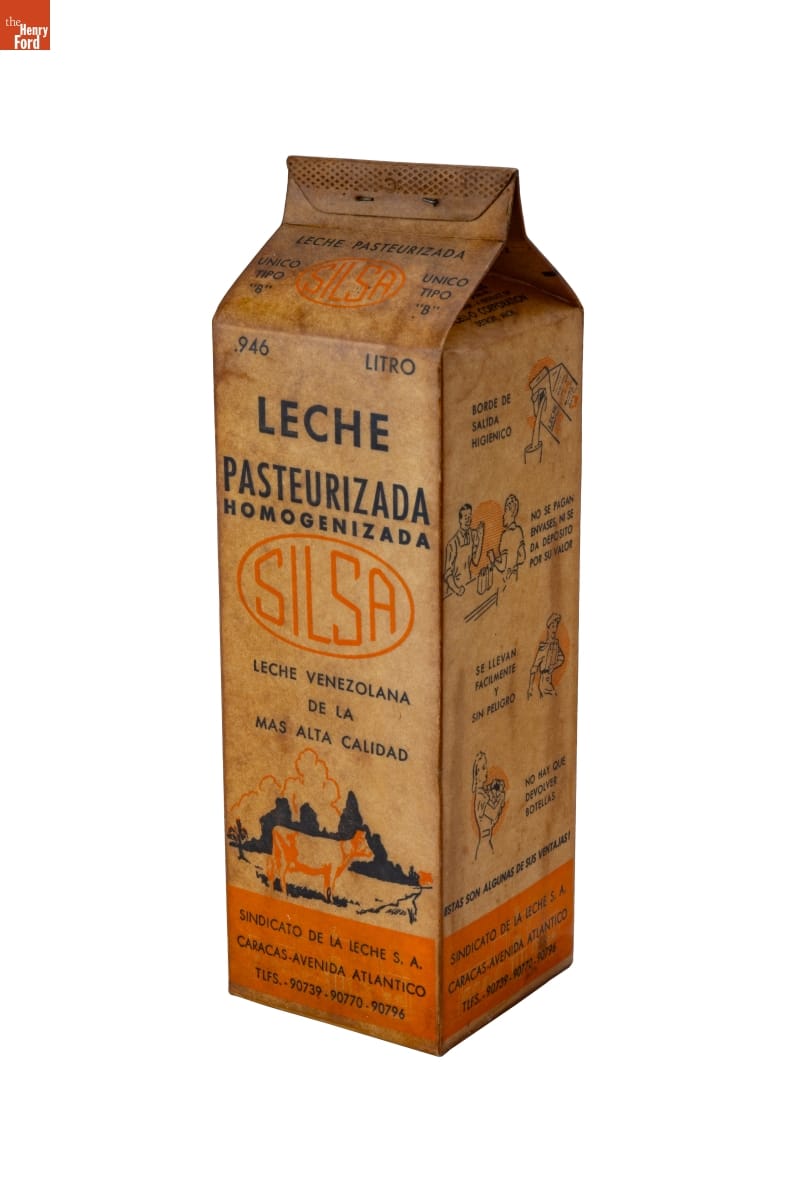
Silsa Milk Carton, circa 1950
The quest for a shatter-proof milk container prompted John Van Wormer to patent a paper carton in 1915. Many processors and distributors continued to use breakable glass bottles, but, after 1937, mechanized production made the disposable, wax-coated folded cartons inexpensive and indispensable liquid containers. The iconic design, a box with a gable-end top with a pouring or drinking spout, remains the industry standard today.